Key Skills for Agricultural Extension Trainer Positions
- Crop production and agronomy
- Soil health and nutrient management
- Integrated pest and disease management
- Climate-smart agriculture practices
- Government agriculture schemes and policies
- Farmer training and capacity building
- Field demonstrations and advisory services
- Data collection and reporting
- Monitoring program outcomes
- Community mobilization
Resume Tips for Agricultural Extension Trainer Applications
- Begin your professional summary with the exact job title "Agricultural Extension Trainer" — ATS systems often match titles literally, and including yours increases the likelihood of passing the initial automated keyword filter before a recruiter reviews your resume
- Quantify farmer outreach, training sessions, or adoption rates.
- Highlight yield improvements or cost reductions achieved by farmers.
- Showcase successful demonstration plots or pilot programs.
- Mention collaboration with government, NGOs, or research bodies.
- Emphasize experience with rural communities and fieldwork.
Strong Action Verbs for Agricultural Extension Trainer Resumes
Advised · Trained · Facilitated · Implemented · Demonstrated · Coordinated · Promoted · Evaluated · Supported · Mobilized · Achieved · Administered · Analyzed · Architected
Common Mistakes to Avoid
- Writing a generic objective statement instead of a targeted agricultural extension trainer professional summary
- Focusing on theory without field implementation results.
- Ignoring farmer adoption or behavior change outcomes.
- Failing to document impact or success metrics.
- Overlooking collaboration with local institutions.
Experience Levels
- Entry Level: Supports field visits, farmer training, data collection, and awareness programs.
- Mid Level: Manages extension programs, delivers technical guidance, and evaluates outcomes.
- Senior Level: Designs extension strategies, leads teams, and coordinates large-scale rural initiatives.
How to Write a Agricultural Extension Trainer Resume
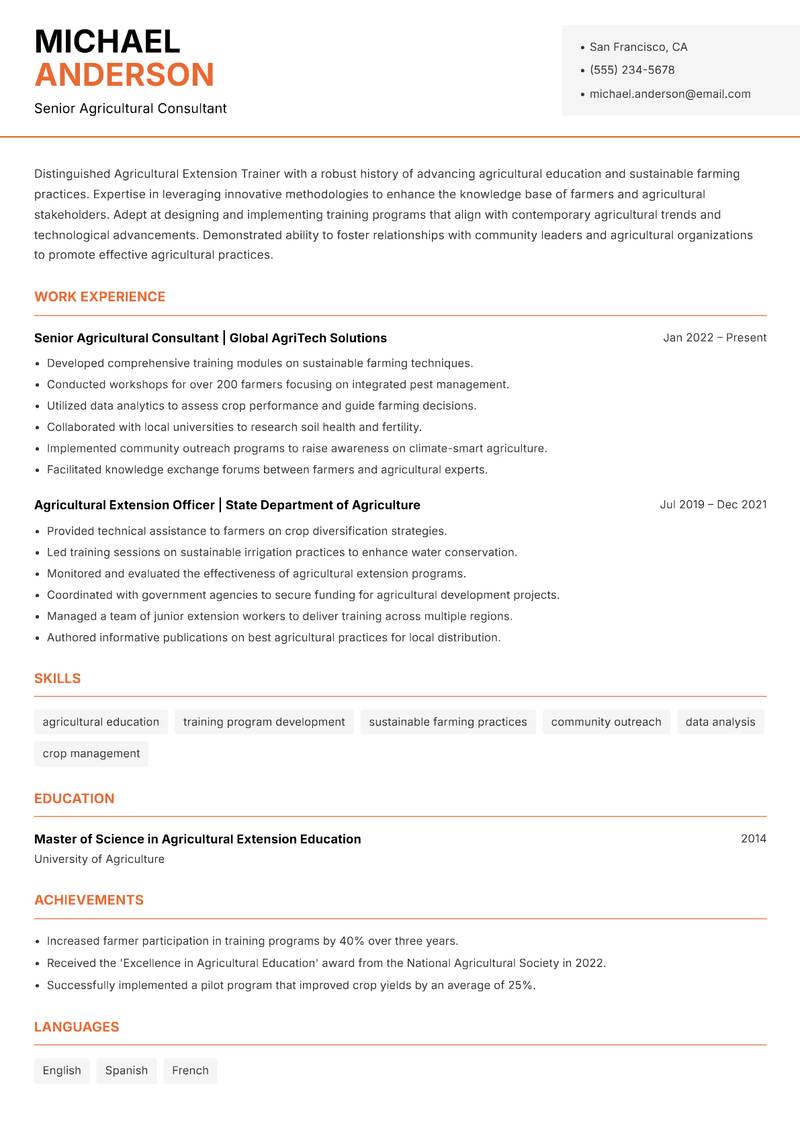
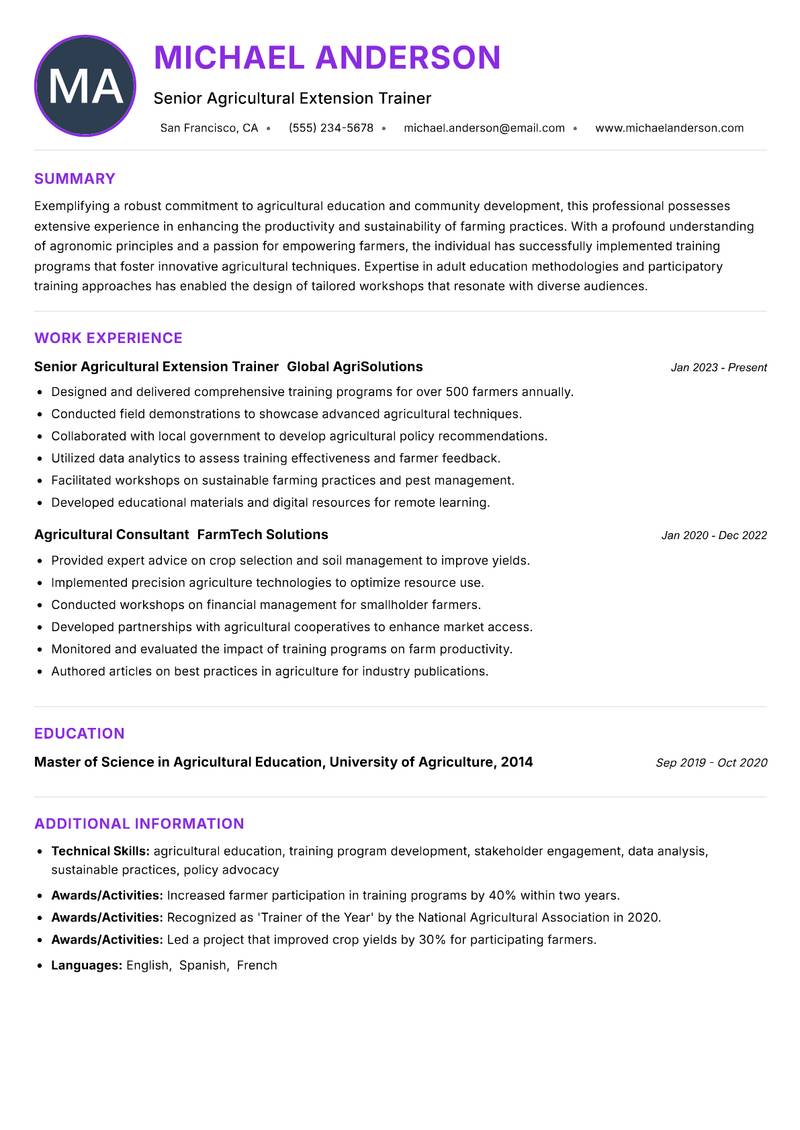
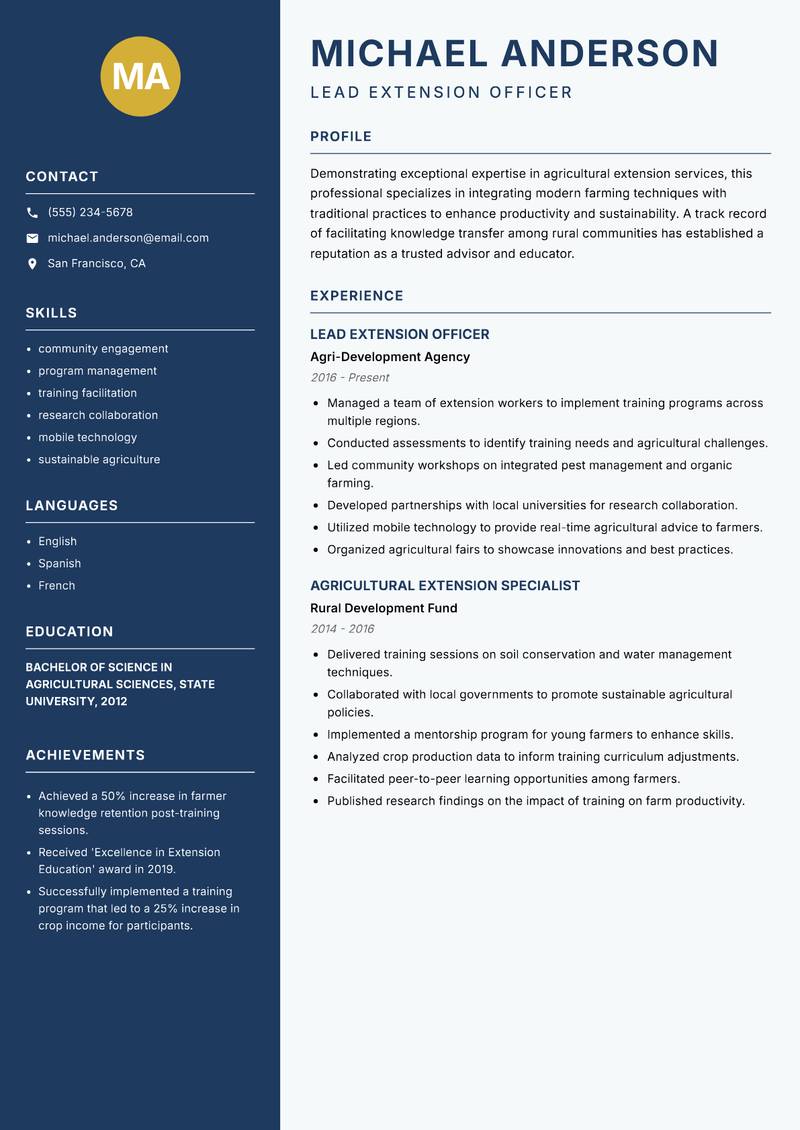
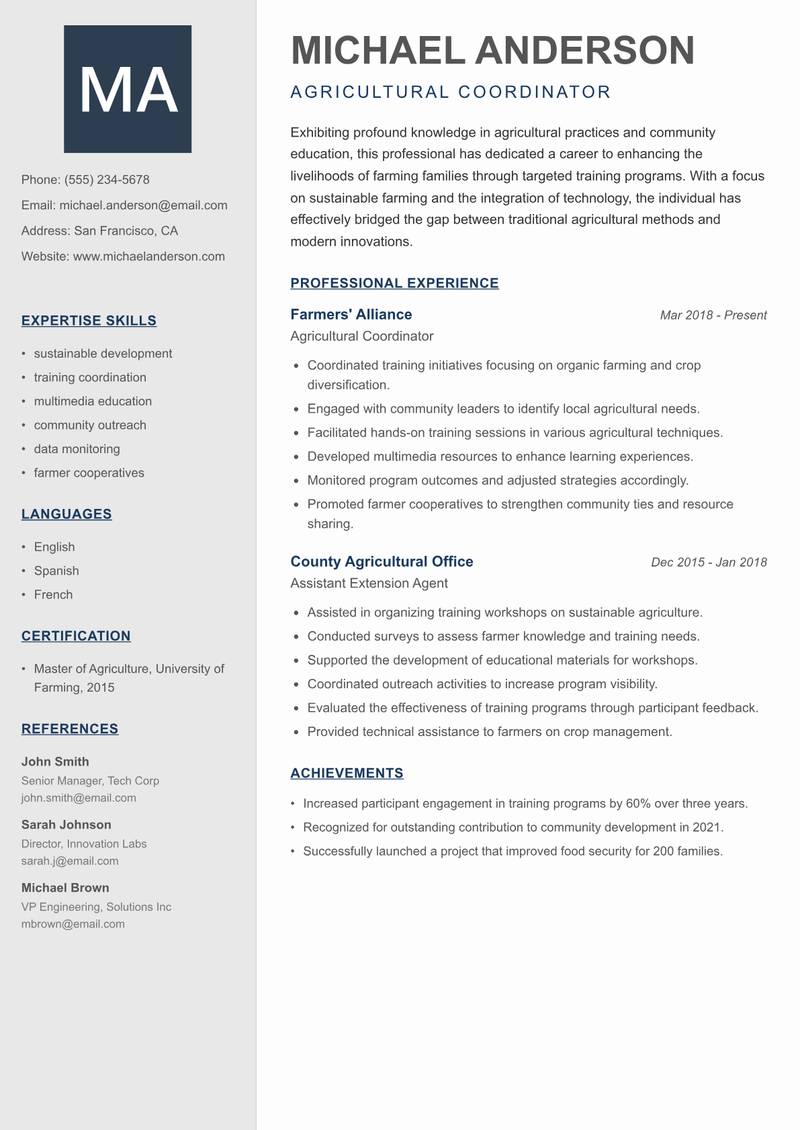
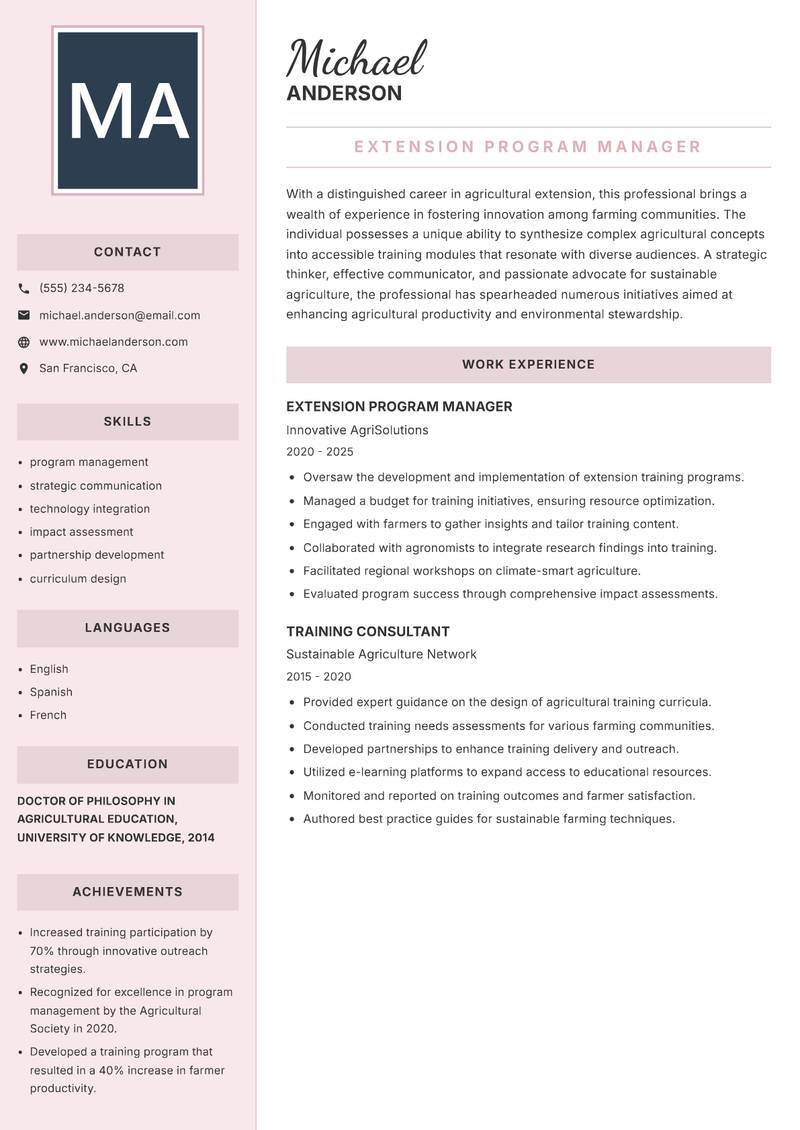
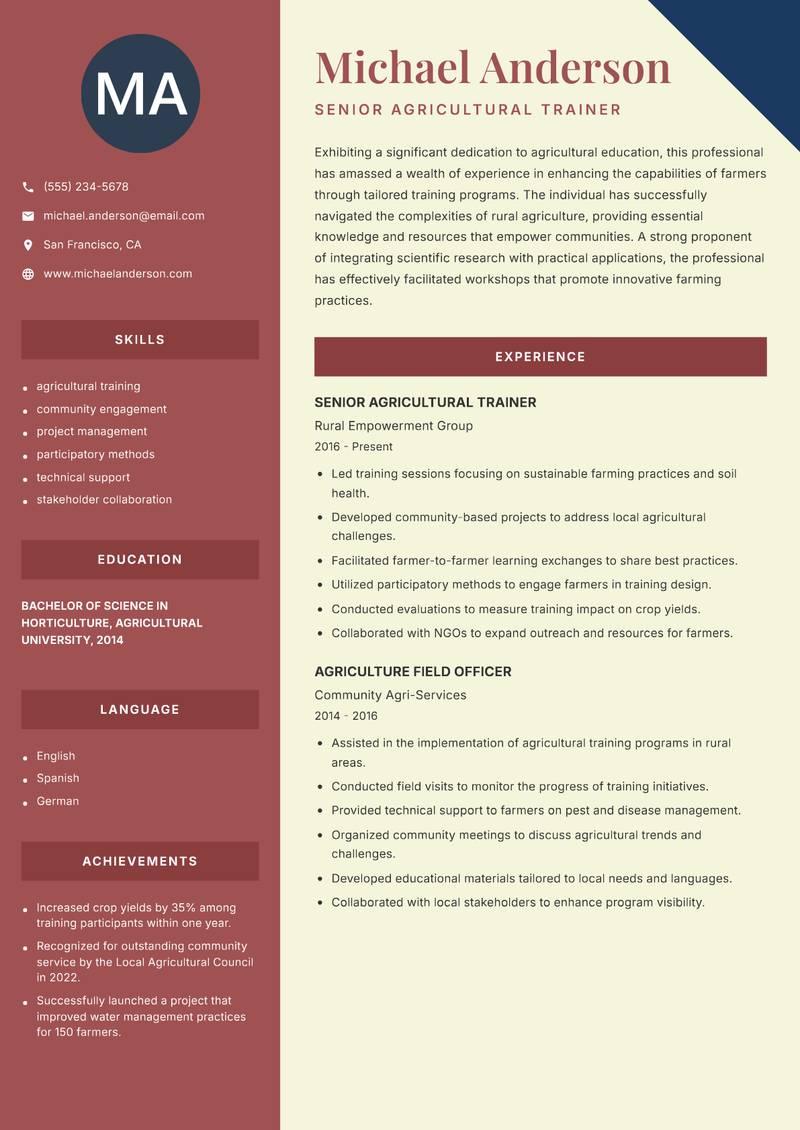
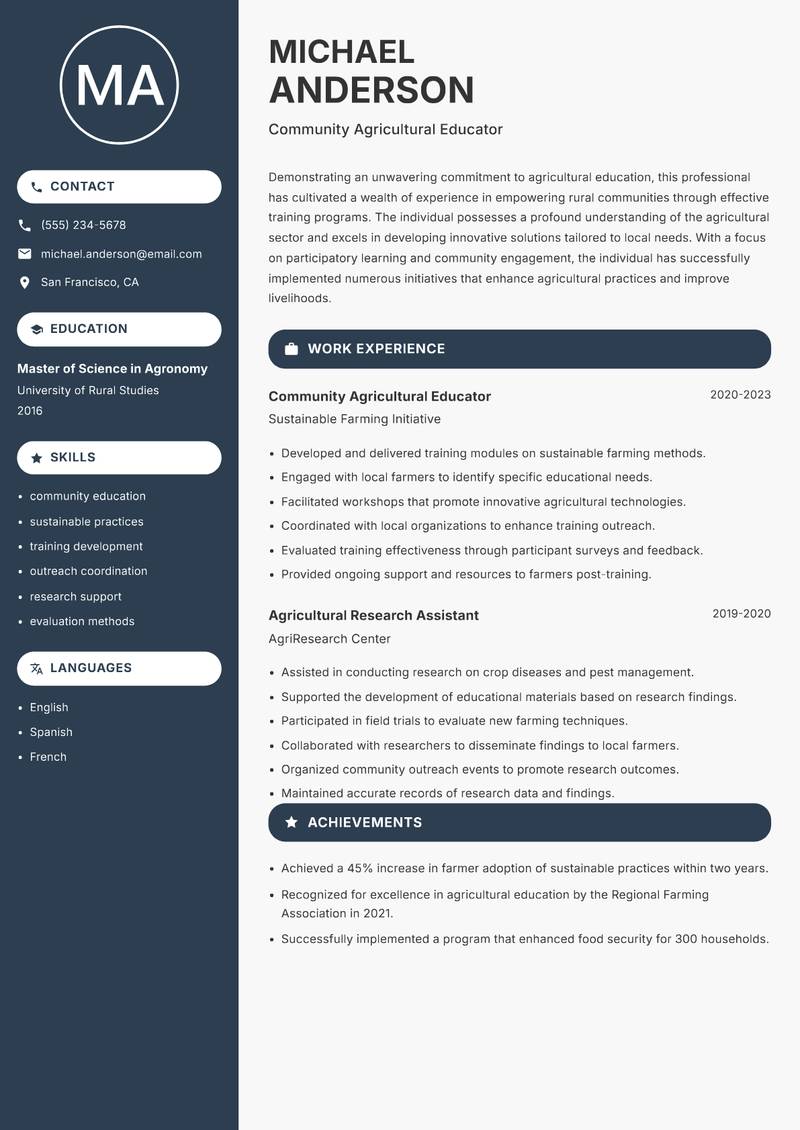
Browse Agricultural Extension Trainer resume examples built around crop production and agronomy, tailored for Agricultural Extension roles.
A strong Agricultural Extension Trainer resume leads with a focused professional summary that names the exact role and your standout achievement. In the experience section, open every bullet with a strong action verb and quantify the result with numbers wherever possible. Highlight your most relevant competencies — especially Crop production and agronomy, Soil health and nutrient management, and Integrated pest and disease management — in a dedicated Skills section positioned early so ATS systems and hiring managers both find it immediately.
For format, most Agricultural Extension Trainer roles suit a reverse-chronological layout: most recent position first, working backwards. Keep to one page for under five years of experience, or two pages for senior candidates with a rich project or leadership history. Use clean, ATS-safe fonts (10–12pt), standard section headings (Summary, Experience, Education, Skills), and avoid tables, text boxes, or multi-column layouts that applicant tracking systems cannot parse reliably.