Key Skills for Alternative Therapy Specialist Positions
- Various alternative therapies
- Traditional diagnostic and treatment methods
- Herbal medicine and formulations
- Therapeutic procedures and protocols
- Lifestyle and diet counseling
- Patient assessment and case documentation
- Treatment planning and follow-up
- Health education and preventive care
- Clinical record maintenance
- Coordination with integrative healthcare teams
Resume Tips for Alternative Therapy Specialist Applications
- Name your primary modality and the regulatory body you are registered with in the first line of your professional summary — alternative therapy specialist recruiters verify credentials before reading clinical experience, so visibility of your registration is more important than any single achievement
- State your specific modality in the first line of your professional summary — recruiters for Ayurveda, TCM, Homeopathy, and Naturopathy roles search for those exact terms, and a generic "alternative medicine practitioner" label fails most ATS filters
- List your regulatory registration number, issuing body, and renewal date in a dedicated Credentials section at the top — alternative medicine employers verify licences before progressing any application, so missing details cause automatic delays
- Quantify patient outcomes wherever the data exists — number of active patients managed, case documentation volume, treatment adherence rates, or patient-reported improvement scores — because claims without numbers are discounted in clinical hiring
- Include your CPD record and any post-graduate certifications with dates — the field evolves rapidly and employers view ongoing learning as evidence of clinical currency, not just compliance
- Highlight any collaboration with conventional medical or multidisciplinary teams — integrative health settings increasingly require practitioners who can communicate treatment rationale to GPs, specialists, and allied health colleagues
Strong Action Verbs for Alternative Therapy Specialist Resumes
Assessed · Diagnosed · Formulated · Prescribed · Administered · Treated · Counselled · Educated · Documented · Evaluated · Monitored · Coordinated · Developed · Implemented · Facilitated · Recommended
Common Mistakes to Avoid
- Using a generic title like "Alternative Medicine Practitioner" instead of naming the exact modality (Ayurveda, TCM, Homeopathy, Naturopathy) — employers search for specific systems and a vague label will fail keyword matching in most ATS
- Omitting regulatory registration details — failing to include your licence number, issuing body, and expiry date forces employers to chase verification and often results in your application being set aside
- Describing outcomes in vague language such as "helped patients feel better" without any supporting metric — patient volume, documented case outcomes, or client retention figures all convert a claim into evidence
- Neglecting CPD and post-qualification training entries — in a field where evidence standards are under scrutiny, an up-to-date learning record demonstrates clinical seriousness and distinguishes you from practitioners who qualified years ago and stopped developing
- Failing to show interprofessional experience — alternative medicine is increasingly practised alongside conventional care, and a resume that makes no mention of GP referrals, multidisciplinary team meetings, or integrated clinic settings signals limited scope of practice to modern employers
Experience Levels
- Entry (0–2 years): Clinical intern, junior practitioner, assistant therapist — focus on modality training, supervised patient hours, and case documentation skills
- Mid-level (3–7 years): Established practitioner, specialist consultant — independent caseload, CPD record, and evidence of patient outcomes
- Senior (8–14 years): Principal practitioner, clinic lead, department head — team supervision, protocol development, and integration with multidisciplinary health services
- Expert (15+ years): Academic researcher, programme director, policy advisor — published work, curriculum authorship, or regulatory board involvement in alternative medicine systems
How to Write a Alternative Therapy Specialist Resume
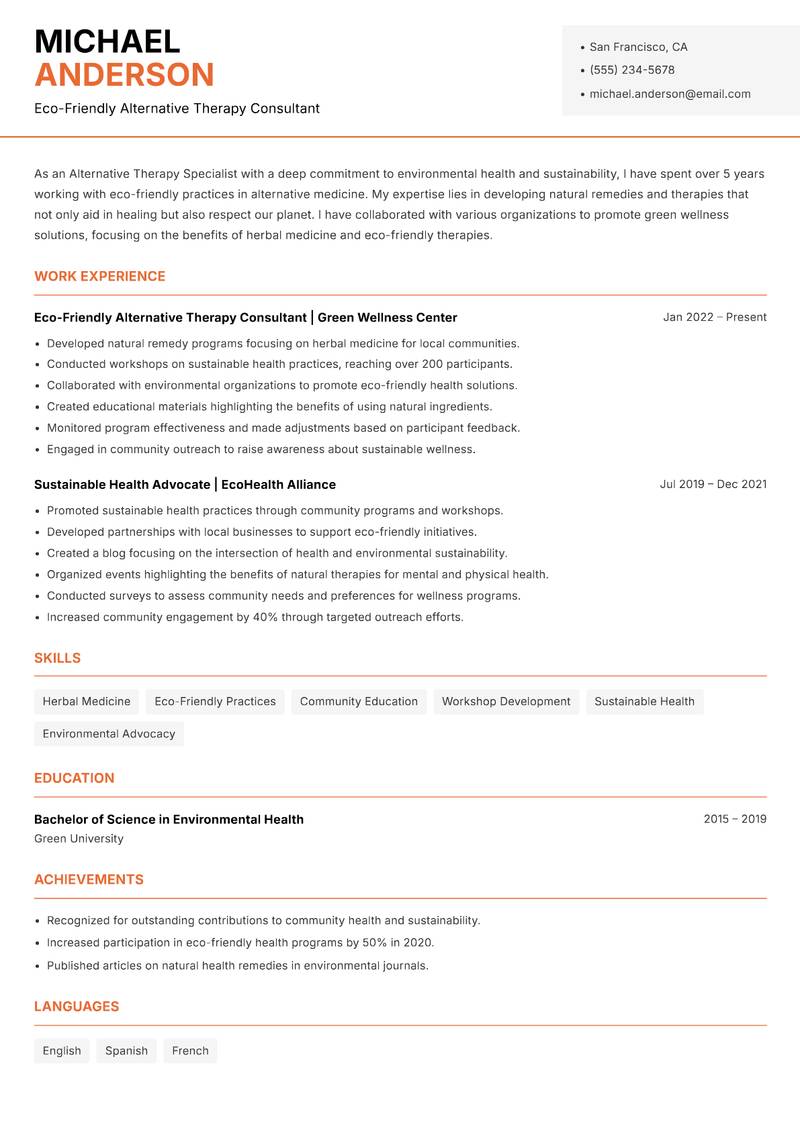
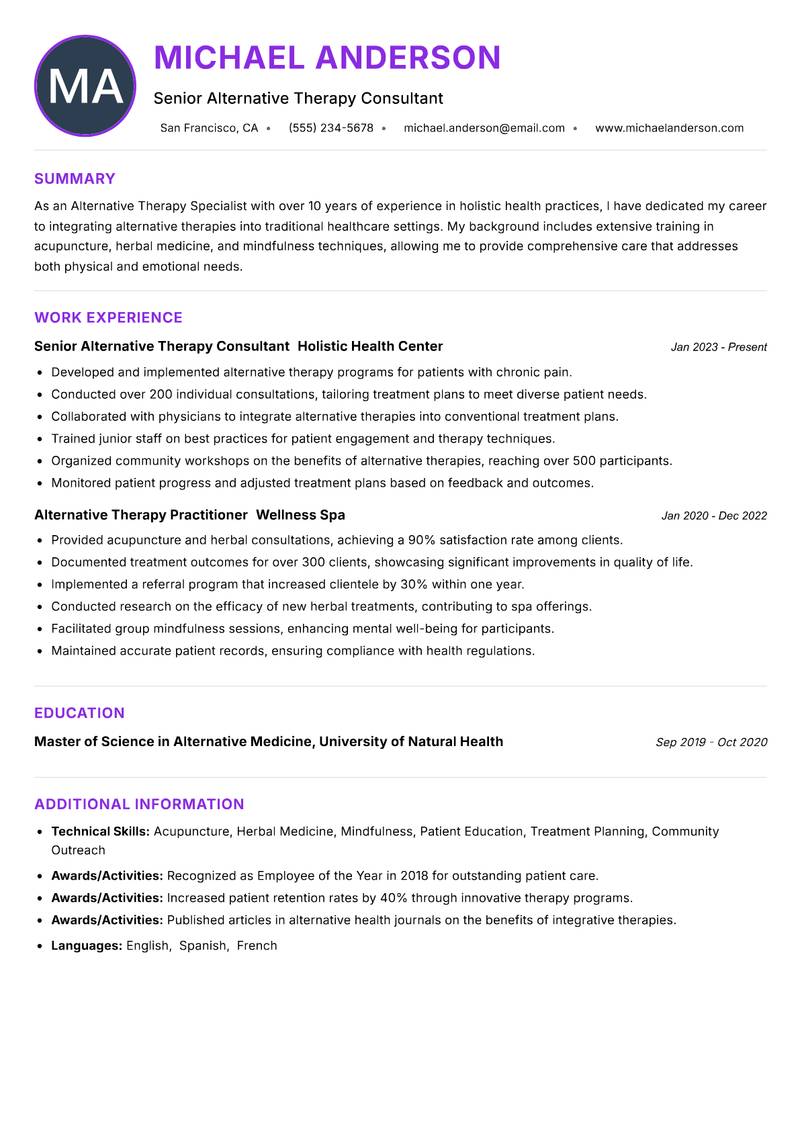
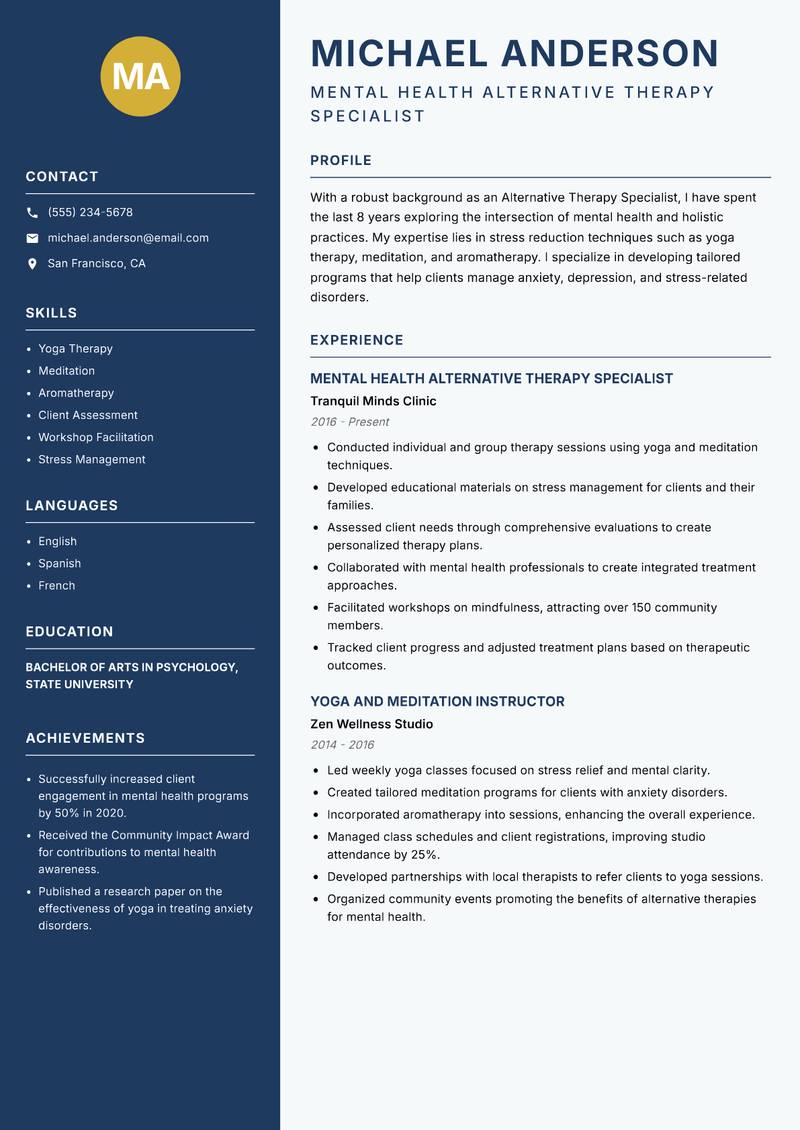
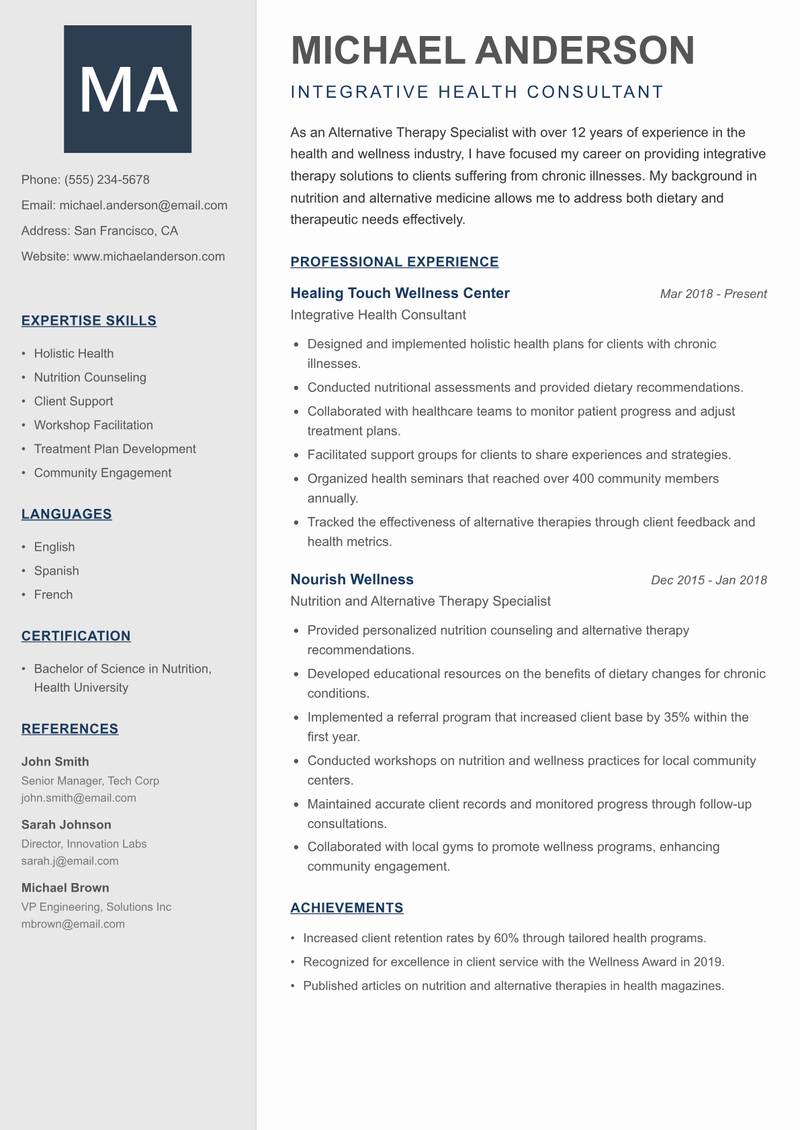
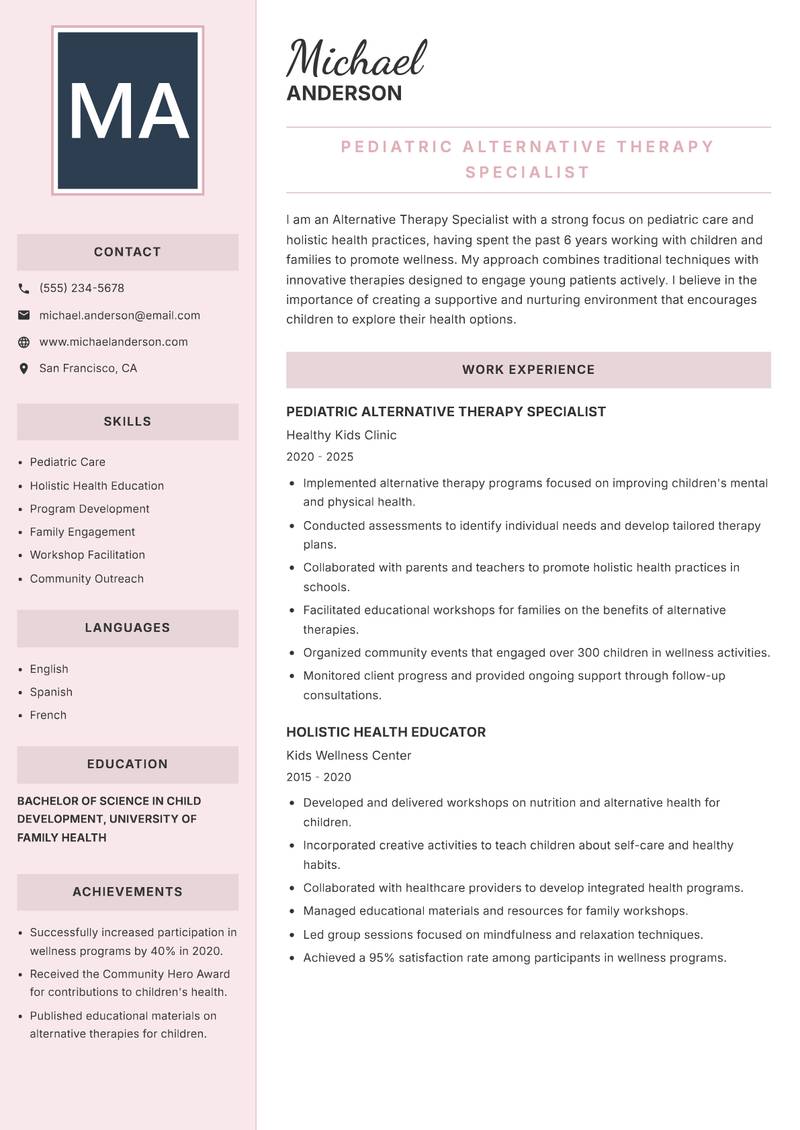
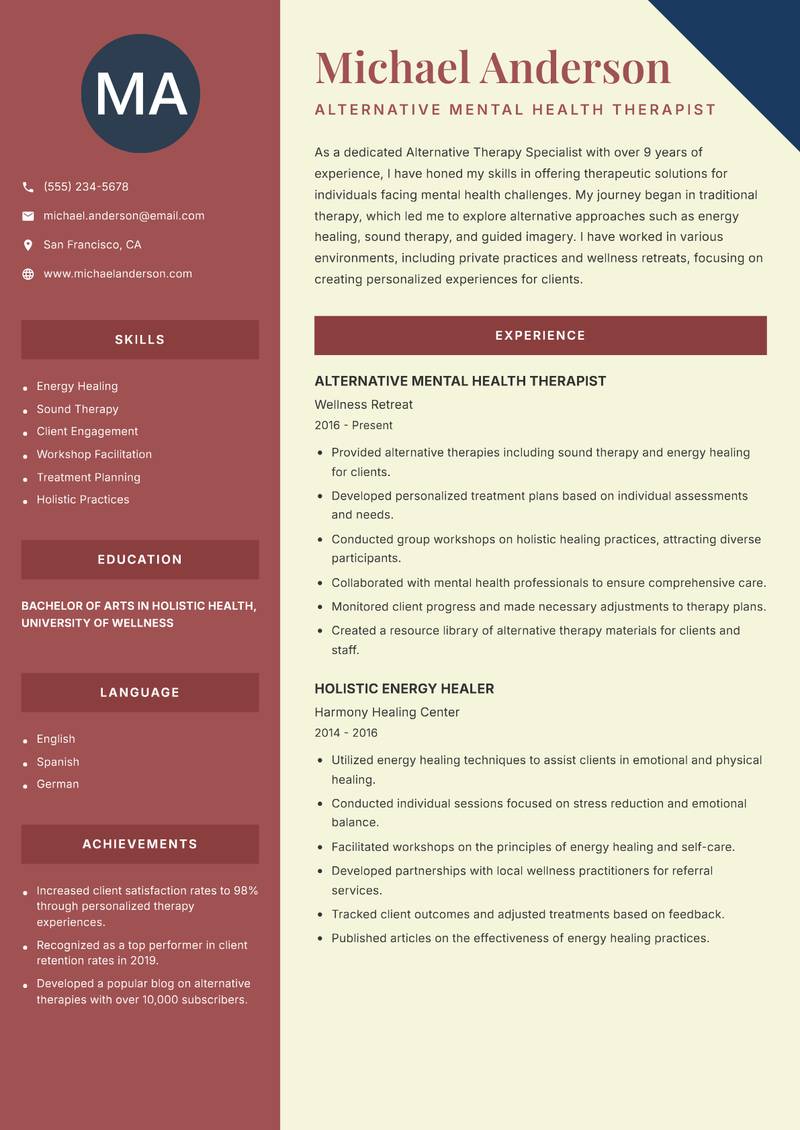
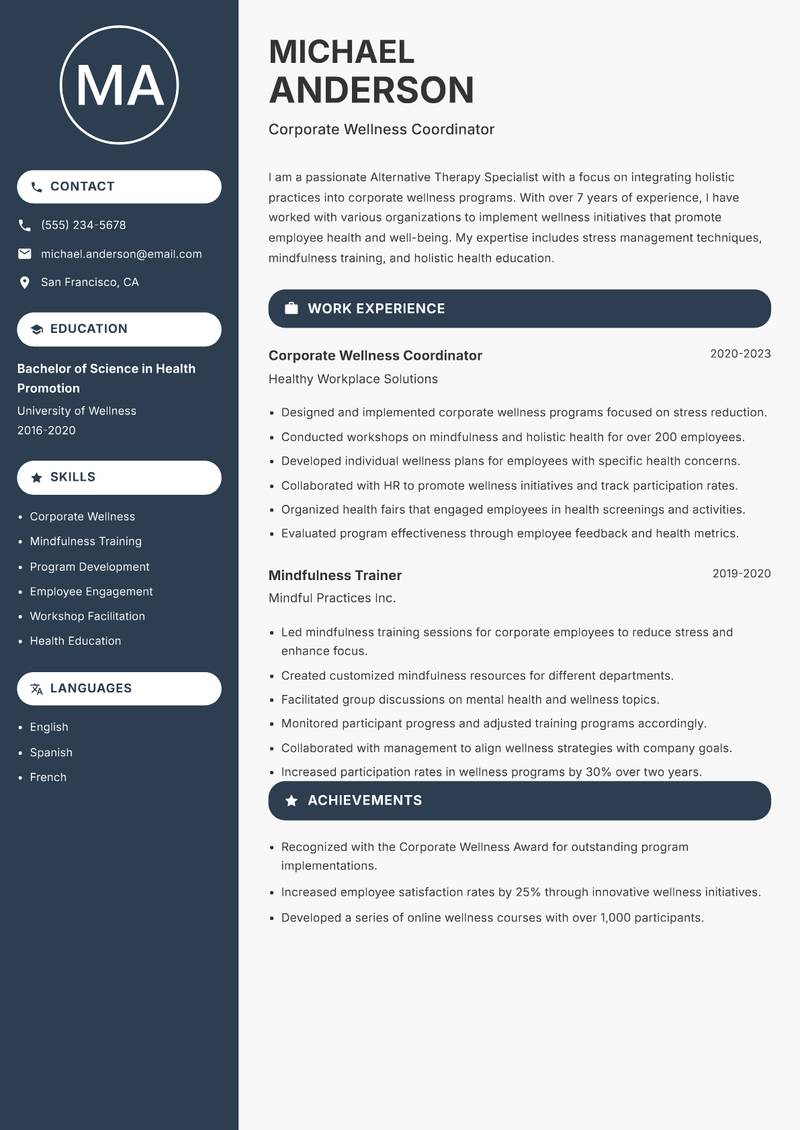
Browse Alternative Therapy Specialist resume examples built around traditional diagnostic and treatment methods, tailored for Alternative Medicine roles.
A strong Alternative Therapy Specialist resume leads with a focused professional summary that names the exact role and your standout achievement. In the experience section, open every bullet with a strong action verb and quantify the result with numbers wherever possible. Highlight your most relevant competencies — especially Various alternative therapies, Traditional diagnostic and treatment methods, and Herbal medicine and formulations — in a dedicated Skills section positioned early so ATS systems and hiring managers both find it immediately.
For format, most Alternative Therapy Specialist roles suit a reverse-chronological layout: most recent position first, working backwards. Keep to one page for under five years of experience, or two pages for senior candidates with a rich project or leadership history. Use clean, ATS-safe fonts (10–12pt), standard section headings (Summary, Experience, Education, Skills), and avoid tables, text boxes, or multi-column layouts that applicant tracking systems cannot parse reliably.