Art Restoration Specialist Resume

These Art Restoration Specialist resume samples are designed to help you write a resume that gets noticed by hiring managers and passes applicant tracking systems (ATS) in Fine Arts. Each example shows real formatting, section structure, and language you can adapt to your own background. When writing your own Art Restoration Specialist resume, focus on highlighting art conservation, studio practice & artistic technique and exhibition curation & installation. Recruiters scan for these qualifications first, so they should appear early in your summary and experience sections. Use strong action verbs such as "exhibited", "created", "curated", "installed" to describe your achievements, and quantify your impact wherever possible — percentages, dollar amounts, or time saved make your resume more convincing. A common mistake to avoid: writing a generic objective statement instead of a targeted art restoration specialist professional summary. Tailor your resume to each Art Restoration Specialist position you apply for rather than using one generic version.

Art Restoration Specialist Resume Template
View PDF
0.0 (0 ratings)

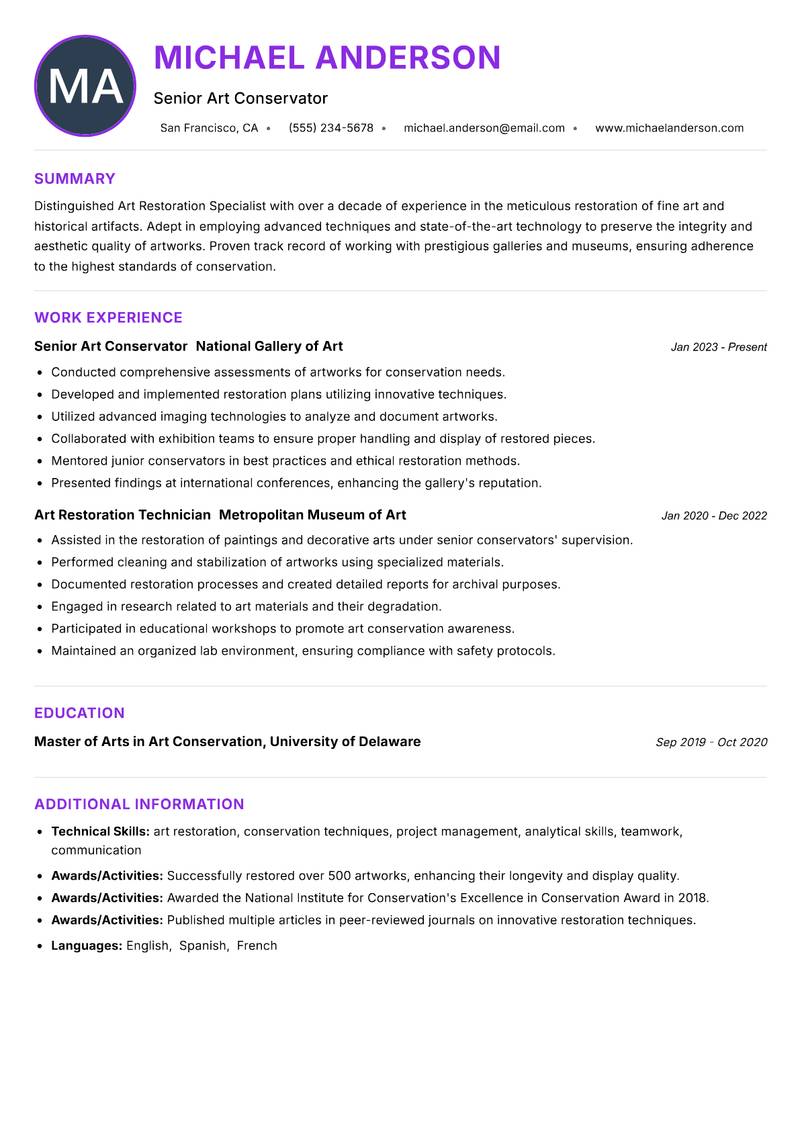
Senior Art Conservator Resume

Distinguished Art Restoration Specialist with over a decade of experience in the meticulous restoration of fine art and historical artifacts. Adept in employing advanced techniques and state-of-the-art technology to preserve the integrity and aesthetic quality of artworks. Proven track record of working with prestigious galleries and museums, ensuring adherence to the highest standards of conservation. Expertise extends to both preventive and interventive restoration, with a strong focus on ethical practices and sustainability. Collaboration with curators and art historians has led to the successful execution of numerous high-profile projects, enhancing public appreciation of cultural heritage. Committed to ongoing professional development and contributing to the advancement of restoration methodologies.

art restoration conservation techniques project management analytical skills teamwork communication
Art Restoration Specialist Resume Preview Example
View PDF
  1. Conducted comprehensive assessments of artworks for conservation needs.
  2. Developed and implemented restoration plans utilizing innovative techniques.
  3. Utilized advanced imaging technologies to analyze and document artworks.
  4. Collaborated with exhibition teams to ensure proper handling and display of restored pieces.
  5. Mentored junior conservators in best practices and ethical restoration methods.
  6. Presented findings at international conferences, enhancing the gallery's reputation.
  1. Assisted in the restoration of paintings and decorative arts under senior conservators' supervision.
  2. Performed cleaning and stabilization of artworks using specialized materials.
  3. Documented restoration processes and created detailed reports for archival purposes.
  4. Engaged in research related to art materials and their degradation.
  5. Participated in educational workshops to promote art conservation awareness.
  6. Maintained an organized lab environment, ensuring compliance with safety protocols.

Achievements

  • Successfully restored over 500 artworks, enhancing their longevity and display quality.
  • Awarded the National Institute for Conservation's Excellence in Conservation Award in 2018.
  • Published multiple articles in peer-reviewed journals on innovative restoration techniques.
⏱️
Experience
2-5 Years
📅
Level
Mid Level
🎓
Education
Master of Arts in Art Conserva...

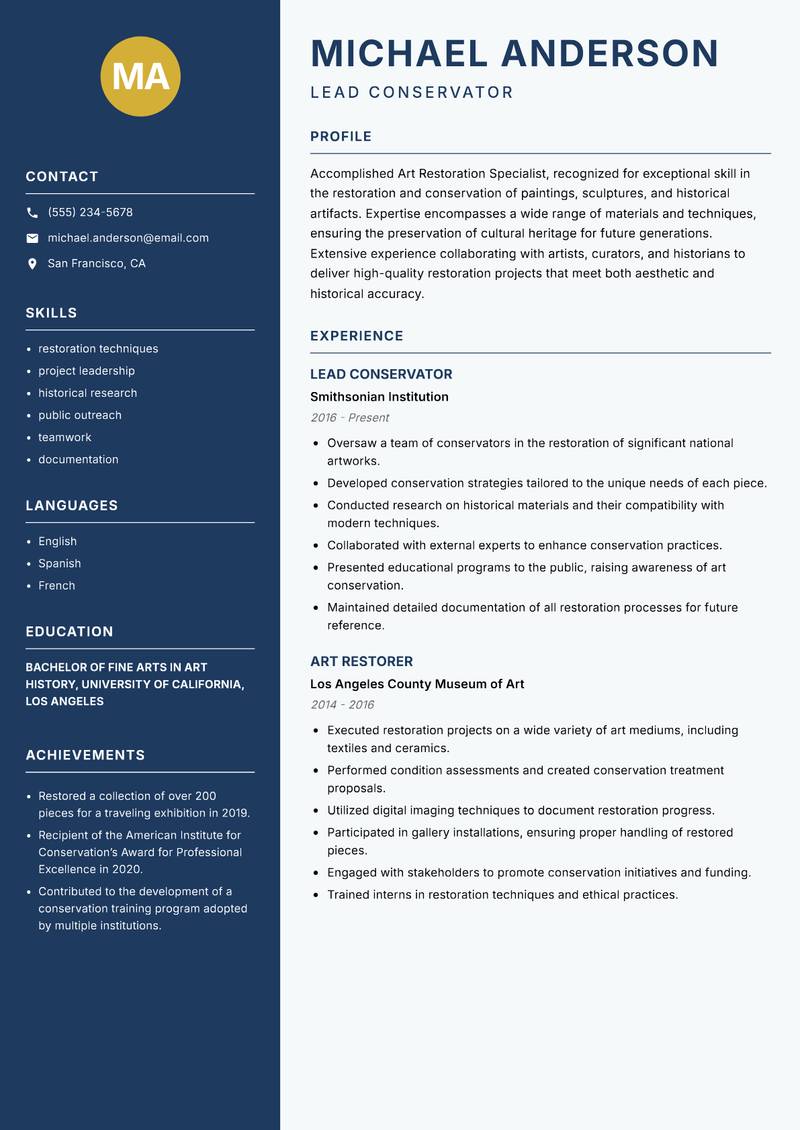
Lead Conservator Resume

Accomplished Art Restoration Specialist, recognized for exceptional skill in the restoration and conservation of paintings, sculptures, and historical artifacts. Expertise encompasses a wide range of materials and techniques, ensuring the preservation of cultural heritage for future generations. Extensive experience collaborating with artists, curators, and historians to deliver high-quality restoration projects that meet both aesthetic and historical accuracy. Committed to continuing education in art conservation methodologies and emerging technologies, fostering a proactive approach to the evolving field of art restoration. An advocate for sustainable practices in the conservation community, striving to balance preservation with environmental responsibility.

restoration techniques project leadership historical research public outreach teamwork documentation
Art Restoration Specialist Resume Preview Example
View PDF
  1. Oversaw a team of conservators in the restoration of significant national artworks.
  2. Developed conservation strategies tailored to the unique needs of each piece.
  3. Conducted research on historical materials and their compatibility with modern techniques.
  4. Collaborated with external experts to enhance conservation practices.
  5. Presented educational programs to the public, raising awareness of art conservation.
  6. Maintained detailed documentation of all restoration processes for future reference.
  1. Executed restoration projects on a wide variety of art mediums, including textiles and ceramics.
  2. Performed condition assessments and created conservation treatment proposals.
  3. Utilized digital imaging techniques to document restoration progress.
  4. Participated in gallery installations, ensuring proper handling of restored pieces.
  5. Engaged with stakeholders to promote conservation initiatives and funding.
  6. Trained interns in restoration techniques and ethical practices.

Achievements

  • Restored a collection of over 200 pieces for a traveling exhibition in 2019.
  • Recipient of the American Institute for Conservation’s Award for Professional Excellence in 2020.
  • Contributed to the development of a conservation training program adopted by multiple institutions.
⏱️
Experience
2-5 Years
📅
Level
Mid Level
🎓
Education
Bachelor of Fine Arts in Art H...

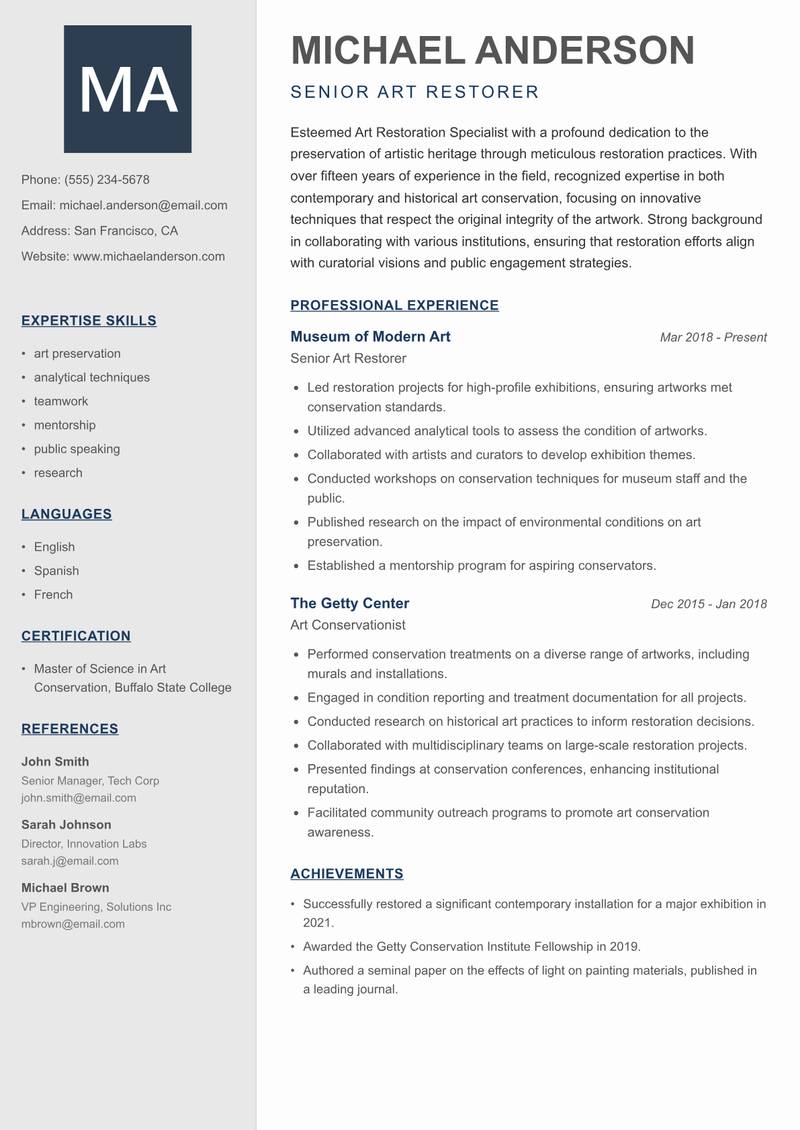
Senior Art Restorer Resume

Esteemed Art Restoration Specialist with a profound dedication to the preservation of artistic heritage through meticulous restoration practices. With over fifteen years of experience in the field, recognized expertise in both contemporary and historical art conservation, focusing on innovative techniques that respect the original integrity of the artwork. Strong background in collaborating with various institutions, ensuring that restoration efforts align with curatorial visions and public engagement strategies. Passionate about educating the next generation of conservators and advocating for the importance of preserving cultural narratives. Consistently seeks opportunities for professional development, staying abreast of advancements in the field.

art preservation analytical techniques teamwork mentorship public speaking research
Art Restoration Specialist Resume Preview Example
View PDF
  1. Led restoration projects for high-profile exhibitions, ensuring artworks met conservation standards.
  2. Utilized advanced analytical tools to assess the condition of artworks.
  3. Collaborated with artists and curators to develop exhibition themes.
  4. Conducted workshops on conservation techniques for museum staff and the public.
  5. Published research on the impact of environmental conditions on art preservation.
  6. Established a mentorship program for aspiring conservators.
  1. Performed conservation treatments on a diverse range of artworks, including murals and installations.
  2. Engaged in condition reporting and treatment documentation for all projects.
  3. Conducted research on historical art practices to inform restoration decisions.
  4. Collaborated with multidisciplinary teams on large-scale restoration projects.
  5. Presented findings at conservation conferences, enhancing institutional reputation.
  6. Facilitated community outreach programs to promote art conservation awareness.

Achievements

  • Successfully restored a significant contemporary installation for a major exhibition in 2021.
  • Awarded the Getty Conservation Institute Fellowship in 2019.
  • Authored a seminal paper on the effects of light on painting materials, published in a leading journal.
⏱️
Experience
2-5 Years
📅
Level
Mid Level
🎓
Education
Master of Science in Art Conse...

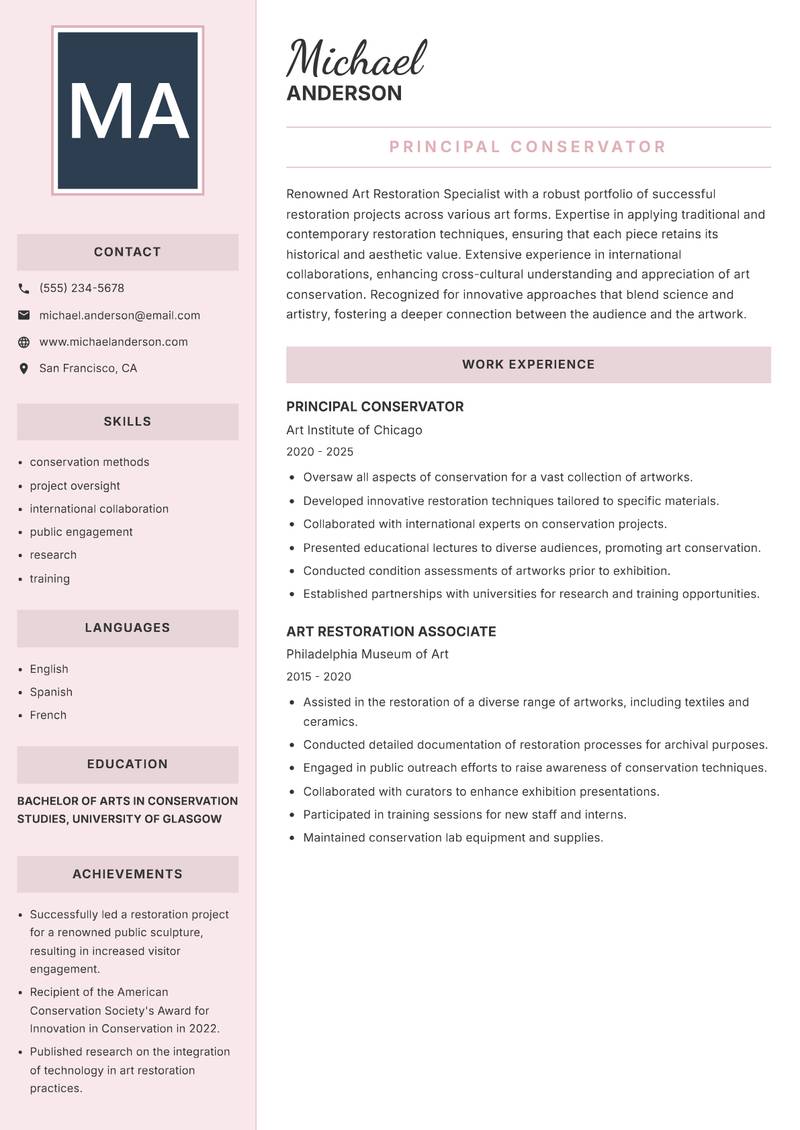
Principal Conservator Resume

Renowned Art Restoration Specialist with a robust portfolio of successful restoration projects across various art forms. Expertise in applying traditional and contemporary restoration techniques, ensuring that each piece retains its historical and aesthetic value. Extensive experience in international collaborations, enhancing cross-cultural understanding and appreciation of art conservation. Recognized for innovative approaches that blend science and artistry, fostering a deeper connection between the audience and the artwork. Strong advocate for sustainable conservation practices, dedicated to minimizing environmental impact while preserving cultural heritage. Continually pursuing advanced training and certifications to remain at the forefront of the field.

conservation methods project oversight international collaboration public engagement research training
Art Restoration Specialist Resume Preview Example
View PDF
  1. Oversaw all aspects of conservation for a vast collection of artworks.
  2. Developed innovative restoration techniques tailored to specific materials.
  3. Collaborated with international experts on conservation projects.
  4. Presented educational lectures to diverse audiences, promoting art conservation.
  5. Conducted condition assessments of artworks prior to exhibition.
  6. Established partnerships with universities for research and training opportunities.
  1. Assisted in the restoration of a diverse range of artworks, including textiles and ceramics.
  2. Conducted detailed documentation of restoration processes for archival purposes.
  3. Engaged in public outreach efforts to raise awareness of conservation techniques.
  4. Collaborated with curators to enhance exhibition presentations.
  5. Participated in training sessions for new staff and interns.
  6. Maintained conservation lab equipment and supplies.

Achievements

  • Successfully led a restoration project for a renowned public sculpture, resulting in increased visitor engagement.
  • Recipient of the American Conservation Society's Award for Innovation in Conservation in 2022.
  • Published research on the integration of technology in art restoration practices.
⏱️
Experience
2-5 Years
📅
Level
Mid Level
🎓
Education
Bachelor of Arts in Conservati...

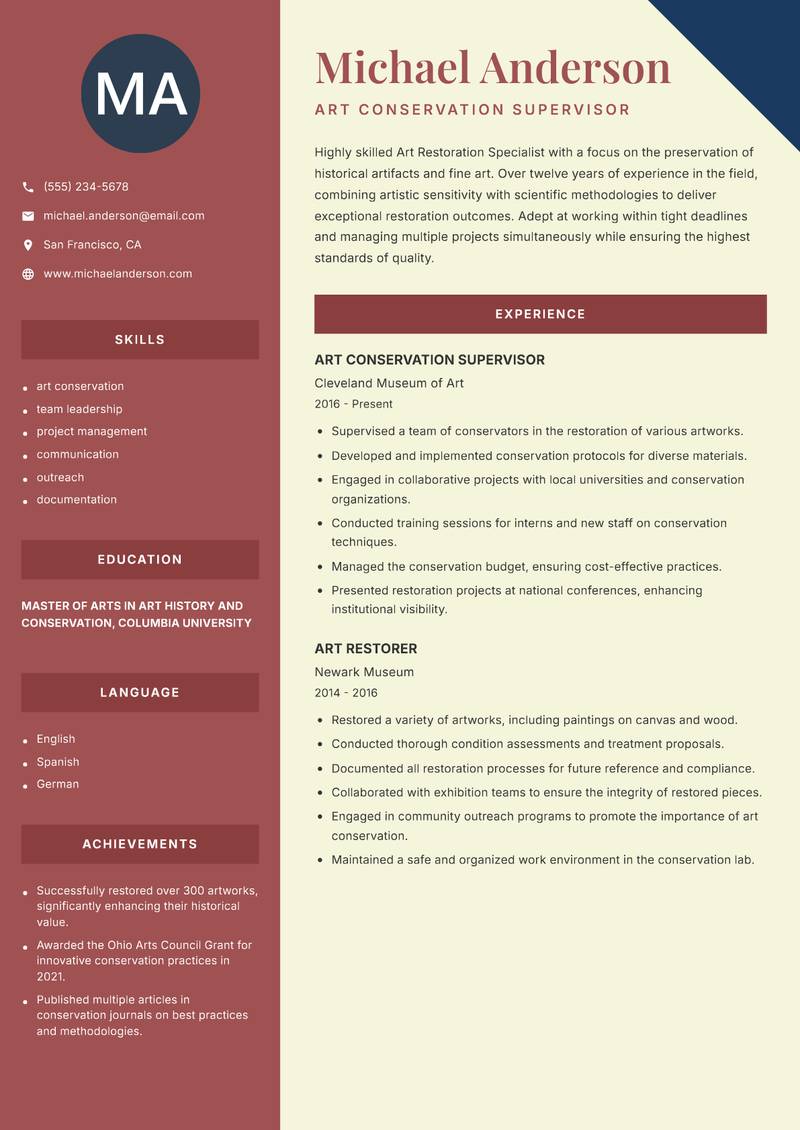
Art Conservation Supervisor Resume

Highly skilled Art Restoration Specialist with a focus on the preservation of historical artifacts and fine art. Over twelve years of experience in the field, combining artistic sensitivity with scientific methodologies to deliver exceptional restoration outcomes. Adept at working within tight deadlines and managing multiple projects simultaneously while ensuring the highest standards of quality. Strong communicator, capable of articulating complex restoration processes to diverse audiences, including stakeholders and the general public. Committed to advancing the field of art conservation through innovative techniques and continuous professional development. Recognized for contributions to the field and dedication to preserving cultural heritage for future generations.

art conservation team leadership project management communication outreach documentation
Art Restoration Specialist Resume Preview Example
View PDF
  1. Supervised a team of conservators in the restoration of various artworks.
  2. Developed and implemented conservation protocols for diverse materials.
  3. Engaged in collaborative projects with local universities and conservation organizations.
  4. Conducted training sessions for interns and new staff on conservation techniques.
  5. Managed the conservation budget, ensuring cost-effective practices.
  6. Presented restoration projects at national conferences, enhancing institutional visibility.
  1. Restored a variety of artworks, including paintings on canvas and wood.
  2. Conducted thorough condition assessments and treatment proposals.
  3. Documented all restoration processes for future reference and compliance.
  4. Collaborated with exhibition teams to ensure the integrity of restored pieces.
  5. Engaged in community outreach programs to promote the importance of art conservation.
  6. Maintained a safe and organized work environment in the conservation lab.

Achievements

  • Successfully restored over 300 artworks, significantly enhancing their historical value.
  • Awarded the Ohio Arts Council Grant for innovative conservation practices in 2021.
  • Published multiple articles in conservation journals on best practices and methodologies.
⏱️
Experience
2-5 Years
📅
Level
Mid Level
🎓
Education
Master of Arts in Art History ...

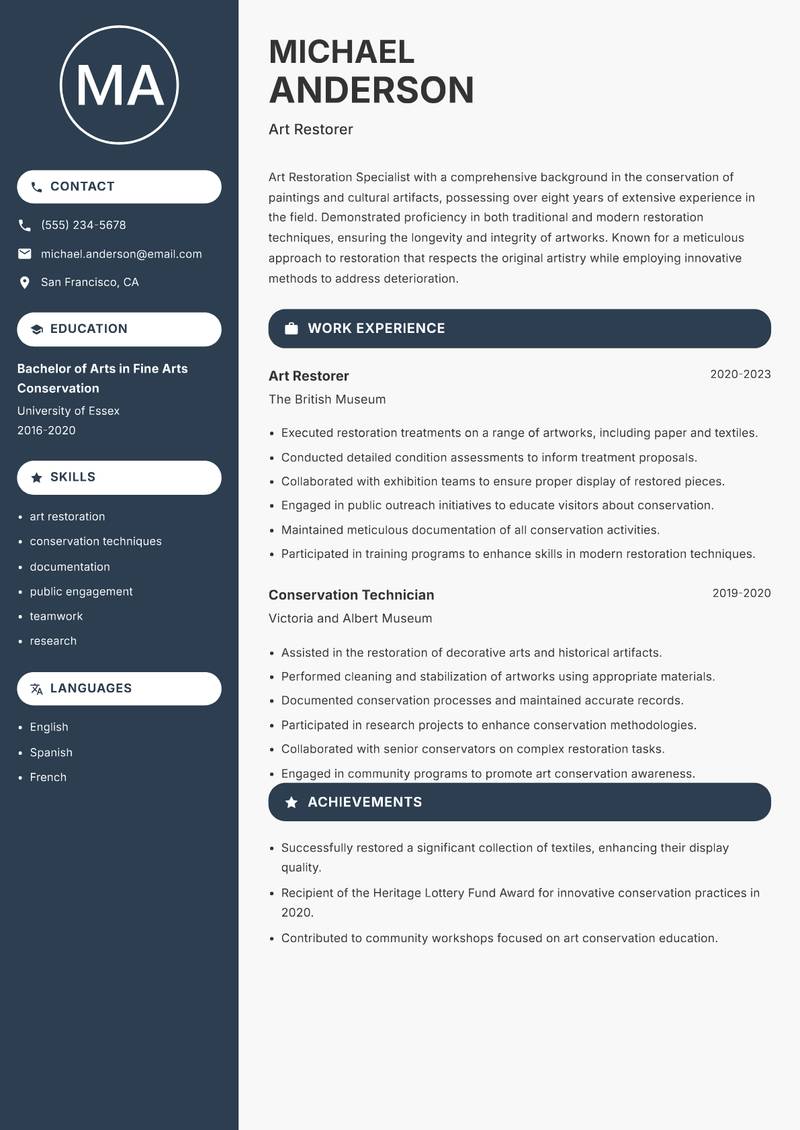
Art Restorer Resume

Art Restoration Specialist with a comprehensive background in the conservation of paintings and cultural artifacts, possessing over eight years of extensive experience in the field. Demonstrated proficiency in both traditional and modern restoration techniques, ensuring the longevity and integrity of artworks. Known for a meticulous approach to restoration that respects the original artistry while employing innovative methods to address deterioration. Skilled in communicating complex conservation concepts to diverse audiences, fostering greater appreciation for the art conservation process. Dedicated to continuous professional growth and active participation in the conservation community, consistently seeking out new training and development opportunities.

art restoration conservation techniques documentation public engagement teamwork research
Art Restoration Specialist Resume Preview Example
View PDF
  1. Executed restoration treatments on a range of artworks, including paper and textiles.
  2. Conducted detailed condition assessments to inform treatment proposals.
  3. Collaborated with exhibition teams to ensure proper display of restored pieces.
  4. Engaged in public outreach initiatives to educate visitors about conservation.
  5. Maintained meticulous documentation of all conservation activities.
  6. Participated in training programs to enhance skills in modern restoration techniques.
  1. Assisted in the restoration of decorative arts and historical artifacts.
  2. Performed cleaning and stabilization of artworks using appropriate materials.
  3. Documented conservation processes and maintained accurate records.
  4. Participated in research projects to enhance conservation methodologies.
  5. Collaborated with senior conservators on complex restoration tasks.
  6. Engaged in community programs to promote art conservation awareness.

Achievements

  • Successfully restored a significant collection of textiles, enhancing their display quality.
  • Recipient of the Heritage Lottery Fund Award for innovative conservation practices in 2020.
  • Contributed to community workshops focused on art conservation education.
⏱️
Experience
2-5 Years
📅
Level
Mid Level
🎓
Education
Bachelor of Arts in Fine Arts ...

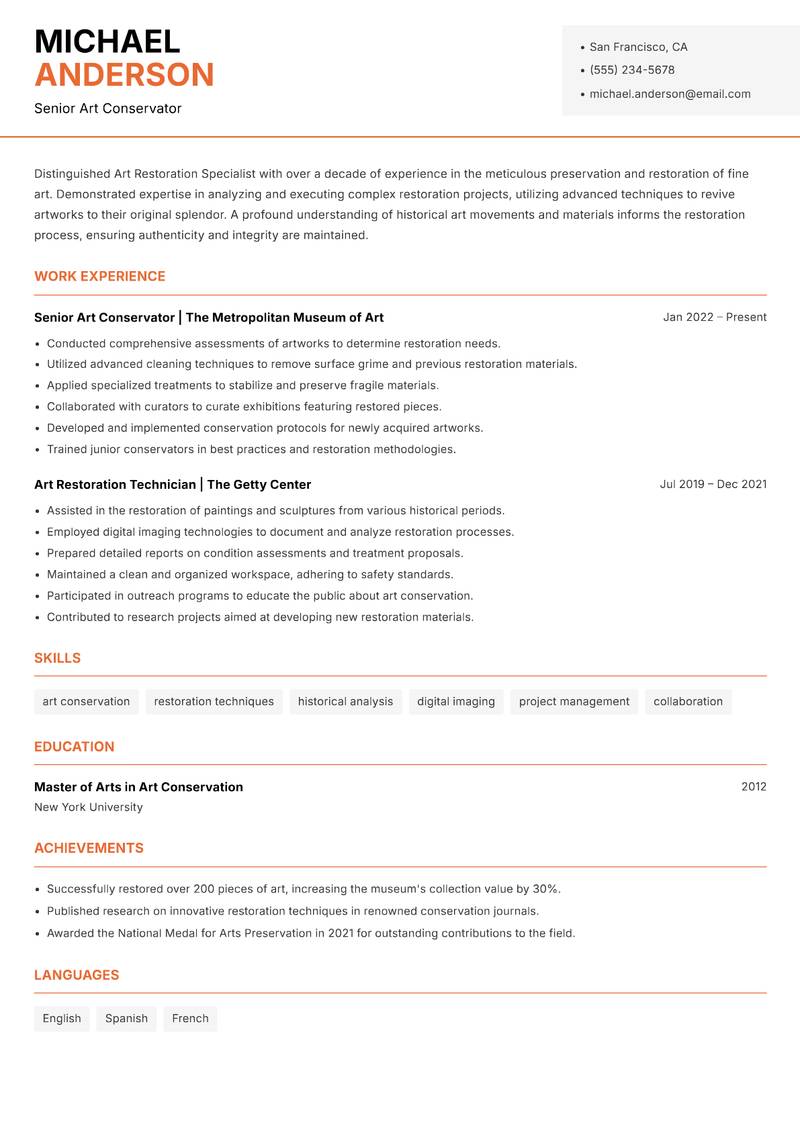
Senior Art Conservator Resume

Distinguished Art Restoration Specialist with over a decade of experience in the meticulous preservation and restoration of fine art. Demonstrated expertise in analyzing and executing complex restoration projects, utilizing advanced techniques to revive artworks to their original splendor. A profound understanding of historical art movements and materials informs the restoration process, ensuring authenticity and integrity are maintained. Proven ability to collaborate with museums, galleries, and private collectors, advising on conservation strategies and best practices. Committed to continuous learning and application of cutting-edge technologies in art restoration, including digital imaging and analytical methods. Recognized for exceptional attention to detail and a passion for preserving cultural heritage, contributing to the academic and practical fields of art conservation.

art conservation restoration techniques historical analysis digital imaging project management collaboration
Art Restoration Specialist Resume Preview Example
View PDF
  1. Conducted comprehensive assessments of artworks to determine restoration needs.
  2. Utilized advanced cleaning techniques to remove surface grime and previous restoration materials.
  3. Applied specialized treatments to stabilize and preserve fragile materials.
  4. Collaborated with curators to curate exhibitions featuring restored pieces.
  5. Developed and implemented conservation protocols for newly acquired artworks.
  6. Trained junior conservators in best practices and restoration methodologies.
  1. Assisted in the restoration of paintings and sculptures from various historical periods.
  2. Employed digital imaging technologies to document and analyze restoration processes.
  3. Prepared detailed reports on condition assessments and treatment proposals.
  4. Maintained a clean and organized workspace, adhering to safety standards.
  5. Participated in outreach programs to educate the public about art conservation.
  6. Contributed to research projects aimed at developing new restoration materials.

Achievements

  • Successfully restored over 200 pieces of art, increasing the museum's collection value by 30%.
  • Published research on innovative restoration techniques in renowned conservation journals.
  • Awarded the National Medal for Arts Preservation in 2021 for outstanding contributions to the field.
⏱️
Experience
2-5 Years
📅
Level
Mid Level
🎓
Education
Master of Arts in Art Conserva...

Key Skills for Art Restoration Specialist Positions

Resume Tips for Art Restoration Specialist Applications

Strong Action Verbs for Art Restoration Specialist Resumes

Exhibited · Created · Curated · Installed · Published · Secured · Collaborated · Educated · Commissioned · Produced · Achieved · Administered · Analyzed · Architected

Common Mistakes to Avoid

Experience Levels

How to Write a Art Restoration Specialist Resume

Browse Art Restoration Specialist resume examples built around studio practice & artistic technique, tailored for Fine Arts roles.

A strong Art Restoration Specialist resume leads with a focused professional summary that names the exact role and your standout achievement. In the experience section, open every bullet with a strong action verb and quantify the result with numbers wherever possible. Highlight your most relevant competencies — especially Art conservation, Studio Practice & Artistic Technique, and Exhibition Curation & Installation — in a dedicated Skills section positioned early so ATS systems and hiring managers both find it immediately.

For format, most Art Restoration Specialist roles suit a reverse-chronological layout: most recent position first, working backwards. Keep to one page for under five years of experience, or two pages for senior candidates with a rich project or leadership history. Use clean, ATS-safe fonts (10–12pt), standard section headings (Summary, Experience, Education, Skills), and avoid tables, text boxes, or multi-column layouts that applicant tracking systems cannot parse reliably.
Frequently Asked Questions

What makes a strong Art Restoration Specialist resume stand out to employers?

A standout Art Restoration Specialist resume combines role-specific skills with quantified achievements. Name the exact job title in your professional summary, mirror keywords from each job posting, and open every bullet point with a strong action verb followed by a measurable result. Certifications, tools, and domain experience specific to art restoration specialist roles should appear prominently near the top.

What skills are most important to include on a Fine Arts resume?

Recruiters hiring in Fine Arts consistently look for Studio Practice & Artistic Technique, Exhibition Curation & Installation, Artist Statement & Critical Writing, Grant Writing & Arts Funding. List these in a dedicated Skills section near the top so both ATS systems and human reviewers spot them fast. Mirror the exact phrasing from each job posting wherever possible — many applicant tracking systems match literal strings rather than synonyms.

What is the best resume format for Fine Arts professionals?

A reverse-chronological format is the standard choice for most Fine Arts candidates — employers expect to see your most recent role first, working backwards. If you are transitioning into Fine Arts from a related field, a hybrid format (brief skills summary at the top followed by chronological experience) can bridge the gap effectively. Keep the document to one page for under five years of experience, or two pages for senior specialists.

How do I make my Fine Arts resume pass applicant tracking systems (ATS)?

Use standard section headings — Summary, Experience, Education, Skills — rather than creative labels that ATS parsers do not recognise. Embed domain keywords such as "Studio Practice & Artistic Technique" and "Exhibition Curation & Installation" naturally inside your experience bullets rather than cramming them into a standalone keyword list. Avoid tables, multi-column layouts, text boxes, headers, footers, and images — these confuse most modern parsers and can cause your resume to be misread or rejected before a human sees it.

What mistakes do Fine Arts professionals most commonly make on their resume?

The most frequent issue is failing to maintain a professional online portfolio — gallery professionals and curators expect to see work online. Beyond that, generic objective statements, unquantified achievements, and inconsistent date formatting appear across almost every Fine Arts application. Fix these by replacing every vague claim with a measurable outcome — specific numbers and named projects add credibility that adjectives cannot.

How long should a Fine Arts resume be?

One page is appropriate for candidates with under five years of relevant Fine Arts experience. Two pages are acceptable — and sometimes expected — for senior specialists, managers, or professionals with a strong portfolio of projects, publications, or credentials. Avoid padding to reach a page count: every line should directly support your application for the specific role you are targeting.

Should I include a professional summary at the top of my Fine Arts resume?

Yes — a two to three sentence summary is the first section most recruiters read. Open with your title and years of Fine Arts experience, then name your most relevant achievement or specialisation. One proven approach: Lead with exhibition history: solo and group shows, galleries, and years — this level of specificity signals genuine expertise before a recruiter reaches your experience section.

Scroll to view samples