Key Skills for Backend Web Developer Positions
- Database management systems like mysql
- HTML5, CSS3, JavaScript (ES6+)
- Front-End Frameworks (React, Vue.js, Angular)
- Back-End Development (Node.js, PHP, Python, Ruby)
- RESTful API & GraphQL Development
- Web Performance Optimization (Core Web Vitals)
- Responsive & Mobile-First Design
- Web Accessibility (WCAG 2.1)
- CMS & E-Commerce Platforms (WordPress, Shopify)
- Database Integration (MySQL, PostgreSQL, MongoDB)
Resume Tips for Backend Web Developer Applications
- List every technical skill with context — language or framework version, years of active use, and a project where you applied it — because backend web developer screeners typically filter on exact tool matches before a human reads your resume
- Include a portfolio URL — live websites are your primary credential in web development.
- Quantify performance improvements: page load time, Core Web Vitals scores, Lighthouse scores.
- Demonstrate accessibility knowledge — WCAG compliance is increasingly a legal requirement.
- Highlight SEO awareness — developers who understand technical SEO are particularly valued by agencies.
- Show version control discipline — clean Git history and meaningful commit messages matter.
Strong Action Verbs for Backend Web Developer Resumes
Built · Launched · Optimized · Designed · Integrated · Refactored · Deployed · Crafted · Developed · Migrated · Achieved · Administered · Analyzed · Architected
Common Mistakes to Avoid
- Writing a generic objective statement instead of a targeted backend web developer professional summary
- Not linking to a portfolio — web developers without a portfolio are significantly disadvantaged.
- Listing outdated technologies (Internet Explorer support, jQuery-only) that signal a stale skill set.
- Neglecting performance and accessibility — they are now considered core competencies, not optional.
- Failing to show back-end or API knowledge — full-stack capability is increasingly expected.
Experience Levels
- Junior Web Developer (0-2 years)
- Web Developer (2-4 years)
- Senior Web Developer (4-8 years)
- Lead Developer / Web Architect (8-12 years)
- Head of Engineering / CTO (12+ years)
How to Write a Backend Web Developer Resume
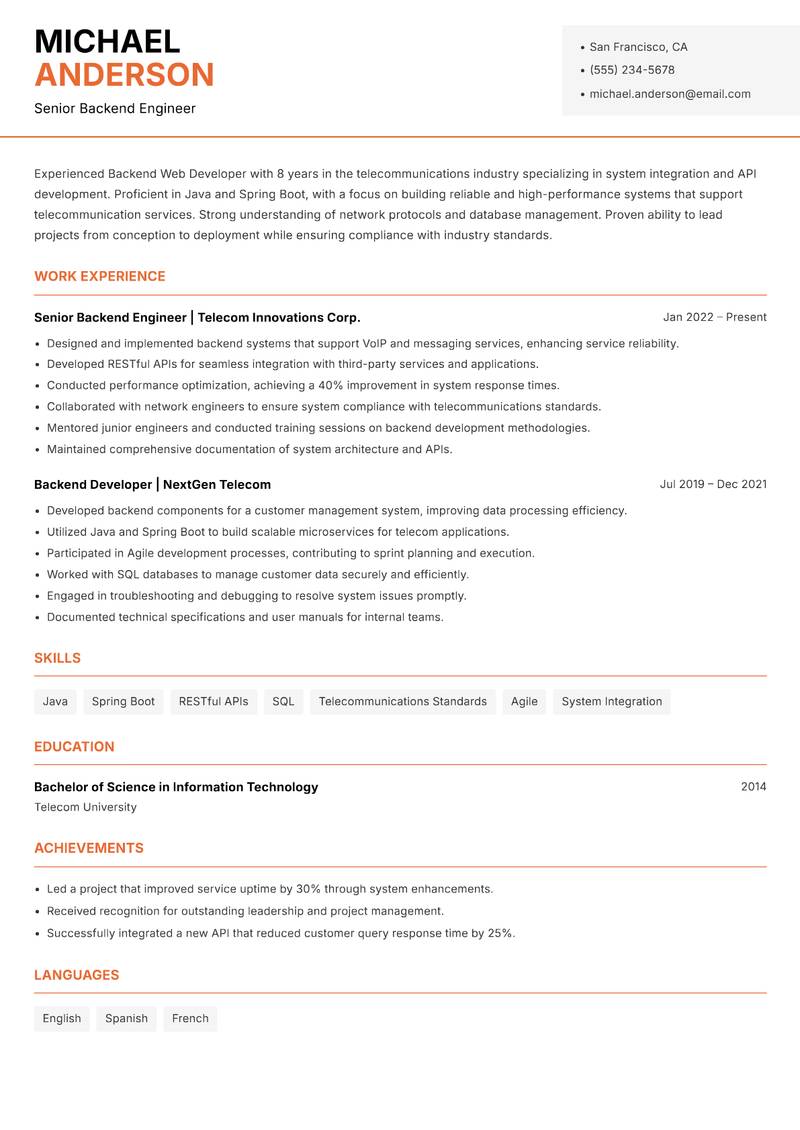
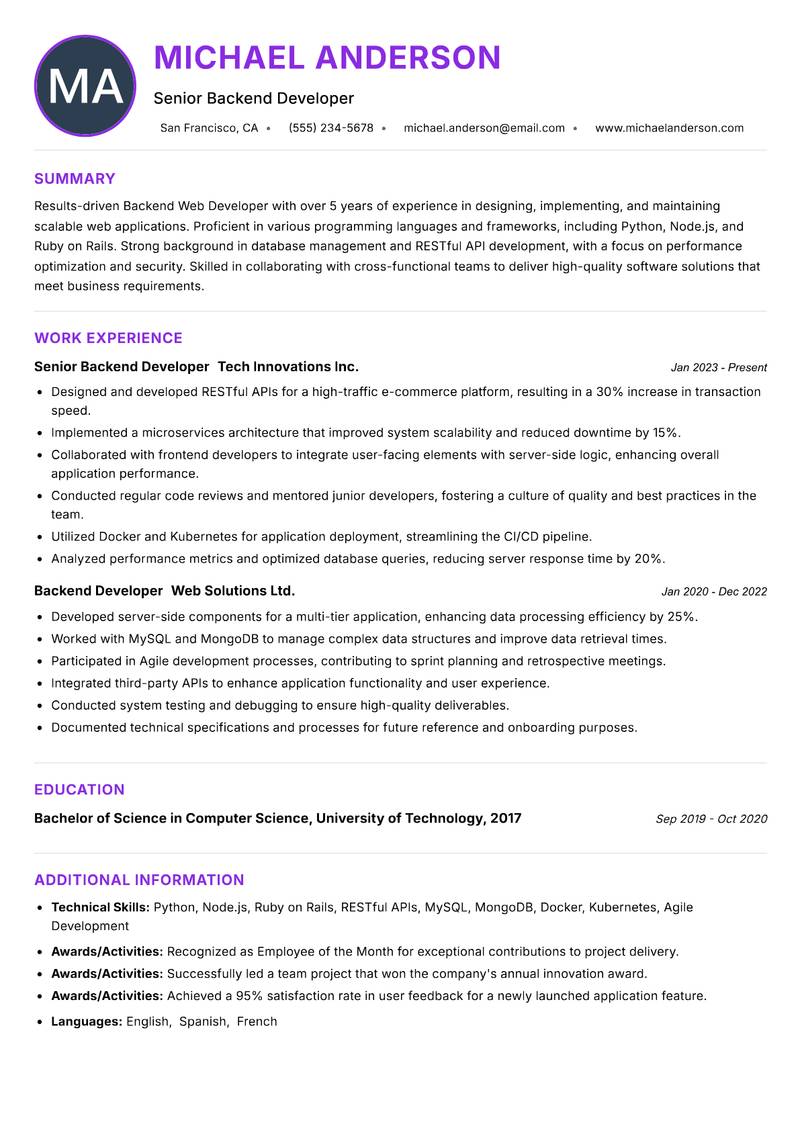
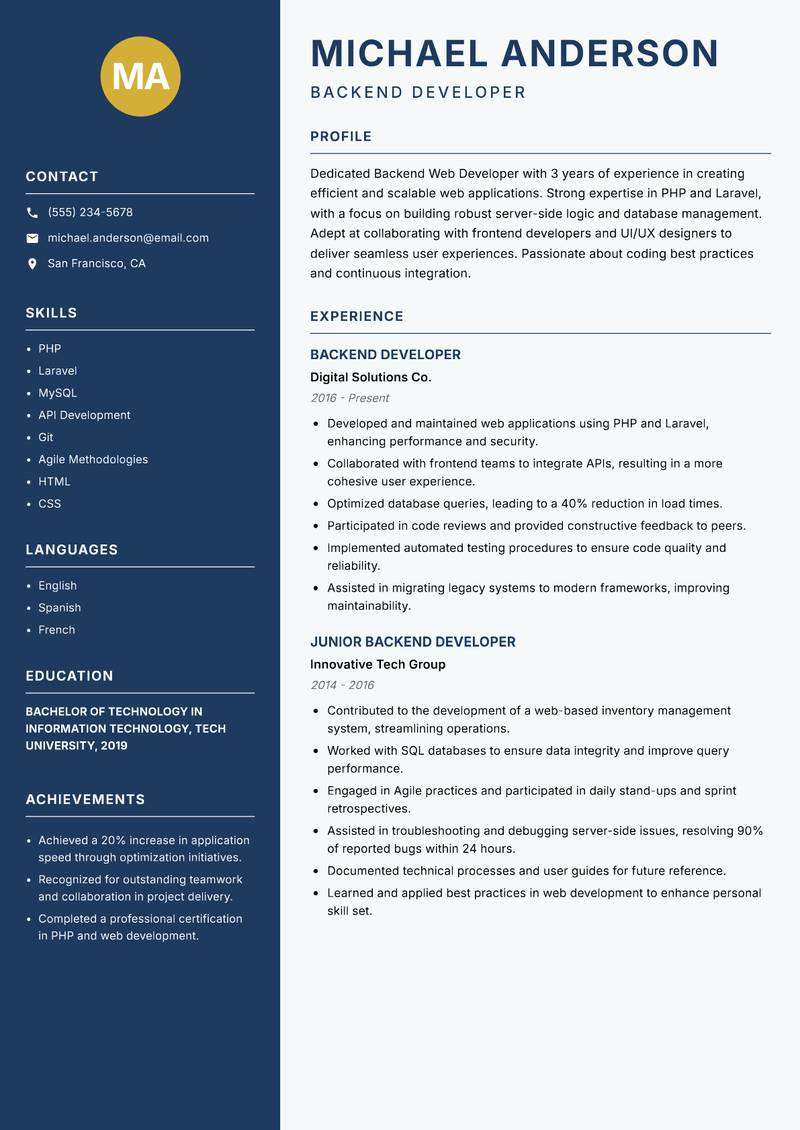
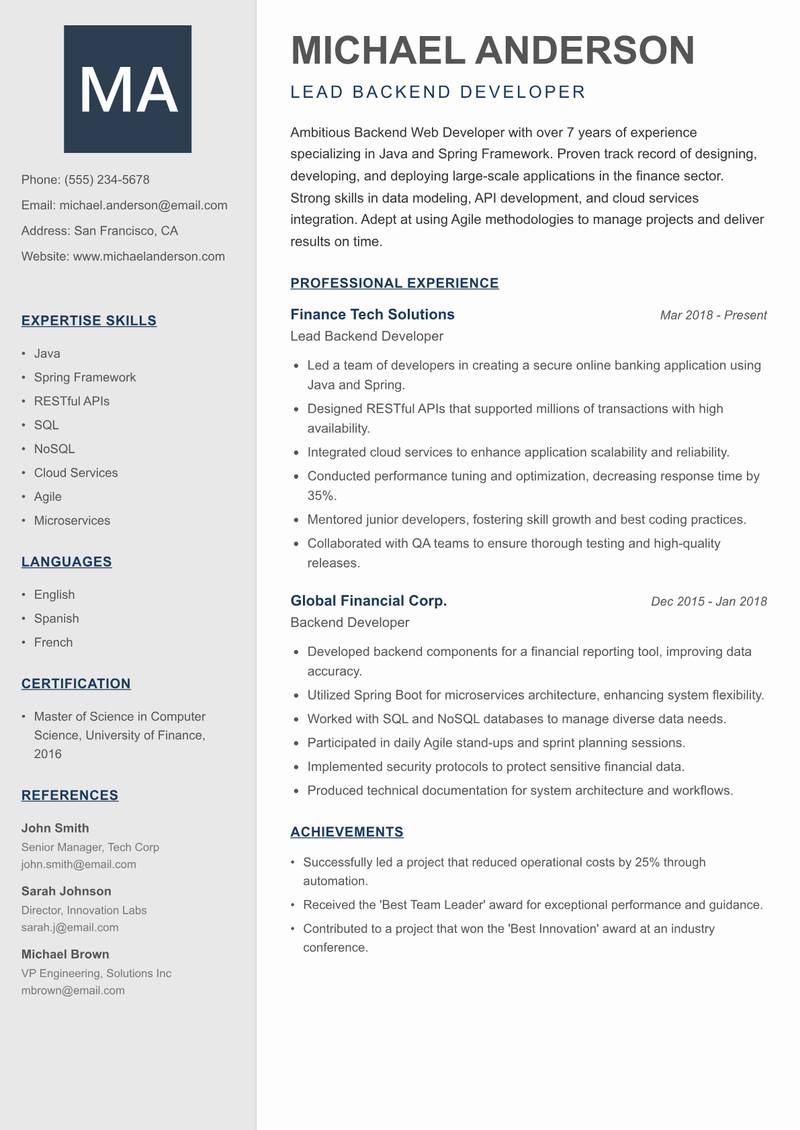
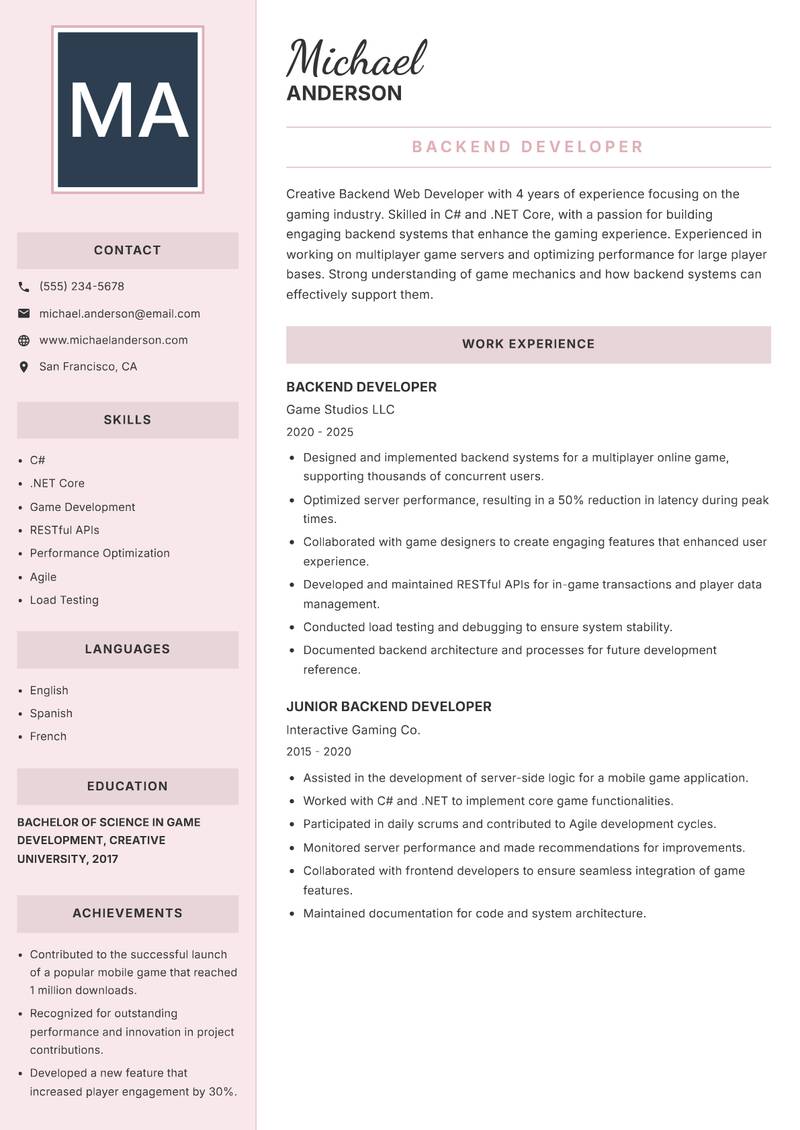
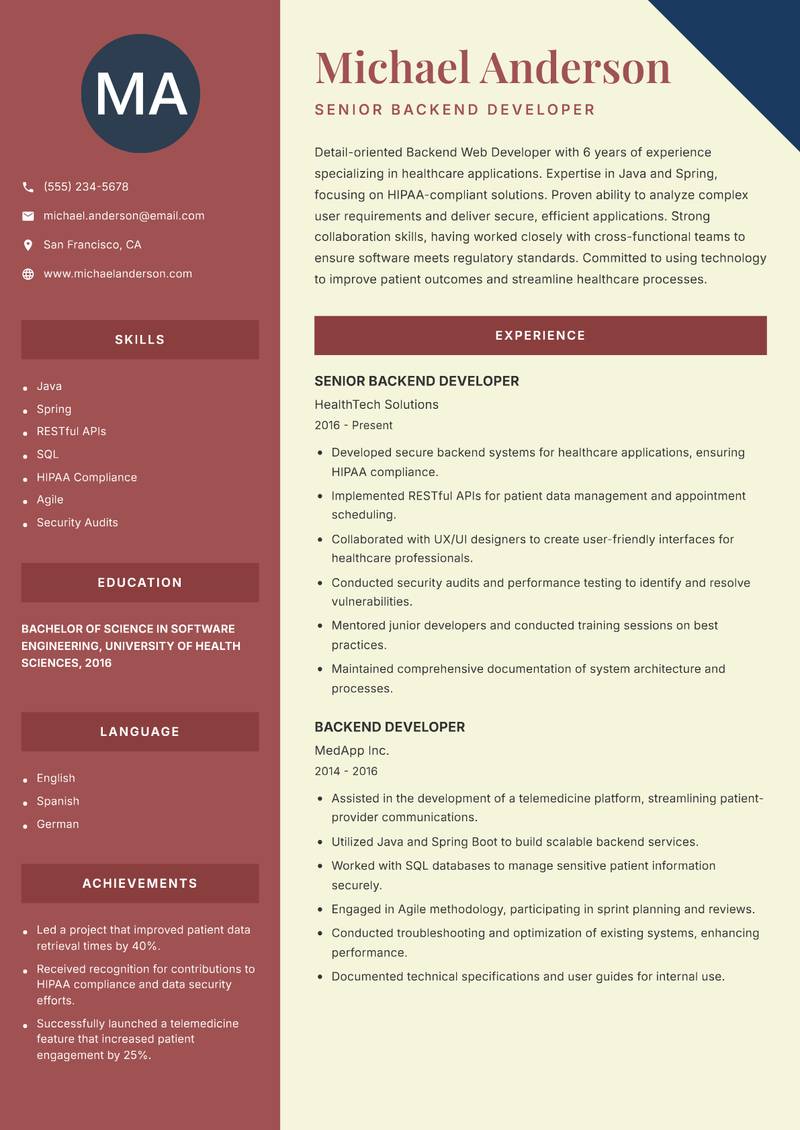
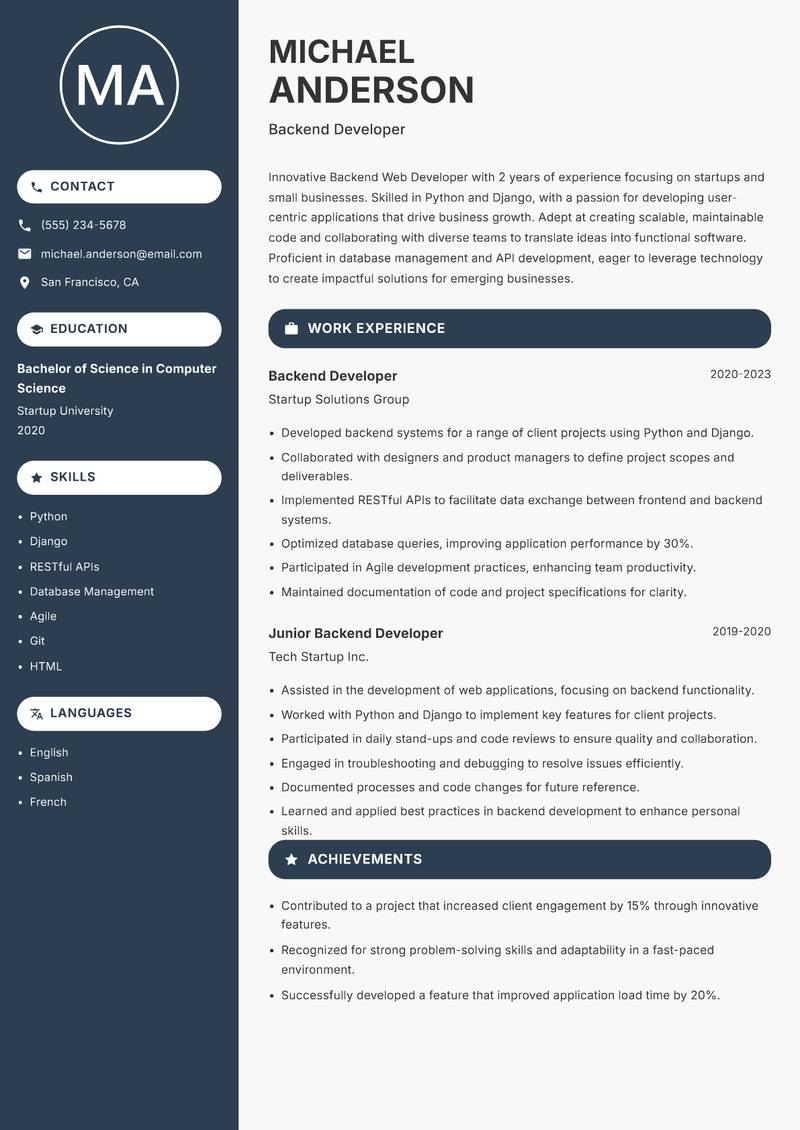
Browse Backend Web Developer resume examples built around database management systems like mysql, tailored for Web Technologies roles.
A strong Backend Web Developer resume leads with a focused professional summary that names the exact role and your standout achievement. In the experience section, open every bullet with a strong action verb and quantify the result with numbers wherever possible. Highlight your most relevant competencies — especially Database management systems like mysql, HTML5, CSS3, JavaScript (ES6+), and Front-End Frameworks (React, Vue.js, Angular) — in a dedicated Skills section positioned early so ATS systems and hiring managers both find it immediately.
For format, most Backend Web Developer roles suit a reverse-chronological layout: most recent position first, working backwards. Keep to one page for under five years of experience, or two pages for senior candidates with a rich project or leadership history. Use clean, ATS-safe fonts (10–12pt), standard section headings (Summary, Experience, Education, Skills), and avoid tables, text boxes, or multi-column layouts that applicant tracking systems cannot parse reliably.