Biomechanics Analyst Resume

These Biomechanics Analyst resume samples are designed to help you write a resume that gets noticed by hiring managers and passes applicant tracking systems (ATS) in Sports Science. Each example shows real formatting, section structure, and language you can adapt to your own background. When writing your own Biomechanics Analyst resume, focus on highlighting analyzing biomechanical data, interpreting results t and exercise physiology\. Recruiters scan for these qualifications first, so they should appear early in your summary and experience sections. Use strong action verbs such as "tested\", "monitored\", "analysed\", "designed\" to describe your achievements, and quantify your impact wherever possible — percentages, dollar amounts, or time saved make your resume more convincing. A common mistake to avoid: writing a generic objective statement instead of a targeted biomechanics analyst professional summary. Tailor your resume to each Biomechanics Analyst position you apply for rather than using one generic version.

Biomechanics Analyst Resume Template
View PDF
0.0 (0 ratings)

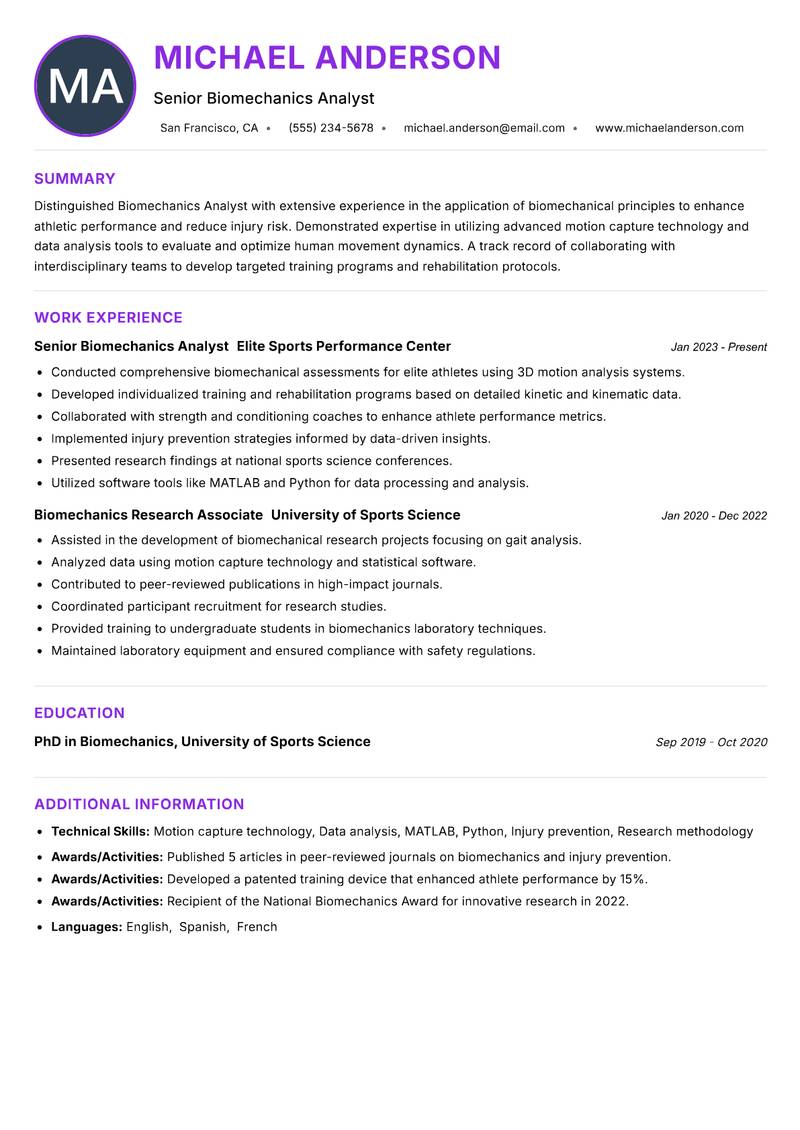
Senior Biomechanics Analyst Resume

Distinguished Biomechanics Analyst with extensive experience in the application of biomechanical principles to enhance athletic performance and reduce injury risk. Demonstrated expertise in utilizing advanced motion capture technology and data analysis tools to evaluate and optimize human movement dynamics. A track record of collaborating with interdisciplinary teams to develop targeted training programs and rehabilitation protocols. Proficient in leveraging biomechanical data to inform sports science research and contribute to scholarly publications. Recognized for innovative problem-solving skills and the ability to translate complex data into actionable insights. A commitment to advancing the field of biomechanics through ongoing professional development and research initiatives.

Motion capture technology Data analysis MATLAB Python Injury prevention Research methodology
Biomechanics Analyst Resume Preview Example
View PDF
  1. Conducted comprehensive biomechanical assessments for elite athletes using 3D motion analysis systems.
  2. Developed individualized training and rehabilitation programs based on detailed kinetic and kinematic data.
  3. Collaborated with strength and conditioning coaches to enhance athlete performance metrics.
  4. Implemented injury prevention strategies informed by data-driven insights.
  5. Presented research findings at national sports science conferences.
  6. Utilized software tools like MATLAB and Python for data processing and analysis.
  1. Assisted in the development of biomechanical research projects focusing on gait analysis.
  2. Analyzed data using motion capture technology and statistical software.
  3. Contributed to peer-reviewed publications in high-impact journals.
  4. Coordinated participant recruitment for research studies.
  5. Provided training to undergraduate students in biomechanics laboratory techniques.
  6. Maintained laboratory equipment and ensured compliance with safety regulations.

Achievements

  • Published 5 articles in peer-reviewed journals on biomechanics and injury prevention.
  • Developed a patented training device that enhanced athlete performance by 15%.
  • Recipient of the National Biomechanics Award for innovative research in 2022.
⏱️
Experience
2-5 Years
📅
Level
Mid Level
🎓
Education
PhD in Biomechanics, Universit...

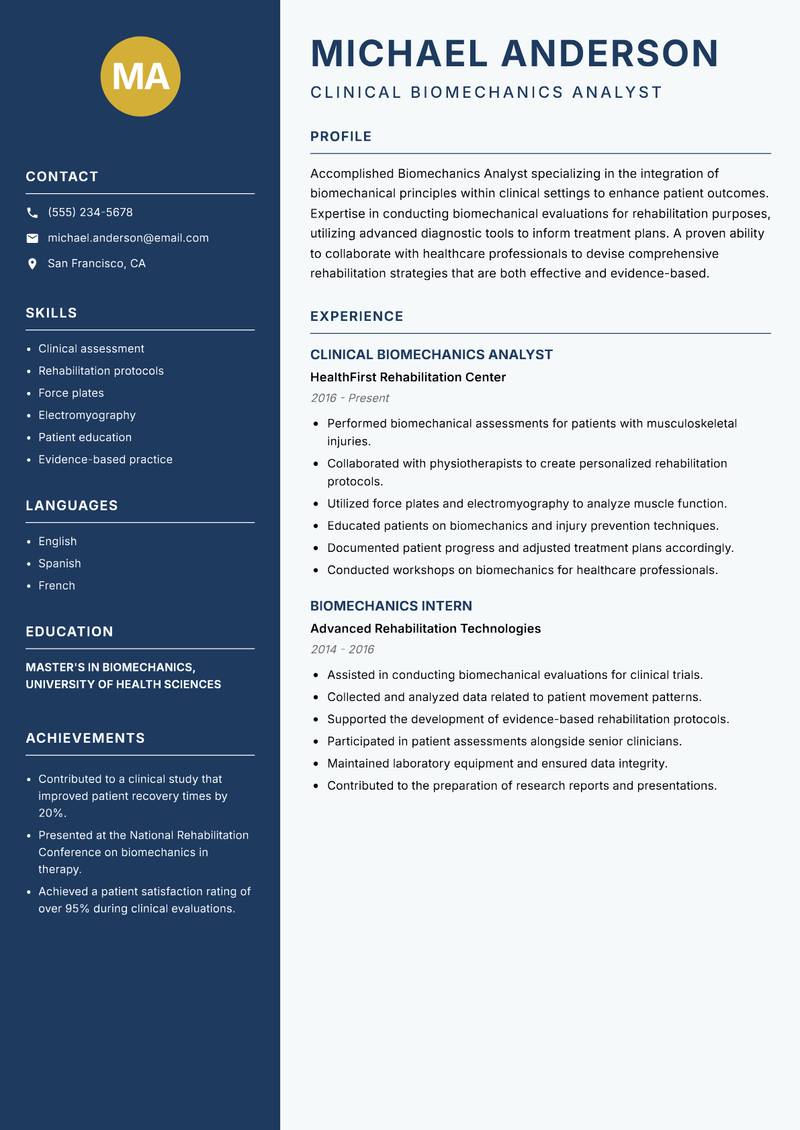
Clinical Biomechanics Analyst Resume

Accomplished Biomechanics Analyst specializing in the integration of biomechanical principles within clinical settings to enhance patient outcomes. Expertise in conducting biomechanical evaluations for rehabilitation purposes, utilizing advanced diagnostic tools to inform treatment plans. A proven ability to collaborate with healthcare professionals to devise comprehensive rehabilitation strategies that are both effective and evidence-based. Recognized for exceptional analytical skills and a detail-oriented approach to problem-solving. Committed to continuous education in biomechanics and rehabilitation sciences to remain at the forefront of the field. Demonstrated success in patient education and support in the recovery process.

Clinical assessment Rehabilitation protocols Force plates Electromyography Patient education Evidence-based practice
Biomechanics Analyst Resume Preview Example
View PDF
  1. Performed biomechanical assessments for patients with musculoskeletal injuries.
  2. Collaborated with physiotherapists to create personalized rehabilitation protocols.
  3. Utilized force plates and electromyography to analyze muscle function.
  4. Educated patients on biomechanics and injury prevention techniques.
  5. Documented patient progress and adjusted treatment plans accordingly.
  6. Conducted workshops on biomechanics for healthcare professionals.
  1. Assisted in conducting biomechanical evaluations for clinical trials.
  2. Collected and analyzed data related to patient movement patterns.
  3. Supported the development of evidence-based rehabilitation protocols.
  4. Participated in patient assessments alongside senior clinicians.
  5. Maintained laboratory equipment and ensured data integrity.
  6. Contributed to the preparation of research reports and presentations.

Achievements

  • Contributed to a clinical study that improved patient recovery times by 20%.
  • Presented at the National Rehabilitation Conference on biomechanics in therapy.
  • Achieved a patient satisfaction rating of over 95% during clinical evaluations.
⏱️
Experience
2-5 Years
📅
Level
Mid Level
🎓
Education
Master's in Biomechanics, Univ...

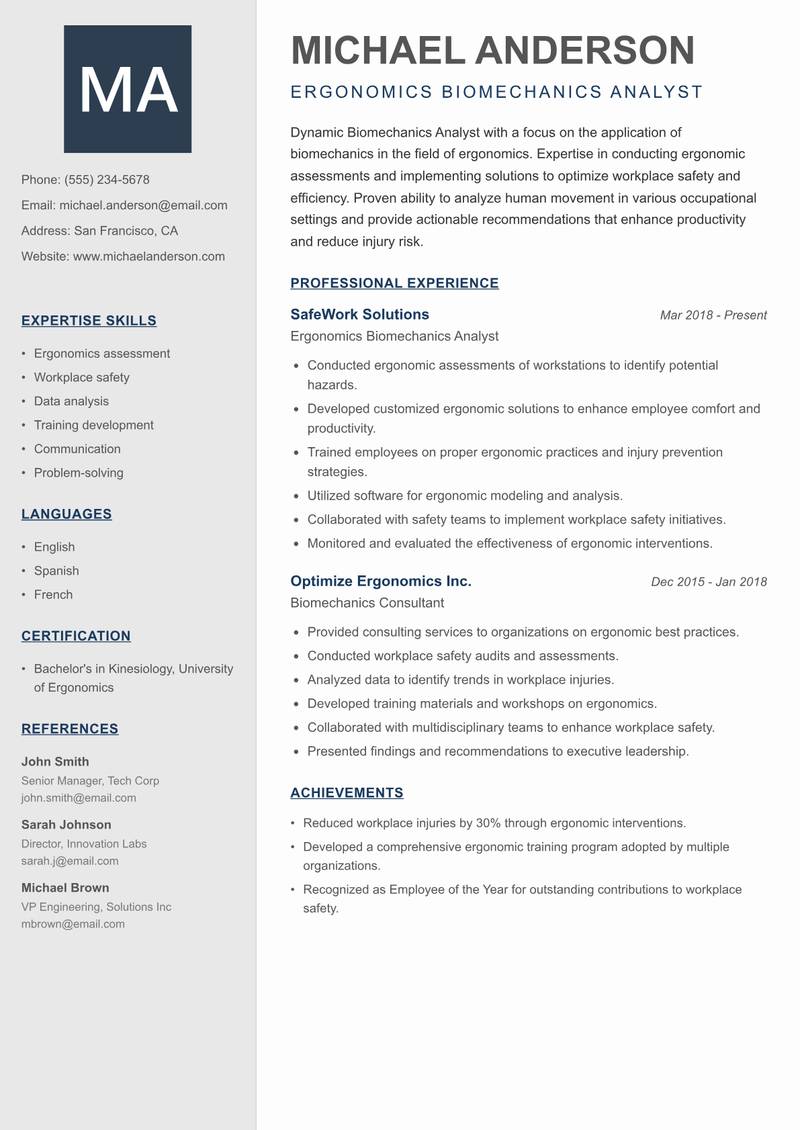
Ergonomics Biomechanics Analyst Resume

Dynamic Biomechanics Analyst with a focus on the application of biomechanics in the field of ergonomics. Expertise in conducting ergonomic assessments and implementing solutions to optimize workplace safety and efficiency. Proven ability to analyze human movement in various occupational settings and provide actionable recommendations that enhance productivity and reduce injury risk. Recognized for strong communication skills and the ability to deliver training programs that educate employees on ergonomic best practices. A commitment to fostering a culture of safety and wellness within organizations. Knowledgeable in the latest ergonomic tools and technologies.

Ergonomics assessment Workplace safety Data analysis Training development Communication Problem-solving
Biomechanics Analyst Resume Preview Example
View PDF
  1. Conducted ergonomic assessments of workstations to identify potential hazards.
  2. Developed customized ergonomic solutions to enhance employee comfort and productivity.
  3. Trained employees on proper ergonomic practices and injury prevention strategies.
  4. Utilized software for ergonomic modeling and analysis.
  5. Collaborated with safety teams to implement workplace safety initiatives.
  6. Monitored and evaluated the effectiveness of ergonomic interventions.
  1. Provided consulting services to organizations on ergonomic best practices.
  2. Conducted workplace safety audits and assessments.
  3. Analyzed data to identify trends in workplace injuries.
  4. Developed training materials and workshops on ergonomics.
  5. Collaborated with multidisciplinary teams to enhance workplace safety.
  6. Presented findings and recommendations to executive leadership.

Achievements

  • Reduced workplace injuries by 30% through ergonomic interventions.
  • Developed a comprehensive ergonomic training program adopted by multiple organizations.
  • Recognized as Employee of the Year for outstanding contributions to workplace safety.
⏱️
Experience
2-5 Years
📅
Level
Mid Level
🎓
Education
Bachelor's in Kinesiology, Uni...

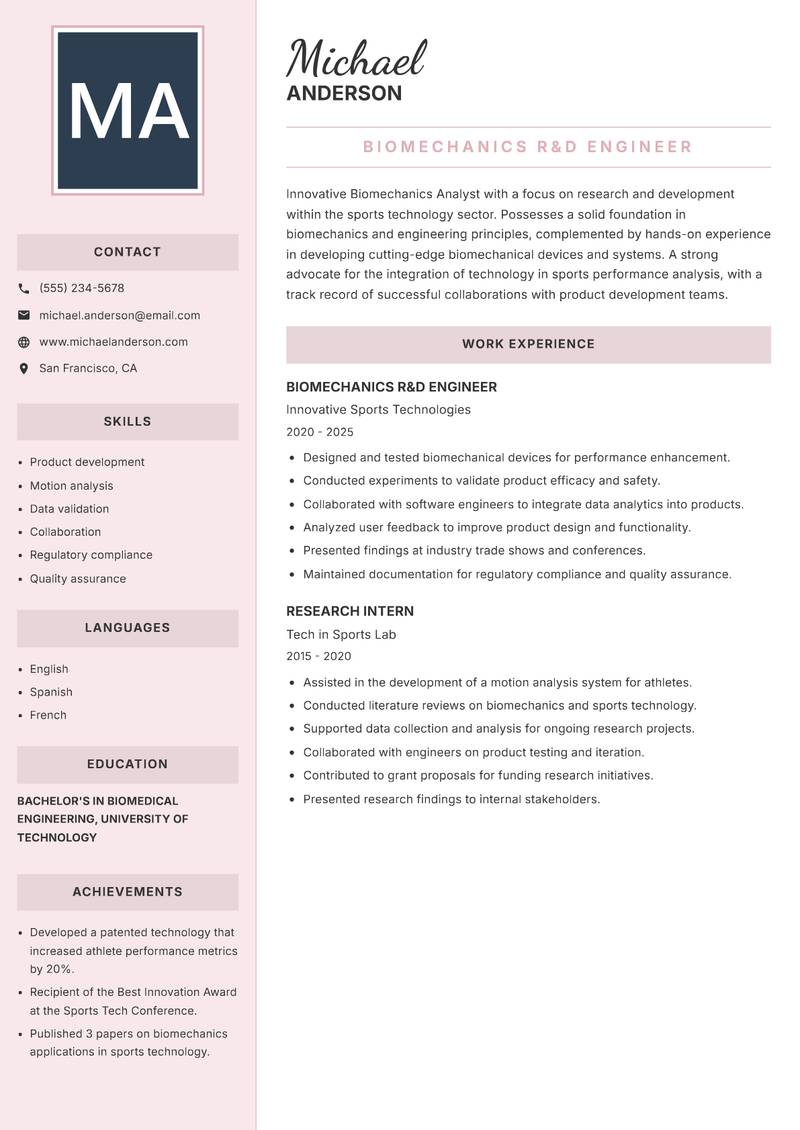
Biomechanics R&D Engineer Resume

Innovative Biomechanics Analyst with a focus on research and development within the sports technology sector. Possesses a solid foundation in biomechanics and engineering principles, complemented by hands-on experience in developing cutting-edge biomechanical devices and systems. A strong advocate for the integration of technology in sports performance analysis, with a track record of successful collaborations with product development teams. Demonstrated ability to conduct rigorous testing and validation of biomechanical products, ensuring compliance with industry standards. Recognized for contributions to technology-driven solutions that enhance athlete performance and safety. Committed to advancing the field through continuous learning and adaptation to technological advancements.

Product development Motion analysis Data validation Collaboration Regulatory compliance Quality assurance
Biomechanics Analyst Resume Preview Example
View PDF
  1. Designed and tested biomechanical devices for performance enhancement.
  2. Conducted experiments to validate product efficacy and safety.
  3. Collaborated with software engineers to integrate data analytics into products.
  4. Analyzed user feedback to improve product design and functionality.
  5. Presented findings at industry trade shows and conferences.
  6. Maintained documentation for regulatory compliance and quality assurance.
  1. Assisted in the development of a motion analysis system for athletes.
  2. Conducted literature reviews on biomechanics and sports technology.
  3. Supported data collection and analysis for ongoing research projects.
  4. Collaborated with engineers on product testing and iteration.
  5. Contributed to grant proposals for funding research initiatives.
  6. Presented research findings to internal stakeholders.

Achievements

  • Developed a patented technology that increased athlete performance metrics by 20%.
  • Recipient of the Best Innovation Award at the Sports Tech Conference.
  • Published 3 papers on biomechanics applications in sports technology.
⏱️
Experience
2-5 Years
📅
Level
Mid Level
🎓
Education
Bachelor's in Biomedical Engin...

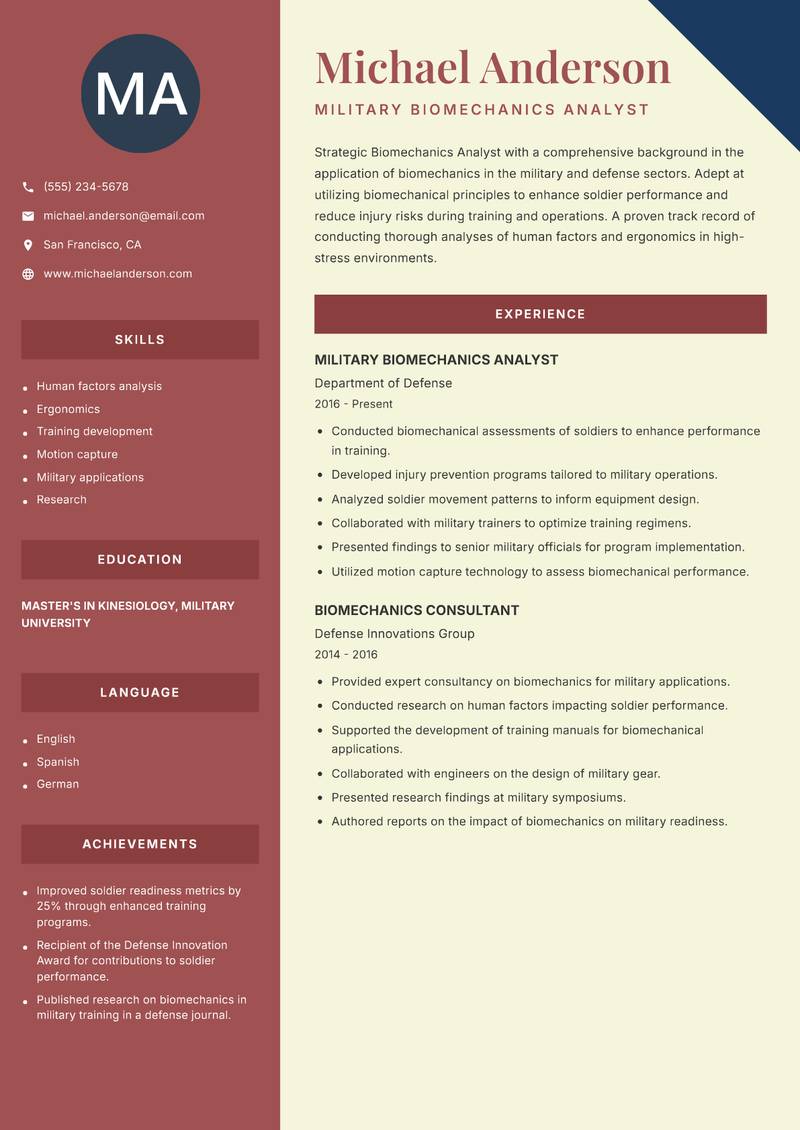
Military Biomechanics Analyst Resume

Strategic Biomechanics Analyst with a comprehensive background in the application of biomechanics in the military and defense sectors. Adept at utilizing biomechanical principles to enhance soldier performance and reduce injury risks during training and operations. A proven track record of conducting thorough analyses of human factors and ergonomics in high-stress environments. Skilled in collaborating with defense agencies to develop training programs that optimize physical readiness. Recognized for the ability to translate complex biomechanical data into actionable strategies for military applications. Committed to improving soldier health and performance through innovative biomechanical solutions.

Human factors analysis Ergonomics Training development Motion capture Military applications Research
Biomechanics Analyst Resume Preview Example
View PDF
  1. Conducted biomechanical assessments of soldiers to enhance performance in training.
  2. Developed injury prevention programs tailored to military operations.
  3. Analyzed soldier movement patterns to inform equipment design.
  4. Collaborated with military trainers to optimize training regimens.
  5. Presented findings to senior military officials for program implementation.
  6. Utilized motion capture technology to assess biomechanical performance.
  1. Provided expert consultancy on biomechanics for military applications.
  2. Conducted research on human factors impacting soldier performance.
  3. Supported the development of training manuals for biomechanical applications.
  4. Collaborated with engineers on the design of military gear.
  5. Presented research findings at military symposiums.
  6. Authored reports on the impact of biomechanics on military readiness.

Achievements

  • Improved soldier readiness metrics by 25% through enhanced training programs.
  • Recipient of the Defense Innovation Award for contributions to soldier performance.
  • Published research on biomechanics in military training in a defense journal.
⏱️
Experience
2-5 Years
📅
Level
Mid Level
🎓
Education
Master's in Kinesiology, Milit...

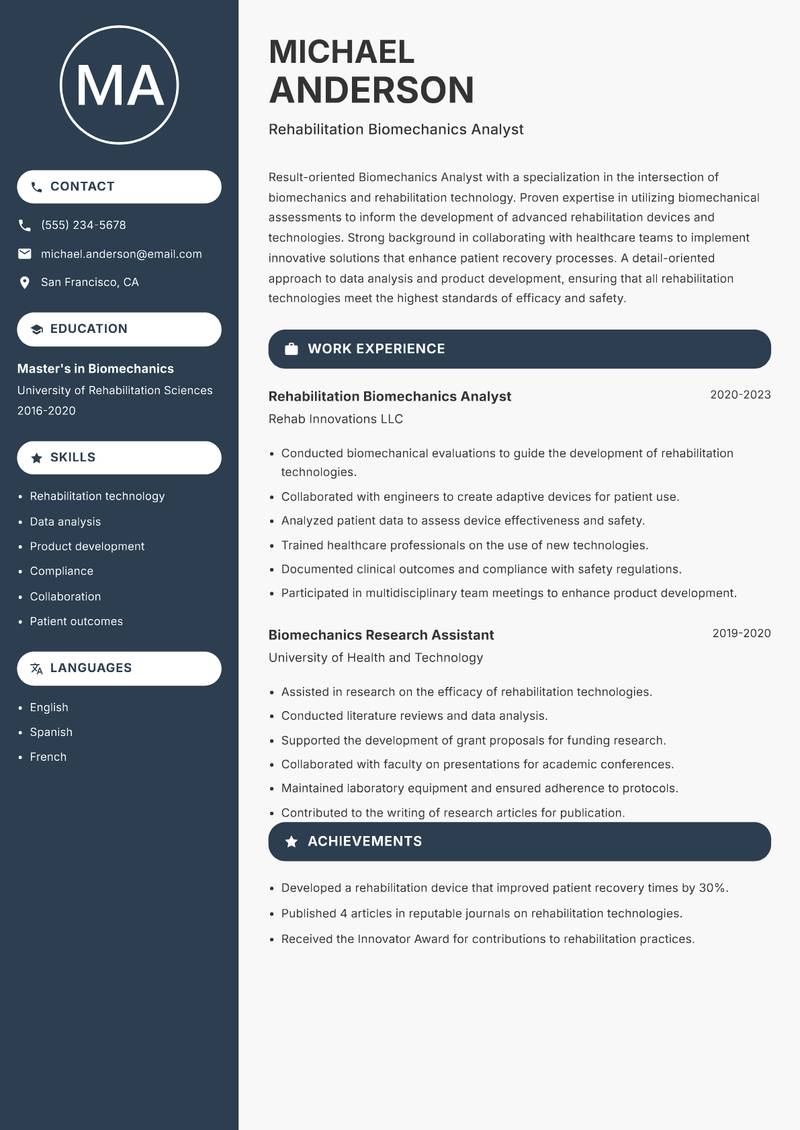
Rehabilitation Biomechanics Analyst Resume

Result-oriented Biomechanics Analyst with a specialization in the intersection of biomechanics and rehabilitation technology. Proven expertise in utilizing biomechanical assessments to inform the development of advanced rehabilitation devices and technologies. Strong background in collaborating with healthcare teams to implement innovative solutions that enhance patient recovery processes. A detail-oriented approach to data analysis and product development, ensuring that all rehabilitation technologies meet the highest standards of efficacy and safety. Recognized for a commitment to improving patient outcomes through research-driven practices and continuous professional development. Adept at navigating the complexities of healthcare regulations and compliance.

Rehabilitation technology Data analysis Product development Compliance Collaboration Patient outcomes
Biomechanics Analyst Resume Preview Example
View PDF
  1. Conducted biomechanical evaluations to guide the development of rehabilitation technologies.
  2. Collaborated with engineers to create adaptive devices for patient use.
  3. Analyzed patient data to assess device effectiveness and safety.
  4. Trained healthcare professionals on the use of new technologies.
  5. Documented clinical outcomes and compliance with safety regulations.
  6. Participated in multidisciplinary team meetings to enhance product development.
  1. Assisted in research on the efficacy of rehabilitation technologies.
  2. Conducted literature reviews and data analysis.
  3. Supported the development of grant proposals for funding research.
  4. Collaborated with faculty on presentations for academic conferences.
  5. Maintained laboratory equipment and ensured adherence to protocols.
  6. Contributed to the writing of research articles for publication.

Achievements

  • Developed a rehabilitation device that improved patient recovery times by 30%.
  • Published 4 articles in reputable journals on rehabilitation technologies.
  • Received the Innovator Award for contributions to rehabilitation practices.
⏱️
Experience
2-5 Years
📅
Level
Mid Level
🎓
Education
Master's in Biomechanics, Univ...

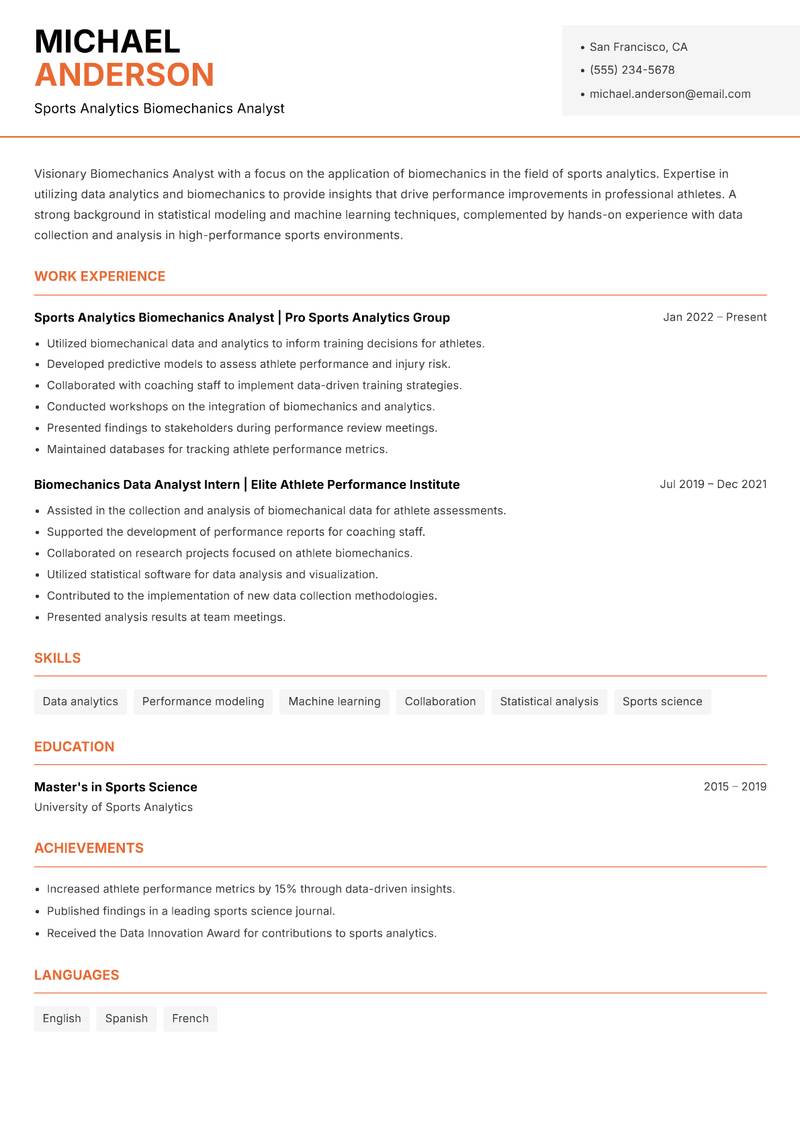
Sports Analytics Biomechanics Analyst Resume

Visionary Biomechanics Analyst with a focus on the application of biomechanics in the field of sports analytics. Expertise in utilizing data analytics and biomechanics to provide insights that drive performance improvements in professional athletes. A strong background in statistical modeling and machine learning techniques, complemented by hands-on experience with data collection and analysis in high-performance sports environments. Recognized for the ability to translate complex biomechanical data into strategic recommendations for coaches and athletes. Committed to leveraging technology and analytics to enhance athletic performance and contribute to the advancement of sports science. A proactive approach to continuous learning and adaptation to emerging trends in sports analytics.

Data analytics Performance modeling Machine learning Collaboration Statistical analysis Sports science
Biomechanics Analyst Resume Preview Example
View PDF
  1. Utilized biomechanical data and analytics to inform training decisions for athletes.
  2. Developed predictive models to assess athlete performance and injury risk.
  3. Collaborated with coaching staff to implement data-driven training strategies.
  4. Conducted workshops on the integration of biomechanics and analytics.
  5. Presented findings to stakeholders during performance review meetings.
  6. Maintained databases for tracking athlete performance metrics.
  1. Assisted in the collection and analysis of biomechanical data for athlete assessments.
  2. Supported the development of performance reports for coaching staff.
  3. Collaborated on research projects focused on athlete biomechanics.
  4. Utilized statistical software for data analysis and visualization.
  5. Contributed to the implementation of new data collection methodologies.
  6. Presented analysis results at team meetings.

Achievements

  • Increased athlete performance metrics by 15% through data-driven insights.
  • Published findings in a leading sports science journal.
  • Received the Data Innovation Award for contributions to sports analytics.
⏱️
Experience
2-5 Years
📅
Level
Mid Level
🎓
Education
Master's in Sports Science, Un...

Key Skills for Biomechanics Analyst Positions

Resume Tips for Biomechanics Analyst Applications

Strong Action Verbs for Biomechanics Analyst Resumes

Tested · Monitored · Analysed · Designed · Optimised · Managed · Improved · Coordinated · Delivered · Advised · Achieved · Administered · Analyzed · Architected · Assessed · Automated

Common Mistakes to Avoid

Experience Levels

How to Write a Biomechanics Analyst Resume

Browse Biomechanics Analyst resume examples built around analyzing biomechanical data, tailored for Sports Science roles.

A strong Biomechanics Analyst resume leads with a focused professional summary that names the exact role and your standout achievement. In the experience section, open every bullet with a strong action verb and quantify the result with numbers wherever possible. Highlight your most relevant competencies — especially Analyzing biomechanical data, Interpreting results t, and Exercise Physiology — in a dedicated Skills section positioned early so ATS systems and hiring managers both find it immediately.

For format, most Biomechanics Analyst roles suit a reverse-chronological layout: most recent position first, working backwards. Keep to one page for under five years of experience, or two pages for senior candidates with a rich project or leadership history. Use clean, ATS-safe fonts (10–12pt), standard section headings (Summary, Experience, Education, Skills), and avoid tables, text boxes, or multi-column layouts that applicant tracking systems cannot parse reliably.
Frequently Asked Questions

What makes a strong Biomechanics Analyst resume stand out to employers?

A standout Biomechanics Analyst resume combines role-specific skills with quantified achievements. Name the exact job title in your professional summary, mirror keywords from each job posting, and open every bullet point with a strong action verb followed by a measurable result. Certifications, tools, and domain experience specific to biomechanics analyst roles should appear prominently near the top.

What skills are most important to include on a Sports Science resume?

Recruiters hiring in Sports Science consistently look for Exercise Physiology, Biomechanical Analysis, Performance Testing & Monitoring, Athlete Load Management. List these in a dedicated Skills section near the top so both ATS systems and human reviewers spot them fast. Mirror the exact phrasing from each job posting wherever possible — many applicant tracking systems match literal strings rather than synonyms.

What is the best resume format for Sports Science professionals?

A reverse-chronological format is the standard choice for most Sports Science candidates — employers expect to see your most recent role first, working backwards. If you are transitioning into Sports Science from a related field, a hybrid format (brief skills summary at the top followed by chronological experience) can bridge the gap effectively. Keep the document to one page for under five years of experience, or two pages for senior specialists.

How do I make my Sports Science resume pass applicant tracking systems (ATS)?

Use standard section headings — Summary, Experience, Education, Skills — rather than creative labels that ATS parsers do not recognise. Embed domain keywords such as "Exercise Physiology" and "Biomechanical Analysis" naturally inside your experience bullets rather than cramming them into a standalone keyword list. Avoid tables, multi-column layouts, text boxes, headers, footers, and images — these confuse most modern parsers and can cause your resume to be misread or rejected before a human sees it.

What mistakes do Sports Science professionals most commonly make on their resume?

The most frequent issue is being too academic without demonstrating applied, on-field experience. Beyond that, generic objective statements, unquantified achievements, and inconsistent date formatting appear across almost every Sports Science application. Fix these by replacing every vague claim with a measurable outcome — specific numbers and named projects add credibility that adjectives cannot.

How long should a Sports Science resume be?

One page is appropriate for candidates with under five years of relevant Sports Science experience. Two pages are acceptable — and sometimes expected — for senior specialists, managers, or professionals with a strong portfolio of projects, publications, or credentials. Avoid padding to reach a page count: every line should directly support your application for the specific role you are targeting.

Should I include a professional summary at the top of my Sports Science resume?

Yes — a two to three sentence summary is the first section most recruiters read. Open with your title and years of Sports Science experience, then name your most relevant achievement or specialisation. One proven approach: List your degree (Sports Science, Exercise Physiology) and any professional registrations (ESSA, NSCA-CSCS). Quantify athlete performance improvements and programs designed. Detail specific technology platforms (Catapult, Polar, Vald, Kinexon) you are proficient with. Demonstrate statistical analysis and data visualisation capability — this level of specificity signals genuine expertise before a recruiter reaches your experience section.

Scroll to view samples