Biomedical Research Fellow Resume

These Biomedical Research Fellow resume samples are designed to help you write a resume that gets noticed by hiring managers and passes applicant tracking systems (ATS) in Biomedical Sciences. Each example shows real formatting, section structure, and language you can adapt to your own background. When writing your own Biomedical Research Fellow resume, focus on highlighting biomedical research, the biomedical research and haematology & blood sciences. Recruiters scan for these qualifications first, so they should appear early in your summary and experience sections. Use strong action verbs such as "analyzed", "processed", "diagnosed", "validated" to describe your achievements, and quantify your impact wherever possible — percentages, dollar amounts, or time saved make your resume more convincing. A common mistake to avoid: writing a generic objective statement instead of a targeted biomedical research fellow professional summary. Tailor your resume to each Biomedical Research Fellow position you apply for rather than using one generic version.

Biomedical Research Fellow Resume Template
View PDF
0.0 (0 ratings)

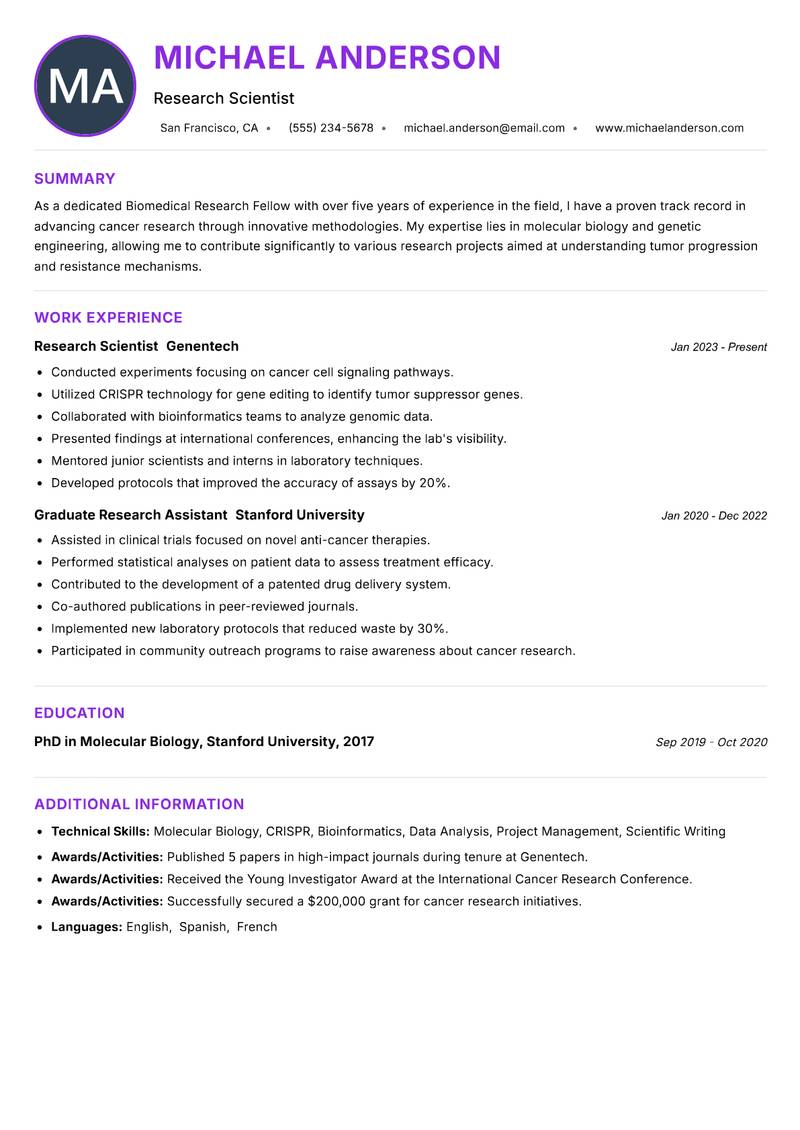
Research Scientist Resume

As a dedicated Biomedical Research Fellow with over five years of experience in the field, I have a proven track record in advancing cancer research through innovative methodologies. My expertise lies in molecular biology and genetic engineering, allowing me to contribute significantly to various research projects aimed at understanding tumor progression and resistance mechanisms. I have collaborated with multidisciplinary teams to design and execute experiments that have yielded impactful findings. My analytical skills enable me to interpret complex data sets, and I am proficient in using bioinformatics tools to support our research objectives. I am passionate about translating laboratory findings into therapeutic strategies and have authored several publications in reputable journals. As I continue to grow in my career, I am eager to lead projects that bridge the gap between laboratory research and clinical applications, ultimately improving patient outcomes.

Molecular Biology CRISPR Bioinformatics Data Analysis Project Management Scientific Writing
Biomedical Research Fellow Resume Preview Example
View PDF
  1. Conducted experiments focusing on cancer cell signaling pathways.
  2. Utilized CRISPR technology for gene editing to identify tumor suppressor genes.
  3. Collaborated with bioinformatics teams to analyze genomic data.
  4. Presented findings at international conferences, enhancing the lab's visibility.
  5. Mentored junior scientists and interns in laboratory techniques.
  6. Developed protocols that improved the accuracy of assays by 20%.
  1. Assisted in clinical trials focused on novel anti-cancer therapies.
  2. Performed statistical analyses on patient data to assess treatment efficacy.
  3. Contributed to the development of a patented drug delivery system.
  4. Co-authored publications in peer-reviewed journals.
  5. Implemented new laboratory protocols that reduced waste by 30%.
  6. Participated in community outreach programs to raise awareness about cancer research.

Achievements

  • Published 5 papers in high-impact journals during tenure at Genentech.
  • Received the Young Investigator Award at the International Cancer Research Conference.
  • Successfully secured a $200,000 grant for cancer research initiatives.
⏱️
Experience
2-5 Years
📅
Level
Mid Level
🎓
Education
PhD in Molecular Biology, Stan...

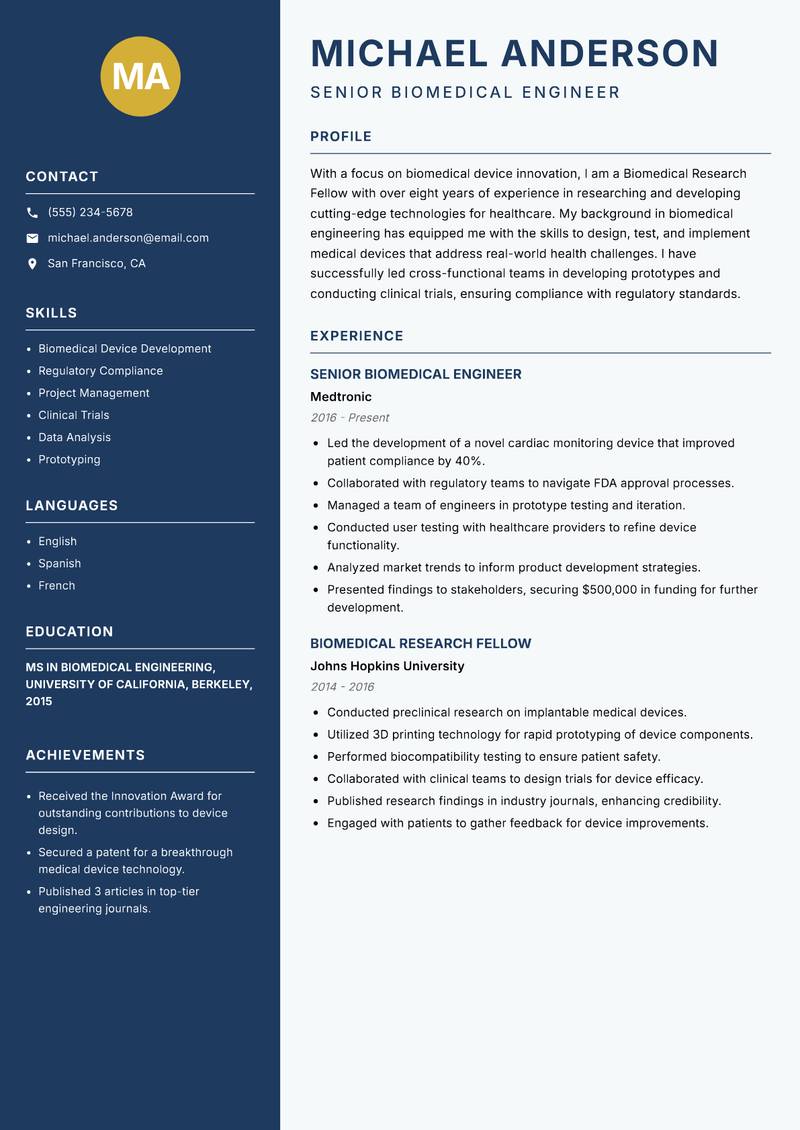
Senior Biomedical Engineer Resume

With a focus on biomedical device innovation, I am a Biomedical Research Fellow with over eight years of experience in researching and developing cutting-edge technologies for healthcare. My background in biomedical engineering has equipped me with the skills to design, test, and implement medical devices that address real-world health challenges. I have successfully led cross-functional teams in developing prototypes and conducting clinical trials, ensuring compliance with regulatory standards. My strong analytical abilities and attention to detail have driven successful product launches, improving patient care and outcomes. I am committed to advancing the field through research that combines engineering principles with biological science, aiming to make healthcare more effective and accessible.

Biomedical Device Development Regulatory Compliance Project Management Clinical Trials Data Analysis Prototyping
Biomedical Research Fellow Resume Preview Example
View PDF
  1. Led the development of a novel cardiac monitoring device that improved patient compliance by 40%.
  2. Collaborated with regulatory teams to navigate FDA approval processes.
  3. Managed a team of engineers in prototype testing and iteration.
  4. Conducted user testing with healthcare providers to refine device functionality.
  5. Analyzed market trends to inform product development strategies.
  6. Presented findings to stakeholders, securing $500,000 in funding for further development.
  1. Conducted preclinical research on implantable medical devices.
  2. Utilized 3D printing technology for rapid prototyping of device components.
  3. Performed biocompatibility testing to ensure patient safety.
  4. Collaborated with clinical teams to design trials for device efficacy.
  5. Published research findings in industry journals, enhancing credibility.
  6. Engaged with patients to gather feedback for device improvements.

Achievements

  • Received the Innovation Award for outstanding contributions to device design.
  • Secured a patent for a breakthrough medical device technology.
  • Published 3 articles in top-tier engineering journals.
⏱️
Experience
2-5 Years
📅
Level
Mid Level
🎓
Education
MS in Biomedical Engineering, ...

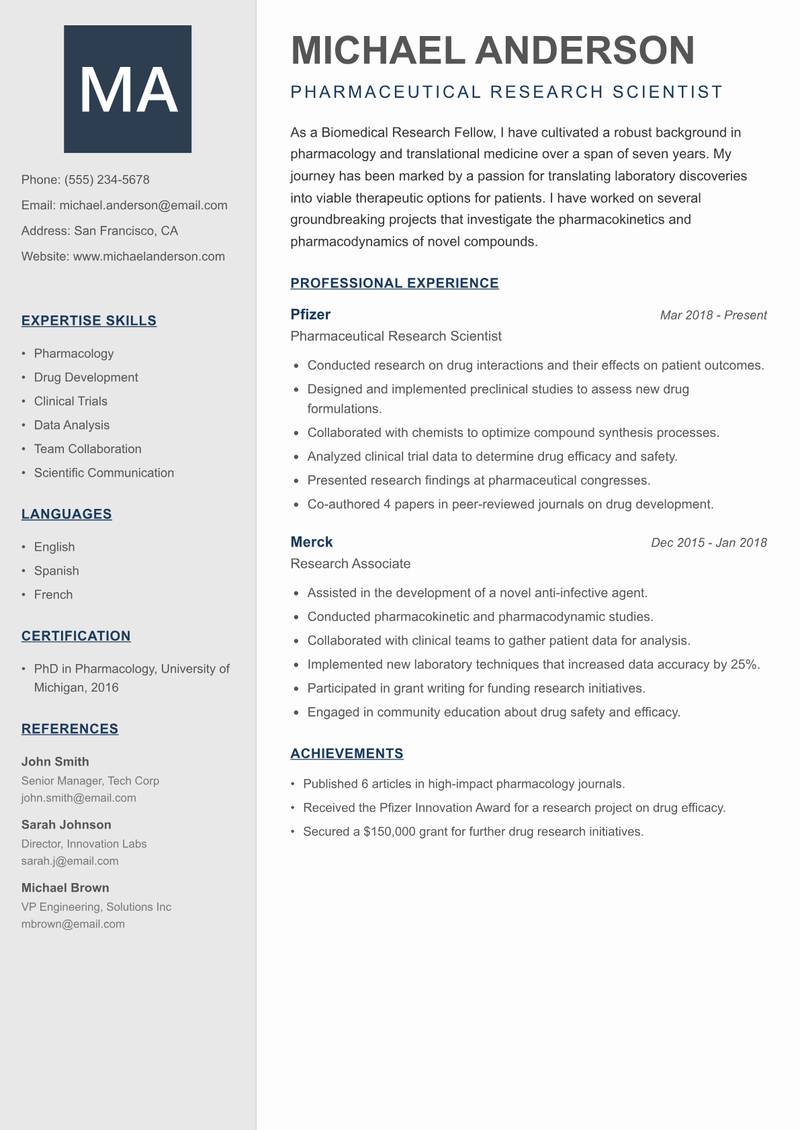
Pharmaceutical Research Scientist Resume

As a Biomedical Research Fellow, I have cultivated a robust background in pharmacology and translational medicine over a span of seven years. My journey has been marked by a passion for translating laboratory discoveries into viable therapeutic options for patients. I have worked on several groundbreaking projects that investigate the pharmacokinetics and pharmacodynamics of novel compounds. My analytical skills allow me to design and interpret complex experiments that drive drug development. I thrive in collaborative environments, working closely with chemists, clinicians, and regulatory experts to ensure that our research meets the highest standards. My goal is to continue contributing to the pharmaceutical industry by developing innovative therapies that address unmet medical needs.

Pharmacology Drug Development Clinical Trials Data Analysis Team Collaboration Scientific Communication
Biomedical Research Fellow Resume Preview Example
View PDF
  1. Conducted research on drug interactions and their effects on patient outcomes.
  2. Designed and implemented preclinical studies to assess new drug formulations.
  3. Collaborated with chemists to optimize compound synthesis processes.
  4. Analyzed clinical trial data to determine drug efficacy and safety.
  5. Presented research findings at pharmaceutical congresses.
  6. Co-authored 4 papers in peer-reviewed journals on drug development.
  1. Assisted in the development of a novel anti-infective agent.
  2. Conducted pharmacokinetic and pharmacodynamic studies.
  3. Collaborated with clinical teams to gather patient data for analysis.
  4. Implemented new laboratory techniques that increased data accuracy by 25%.
  5. Participated in grant writing for funding research initiatives.
  6. Engaged in community education about drug safety and efficacy.

Achievements

  • Published 6 articles in high-impact pharmacology journals.
  • Received the Pfizer Innovation Award for a research project on drug efficacy.
  • Secured a $150,000 grant for further drug research initiatives.
⏱️
Experience
2-5 Years
📅
Level
Mid Level
🎓
Education
PhD in Pharmacology, Universit...

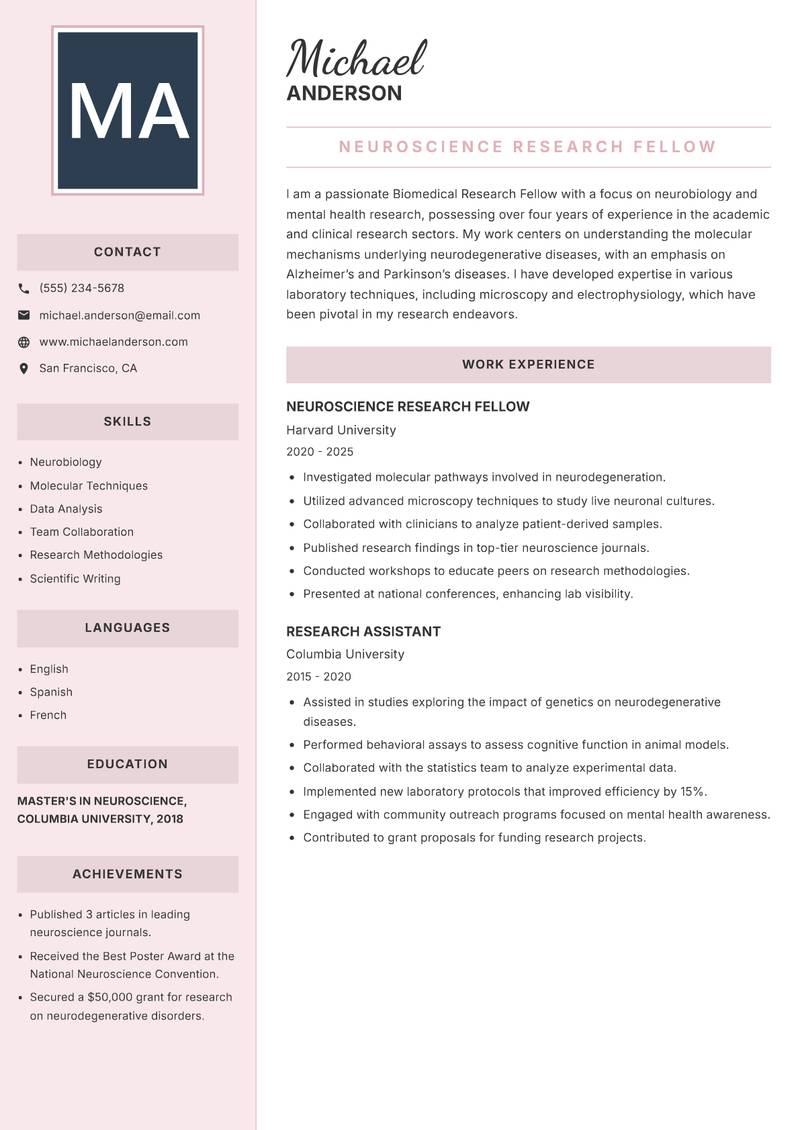
Neuroscience Research Fellow Resume

I am a passionate Biomedical Research Fellow with a focus on neurobiology and mental health research, possessing over four years of experience in the academic and clinical research sectors. My work centers on understanding the molecular mechanisms underlying neurodegenerative diseases, with an emphasis on Alzheimer’s and Parkinson’s diseases. I have developed expertise in various laboratory techniques, including microscopy and electrophysiology, which have been pivotal in my research endeavors. My collaborative nature has allowed me to work with multidisciplinary teams to translate findings into potential therapeutic approaches. I am driven by the mission to improve mental health outcomes and am eager to contribute to innovative solutions that address complex brain disorders.

Neurobiology Molecular Techniques Data Analysis Team Collaboration Research Methodologies Scientific Writing
Biomedical Research Fellow Resume Preview Example
View PDF
  1. Investigated molecular pathways involved in neurodegeneration.
  2. Utilized advanced microscopy techniques to study live neuronal cultures.
  3. Collaborated with clinicians to analyze patient-derived samples.
  4. Published research findings in top-tier neuroscience journals.
  5. Conducted workshops to educate peers on research methodologies.
  6. Presented at national conferences, enhancing lab visibility.
  1. Assisted in studies exploring the impact of genetics on neurodegenerative diseases.
  2. Performed behavioral assays to assess cognitive function in animal models.
  3. Collaborated with the statistics team to analyze experimental data.
  4. Implemented new laboratory protocols that improved efficiency by 15%.
  5. Engaged with community outreach programs focused on mental health awareness.
  6. Contributed to grant proposals for funding research projects.

Achievements

  • Published 3 articles in leading neuroscience journals.
  • Received the Best Poster Award at the National Neuroscience Convention.
  • Secured a $50,000 grant for research on neurodegenerative disorders.
⏱️
Experience
2-5 Years
📅
Level
Mid Level
🎓
Education
Master's in Neuroscience, Colu...

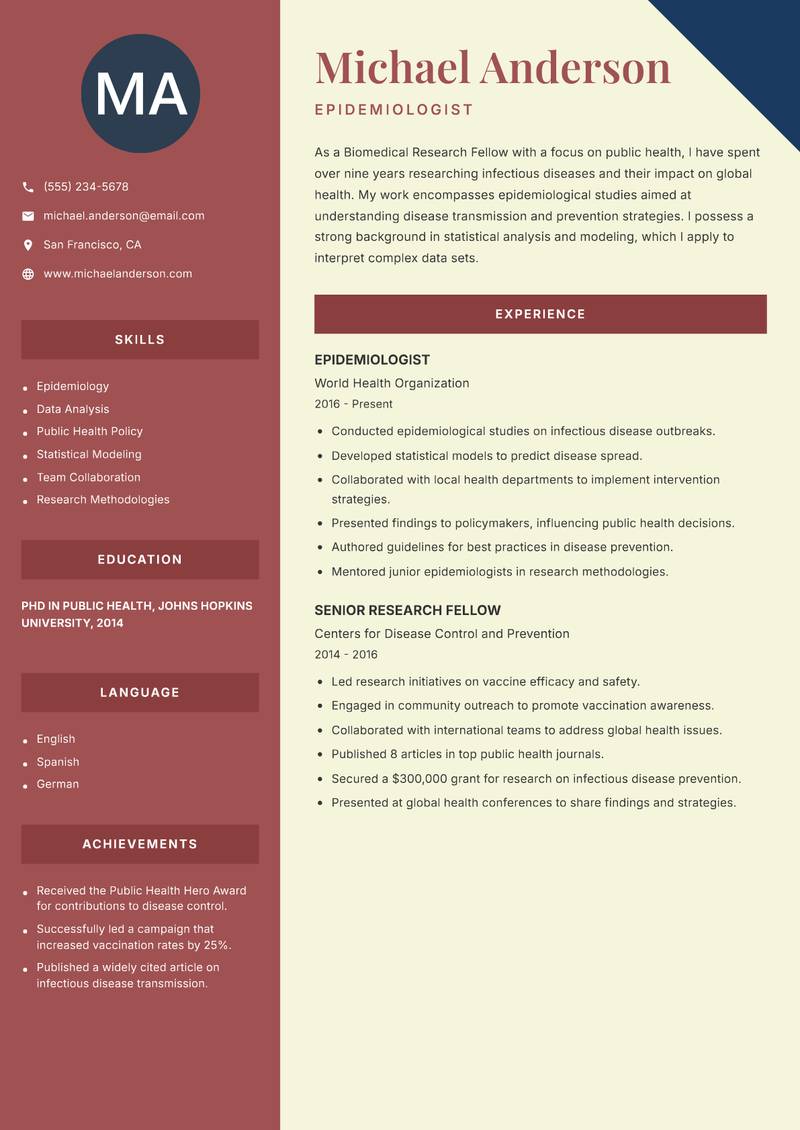
Epidemiologist Resume

As a Biomedical Research Fellow with a focus on public health, I have spent over nine years researching infectious diseases and their impact on global health. My work encompasses epidemiological studies aimed at understanding disease transmission and prevention strategies. I possess a strong background in statistical analysis and modeling, which I apply to interpret complex data sets. My collaborative approach allows me to engage with diverse teams, including government agencies and non-profit organizations, to address public health challenges. I am committed to translating research findings into actionable public health policies that improve community health outcomes.

Epidemiology Data Analysis Public Health Policy Statistical Modeling Team Collaboration Research Methodologies
Biomedical Research Fellow Resume Preview Example
View PDF
  1. Conducted epidemiological studies on infectious disease outbreaks.
  2. Developed statistical models to predict disease spread.
  3. Collaborated with local health departments to implement intervention strategies.
  4. Presented findings to policymakers, influencing public health decisions.
  5. Authored guidelines for best practices in disease prevention.
  6. Mentored junior epidemiologists in research methodologies.
  1. Led research initiatives on vaccine efficacy and safety.
  2. Engaged in community outreach to promote vaccination awareness.
  3. Collaborated with international teams to address global health issues.
  4. Published 8 articles in top public health journals.
  5. Secured a $300,000 grant for research on infectious disease prevention.
  6. Presented at global health conferences to share findings and strategies.

Achievements

  • Received the Public Health Hero Award for contributions to disease control.
  • Successfully led a campaign that increased vaccination rates by 25%.
  • Published a widely cited article on infectious disease transmission.
⏱️
Experience
2-5 Years
📅
Level
Mid Level
🎓
Education
PhD in Public Health, Johns Ho...

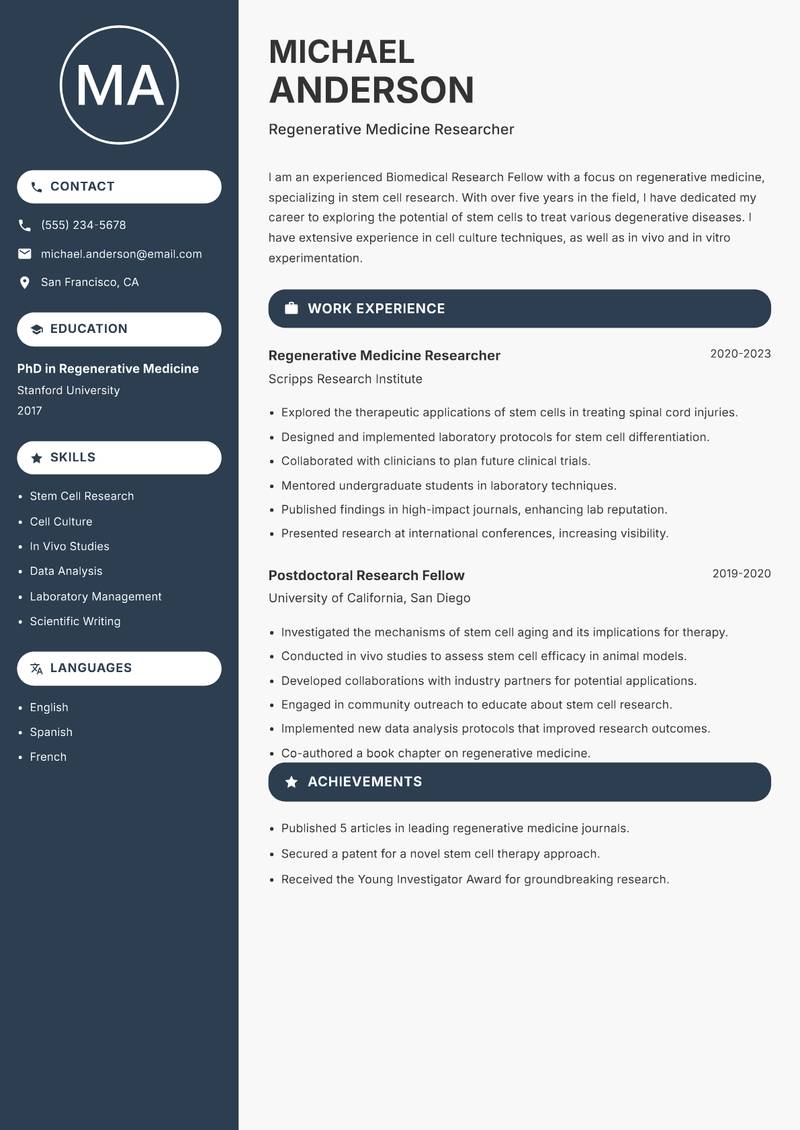
Regenerative Medicine Researcher Resume

I am an experienced Biomedical Research Fellow with a focus on regenerative medicine, specializing in stem cell research. With over five years in the field, I have dedicated my career to exploring the potential of stem cells to treat various degenerative diseases. I have extensive experience in cell culture techniques, as well as in vivo and in vitro experimentation. My research has not only contributed to scientific knowledge but has also paved the way for potential clinical applications. I am passionate about mentoring the next generation of scientists and collaborating with interdisciplinary teams to drive impactful research that transforms patient care.

Stem Cell Research Cell Culture In Vivo Studies Data Analysis Laboratory Management Scientific Writing
Biomedical Research Fellow Resume Preview Example
View PDF
  1. Explored the therapeutic applications of stem cells in treating spinal cord injuries.
  2. Designed and implemented laboratory protocols for stem cell differentiation.
  3. Collaborated with clinicians to plan future clinical trials.
  4. Mentored undergraduate students in laboratory techniques.
  5. Published findings in high-impact journals, enhancing lab reputation.
  6. Presented research at international conferences, increasing visibility.
  1. Investigated the mechanisms of stem cell aging and its implications for therapy.
  2. Conducted in vivo studies to assess stem cell efficacy in animal models.
  3. Developed collaborations with industry partners for potential applications.
  4. Engaged in community outreach to educate about stem cell research.
  5. Implemented new data analysis protocols that improved research outcomes.
  6. Co-authored a book chapter on regenerative medicine.

Achievements

  • Published 5 articles in leading regenerative medicine journals.
  • Secured a patent for a novel stem cell therapy approach.
  • Received the Young Investigator Award for groundbreaking research.
⏱️
Experience
2-5 Years
📅
Level
Mid Level
🎓
Education
PhD in Regenerative Medicine, ...

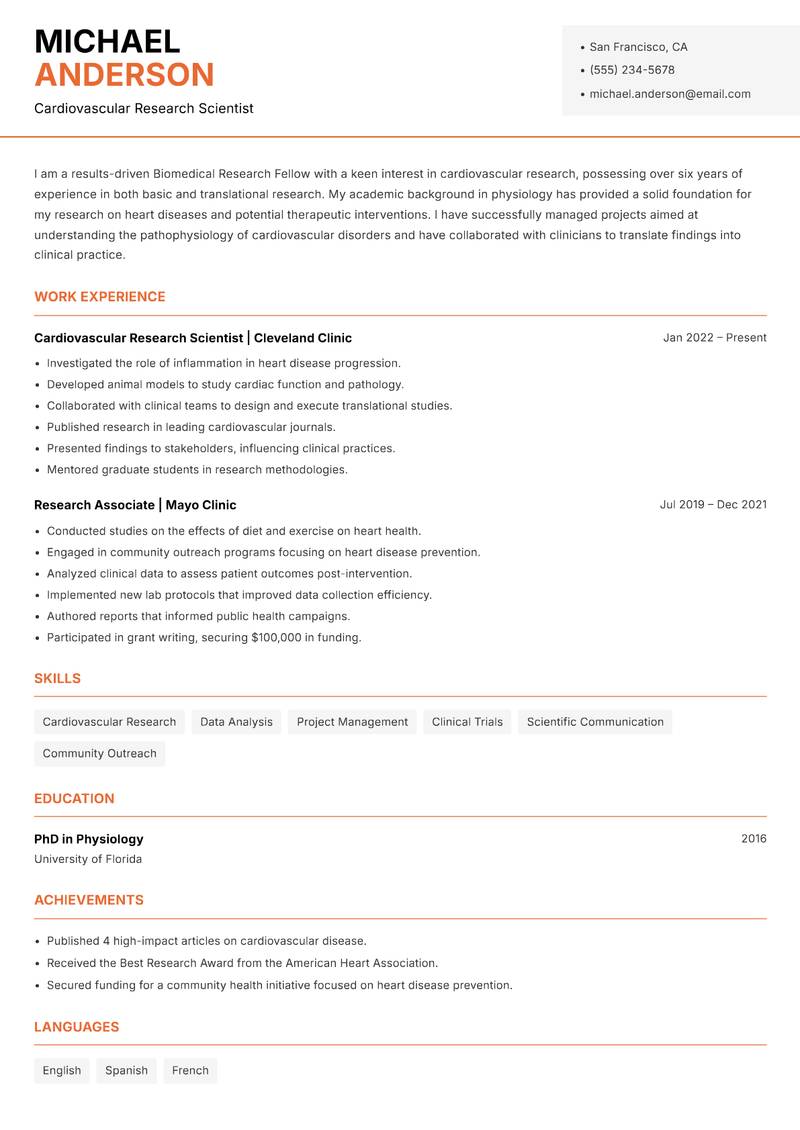
Cardiovascular Research Scientist Resume

I am a results-driven Biomedical Research Fellow with a keen interest in cardiovascular research, possessing over six years of experience in both basic and translational research. My academic background in physiology has provided a solid foundation for my research on heart diseases and potential therapeutic interventions. I have successfully managed projects aimed at understanding the pathophysiology of cardiovascular disorders and have collaborated with clinicians to translate findings into clinical practice. My strong communication skills enable me to effectively disseminate research results to varied audiences, from academic circles to the general public. I am committed to improving cardiovascular health outcomes and am eager to continue my work in this vital area of medicine.

Cardiovascular Research Data Analysis Project Management Clinical Trials Scientific Communication Community Outreach
Biomedical Research Fellow Resume Preview Example
View PDF
  1. Investigated the role of inflammation in heart disease progression.
  2. Developed animal models to study cardiac function and pathology.
  3. Collaborated with clinical teams to design and execute translational studies.
  4. Published research in leading cardiovascular journals.
  5. Presented findings to stakeholders, influencing clinical practices.
  6. Mentored graduate students in research methodologies.
  1. Conducted studies on the effects of diet and exercise on heart health.
  2. Engaged in community outreach programs focusing on heart disease prevention.
  3. Analyzed clinical data to assess patient outcomes post-intervention.
  4. Implemented new lab protocols that improved data collection efficiency.
  5. Authored reports that informed public health campaigns.
  6. Participated in grant writing, securing $100,000 in funding.

Achievements

  • Published 4 high-impact articles on cardiovascular disease.
  • Received the Best Research Award from the American Heart Association.
  • Secured funding for a community health initiative focused on heart disease prevention.
⏱️
Experience
2-5 Years
📅
Level
Mid Level
🎓
Education
PhD in Physiology, University ...

Key Skills for Biomedical Research Fellow Positions

Resume Tips for Biomedical Research Fellow Applications

Strong Action Verbs for Biomedical Research Fellow Resumes

Analyzed · Processed · Diagnosed · Validated · Calibrated · Implemented · Reported · Researched · Accredited · Documented · Achieved · Administered · Architected · Assessed

Common Mistakes to Avoid

Experience Levels

How to Write a Biomedical Research Fellow Resume

Browse Biomedical Research Fellow resume examples built around haematology & blood sciences, tailored for Biomedical Sciences roles.

A strong Biomedical Research Fellow resume leads with a focused professional summary that names the exact role and your standout achievement. In the experience section, open every bullet with a strong action verb and quantify the result with numbers wherever possible. Highlight your most relevant competencies — especially Biomedical Research, The Biomedical Research, and Haematology & Blood Sciences — in a dedicated Skills section positioned early so ATS systems and hiring managers both find it immediately.

For format, most Biomedical Research Fellow roles suit a reverse-chronological layout: most recent position first, working backwards. Keep to one page for under five years of experience, or two pages for senior candidates with a rich project or leadership history. Use clean, ATS-safe fonts (10–12pt), standard section headings (Summary, Experience, Education, Skills), and avoid tables, text boxes, or multi-column layouts that applicant tracking systems cannot parse reliably.
Frequently Asked Questions

What makes a strong Biomedical Research Fellow resume stand out to employers?

A standout Biomedical Research Fellow resume combines role-specific skills with quantified achievements. Name the exact job title in your professional summary, mirror keywords from each job posting, and open every bullet point with a strong action verb followed by a measurable result. Certifications, tools, and domain experience specific to biomedical research fellow roles should appear prominently near the top.

What skills are most important to include on a Biomedical Sciences resume?

Recruiters hiring in Biomedical Sciences consistently look for Haematology & Blood Sciences, Clinical Biochemistry & Toxicology, Medical Microbiology & Virology, Histopathology & Cytology. List these in a dedicated Skills section near the top so both ATS systems and human reviewers spot them fast. Mirror the exact phrasing from each job posting wherever possible — many applicant tracking systems match literal strings rather than synonyms.

What is the best resume format for Biomedical Sciences professionals?

A reverse-chronological format is the standard choice for most Biomedical Sciences candidates — employers expect to see your most recent role first, working backwards. If you are transitioning into Biomedical Sciences from a related field, a hybrid format (brief skills summary at the top followed by chronological experience) can bridge the gap effectively. Keep the document to one page for under five years of experience, or two pages for senior specialists.

How do I make my Biomedical Sciences resume pass applicant tracking systems (ATS)?

Use standard section headings — Summary, Experience, Education, Skills — rather than creative labels that ATS parsers do not recognise. Embed domain keywords such as "Haematology & Blood Sciences" and "Clinical Biochemistry & Toxicology" naturally inside your experience bullets rather than cramming them into a standalone keyword list. Avoid tables, multi-column layouts, text boxes, headers, footers, and images — these confuse most modern parsers and can cause your resume to be misread or rejected before a human sees it.

What mistakes do Biomedical Sciences professionals most commonly make on their resume?

The most frequent issue is omitting professional registration for clinical roles — it is a legal requirement. Beyond that, generic objective statements, unquantified achievements, and inconsistent date formatting appear across almost every Biomedical Sciences application. Fix these by replacing every vague claim with a measurable outcome — specific numbers and named projects add credibility that adjectives cannot.

How long should a Biomedical Sciences resume be?

One page is appropriate for candidates with under five years of relevant Biomedical Sciences experience. Two pages are acceptable — and sometimes expected — for senior specialists, managers, or professionals with a strong portfolio of projects, publications, or credentials. Avoid padding to reach a page count: every line should directly support your application for the specific role you are targeting.

Should I include a professional summary at the top of my Biomedical Sciences resume?

Yes — a two to three sentence summary is the first section most recruiters read. Open with your title and years of Biomedical Sciences experience, then name your most relevant achievement or specialisation. One proven approach: List HCPC or equivalent professional registration — it is required for clinical diagnostic roles — this level of specificity signals genuine expertise before a recruiter reaches your experience section.

Scroll to view samples