Cloud Operations Engineer Resume

These Cloud Operations Engineer resume samples are designed to help you write a resume that gets noticed by hiring managers and passes applicant tracking systems (ATS) in Cloud Computing. Each example shows real formatting, section structure, and language you can adapt to your own background. When writing your own Cloud Operations Engineer resume, focus on highlighting cloud operations, as a cloud operations and AWS / azure / GCP platform services. Recruiters scan for these qualifications first, so they should appear early in your summary and experience sections. Use strong action verbs such as "architected", "migrated", "deployed", "automated" to describe your achievements, and quantify your impact wherever possible — percentages, dollar amounts, or time saved make your resume more convincing. A common mistake to avoid: writing a generic objective statement instead of a targeted cloud operations engineer professional summary. Tailor your resume to each Cloud Operations Engineer position you apply for rather than using one generic version.

Cloud Operations Engineer Resume Template
View PDF
0.0 (0 ratings)

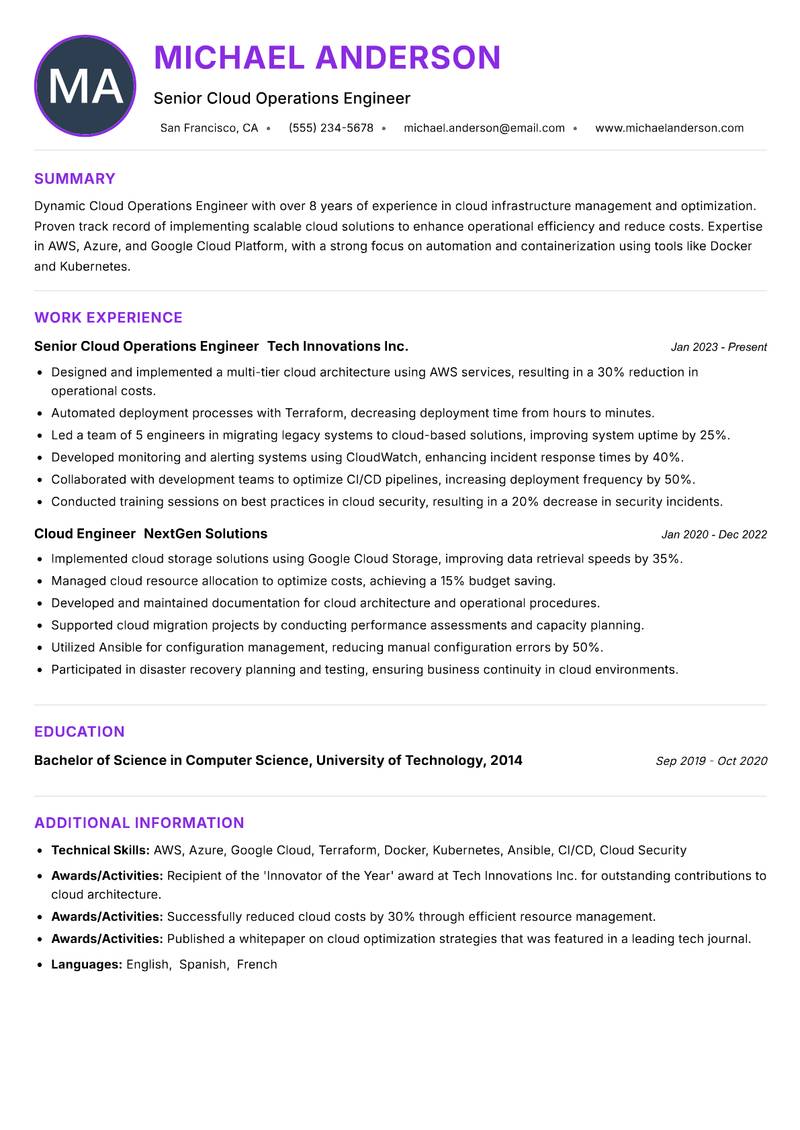
Senior Cloud Operations Engineer Resume

Dynamic Cloud Operations Engineer with over 8 years of experience in cloud infrastructure management and optimization. Proven track record of implementing scalable cloud solutions to enhance operational efficiency and reduce costs. Expertise in AWS, Azure, and Google Cloud Platform, with a strong focus on automation and containerization using tools like Docker and Kubernetes. Demonstrated ability to lead cross-functional teams and collaborate with stakeholders to align cloud strategies with business objectives. Adept at troubleshooting complex cloud-based systems and providing innovative solutions to enhance performance and reliability. Committed to continuous improvement and staying abreast of emerging technologies to drive cloud initiatives forward.

AWS Azure Google Cloud Terraform Docker Kubernetes Ansible CI/CD Cloud Security
Cloud Operations Engineer Resume Preview Example
View PDF
  1. Designed and implemented a multi-tier cloud architecture using AWS services, resulting in a 30% reduction in operational costs.
  2. Automated deployment processes with Terraform, decreasing deployment time from hours to minutes.
  3. Led a team of 5 engineers in migrating legacy systems to cloud-based solutions, improving system uptime by 25%.
  4. Developed monitoring and alerting systems using CloudWatch, enhancing incident response times by 40%.
  5. Collaborated with development teams to optimize CI/CD pipelines, increasing deployment frequency by 50%.
  6. Conducted training sessions on best practices in cloud security, resulting in a 20% decrease in security incidents.
  1. Implemented cloud storage solutions using Google Cloud Storage, improving data retrieval speeds by 35%.
  2. Managed cloud resource allocation to optimize costs, achieving a 15% budget saving.
  3. Developed and maintained documentation for cloud architecture and operational procedures.
  4. Supported cloud migration projects by conducting performance assessments and capacity planning.
  5. Utilized Ansible for configuration management, reducing manual configuration errors by 50%.
  6. Participated in disaster recovery planning and testing, ensuring business continuity in cloud environments.

Achievements

  • Recipient of the 'Innovator of the Year' award at Tech Innovations Inc. for outstanding contributions to cloud architecture.
  • Successfully reduced cloud costs by 30% through efficient resource management.
  • Published a whitepaper on cloud optimization strategies that was featured in a leading tech journal.
⏱️
Experience
2-5 Years
📅
Level
Mid Level
🎓
Education
Bachelor of Science in Compute...

Cloud Operations Engineer Resume

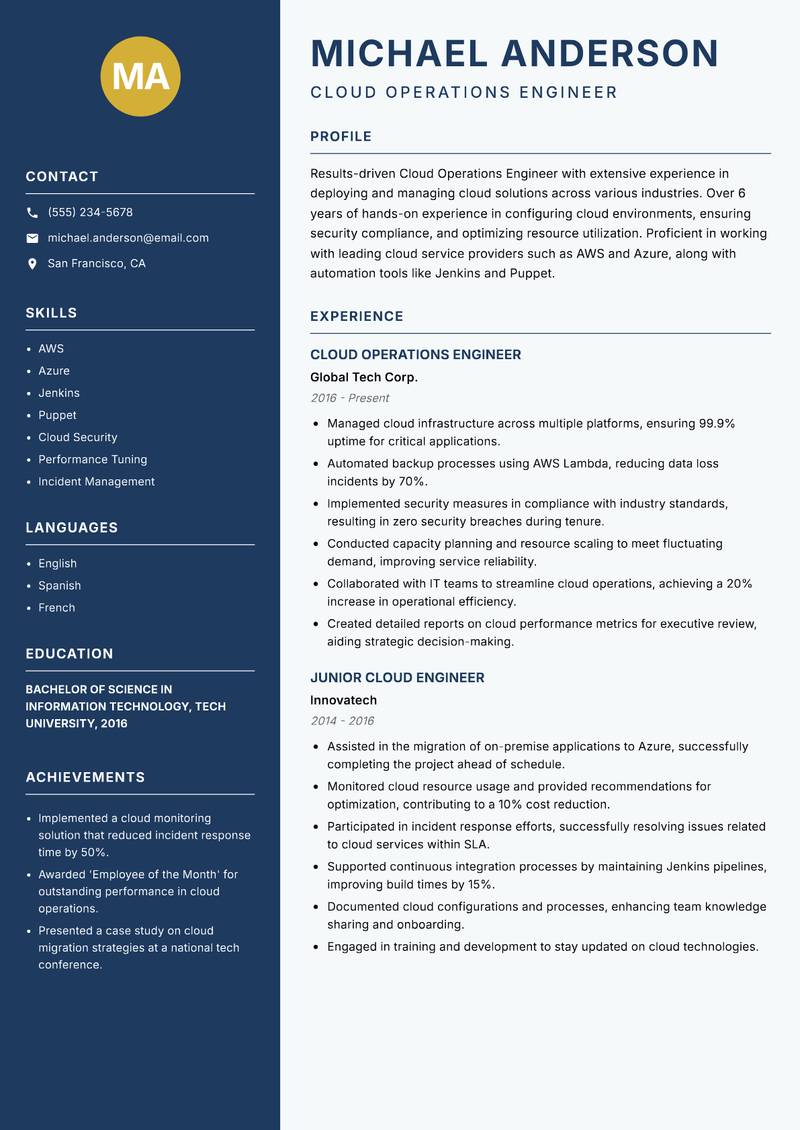
Experienced Cloud Operations Engineer with extensive experience in deploying and managing cloud solutions across various industries. Over 6 years of hands-on experience in configuring cloud environments, ensuring security compliance, and optimizing resource utilization. Proficient in working with leading cloud service providers such as AWS and Azure, along with automation tools like Jenkins and Puppet. Strong analytical skills with a focus on performance tuning and troubleshooting cloud applications. Known for excellent problem-solving abilities and a commitment to delivering high-quality service within deadlines. Passionate about leveraging cloud technology to drive business transformation and enhance operational agility.

AWS Azure Jenkins Puppet Cloud Security Performance Tuning Incident Management
Cloud Operations Engineer Resume Preview Example
View PDF
  1. Managed cloud infrastructure across multiple platforms, ensuring 99.9% uptime for critical applications.
  2. Automated backup processes using AWS Lambda, reducing data loss incidents by 70%.
  3. Implemented security measures in compliance with industry standards, resulting in zero security breaches during tenure.
  4. Conducted capacity planning and resource scaling to meet fluctuating demand, improving service reliability.
  5. Collaborated with IT teams to streamline cloud operations, achieving a 20% increase in operational efficiency.
  6. Created detailed reports on cloud performance metrics for executive review, aiding strategic decision-making.
  1. Assisted in the migration of on-premise applications to Azure, successfully completing the project ahead of schedule.
  2. Monitored cloud resource usage and provided recommendations for optimization, contributing to a 10% cost reduction.
  3. Participated in incident response efforts, successfully resolving issues related to cloud services within SLA.
  4. Supported continuous integration processes by maintaining Jenkins pipelines, improving build times by 15%.
  5. Documented cloud configurations and processes, enhancing team knowledge sharing and onboarding.
  6. Engaged in training and development to stay updated on cloud technologies.

Achievements

  • Implemented a cloud monitoring solution that reduced incident response time by 50%.
  • Awarded 'Employee of the Month' for outstanding performance in cloud operations.
  • Presented a case study on cloud migration strategies at a national tech conference.
⏱️
Experience
2-5 Years
📅
Level
Mid Level
🎓
Education
Bachelor of Science in Informa...

Cloud Support Engineer Resume

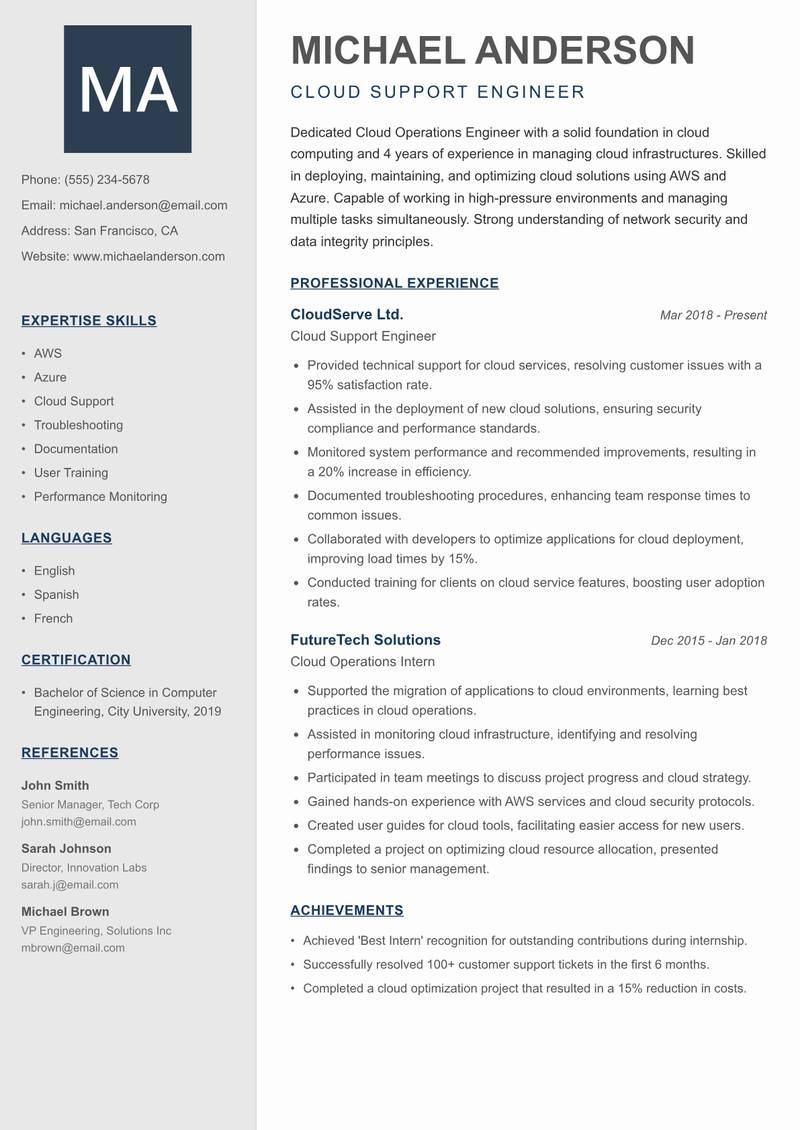
Dedicated Cloud Operations Engineer with a solid foundation in cloud computing and 4 years of experience in managing cloud infrastructures. Skilled in deploying, maintaining, and optimizing cloud solutions using AWS and Azure. Capable of working in high-pressure environments and managing multiple tasks simultaneously. Strong understanding of network security and data integrity principles. Proven ability to collaborate with cross-functional teams to drive cloud-based projects to completion. Eager to apply technical expertise and innovative thinking to enhance cloud operations within a forward-thinking organization.

AWS Azure Cloud Support Troubleshooting Documentation User Training Performance Monitoring
Cloud Operations Engineer Resume Preview Example
View PDF
  1. Provided technical support for cloud services, resolving customer issues with a 95% satisfaction rate.
  2. Assisted in the deployment of new cloud solutions, ensuring security compliance and performance standards.
  3. Monitored system performance and recommended improvements, resulting in a 20% increase in efficiency.
  4. Documented troubleshooting procedures, enhancing team response times to common issues.
  5. Collaborated with developers to optimize applications for cloud deployment, improving load times by 15%.
  6. Conducted training for clients on cloud service features, boosting user adoption rates.
  1. Supported the migration of applications to cloud environments, learning best practices in cloud operations.
  2. Assisted in monitoring cloud infrastructure, identifying and resolving performance issues.
  3. Participated in team meetings to discuss project progress and cloud strategy.
  4. Gained hands-on experience with AWS services and cloud security protocols.
  5. Created user guides for cloud tools, facilitating easier access for new users.
  6. Completed a project on optimizing cloud resource allocation, presented findings to senior management.

Achievements

  • Achieved 'Best Intern' recognition for outstanding contributions during internship.
  • Successfully resolved 100+ customer support tickets in the first 6 months.
  • Completed a cloud optimization project that resulted in a 15% reduction in costs.
⏱️
Experience
2-5 Years
📅
Level
Mid Level
🎓
Education
Bachelor of Science in Compute...

Cloud Application Engineer Resume

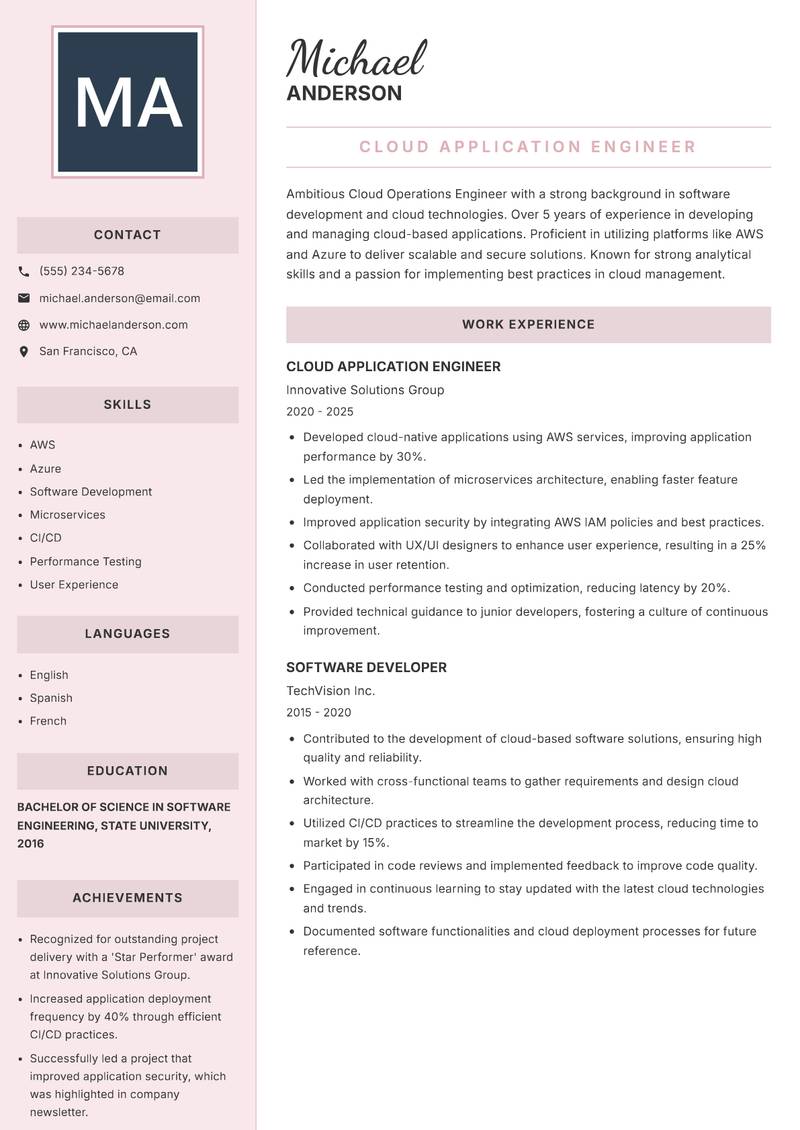
Driven Cloud Operations Engineer with a strong background in software development and cloud technologies. Over 5 years of experience in developing and managing cloud-based applications. Proficient in utilizing platforms like AWS and Azure to deliver scalable and secure solutions. Known for strong analytical skills and a passion for implementing best practices in cloud management. Excellent communicator who thrives in a collaborative team environment and is committed to achieving results through innovative solutions. Enthusiastic about leveraging cloud technologies to enhance user experiences and drive business success.

AWS Azure Software Development Microservices CI/CD Performance Testing User Experience
Cloud Operations Engineer Resume Preview Example
View PDF
  1. Developed cloud-native applications using AWS services, improving application performance by 30%.
  2. Led the implementation of microservices architecture, enabling faster feature deployment.
  3. Improved application security by integrating AWS IAM policies and best practices.
  4. Collaborated with UX/UI designers to enhance user experience, resulting in a 25% increase in user retention.
  5. Conducted performance testing and optimization, reducing latency by 20%.
  6. Provided technical guidance to junior developers, fostering a culture of continuous improvement.
  1. Contributed to the development of cloud-based software solutions, ensuring high quality and reliability.
  2. Worked with cross-functional teams to gather requirements and design cloud architecture.
  3. Utilized CI/CD practices to streamline the development process, reducing time to market by 15%.
  4. Participated in code reviews and implemented feedback to improve code quality.
  5. Engaged in continuous learning to stay updated with the latest cloud technologies and trends.
  6. Documented software functionalities and cloud deployment processes for future reference.

Achievements

  • Recognized for outstanding project delivery with a 'Star Performer' award at Innovative Solutions Group.
  • Increased application deployment frequency by 40% through efficient CI/CD practices.
  • Successfully led a project that improved application security, which was highlighted in company newsletter.
⏱️
Experience
2-5 Years
📅
Level
Mid Level
🎓
Education
Bachelor of Science in Softwar...

Lead Cloud Operations Engineer Resume

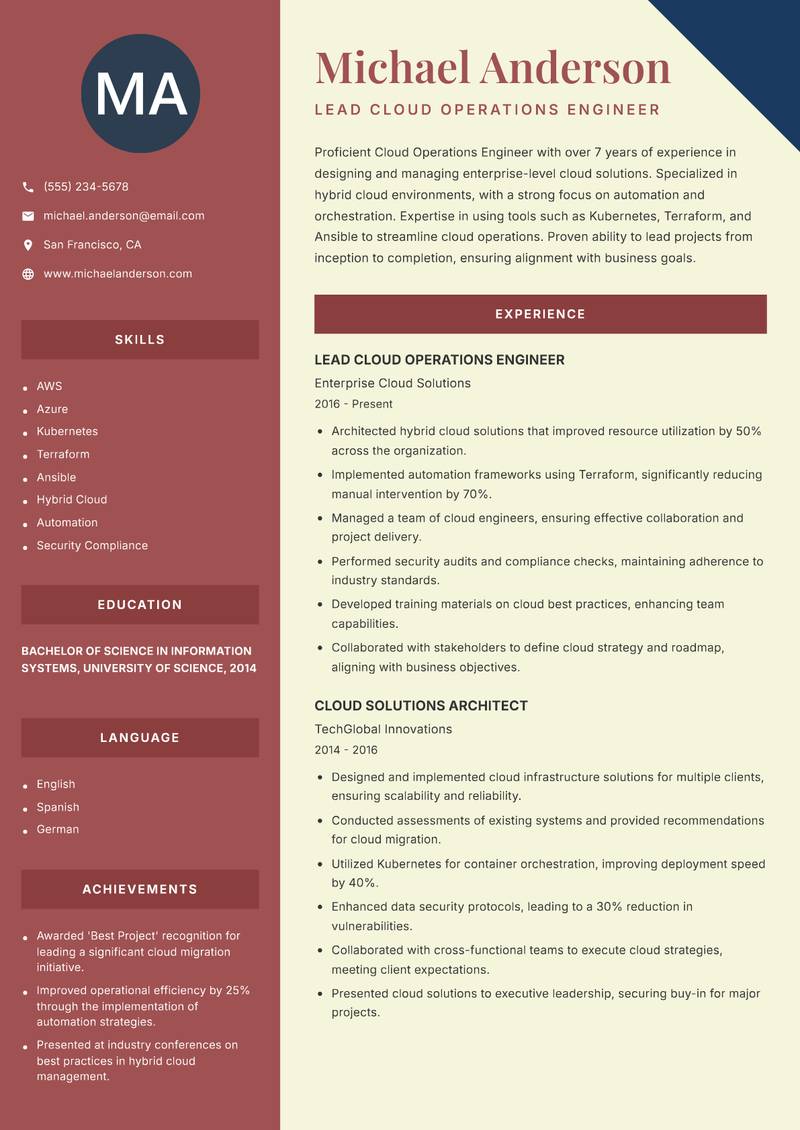
Proficient Cloud Operations Engineer with over 7 years of experience in designing and managing enterprise-level cloud solutions. Specialized in hybrid cloud environments, with a strong focus on automation and orchestration. Expertise in using tools such as Kubernetes, Terraform, and Ansible to streamline cloud operations. Proven ability to lead projects from inception to completion, ensuring alignment with business goals. Strong analytical and problem-solving skills combined with excellent communication abilities. Passionate about driving cloud innovation and optimizing IT infrastructures to enhance organizational efficiency.

AWS Azure Kubernetes Terraform Ansible Hybrid Cloud Automation Security Compliance
Cloud Operations Engineer Resume Preview Example
View PDF
  1. Architected hybrid cloud solutions that improved resource utilization by 50% across the organization.
  2. Implemented automation frameworks using Terraform, significantly reducing manual intervention by 70%.
  3. Managed a team of cloud engineers, ensuring effective collaboration and project delivery.
  4. Performed security audits and compliance checks, maintaining adherence to industry standards.
  5. Developed training materials on cloud best practices, enhancing team capabilities.
  6. Collaborated with stakeholders to define cloud strategy and roadmap, aligning with business objectives.
  1. Designed and implemented cloud infrastructure solutions for multiple clients, ensuring scalability and reliability.
  2. Conducted assessments of existing systems and provided recommendations for cloud migration.
  3. Utilized Kubernetes for container orchestration, improving deployment speed by 40%.
  4. Enhanced data security protocols, leading to a 30% reduction in vulnerabilities.
  5. Collaborated with cross-functional teams to execute cloud strategies, meeting client expectations.
  6. Presented cloud solutions to executive leadership, securing buy-in for major projects.

Achievements

  • Awarded 'Best Project' recognition for leading a significant cloud migration initiative.
  • Improved operational efficiency by 25% through the implementation of automation strategies.
  • Presented at industry conferences on best practices in hybrid cloud management.
⏱️
Experience
2-5 Years
📅
Level
Mid Level
🎓
Education
Bachelor of Science in Informa...

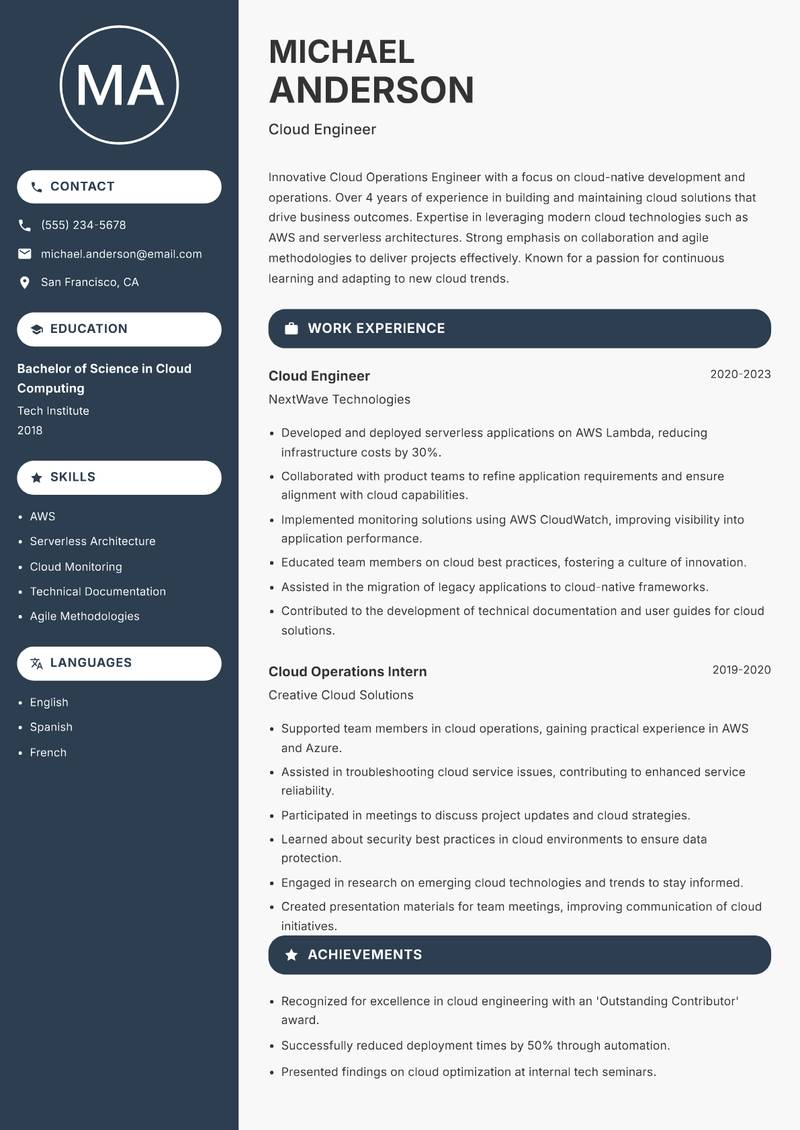
Cloud Engineer Resume

Innovative Cloud Operations Engineer with a focus on cloud-native development and operations. Over 4 years of experience in building and maintaining cloud solutions that drive business outcomes. Expertise in leveraging modern cloud technologies such as AWS and serverless architectures. Strong emphasis on collaboration and agile methodologies to deliver projects effectively. Known for a passion for continuous learning and adapting to new cloud trends. Committed to empowering organizations through efficient cloud practices and enhancing overall productivity.

AWS Serverless Architecture Cloud Monitoring Technical Documentation Agile Methodologies
Cloud Operations Engineer Resume Preview Example
View PDF
  1. Developed and deployed serverless applications on AWS Lambda, reducing infrastructure costs by 30%.
  2. Collaborated with product teams to refine application requirements and ensure alignment with cloud capabilities.
  3. Implemented monitoring solutions using AWS CloudWatch, improving visibility into application performance.
  4. Educated team members on cloud best practices, fostering a culture of innovation.
  5. Assisted in the migration of legacy applications to cloud-native frameworks.
  6. Contributed to the development of technical documentation and user guides for cloud solutions.
  1. Supported team members in cloud operations, gaining practical experience in AWS and Azure.
  2. Assisted in troubleshooting cloud service issues, contributing to enhanced service reliability.
  3. Participated in meetings to discuss project updates and cloud strategies.
  4. Learned about security best practices in cloud environments to ensure data protection.
  5. Engaged in research on emerging cloud technologies and trends to stay informed.
  6. Created presentation materials for team meetings, improving communication of cloud initiatives.

Achievements

  • Recognized for excellence in cloud engineering with an 'Outstanding Contributor' award.
  • Successfully reduced deployment times by 50% through automation.
  • Presented findings on cloud optimization at internal tech seminars.
⏱️
Experience
2-5 Years
📅
Level
Mid Level
🎓
Education
Bachelor of Science in Cloud C...

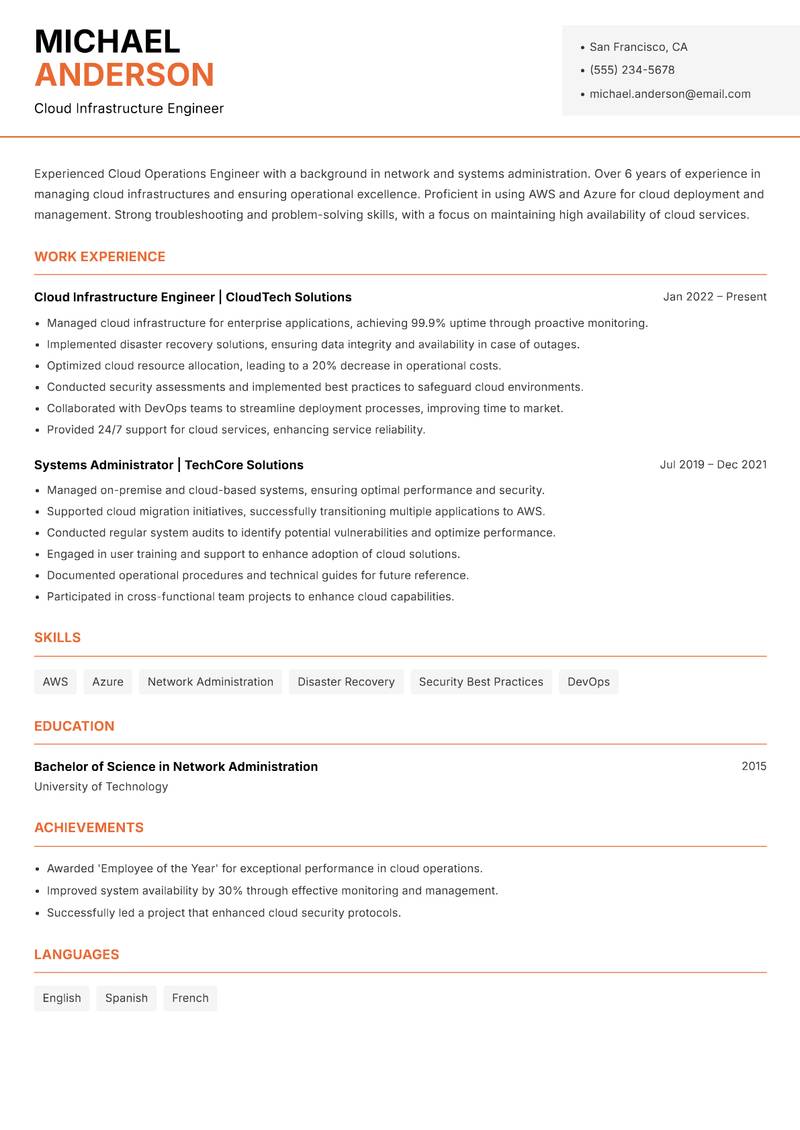
Cloud Infrastructure Engineer Resume

Experienced Cloud Operations Engineer with a background in network and systems administration. Over 6 years of experience in managing cloud infrastructures and ensuring operational excellence. Proficient in using AWS and Azure for cloud deployment and management. Strong troubleshooting and problem-solving skills, with a focus on maintaining high availability of cloud services. Effective communicator with the ability to work collaboratively with cross-functional teams to deliver robust cloud solutions. Passionate about leveraging technology to drive efficiency and enhance user experience.

AWS Azure Network Administration Disaster Recovery Security Best Practices DevOps
Cloud Operations Engineer Resume Preview Example
View PDF
  1. Managed cloud infrastructure for enterprise applications, achieving 99.9% uptime through proactive monitoring.
  2. Implemented disaster recovery solutions, ensuring data integrity and availability in case of outages.
  3. Optimized cloud resource allocation, leading to a 20% decrease in operational costs.
  4. Conducted security assessments and implemented best practices to safeguard cloud environments.
  5. Collaborated with DevOps teams to streamline deployment processes, improving time to market.
  6. Provided 24/7 support for cloud services, enhancing service reliability.
  1. Managed on-premise and cloud-based systems, ensuring optimal performance and security.
  2. Supported cloud migration initiatives, successfully transitioning multiple applications to AWS.
  3. Conducted regular system audits to identify potential vulnerabilities and optimize performance.
  4. Engaged in user training and support to enhance adoption of cloud solutions.
  5. Documented operational procedures and technical guides for future reference.
  6. Participated in cross-functional team projects to enhance cloud capabilities.

Achievements

  • Awarded 'Employee of the Year' for exceptional performance in cloud operations.
  • Improved system availability by 30% through effective monitoring and management.
  • Successfully led a project that enhanced cloud security protocols.
⏱️
Experience
2-5 Years
📅
Level
Mid Level
🎓
Education
Bachelor of Science in Network...

Key Skills for Cloud Operations Engineer Positions

Resume Tips for Cloud Operations Engineer Applications

Strong Action Verbs for Cloud Operations Engineer Resumes

Architected · Migrated · Deployed · Automated · Optimized · Provisioned · Secured · Orchestrated · Monitored · Designed · Achieved · Administered · Analyzed · Assessed

Common Mistakes to Avoid

Experience Levels

How to Write a Cloud Operations Engineer Resume

Browse Cloud Operations Engineer resume examples built around AWS / azure / GCP platform services, tailored for Cloud Computing roles.

A strong Cloud Operations Engineer resume leads with a focused professional summary that names the exact role and your standout achievement. In the experience section, open every bullet with a strong action verb and quantify the result with numbers wherever possible. Highlight your most relevant competencies — especially Cloud Operations, As a Cloud Operations, and AWS / Azure / GCP Platform Services — in a dedicated Skills section positioned early so ATS systems and hiring managers both find it immediately.

For format, most Cloud Operations Engineer roles suit a reverse-chronological layout: most recent position first, working backwards. Keep to one page for under five years of experience, or two pages for senior candidates with a rich project or leadership history. Use clean, ATS-safe fonts (10–12pt), standard section headings (Summary, Experience, Education, Skills), and avoid tables, text boxes, or multi-column layouts that applicant tracking systems cannot parse reliably.
Frequently Asked Questions

What makes a strong Cloud Operations Engineer resume stand out to employers?

A standout Cloud Operations Engineer resume combines role-specific skills with quantified achievements. Name the exact job title in your professional summary, mirror keywords from each job posting, and open every bullet point with a strong action verb followed by a measurable result. Certifications, tools, and domain experience specific to cloud operations engineer roles should appear prominently near the top.

What skills are most important to include on a Cloud Computing resume?

Recruiters hiring in Cloud Computing consistently look for AWS / Azure / GCP Platform Services, Infrastructure as Code (Terraform, CloudFormation), Containerization (Docker, Kubernetes), Cloud Security & IAM. List these in a dedicated Skills section near the top so both ATS systems and human reviewers spot them fast. Mirror the exact phrasing from each job posting wherever possible — many applicant tracking systems match literal strings rather than synonyms.

What is the best resume format for Cloud Computing professionals?

A reverse-chronological format is the standard choice for most Cloud Computing candidates — employers expect to see your most recent role first, working backwards. If you are transitioning into Cloud Computing from a related field, a hybrid format (brief skills summary at the top followed by chronological experience) can bridge the gap effectively. Keep the document to one page for under five years of experience, or two pages for senior specialists.

How do I make my Cloud Computing resume pass applicant tracking systems (ATS)?

Use standard section headings — Summary, Experience, Education, Skills — rather than creative labels that ATS parsers do not recognise. Embed domain keywords such as "AWS / Azure / GCP Platform Services" and "Infrastructure as Code (Terraform, CloudFormation)" naturally inside your experience bullets rather than cramming them into a standalone keyword list. Avoid tables, multi-column layouts, text boxes, headers, footers, and images — these confuse most modern parsers and can cause your resume to be misread or rejected before a human sees it.

What mistakes do Cloud Computing professionals most commonly make on their resume?

The most frequent issue is listing cloud services without explaining what you built or solved with them. Beyond that, generic objective statements, unquantified achievements, and inconsistent date formatting appear across almost every Cloud Computing application. Fix these by replacing every vague claim with a measurable outcome — specific numbers and named projects add credibility that adjectives cannot.

How long should a Cloud Computing resume be?

One page is appropriate for candidates with under five years of relevant Cloud Computing experience. Two pages are acceptable — and sometimes expected — for senior specialists, managers, or professionals with a strong portfolio of projects, publications, or credentials. Avoid padding to reach a page count: every line should directly support your application for the specific role you are targeting.

Should I include a professional summary at the top of my Cloud Computing resume?

Yes — a two to three sentence summary is the first section most recruiters read. Open with your title and years of Cloud Computing experience, then name your most relevant achievement or specialisation. One proven approach: List cloud certifications prominently: AWS Solutions Architect, Azure Administrator, GCP Professional — this level of specificity signals genuine expertise before a recruiter reaches your experience section.

Scroll to view samples