Key Skills for Cognitive Scientist Positions
- Cognitive psychology
- Data analysis
- Research Design (Experimental, Survey, Ethnographic)
- Statistical Analysis (SPSS, R, Python)
- Psychological Assessment & Testing
- Cognitive & Social Psychology Theory
- Behavioral Economics & Nudge Theory
- Neuroscience Methods (fMRI, EEG basics)
- Qualitative Methods (Interviews, Focus Groups)
- Behavior Change Program Design
Resume Tips for Cognitive Scientist Applications
- Highlight your Cognitive psychology and data analysis experience prominently — this is a primary differentiator employers look for in cognitive scientist candidates
- Demonstrate methodological rigor — specify quantitative and qualitative techniques mastered.
- Highlight publication record and conference presentations for academic positions.
- For applied roles, show how behavioral insights translated into business or policy outcomes.
- Quantify research reach: sample sizes, population served, policy decisions influenced.
- Demonstrate interdisciplinary competency — behavioral science increasingly intersects with data science and design.
Strong Action Verbs for Cognitive Scientist Resumes
Researched · Analyzed · Designed · Published · Evaluated · Modeled · Consulted · Assessed · Presented · Collaborated · Achieved · Administered · Architected · Automated
Common Mistakes to Avoid
- Leaving out Cognitive psychology and data analysis experience — this is a core differentiator for cognitive scientist roles
- Writing a generic objective statement instead of a targeted cognitive scientist professional summary
- Failing to specify research methods — behavioral science is method-driven, and employers assess competency through methodology.
- Not demonstrating applied relevance — pure theoretical work rarely translates well to commercial behavioral science.
- Ignoring quantitative skills — modern behavioral science is heavily data-driven.
Experience Levels
- Research Assistant / Graduate Student (0-3 years)
- Research Associate / Analyst (3-6 years)
- Senior Researcher / Lecturer (6-10 years)
- Principal Researcher / Consultant (10-15 years)
- Professor / Director of Research (15+ years)
How to Write a Cognitive Scientist Resume
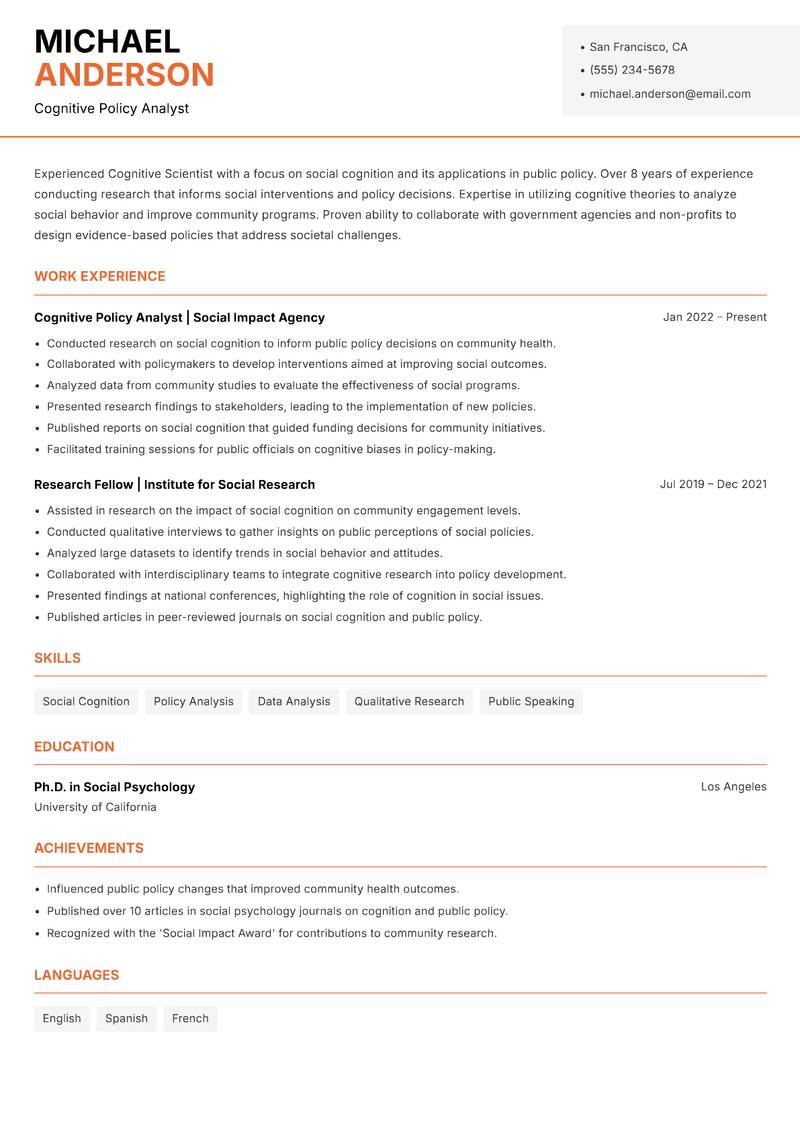
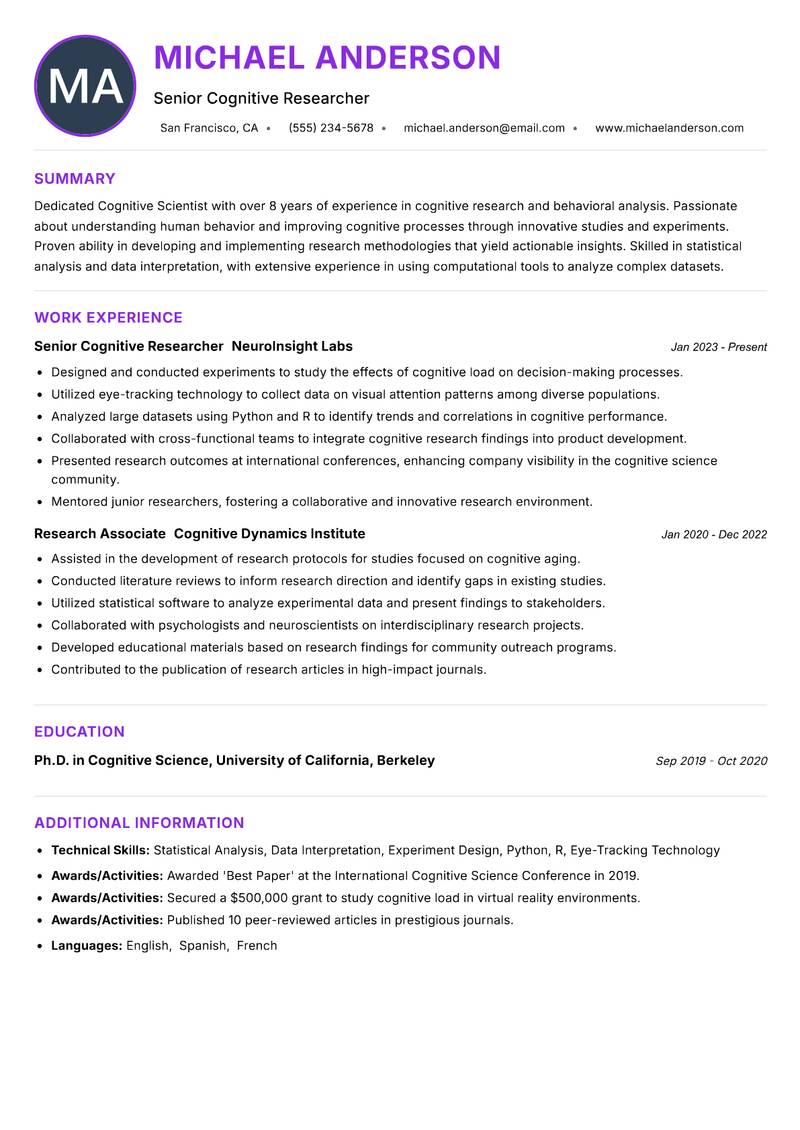
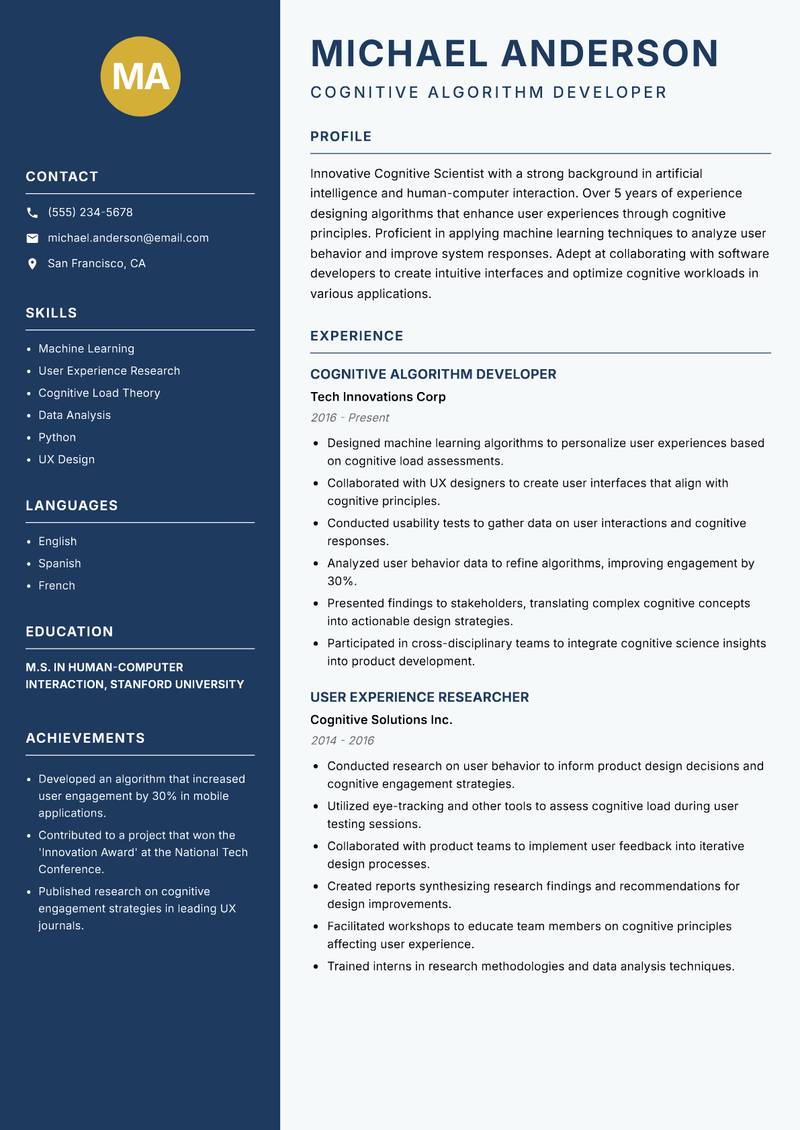
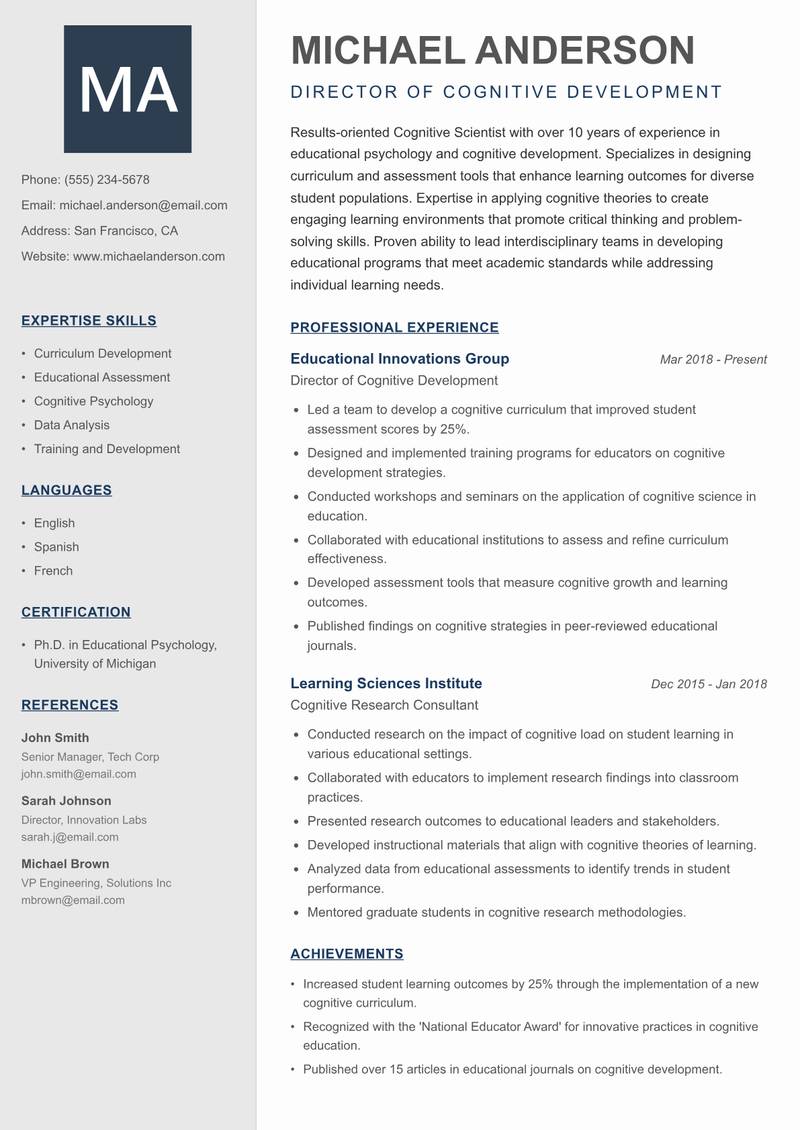
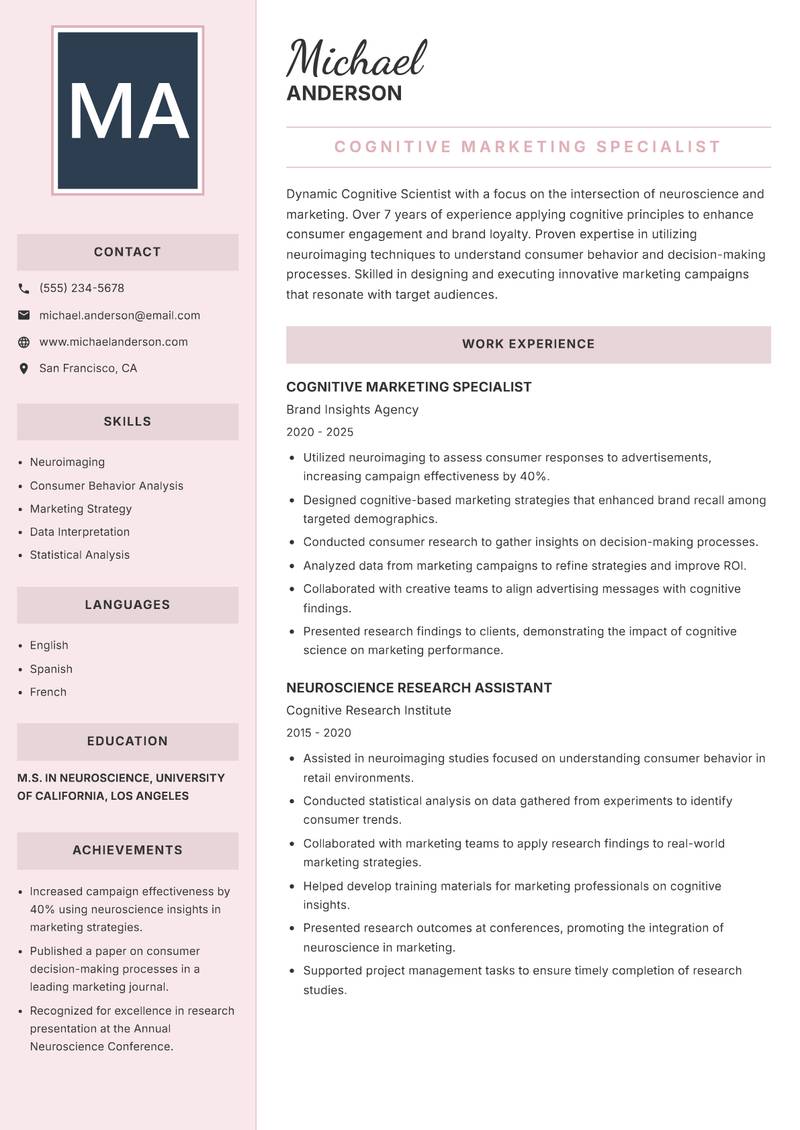
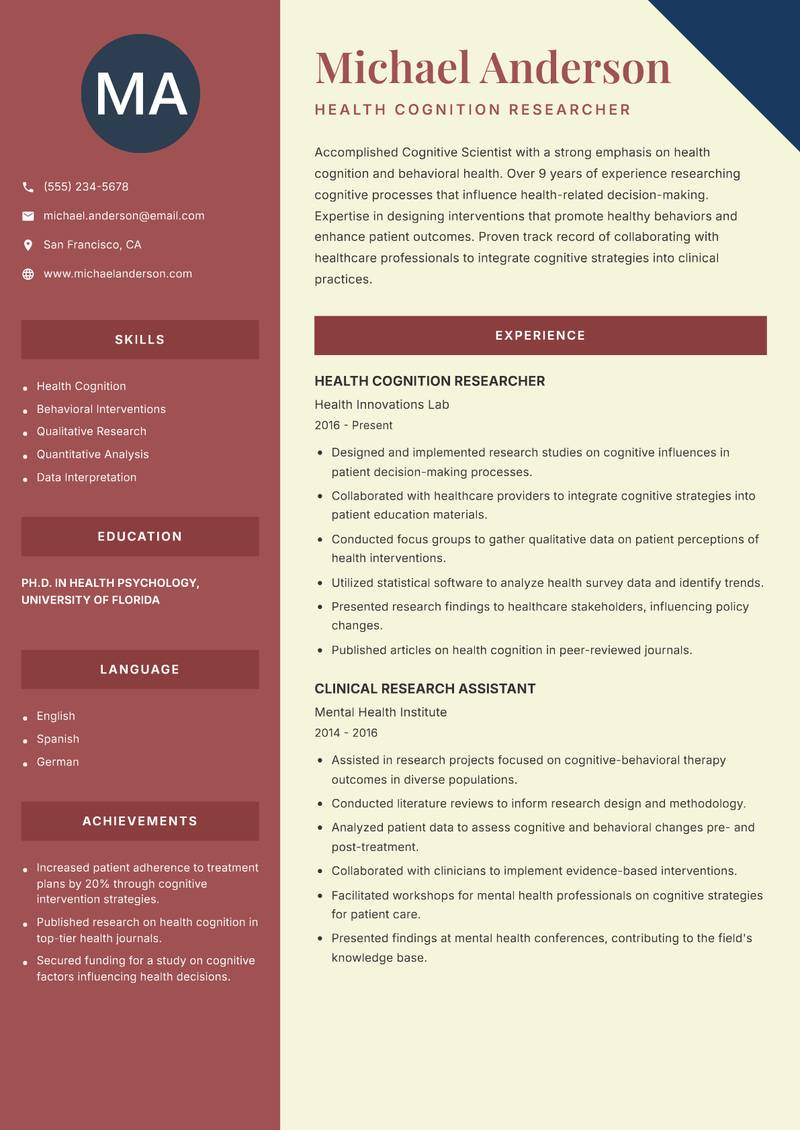
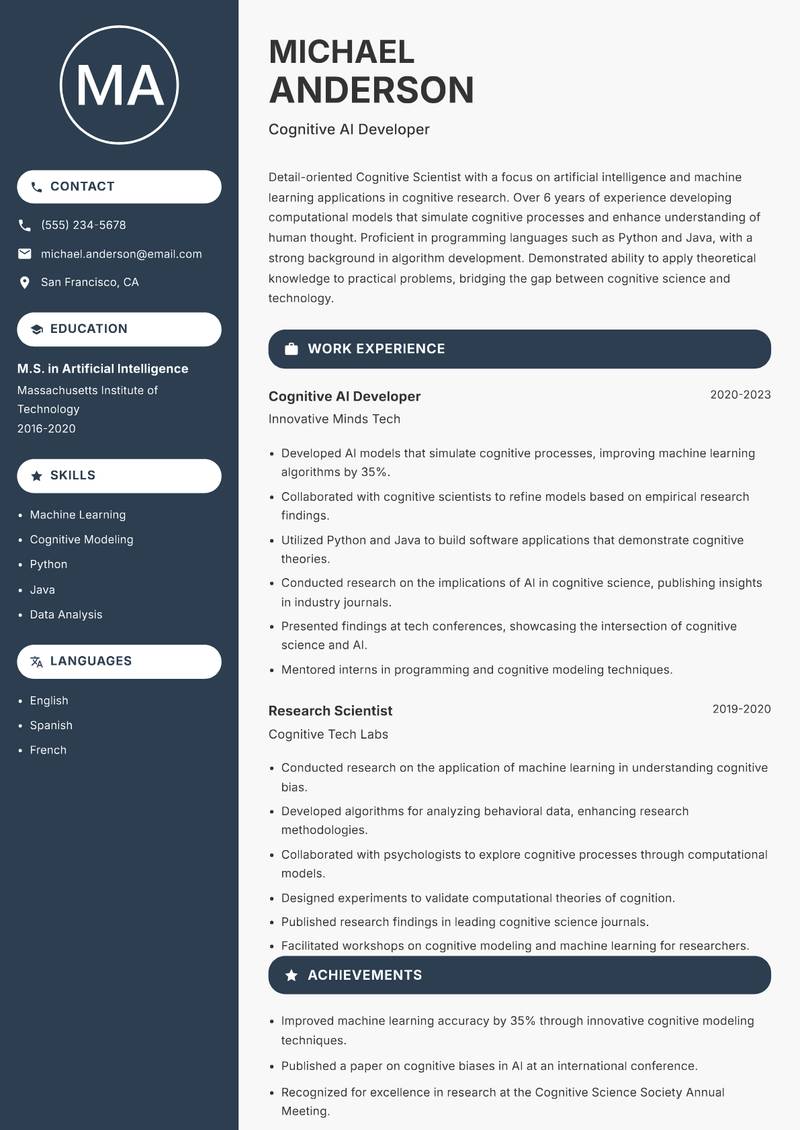
Browse Cognitive Scientist resume examples built around data analysis, tailored for Behavioral Sciences roles.
A strong Cognitive Scientist resume leads with a focused professional summary that names the exact role and your standout achievement. In the experience section, open every bullet with a strong action verb and quantify the result with numbers wherever possible. Highlight your most relevant competencies — especially Cognitive psychology, Data analysis, and Research Design (Experimental, Survey, Ethnographic) — in a dedicated Skills section positioned early so ATS systems and hiring managers both find it immediately.
For format, most Cognitive Scientist roles suit a reverse-chronological layout: most recent position first, working backwards. Keep to one page for under five years of experience, or two pages for senior candidates with a rich project or leadership history. Use clean, ATS-safe fonts (10–12pt), standard section headings (Summary, Experience, Education, Skills), and avoid tables, text boxes, or multi-column layouts that applicant tracking systems cannot parse reliably.