Key Skills for Commercial Carpenter Positions
- Commercial construction
- A keen eye for detail
- Various tools
- Structural Framing & Formwork
- Joinery & Interior Fit-Out
- Cabinet Making & Custom Furniture
- Timber Species Knowledge & Selection
- Hand & Power Tool Proficiency
- BlueprintReading & Measurement
- Jointing Techniques (Mortise, Dovetail, Biscuit)
Resume Tips for Commercial Carpenter Applications
- List all licences, tickets, and safety certifications with their issue body, number, and expiry — commercial carpenter employers often verify these before progressing any application, so missing or vague credential details cause automatic disqualification
- List trade qualification and apprenticeship completion prominently.
- Specify specialization: structural, joinery, cabinet making, or restoration carpentry.
- Highlight notable projects: residential construction, commercial fit-outs, heritage restorations.
- Demonstrate site safety qualifications: White Card (Australia), CSCS (UK), OSHA 10 (US).
- For cabinet making, include photos or portfolio links showcasing your work.
Strong Action Verbs for Commercial Carpenter Resumes
Built · Framed · Fitted · Joined · Crafted · Installed · Restored · Measured · Managed · Estimated · Achieved · Administered · Analyzed · Architected
Common Mistakes to Avoid
- Writing a generic objective statement instead of a targeted commercial carpenter professional summary
- Omitting trade qualifications — employers require evidence of formal apprenticeship.
- Not specifying specialization area — structural and finish carpentry are different skill sets.
- Failing to list safety cards and site induction certifications.
- Neglecting to demonstrate blueprint reading and measurement accuracy.
Experience Levels
- Apprentice Carpenter (0-4 years training)
- Carpenter / Journeyman (0-5 years post-qualification)
- Senior Carpenter (5-10 years)
- Carpentry Foreman / Leading Hand (10-15 years)
- Project Manager / Master Carpenter (15+ years)
How to Write a Commercial Carpenter Resume
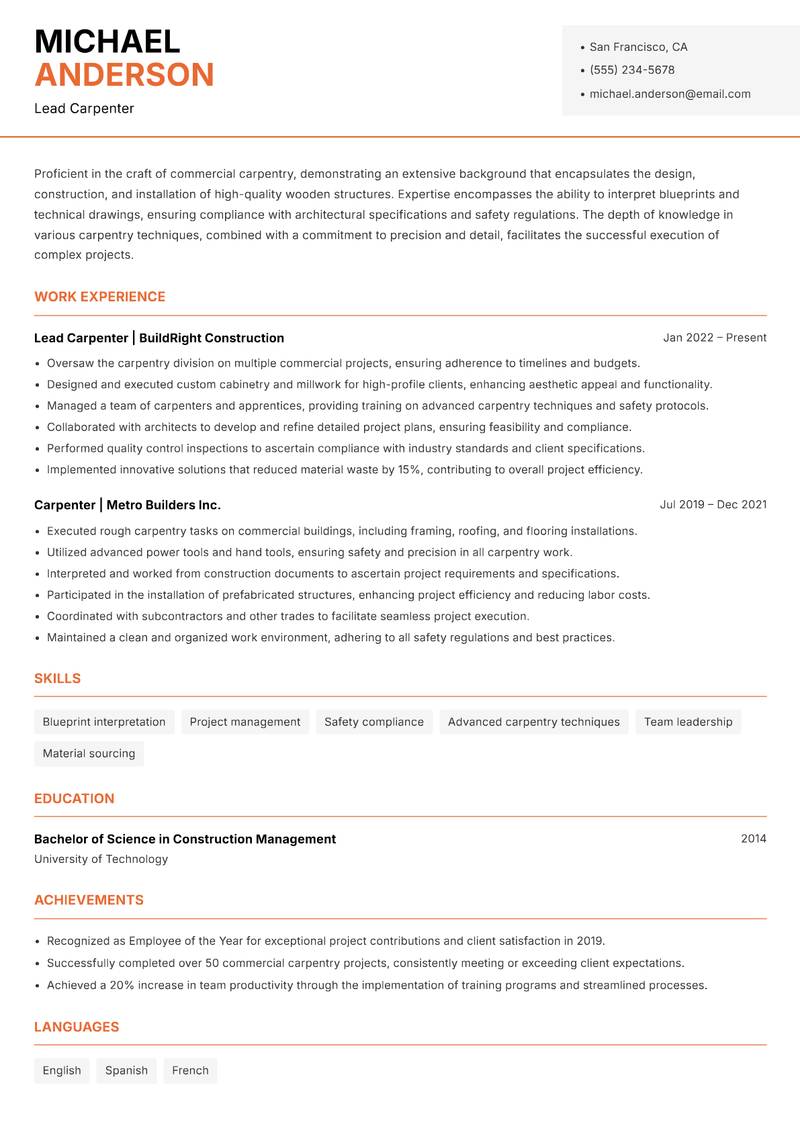
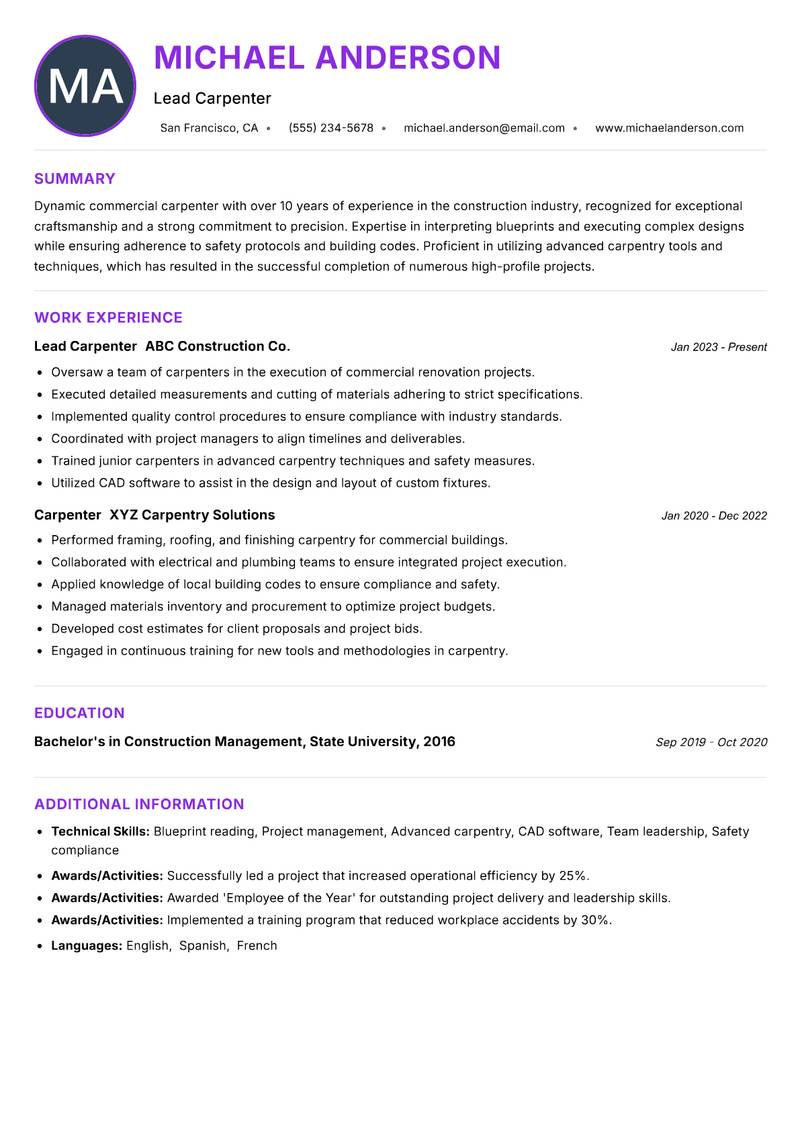
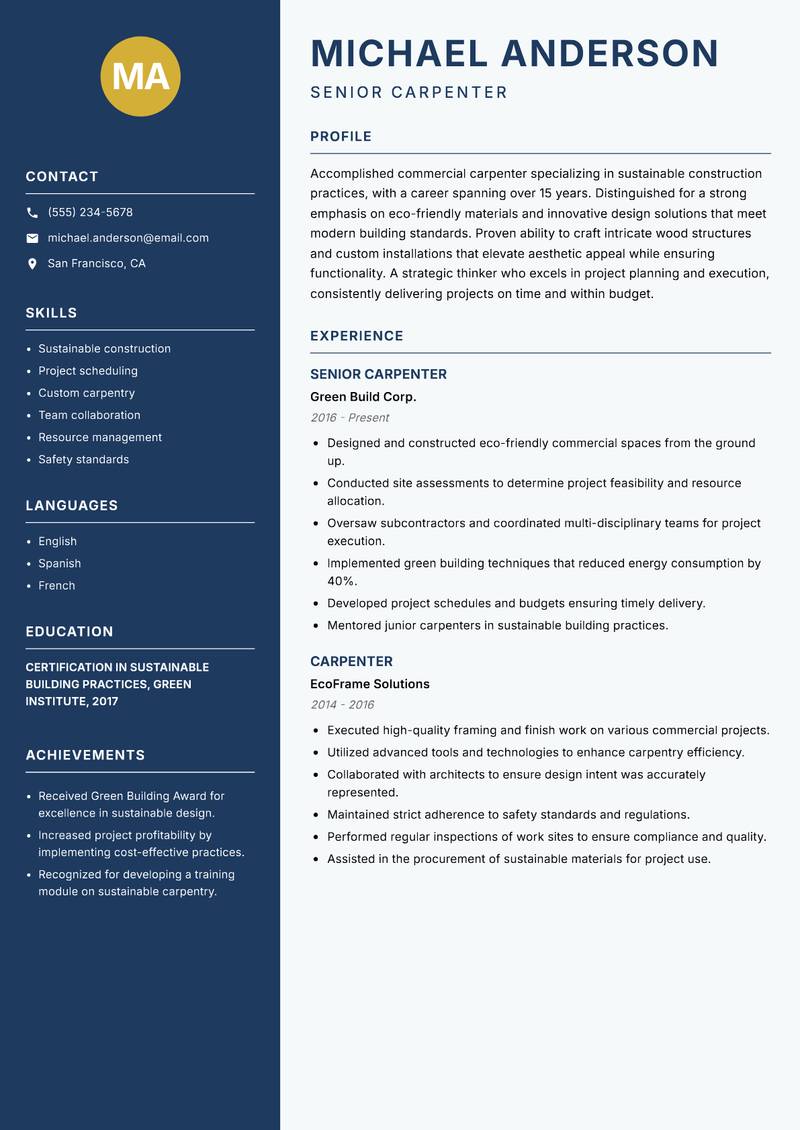
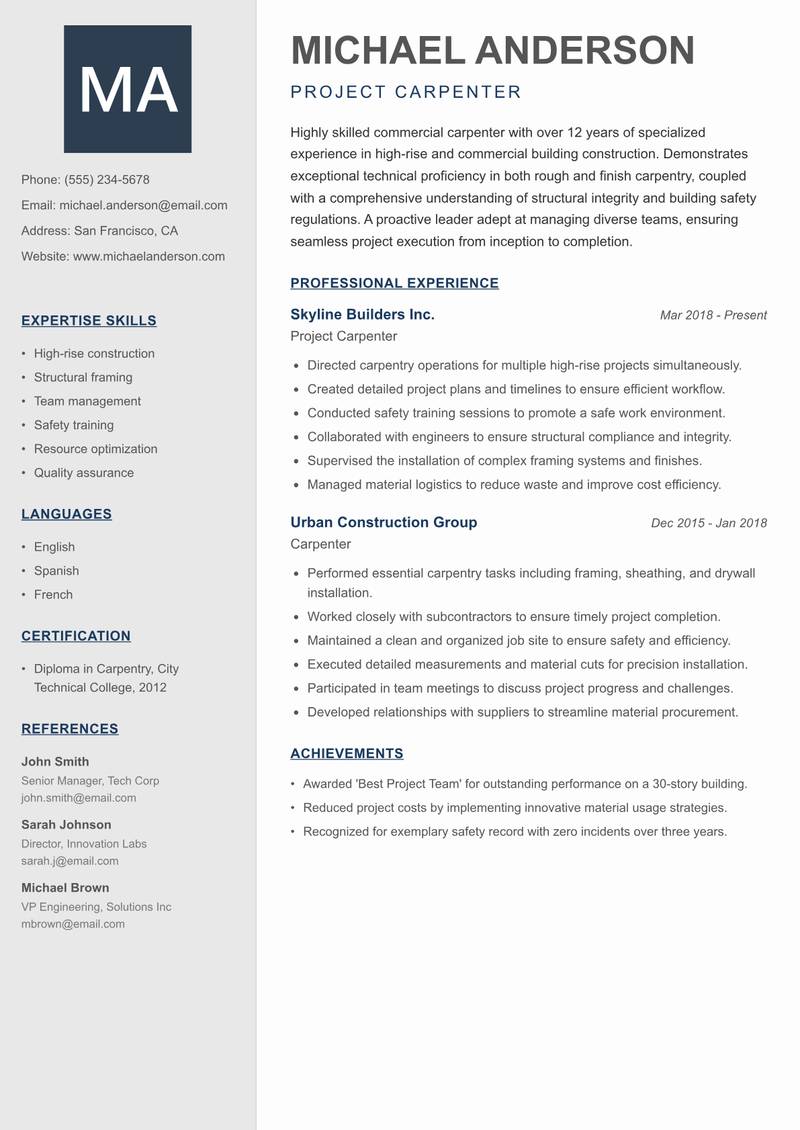
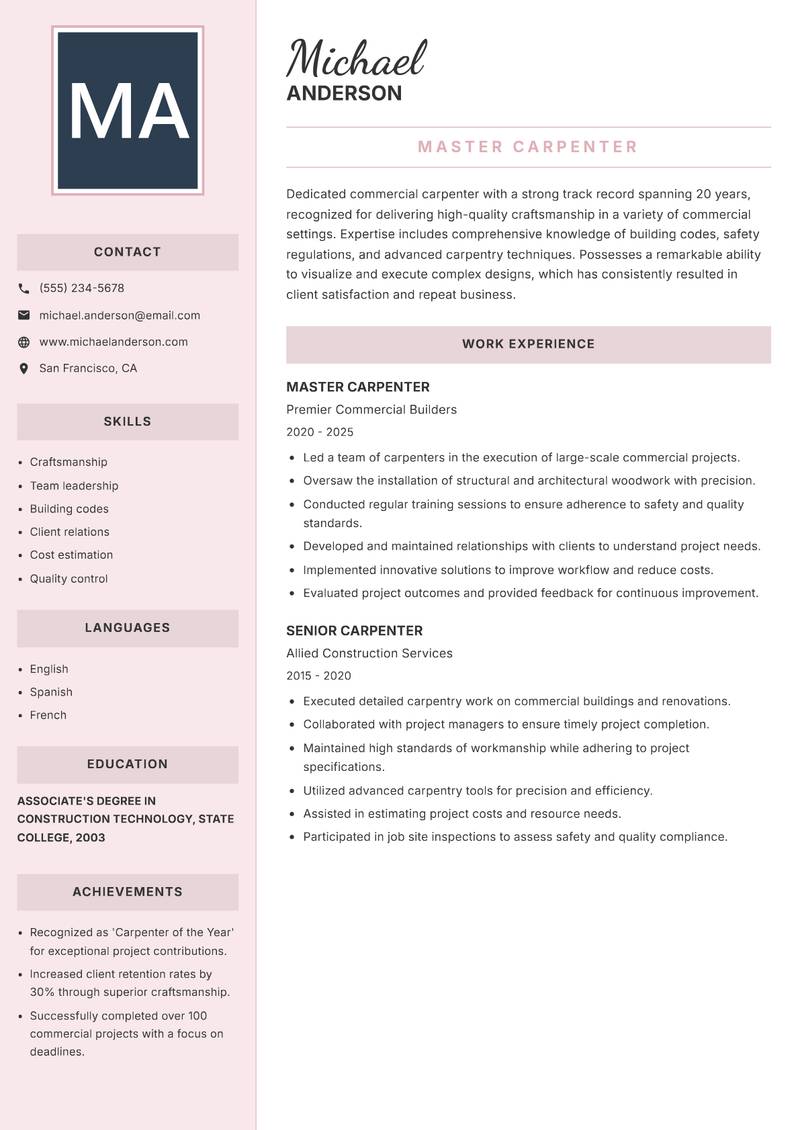
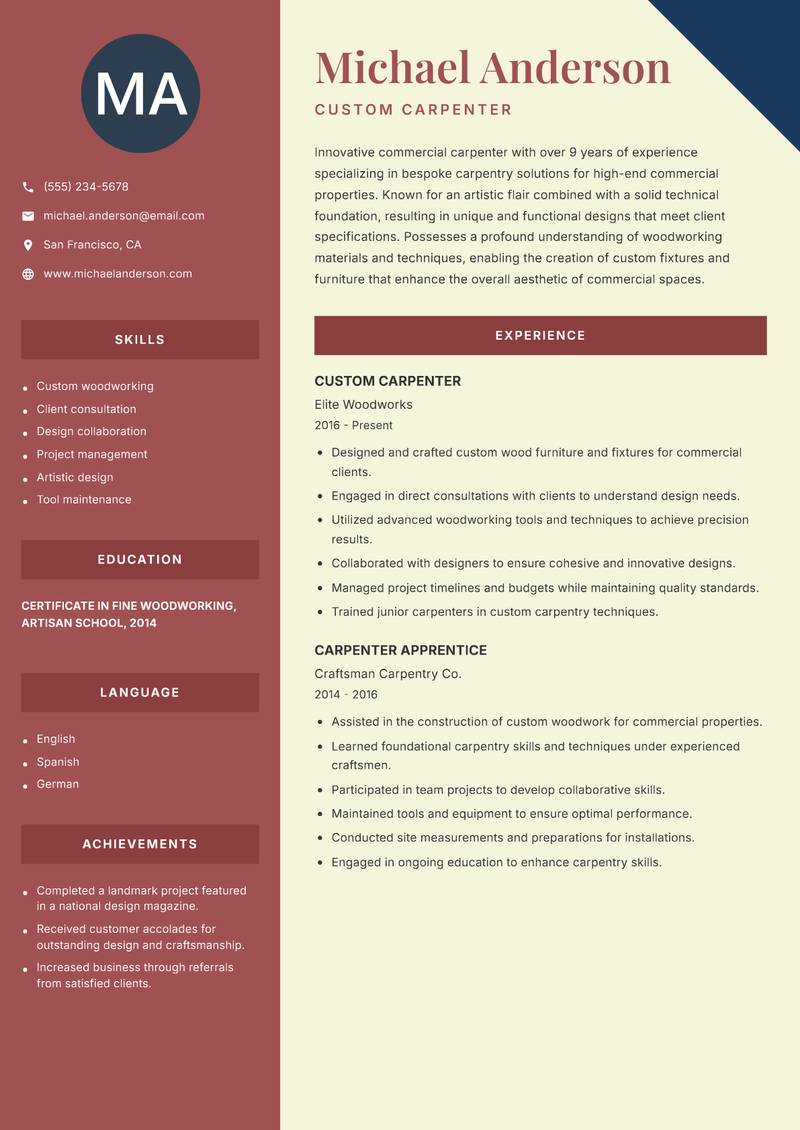
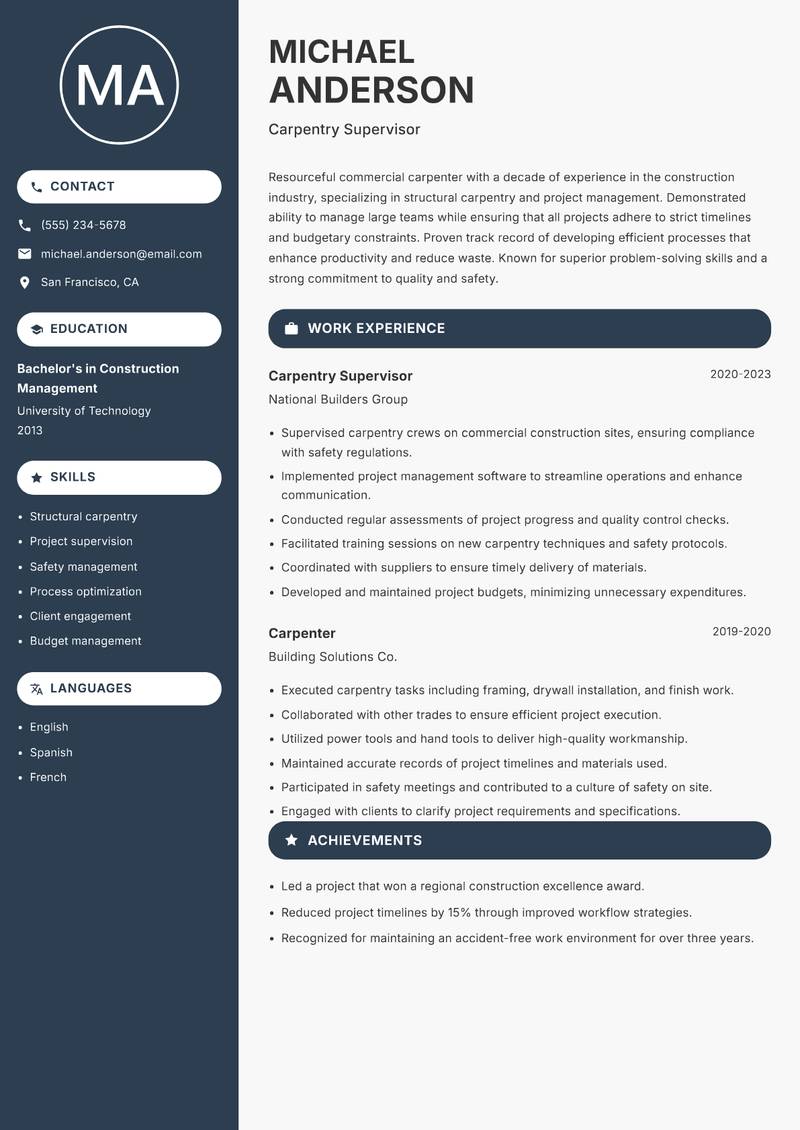
Browse Commercial Carpenter resume examples built around a keen eye for detail, tailored for Carpentry & Woodwork roles.
A strong Commercial Carpenter resume leads with a focused professional summary that names the exact role and your standout achievement. In the experience section, open every bullet with a strong action verb and quantify the result with numbers wherever possible. Highlight your most relevant competencies — especially Commercial construction, A keen eye for detail, and Various tools — in a dedicated Skills section positioned early so ATS systems and hiring managers both find it immediately.
For format, most Commercial Carpenter roles suit a reverse-chronological layout: most recent position first, working backwards. Keep to one page for under five years of experience, or two pages for senior candidates with a rich project or leadership history. Use clean, ATS-safe fonts (10–12pt), standard section headings (Summary, Experience, Education, Skills), and avoid tables, text boxes, or multi-column layouts that applicant tracking systems cannot parse reliably.