Crime Reporter Resume

These Crime Reporter resume samples are designed to help you write a resume that gets noticed by hiring managers and passes applicant tracking systems (ATS) in Journalism. Each example shows real formatting, section structure, and language you can adapt to your own background. When writing your own Crime Reporter resume, focus on highlighting news writing & reporting, investigative journalism & source development and interviewing techniques. Recruiters scan for these qualifications first, so they should appear early in your summary and experience sections. Use strong action verbs such as "reported", "investigated", "interviewed", "published" to describe your achievements, and quantify your impact wherever possible — percentages, dollar amounts, or time saved make your resume more convincing. A common mistake to avoid: writing a generic objective statement instead of a targeted crime reporter professional summary. Tailor your resume to each Crime Reporter position you apply for rather than using one generic version.

Crime Reporter Resume Template
View PDF
0.0 (0 ratings)

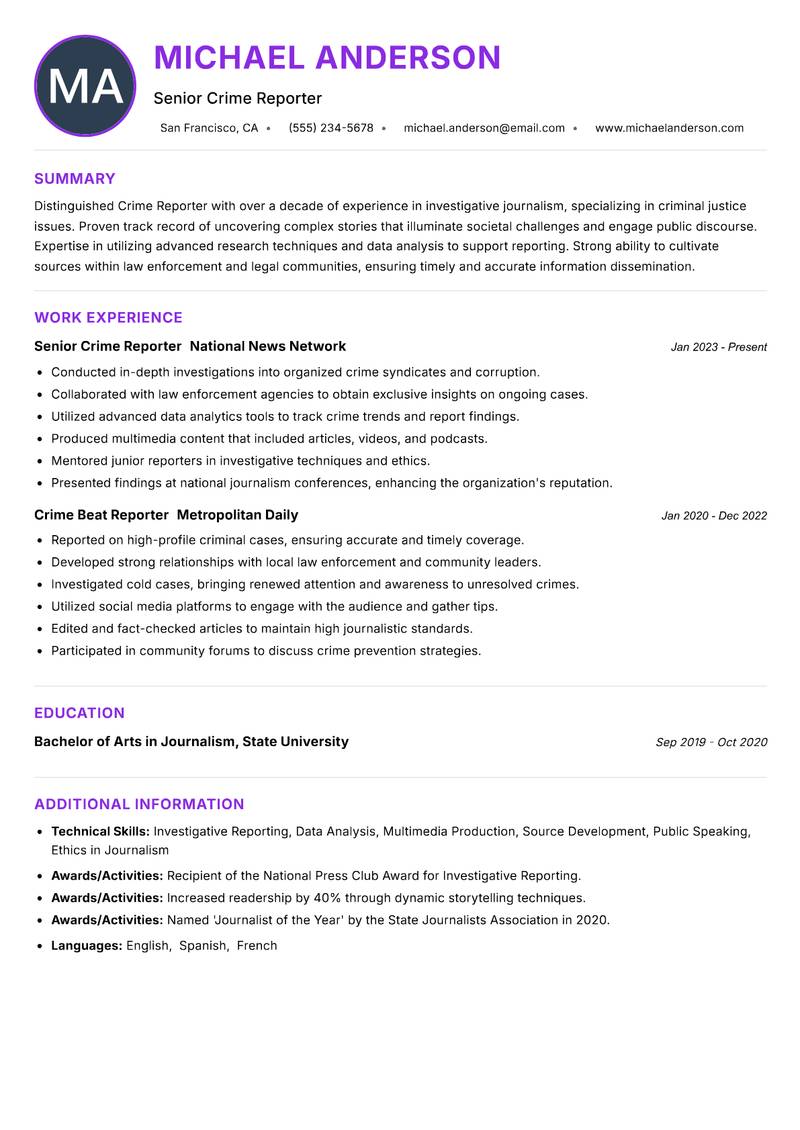
Senior Crime Reporter Resume

Distinguished Crime Reporter with over a decade of experience in investigative journalism, specializing in criminal justice issues. Proven track record of uncovering complex stories that illuminate societal challenges and engage public discourse. Expertise in utilizing advanced research techniques and data analysis to support reporting. Strong ability to cultivate sources within law enforcement and legal communities, ensuring timely and accurate information dissemination. Renowned for delivering compelling narratives that resonate with diverse audiences and elevate awareness around crime-related matters. Committed to upholding journalistic integrity while fostering transparency and accountability within the justice system.

Investigative Reporting Data Analysis Multimedia Production Source Development Public Speaking Ethics in Journalism
Crime Reporter Resume Preview Example
View PDF
  1. Conducted in-depth investigations into organized crime syndicates and corruption.
  2. Collaborated with law enforcement agencies to obtain exclusive insights on ongoing cases.
  3. Utilized advanced data analytics tools to track crime trends and report findings.
  4. Produced multimedia content that included articles, videos, and podcasts.
  5. Mentored junior reporters in investigative techniques and ethics.
  6. Presented findings at national journalism conferences, enhancing the organization's reputation.
  1. Reported on high-profile criminal cases, ensuring accurate and timely coverage.
  2. Developed strong relationships with local law enforcement and community leaders.
  3. Investigated cold cases, bringing renewed attention and awareness to unresolved crimes.
  4. Utilized social media platforms to engage with the audience and gather tips.
  5. Edited and fact-checked articles to maintain high journalistic standards.
  6. Participated in community forums to discuss crime prevention strategies.

Achievements

  • Recipient of the National Press Club Award for Investigative Reporting.
  • Increased readership by 40% through dynamic storytelling techniques.
  • Named 'Journalist of the Year' by the State Journalists Association in 2020.
⏱️
Experience
2-5 Years
📅
Level
Mid Level
🎓
Education
Bachelor of Arts in Journalism...

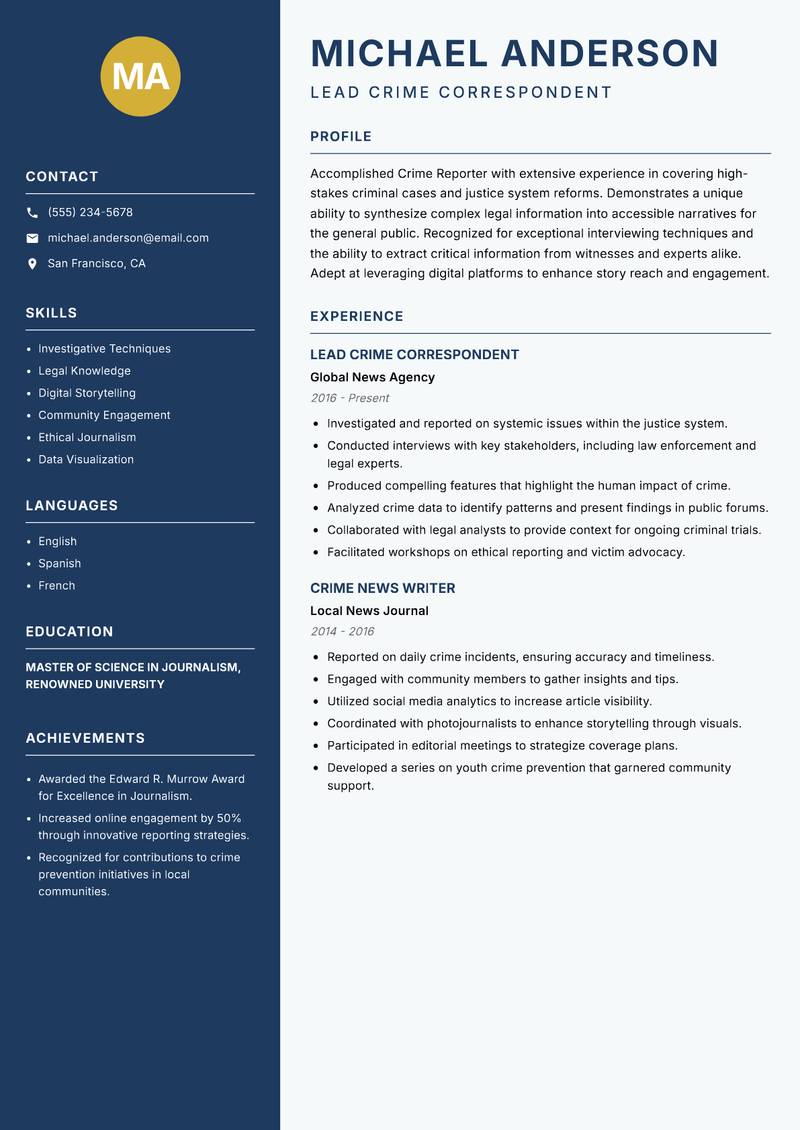
Lead Crime Correspondent Resume

Accomplished Crime Reporter with extensive experience in covering high-stakes criminal cases and justice system reforms. Demonstrates a unique ability to synthesize complex legal information into accessible narratives for the general public. Recognized for exceptional interviewing techniques and the ability to extract critical information from witnesses and experts alike. Adept at leveraging digital platforms to enhance story reach and engagement. A strong advocate for victims’ rights and community safety, often highlighting underreported issues within the criminal justice framework. Committed to fostering a nuanced understanding of crime through thorough research and ethical reporting practices.

Investigative Techniques Legal Knowledge Digital Storytelling Community Engagement Ethical Journalism Data Visualization
Crime Reporter Resume Preview Example
View PDF
  1. Investigated and reported on systemic issues within the justice system.
  2. Conducted interviews with key stakeholders, including law enforcement and legal experts.
  3. Produced compelling features that highlight the human impact of crime.
  4. Analyzed crime data to identify patterns and present findings in public forums.
  5. Collaborated with legal analysts to provide context for ongoing criminal trials.
  6. Facilitated workshops on ethical reporting and victim advocacy.
  1. Reported on daily crime incidents, ensuring accuracy and timeliness.
  2. Engaged with community members to gather insights and tips.
  3. Utilized social media analytics to increase article visibility.
  4. Coordinated with photojournalists to enhance storytelling through visuals.
  5. Participated in editorial meetings to strategize coverage plans.
  6. Developed a series on youth crime prevention that garnered community support.

Achievements

  • Awarded the Edward R. Murrow Award for Excellence in Journalism.
  • Increased online engagement by 50% through innovative reporting strategies.
  • Recognized for contributions to crime prevention initiatives in local communities.
⏱️
Experience
2-5 Years
📅
Level
Mid Level
🎓
Education
Master of Science in Journalis...

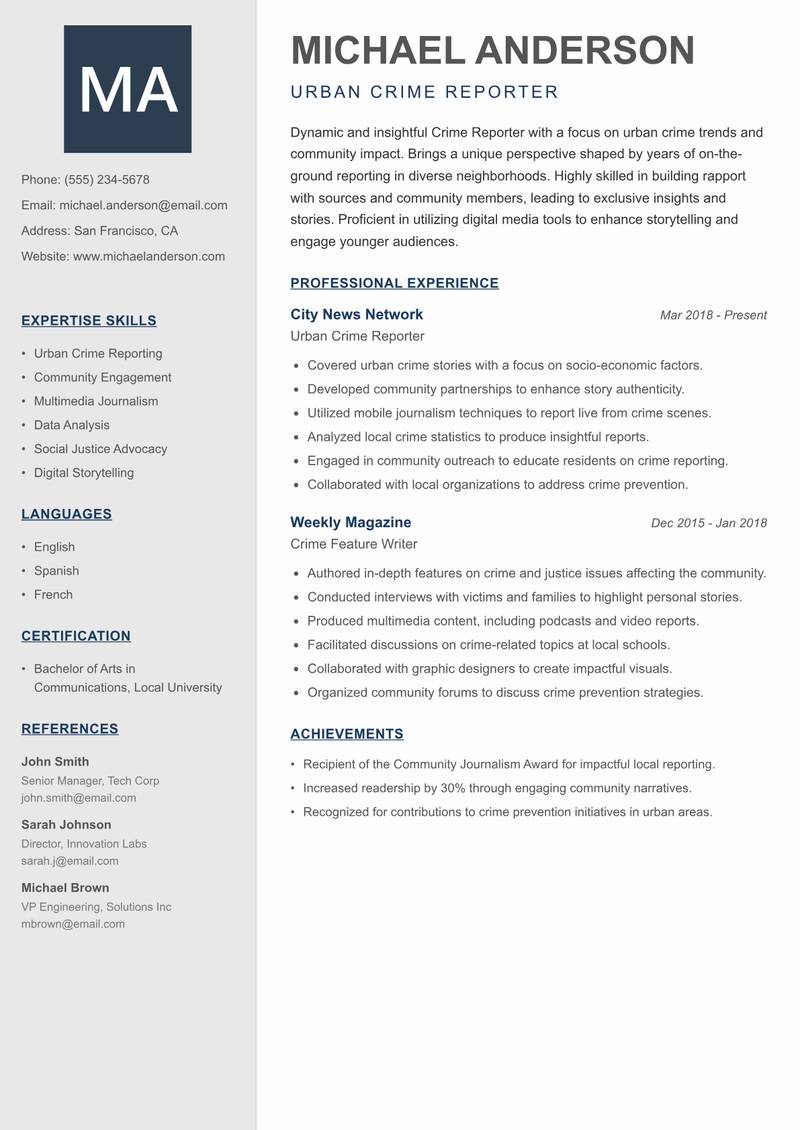
Urban Crime Reporter Resume

Dynamic and insightful Crime Reporter with a focus on urban crime trends and community impact. Brings a unique perspective shaped by years of on-the-ground reporting in diverse neighborhoods. Highly skilled in building rapport with sources and community members, leading to exclusive insights and stories. Proficient in utilizing digital media tools to enhance storytelling and engage younger audiences. Committed to shedding light on the root causes of crime and advocating for social justice through informed journalism. Recognized for the ability to balance factual reporting with compelling human interest narratives.

Urban Crime Reporting Community Engagement Multimedia Journalism Data Analysis Social Justice Advocacy Digital Storytelling
Crime Reporter Resume Preview Example
View PDF
  1. Covered urban crime stories with a focus on socio-economic factors.
  2. Developed community partnerships to enhance story authenticity.
  3. Utilized mobile journalism techniques to report live from crime scenes.
  4. Analyzed local crime statistics to produce insightful reports.
  5. Engaged in community outreach to educate residents on crime reporting.
  6. Collaborated with local organizations to address crime prevention.
  1. Authored in-depth features on crime and justice issues affecting the community.
  2. Conducted interviews with victims and families to highlight personal stories.
  3. Produced multimedia content, including podcasts and video reports.
  4. Facilitated discussions on crime-related topics at local schools.
  5. Collaborated with graphic designers to create impactful visuals.
  6. Organized community forums to discuss crime prevention strategies.

Achievements

  • Recipient of the Community Journalism Award for impactful local reporting.
  • Increased readership by 30% through engaging community narratives.
  • Recognized for contributions to crime prevention initiatives in urban areas.
⏱️
Experience
2-5 Years
📅
Level
Mid Level
🎓
Education
Bachelor of Arts in Communicat...

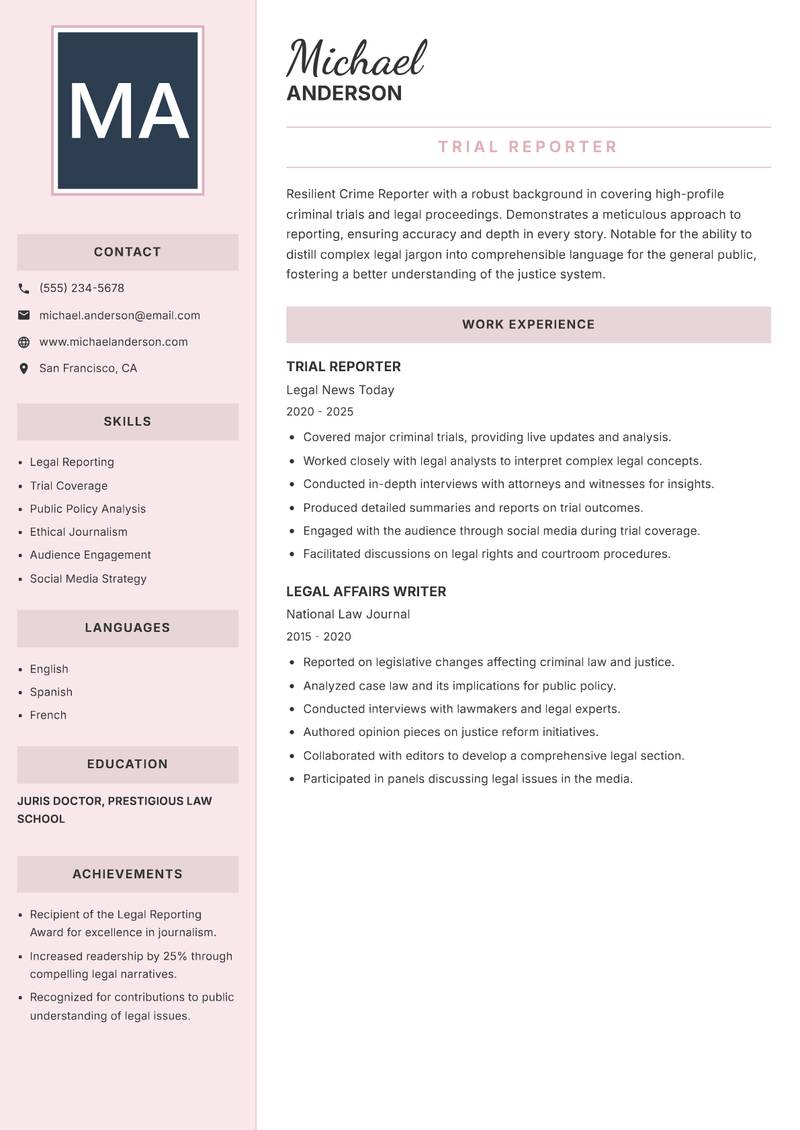
Trial Reporter Resume

Resilient Crime Reporter with a robust background in covering high-profile criminal trials and legal proceedings. Demonstrates a meticulous approach to reporting, ensuring accuracy and depth in every story. Notable for the ability to distill complex legal jargon into comprehensible language for the general public, fostering a better understanding of the justice system. Engages with legal experts and advocates to provide context and analysis on significant cases. Committed to ethical journalism and the pursuit of truth, with a strong focus on accountability and transparency in the legal sphere. Recognized for impactful reporting that drives public interest and awareness.

Legal Reporting Trial Coverage Public Policy Analysis Ethical Journalism Audience Engagement Social Media Strategy
Crime Reporter Resume Preview Example
View PDF
  1. Covered major criminal trials, providing live updates and analysis.
  2. Worked closely with legal analysts to interpret complex legal concepts.
  3. Conducted in-depth interviews with attorneys and witnesses for insights.
  4. Produced detailed summaries and reports on trial outcomes.
  5. Engaged with the audience through social media during trial coverage.
  6. Facilitated discussions on legal rights and courtroom procedures.
  1. Reported on legislative changes affecting criminal law and justice.
  2. Analyzed case law and its implications for public policy.
  3. Conducted interviews with lawmakers and legal experts.
  4. Authored opinion pieces on justice reform initiatives.
  5. Collaborated with editors to develop a comprehensive legal section.
  6. Participated in panels discussing legal issues in the media.

Achievements

  • Recipient of the Legal Reporting Award for excellence in journalism.
  • Increased readership by 25% through compelling legal narratives.
  • Recognized for contributions to public understanding of legal issues.
⏱️
Experience
2-5 Years
📅
Level
Mid Level
🎓
Education
Juris Doctor, Prestigious Law ...

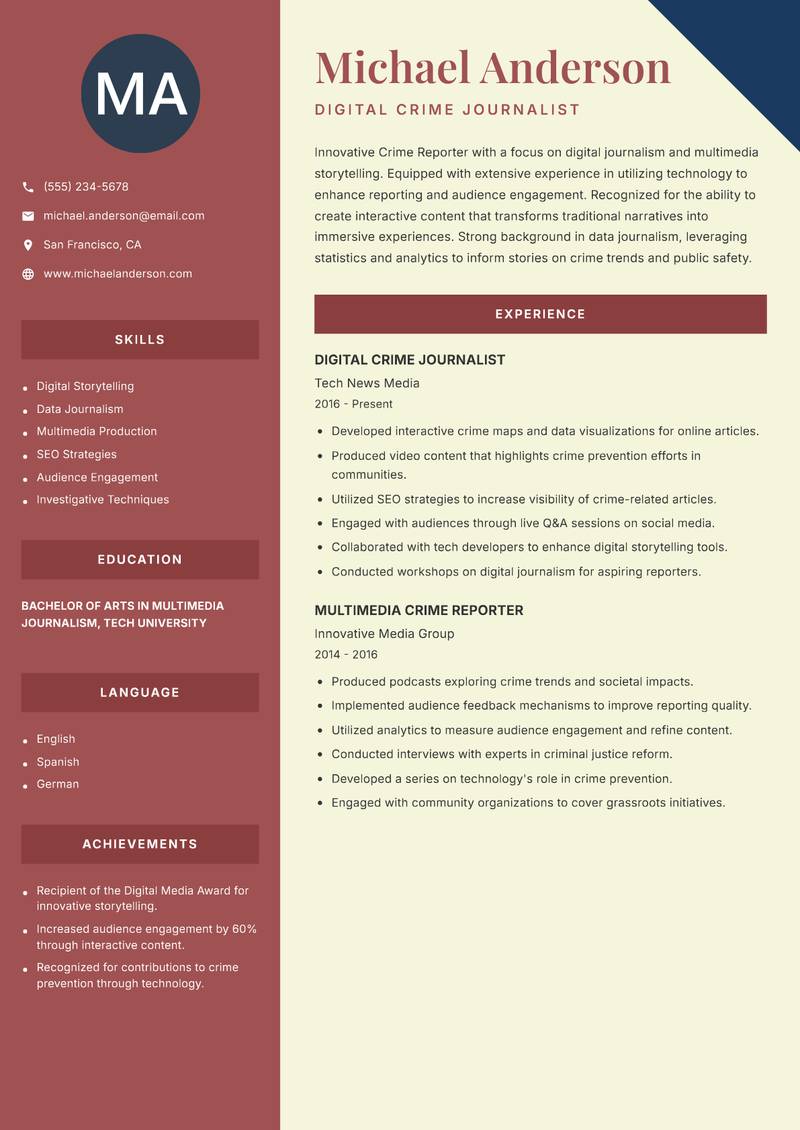
Digital Crime Journalist Resume

Innovative Crime Reporter with a focus on digital journalism and multimedia storytelling. Equipped with extensive experience in utilizing technology to enhance reporting and audience engagement. Recognized for the ability to create interactive content that transforms traditional narratives into immersive experiences. Strong background in data journalism, leveraging statistics and analytics to inform stories on crime trends and public safety. Committed to fostering transparency and accountability through investigative reporting. Known for engaging with diverse communities to amplify underrepresented voices in crime narratives.

Digital Storytelling Data Journalism Multimedia Production SEO Strategies Audience Engagement Investigative Techniques
Crime Reporter Resume Preview Example
View PDF
  1. Developed interactive crime maps and data visualizations for online articles.
  2. Produced video content that highlights crime prevention efforts in communities.
  3. Utilized SEO strategies to increase visibility of crime-related articles.
  4. Engaged with audiences through live Q&A sessions on social media.
  5. Collaborated with tech developers to enhance digital storytelling tools.
  6. Conducted workshops on digital journalism for aspiring reporters.
  1. Produced podcasts exploring crime trends and societal impacts.
  2. Implemented audience feedback mechanisms to improve reporting quality.
  3. Utilized analytics to measure audience engagement and refine content.
  4. Conducted interviews with experts in criminal justice reform.
  5. Developed a series on technology's role in crime prevention.
  6. Engaged with community organizations to cover grassroots initiatives.

Achievements

  • Recipient of the Digital Media Award for innovative storytelling.
  • Increased audience engagement by 60% through interactive content.
  • Recognized for contributions to crime prevention through technology.
⏱️
Experience
2-5 Years
📅
Level
Mid Level
🎓
Education
Bachelor of Arts in Multimedia...

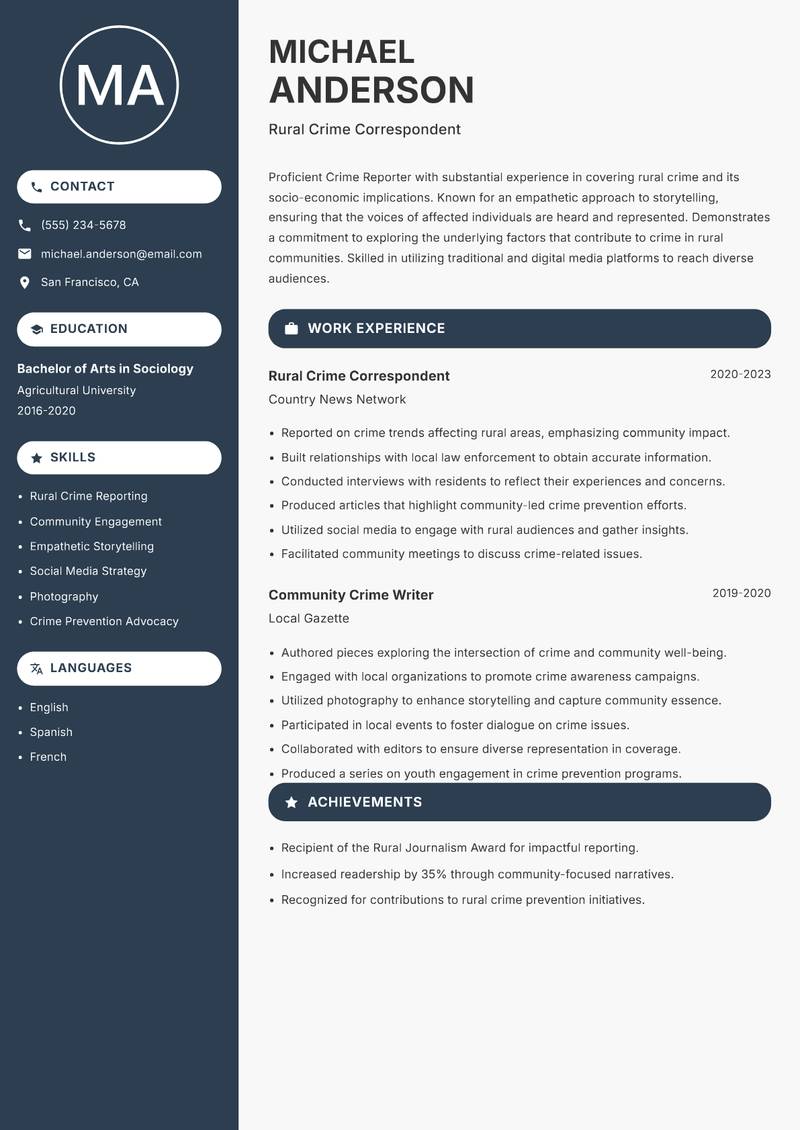
Rural Crime Correspondent Resume

Proficient Crime Reporter with substantial experience in covering rural crime and its socio-economic implications. Known for an empathetic approach to storytelling, ensuring that the voices of affected individuals are heard and represented. Demonstrates a commitment to exploring the underlying factors that contribute to crime in rural communities. Skilled in utilizing traditional and digital media platforms to reach diverse audiences. A strong advocate for community engagement and education on crime prevention initiatives. Recognized for the ability to build trust within communities, fostering open communication and collaboration.

Rural Crime Reporting Community Engagement Empathetic Storytelling Social Media Strategy Photography Crime Prevention Advocacy
Crime Reporter Resume Preview Example
View PDF
  1. Reported on crime trends affecting rural areas, emphasizing community impact.
  2. Built relationships with local law enforcement to obtain accurate information.
  3. Conducted interviews with residents to reflect their experiences and concerns.
  4. Produced articles that highlight community-led crime prevention efforts.
  5. Utilized social media to engage with rural audiences and gather insights.
  6. Facilitated community meetings to discuss crime-related issues.
  1. Authored pieces exploring the intersection of crime and community well-being.
  2. Engaged with local organizations to promote crime awareness campaigns.
  3. Utilized photography to enhance storytelling and capture community essence.
  4. Participated in local events to foster dialogue on crime issues.
  5. Collaborated with editors to ensure diverse representation in coverage.
  6. Produced a series on youth engagement in crime prevention programs.

Achievements

  • Recipient of the Rural Journalism Award for impactful reporting.
  • Increased readership by 35% through community-focused narratives.
  • Recognized for contributions to rural crime prevention initiatives.
⏱️
Experience
2-5 Years
📅
Level
Mid Level
🎓
Education
Bachelor of Arts in Sociology,...

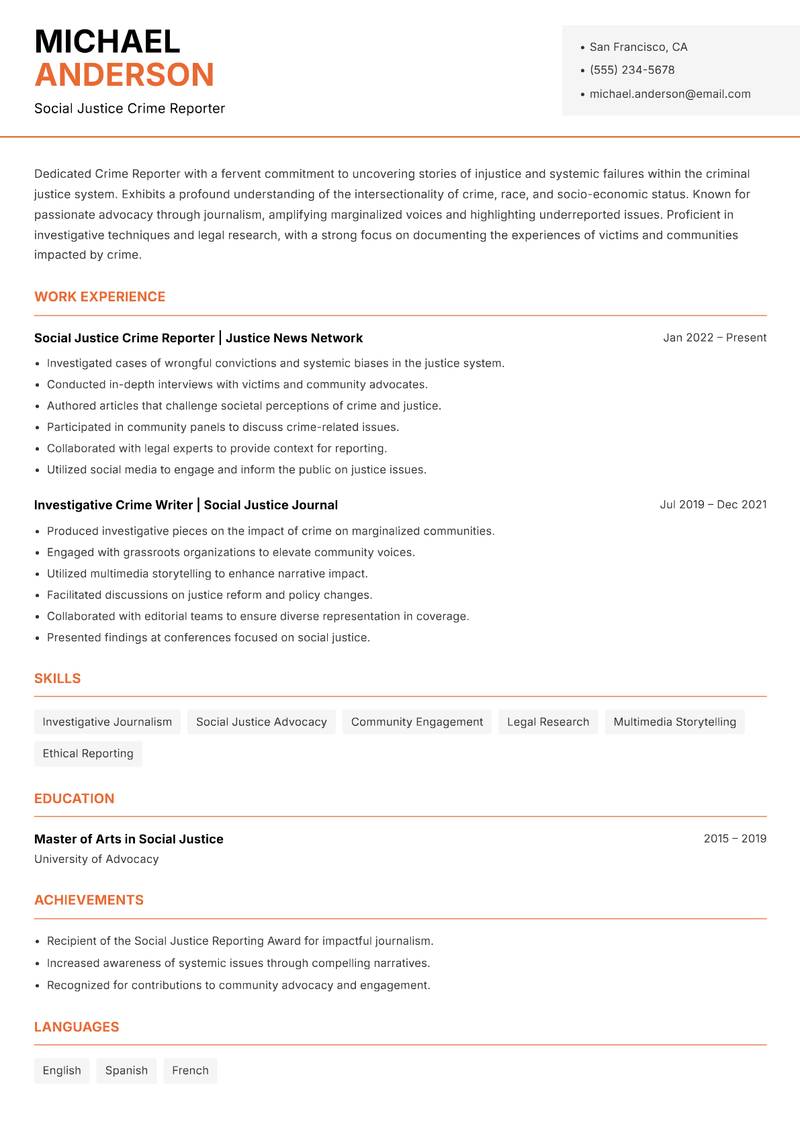
Social Justice Crime Reporter Resume

Dedicated Crime Reporter with a fervent commitment to uncovering stories of injustice and systemic failures within the criminal justice system. Exhibits a profound understanding of the intersectionality of crime, race, and socio-economic status. Known for passionate advocacy through journalism, amplifying marginalized voices and highlighting underreported issues. Proficient in investigative techniques and legal research, with a strong focus on documenting the experiences of victims and communities impacted by crime. Aims to foster societal change through informed reporting and community engagement. Recognized for impactful storytelling that resonates with audiences and drives public discourse.

Investigative Journalism Social Justice Advocacy Community Engagement Legal Research Multimedia Storytelling Ethical Reporting
Crime Reporter Resume Preview Example
View PDF
  1. Investigated cases of wrongful convictions and systemic biases in the justice system.
  2. Conducted in-depth interviews with victims and community advocates.
  3. Authored articles that challenge societal perceptions of crime and justice.
  4. Participated in community panels to discuss crime-related issues.
  5. Collaborated with legal experts to provide context for reporting.
  6. Utilized social media to engage and inform the public on justice issues.
  1. Produced investigative pieces on the impact of crime on marginalized communities.
  2. Engaged with grassroots organizations to elevate community voices.
  3. Utilized multimedia storytelling to enhance narrative impact.
  4. Facilitated discussions on justice reform and policy changes.
  5. Collaborated with editorial teams to ensure diverse representation in coverage.
  6. Presented findings at conferences focused on social justice.

Achievements

  • Recipient of the Social Justice Reporting Award for impactful journalism.
  • Increased awareness of systemic issues through compelling narratives.
  • Recognized for contributions to community advocacy and engagement.
⏱️
Experience
2-5 Years
📅
Level
Mid Level
🎓
Education
Master of Arts in Social Justi...

Key Skills for Crime Reporter Positions

Resume Tips for Crime Reporter Applications

Strong Action Verbs for Crime Reporter Resumes

Reported · Investigated · Interviewed · Published · Edited · Broke · Filmed · Analyzed · Sourced · Revealed · Achieved · Administered · Architected · Assessed

Common Mistakes to Avoid

Experience Levels

How to Write a Crime Reporter Resume

Browse Crime Reporter resume examples built around news writing & reporting, tailored for Journalism roles.

A strong Crime Reporter resume leads with a focused professional summary that names the exact role and your standout achievement. In the experience section, open every bullet with a strong action verb and quantify the result with numbers wherever possible. Highlight your most relevant competencies — especially News Writing & Reporting, Investigative Journalism & Source Development, and Interviewing Techniques — in a dedicated Skills section positioned early so ATS systems and hiring managers both find it immediately.

For format, most Crime Reporter roles suit a reverse-chronological layout: most recent position first, working backwards. Keep to one page for under five years of experience, or two pages for senior candidates with a rich project or leadership history. Use clean, ATS-safe fonts (10–12pt), standard section headings (Summary, Experience, Education, Skills), and avoid tables, text boxes, or multi-column layouts that applicant tracking systems cannot parse reliably.
Frequently Asked Questions

What makes a strong Crime Reporter resume stand out to employers?

A standout Crime Reporter resume combines role-specific skills with quantified achievements. Name the exact job title in your professional summary, mirror keywords from each job posting, and open every bullet point with a strong action verb followed by a measurable result. Certifications, tools, and domain experience specific to crime reporter roles should appear prominently near the top.

What skills are most important to include on a Journalism resume?

Recruiters hiring in Journalism consistently look for News Writing & Reporting, Investigative Journalism & Source Development, Interviewing Techniques, Multimedia Production (Video, Audio, Photography). List these in a dedicated Skills section near the top so both ATS systems and human reviewers spot them fast. Mirror the exact phrasing from each job posting wherever possible — many applicant tracking systems match literal strings rather than synonyms.

What is the best resume format for Journalism professionals?

A reverse-chronological format is the standard choice for most Journalism candidates — employers expect to see your most recent role first, working backwards. If you are transitioning into Journalism from a related field, a hybrid format (brief skills summary at the top followed by chronological experience) can bridge the gap effectively. Keep the document to one page for under five years of experience, or two pages for senior specialists.

How do I make my Journalism resume pass applicant tracking systems (ATS)?

Use standard section headings — Summary, Experience, Education, Skills — rather than creative labels that ATS parsers do not recognise. Embed domain keywords such as "News Writing & Reporting" and "Investigative Journalism & Source Development" naturally inside your experience bullets rather than cramming them into a standalone keyword list. Avoid tables, multi-column layouts, text boxes, headers, footers, and images — these confuse most modern parsers and can cause your resume to be misread or rejected before a human sees it.

What mistakes do Journalism professionals most commonly make on their resume?

The most frequent issue is not linking to a byline portfolio — editors cannot assess journalists without reading their work. Beyond that, generic objective statements, unquantified achievements, and inconsistent date formatting appear across almost every Journalism application. Fix these by replacing every vague claim with a measurable outcome — specific numbers and named projects add credibility that adjectives cannot.

How long should a Journalism resume be?

One page is appropriate for candidates with under five years of relevant Journalism experience. Two pages are acceptable — and sometimes expected — for senior specialists, managers, or professionals with a strong portfolio of projects, publications, or credentials. Avoid padding to reach a page count: every line should directly support your application for the specific role you are targeting.

Should I include a professional summary at the top of my Journalism resume?

Yes — a two to three sentence summary is the first section most recruiters read. Open with your title and years of Journalism experience, then name your most relevant achievement or specialisation. One proven approach: Link to a portfolio of published bylines — the publication name and quality of writing are the primary credentials — this level of specificity signals genuine expertise before a recruiter reaches your experience section.

Scroll to view samples