Cybersecurity Researcher Resume

These Cybersecurity Researcher resume samples are designed to help you write a resume that gets noticed by hiring managers and passes applicant tracking systems (ATS) in Cybersecurity. Each example shows real formatting, section structure, and language you can adapt to your own background. When writing your own Cybersecurity Researcher resume, focus on highlighting threat detection & incident response, penetration testing & vulnerability assessment and security information & event management (SIEM). Recruiters scan for these qualifications first, so they should appear early in your summary and experience sections. Use strong action verbs such as "secured", "detected", "responded", "penetrated" to describe your achievements, and quantify your impact wherever possible — percentages, dollar amounts, or time saved make your resume more convincing. A common mistake to avoid: writing a generic objective statement instead of a targeted cybersecurity researcher professional summary. Tailor your resume to each Cybersecurity Researcher position you apply for rather than using one generic version.

Cybersecurity Researcher Resume Template
View PDF
0.0 (0 ratings)

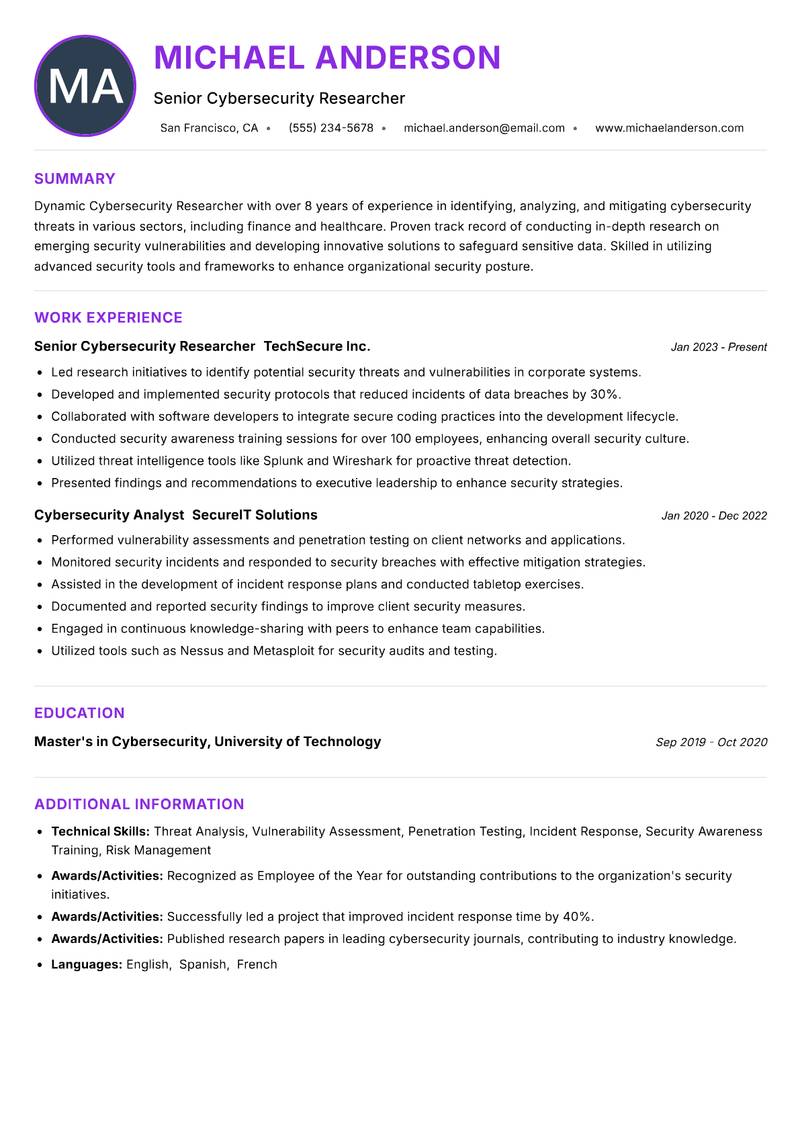
Senior Cybersecurity Researcher Resume

Dynamic Cybersecurity Researcher with over 8 years of experience in identifying, analyzing, and mitigating cybersecurity threats in various sectors, including finance and healthcare. Proven track record of conducting in-depth research on emerging security vulnerabilities and developing innovative solutions to safeguard sensitive data. Skilled in utilizing advanced security tools and frameworks to enhance organizational security posture. Adept at collaborating with cross-functional teams to develop comprehensive cybersecurity strategies and policies. Committed to continuous learning and staying updated on the latest cybersecurity trends and technologies. Holds a Master's degree in Cybersecurity and various industry certifications, including Certified Information Systems Security Professional (CISSP). Passionate about educating others on cybersecurity best practices and enhancing security awareness across organizations.

Threat Analysis Vulnerability Assessment Penetration Testing Incident Response Security Awareness Training Risk Management
Cybersecurity Researcher Resume Preview Example
View PDF
  1. Led research initiatives to identify potential security threats and vulnerabilities in corporate systems.
  2. Developed and implemented security protocols that reduced incidents of data breaches by 30%.
  3. Collaborated with software developers to integrate secure coding practices into the development lifecycle.
  4. Conducted security awareness training sessions for over 100 employees, enhancing overall security culture.
  5. Utilized threat intelligence tools like Splunk and Wireshark for proactive threat detection.
  6. Presented findings and recommendations to executive leadership to enhance security strategies.
  1. Performed vulnerability assessments and penetration testing on client networks and applications.
  2. Monitored security incidents and responded to security breaches with effective mitigation strategies.
  3. Assisted in the development of incident response plans and conducted tabletop exercises.
  4. Documented and reported security findings to improve client security measures.
  5. Engaged in continuous knowledge-sharing with peers to enhance team capabilities.
  6. Utilized tools such as Nessus and Metasploit for security audits and testing.

Achievements

  • Recognized as Employee of the Year for outstanding contributions to the organization's security initiatives.
  • Successfully led a project that improved incident response time by 40%.
  • Published research papers in leading cybersecurity journals, contributing to industry knowledge.
⏱️
Experience
2-5 Years
📅
Level
Mid Level
🎓
Education
Master's in Cybersecurity, Uni...

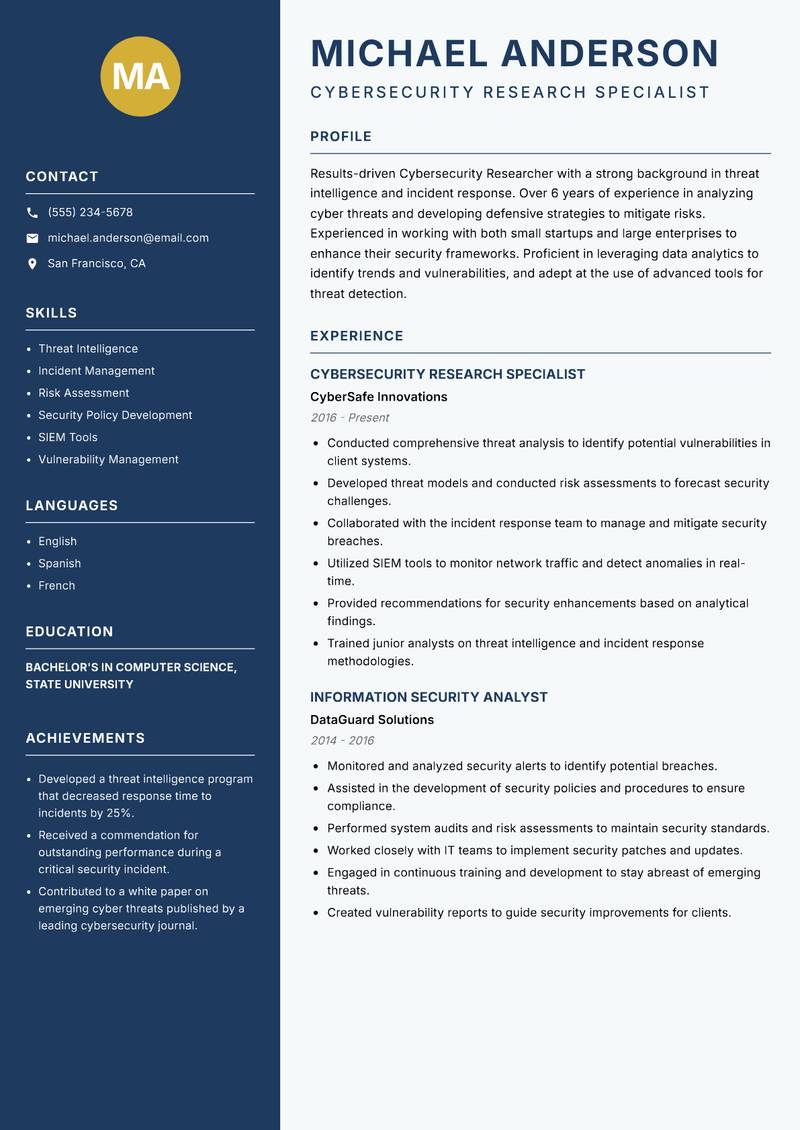
Cybersecurity Research Specialist Resume

Experienced Cybersecurity Researcher with a strong background in threat intelligence and incident response. Over 6 years of experience in analyzing cyber threats and developing defensive strategies to mitigate risks. Experienced in working with both small startups and large enterprises to enhance their security frameworks. Proficient in leveraging data analytics to identify trends and vulnerabilities, and adept at the use of advanced tools for threat detection. Strong communication skills enable effective collaboration with technical teams and stakeholders. Holds a Bachelor's degree in Computer Science and multiple certifications, including Certified Ethical Hacker (CEH). Passionate about fostering a culture of security awareness and implementing best practices across organizations.

Threat Intelligence Incident Management Risk Assessment Security Policy Development SIEM Tools Vulnerability Management
Cybersecurity Researcher Resume Preview Example
View PDF
  1. Conducted comprehensive threat analysis to identify potential vulnerabilities in client systems.
  2. Developed threat models and conducted risk assessments to forecast security challenges.
  3. Collaborated with the incident response team to manage and mitigate security breaches.
  4. Utilized SIEM tools to monitor network traffic and detect anomalies in real-time.
  5. Provided recommendations for security enhancements based on analytical findings.
  6. Trained junior analysts on threat intelligence and incident response methodologies.
  1. Monitored and analyzed security alerts to identify potential breaches.
  2. Assisted in the development of security policies and procedures to ensure compliance.
  3. Performed system audits and risk assessments to maintain security standards.
  4. Worked closely with IT teams to implement security patches and updates.
  5. Engaged in continuous training and development to stay abreast of emerging threats.
  6. Created vulnerability reports to guide security improvements for clients.

Achievements

  • Developed a threat intelligence program that decreased response time to incidents by 25%.
  • Received a commendation for outstanding performance during a critical security incident.
  • Contributed to a white paper on emerging cyber threats published by a leading cybersecurity journal.
⏱️
Experience
2-5 Years
📅
Level
Mid Level
🎓
Education
Bachelor's in Computer Science...

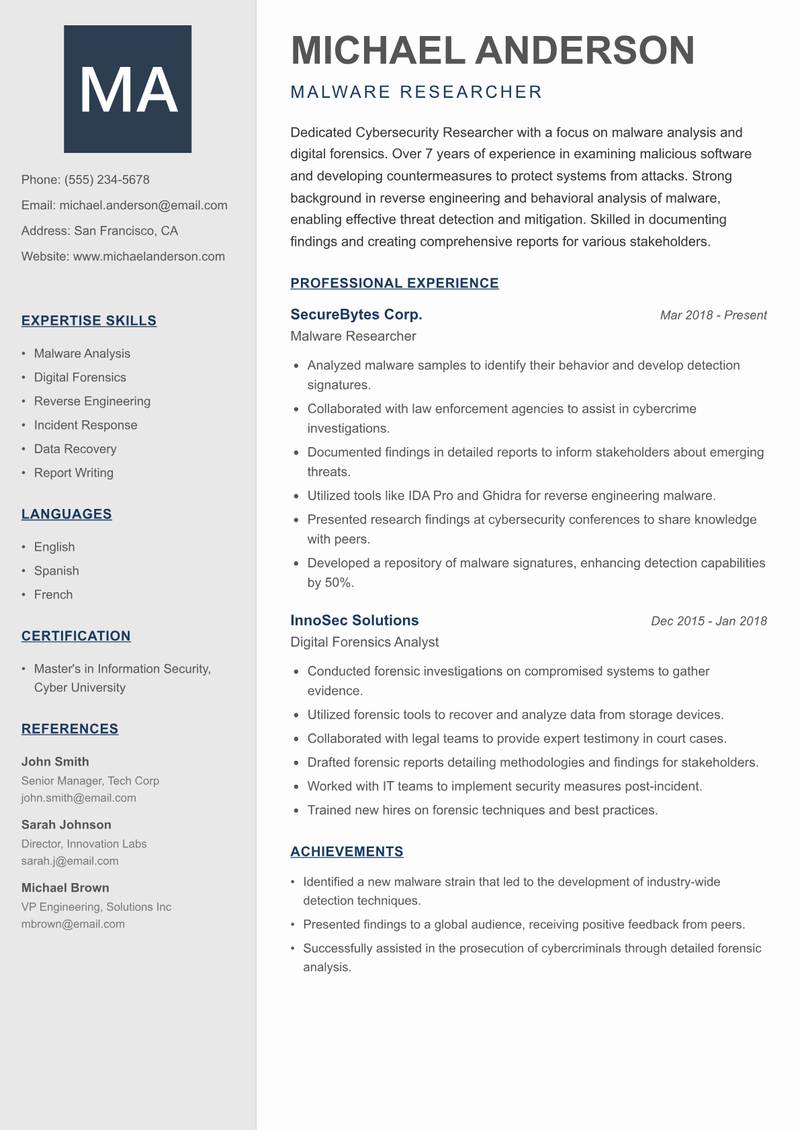
Malware Researcher Resume

Dedicated Cybersecurity Researcher with a focus on malware analysis and digital forensics. Over 7 years of experience in examining malicious software and developing countermeasures to protect systems from attacks. Strong background in reverse engineering and behavioral analysis of malware, enabling effective threat detection and mitigation. Skilled in documenting findings and creating comprehensive reports for various stakeholders. Holds a Master's degree in Information Security and multiple certifications, including Certified Information Security Manager (CISM). Passionate about sharing knowledge through workshops and training sessions to enhance organizational readiness against cyber threats.

Malware Analysis Digital Forensics Reverse Engineering Incident Response Data Recovery Report Writing
Cybersecurity Researcher Resume Preview Example
View PDF
  1. Analyzed malware samples to identify their behavior and develop detection signatures.
  2. Collaborated with law enforcement agencies to assist in cybercrime investigations.
  3. Documented findings in detailed reports to inform stakeholders about emerging threats.
  4. Utilized tools like IDA Pro and Ghidra for reverse engineering malware.
  5. Presented research findings at cybersecurity conferences to share knowledge with peers.
  6. Developed a repository of malware signatures, enhancing detection capabilities by 50%.
  1. Conducted forensic investigations on compromised systems to gather evidence.
  2. Utilized forensic tools to recover and analyze data from storage devices.
  3. Collaborated with legal teams to provide expert testimony in court cases.
  4. Drafted forensic reports detailing methodologies and findings for stakeholders.
  5. Worked with IT teams to implement security measures post-incident.
  6. Trained new hires on forensic techniques and best practices.

Achievements

  • Identified a new malware strain that led to the development of industry-wide detection techniques.
  • Presented findings to a global audience, receiving positive feedback from peers.
  • Successfully assisted in the prosecution of cybercriminals through detailed forensic analysis.
⏱️
Experience
2-5 Years
📅
Level
Mid Level
🎓
Education
Master's in Information Securi...

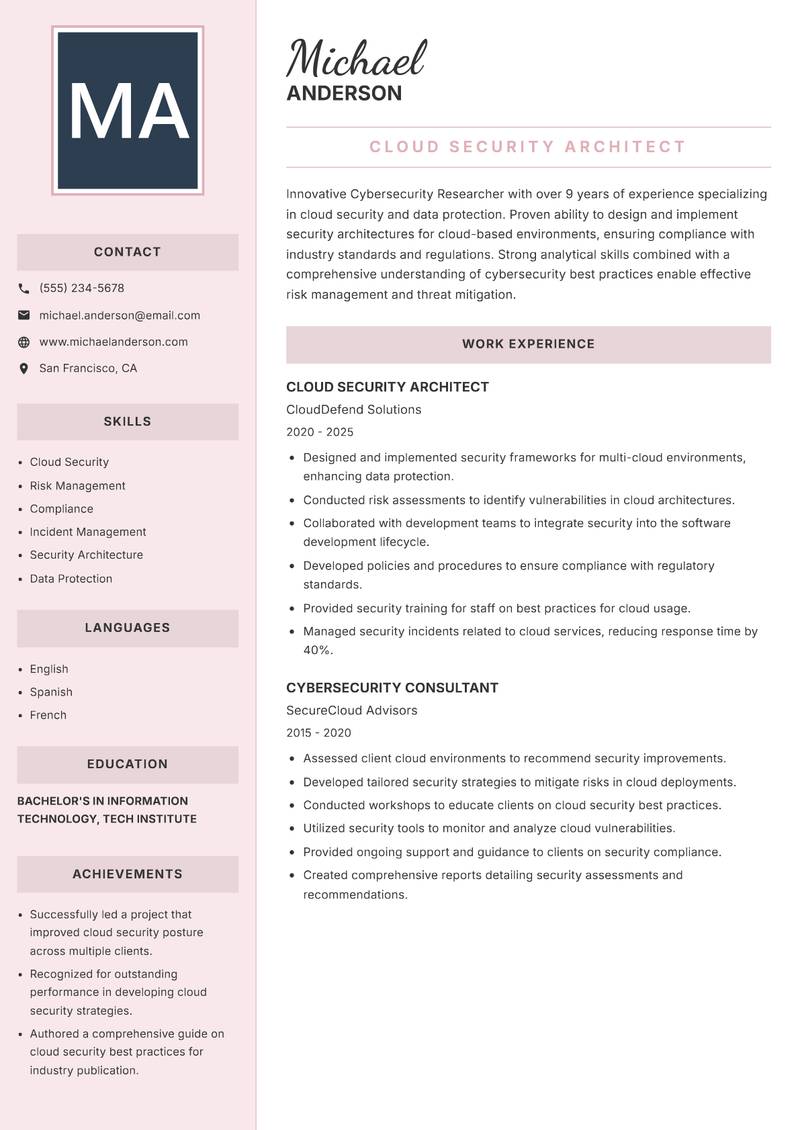
Cloud Security Architect Resume

Innovative Cybersecurity Researcher with over 9 years of experience specializing in cloud security and data protection. Proven ability to design and implement security architectures for cloud-based environments, ensuring compliance with industry standards and regulations. Strong analytical skills combined with a comprehensive understanding of cybersecurity best practices enable effective risk management and threat mitigation. Experienced in working with diverse teams to foster a culture of security awareness and compliance. Holds a Bachelor's degree in Information Technology and several professional certifications, including Certified Cloud Security Professional (CCSP). Committed to continuous improvement and staying updated on emerging cloud security threats.

Cloud Security Risk Management Compliance Incident Management Security Architecture Data Protection
Cybersecurity Researcher Resume Preview Example
View PDF
  1. Designed and implemented security frameworks for multi-cloud environments, enhancing data protection.
  2. Conducted risk assessments to identify vulnerabilities in cloud architectures.
  3. Collaborated with development teams to integrate security into the software development lifecycle.
  4. Developed policies and procedures to ensure compliance with regulatory standards.
  5. Provided security training for staff on best practices for cloud usage.
  6. Managed security incidents related to cloud services, reducing response time by 40%.
  1. Assessed client cloud environments to recommend security improvements.
  2. Developed tailored security strategies to mitigate risks in cloud deployments.
  3. Conducted workshops to educate clients on cloud security best practices.
  4. Utilized security tools to monitor and analyze cloud vulnerabilities.
  5. Provided ongoing support and guidance to clients on security compliance.
  6. Created comprehensive reports detailing security assessments and recommendations.

Achievements

  • Successfully led a project that improved cloud security posture across multiple clients.
  • Recognized for outstanding performance in developing cloud security strategies.
  • Authored a comprehensive guide on cloud security best practices for industry publication.
⏱️
Experience
2-5 Years
📅
Level
Mid Level
🎓
Education
Bachelor's in Information Tech...

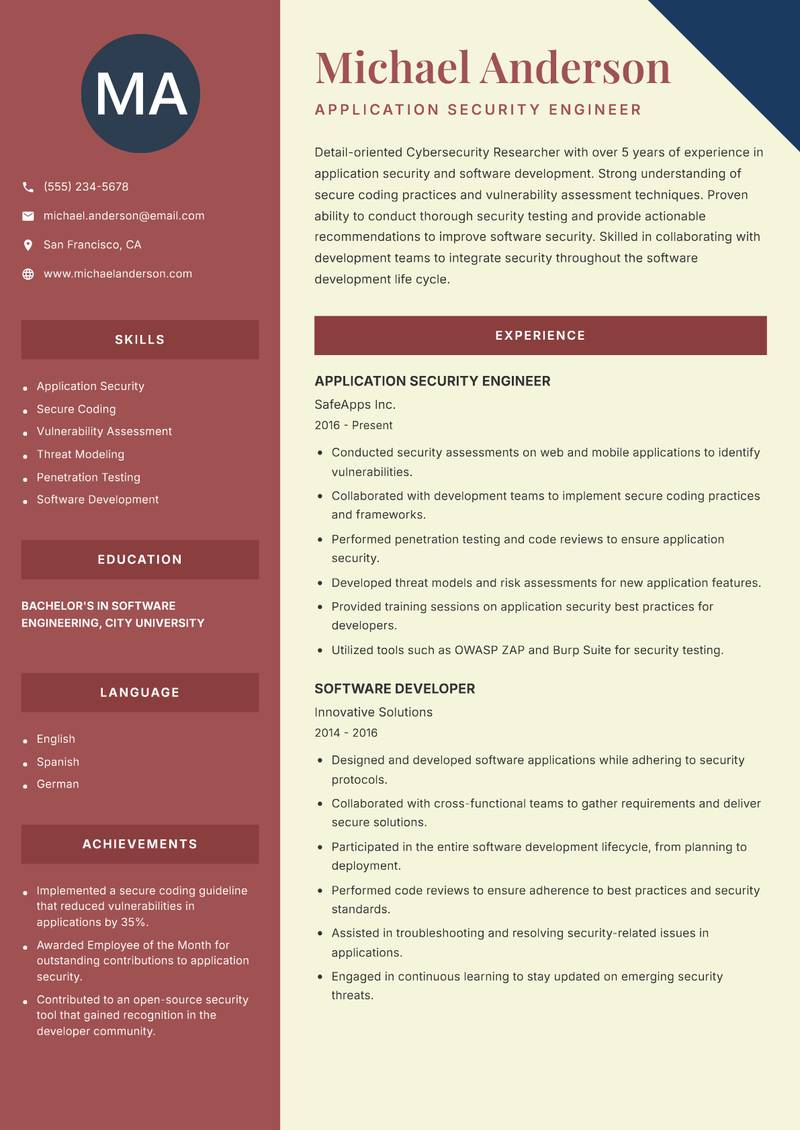
Application Security Engineer Resume

Detail-oriented Cybersecurity Researcher with over 5 years of experience in application security and software development. Strong understanding of secure coding practices and vulnerability assessment techniques. Proven ability to conduct thorough security testing and provide actionable recommendations to improve software security. Skilled in collaborating with development teams to integrate security throughout the software development life cycle. Holds a Bachelor's degree in Software Engineering and certifications in Application Security. Passionate about leveraging technology to build secure applications and enhance user trust in digital products.

Application Security Secure Coding Vulnerability Assessment Threat Modeling Penetration Testing Software Development
Cybersecurity Researcher Resume Preview Example
View PDF
  1. Conducted security assessments on web and mobile applications to identify vulnerabilities.
  2. Collaborated with development teams to implement secure coding practices and frameworks.
  3. Performed penetration testing and code reviews to ensure application security.
  4. Developed threat models and risk assessments for new application features.
  5. Provided training sessions on application security best practices for developers.
  6. Utilized tools such as OWASP ZAP and Burp Suite for security testing.
  1. Designed and developed software applications while adhering to security protocols.
  2. Collaborated with cross-functional teams to gather requirements and deliver secure solutions.
  3. Participated in the entire software development lifecycle, from planning to deployment.
  4. Performed code reviews to ensure adherence to best practices and security standards.
  5. Assisted in troubleshooting and resolving security-related issues in applications.
  6. Engaged in continuous learning to stay updated on emerging security threats.

Achievements

  • Implemented a secure coding guideline that reduced vulnerabilities in applications by 35%.
  • Awarded Employee of the Month for outstanding contributions to application security.
  • Contributed to an open-source security tool that gained recognition in the developer community.
⏱️
Experience
2-5 Years
📅
Level
Mid Level
🎓
Education
Bachelor's in Software Enginee...

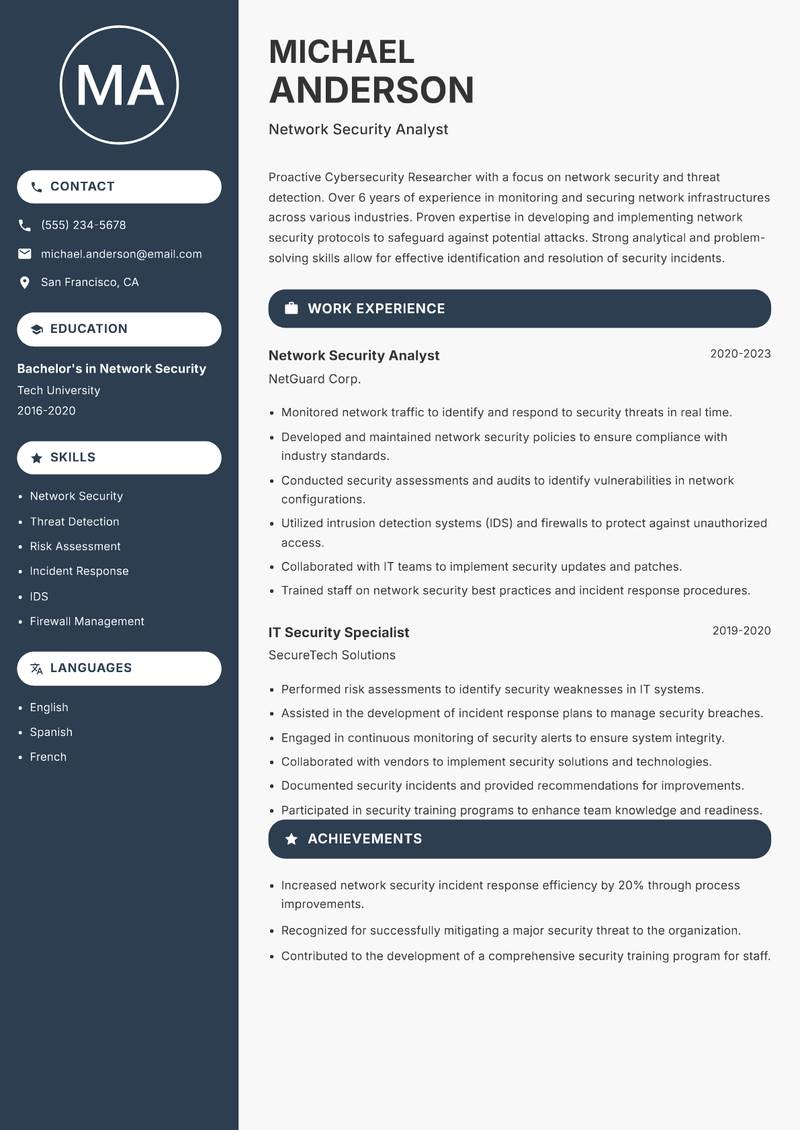
Network Security Analyst Resume

Driven Cybersecurity Researcher with a focus on network security and threat detection. Over 6 years of experience in monitoring and securing network infrastructures across various industries. Proven expertise in developing and implementing network security protocols to safeguard against potential attacks. Strong analytical and problem-solving skills allow for effective identification and resolution of security incidents. Holds a Bachelor's degree in Network Security and certifications such as CompTIA Security+. Passionate about leveraging technology and innovative solutions to enhance network security and protect organizational assets.

Network Security Threat Detection Risk Assessment Incident Response IDS Firewall Management
Cybersecurity Researcher Resume Preview Example
View PDF
  1. Monitored network traffic to identify and respond to security threats in real time.
  2. Developed and maintained network security policies to ensure compliance with industry standards.
  3. Conducted security assessments and audits to identify vulnerabilities in network configurations.
  4. Utilized intrusion detection systems (IDS) and firewalls to protect against unauthorized access.
  5. Collaborated with IT teams to implement security updates and patches.
  6. Trained staff on network security best practices and incident response procedures.
  1. Performed risk assessments to identify security weaknesses in IT systems.
  2. Assisted in the development of incident response plans to manage security breaches.
  3. Engaged in continuous monitoring of security alerts to ensure system integrity.
  4. Collaborated with vendors to implement security solutions and technologies.
  5. Documented security incidents and provided recommendations for improvements.
  6. Participated in security training programs to enhance team knowledge and readiness.

Achievements

  • Increased network security incident response efficiency by 20% through process improvements.
  • Recognized for successfully mitigating a major security threat to the organization.
  • Contributed to the development of a comprehensive security training program for staff.
⏱️
Experience
2-5 Years
📅
Level
Mid Level
🎓
Education
Bachelor's in Network Security...

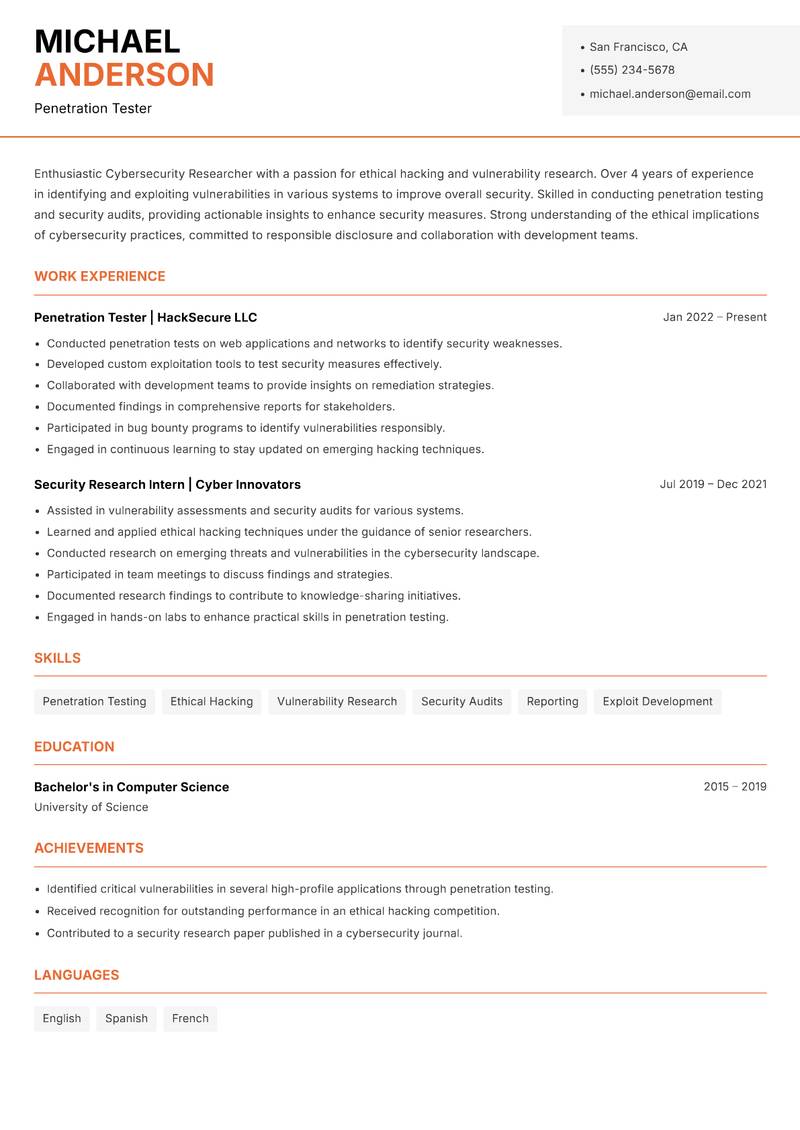
Penetration Tester Resume

Enthusiastic Cybersecurity Researcher with a passion for ethical hacking and vulnerability research. Over 4 years of experience in identifying and exploiting vulnerabilities in various systems to improve overall security. Skilled in conducting penetration testing and security audits, providing actionable insights to enhance security measures. Strong understanding of the ethical implications of cybersecurity practices, committed to responsible disclosure and collaboration with development teams. Holds a Bachelor's degree in Computer Science and certifications including Offensive Security Certified Professional (OSCP). Eager to contribute to a team focused on advancing cybersecurity practices and protecting digital assets.

Penetration Testing Ethical Hacking Vulnerability Research Security Audits Reporting Exploit Development
Cybersecurity Researcher Resume Preview Example
View PDF
  1. Conducted penetration tests on web applications and networks to identify security weaknesses.
  2. Developed custom exploitation tools to test security measures effectively.
  3. Collaborated with development teams to provide insights on remediation strategies.
  4. Documented findings in comprehensive reports for stakeholders.
  5. Participated in bug bounty programs to identify vulnerabilities responsibly.
  6. Engaged in continuous learning to stay updated on emerging hacking techniques.
  1. Assisted in vulnerability assessments and security audits for various systems.
  2. Learned and applied ethical hacking techniques under the guidance of senior researchers.
  3. Conducted research on emerging threats and vulnerabilities in the cybersecurity landscape.
  4. Participated in team meetings to discuss findings and strategies.
  5. Documented research findings to contribute to knowledge-sharing initiatives.
  6. Engaged in hands-on labs to enhance practical skills in penetration testing.

Achievements

  • Identified critical vulnerabilities in several high-profile applications through penetration testing.
  • Received recognition for outstanding performance in an ethical hacking competition.
  • Contributed to a security research paper published in a cybersecurity journal.
⏱️
Experience
2-5 Years
📅
Level
Mid Level
🎓
Education
Bachelor's in Computer Science...

Key Skills for Cybersecurity Researcher Positions

Resume Tips for Cybersecurity Researcher Applications

Strong Action Verbs for Cybersecurity Researcher Resumes

Secured · Detected · Responded · Penetrated · Analyzed · Mitigated · Forensicated · Audited · Implemented · Monitored · Achieved · Administered · Architected · Assessed

Common Mistakes to Avoid

Experience Levels

How to Write a Cybersecurity Researcher Resume

Browse Cybersecurity Researcher resume examples built around threat detection & incident response, tailored for Cybersecurity roles.

A strong Cybersecurity Researcher resume leads with a focused professional summary that names the exact role and your standout achievement. In the experience section, open every bullet with a strong action verb and quantify the result with numbers wherever possible. Highlight your most relevant competencies — especially Threat Detection & Incident Response, Penetration Testing & Vulnerability Assessment, and Security Information & Event Management (SIEM) — in a dedicated Skills section positioned early so ATS systems and hiring managers both find it immediately.

For format, most Cybersecurity Researcher roles suit a reverse-chronological layout: most recent position first, working backwards. Keep to one page for under five years of experience, or two pages for senior candidates with a rich project or leadership history. Use clean, ATS-safe fonts (10–12pt), standard section headings (Summary, Experience, Education, Skills), and avoid tables, text boxes, or multi-column layouts that applicant tracking systems cannot parse reliably.
Frequently Asked Questions

What makes a strong Cybersecurity Researcher resume stand out to employers?

A standout Cybersecurity Researcher resume combines role-specific skills with quantified achievements. Name the exact job title in your professional summary, mirror keywords from each job posting, and open every bullet point with a strong action verb followed by a measurable result. Certifications, tools, and domain experience specific to cybersecurity researcher roles should appear prominently near the top.

What skills are most important to include on a Cybersecurity resume?

Recruiters hiring in Cybersecurity consistently look for Threat Detection & Incident Response, Penetration Testing & Vulnerability Assessment, Security Information & Event Management (SIEM), Network Security & Firewall Management. List these in a dedicated Skills section near the top so both ATS systems and human reviewers spot them fast. Mirror the exact phrasing from each job posting wherever possible — many applicant tracking systems match literal strings rather than synonyms.

What is the best resume format for Cybersecurity professionals?

A reverse-chronological format is the standard choice for most Cybersecurity candidates — employers expect to see your most recent role first, working backwards. If you are transitioning into Cybersecurity from a related field, a hybrid format (brief skills summary at the top followed by chronological experience) can bridge the gap effectively. Keep the document to one page for under five years of experience, or two pages for senior specialists.

How do I make my Cybersecurity resume pass applicant tracking systems (ATS)?

Use standard section headings — Summary, Experience, Education, Skills — rather than creative labels that ATS parsers do not recognise. Embed domain keywords such as "Threat Detection & Incident Response" and "Penetration Testing & Vulnerability Assessment" naturally inside your experience bullets rather than cramming them into a standalone keyword list. Avoid tables, multi-column layouts, text boxes, headers, footers, and images — these confuse most modern parsers and can cause your resume to be misread or rejected before a human sees it.

What mistakes do Cybersecurity professionals most commonly make on their resume?

The most frequent issue is omitting specific certifications — hiring managers frequently filter by CISSP, OSCP, or equivalent. Beyond that, generic objective statements, unquantified achievements, and inconsistent date formatting appear across almost every Cybersecurity application. Fix these by replacing every vague claim with a measurable outcome — specific numbers and named projects add credibility that adjectives cannot.

How long should a Cybersecurity resume be?

One page is appropriate for candidates with under five years of relevant Cybersecurity experience. Two pages are acceptable — and sometimes expected — for senior specialists, managers, or professionals with a strong portfolio of projects, publications, or credentials. Avoid padding to reach a page count: every line should directly support your application for the specific role you are targeting.

Should I include a professional summary at the top of my Cybersecurity resume?

Yes — a two to three sentence summary is the first section most recruiters read. Open with your title and years of Cybersecurity experience, then name your most relevant achievement or specialisation. One proven approach: Lead with certifications: CISSP, CEH, OSCP, CompTIA Security+, CISM — they are gatekeepers — this level of specificity signals genuine expertise before a recruiter reaches your experience section.

Scroll to view samples