Deep Learning Engineer Resume

These Deep Learning Engineer resume samples are designed to help you write a resume that gets noticed by hiring managers and passes applicant tracking systems (ATS) in Artificial Intelligence. Each example shows real formatting, section structure, and language you can adapt to your own background. When writing your own Deep Learning Engineer resume, focus on highlighting neural networks, AI technologies and programming (Python, r, java, C++). Recruiters scan for these qualifications first, so they should appear early in your summary and experience sections. Use strong action verbs such as "designed", "developed", "trained", "optimized" to describe your achievements, and quantify your impact wherever possible — percentages, dollar amounts, or time saved make your resume more convincing. A common mistake to avoid: writing a generic objective statement instead of a targeted deep learning engineer professional summary. Tailor your resume to each Deep Learning Engineer position you apply for rather than using one generic version.

Deep Learning Engineer Resume Template
View PDF
0.0 (0 ratings)

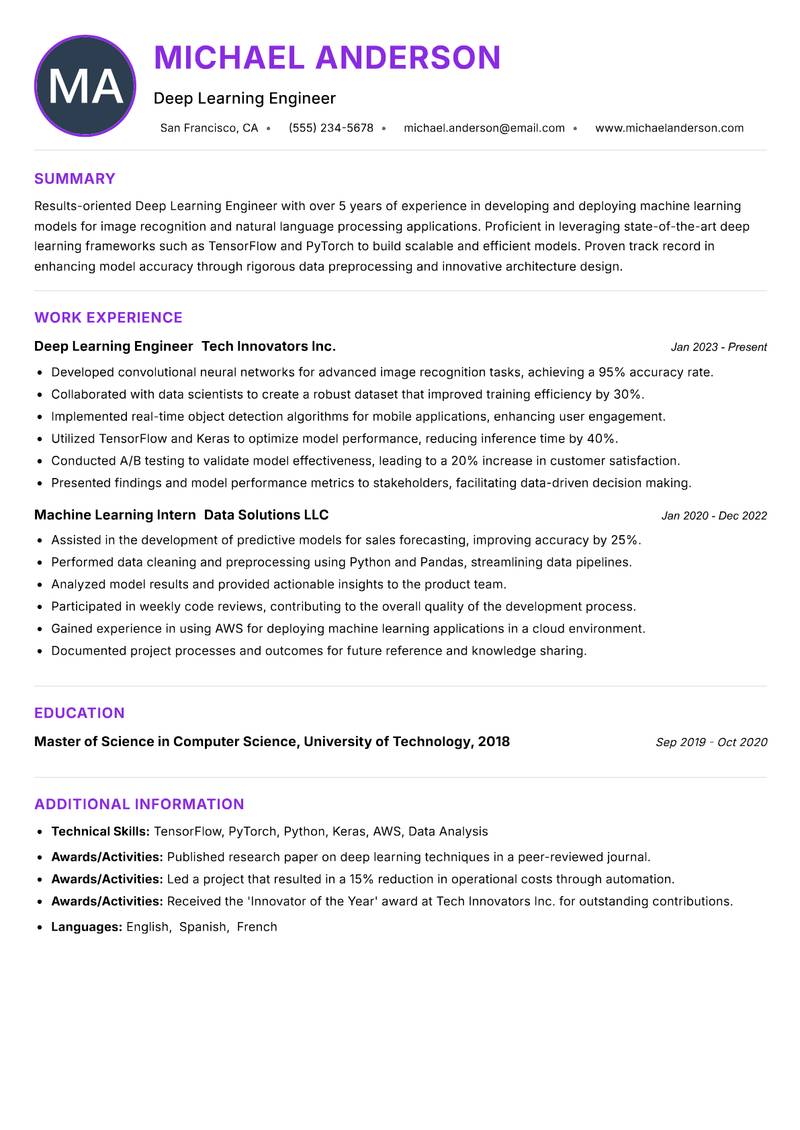
Deep Learning Engineer Resume

Accomplished Deep Learning Engineer with over 5 years of experience in developing and deploying machine learning models for image recognition and natural language processing applications. Proficient in leveraging state-of-the-art deep learning frameworks such as TensorFlow and PyTorch to build scalable and efficient models. Proven track record in enhancing model accuracy through rigorous data preprocessing and innovative architecture design. Strong collaboration skills with cross-functional teams, focusing on delivering high-quality software solutions in fast-paced environments. Passionate about applying cutting-edge technologies to solve real-world problems and drive business growth. Adept at conducting in-depth research to inform model development and ensure optimal performance. Committed to continuous learning and staying updated with the latest advancements in deep learning and AI research.

TensorFlow PyTorch Python Keras AWS Data Analysis
Deep Learning Engineer Resume Preview Example
View PDF
  1. Developed convolutional neural networks for advanced image recognition tasks, achieving a 95% accuracy rate.
  2. Collaborated with data scientists to create a robust dataset that improved training efficiency by 30%.
  3. Implemented real-time object detection algorithms for mobile applications, enhancing user engagement.
  4. Utilized TensorFlow and Keras to optimize model performance, reducing inference time by 40%.
  5. Conducted A/B testing to validate model effectiveness, leading to a 20% increase in customer satisfaction.
  6. Presented findings and model performance metrics to stakeholders, facilitating data-driven decision making.
  1. Assisted in the development of predictive models for sales forecasting, improving accuracy by 25%.
  2. Performed data cleaning and preprocessing using Python and Pandas, streamlining data pipelines.
  3. Analyzed model results and provided actionable insights to the product team.
  4. Participated in weekly code reviews, contributing to the overall quality of the development process.
  5. Gained experience in using AWS for deploying machine learning applications in a cloud environment.
  6. Documented project processes and outcomes for future reference and knowledge sharing.

Achievements

  • Published research paper on deep learning techniques in a peer-reviewed journal.
  • Led a project that resulted in a 15% reduction in operational costs through automation.
  • Received the 'Innovator of the Year' award at Tech Innovators Inc. for outstanding contributions.
⏱️
Experience
2-5 Years
📅
Level
Mid Level
🎓
Education
Master of Science in Computer ...

Senior Deep Learning Engineer Resume

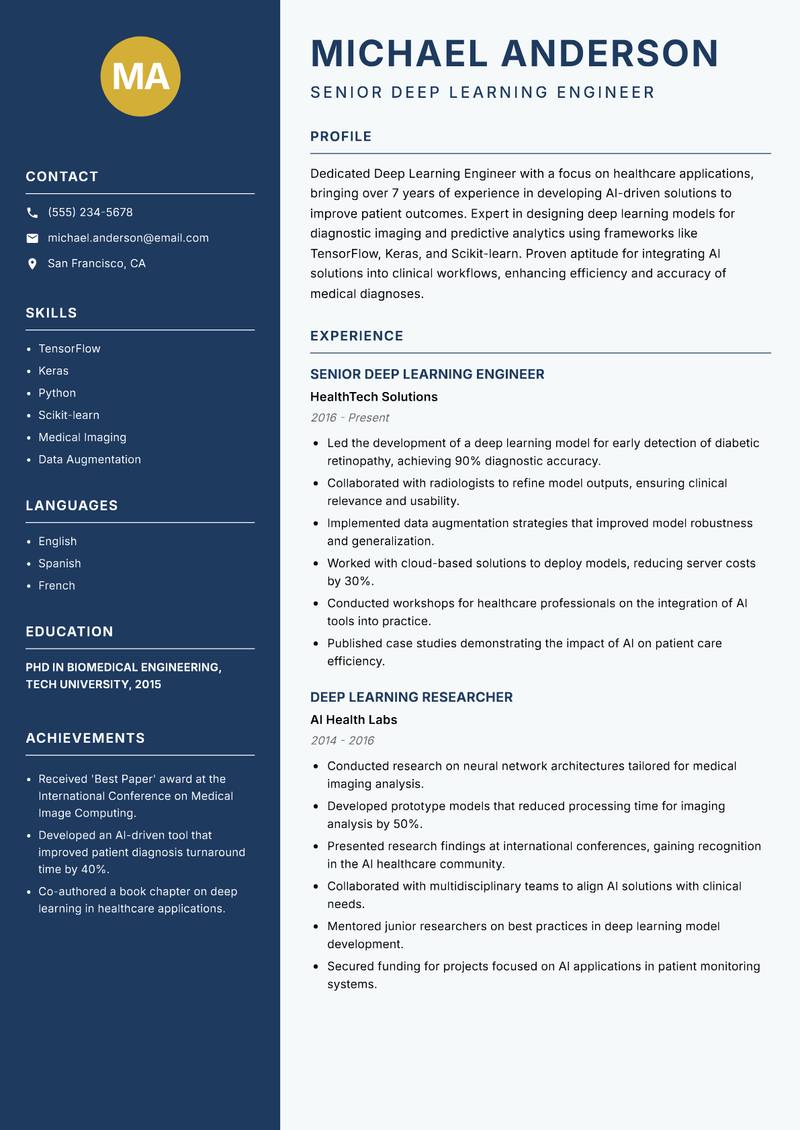
Dedicated Deep Learning Engineer with a focus on healthcare applications, bringing over 7 years of experience in developing AI-driven solutions to improve patient outcomes. Expert in designing deep learning models for diagnostic imaging and predictive analytics using frameworks like TensorFlow, Keras, and Scikit-learn. Proven aptitude for integrating AI solutions into clinical workflows, enhancing efficiency and accuracy of medical diagnoses. Strong communicator who collaborates effectively with healthcare professionals to understand needs and translate them into technical specifications. Committed to advancing the field of medical technology through innovative research and implementation of machine learning techniques. Continuously exploring new methodologies to enhance model performance and applicability in real-world scenarios.

TensorFlow Keras Python Scikit-learn Medical Imaging Data Augmentation
Deep Learning Engineer Resume Preview Example
View PDF
  1. Led the development of a deep learning model for early detection of diabetic retinopathy, achieving 90% diagnostic accuracy.
  2. Collaborated with radiologists to refine model outputs, ensuring clinical relevance and usability.
  3. Implemented data augmentation strategies that improved model robustness and generalization.
  4. Worked with cloud-based solutions to deploy models, reducing server costs by 30%.
  5. Conducted workshops for healthcare professionals on the integration of AI tools into practice.
  6. Published case studies demonstrating the impact of AI on patient care efficiency.
  1. Conducted research on neural network architectures tailored for medical imaging analysis.
  2. Developed prototype models that reduced processing time for imaging analysis by 50%.
  3. Presented research findings at international conferences, gaining recognition in the AI healthcare community.
  4. Collaborated with multidisciplinary teams to align AI solutions with clinical needs.
  5. Mentored junior researchers on best practices in deep learning model development.
  6. Secured funding for projects focused on AI applications in patient monitoring systems.

Achievements

  • Received 'Best Paper' award at the International Conference on Medical Image Computing.
  • Developed an AI-driven tool that improved patient diagnosis turnaround time by 40%.
  • Co-authored a book chapter on deep learning in healthcare applications.
⏱️
Experience
2-5 Years
📅
Level
Mid Level
🎓
Education
PhD in Biomedical Engineering,...

Deep Learning Engineer Resume

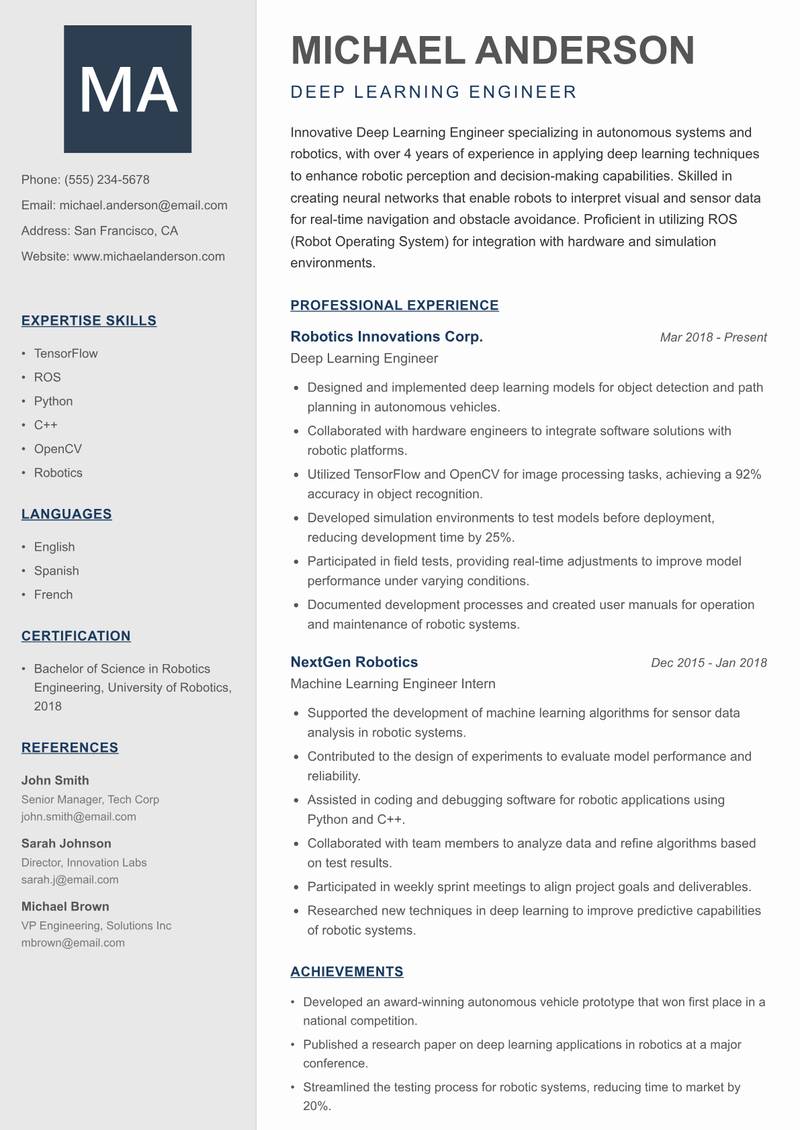
Innovative Deep Learning Engineer specializing in autonomous systems and robotics, with over 4 years of experience in applying deep learning techniques to enhance robotic perception and decision-making capabilities. Skilled in creating neural networks that enable robots to interpret visual and sensor data for real-time navigation and obstacle avoidance. Proficient in utilizing ROS (Robot Operating System) for integration with hardware and simulation environments. Strong problem-solving skills and a passion for advancing robotic technology through AI methodologies. Experienced in working in interdisciplinary teams to design and implement scalable robotic solutions for industrial applications. Committed to continuous improvement and exploring new technologies to push the boundaries of what's possible in robotics.

TensorFlow ROS Python C++ OpenCV Robotics
Deep Learning Engineer Resume Preview Example
View PDF
  1. Designed and implemented deep learning models for object detection and path planning in autonomous vehicles.
  2. Collaborated with hardware engineers to integrate software solutions with robotic platforms.
  3. Utilized TensorFlow and OpenCV for image processing tasks, achieving a 92% accuracy in object recognition.
  4. Developed simulation environments to test models before deployment, reducing development time by 25%.
  5. Participated in field tests, providing real-time adjustments to improve model performance under varying conditions.
  6. Documented development processes and created user manuals for operation and maintenance of robotic systems.
  1. Supported the development of machine learning algorithms for sensor data analysis in robotic systems.
  2. Contributed to the design of experiments to evaluate model performance and reliability.
  3. Assisted in coding and debugging software for robotic applications using Python and C++.
  4. Collaborated with team members to analyze data and refine algorithms based on test results.
  5. Participated in weekly sprint meetings to align project goals and deliverables.
  6. Researched new techniques in deep learning to improve predictive capabilities of robotic systems.

Achievements

  • Developed an award-winning autonomous vehicle prototype that won first place in a national competition.
  • Published a research paper on deep learning applications in robotics at a major conference.
  • Streamlined the testing process for robotic systems, reducing time to market by 20%.
⏱️
Experience
2-5 Years
📅
Level
Mid Level
🎓
Education
Bachelor of Science in Robotic...

Deep Learning Engineer Resume

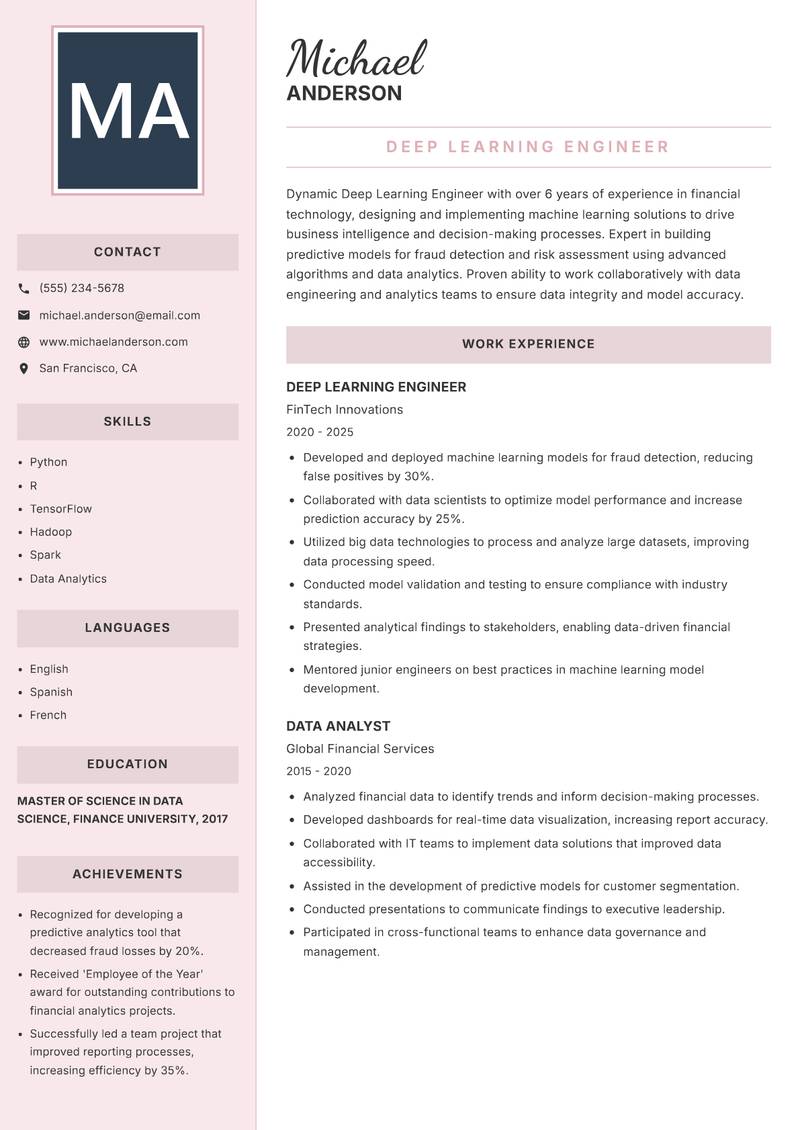
Dynamic Deep Learning Engineer with over 6 years of experience in financial technology, designing and implementing machine learning solutions to drive business intelligence and decision-making processes. Expert in building predictive models for fraud detection and risk assessment using advanced algorithms and data analytics. Proven ability to work collaboratively with data engineering and analytics teams to ensure data integrity and model accuracy. Strong skills in Python and R, along with proficiency in utilizing big data technologies such as Hadoop and Spark for large-scale data processing. Committed to leveraging machine learning to create actionable insights that enhance operational efficiency and reduce financial risk. Passionate about continuous improvement and staying current with emerging trends in AI and machine learning.

Python R TensorFlow Hadoop Spark Data Analytics
Deep Learning Engineer Resume Preview Example
View PDF
  1. Developed and deployed machine learning models for fraud detection, reducing false positives by 30%.
  2. Collaborated with data scientists to optimize model performance and increase prediction accuracy by 25%.
  3. Utilized big data technologies to process and analyze large datasets, improving data processing speed.
  4. Conducted model validation and testing to ensure compliance with industry standards.
  5. Presented analytical findings to stakeholders, enabling data-driven financial strategies.
  6. Mentored junior engineers on best practices in machine learning model development.
  1. Analyzed financial data to identify trends and inform decision-making processes.
  2. Developed dashboards for real-time data visualization, increasing report accuracy.
  3. Collaborated with IT teams to implement data solutions that improved data accessibility.
  4. Assisted in the development of predictive models for customer segmentation.
  5. Conducted presentations to communicate findings to executive leadership.
  6. Participated in cross-functional teams to enhance data governance and management.

Achievements

  • Recognized for developing a predictive analytics tool that decreased fraud losses by 20%.
  • Received 'Employee of the Year' award for outstanding contributions to financial analytics projects.
  • Successfully led a team project that improved reporting processes, increasing efficiency by 35%.
⏱️
Experience
2-5 Years
📅
Level
Mid Level
🎓
Education
Master of Science in Data Scie...

Deep Learning Engineer Resume

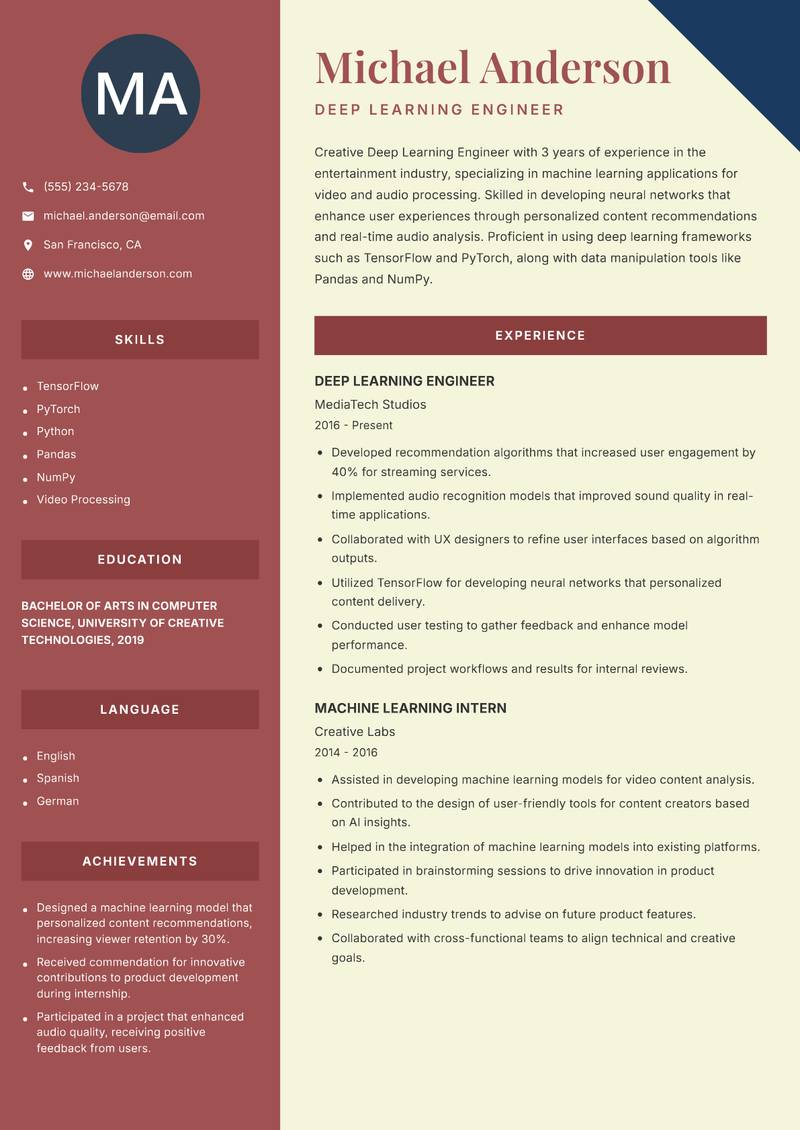
Creative Deep Learning Engineer with 3 years of experience in the entertainment industry, specializing in machine learning applications for video and audio processing. Skilled in developing neural networks that enhance user experiences through personalized content recommendations and real-time audio analysis. Proficient in using deep learning frameworks such as TensorFlow and PyTorch, along with data manipulation tools like Pandas and NumPy. Strong understanding of the digital media landscape and the impact of AI on content consumption. Passionate about pushing the boundaries of technology to create innovative solutions that engage and captivate audiences. Adept at collaborating with creative teams to ensure technical solutions align with artistic visions.

TensorFlow PyTorch Python Pandas NumPy Video Processing
Deep Learning Engineer Resume Preview Example
View PDF
  1. Developed recommendation algorithms that increased user engagement by 40% for streaming services.
  2. Implemented audio recognition models that improved sound quality in real-time applications.
  3. Collaborated with UX designers to refine user interfaces based on algorithm outputs.
  4. Utilized TensorFlow for developing neural networks that personalized content delivery.
  5. Conducted user testing to gather feedback and enhance model performance.
  6. Documented project workflows and results for internal reviews.
  1. Assisted in developing machine learning models for video content analysis.
  2. Contributed to the design of user-friendly tools for content creators based on AI insights.
  3. Helped in the integration of machine learning models into existing platforms.
  4. Participated in brainstorming sessions to drive innovation in product development.
  5. Researched industry trends to advise on future product features.
  6. Collaborated with cross-functional teams to align technical and creative goals.

Achievements

  • Designed a machine learning model that personalized content recommendations, increasing viewer retention by 30%.
  • Received commendation for innovative contributions to product development during internship.
  • Participated in a project that enhanced audio quality, receiving positive feedback from users.
⏱️
Experience
2-5 Years
📅
Level
Mid Level
🎓
Education
Bachelor of Arts in Computer S...

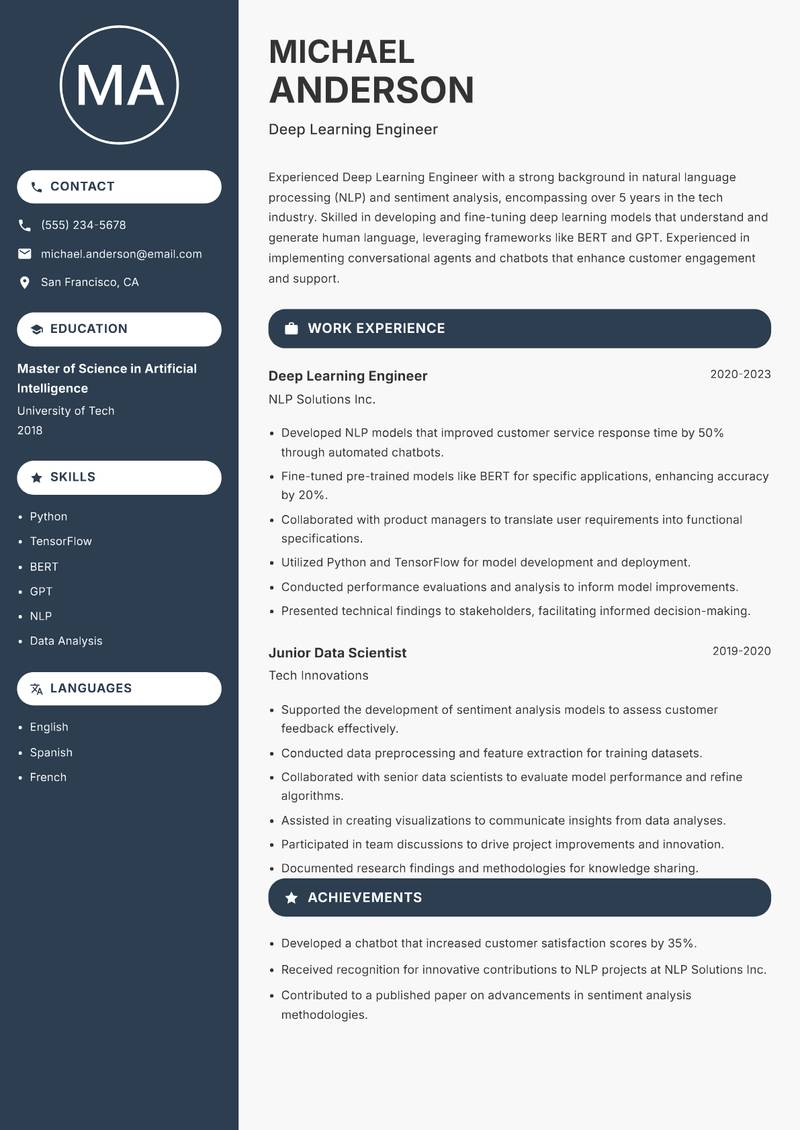
Deep Learning Engineer Resume

Experienced Deep Learning Engineer with a strong background in natural language processing (NLP) and sentiment analysis, encompassing over 5 years in the tech industry. Skilled in developing and fine-tuning deep learning models that understand and generate human language, leveraging frameworks like BERT and GPT. Experienced in implementing conversational agents and chatbots that enhance customer engagement and support. Proven ability to analyze large datasets for training models effectively, resulting in improved accuracy and response times. Excellent communicator capable of conveying complex technical concepts to non-technical stakeholders. Passionate about advancing NLP technologies to create intuitive and user-friendly applications.

Python TensorFlow BERT GPT NLP Data Analysis
Deep Learning Engineer Resume Preview Example
View PDF
  1. Developed NLP models that improved customer service response time by 50% through automated chatbots.
  2. Fine-tuned pre-trained models like BERT for specific applications, enhancing accuracy by 20%.
  3. Collaborated with product managers to translate user requirements into functional specifications.
  4. Utilized Python and TensorFlow for model development and deployment.
  5. Conducted performance evaluations and analysis to inform model improvements.
  6. Presented technical findings to stakeholders, facilitating informed decision-making.
  1. Supported the development of sentiment analysis models to assess customer feedback effectively.
  2. Conducted data preprocessing and feature extraction for training datasets.
  3. Collaborated with senior data scientists to evaluate model performance and refine algorithms.
  4. Assisted in creating visualizations to communicate insights from data analyses.
  5. Participated in team discussions to drive project improvements and innovation.
  6. Documented research findings and methodologies for knowledge sharing.

Achievements

  • Developed a chatbot that increased customer satisfaction scores by 35%.
  • Received recognition for innovative contributions to NLP projects at NLP Solutions Inc.
  • Contributed to a published paper on advancements in sentiment analysis methodologies.
⏱️
Experience
2-5 Years
📅
Level
Mid Level
🎓
Education
Master of Science in Artificia...

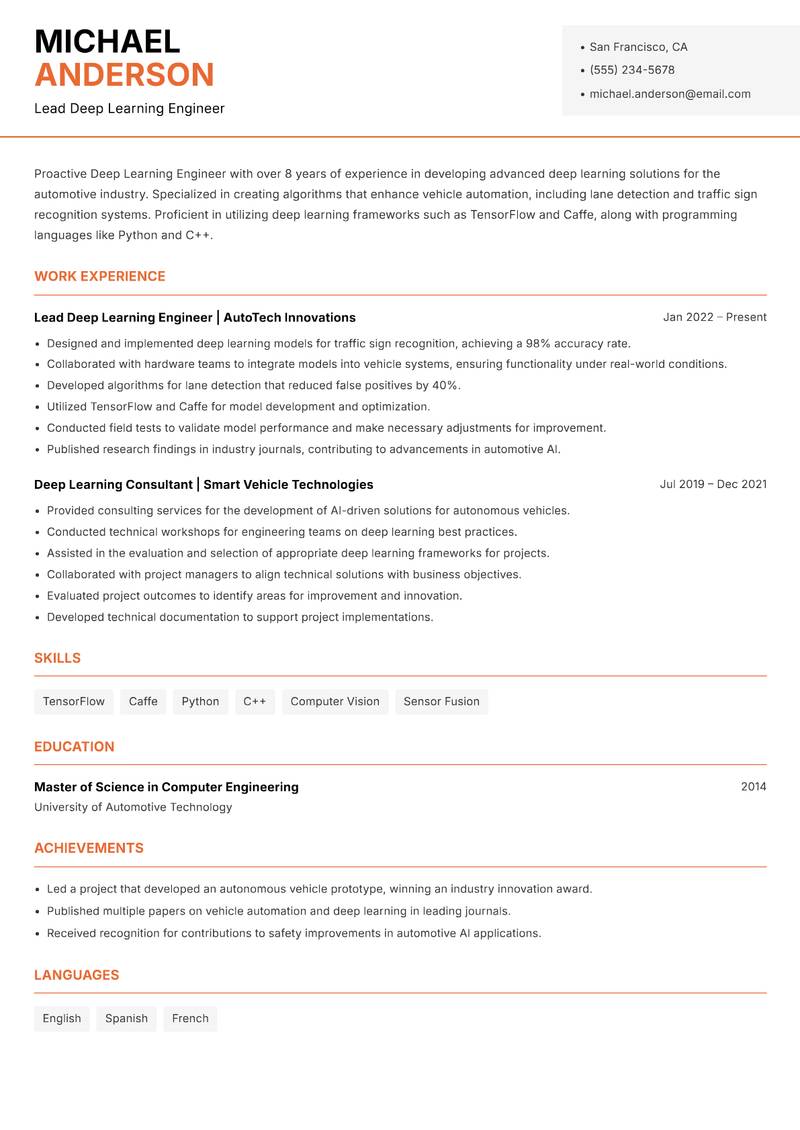
Lead Deep Learning Engineer Resume

Driven Deep Learning Engineer with over 8 years of experience in developing advanced deep learning solutions for the automotive industry. Specialized in creating algorithms that enhance vehicle automation, including lane detection and traffic sign recognition systems. Proficient in utilizing deep learning frameworks such as TensorFlow and Caffe, along with programming languages like Python and C++. Strong background in computer vision and sensor fusion techniques. Experienced in collaborating with multidisciplinary teams to drive innovation and ensure product success. Committed to ongoing learning and implementing cutting-edge technologies to improve vehicle safety and performance. Passionate about contributing to the future of autonomous driving and smart transportation systems.

TensorFlow Caffe Python C++ Computer Vision Sensor Fusion
Deep Learning Engineer Resume Preview Example
View PDF
  1. Designed and implemented deep learning models for traffic sign recognition, achieving a 98% accuracy rate.
  2. Collaborated with hardware teams to integrate models into vehicle systems, ensuring functionality under real-world conditions.
  3. Developed algorithms for lane detection that reduced false positives by 40%.
  4. Utilized TensorFlow and Caffe for model development and optimization.
  5. Conducted field tests to validate model performance and make necessary adjustments for improvement.
  6. Published research findings in industry journals, contributing to advancements in automotive AI.
  1. Provided consulting services for the development of AI-driven solutions for autonomous vehicles.
  2. Conducted technical workshops for engineering teams on deep learning best practices.
  3. Assisted in the evaluation and selection of appropriate deep learning frameworks for projects.
  4. Collaborated with project managers to align technical solutions with business objectives.
  5. Evaluated project outcomes to identify areas for improvement and innovation.
  6. Developed technical documentation to support project implementations.

Achievements

  • Led a project that developed an autonomous vehicle prototype, winning an industry innovation award.
  • Published multiple papers on vehicle automation and deep learning in leading journals.
  • Received recognition for contributions to safety improvements in automotive AI applications.
⏱️
Experience
2-5 Years
📅
Level
Mid Level
🎓
Education
Master of Science in Computer ...

Key Skills for Deep Learning Engineer Positions

Resume Tips for Deep Learning Engineer Applications

Strong Action Verbs for Deep Learning Engineer Resumes

Designed · Developed · Trained · Optimized · Deployed · Automated · Analyzed · Implemented · Evaluated · Scaled · Updated · Achieved · Administered · Architected

Common Mistakes to Avoid

Experience Levels

How to Write a Deep Learning Engineer Resume

Browse Deep Learning Engineer resume examples built around neural networks, tailored for Artificial Intelligence roles.

A strong Deep Learning Engineer resume leads with a focused professional summary that names the exact role and your standout achievement. In the experience section, open every bullet with a strong action verb and quantify the result with numbers wherever possible. Highlight your most relevant competencies — especially Neural networks, AI technologies, and Programming (Python, R, Java, C++) — in a dedicated Skills section positioned early so ATS systems and hiring managers both find it immediately.

For format, most Deep Learning Engineer roles suit a reverse-chronological layout: most recent position first, working backwards. Keep to one page for under five years of experience, or two pages for senior candidates with a rich project or leadership history. Use clean, ATS-safe fonts (10–12pt), standard section headings (Summary, Experience, Education, Skills), and avoid tables, text boxes, or multi-column layouts that applicant tracking systems cannot parse reliably.
Frequently Asked Questions

What makes a strong Deep Learning Engineer resume stand out to employers?

A standout Deep Learning Engineer resume combines role-specific skills with quantified achievements. Name the exact job title in your professional summary, mirror keywords from each job posting, and open every bullet point with a strong action verb followed by a measurable result. Certifications, tools, and domain experience specific to deep learning engineer roles should appear prominently near the top.

What skills are most important to include on a Artificial Intelligence resume?

Recruiters hiring in Artificial Intelligence consistently look for Programming (Python, R, Java, C++), Machine learning and deep learning algorithms, Data preprocessing and feature engineering, Natural Language Processing (NLP). List these in a dedicated Skills section near the top so both ATS systems and human reviewers spot them fast. Mirror the exact phrasing from each job posting wherever possible — many applicant tracking systems match literal strings rather than synonyms.

What is the best resume format for Artificial Intelligence professionals?

A reverse-chronological format is the standard choice for most Artificial Intelligence candidates — employers expect to see your most recent role first, working backwards. If you are transitioning into Artificial Intelligence from a related field, a hybrid format (brief skills summary at the top followed by chronological experience) can bridge the gap effectively. Keep the document to one page for under five years of experience, or two pages for senior specialists.

How do I make my Artificial Intelligence resume pass applicant tracking systems (ATS)?

Use standard section headings — Summary, Experience, Education, Skills — rather than creative labels that ATS parsers do not recognise. Embed domain keywords such as "Programming (Python, R, Java, C++)" and "Machine learning and deep learning algorithms" naturally inside your experience bullets rather than cramming them into a standalone keyword list. Avoid tables, multi-column layouts, text boxes, headers, footers, and images — these confuse most modern parsers and can cause your resume to be misread or rejected before a human sees it.

What mistakes do Artificial Intelligence professionals most commonly make on their resume?

The most frequent issue is listing algorithms without explaining real-world impact. Beyond that, generic objective statements, unquantified achievements, and inconsistent date formatting appear across almost every Artificial Intelligence application. Fix these by replacing every vague claim with a measurable outcome — specific numbers and named projects add credibility that adjectives cannot.

How long should a Artificial Intelligence resume be?

One page is appropriate for candidates with under five years of relevant Artificial Intelligence experience. Two pages are acceptable — and sometimes expected — for senior specialists, managers, or professionals with a strong portfolio of projects, publications, or credentials. Avoid padding to reach a page count: every line should directly support your application for the specific role you are targeting.

Should I include a professional summary at the top of my Artificial Intelligence resume?

Yes — a two to three sentence summary is the first section most recruiters read. Open with your title and years of Artificial Intelligence experience, then name your most relevant achievement or specialisation. One proven approach: Quantify model performance improvements such as accuracy, precision, or latency reduction — this level of specificity signals genuine expertise before a recruiter reaches your experience section.

Scroll to view samples