Key Skills for Editorial Designer Positions
- Information Design & Data Visualization
- Brand Communication Design
- Illustration & Infographic Creation
- Publication Design (InDesign, Affinity Publisher)
- Wayfinding & Signage Systems
- Presentation Design (PowerPoint, Keynote)
- Corporate Communication Design
- Digital Content Creation
- Typography & Grid Systems
- Research & Audience Analysis
Resume Tips for Editorial Designer Applications
- Include a portfolio URL in your header — editorial designer roles are always evaluated on the work itself first, and a well-organised case study showing process (brief → iteration → outcome) will outperform any list of software skills
- Portfolio is essential — link to it from the top of your resume.
- Demonstrate strategic thinking: explain the communication problem each project solved.
- List software proficiency across print and digital tools.
- Highlight data visualization skills — they are increasingly valued across industries.
- For corporate roles, show presentation design and executive communication experience.
Strong Action Verbs for Editorial Designer Resumes
Communicated · Designed · Visualized · Illustrated · Strategized · Produced · Presented · Simplified · Crafted · Delivered · Updated · Achieved · Administered · Analyzed
Common Mistakes to Avoid
- Writing a generic objective statement instead of a targeted editorial designer professional summary
- Not providing a portfolio with strategic context for each project.
- Ignoring data visualization skills that are highly sought across sectors.
- Failing to show communication strategy thinking — employers want designers who understand business goals.
- Not demonstrating accessibility and inclusive design awareness.
Experience Levels
- Junior Designer (0-2 years)
- Visual Communication Designer (2-5 years)
- Senior Designer (5-9 years)
- Lead Designer / Creative Consultant (9-14 years)
- Creative Director / Head of Brand (14+ years)
How to Write a Editorial Designer Resume
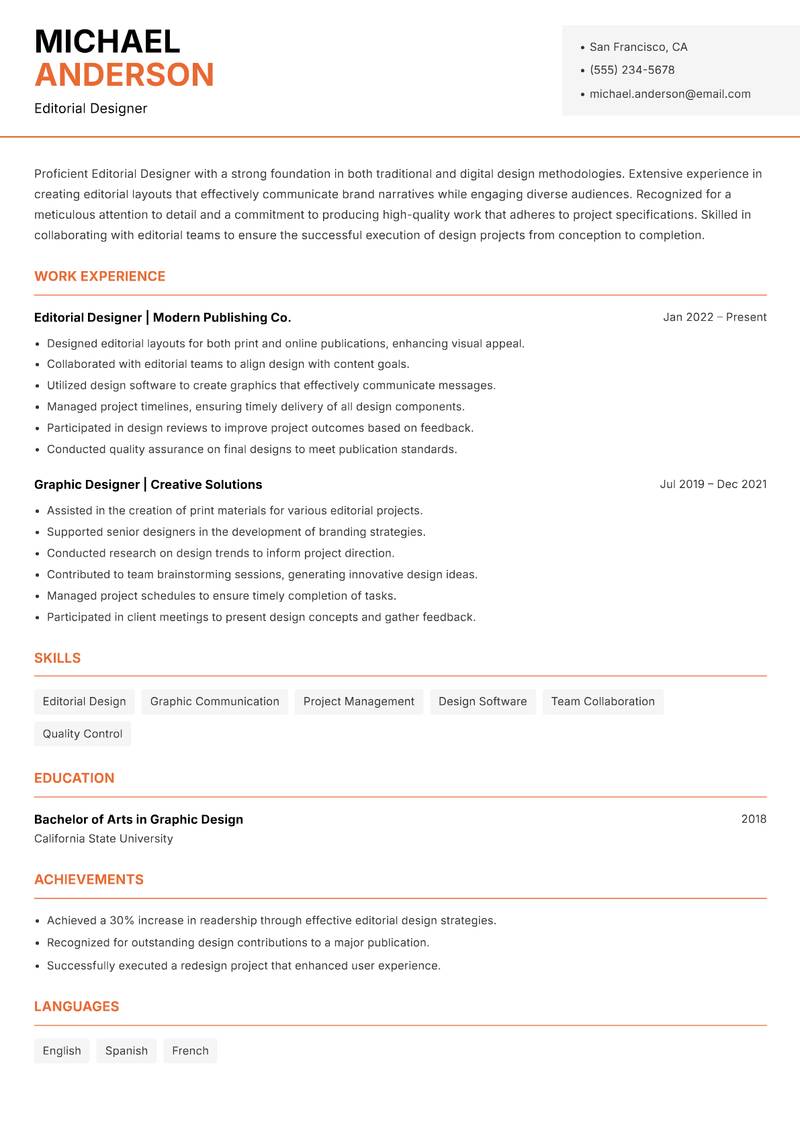
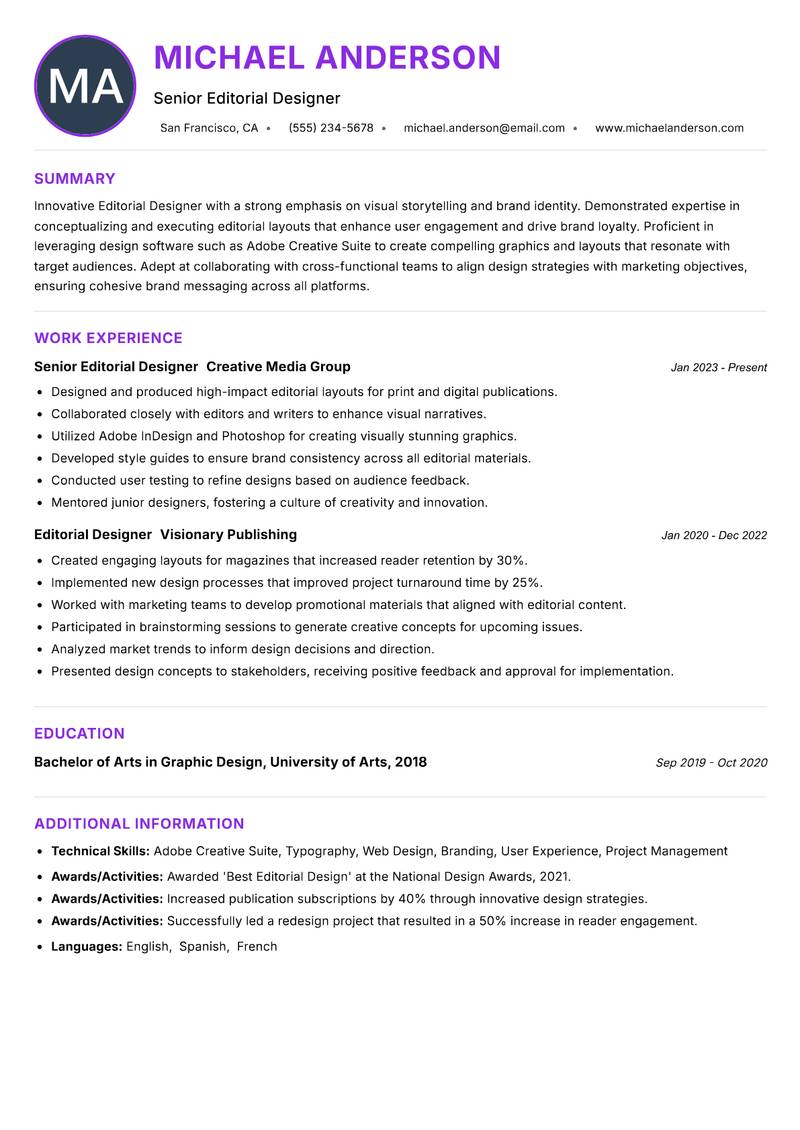
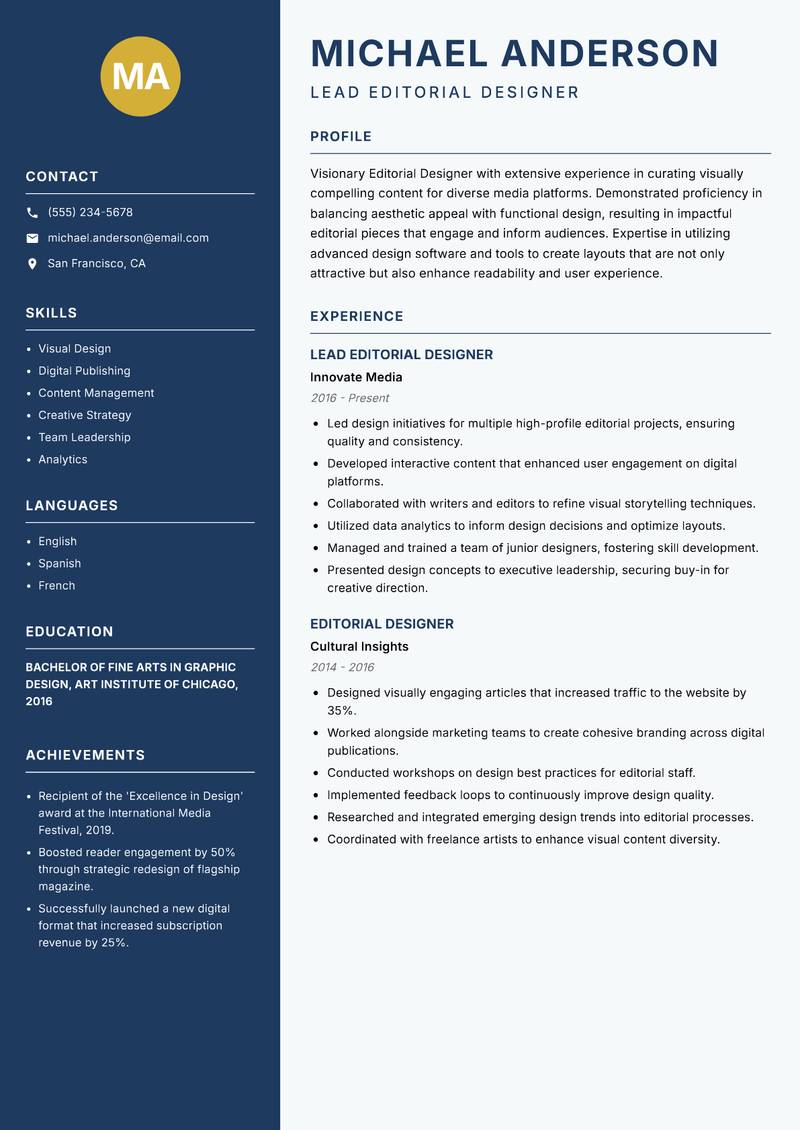
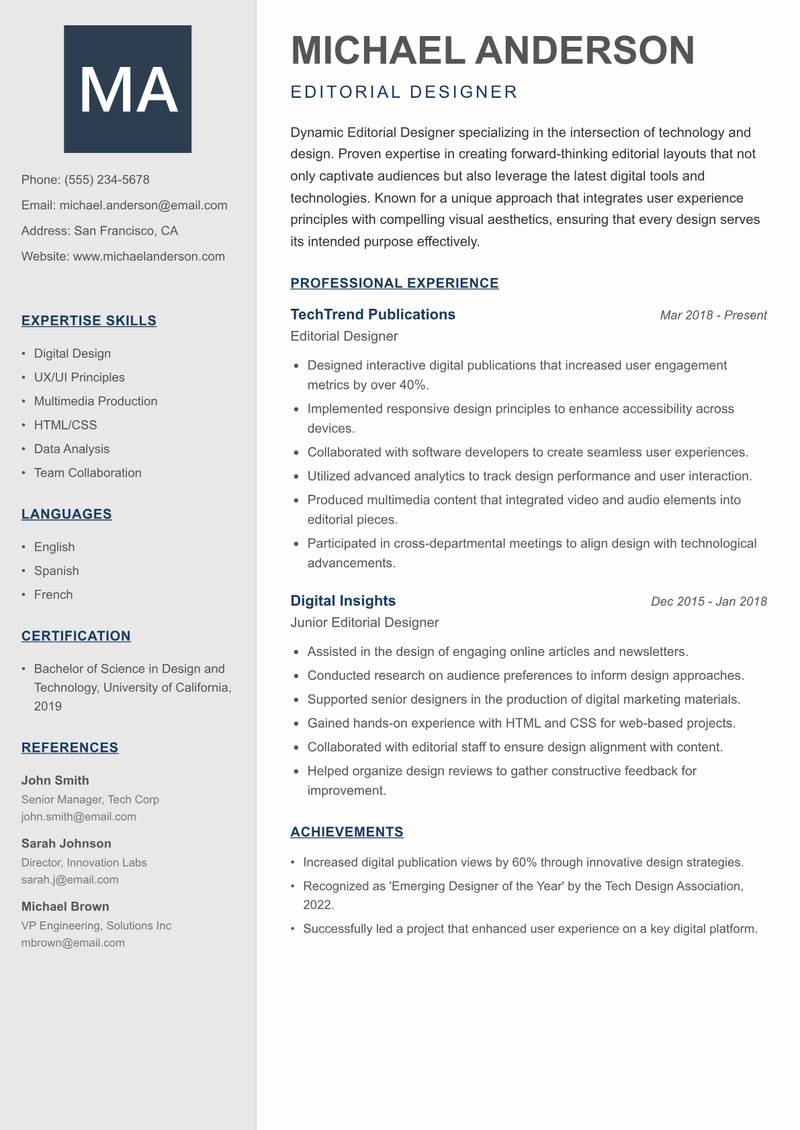
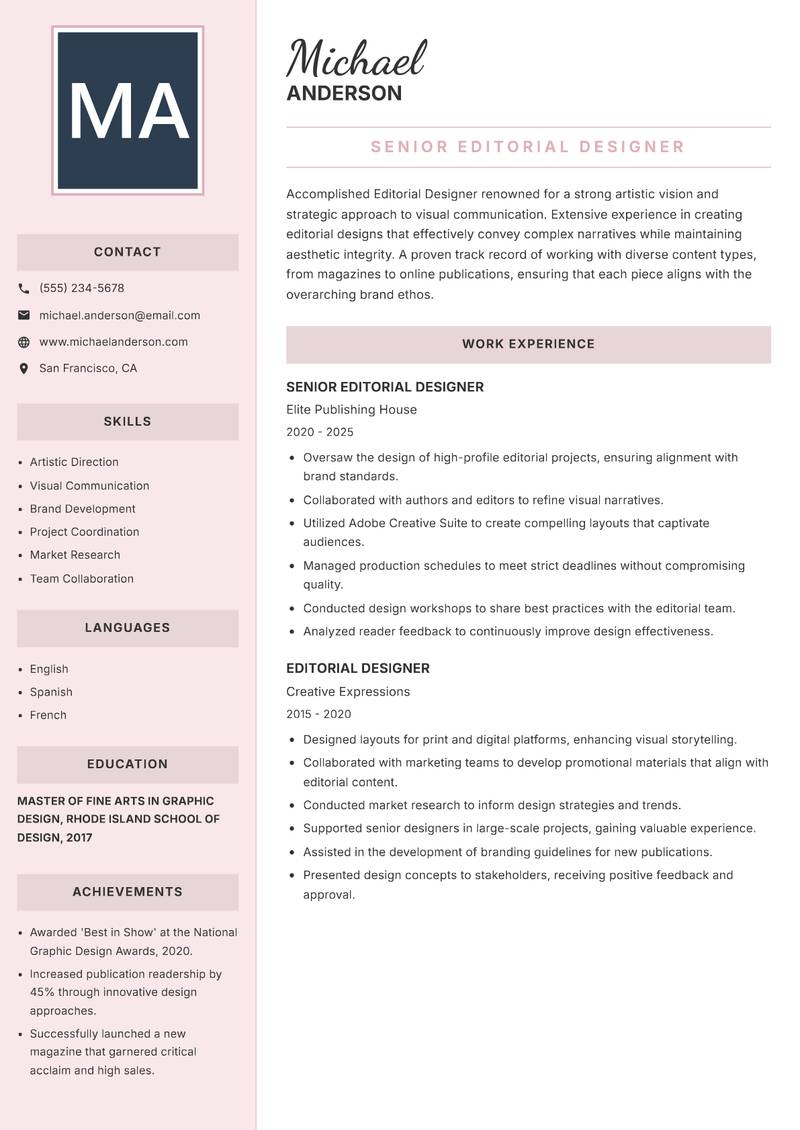
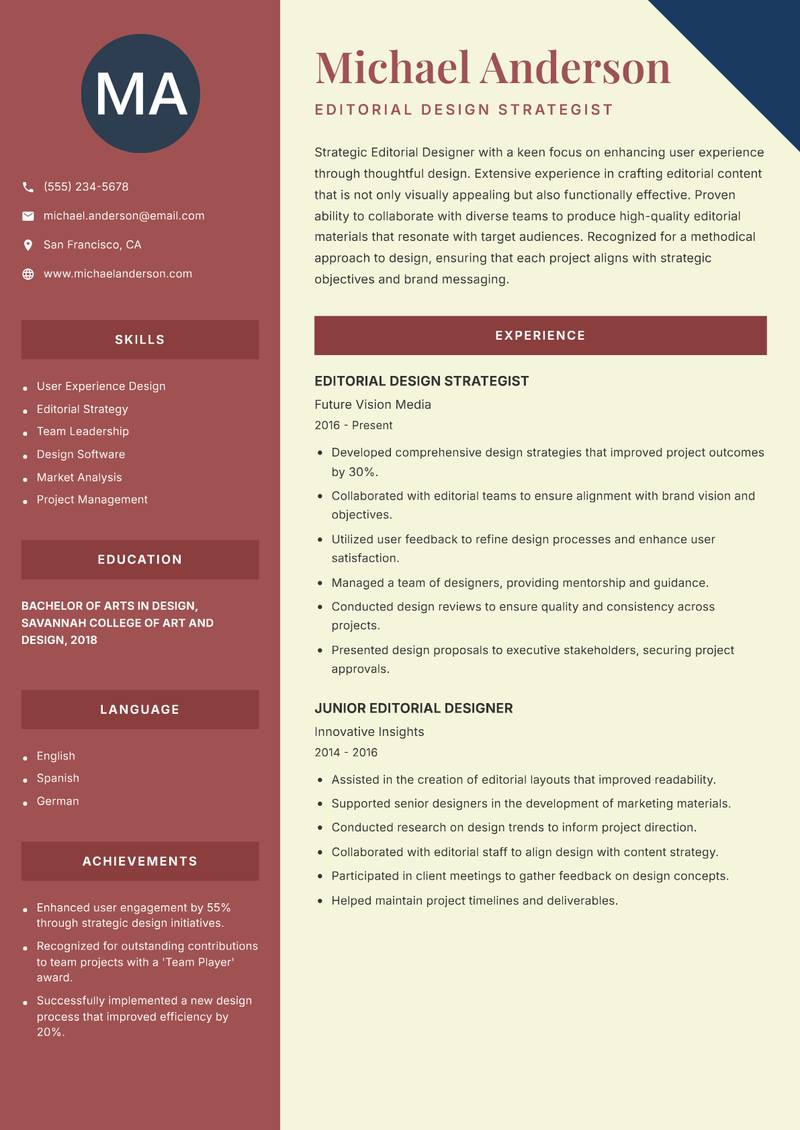
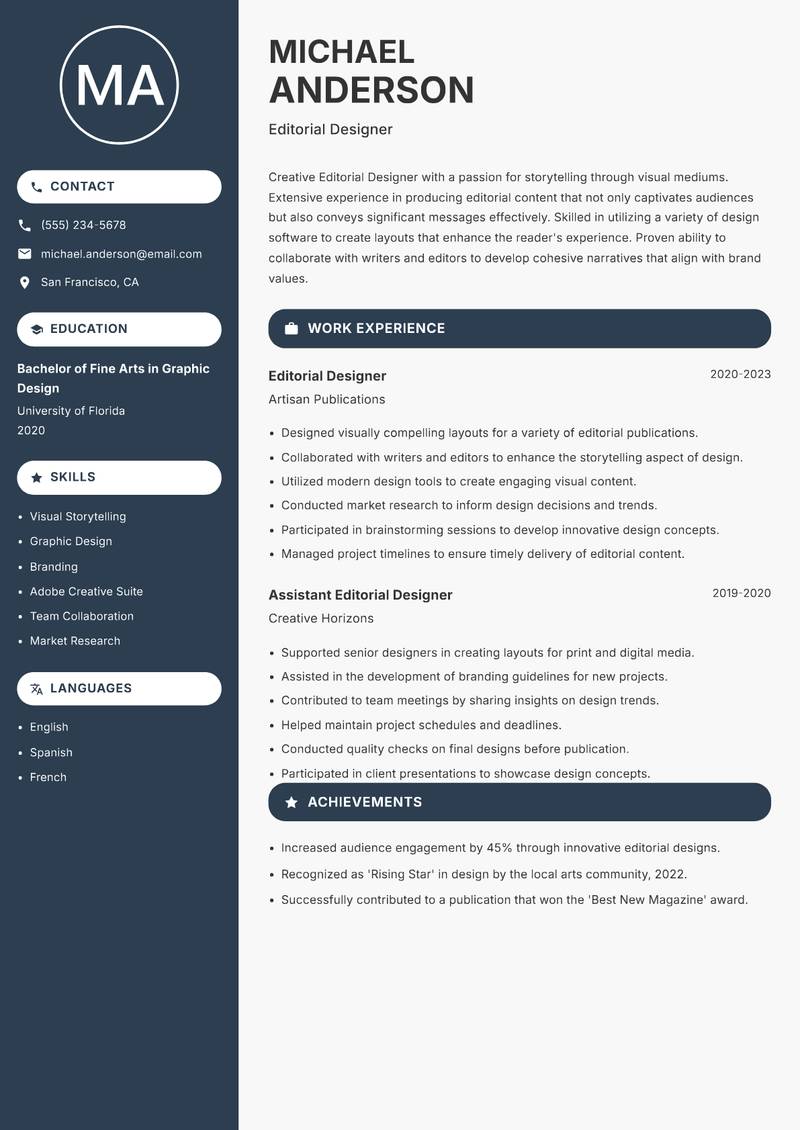
Browse Editorial Designer resume examples built around information design & data visualization, tailored for Visual Communication roles.
A strong Editorial Designer resume leads with a focused professional summary that names the exact role and your standout achievement. In the experience section, open every bullet with a strong action verb and quantify the result with numbers wherever possible. Highlight your most relevant competencies — especially Information Design & Data Visualization, Brand Communication Design, and Illustration & Infographic Creation — in a dedicated Skills section positioned early so ATS systems and hiring managers both find it immediately.
For format, most Editorial Designer roles suit a reverse-chronological layout: most recent position first, working backwards. Keep to one page for under five years of experience, or two pages for senior candidates with a rich project or leadership history. Use clean, ATS-safe fonts (10–12pt), standard section headings (Summary, Experience, Education, Skills), and avoid tables, text boxes, or multi-column layouts that applicant tracking systems cannot parse reliably.