Key Skills for Electronics Project Engineer Positions
- Analog & Digital Circuit Design
- PCB Layout & Signal Integrity
- Embedded C/C++ Programming
- FPGA Design (VHDL, Verilog)
- RF Design & Antenna Engineering
- Power Electronics & EMC Compliance
- Electronic CAD (Altium Designer, Cadence)
- Oscilloscope, Logic Analyzer & Test Equipment
- Signal Processing (DSP, FFT)
- Hardware-Software Co-design
Resume Tips for Electronics Project Engineer Applications
- Begin your professional summary with the exact job title "Electronics Project Engineer" — ATS systems often match titles literally, and including yours increases the likelihood of passing the initial automated keyword filter before a recruiter reviews your resume
- List specific EDA tools: Altium Designer, Cadence Virtuoso, Mentor Graphics, OrCAD.
- Specify HDL experience: VHDL vs. Verilog vs. SystemVerilog for FPGA and ASIC roles.
- Demonstrate board bring-up and debugging skills — practical hardware experience separates good engineers.
- Highlight EMC design and compliance experience — it is required for any product entering commercial markets.
- For embedded roles, show proficiency in both hardware design and embedded software.
Strong Action Verbs for Electronics Project Engineer Resumes
Designed · Simulated · Implemented · Verified · Prototyped · Tested · Debugged · Optimized · Integrated · Deployed · Achieved · Administered · Analyzed · Architected
Common Mistakes to Avoid
- Writing a generic objective statement instead of a targeted electronics project engineer professional summary
- Not specifying EDA tools — electronics employers hire for tool-specific expertise.
- Failing to differentiate analog, digital, RF, and power electronics — they require very different skills.
- Ignoring EMC compliance experience, which is mandatory for product development roles.
- Not demonstrating hands-on lab and debugging skills alongside simulation work.
Experience Levels
- Graduate Electronics Engineer (0-2 years)
- Electronics Engineer (2-5 years)
- Senior Electronics Engineer (5-9 years)
- Lead / Principal Engineer (9-14 years)
- Chief Electronics Engineer / Director (14+ years)
How to Write a Electronics Project Engineer Resume
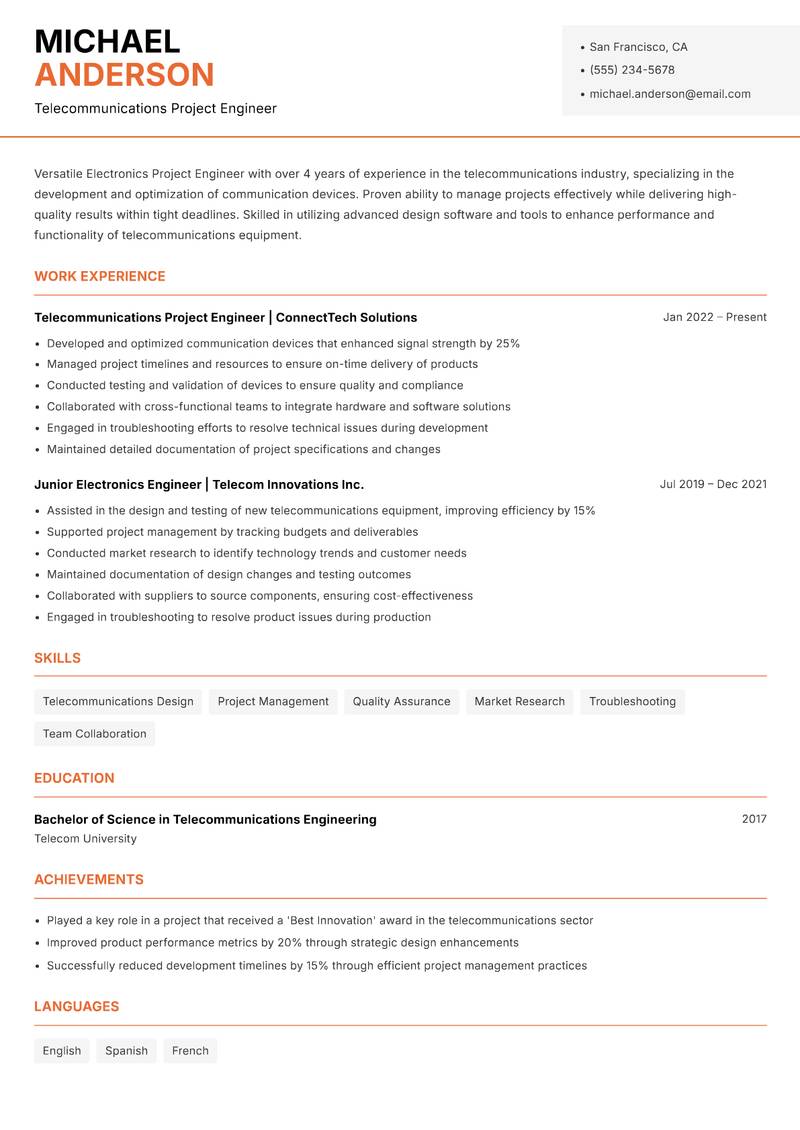
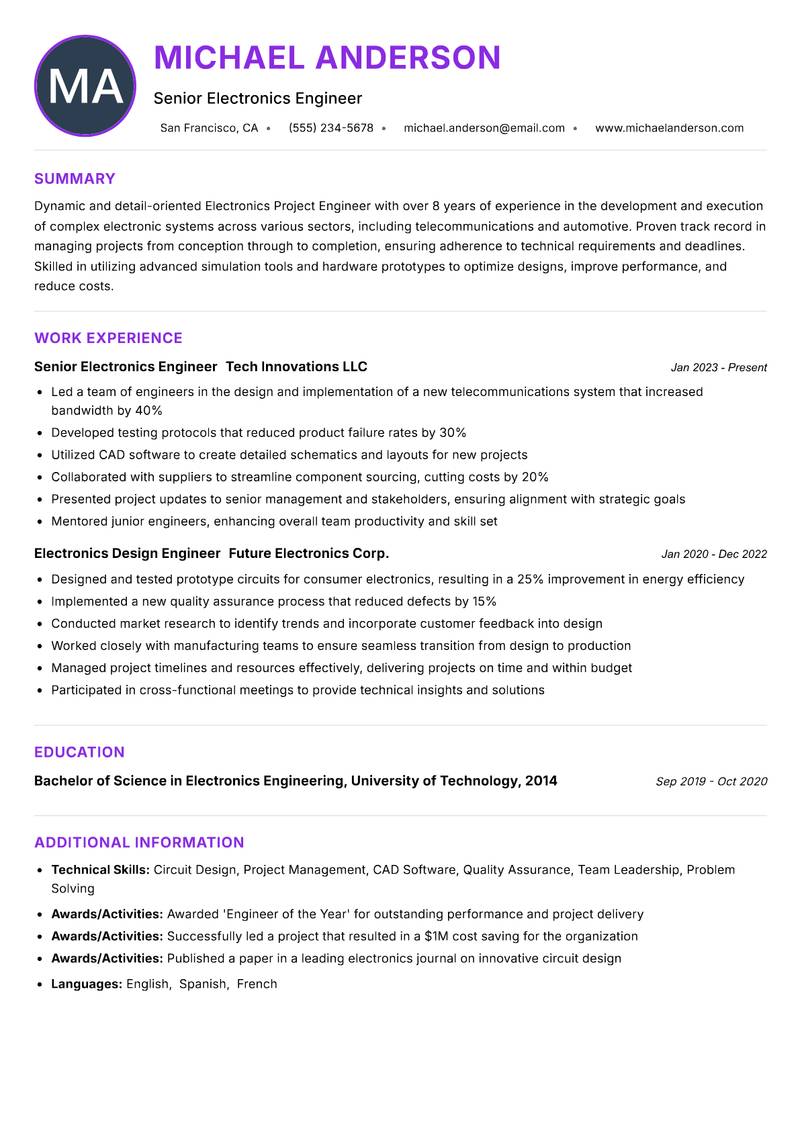
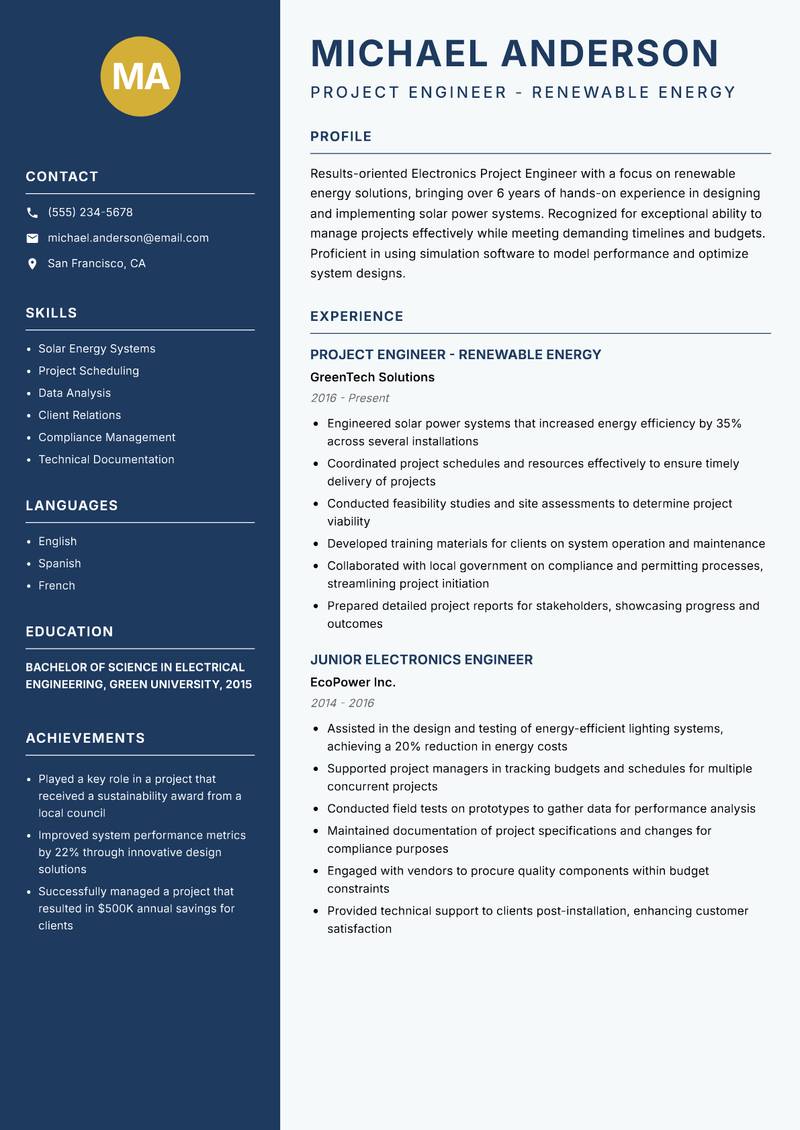
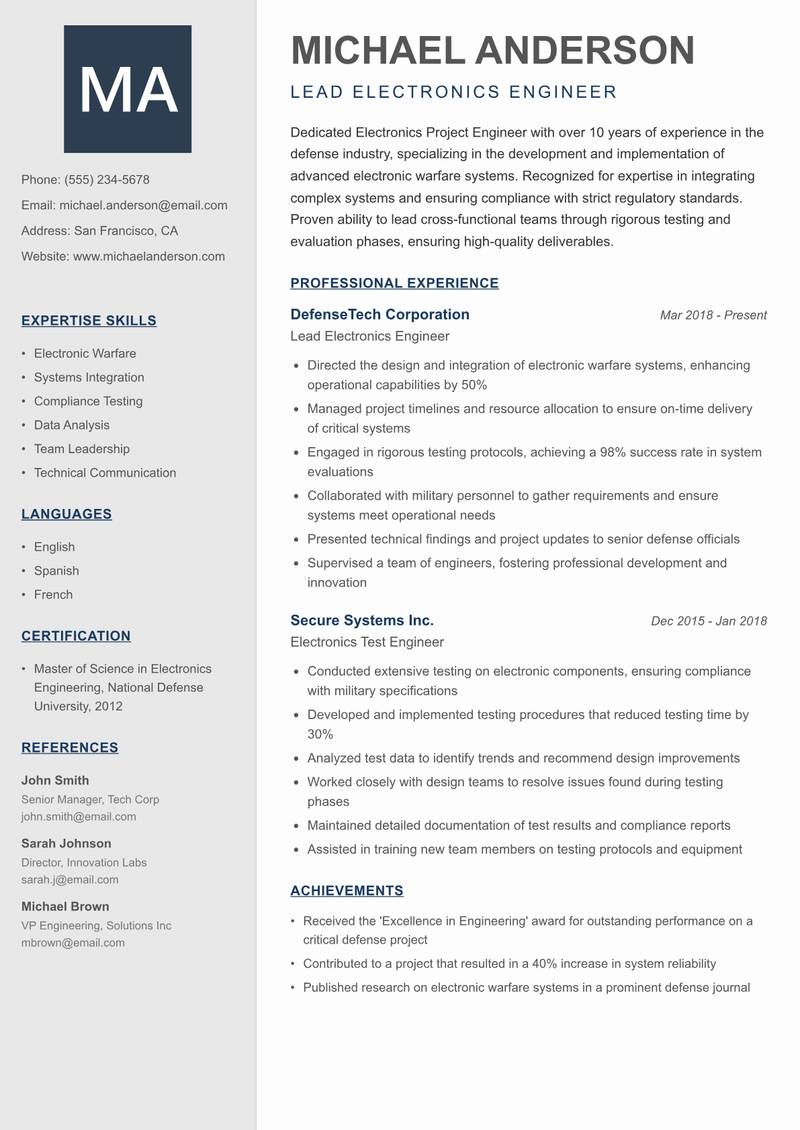
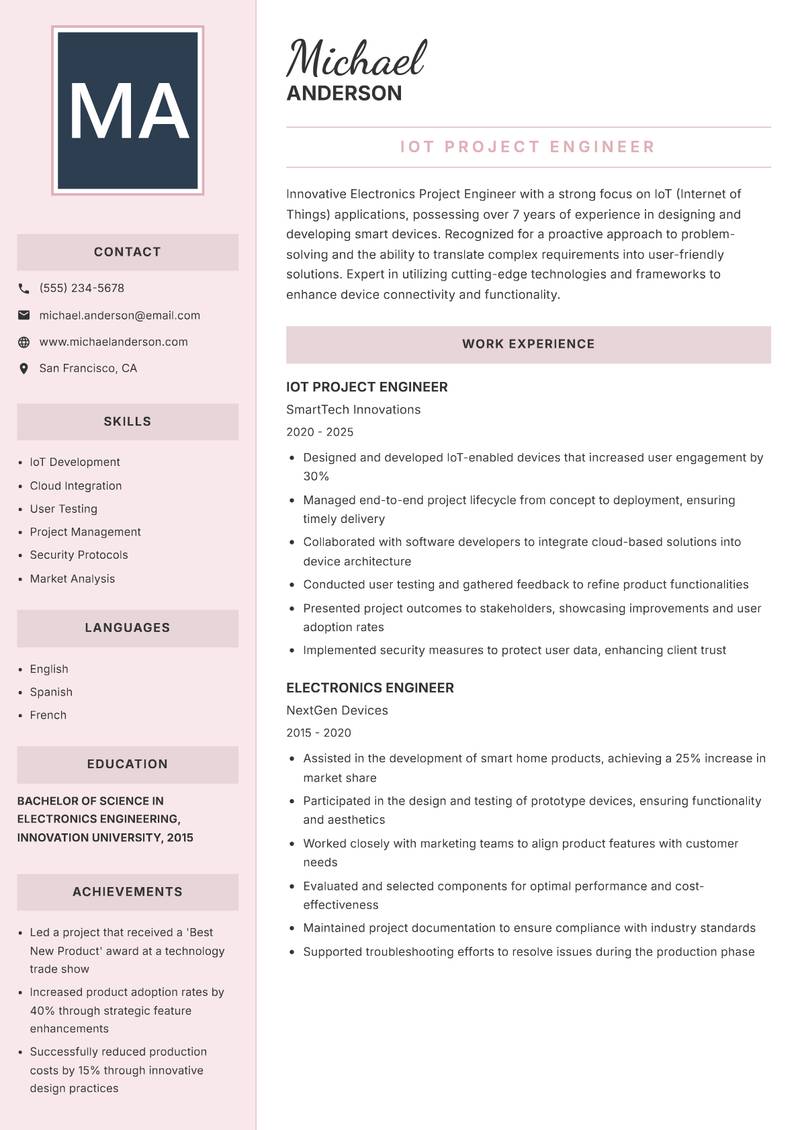
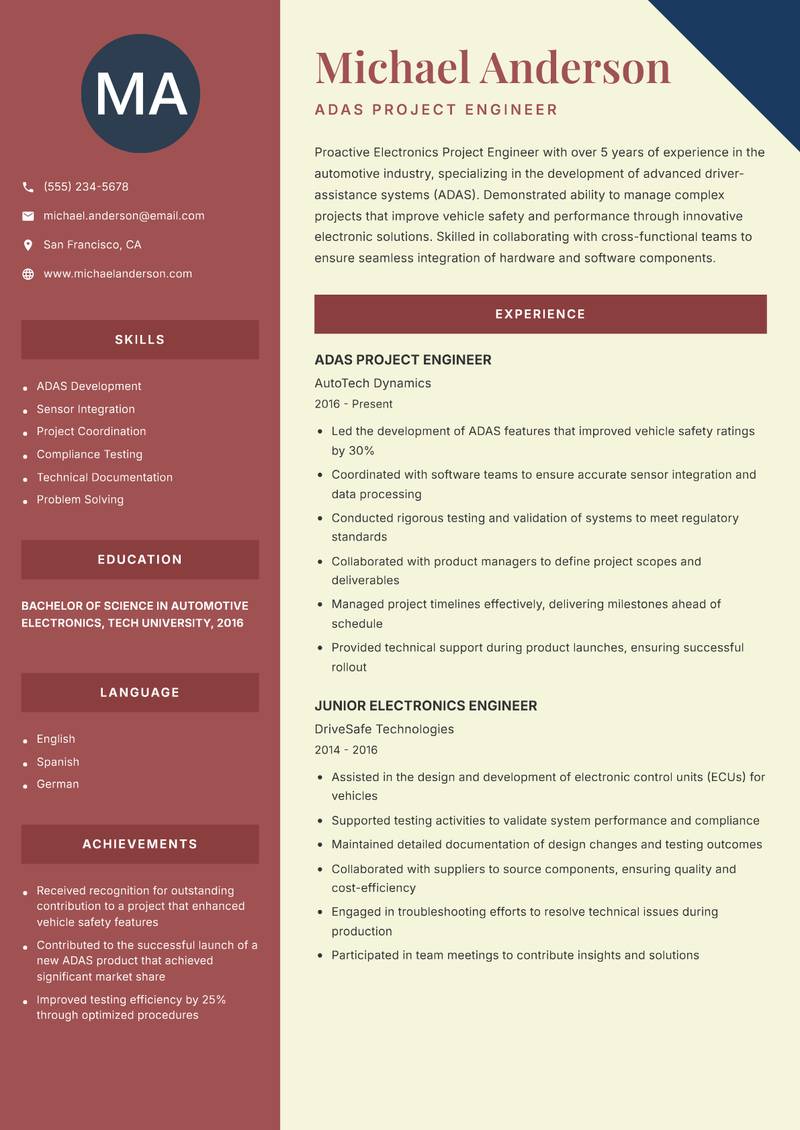
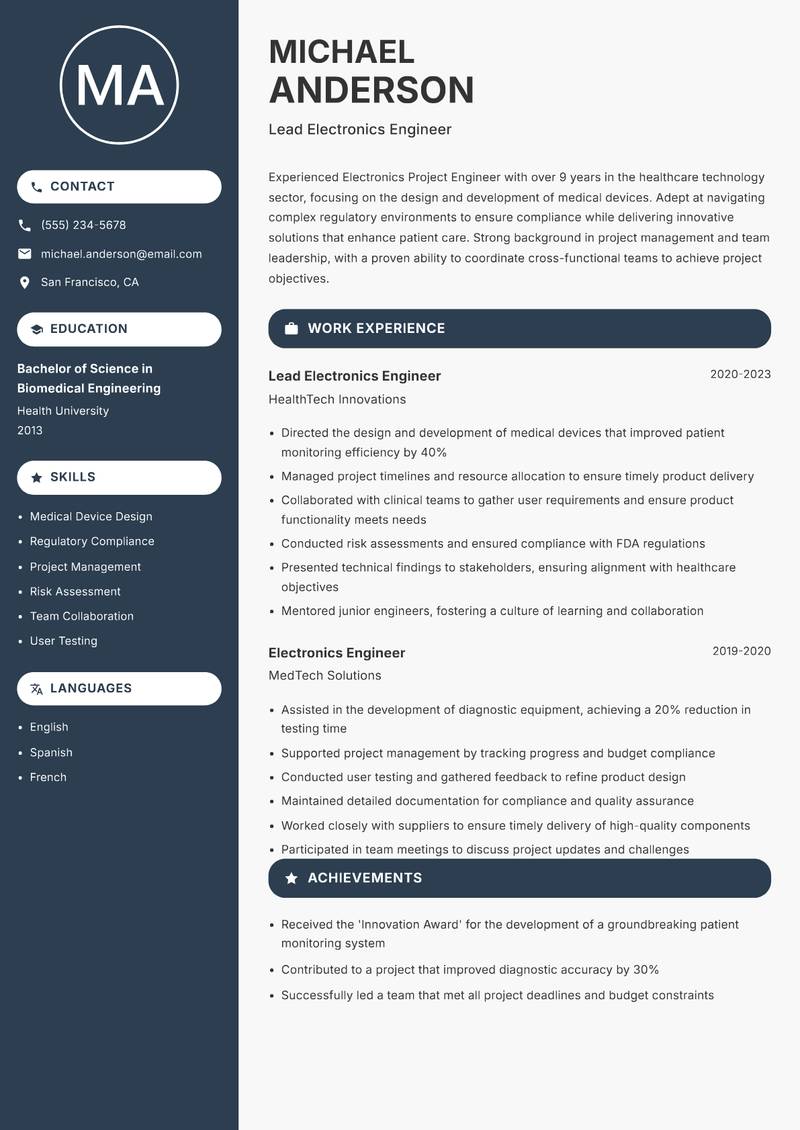
Browse Electronics Project Engineer resume examples built around analog & digital circuit design, tailored for Electronics Engineering roles.
A strong Electronics Project Engineer resume leads with a focused professional summary that names the exact role and your standout achievement. In the experience section, open every bullet with a strong action verb and quantify the result with numbers wherever possible. Highlight your most relevant competencies — especially Analog & Digital Circuit Design, PCB Layout & Signal Integrity, and Embedded C/C++ Programming — in a dedicated Skills section positioned early so ATS systems and hiring managers both find it immediately.
For format, most Electronics Project Engineer roles suit a reverse-chronological layout: most recent position first, working backwards. Keep to one page for under five years of experience, or two pages for senior candidates with a rich project or leadership history. Use clean, ATS-safe fonts (10–12pt), standard section headings (Summary, Experience, Education, Skills), and avoid tables, text boxes, or multi-column layouts that applicant tracking systems cannot parse reliably.