Key Skills for Environmental Sciences Analyst Positions
- Environmental Impact Assessment (EIA)
- Ecological Surveys & Species Identification
- Water & Air Quality Monitoring
- Soil & Sediment Analysis
- GIS & Environmental Mapping
- Environmental Regulation & Permitting
- Remediation & Contamination Assessment
- Carbon Footprint & Life Cycle Assessment
- Wildlife Conservation & Habitat Management
- Scientific Report Writing & Stakeholder Consultation
Resume Tips for Environmental Sciences Analyst Applications
- Frame every achievement as a business outcome — revenue impact, cost reduction, efficiency gain, or risk mitigated — since environmental sciences analyst employers want analysts who translate data into decisions, not just produce reports
- Specify fieldwork environments and survey methodologies to demonstrate practical competency.
- Highlight EIA process experience — it is a core competency for most environmental consulting roles.
- Demonstrate regulatory knowledge relevant to your region (EPA, Natural England, EU EIA Directive).
- Quantify environmental outcomes: hectares surveyed, pollution reduced, species protected.
- Show GIS proficiency — spatial analysis is essential for environmental work.
Strong Action Verbs for Environmental Sciences Analyst Resumes
Assessed · Surveyed · Monitored · Remediated · Consulted · Mapped · Restored · Complied · Reported · Conserved · Achieved · Administered · Analyzed · Architected
Common Mistakes to Avoid
- Writing a generic objective statement instead of a targeted environmental sciences analyst professional summary
- Not demonstrating EIA process knowledge — it is the foundation of environmental consulting.
- Failing to specify fieldwork skills — survey methodologies and species identification competencies vary significantly.
- Ignoring regulatory and compliance knowledge that clients rely on environmental scientists to navigate.
- Neglecting GIS skills — environmental work is inherently spatial.
Experience Levels
- Environmental Graduate / Research Assistant (0-2 years)
- Environmental Scientist / Ecologist (2-5 years)
- Senior Scientist / Consultant (5-9 years)
- Principal Consultant / Project Manager (9-14 years)
- Director / Chief Environmental Officer (14+ years)
How to Write a Environmental Sciences Analyst Resume
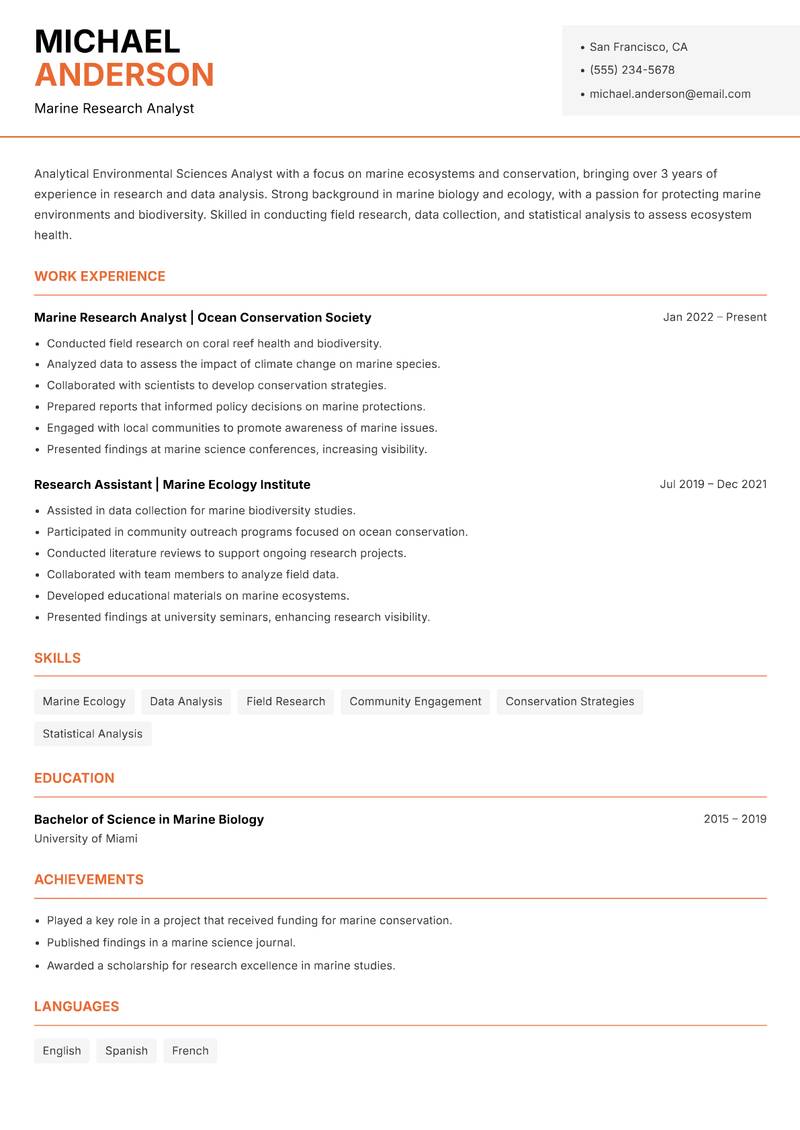
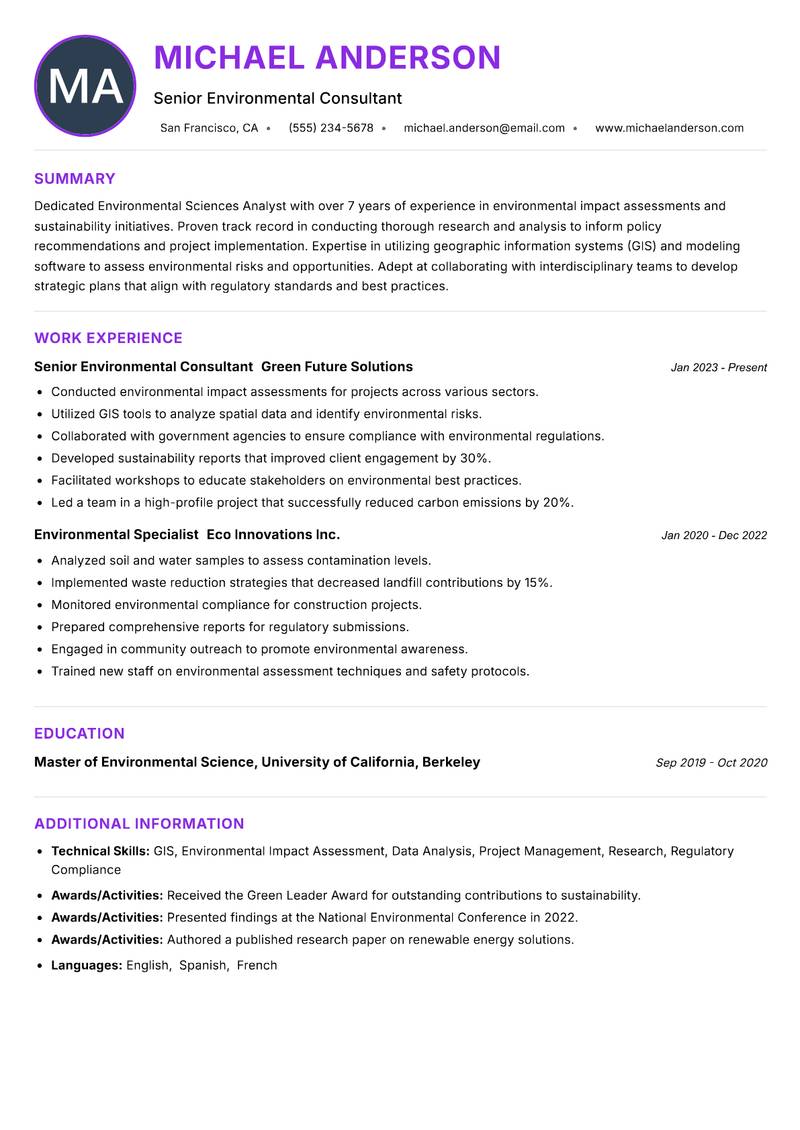
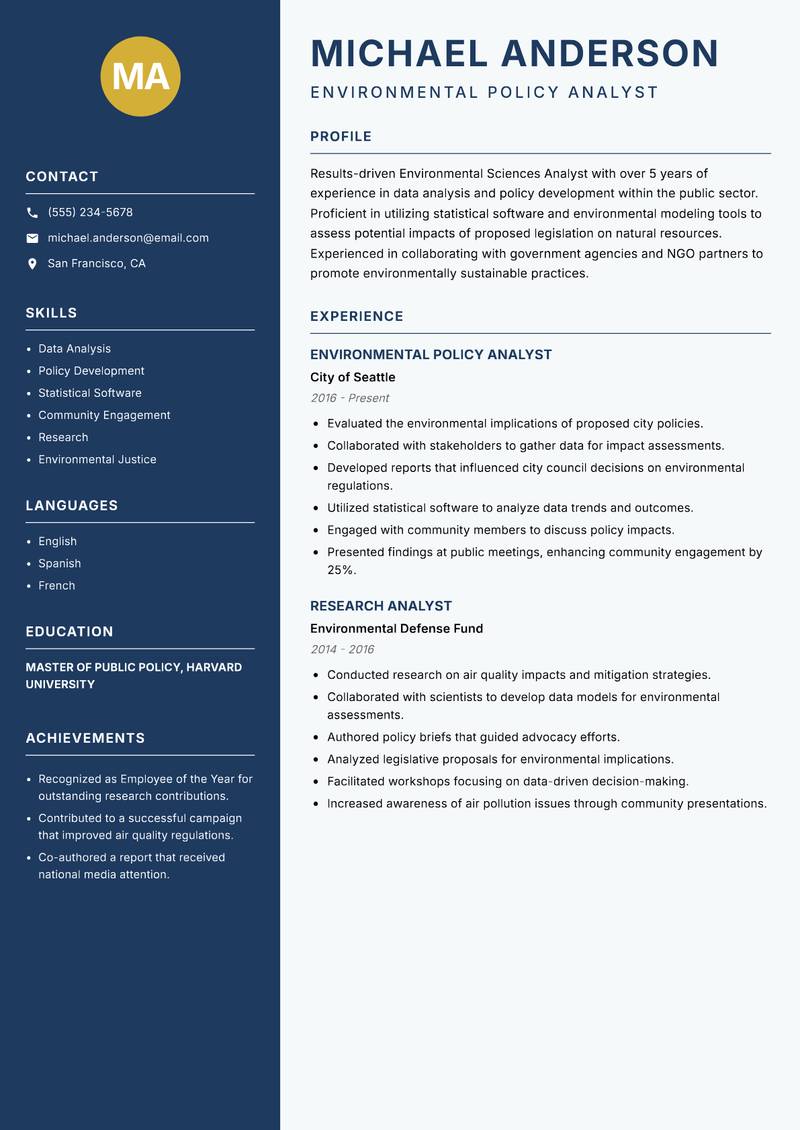
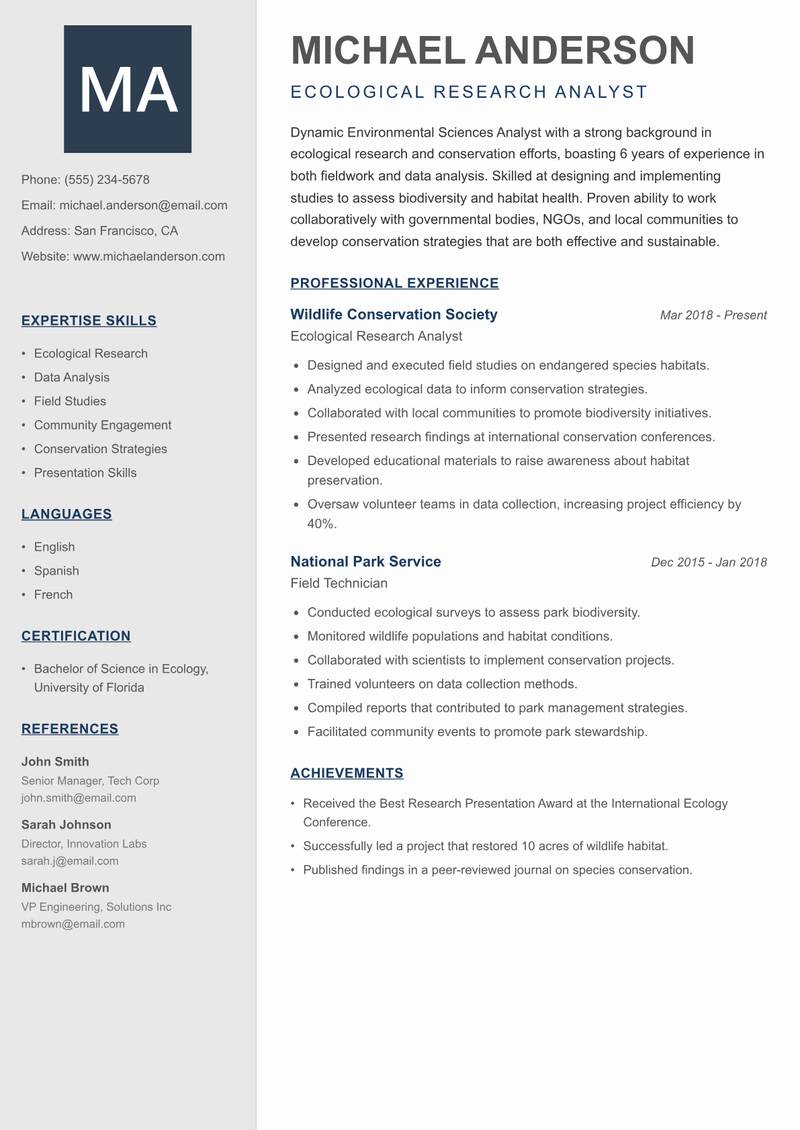
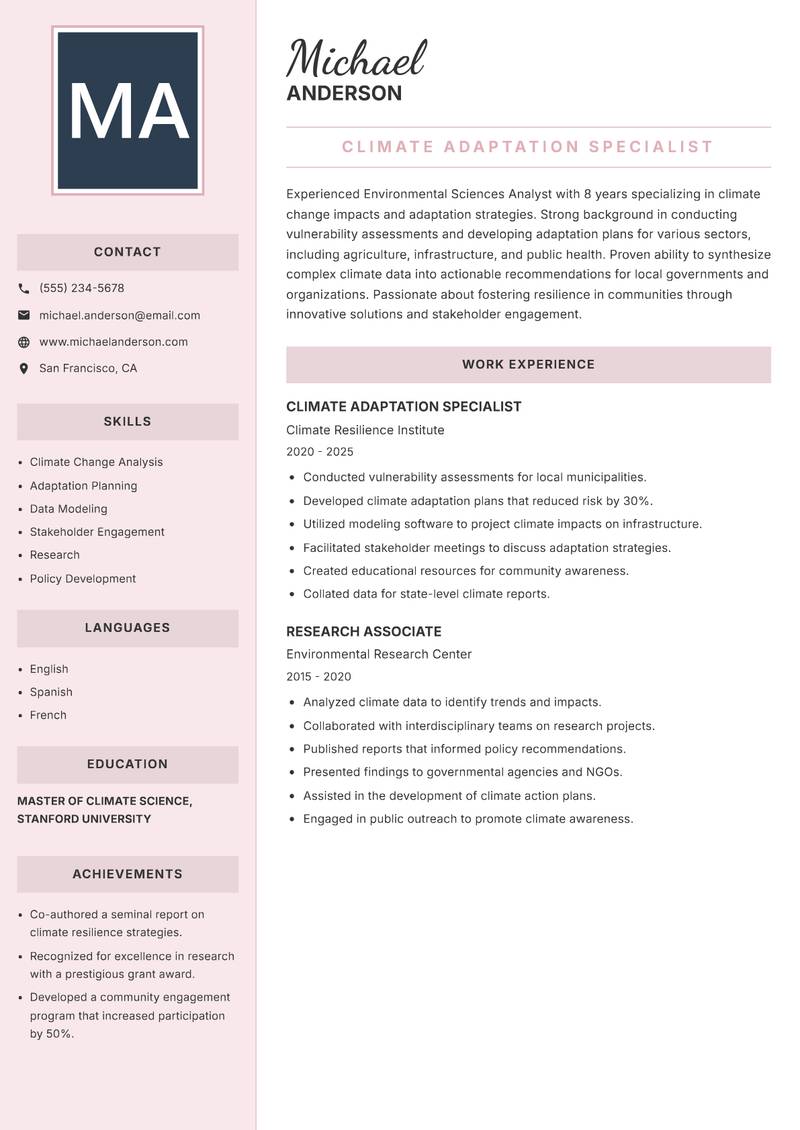
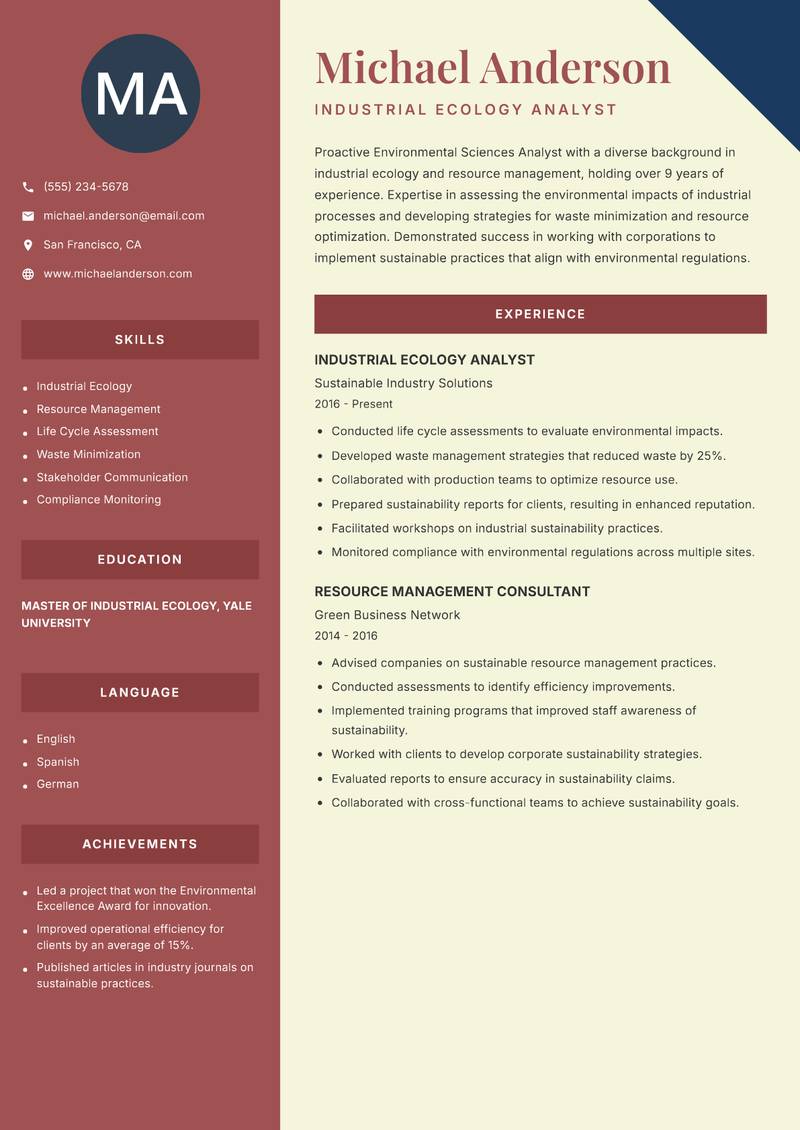
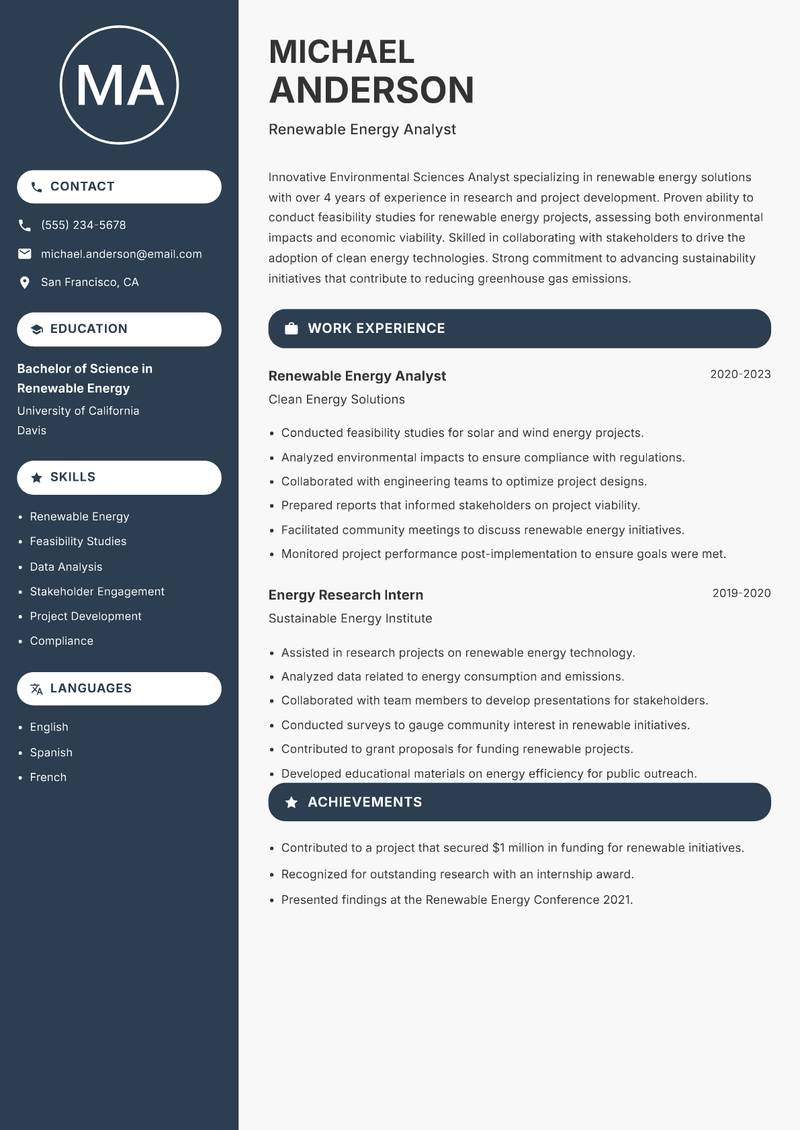
Browse Environmental Sciences Analyst resume examples built around ecological surveys & species identification, tailored for Environmental Sciences roles.
A strong Environmental Sciences Analyst resume leads with a focused professional summary that names the exact role and your standout achievement. In the experience section, open every bullet with a strong action verb and quantify the result with numbers wherever possible. Highlight your most relevant competencies — especially Environmental Impact Assessment (EIA), Ecological Surveys & Species Identification, and Water & Air Quality Monitoring — in a dedicated Skills section positioned early so ATS systems and hiring managers both find it immediately.
For format, most Environmental Sciences Analyst roles suit a reverse-chronological layout: most recent position first, working backwards. Keep to one page for under five years of experience, or two pages for senior candidates with a rich project or leadership history. Use clean, ATS-safe fonts (10–12pt), standard section headings (Summary, Experience, Education, Skills), and avoid tables, text boxes, or multi-column layouts that applicant tracking systems cannot parse reliably.