Key Skills for General Surgeon Positions
- Operative Technique & Surgical Precision
- Preoperative Assessment & Surgical Planning
- Minimally Invasive & Laparoscopic Surgery
- Robotic Surgery (da Vinci System)
- Anesthesia Administration & Airway Management
- Trauma & Emergency Surgical Response
- Post-Operative Care & Complication Management
- Surgical Teaching & Training
- Operating Theater Team Leadership
- Surgical Quality Improvement
Resume Tips for General Surgeon Applications
- Include your GMC or medical council registration number prominently — general surgeon applicants are typically verified against professional registers before interview, and missing this detail causes unnecessary delays
- Provide a full operative case log with volume, complexity, and specialty breakdown.
- List specialty surgical training pathways and board certifications clearly.
- Quantify outcomes where possible: complication rates, return-to-theater rates, length-of-stay metrics.
- Highlight minimally invasive and robotic surgery credentials, which are highly sought-after.
- For academic surgeons, include research publications and teaching program leadership.
Strong Action Verbs for General Surgeon Resumes
Operated · Resected · Reconstructed · Managed · Led · Taught · Published · Diagnosed · Coordinated · Assessed · Trained · Achieved · Administered · Analyzed
Common Mistakes to Avoid
- Writing a generic objective statement instead of a targeted general surgeon professional summary
- Omitting operative case volume — surgical employers need to know the breadth and depth of your experience.
- Failing to specify subspecialty training and board certification.
- Not demonstrating robotic or minimally invasive surgery skills, increasingly required for senior roles.
- Neglecting research and teaching for academic surgical positions.
Experience Levels
- Medical Student / Surgical Intern (0-3 years)
- Surgical Resident / Registrar (3-7 years)
- Fellow / Specialist Trainee (7-12 years)
- Consultant Surgeon (12-18 years)
- Professor / Head of Surgery (18+ years)
How to Write a General Surgeon Resume
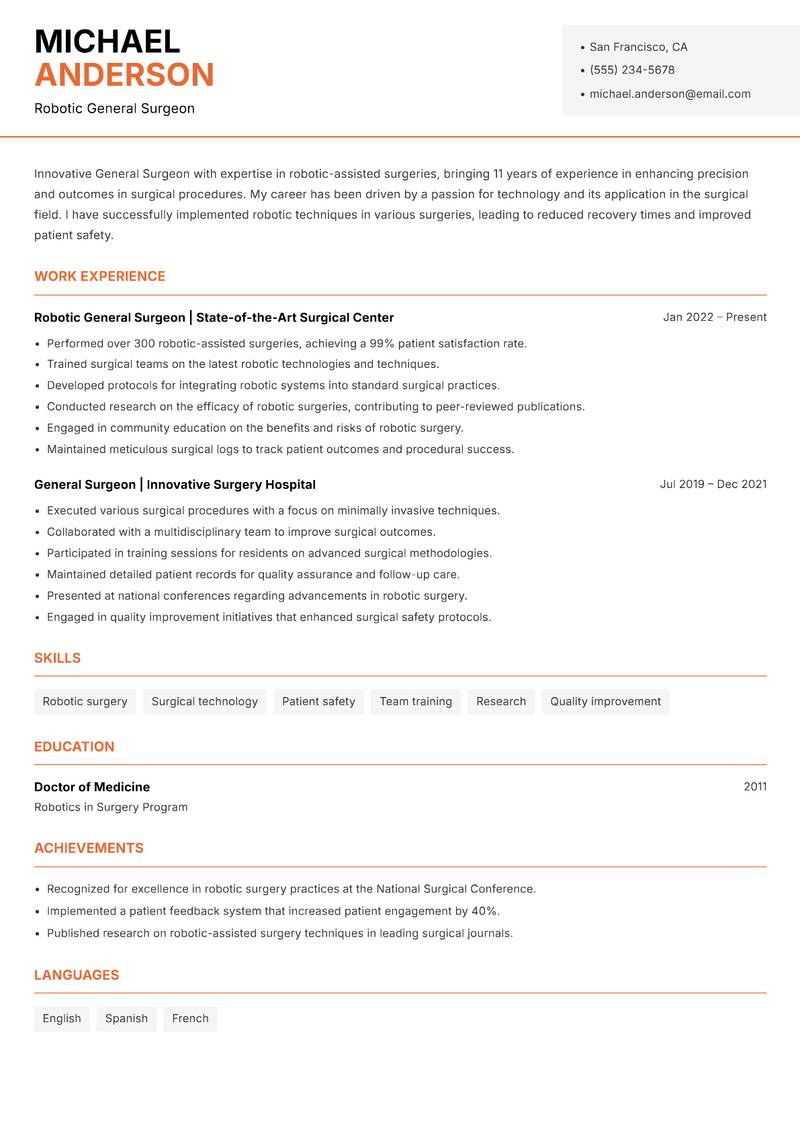
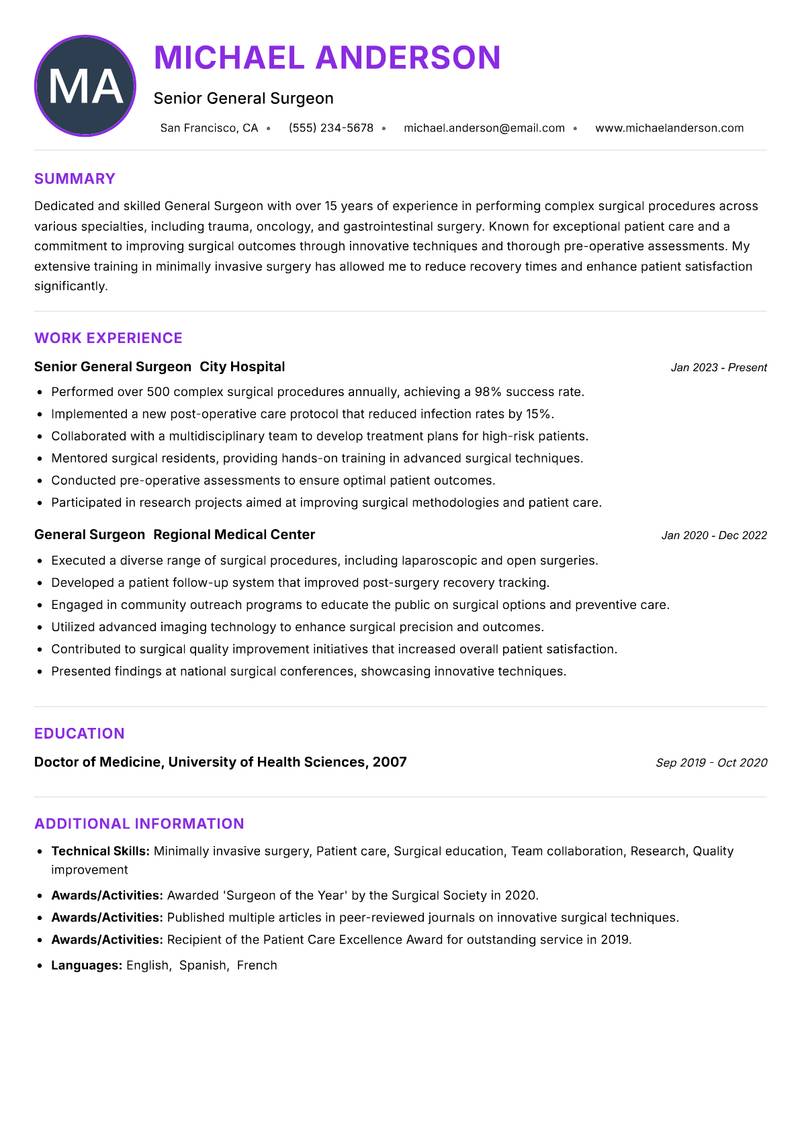
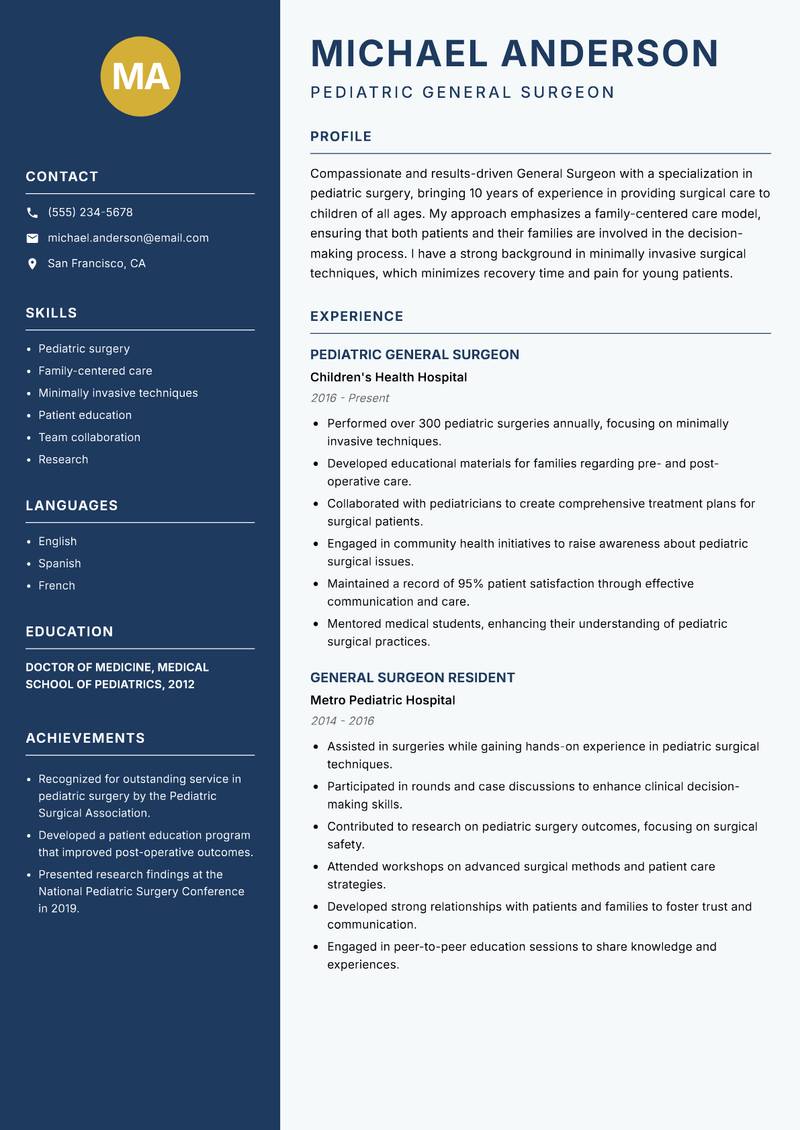
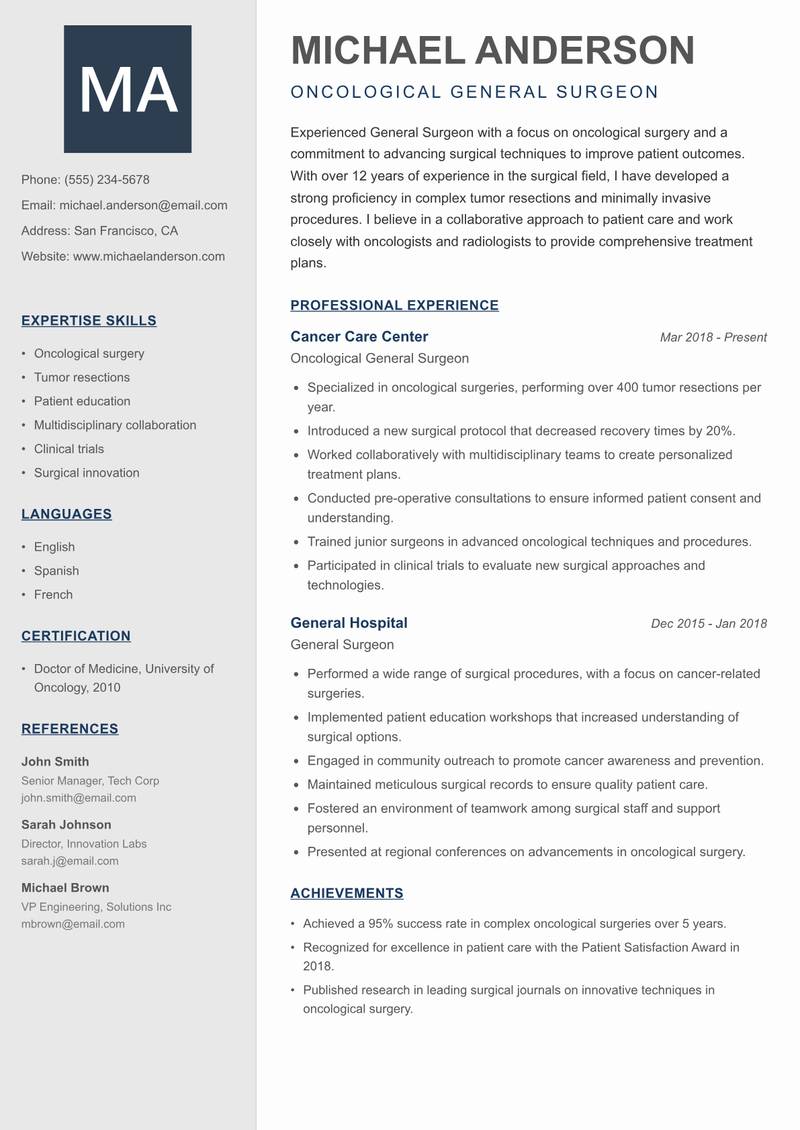
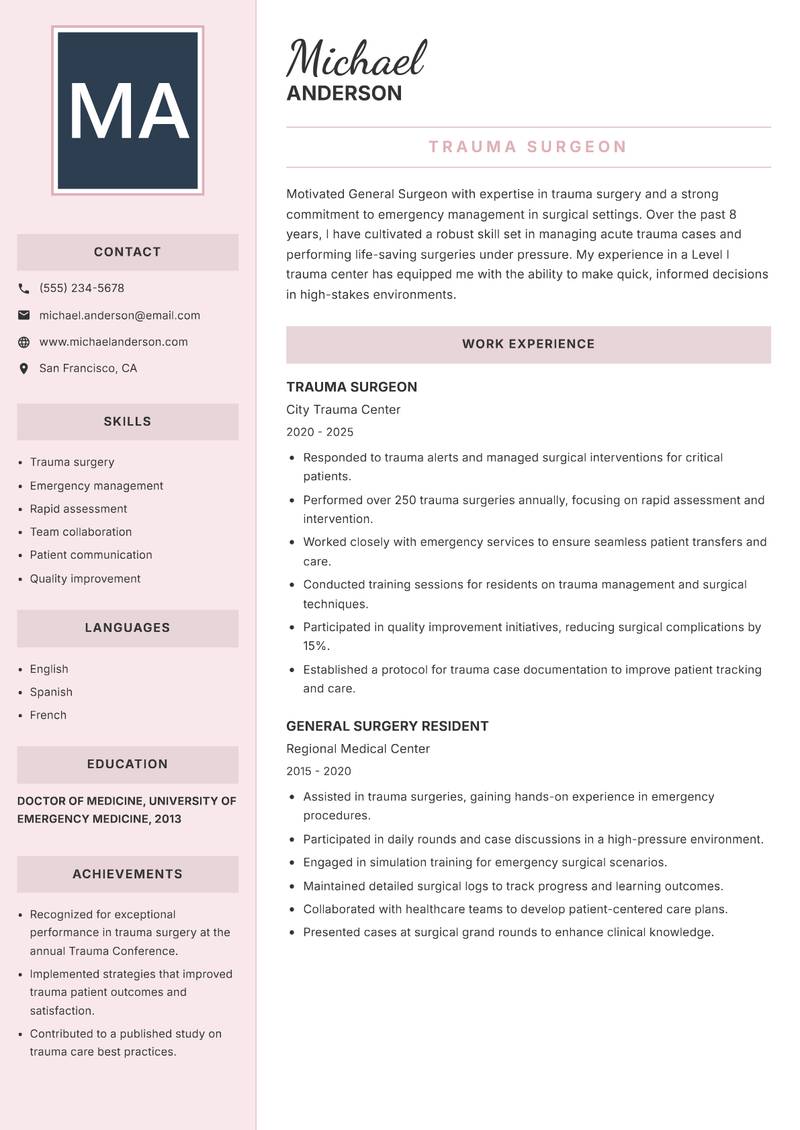
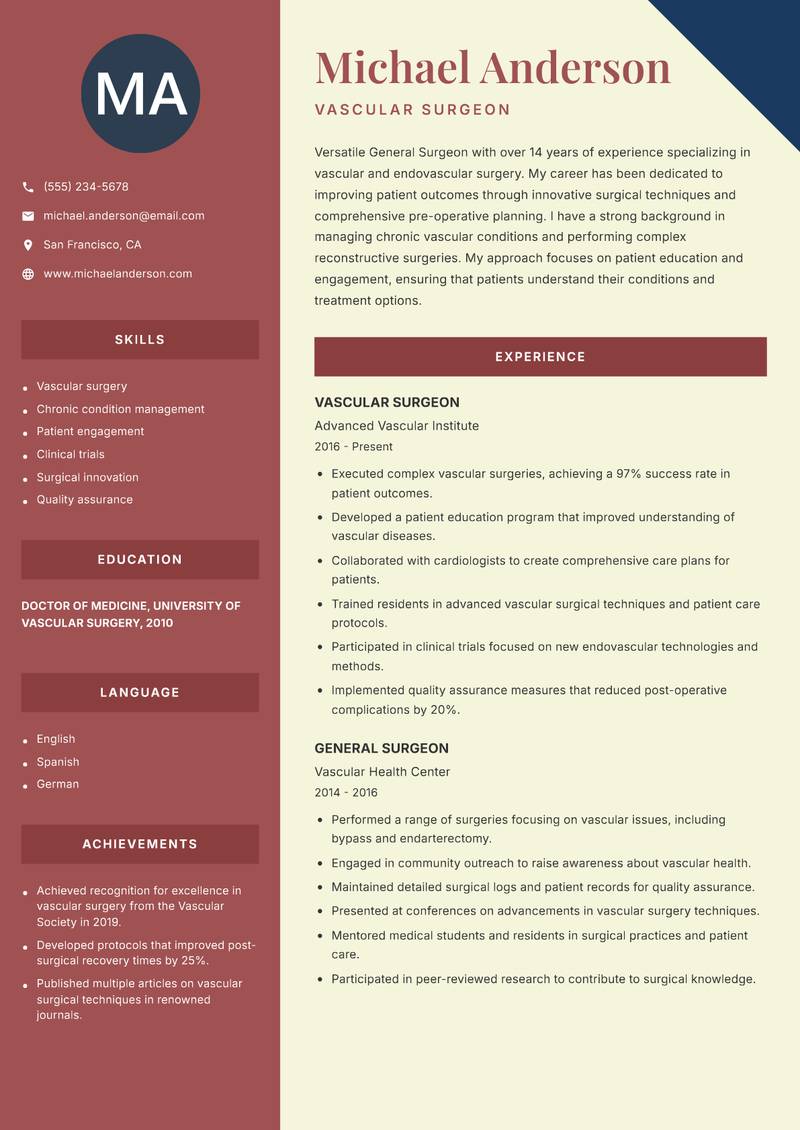
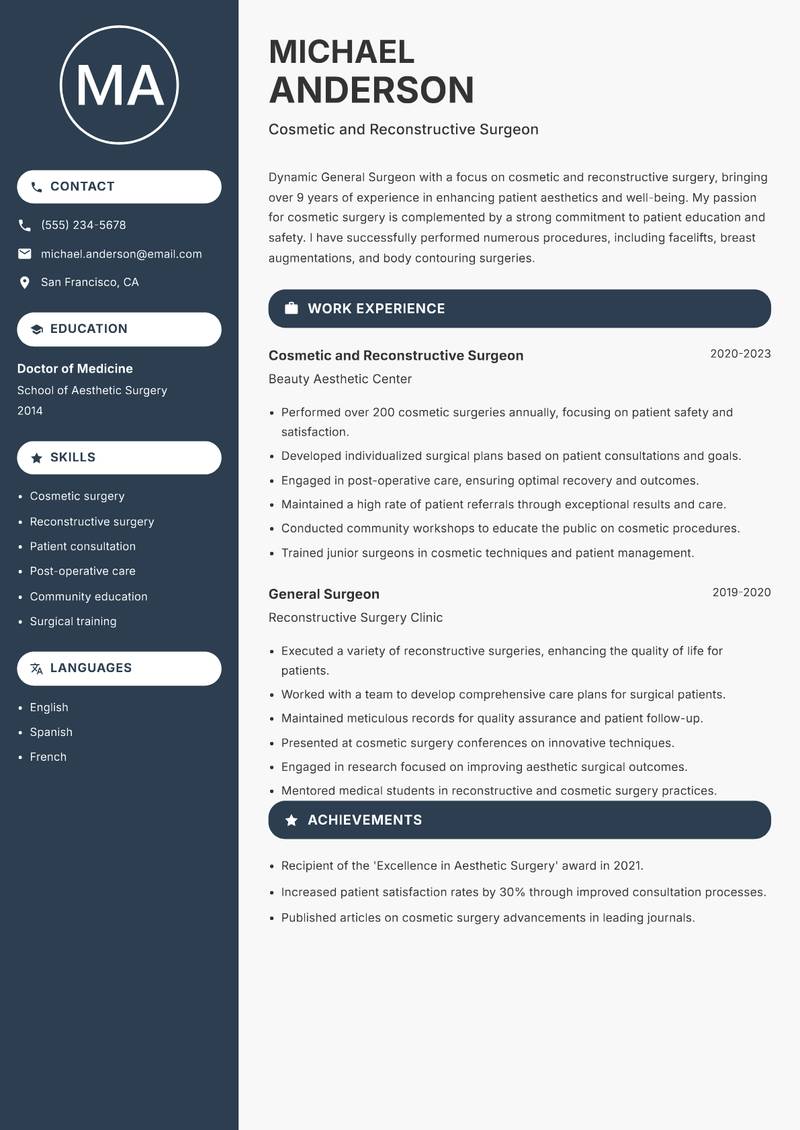
Browse General Surgeon resume examples built around operative technique & surgical precision, tailored for Surgical Medicine roles.
A strong General Surgeon resume leads with a focused professional summary that names the exact role and your standout achievement. In the experience section, open every bullet with a strong action verb and quantify the result with numbers wherever possible. Highlight your most relevant competencies — especially Operative Technique & Surgical Precision, Preoperative Assessment & Surgical Planning, and Minimally Invasive & Laparoscopic Surgery — in a dedicated Skills section positioned early so ATS systems and hiring managers both find it immediately.
For format, most General Surgeon roles suit a reverse-chronological layout: most recent position first, working backwards. Keep to one page for under five years of experience, or two pages for senior candidates with a rich project or leadership history. Use clean, ATS-safe fonts (10–12pt), standard section headings (Summary, Experience, Education, Skills), and avoid tables, text boxes, or multi-column layouts that applicant tracking systems cannot parse reliably.