Key Skills for Industrial Robotics Engineer Positions
- Robot Programming (KUKA, Fanuc, ABB, UR)
- PLC Programming (Siemens, Allen-Bradley)
- Robot Operating System (ROS/ROS2)
- Computer Vision & Sensor Fusion
- Control Theory & Feedback Systems
- Motion Planning & Path Optimization
- Machine Learning for Robotics
- Simulation (Gazebo, Webots, RobotStudio)
- Industrial Networking (Profinet, EtherCAT)
- Safety Systems (ISO 10218, EN ISO 13849)
Resume Tips for Industrial Robotics Engineer Applications
- Begin your professional summary with the exact job title "Industrial Robotics Engineer" — ATS systems often match titles literally, and including yours increases the likelihood of passing the initial automated keyword filter before a recruiter reviews your resume
- List robot brands and programming environments you have worked with: KUKA KRC, Fanuc, ABB RAPID, UR Script.
- Demonstrate PLC programming proficiency: Siemens TIA Portal, Rockwell Studio 5000.
- Highlight safety certification knowledge: ISO 10218, collaborative robot safety standards.
- For software robotics roles, demonstrate ROS/ROS2 experience with specific packages.
- Quantify automation impact: cycle time improvements, uptime rates, defect reductions.
Strong Action Verbs for Industrial Robotics Engineer Resumes
Programmed · Automated · Integrated · Designed · Commissioned · Optimized · Simulated · Developed · Deployed · Tested · Achieved · Administered · Analyzed · Architected
Common Mistakes to Avoid
- Writing a generic objective statement instead of a targeted industrial robotics engineer professional summary
- Not listing specific robot programming environments — naming the brand is insufficient; show the controller experience.
- Failing to demonstrate safety systems knowledge — robot deployments have strict safety requirements.
- Ignoring simulation tools — virtual commissioning is now a standard industry practice.
- Not showing software skills alongside hardware — modern robotics requires both.
Experience Levels
- Graduate / Junior Automation Engineer (0-2 years)
- Robotics / Automation Engineer (2-5 years)
- Senior Engineer (5-9 years)
- Systems Integration Lead (9-14 years)
- Robotics Director / CTO (14+ years)
How to Write a Industrial Robotics Engineer Resume
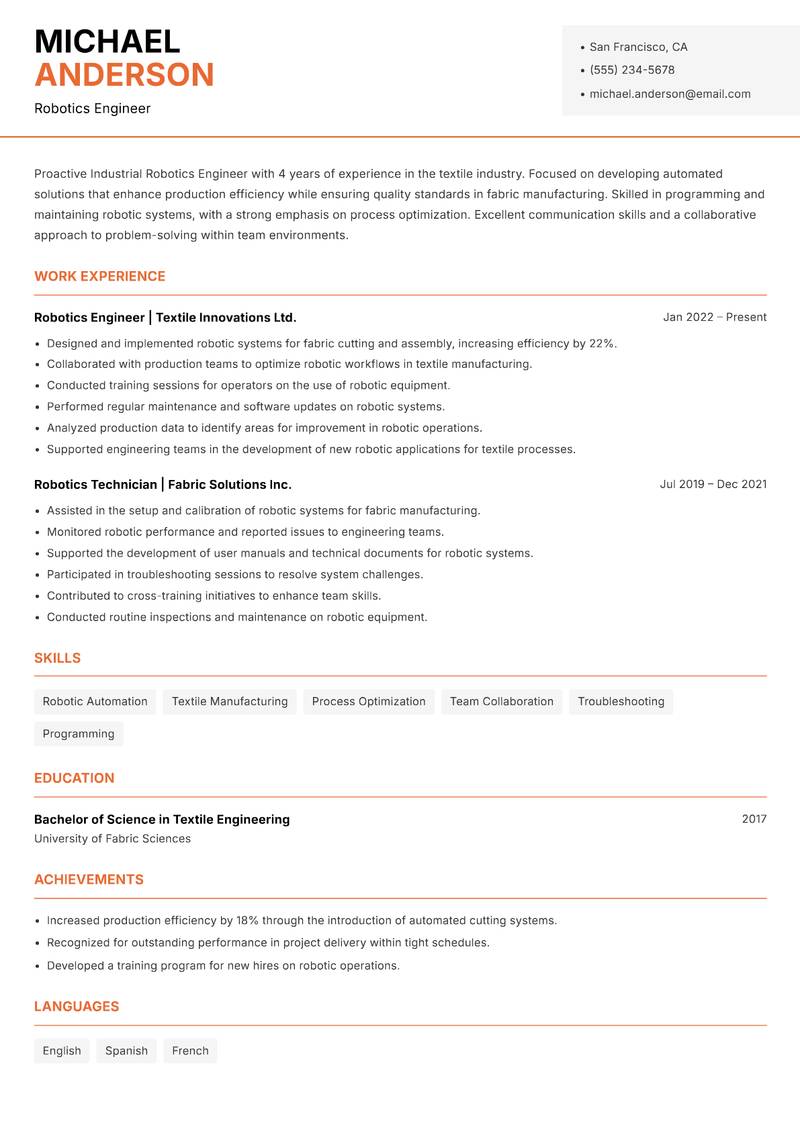
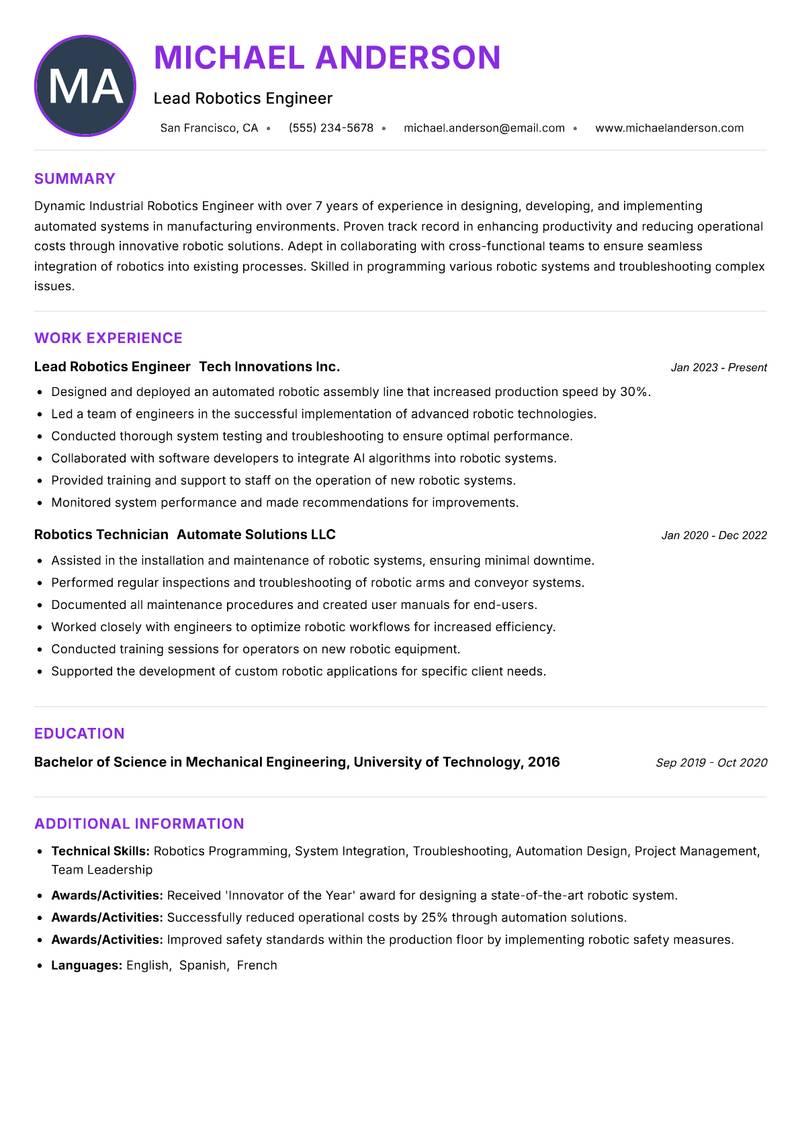
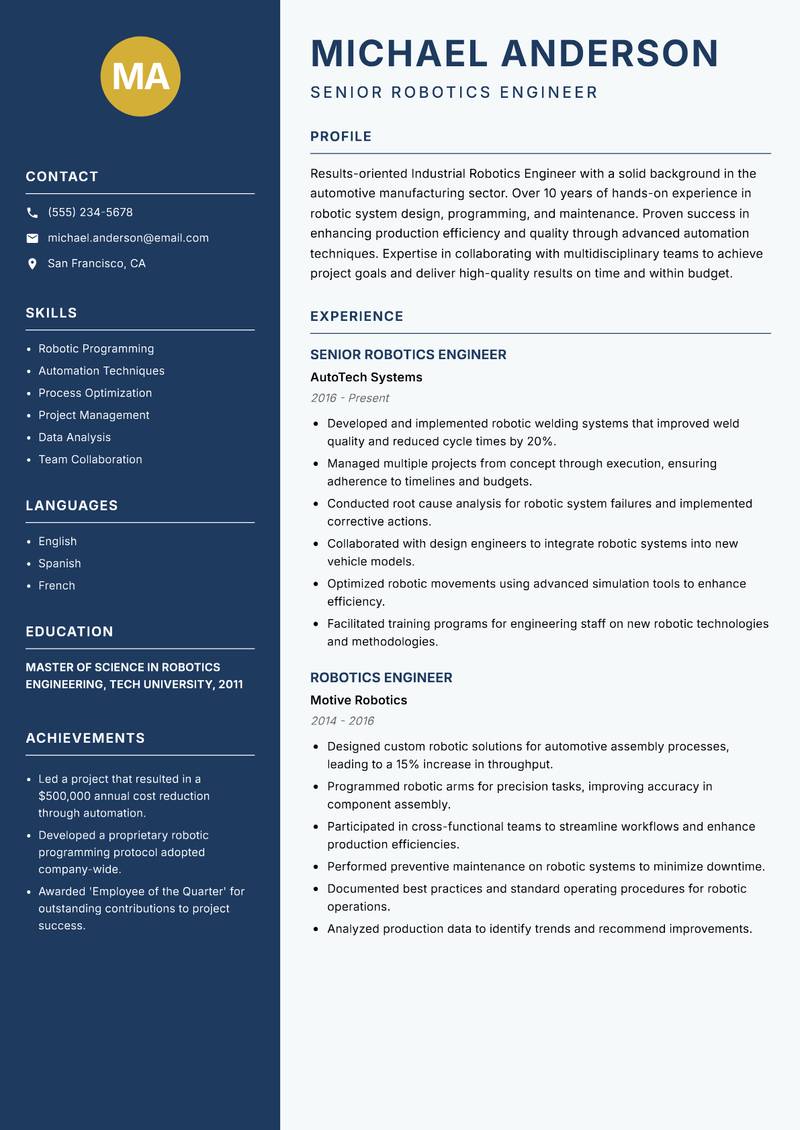
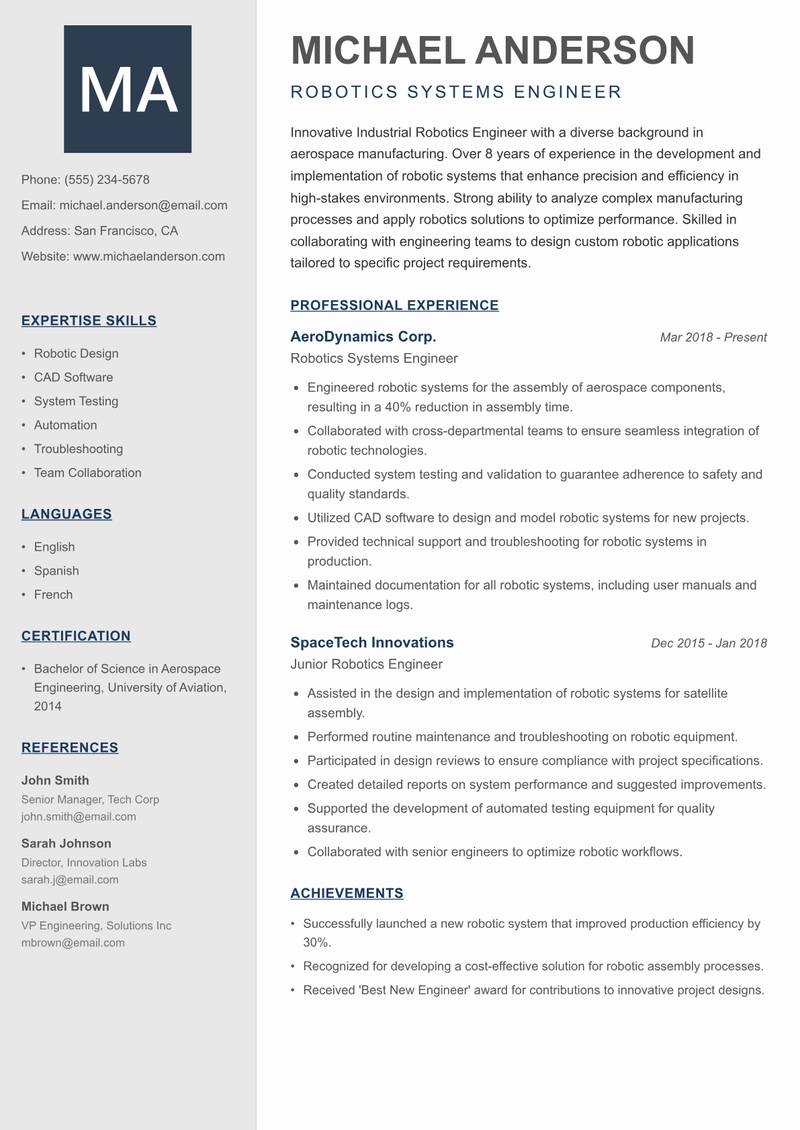
Browse Industrial Robotics Engineer resume examples built around robot programming (KUKA, fanuc, ABB, UR), tailored for Robotics & Automation roles.
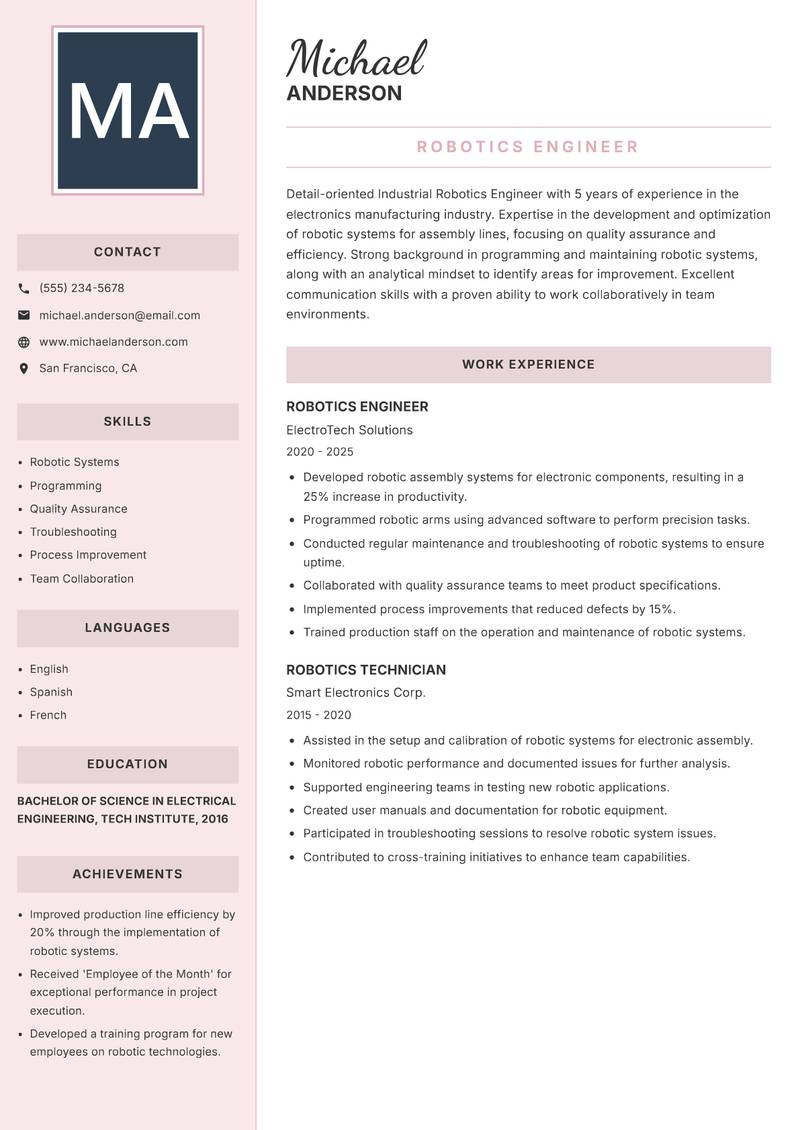
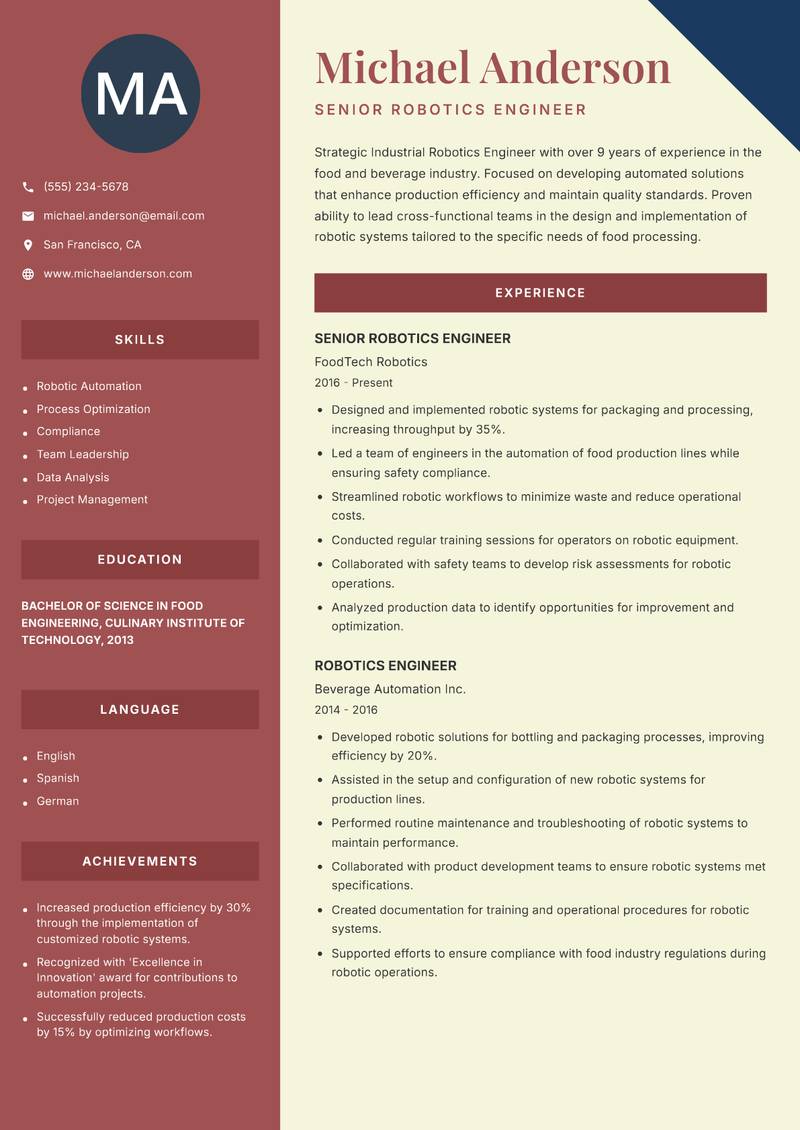
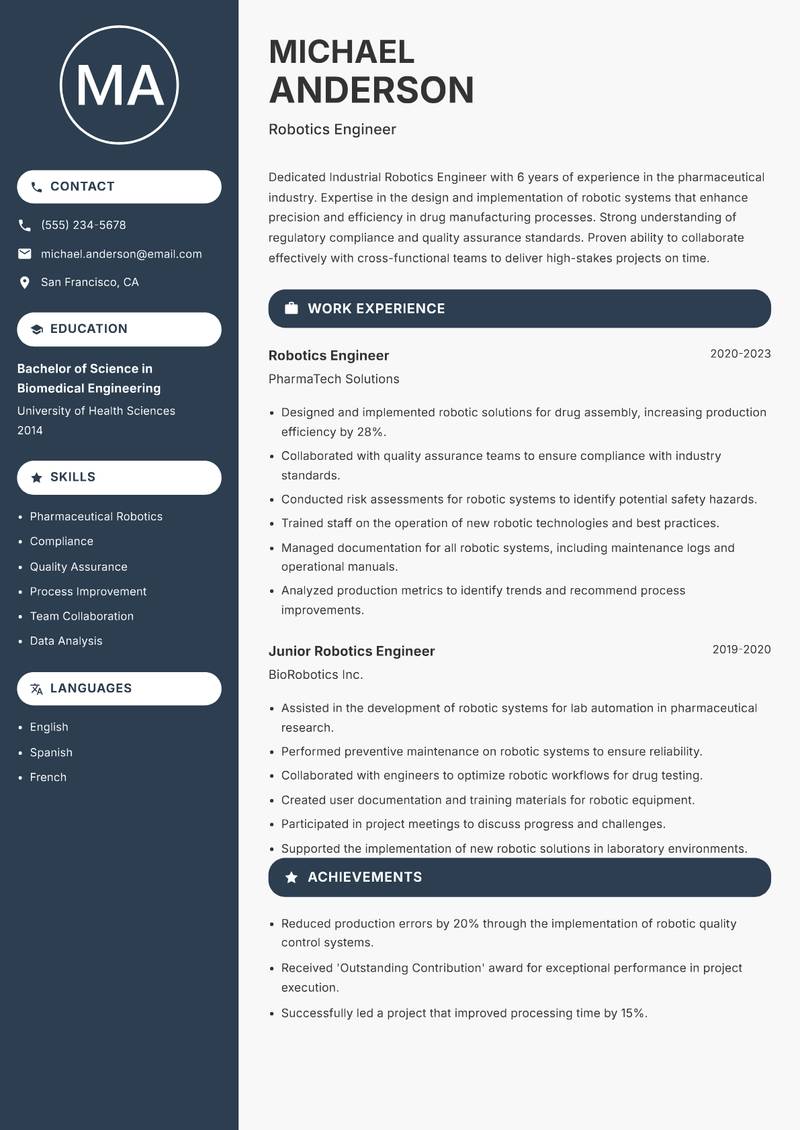
A strong Industrial Robotics Engineer resume leads with a focused professional summary that names the exact role and your standout achievement. In the experience section, open every bullet with a strong action verb and quantify the result with numbers wherever possible. Highlight your most relevant competencies — especially Robot Programming (KUKA, Fanuc, ABB, UR), PLC Programming (Siemens, Allen-Bradley), and Robot Operating System (ROS/ROS2) — in a dedicated Skills section positioned early so ATS systems and hiring managers both find it immediately.
For format, most Industrial Robotics Engineer roles suit a reverse-chronological layout: most recent position first, working backwards. Keep to one page for under five years of experience, or two pages for senior candidates with a rich project or leadership history. Use clean, ATS-safe fonts (10–12pt), standard section headings (Summary, Experience, Education, Skills), and avoid tables, text boxes, or multi-column layouts that applicant tracking systems cannot parse reliably.