Key Skills for Insurance Executive Positions
- Underwriting & Risk Assessment
- Actuarial Analysis & Pricing
- Claims Management & Investigation
- Insurance Product Knowledge (Life, P&C, Specialty)
- Reinsurance Structuring
- Compliance & Regulatory Knowledge (FCA, APRA, NAIC)
- Claims Negotiation & Litigation Management
- Broking & Client Advisory
- Loss Prevention & Risk Engineering
- InsurTech & Digital Claims Processing
Resume Tips for Insurance Executive Applications
- Lead your summary with the scope of your leadership — team size, budget managed, or strategic initiatives delivered — since insurance executive employers expect to see measurable impact at that seniority level before considering a candidate
- List professional qualifications: ACII, FCAS, FSA, CIP — they are highly valued credentials.
- Specify lines of business: life, marine, cyber, property, casualty — they require different expertise.
- Demonstrate pricing and analytical skills for underwriting and actuarial applications.
- Highlight regulatory knowledge: FCA, APRA, Solvency II — compliance is central to insurance operations.
- For claims roles, show negotiation and litigation management experience.
Strong Action Verbs for Insurance Executive Resumes
Underwrote · Assessed · Priced · Negotiated · Managed · Investigated · Complied · Analyzed · Advised · Settled · Achieved · Administered · Architected · Automated
Common Mistakes to Avoid
- Writing a generic objective statement instead of a targeted insurance executive professional summary
- Omitting professional insurance qualifications — they are almost always required.
- Not specifying lines of business — marine and cyber underwriting require completely different expertise.
- Failing to quantify premium volume and portfolio performance.
- Ignoring regulatory compliance knowledge — insurance is heavily regulated globally.
Experience Levels
- Graduate Trainee / Assistant Underwriter (0-2 years)
- Underwriter / Claims Handler (2-6 years)
- Senior Underwriter / Manager (6-11 years)
- Head of Underwriting / Senior Manager (11-17 years)
- Chief Underwriting Officer / Director (17+ years)
How to Write a Insurance Executive Resume
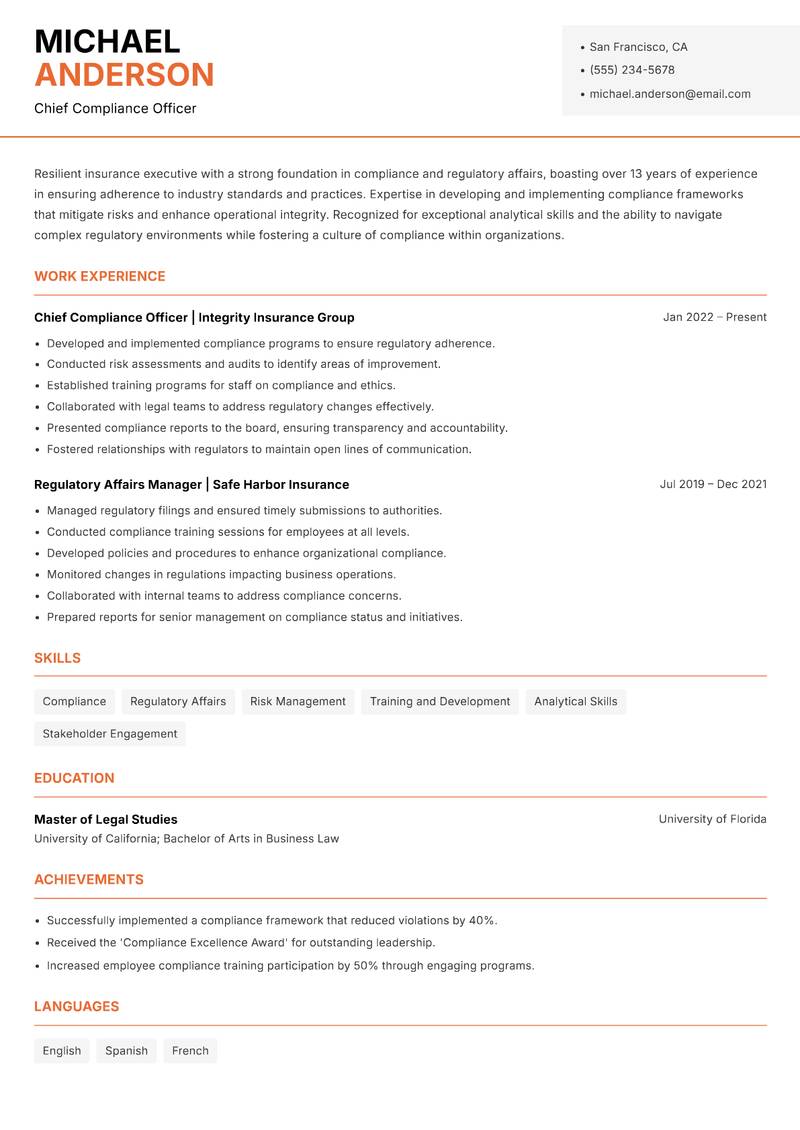
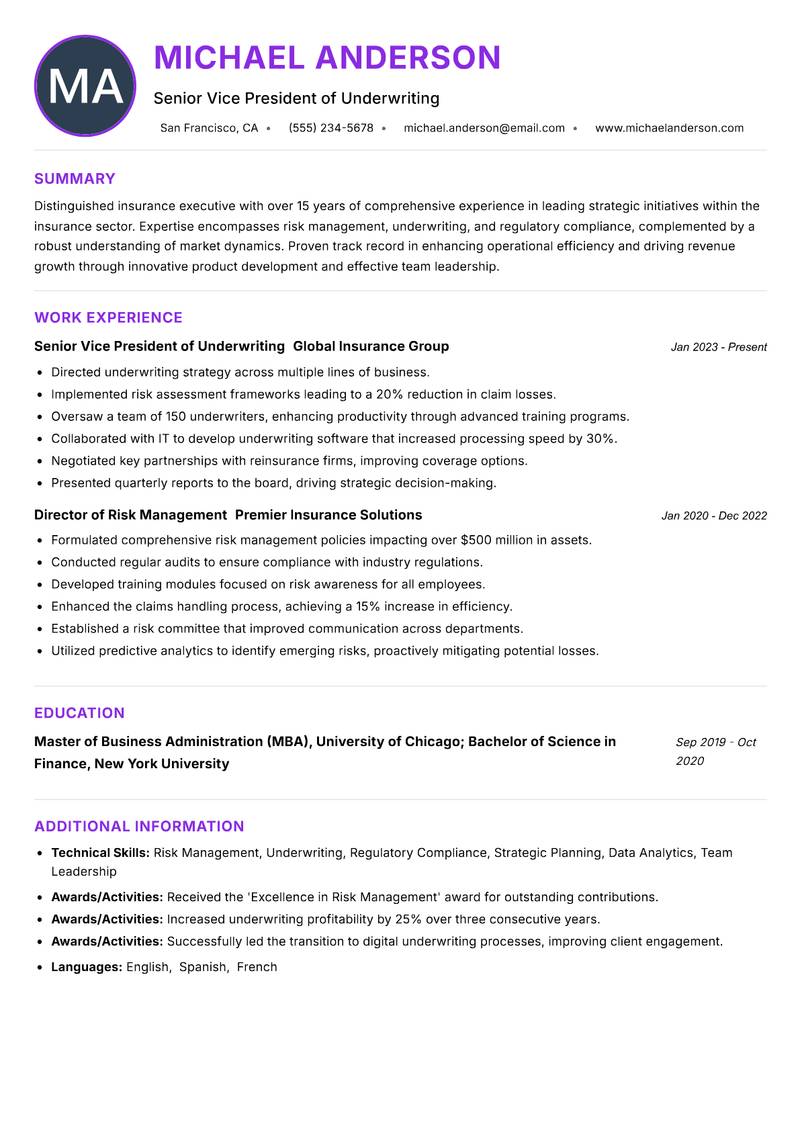
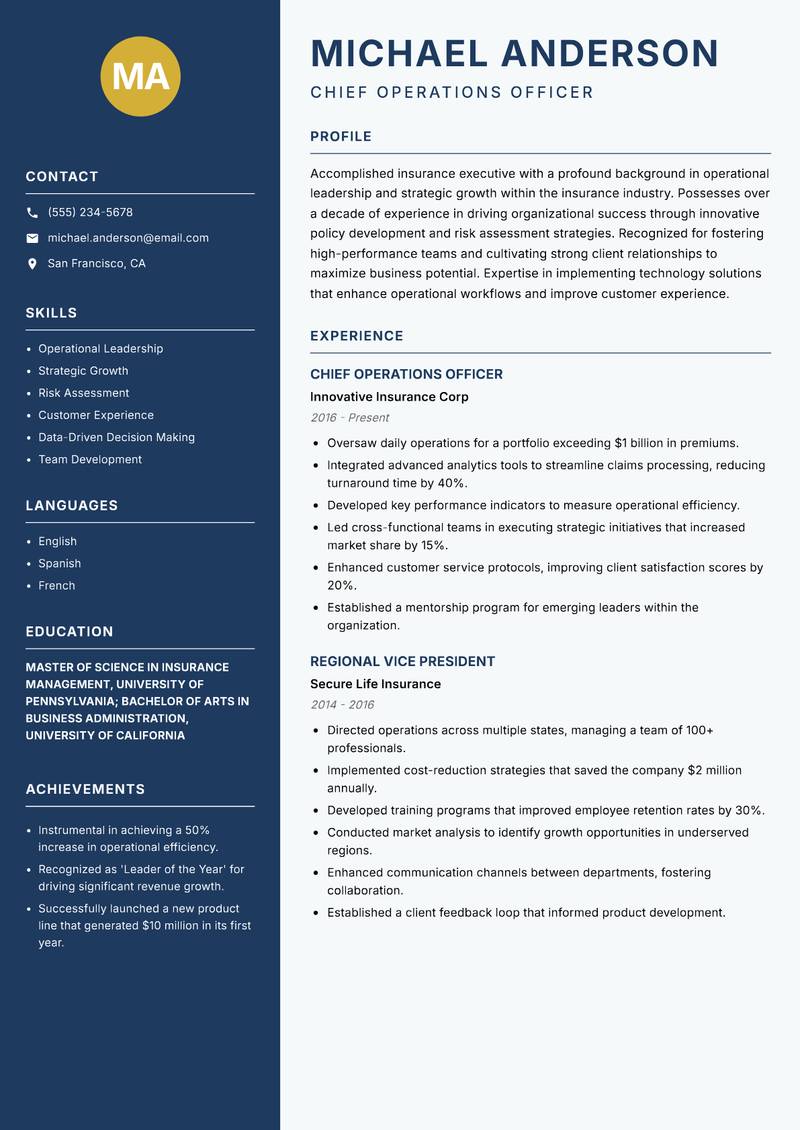
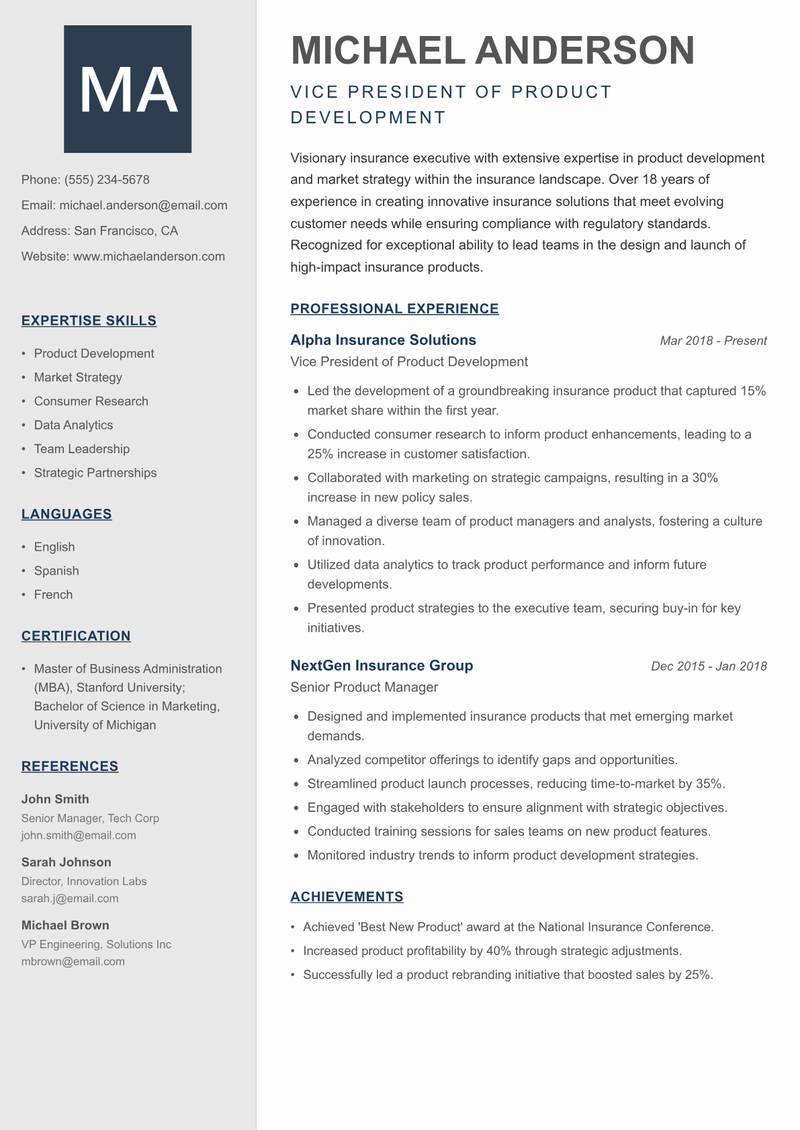
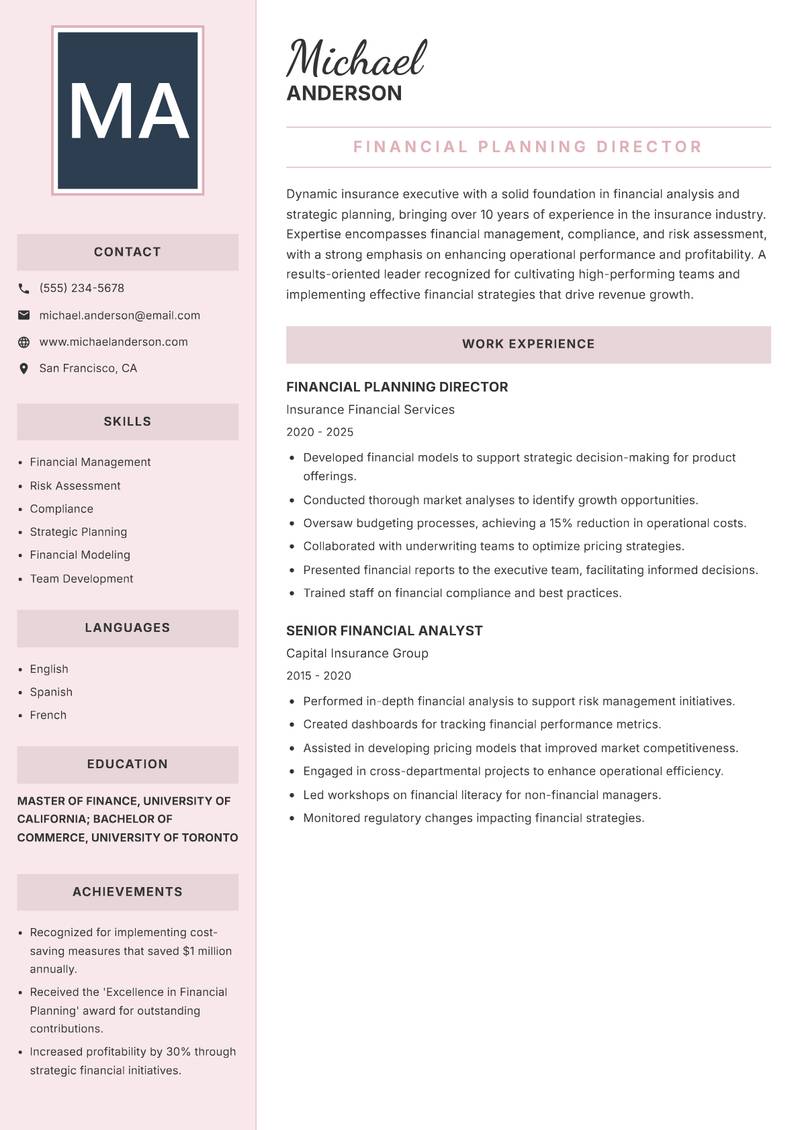
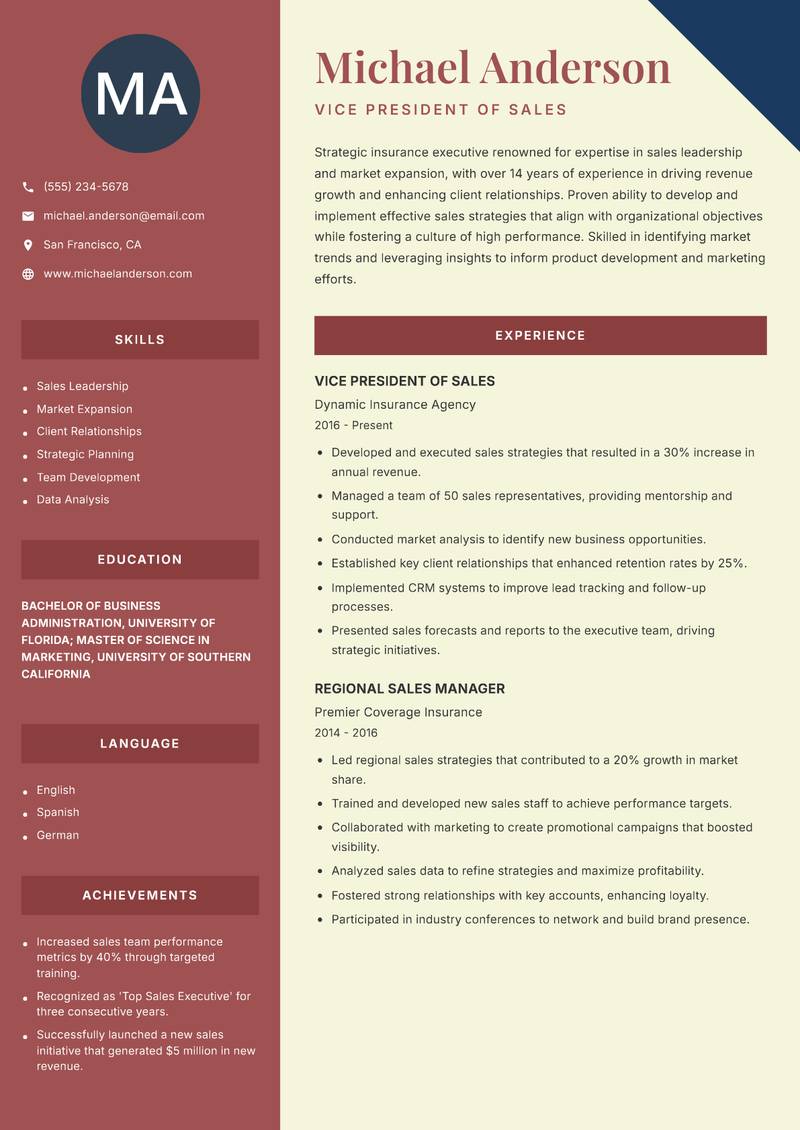
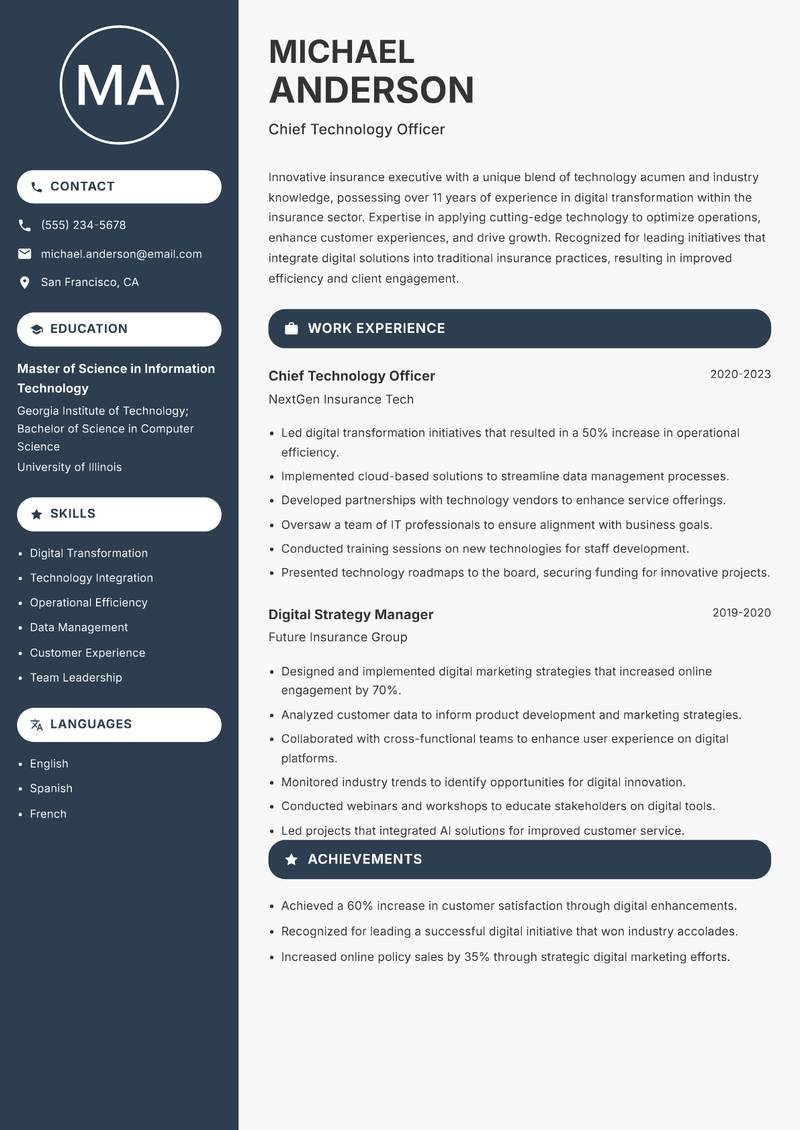
Browse Insurance Executive resume examples built around underwriting & risk assessment, tailored for Insurance roles.
A strong Insurance Executive resume leads with a focused professional summary that names the exact role and your standout achievement. In the experience section, open every bullet with a strong action verb and quantify the result with numbers wherever possible. Highlight your most relevant competencies — especially Underwriting & Risk Assessment, Actuarial Analysis & Pricing, and Claims Management & Investigation — in a dedicated Skills section positioned early so ATS systems and hiring managers both find it immediately.
For format, most Insurance Executive roles suit a reverse-chronological layout: most recent position first, working backwards. Keep to one page for under five years of experience, or two pages for senior candidates with a rich project or leadership history. Use clean, ATS-safe fonts (10–12pt), standard section headings (Summary, Experience, Education, Skills), and avoid tables, text boxes, or multi-column layouts that applicant tracking systems cannot parse reliably.