Live Sound Engineer Resume

These Live Sound Engineer resume samples are designed to help you write a resume that gets noticed by hiring managers and passes applicant tracking systems (ATS) in Music & Sound. Each example shows real formatting, section structure, and language you can adapt to your own background. When writing your own Live Sound Engineer resume, focus on highlighting music production & beat making (Ableton, logic pro, pro tools), mixing & mastering engineering and sound design & synthesis. Recruiters scan for these qualifications first, so they should appear early in your summary and experience sections. Use strong action verbs such as "produced", "composed", "mixed", "mastered" to describe your achievements, and quantify your impact wherever possible — percentages, dollar amounts, or time saved make your resume more convincing. A common mistake to avoid: writing a generic objective statement instead of a targeted live sound engineer professional summary. Tailor your resume to each Live Sound Engineer position you apply for rather than using one generic version.

Live Sound Engineer Resume Template
View PDF
0.0 (0 ratings)

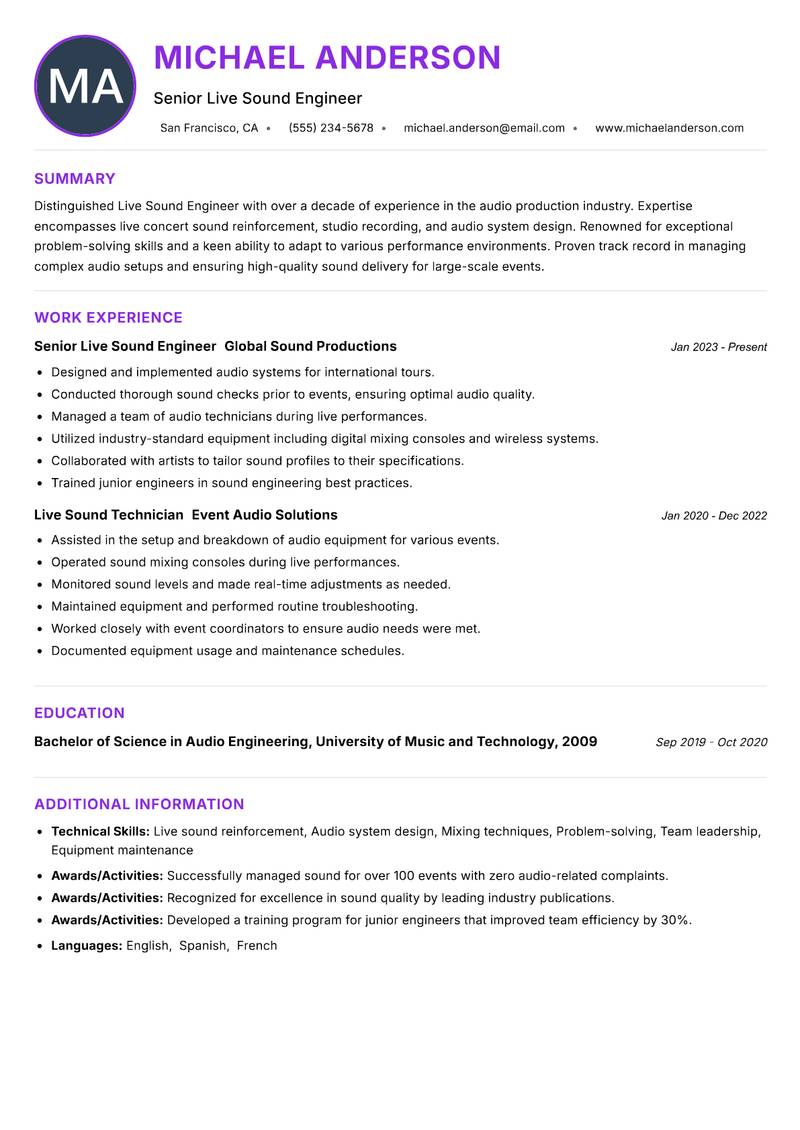
Senior Live Sound Engineer Resume

Distinguished Live Sound Engineer with over a decade of experience in the audio production industry. Expertise encompasses live concert sound reinforcement, studio recording, and audio system design. Renowned for exceptional problem-solving skills and a keen ability to adapt to various performance environments. Proven track record in managing complex audio setups and ensuring high-quality sound delivery for large-scale events. Collaborative team player, effectively liaising with artists, producers, and technical staff to achieve desired sonic outcomes. Committed to continuous professional development and staying abreast of emerging technologies within the audio engineering field.

Live sound reinforcement Audio system design Mixing techniques Problem-solving Team leadership Equipment maintenance
Live Sound Engineer Resume Preview Example
View PDF
  1. Designed and implemented audio systems for international tours.
  2. Conducted thorough sound checks prior to events, ensuring optimal audio quality.
  3. Managed a team of audio technicians during live performances.
  4. Utilized industry-standard equipment including digital mixing consoles and wireless systems.
  5. Collaborated with artists to tailor sound profiles to their specifications.
  6. Trained junior engineers in sound engineering best practices.
  1. Assisted in the setup and breakdown of audio equipment for various events.
  2. Operated sound mixing consoles during live performances.
  3. Monitored sound levels and made real-time adjustments as needed.
  4. Maintained equipment and performed routine troubleshooting.
  5. Worked closely with event coordinators to ensure audio needs were met.
  6. Documented equipment usage and maintenance schedules.

Achievements

  • Successfully managed sound for over 100 events with zero audio-related complaints.
  • Recognized for excellence in sound quality by leading industry publications.
  • Developed a training program for junior engineers that improved team efficiency by 30%.
⏱️
Experience
2-5 Years
📅
Level
Mid Level
🎓
Education
Bachelor of Science in Audio E...

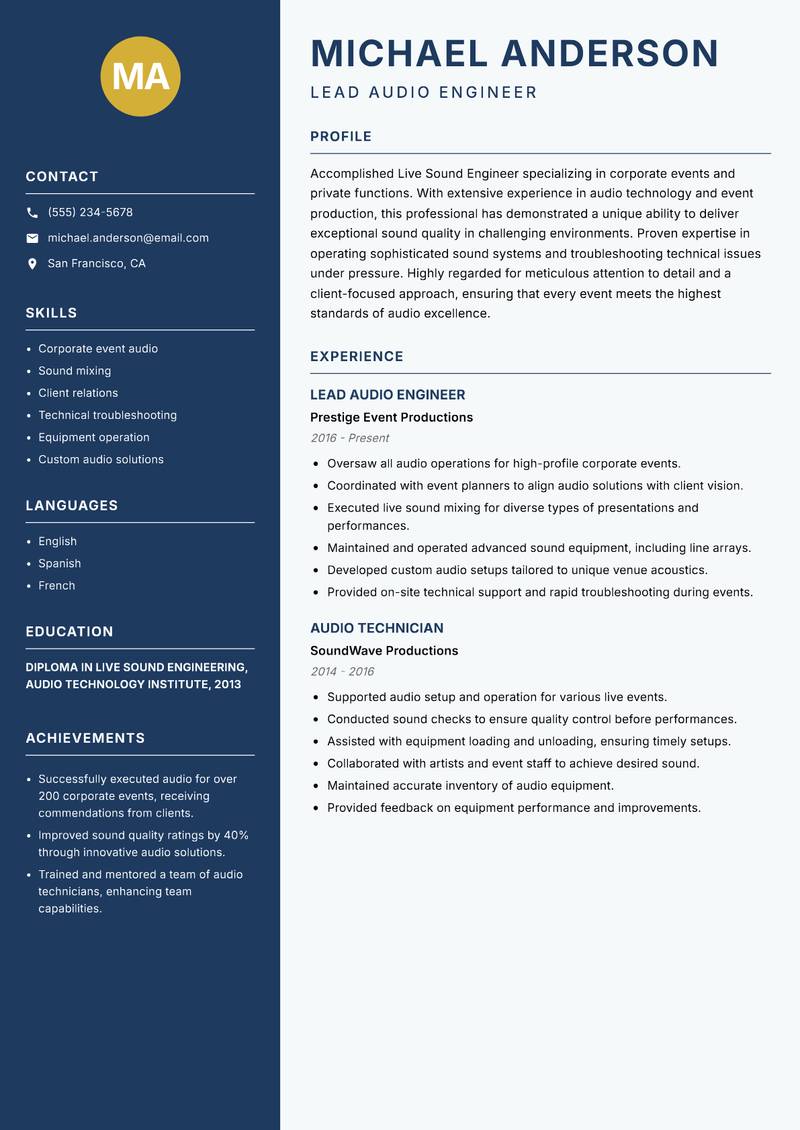
Lead Audio Engineer Resume

Accomplished Live Sound Engineer specializing in corporate events and private functions. With extensive experience in audio technology and event production, this professional has demonstrated a unique ability to deliver exceptional sound quality in challenging environments. Proven expertise in operating sophisticated sound systems and troubleshooting technical issues under pressure. Highly regarded for meticulous attention to detail and a client-focused approach, ensuring that every event meets the highest standards of audio excellence. Continuously seeks opportunities for innovation in audio production and strives to exceed client expectations.

Corporate event audio Sound mixing Client relations Technical troubleshooting Equipment operation Custom audio solutions
Live Sound Engineer Resume Preview Example
View PDF
  1. Oversaw all audio operations for high-profile corporate events.
  2. Coordinated with event planners to align audio solutions with client vision.
  3. Executed live sound mixing for diverse types of presentations and performances.
  4. Maintained and operated advanced sound equipment, including line arrays.
  5. Developed custom audio setups tailored to unique venue acoustics.
  6. Provided on-site technical support and rapid troubleshooting during events.
  1. Supported audio setup and operation for various live events.
  2. Conducted sound checks to ensure quality control before performances.
  3. Assisted with equipment loading and unloading, ensuring timely setups.
  4. Collaborated with artists and event staff to achieve desired sound.
  5. Maintained accurate inventory of audio equipment.
  6. Provided feedback on equipment performance and improvements.

Achievements

  • Successfully executed audio for over 200 corporate events, receiving commendations from clients.
  • Improved sound quality ratings by 40% through innovative audio solutions.
  • Trained and mentored a team of audio technicians, enhancing team capabilities.
⏱️
Experience
2-5 Years
📅
Level
Mid Level
🎓
Education
Diploma in Live Sound Engineer...

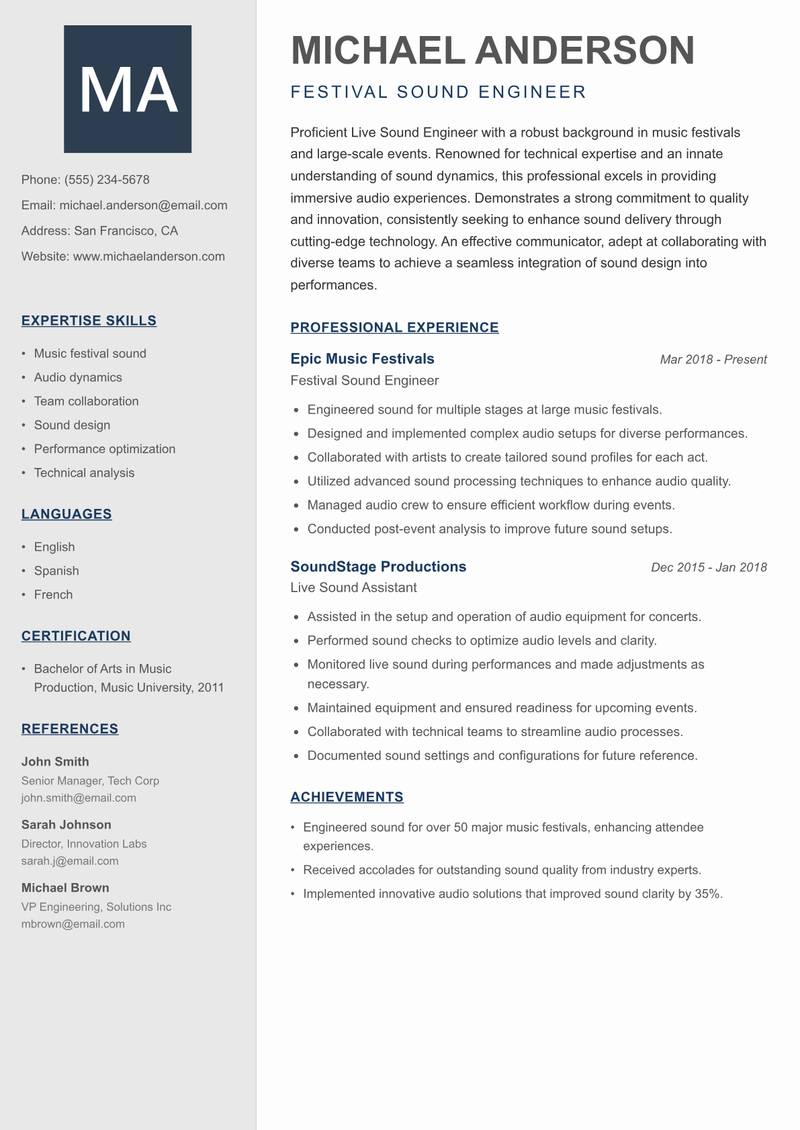
Festival Sound Engineer Resume

Proficient Live Sound Engineer with a robust background in music festivals and large-scale events. Renowned for technical expertise and an innate understanding of sound dynamics, this professional excels in providing immersive audio experiences. Demonstrates a strong commitment to quality and innovation, consistently seeking to enhance sound delivery through cutting-edge technology. An effective communicator, adept at collaborating with diverse teams to achieve a seamless integration of sound design into performances. Recognized for the ability to manage high-pressure situations with poise, ensuring flawless execution of live sound across various genres.

Music festival sound Audio dynamics Team collaboration Sound design Performance optimization Technical analysis
Live Sound Engineer Resume Preview Example
View PDF
  1. Engineered sound for multiple stages at large music festivals.
  2. Designed and implemented complex audio setups for diverse performances.
  3. Collaborated with artists to create tailored sound profiles for each act.
  4. Utilized advanced sound processing techniques to enhance audio quality.
  5. Managed audio crew to ensure efficient workflow during events.
  6. Conducted post-event analysis to improve future sound setups.
  1. Assisted in the setup and operation of audio equipment for concerts.
  2. Performed sound checks to optimize audio levels and clarity.
  3. Monitored live sound during performances and made adjustments as necessary.
  4. Maintained equipment and ensured readiness for upcoming events.
  5. Collaborated with technical teams to streamline audio processes.
  6. Documented sound settings and configurations for future reference.

Achievements

  • Engineered sound for over 50 major music festivals, enhancing attendee experiences.
  • Received accolades for outstanding sound quality from industry experts.
  • Implemented innovative audio solutions that improved sound clarity by 35%.
⏱️
Experience
2-5 Years
📅
Level
Mid Level
🎓
Education
Bachelor of Arts in Music Prod...

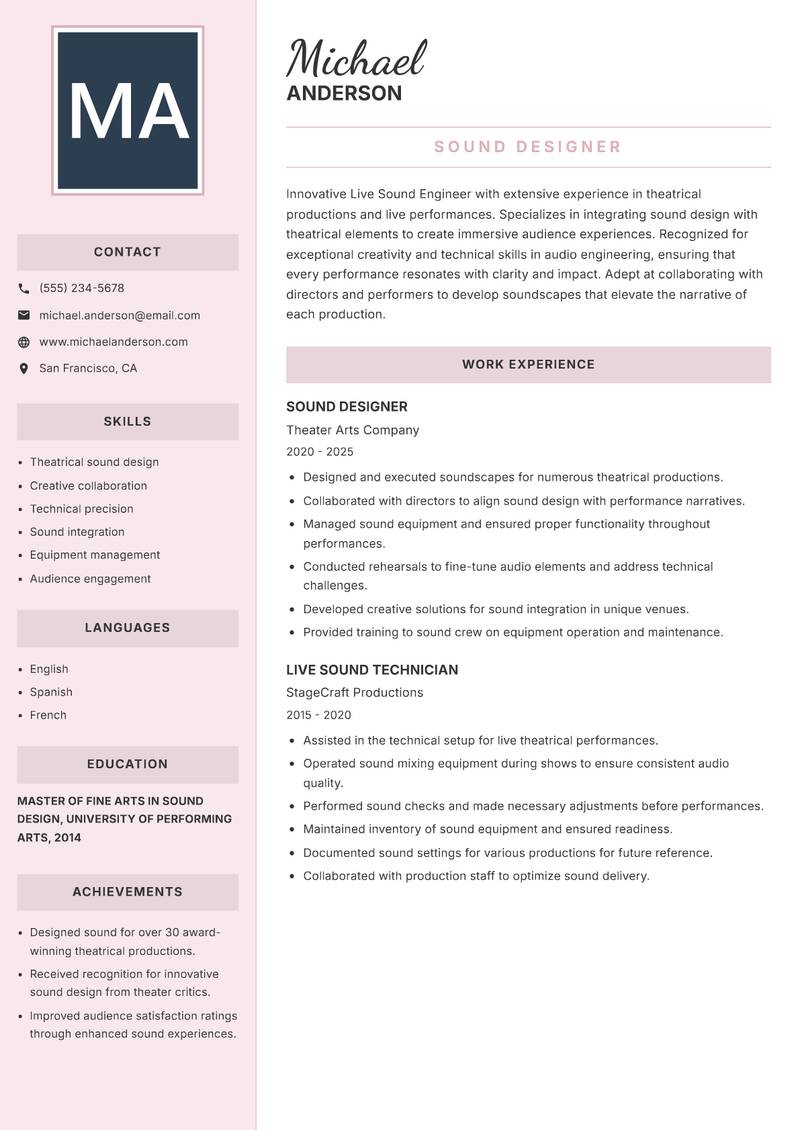
Sound Designer Resume

Innovative Live Sound Engineer with extensive experience in theatrical productions and live performances. Specializes in integrating sound design with theatrical elements to create immersive audience experiences. Recognized for exceptional creativity and technical skills in audio engineering, ensuring that every performance resonates with clarity and impact. Adept at collaborating with directors and performers to develop soundscapes that elevate the narrative of each production. Committed to fostering a collaborative environment that encourages artistic expression while maintaining technical precision.

Theatrical sound design Creative collaboration Technical precision Sound integration Equipment management Audience engagement
Live Sound Engineer Resume Preview Example
View PDF
  1. Designed and executed soundscapes for numerous theatrical productions.
  2. Collaborated with directors to align sound design with performance narratives.
  3. Managed sound equipment and ensured proper functionality throughout performances.
  4. Conducted rehearsals to fine-tune audio elements and address technical challenges.
  5. Developed creative solutions for sound integration in unique venues.
  6. Provided training to sound crew on equipment operation and maintenance.
  1. Assisted in the technical setup for live theatrical performances.
  2. Operated sound mixing equipment during shows to ensure consistent audio quality.
  3. Performed sound checks and made necessary adjustments before performances.
  4. Maintained inventory of sound equipment and ensured readiness.
  5. Documented sound settings for various productions for future reference.
  6. Collaborated with production staff to optimize sound delivery.

Achievements

  • Designed sound for over 30 award-winning theatrical productions.
  • Received recognition for innovative sound design from theater critics.
  • Improved audience satisfaction ratings through enhanced sound experiences.
⏱️
Experience
2-5 Years
📅
Level
Mid Level
🎓
Education
Master of Fine Arts in Sound D...

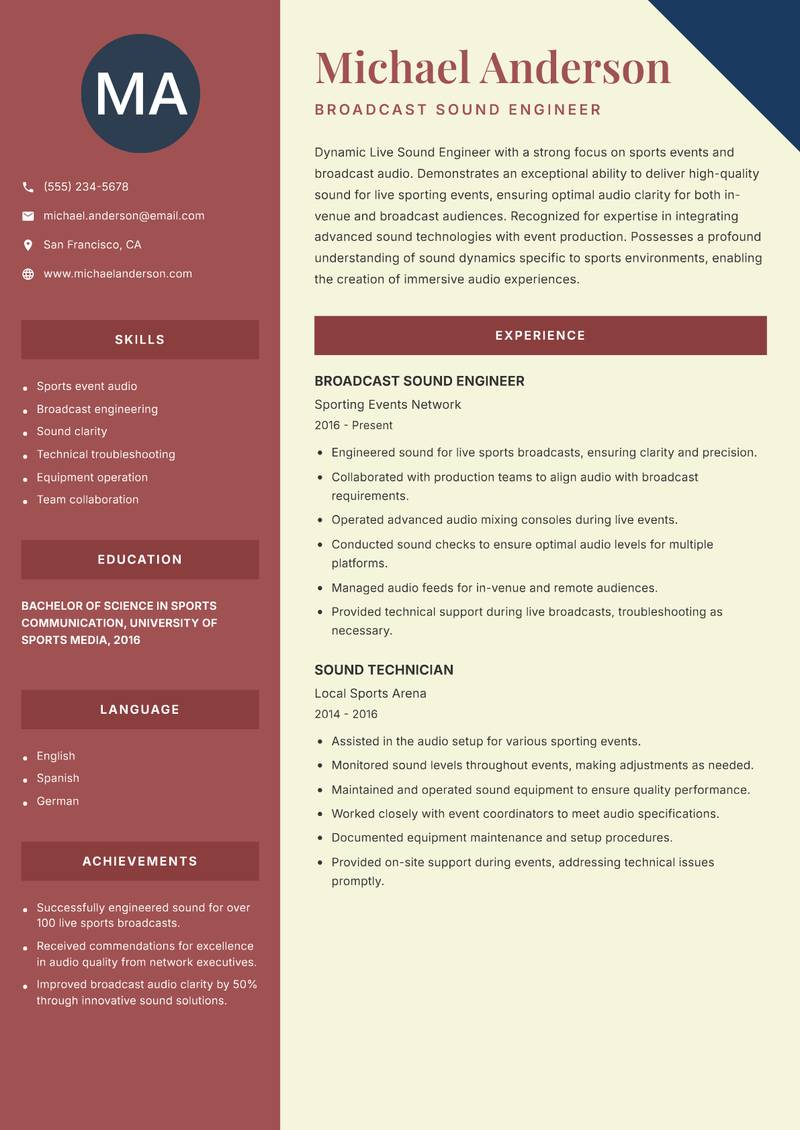
Broadcast Sound Engineer Resume

Dynamic Live Sound Engineer with a strong focus on sports events and broadcast audio. Demonstrates an exceptional ability to deliver high-quality sound for live sporting events, ensuring optimal audio clarity for both in-venue and broadcast audiences. Recognized for expertise in integrating advanced sound technologies with event production. Possesses a profound understanding of sound dynamics specific to sports environments, enabling the creation of immersive audio experiences. Committed to maintaining the highest standards of audio quality while working under tight deadlines in fast-paced settings.

Sports event audio Broadcast engineering Sound clarity Technical troubleshooting Equipment operation Team collaboration
Live Sound Engineer Resume Preview Example
View PDF
  1. Engineered sound for live sports broadcasts, ensuring clarity and precision.
  2. Collaborated with production teams to align audio with broadcast requirements.
  3. Operated advanced audio mixing consoles during live events.
  4. Conducted sound checks to ensure optimal audio levels for multiple platforms.
  5. Managed audio feeds for in-venue and remote audiences.
  6. Provided technical support during live broadcasts, troubleshooting as necessary.
  1. Assisted in the audio setup for various sporting events.
  2. Monitored sound levels throughout events, making adjustments as needed.
  3. Maintained and operated sound equipment to ensure quality performance.
  4. Worked closely with event coordinators to meet audio specifications.
  5. Documented equipment maintenance and setup procedures.
  6. Provided on-site support during events, addressing technical issues promptly.

Achievements

  • Successfully engineered sound for over 100 live sports broadcasts.
  • Received commendations for excellence in audio quality from network executives.
  • Improved broadcast audio clarity by 50% through innovative sound solutions.
⏱️
Experience
2-5 Years
📅
Level
Mid Level
🎓
Education
Bachelor of Science in Sports ...

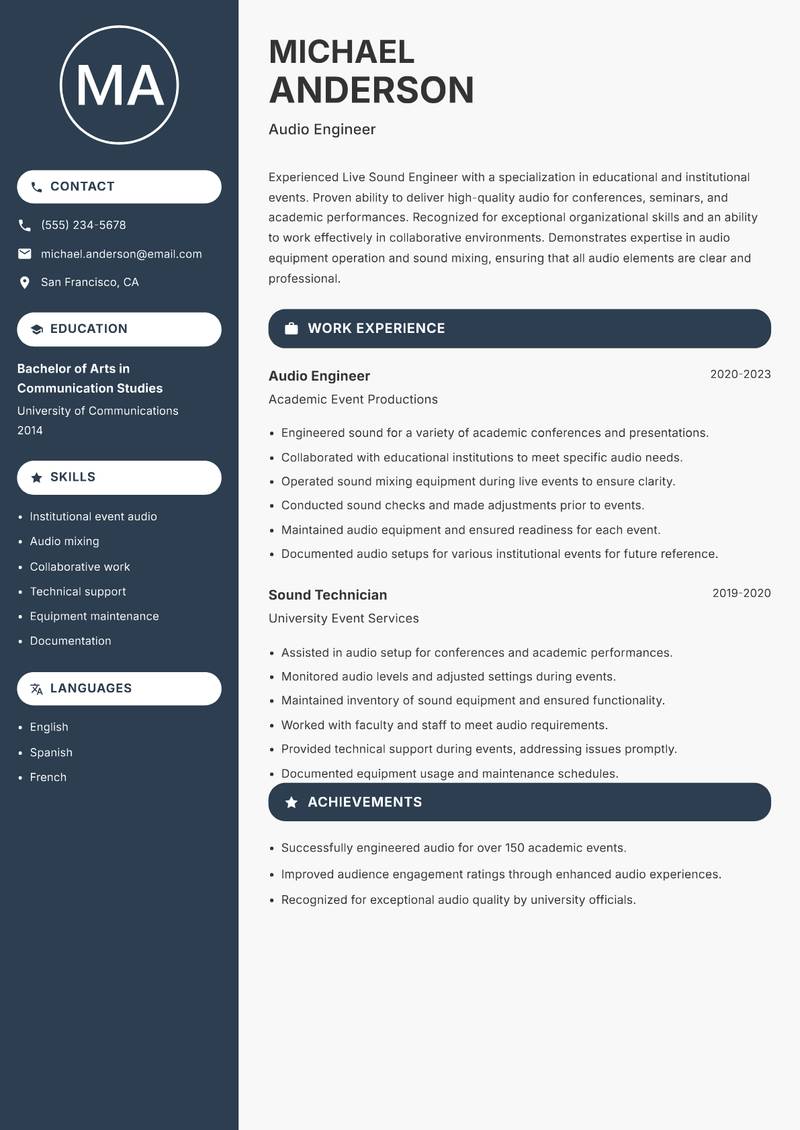
Audio Engineer Resume

Experienced Live Sound Engineer with a specialization in educational and institutional events. Proven ability to deliver high-quality audio for conferences, seminars, and academic performances. Recognized for exceptional organizational skills and an ability to work effectively in collaborative environments. Demonstrates expertise in audio equipment operation and sound mixing, ensuring that all audio elements are clear and professional. Committed to providing superior audio experiences that enhance the educational value of events. Continually seeks to improve audio processes to meet the unique needs of each institution.

Institutional event audio Audio mixing Collaborative work Technical support Equipment maintenance Documentation
Live Sound Engineer Resume Preview Example
View PDF
  1. Engineered sound for a variety of academic conferences and presentations.
  2. Collaborated with educational institutions to meet specific audio needs.
  3. Operated sound mixing equipment during live events to ensure clarity.
  4. Conducted sound checks and made adjustments prior to events.
  5. Maintained audio equipment and ensured readiness for each event.
  6. Documented audio setups for various institutional events for future reference.
  1. Assisted in audio setup for conferences and academic performances.
  2. Monitored audio levels and adjusted settings during events.
  3. Maintained inventory of sound equipment and ensured functionality.
  4. Worked with faculty and staff to meet audio requirements.
  5. Provided technical support during events, addressing issues promptly.
  6. Documented equipment usage and maintenance schedules.

Achievements

  • Successfully engineered audio for over 150 academic events.
  • Improved audience engagement ratings through enhanced audio experiences.
  • Recognized for exceptional audio quality by university officials.
⏱️
Experience
2-5 Years
📅
Level
Mid Level
🎓
Education
Bachelor of Arts in Communicat...

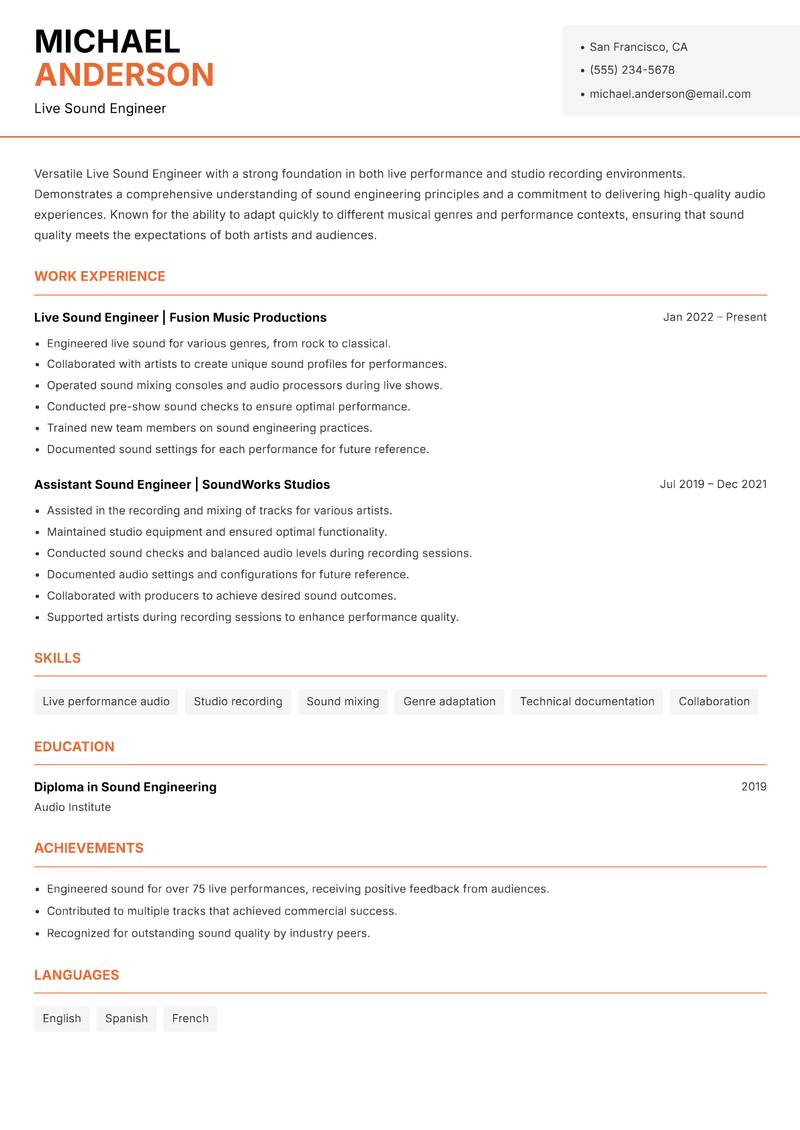
Live Sound Engineer Resume

Versatile Live Sound Engineer with a strong foundation in both live performance and studio recording environments. Demonstrates a comprehensive understanding of sound engineering principles and a commitment to delivering high-quality audio experiences. Known for the ability to adapt quickly to different musical genres and performance contexts, ensuring that sound quality meets the expectations of both artists and audiences. Proven experience in collaborating with musicians, producers, and technical teams to achieve superior sound outcomes. Continually seeks to refine skills and expand knowledge in audio technologies and techniques.

Live performance audio Studio recording Sound mixing Genre adaptation Technical documentation Collaboration
Live Sound Engineer Resume Preview Example
View PDF
  1. Engineered live sound for various genres, from rock to classical.
  2. Collaborated with artists to create unique sound profiles for performances.
  3. Operated sound mixing consoles and audio processors during live shows.
  4. Conducted pre-show sound checks to ensure optimal performance.
  5. Trained new team members on sound engineering practices.
  6. Documented sound settings for each performance for future reference.
  1. Assisted in the recording and mixing of tracks for various artists.
  2. Maintained studio equipment and ensured optimal functionality.
  3. Conducted sound checks and balanced audio levels during recording sessions.
  4. Documented audio settings and configurations for future reference.
  5. Collaborated with producers to achieve desired sound outcomes.
  6. Supported artists during recording sessions to enhance performance quality.

Achievements

  • Engineered sound for over 75 live performances, receiving positive feedback from audiences.
  • Contributed to multiple tracks that achieved commercial success.
  • Recognized for outstanding sound quality by industry peers.
⏱️
Experience
2-5 Years
📅
Level
Mid Level
🎓
Education
Diploma in Sound Engineering, ...

Key Skills for Live Sound Engineer Positions

Resume Tips for Live Sound Engineer Applications

Strong Action Verbs for Live Sound Engineer Resumes

Produced · Composed · Mixed · Mastered · Designed · Engineered · Performed · Arranged · Scored · Recorded · Achieved · Administered · Analyzed · Architected

Common Mistakes to Avoid

Experience Levels

How to Write a Live Sound Engineer Resume

Browse Live Sound Engineer resume examples built around music production & beat making (Ableton, logic pro, pro tools), tailored for Music & Sound roles.

A strong Live Sound Engineer resume leads with a focused professional summary that names the exact role and your standout achievement. In the experience section, open every bullet with a strong action verb and quantify the result with numbers wherever possible. Highlight your most relevant competencies — especially Music Production & Beat Making (Ableton, Logic Pro, Pro Tools), Mixing & Mastering Engineering, and Sound Design & Synthesis — in a dedicated Skills section positioned early so ATS systems and hiring managers both find it immediately.

For format, most Live Sound Engineer roles suit a reverse-chronological layout: most recent position first, working backwards. Keep to one page for under five years of experience, or two pages for senior candidates with a rich project or leadership history. Use clean, ATS-safe fonts (10–12pt), standard section headings (Summary, Experience, Education, Skills), and avoid tables, text boxes, or multi-column layouts that applicant tracking systems cannot parse reliably.
Frequently Asked Questions

What makes a strong Live Sound Engineer resume stand out to employers?

A standout Live Sound Engineer resume combines role-specific skills with quantified achievements. Name the exact job title in your professional summary, mirror keywords from each job posting, and open every bullet point with a strong action verb followed by a measurable result. Certifications, tools, and domain experience specific to live sound engineer roles should appear prominently near the top.

What skills are most important to include on a Music & Sound resume?

Recruiters hiring in Music & Sound consistently look for Music Production & Beat Making (Ableton, Logic Pro, Pro Tools), Mixing & Mastering Engineering, Sound Design & Synthesis, Live Sound Engineering. List these in a dedicated Skills section near the top so both ATS systems and human reviewers spot them fast. Mirror the exact phrasing from each job posting wherever possible — many applicant tracking systems match literal strings rather than synonyms.

What is the best resume format for Music & Sound professionals?

A reverse-chronological format is the standard choice for most Music & Sound candidates — employers expect to see your most recent role first, working backwards. If you are transitioning into Music & Sound from a related field, a hybrid format (brief skills summary at the top followed by chronological experience) can bridge the gap effectively. Keep the document to one page for under five years of experience, or two pages for senior specialists.

How do I make my Music & Sound resume pass applicant tracking systems (ATS)?

Use standard section headings — Summary, Experience, Education, Skills — rather than creative labels that ATS parsers do not recognise. Embed domain keywords such as "Music Production & Beat Making (Ableton, Logic Pro, Pro Tools)" and "Mixing & Mastering Engineering" naturally inside your experience bullets rather than cramming them into a standalone keyword list. Avoid tables, multi-column layouts, text boxes, headers, footers, and images — these confuse most modern parsers and can cause your resume to be misread or rejected before a human sees it.

What mistakes do Music & Sound professionals most commonly make on their resume?

The most frequent issue is not providing audio samples or streaming links — sound work is judged by listening. Beyond that, generic objective statements, unquantified achievements, and inconsistent date formatting appear across almost every Music & Sound application. Fix these by replacing every vague claim with a measurable outcome — specific numbers and named projects add credibility that adjectives cannot.

How long should a Music & Sound resume be?

One page is appropriate for candidates with under five years of relevant Music & Sound experience. Two pages are acceptable — and sometimes expected — for senior specialists, managers, or professionals with a strong portfolio of projects, publications, or credentials. Avoid padding to reach a page count: every line should directly support your application for the specific role you are targeting.

Should I include a professional summary at the top of my Music & Sound resume?

Yes — a two to three sentence summary is the first section most recruiters read. Open with your title and years of Music & Sound experience, then name your most relevant achievement or specialisation. One proven approach: Link to streaming profiles, production credits, or SoundCloud portfolios — employers listen before they read — this level of specificity signals genuine expertise before a recruiter reaches your experience section.

Scroll to view samples