Key Skills for Maritime Officer Positions
- Vessel Navigation & Seamanship
- Marine Engineering & Propulsion Systems
- STCW Certification & Maritime Safety
- Port & Terminal Operations Management
- Cargo Operations & Stowage Planning
- Maritime Law (SOLAS, MARPOL, ISM Code)
- Ship Chartering & Freight Negotiation
- Maritime Communications (GMDSS)
- Bunker Management & Fuel Efficiency
- Maritime Environmental Compliance
Resume Tips for Maritime Officer Applications
- Lead your summary by emphasising maritime laws and regulations while overseeing safe — it sets apart strong maritime officer applicants from the start
- List STCW certificates of competency prominently for seafaring roles.
- Specify vessel type and GRT/DWT — tanker, bulker, container, ro-ro experience are valued differently.
- Demonstrate port operations scale: TEU throughput, berth occupancy, vessel calls managed.
- Highlight environmental compliance: MARPOL, ballast water management, emissions monitoring.
- For commercial roles, show chartering and negotiation outcomes: freight rates secured, voyage profitability.
Strong Action Verbs for Maritime Officer Resumes
Navigated · Operated · Managed · Complied · Coordinated · Supervised · Inspected · Negotiated · Maintained · Planned · Achieved · Administered · Analyzed · Architected
Common Mistakes to Avoid
- Writing a generic objective statement instead of a targeted maritime officer professional summary
- Not listing STCW certificates — seafarer roles legally require these.
- Failing to specify vessel type — tanker and container ship operations require different training.
- Ignoring environmental compliance knowledge — MARPOL violations carry severe penalties.
- Not quantifying port or terminal operational scale.
Experience Levels
- Rating / Cadet / Junior Officer (0-4 years)
- Officer / Engineer (4-10 years)
- Chief Officer / Senior Engineer (10-16 years)
- Master / Chief Engineer / Port Manager (16-22 years)
- Superintendent / Port Director (22+ years)
How to Write a Maritime Officer Resume
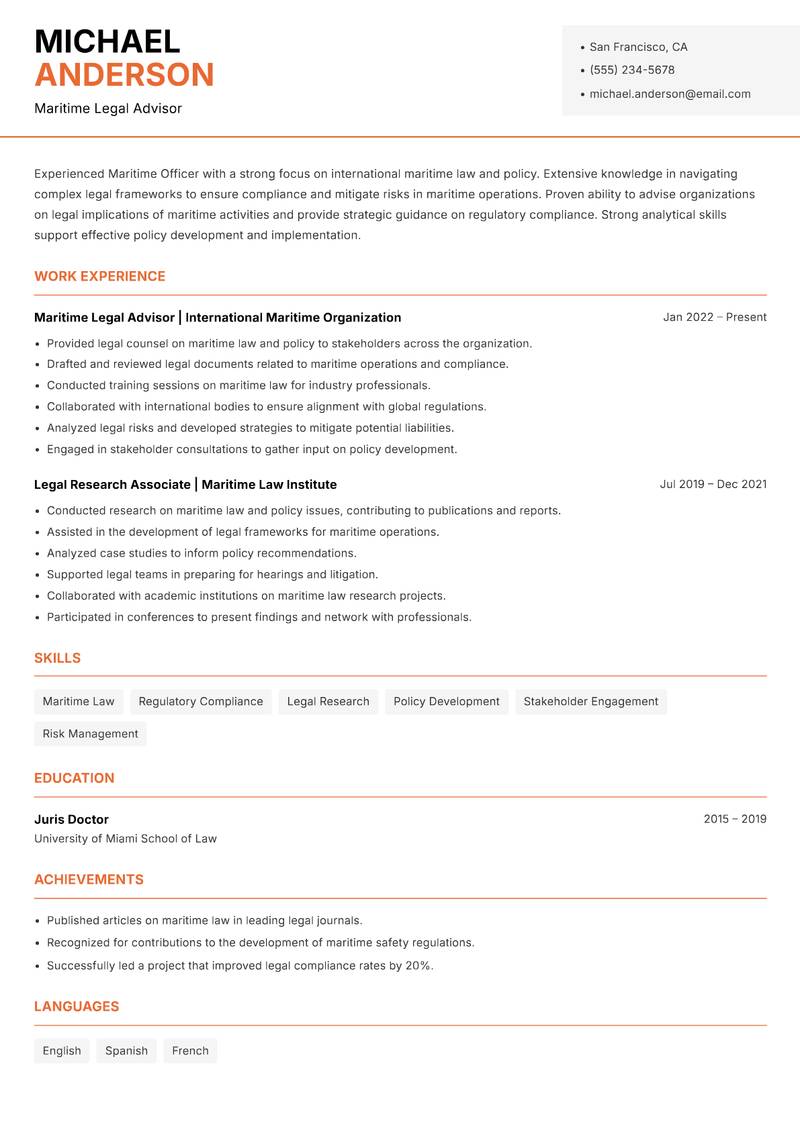
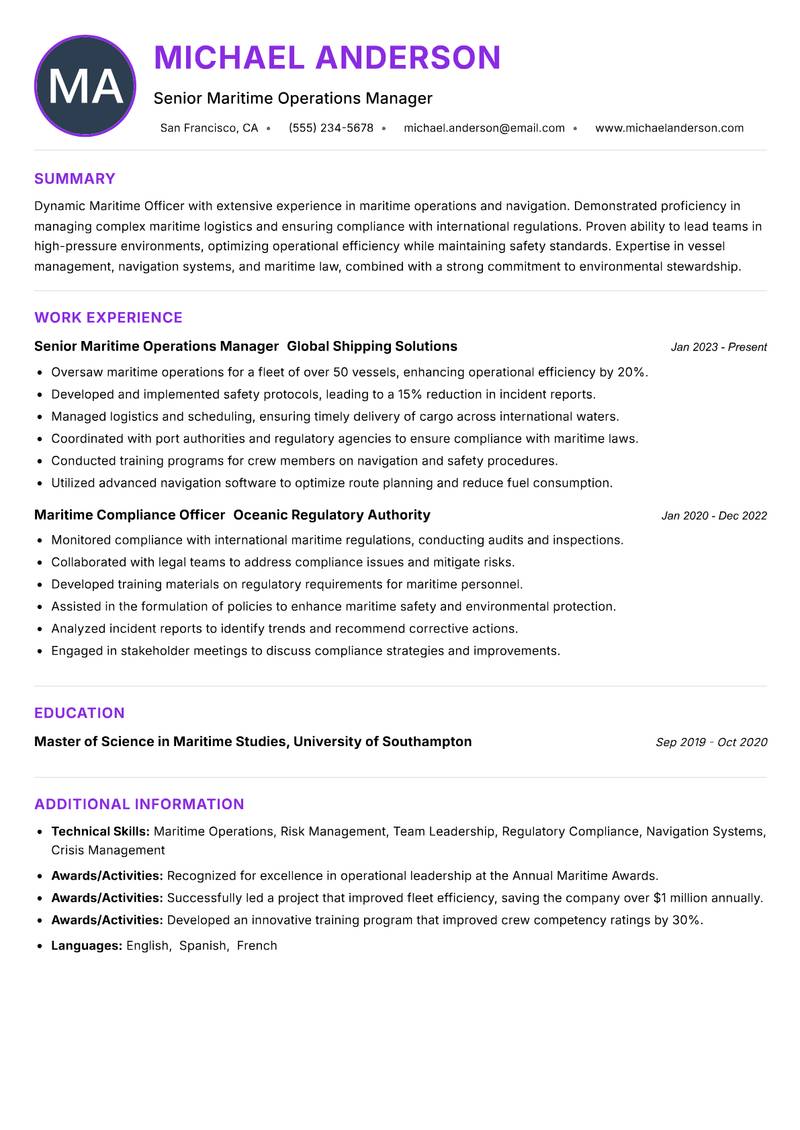
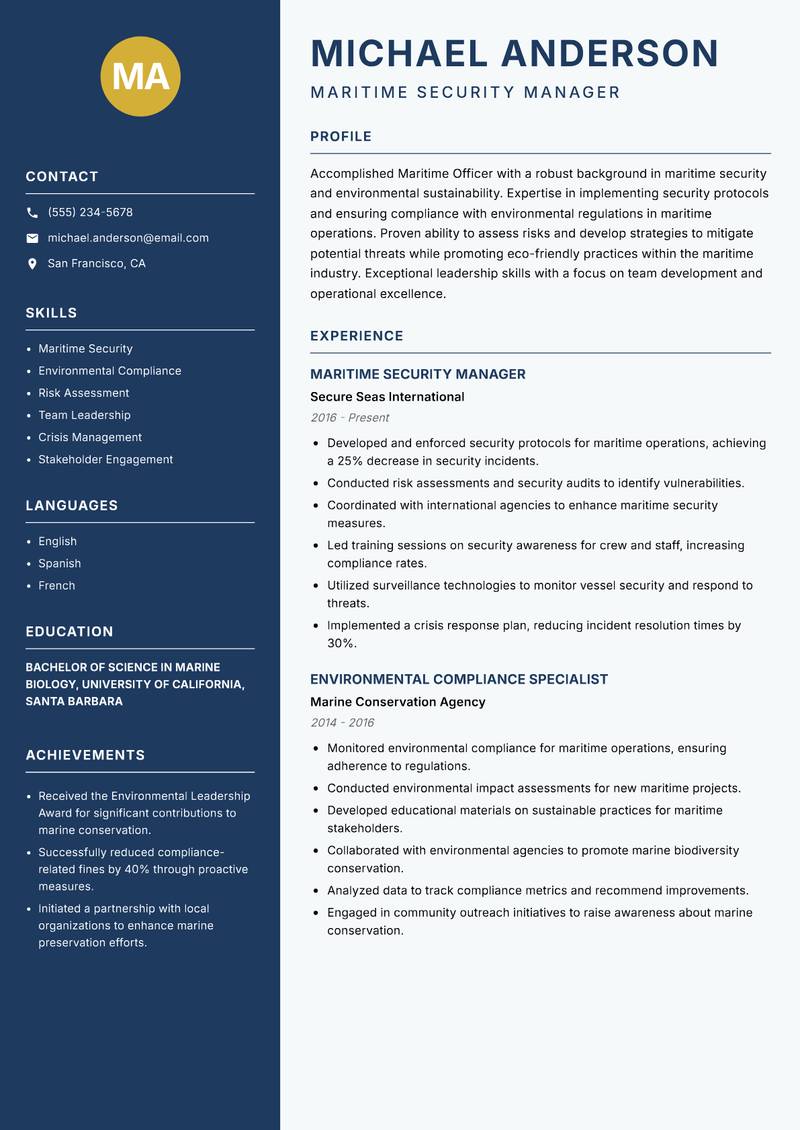
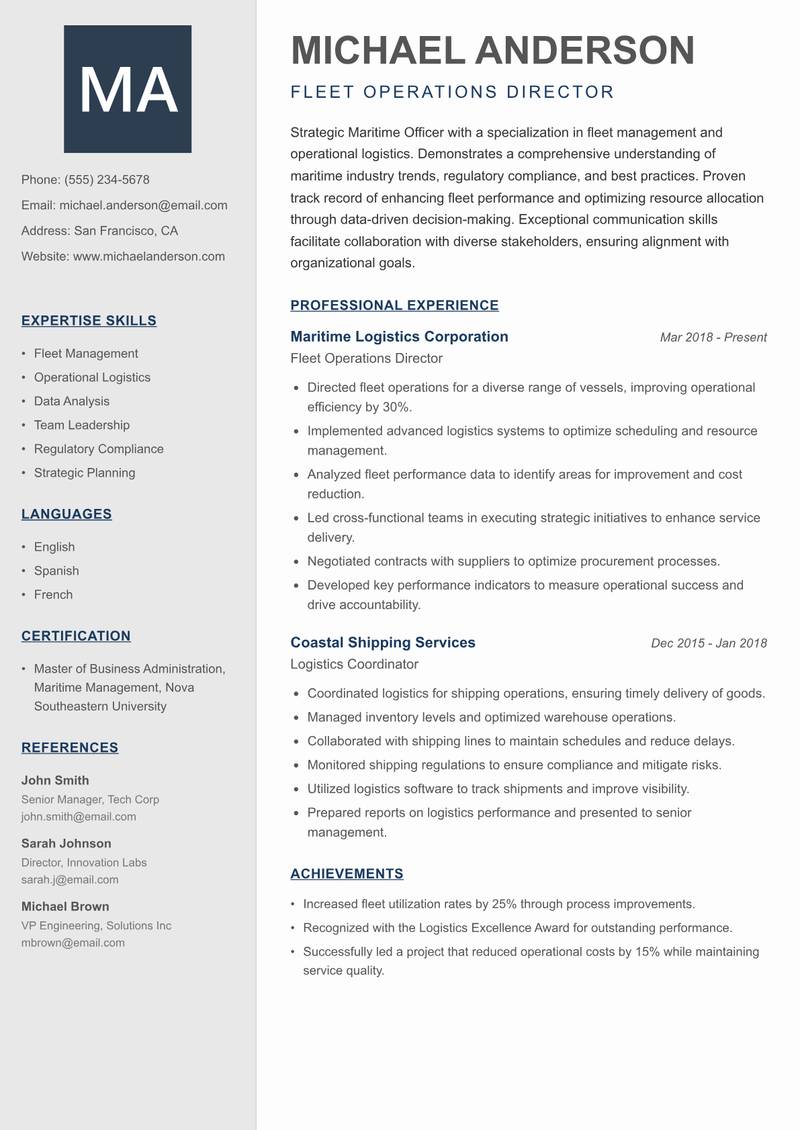
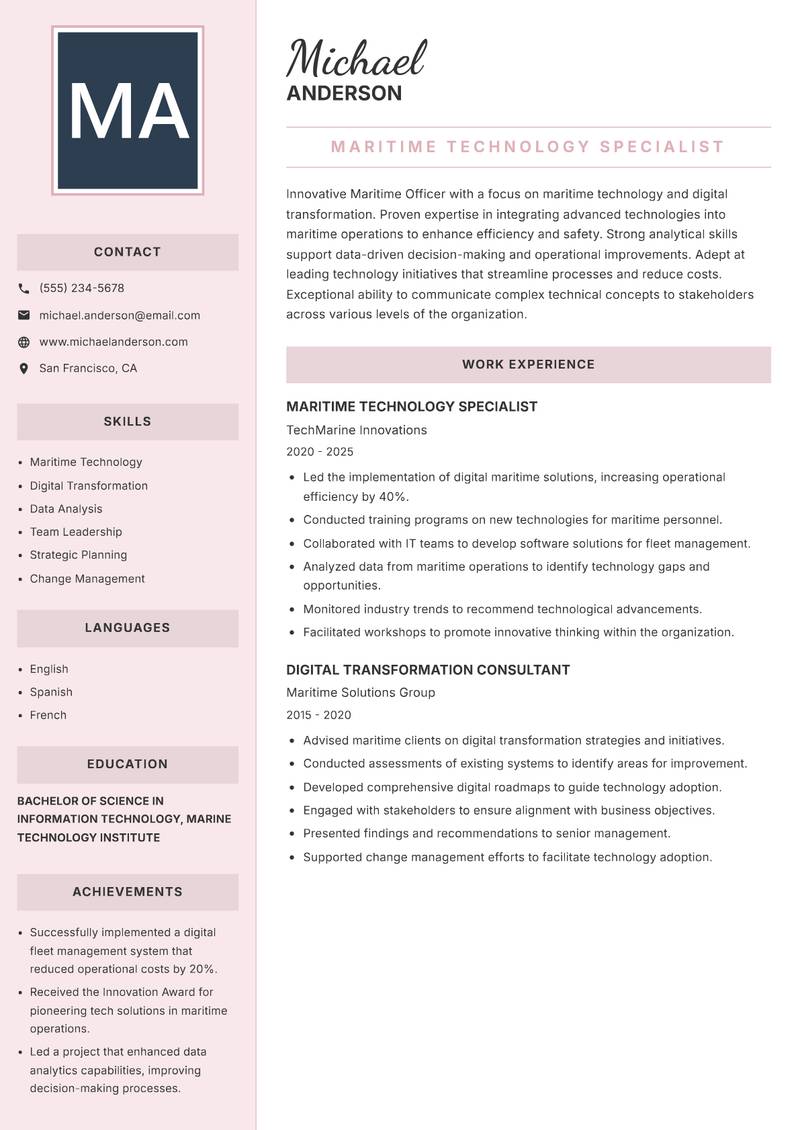
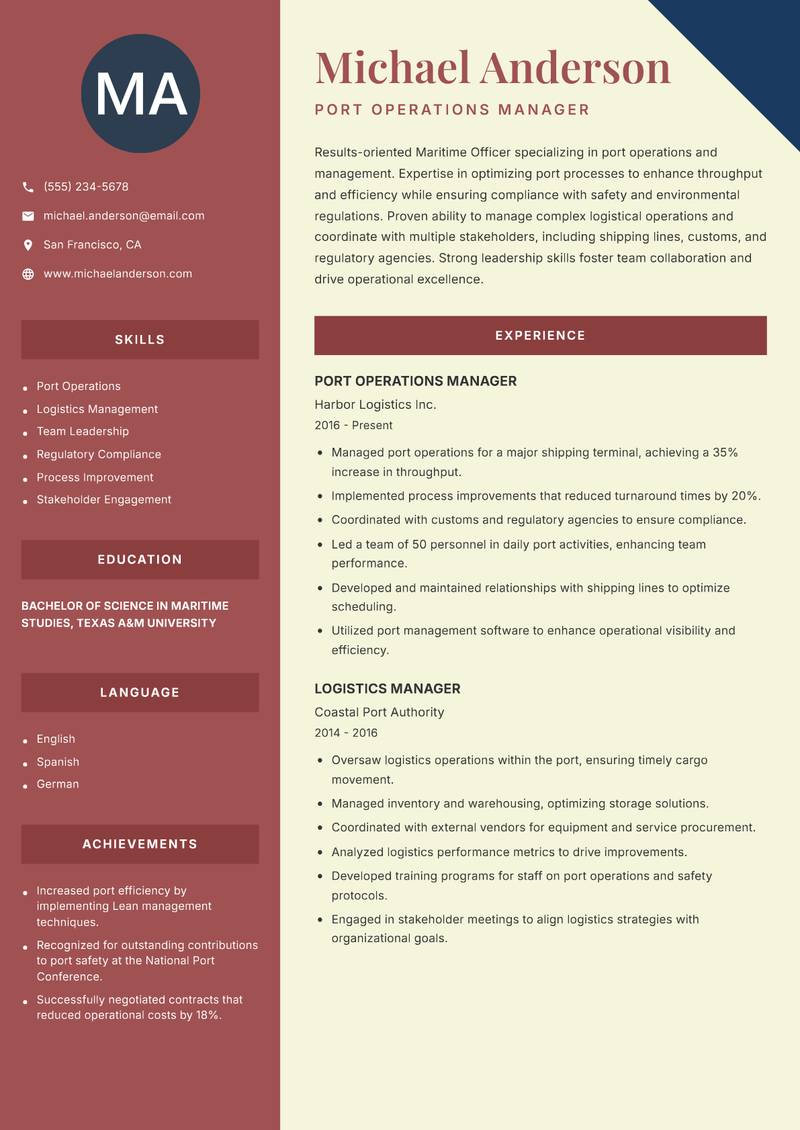
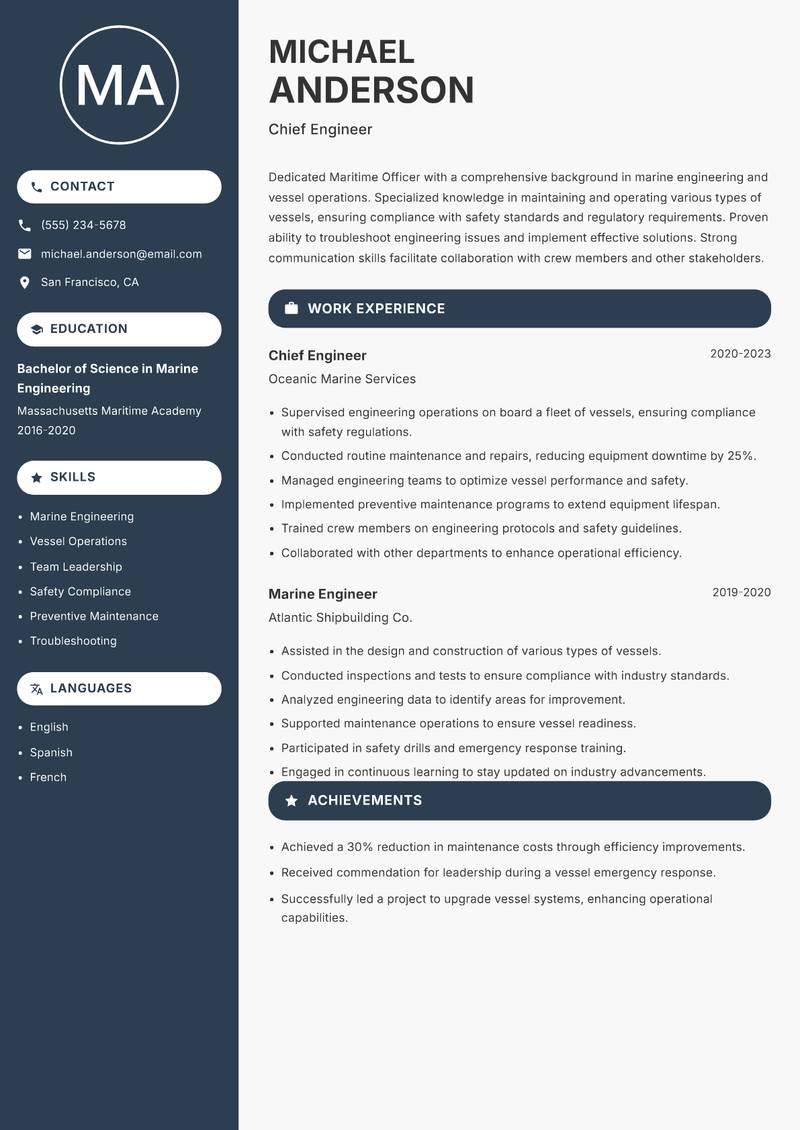
Browse Maritime Officer resume examples built around vessel navigation & seamanship, tailored for Maritime Services roles.
A strong Maritime Officer resume leads with a focused professional summary that names the exact role and your standout achievement. In the experience section, open every bullet with a strong action verb and quantify the result with numbers wherever possible. Highlight your most relevant competencies — especially Vessel Navigation & Seamanship, Marine Engineering & Propulsion Systems, and STCW Certification & Maritime Safety — in a dedicated Skills section positioned early so ATS systems and hiring managers both find it immediately.
For format, most Maritime Officer roles suit a reverse-chronological layout: most recent position first, working backwards. Keep to one page for under five years of experience, or two pages for senior candidates with a rich project or leadership history. Use clean, ATS-safe fonts (10–12pt), standard section headings (Summary, Experience, Education, Skills), and avoid tables, text boxes, or multi-column layouts that applicant tracking systems cannot parse reliably.