Key Skills for Monetary Economist Positions
- Monetary policy
- Economic modeling
- Econometric Analysis (Stata, R, Python)
- Macroeconomic & Microeconomic Modeling
- Policy Analysis & Evaluation
- Market Design & Mechanism Analysis
- Data Collection & Statistical Analysis
- Cost-Benefit & Impact Analysis
- Economic Forecasting
- Research Publication & Presentation
Resume Tips for Monetary Economist Applications
- Highlight your Monetary policy and economic modeling experience prominently — this is a primary differentiator employers look for in monetary economist candidates
- Demonstrate econometric software proficiency: Stata, R, Python, EViews — specify experience level.
- Publications, working papers, and policy citations are critical for academic and policy-facing roles.
- For government roles, show experience translating economic analysis into accessible policy briefs.
- Highlight sector specialization: health, labor, competition, environmental — employers hire for specific domains.
- Quantify policy impact where possible: regulations influenced, cost-benefit recommendations adopted.
Strong Action Verbs for Monetary Economist Resumes
Analyzed · Modeled · Forecasted · Evaluated · Published · Advised · Estimated · Designed · Researched · Recommended · Achieved · Administered · Architected · Assessed
Common Mistakes to Avoid
- Leaving out Monetary policy and economic modeling experience — this is a core differentiator for monetary economist roles
- Writing a generic objective statement instead of a targeted monetary economist professional summary
- Failing to demonstrate econometric software proficiency.
- Not listing publications and policy contributions for research-focused applications.
- Ignoring sector specialization — economics is applied differently in healthcare, energy, and competition.
Experience Levels
- Research Assistant / Graduate Student (0-3 years)
- Economist / Analyst (3-7 years)
- Senior Economist (7-12 years)
- Principal Economist / Research Director (12-18 years)
- Chief Economist / Professor (18+ years)
How to Write a Monetary Economist Resume
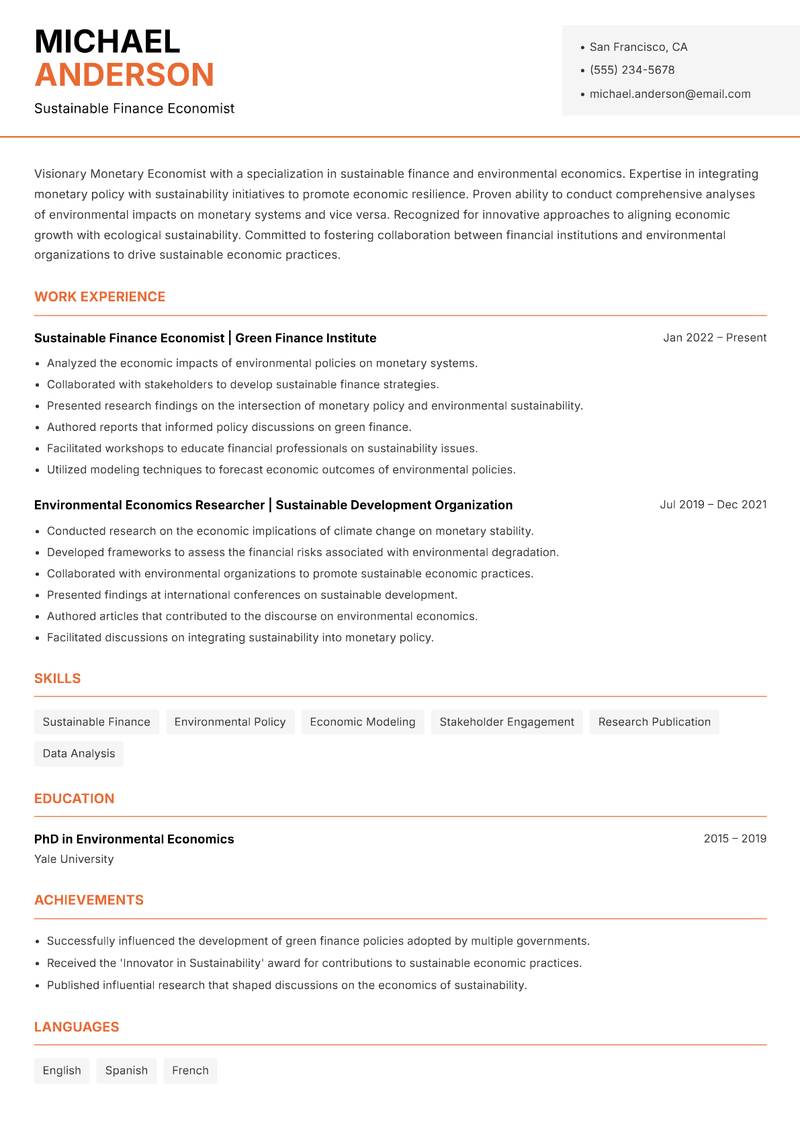
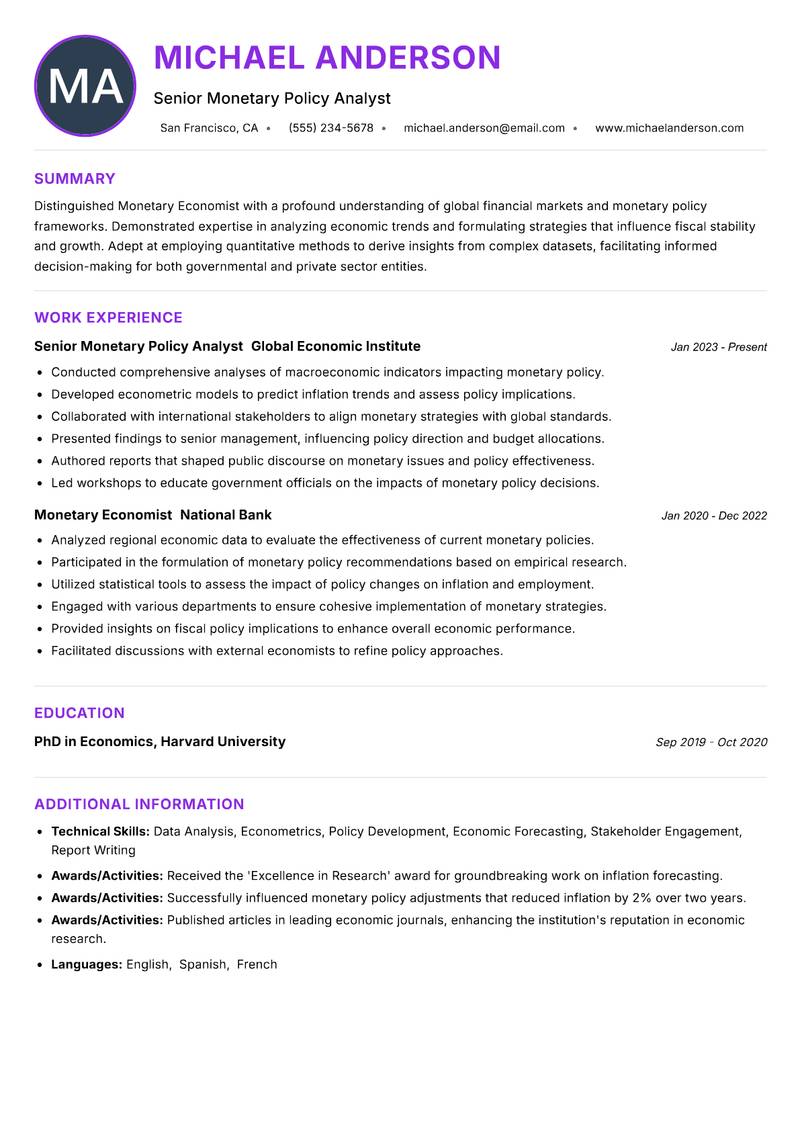
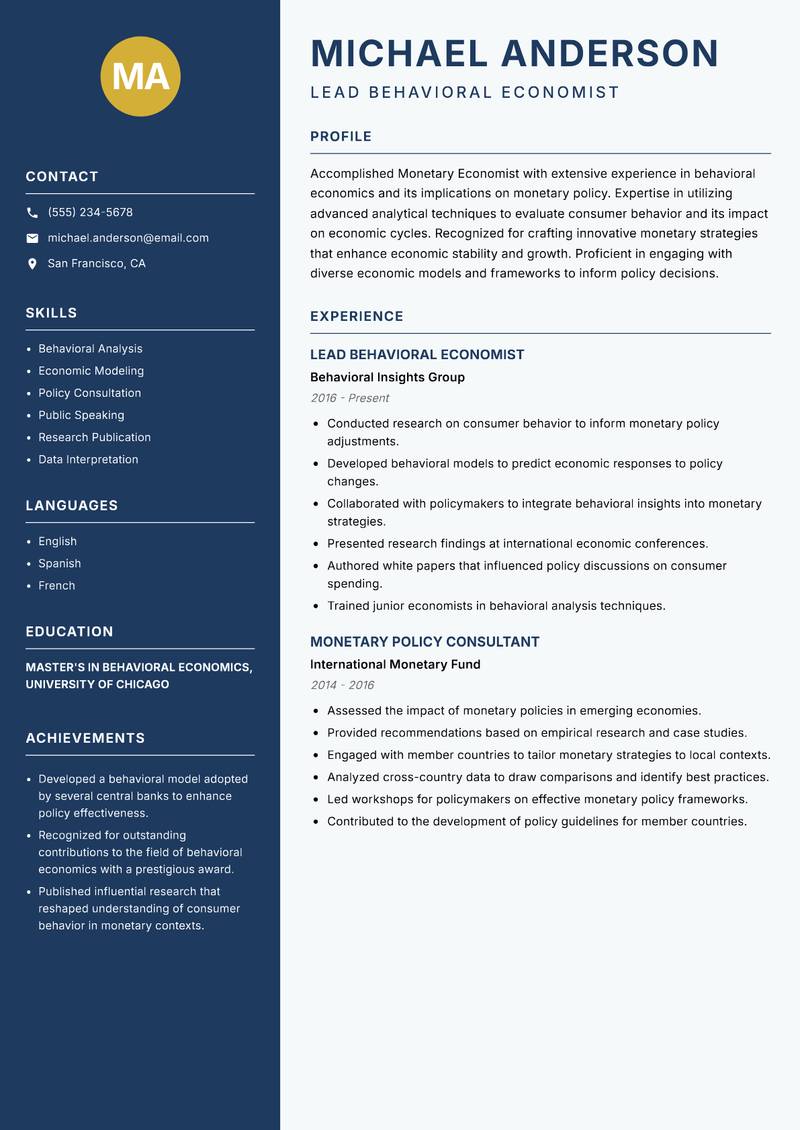
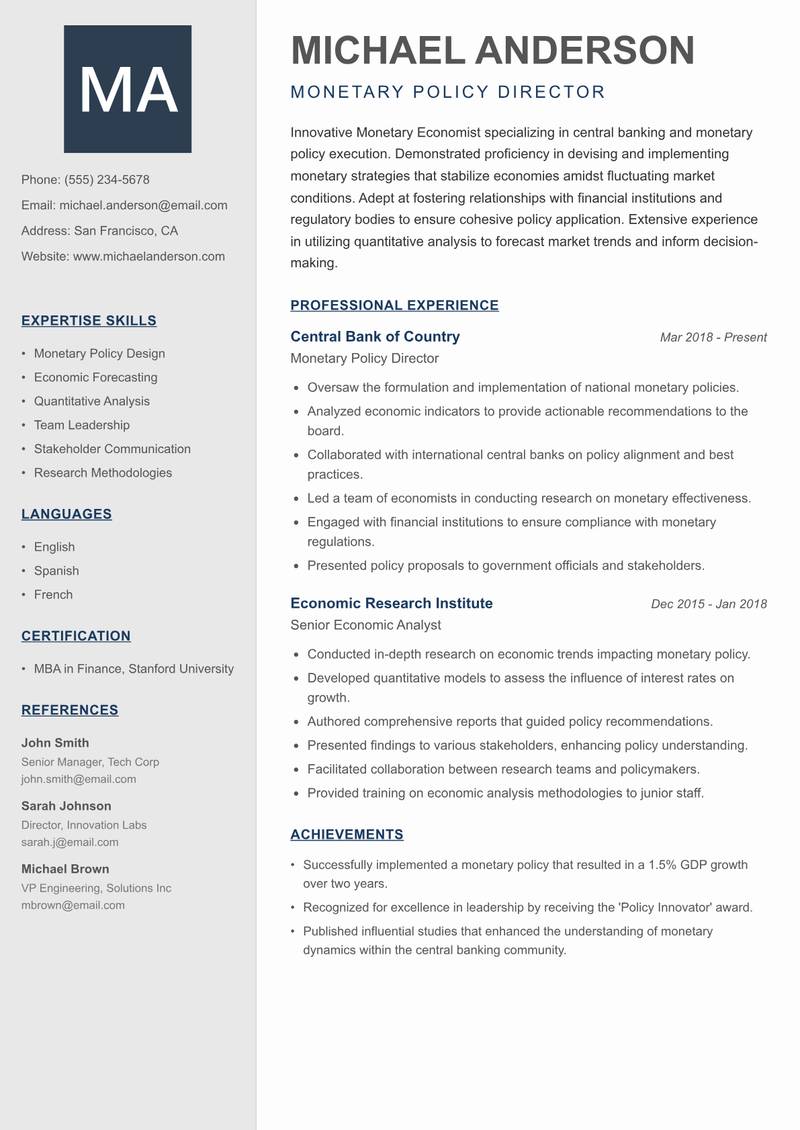
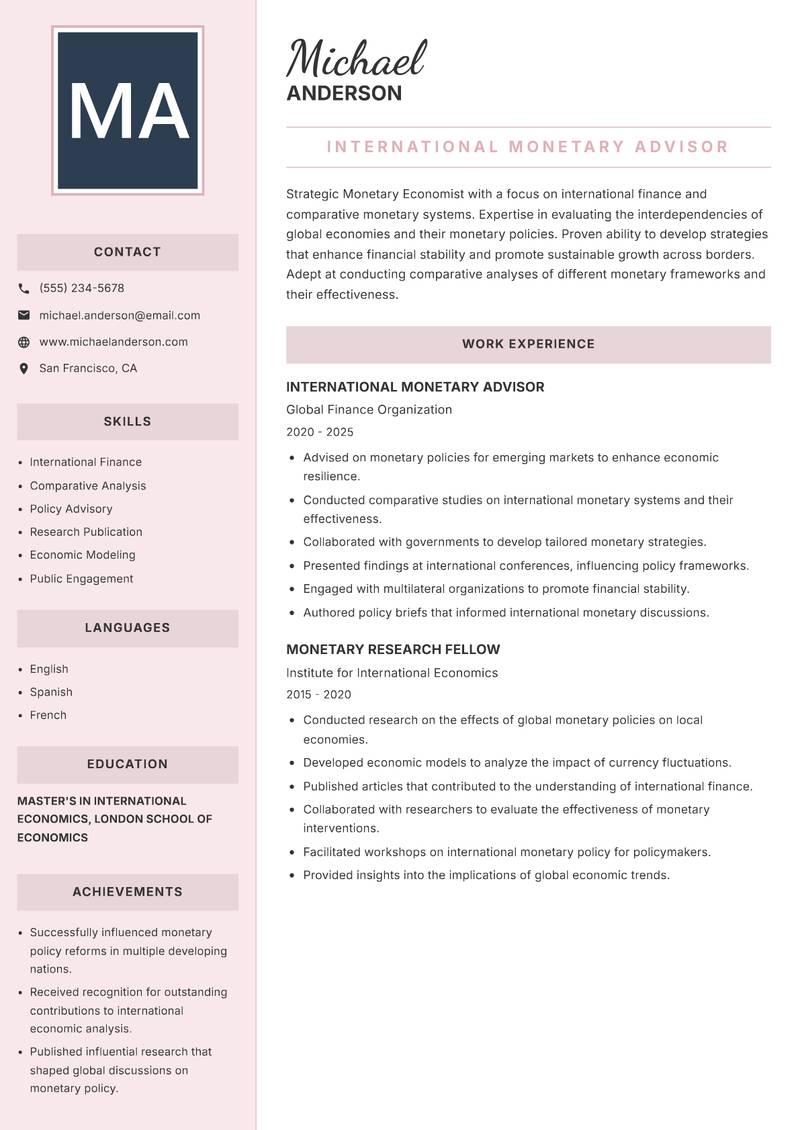
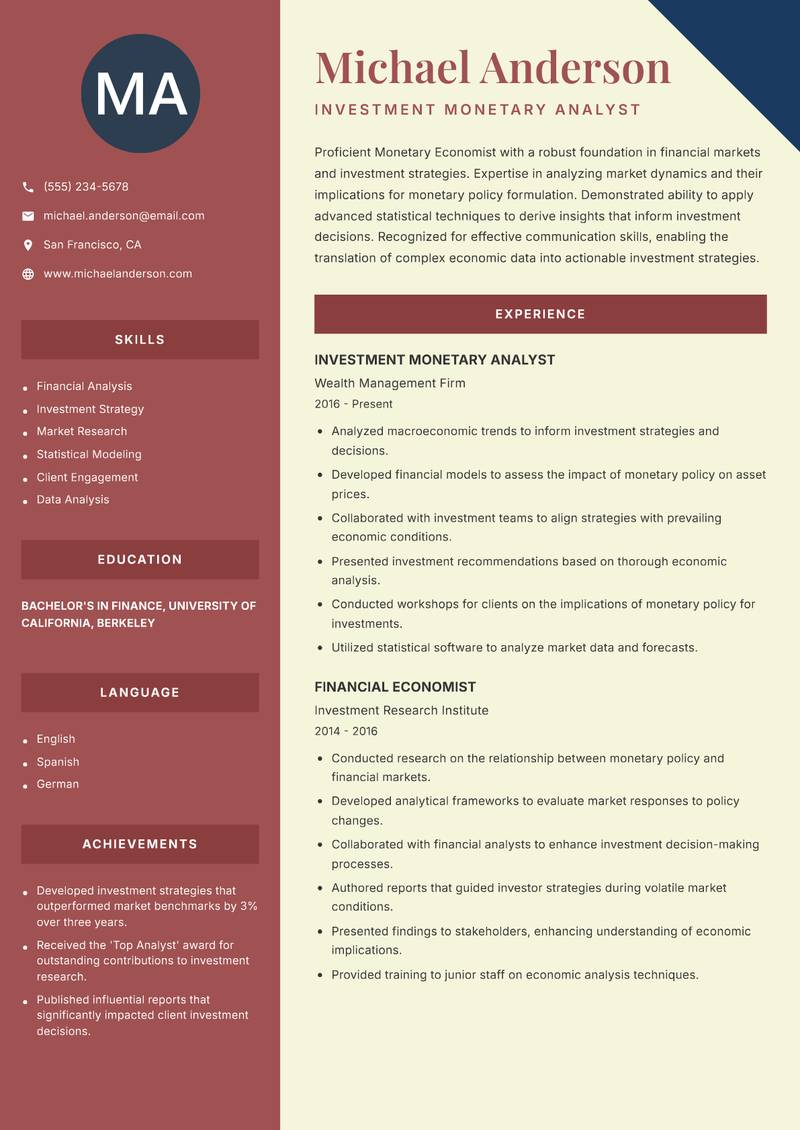
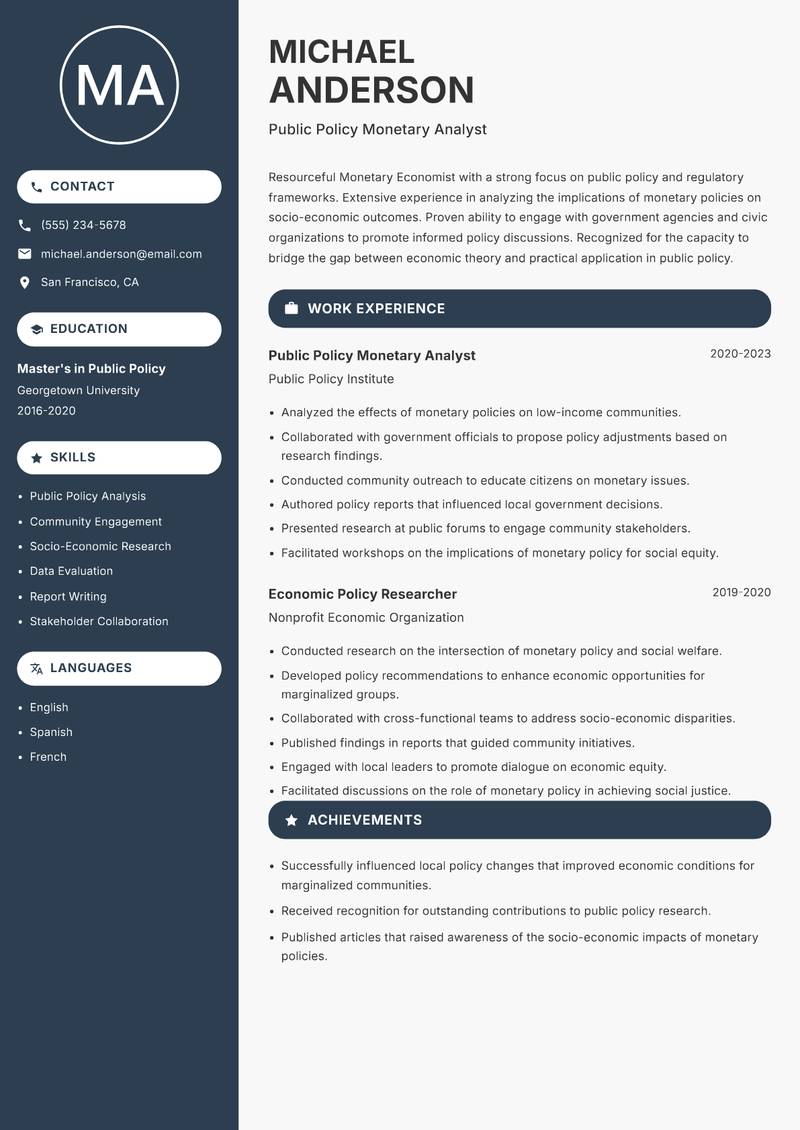
Browse Monetary Economist resume examples built around economic modeling, tailored for Economics roles.
A strong Monetary Economist resume leads with a focused professional summary that names the exact role and your standout achievement. In the experience section, open every bullet with a strong action verb and quantify the result with numbers wherever possible. Highlight your most relevant competencies — especially Monetary policy, Economic modeling, and Econometric Analysis (Stata, R, Python) — in a dedicated Skills section positioned early so ATS systems and hiring managers both find it immediately.
For format, most Monetary Economist roles suit a reverse-chronological layout: most recent position first, working backwards. Keep to one page for under five years of experience, or two pages for senior candidates with a rich project or leadership history. Use clean, ATS-safe fonts (10–12pt), standard section headings (Summary, Experience, Education, Skills), and avoid tables, text boxes, or multi-column layouts that applicant tracking systems cannot parse reliably.