Key Skills for Network Operations Engineer Positions
- Network protocols
- Troubleshooting
- Network Operations
- As a Network Operations
- Network Design & Architecture
- Routing & Switching (Cisco, Juniper)
- Network Security (Firewalls, IDS/IPS, VPN)
- SDN & SD-WAN Technologies
- Wireless Networking (Wi-Fi 6, 5G)
- Network Automation (Ansible, Python, NETCONF)
Resume Tips for Network Operations Engineer Applications
- Highlight your Network protocols and troubleshooting experience prominently — this is a primary differentiator employers look for in network operations engineer candidates
- Lead with certifications: CCNA, CCNP, CCIE, Juniper JNCIS — they are the primary hiring filter.
- Quantify network scale: number of devices managed, bandwidth capacity, uptime SLA achieved.
- Demonstrate automation skills — employers increasingly value network engineers who can code.
- Highlight incident response and troubleshooting — diagnosing network failures under pressure is a key competency.
- Show multi-vendor experience across Cisco, Juniper, Palo Alto, or Aruba.
Strong Action Verbs for Network Operations Engineer Resumes
Designed · Configured · Deployed · Optimized · Troubleshooted · Migrated · Secured · Monitored · Automated · Implemented · Achieved · Administered · Analyzed · Architected
Common Mistakes to Avoid
- Leaving out Network protocols and troubleshooting experience — this is a core differentiator for network operations engineer roles
- Writing a generic objective statement instead of a targeted network operations engineer professional summary
- Not listing Cisco or Juniper certifications that are effectively minimum requirements.
- Describing network configurations without quantifying scale or business impact.
- Ignoring automation skills — manually-configured networks are increasingly obsolete in enterprise environments.
Experience Levels
- Network Technician / NOC Analyst (0-2 years)
- Network Engineer (2-6 years)
- Senior Network Engineer (6-10 years)
- Network Architect (10-14 years)
- Chief Network Officer / Principal Architect (14+ years)
How to Write a Network Operations Engineer Resume
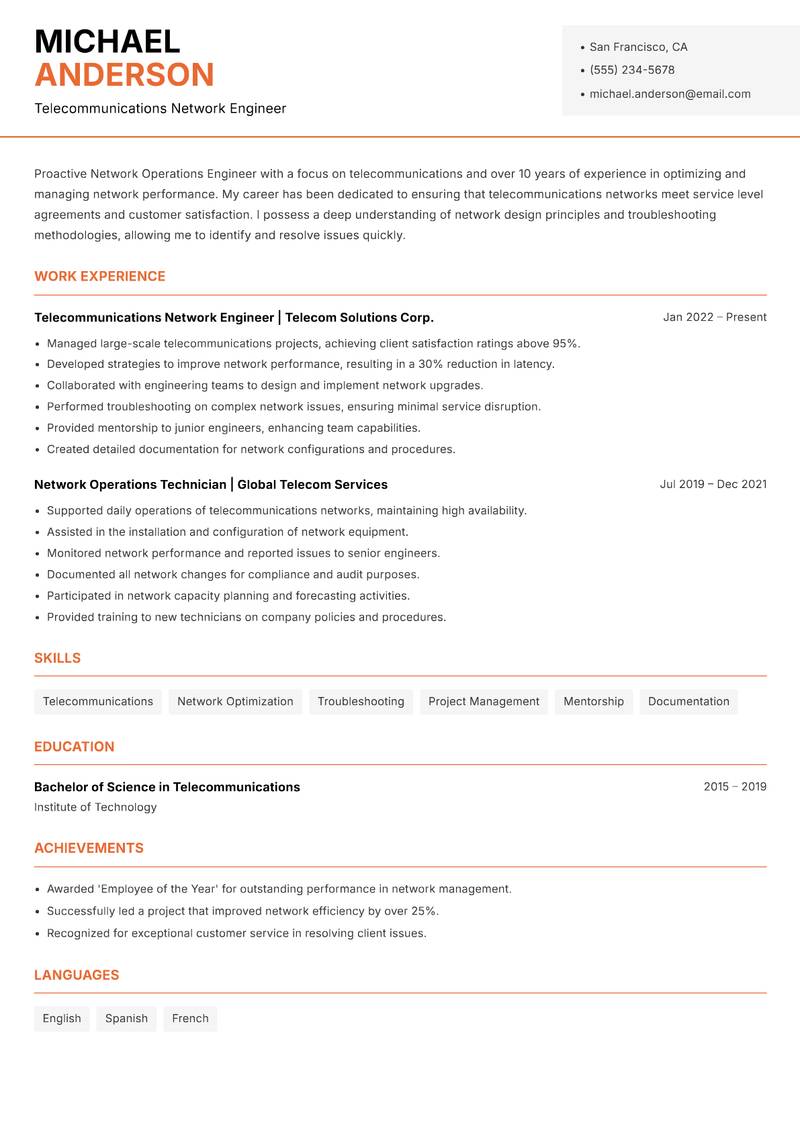
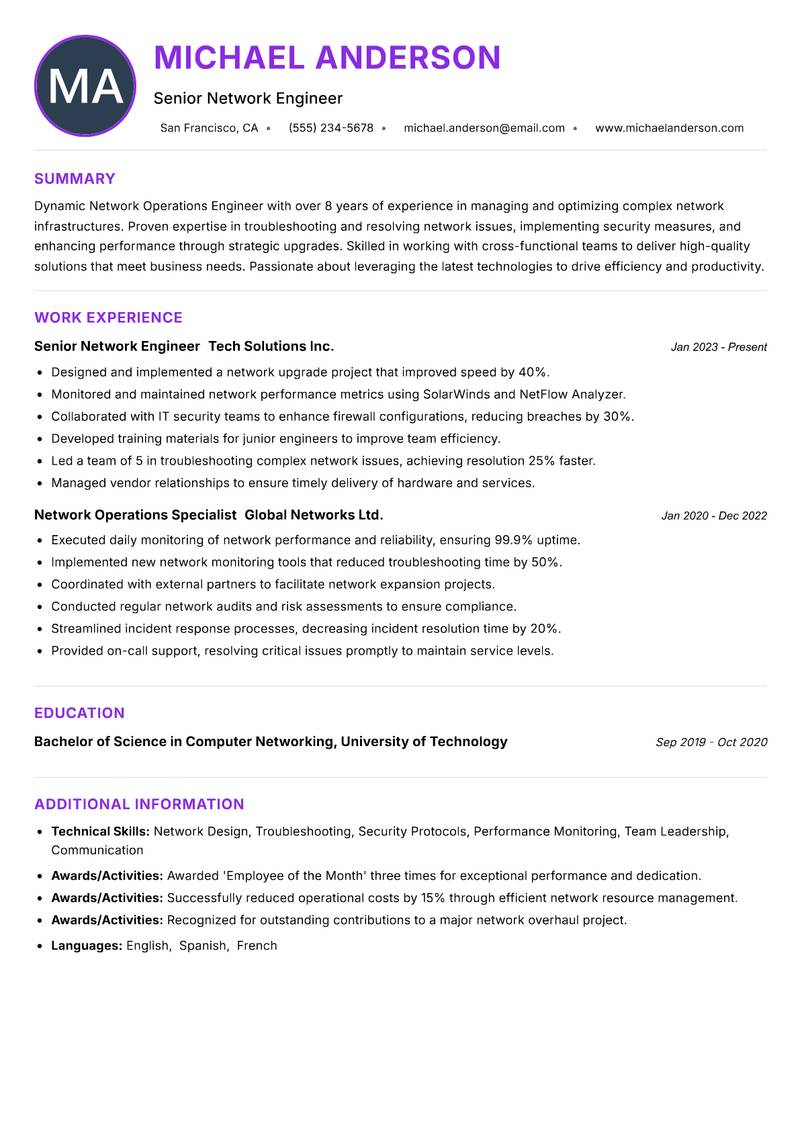
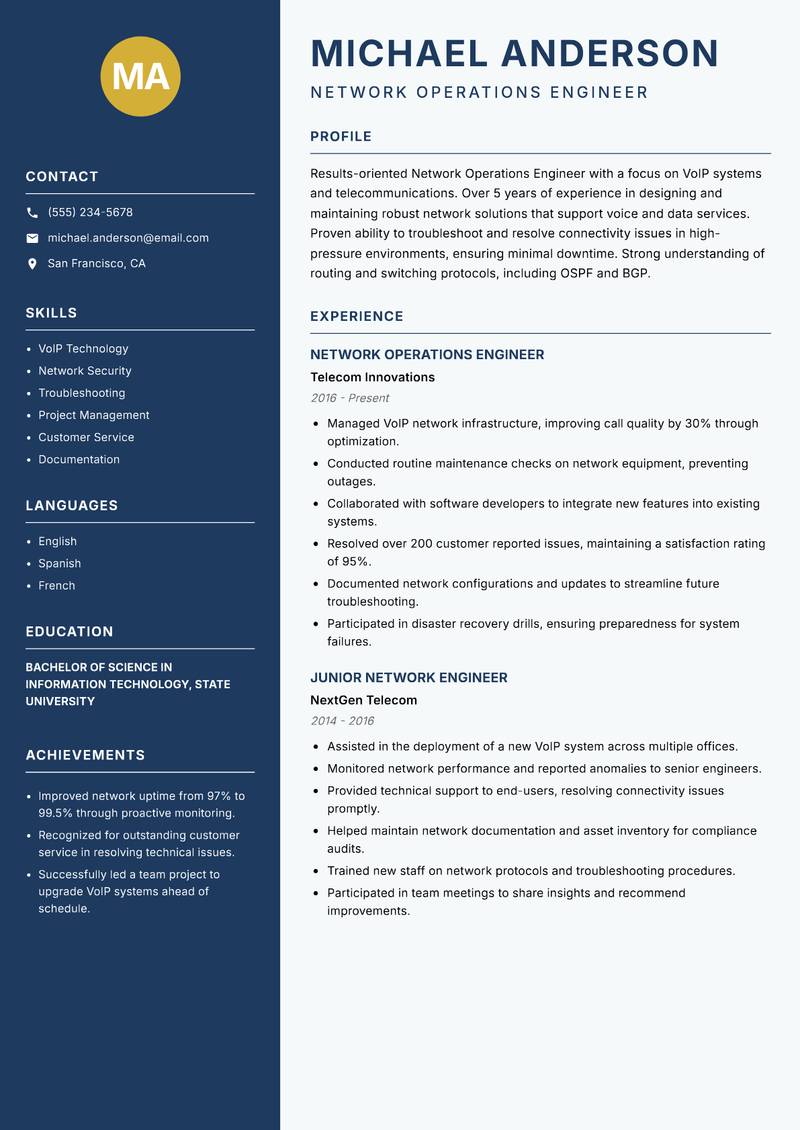
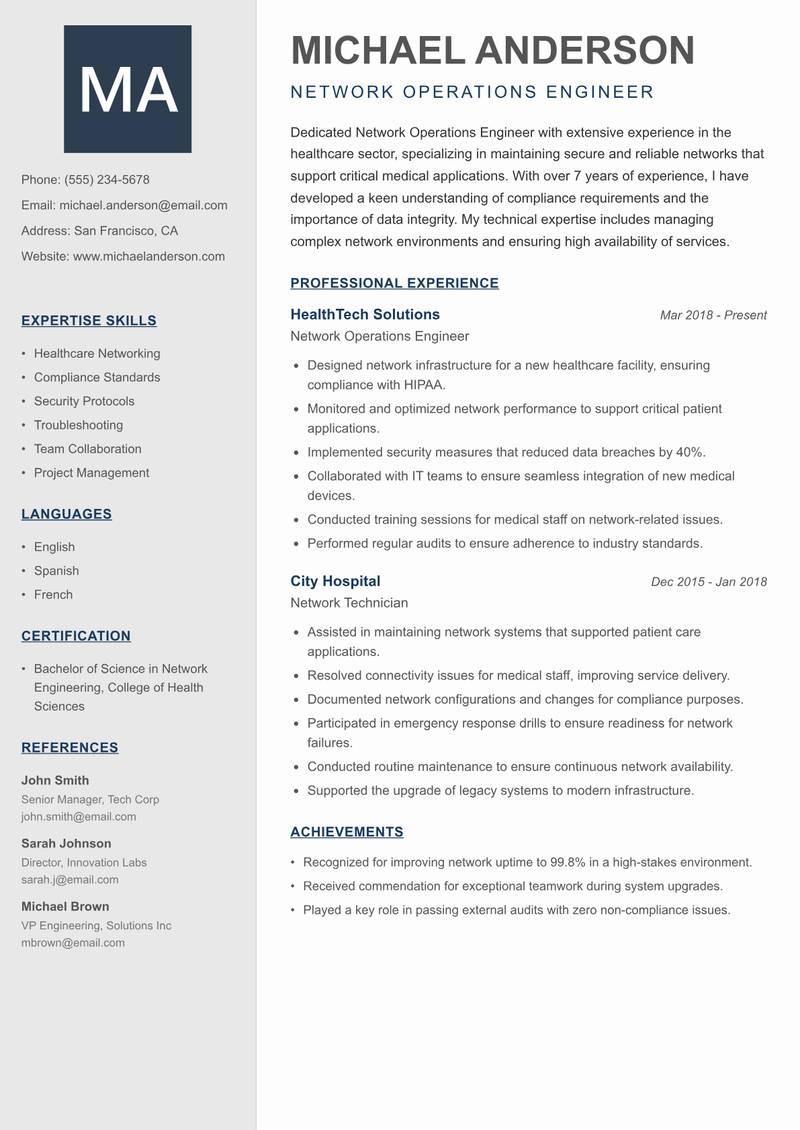
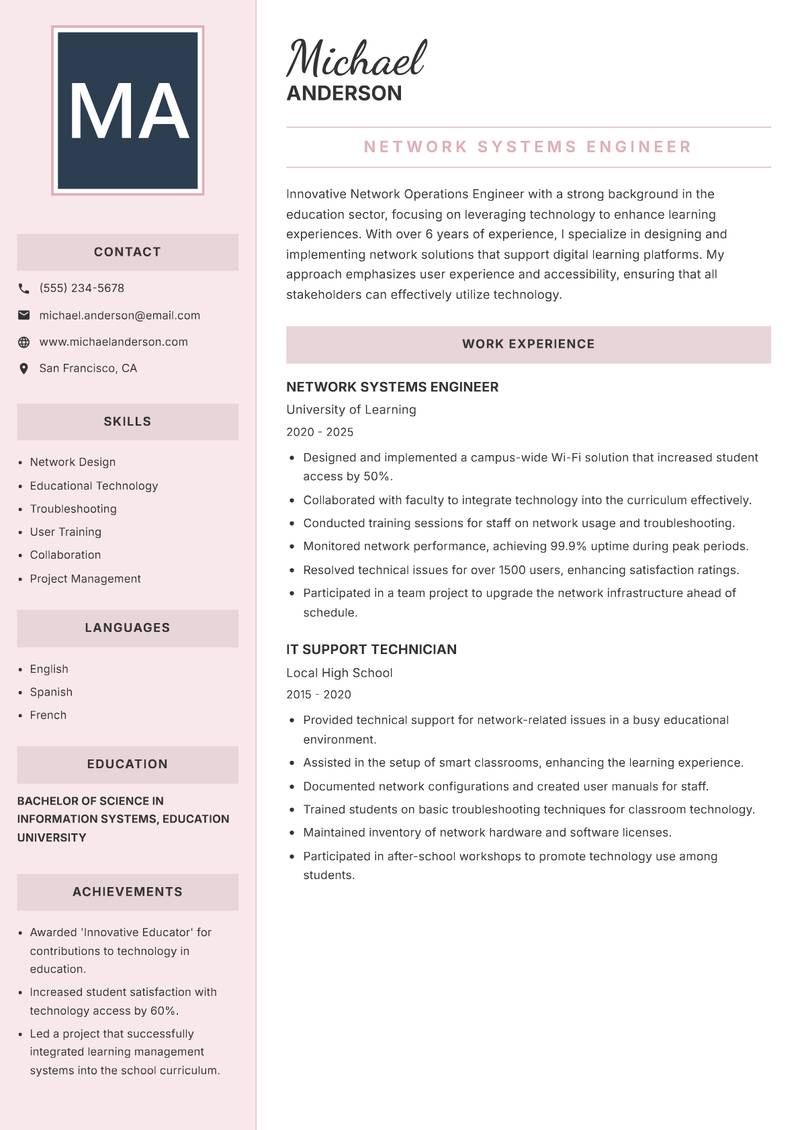
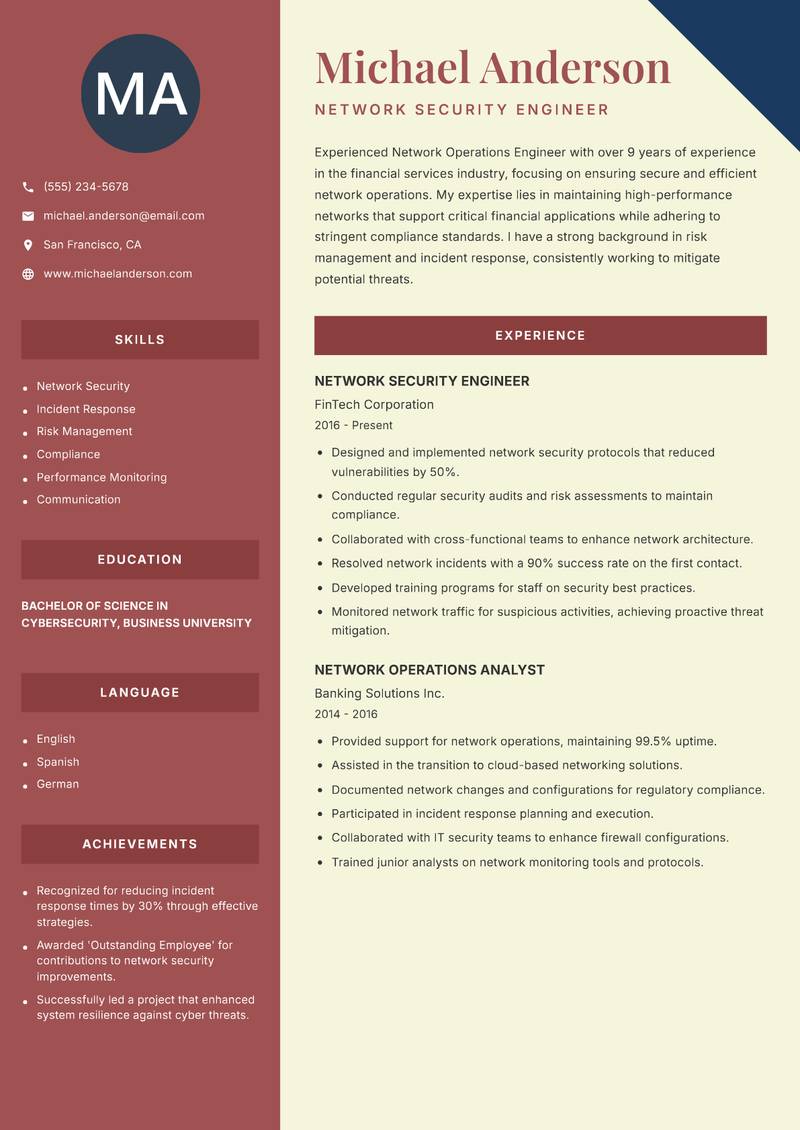
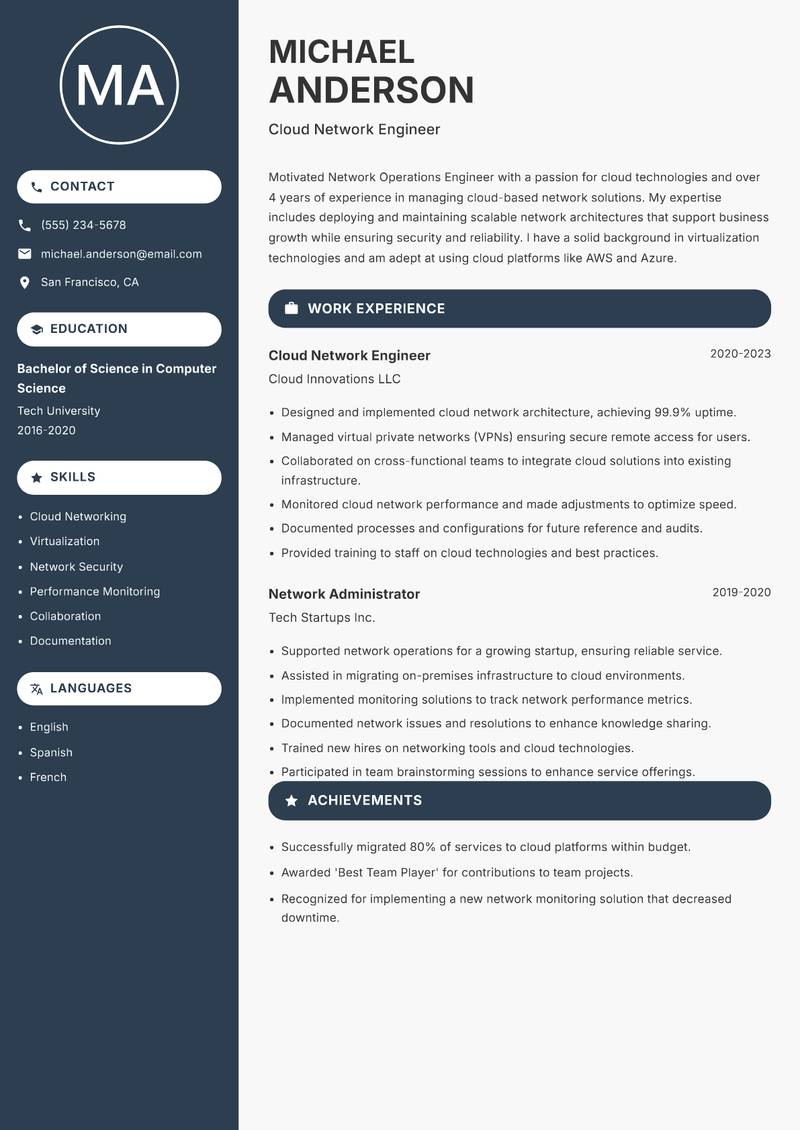
Browse Network Operations Engineer resume examples built around troubleshooting, tailored for Networking roles.
A strong Network Operations Engineer resume leads with a focused professional summary that names the exact role and your standout achievement. In the experience section, open every bullet with a strong action verb and quantify the result with numbers wherever possible. Highlight your most relevant competencies — especially Network protocols, Troubleshooting, and Network Operations — in a dedicated Skills section positioned early so ATS systems and hiring managers both find it immediately.
For format, most Network Operations Engineer roles suit a reverse-chronological layout: most recent position first, working backwards. Keep to one page for under five years of experience, or two pages for senior candidates with a rich project or leadership history. Use clean, ATS-safe fonts (10–12pt), standard section headings (Summary, Experience, Education, Skills), and avoid tables, text boxes, or multi-column layouts that applicant tracking systems cannot parse reliably.