Key Skills for Outbound Logistics Executive Positions
- Freight Management (Road, Rail, Sea, Air)
- Warehouse & Distribution Center Operations
- 3PL & Outsourced Logistics Management
- Customs & International Trade Compliance
- Transport Management Systems (TMS)
- Logistics Cost Optimization
- Cold Chain & Temperature-Controlled Logistics
- Last-Mile Delivery Optimization
- Supplier & Carrier Negotiation
- Logistics Analytics & KPI Reporting
Resume Tips for Outbound Logistics Executive Applications
- Lead your summary with the scope of your leadership — team size, budget managed, or strategic initiatives delivered — since outbound logistics executive employers expect to see measurable impact at that seniority level before considering a candidate
- Quantify KPIs: on-time delivery rate, transport cost/unit, order accuracy, carrier performance scores.
- Demonstrate TMS and WMS proficiency — specify platforms used.
- Highlight customs and trade compliance knowledge for international freight roles.
- For 3PL roles, show client management and SLA delivery alongside operations management.
- Demonstrate cost optimization outcomes: freight cost reductions, route efficiency improvements.
Strong Action Verbs for Outbound Logistics Executive Resumes
Coordinated · Managed · Optimized · Negotiated · Delivered · Tracked · Complied · Consolidated · Planned · Scaled · Achieved · Administered · Analyzed · Architected
Common Mistakes to Avoid
- Writing a generic objective statement instead of a targeted outbound logistics executive professional summary
- Not providing operational KPIs — logistics performance is entirely measurable.
- Failing to specify technology systems used.
- Ignoring customs and compliance knowledge for international logistics.
- Not demonstrating carrier management and negotiation skills.
Experience Levels
- Logistics Coordinator / Graduate (0-2 years)
- Logistics Specialist / Analyst (2-5 years)
- Logistics Manager (5-9 years)
- Senior Manager / Head of Logistics (9-14 years)
- VP / Director of Logistics (14+ years)
How to Write a Outbound Logistics Executive Resume
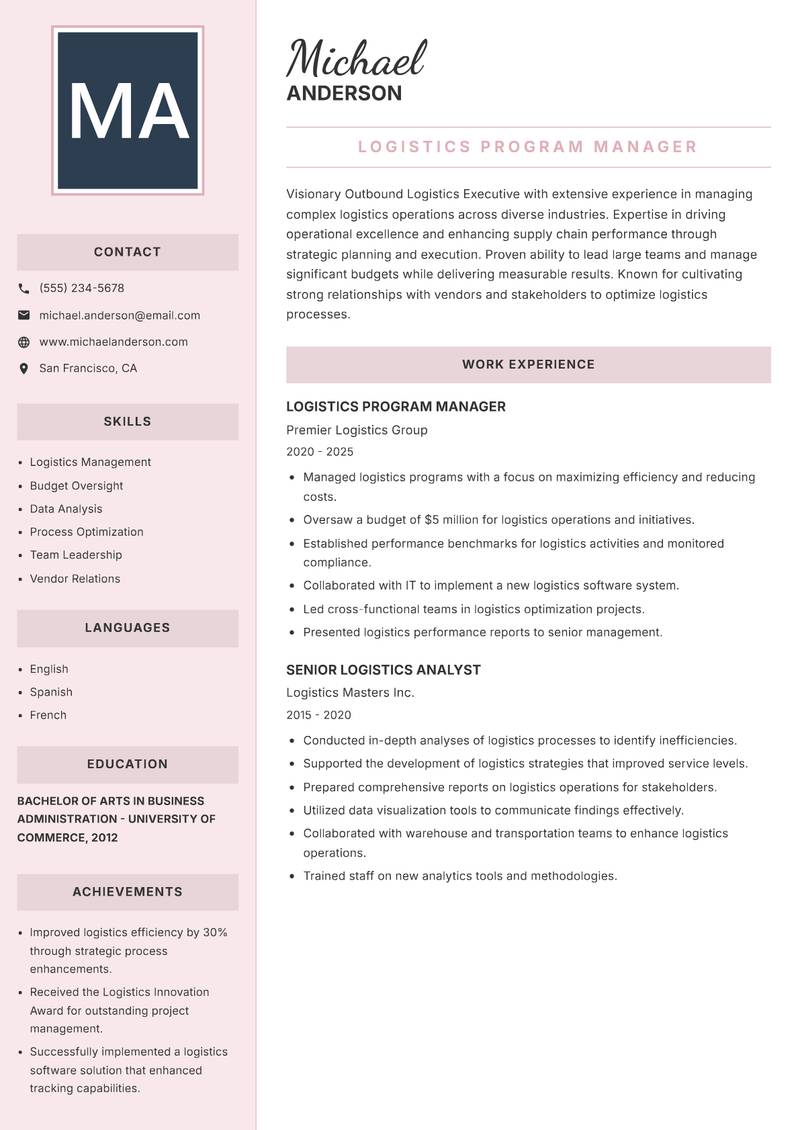
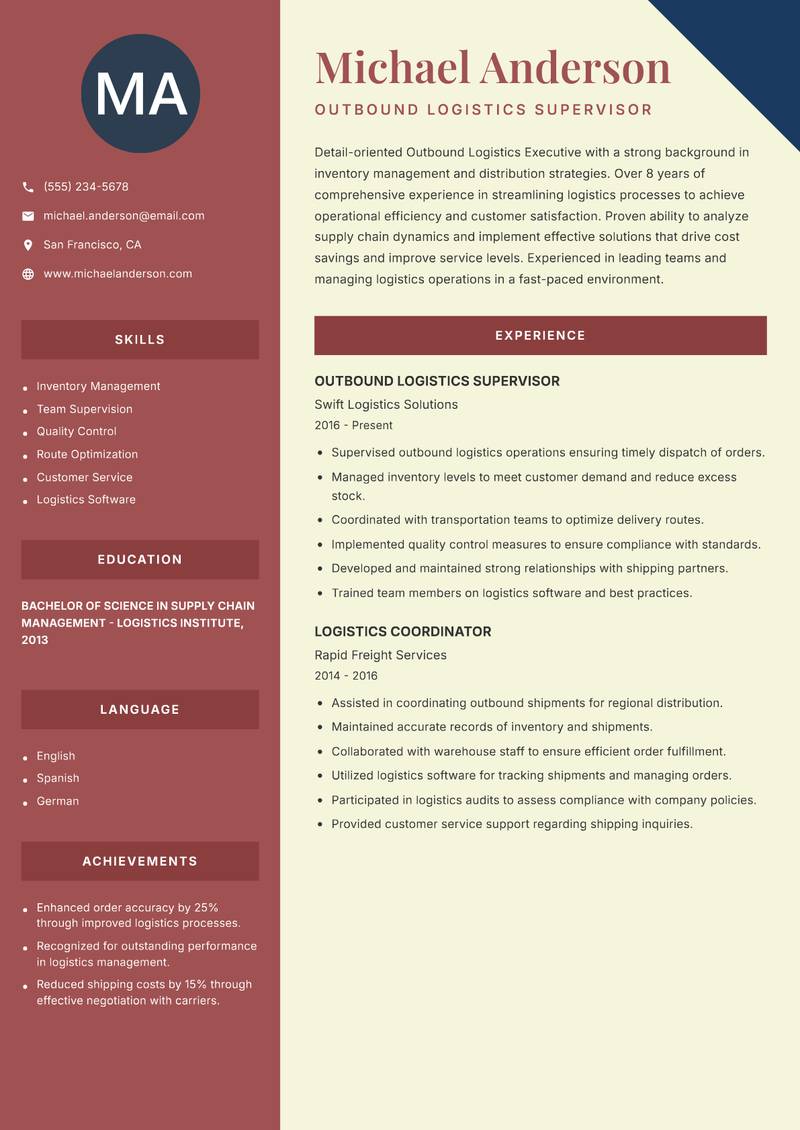
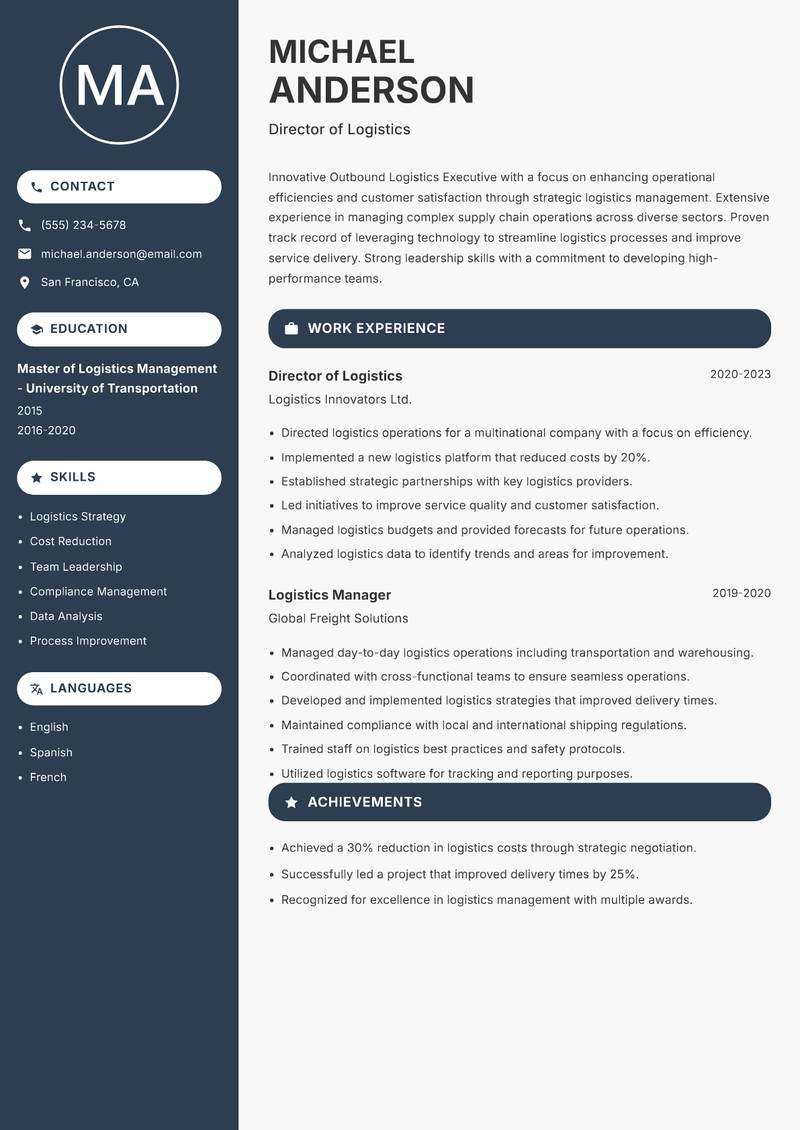
Browse Outbound Logistics Executive resume examples built around freight management (Road, rail, sea, air), tailored for Logistics roles.
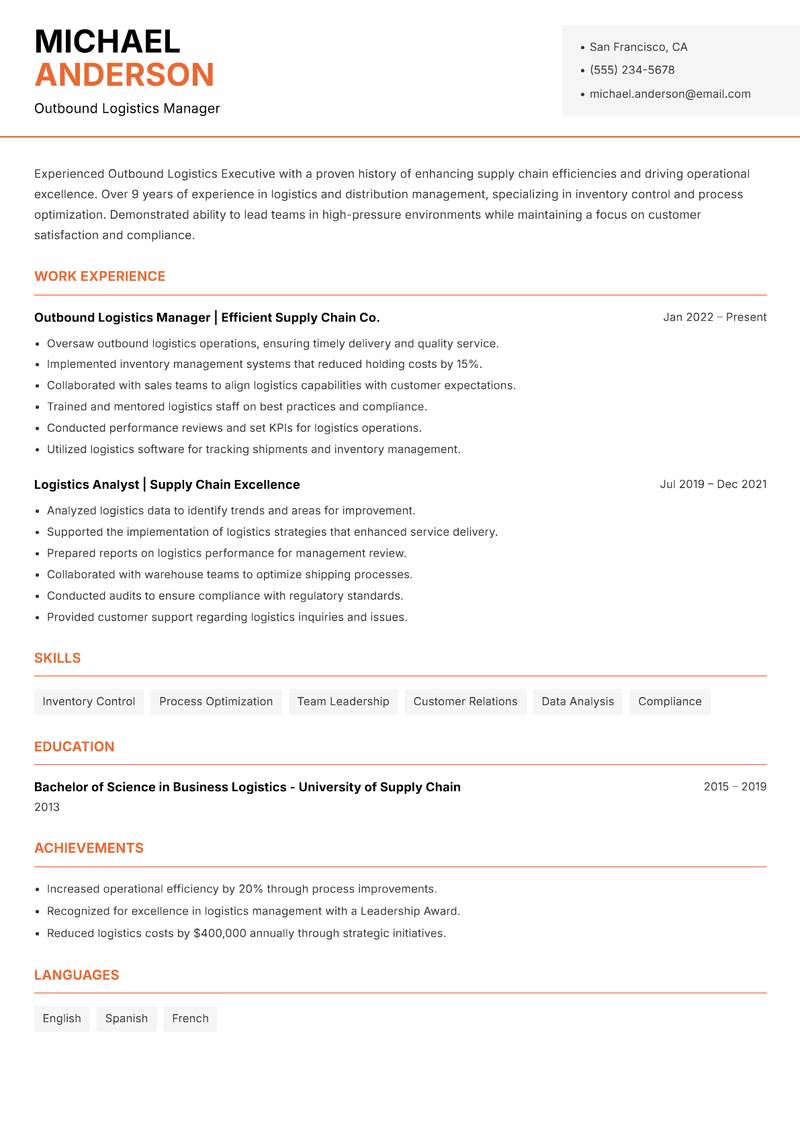
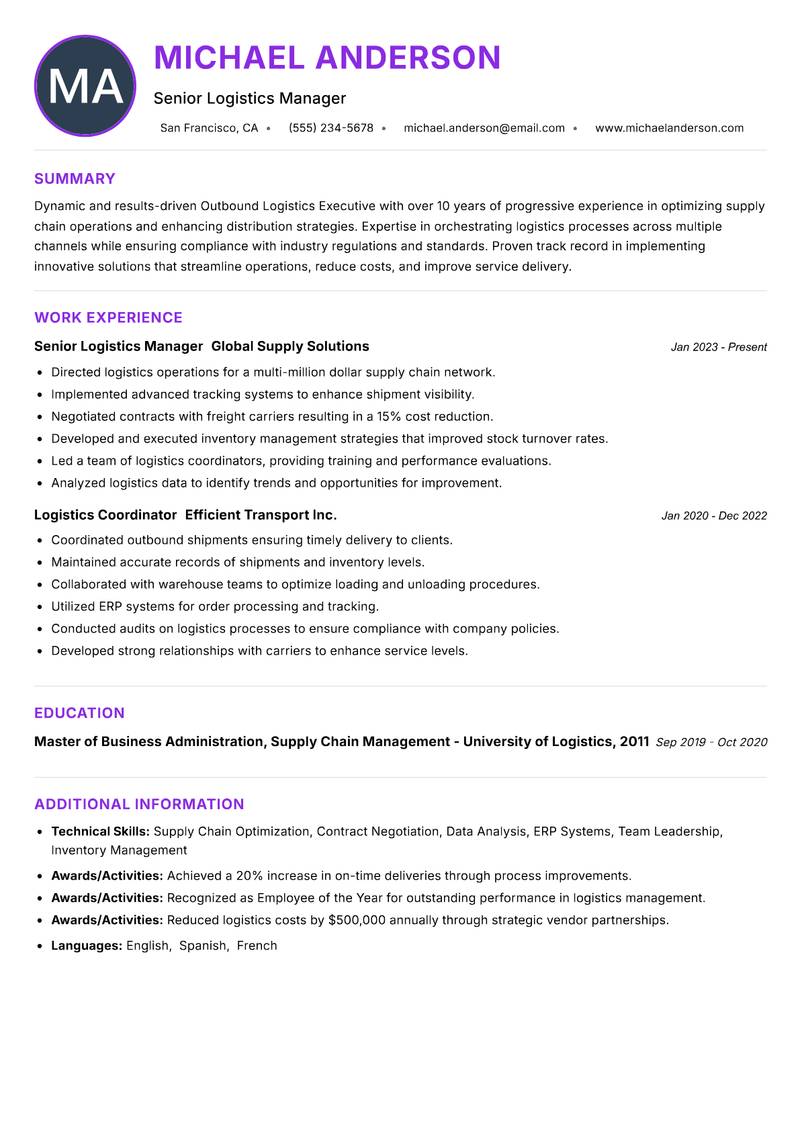
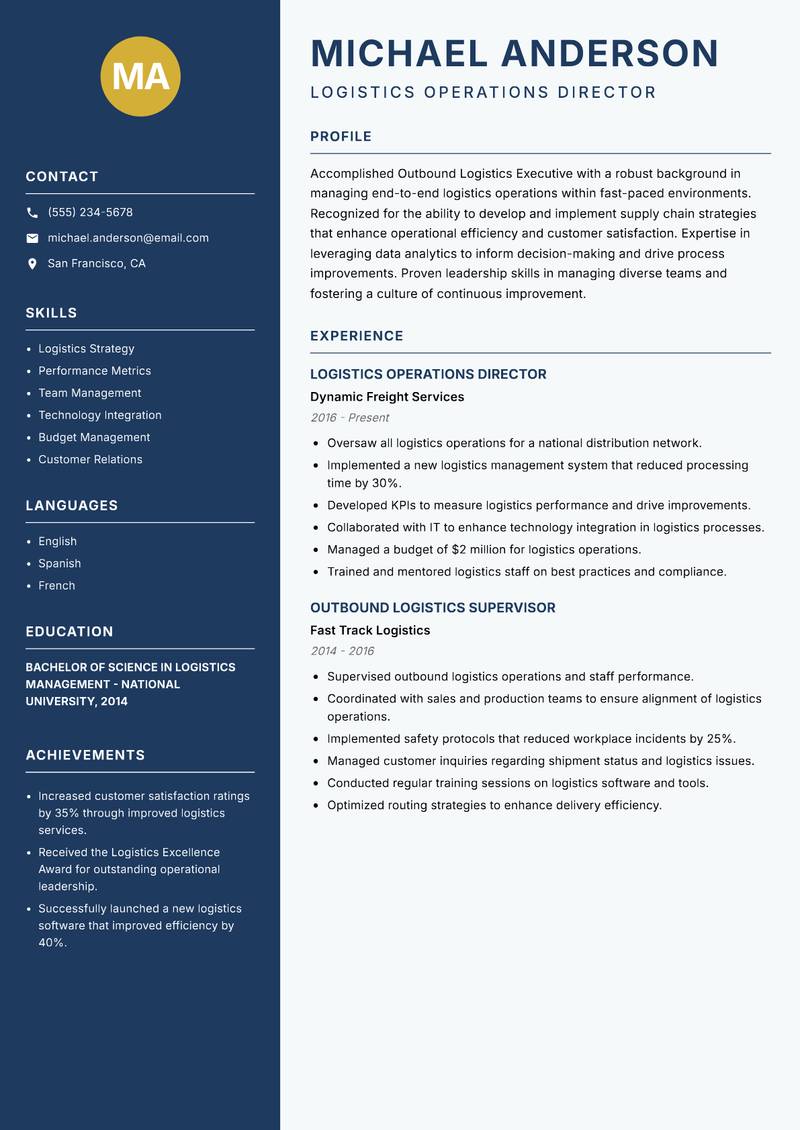
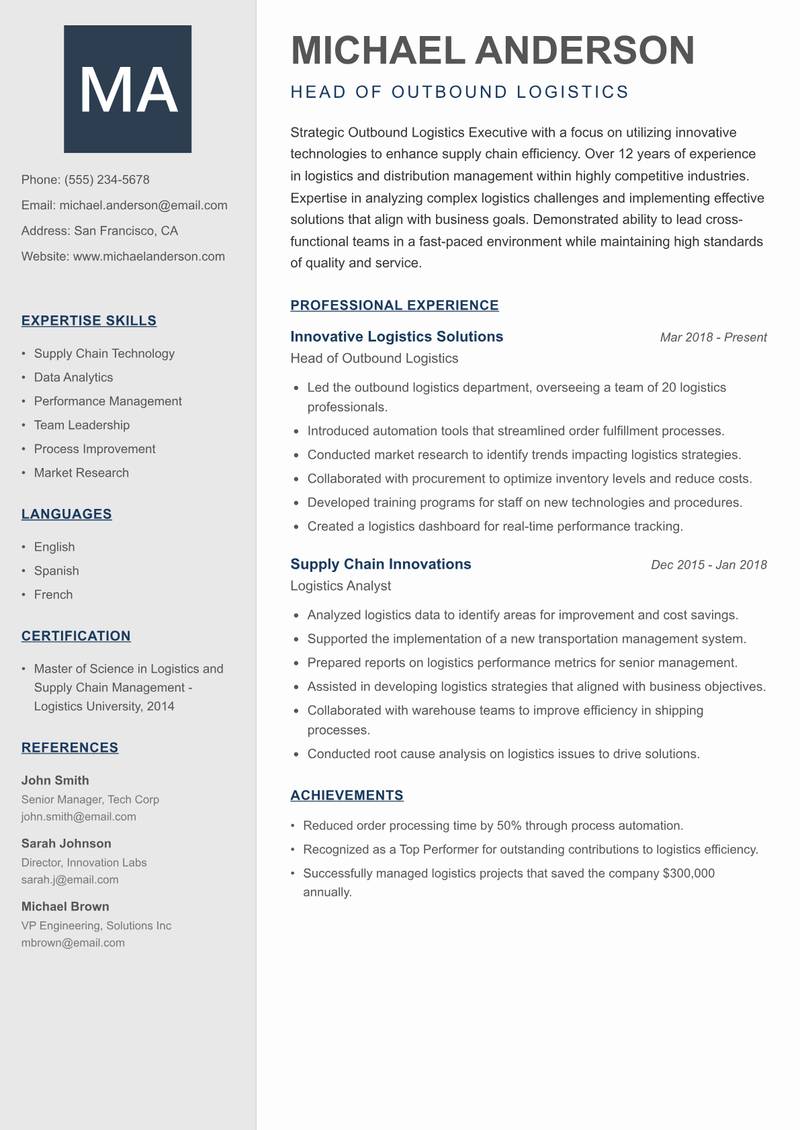
A strong Outbound Logistics Executive resume leads with a focused professional summary that names the exact role and your standout achievement. In the experience section, open every bullet with a strong action verb and quantify the result with numbers wherever possible. Highlight your most relevant competencies — especially Freight Management (Road, Rail, Sea, Air), Warehouse & Distribution Center Operations, and 3PL & Outsourced Logistics Management — in a dedicated Skills section positioned early so ATS systems and hiring managers both find it immediately.
For format, most Outbound Logistics Executive roles suit a reverse-chronological layout: most recent position first, working backwards. Keep to one page for under five years of experience, or two pages for senior candidates with a rich project or leadership history. Use clean, ATS-safe fonts (10–12pt), standard section headings (Summary, Experience, Education, Skills), and avoid tables, text boxes, or multi-column layouts that applicant tracking systems cannot parse reliably.