Key Skills for Postdoctoral Medical Researcher Positions
- Clinical Trial Design & Protocol Development
- Good Clinical Practice (GCP) Compliance
- Biostatistics & Data Analysis (R, SAS, SPSS)
- Laboratory Techniques (PCR, ELISA, cell culture)
- Systematic Review & Meta-Analysis
- Ethics Committee Submissions & IRB Compliance
- Grant Writing & Research Funding
- Medical Writing & Publication
- Regulatory Affairs (FDA, EMA pathways)
- Research Coordination & Patient Recruitment
Resume Tips for Postdoctoral Medical Researcher Applications
- List peer-reviewed publications in a separate section using a standard citation format, and note your h-index if it is competitive — postdoctoral medical researcher academic or industry research roles evaluate research output before reviewing general experience
- Lead with publications, conference presentations, and grant funding — they are the primary research credentials.
- Specify GCP certification and clinical trial experience clearly — pharma and CRO employers require it.
- Demonstrate statistical software proficiency: R, SAS, SPSS, or GraphPad Prism.
- For translational research roles, show understanding of both bench science and clinical application.
- Highlight patient-facing experience if you have worked as a coordinator on patient-recruitment trials.
Strong Action Verbs for Postdoctoral Medical Researcher Resumes
Investigated · Published · Analyzed · Designed · Recruited · Submitted · Collaborated · Evaluated · Coordinated · Granted · Achieved · Administered · Architected · Assessed
Common Mistakes to Avoid
- Writing a generic objective statement instead of a targeted postdoctoral medical researcher professional summary
- Failing to list GCP certification for clinical research roles — it is typically a minimum requirement.
- Not providing a publication list or ORCID/ResearchGate link for academic applications.
- Describing research topics without specifying methodological expertise.
- Ignoring regulatory knowledge — even basic-science researchers benefit from understanding approval pathways.
Experience Levels
- Research Assistant / Student (0-3 years)
- Research Associate / CRC (3-6 years)
- Senior Researcher / CRA (6-10 years)
- Principal Investigator / Research Director (10-15 years)
- Chief Scientific Officer / Professor (15+ years)
How to Write a Postdoctoral Medical Researcher Resume
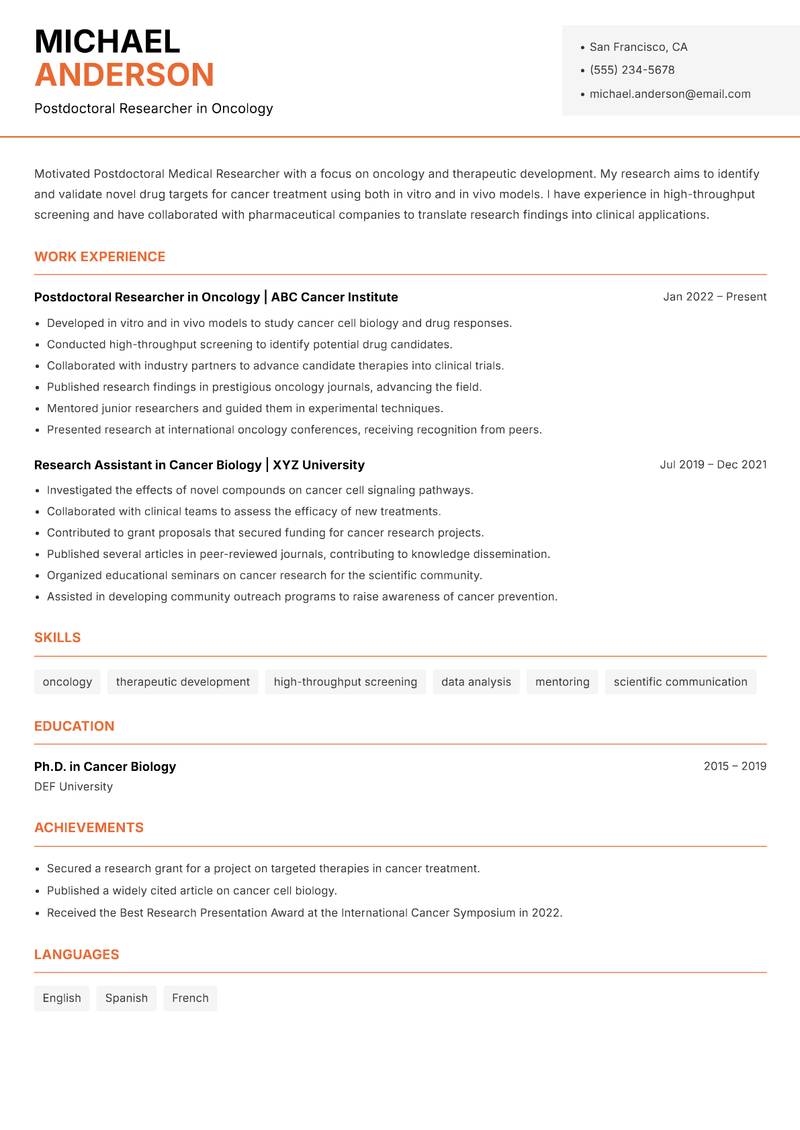
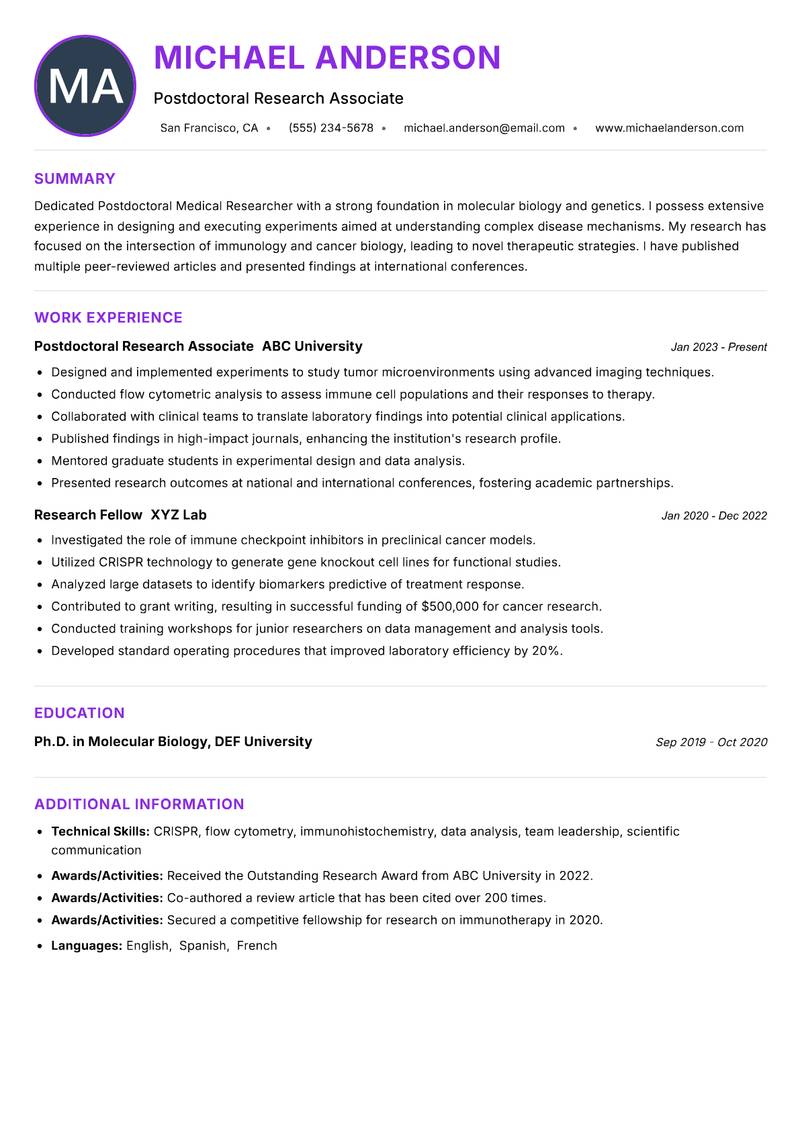
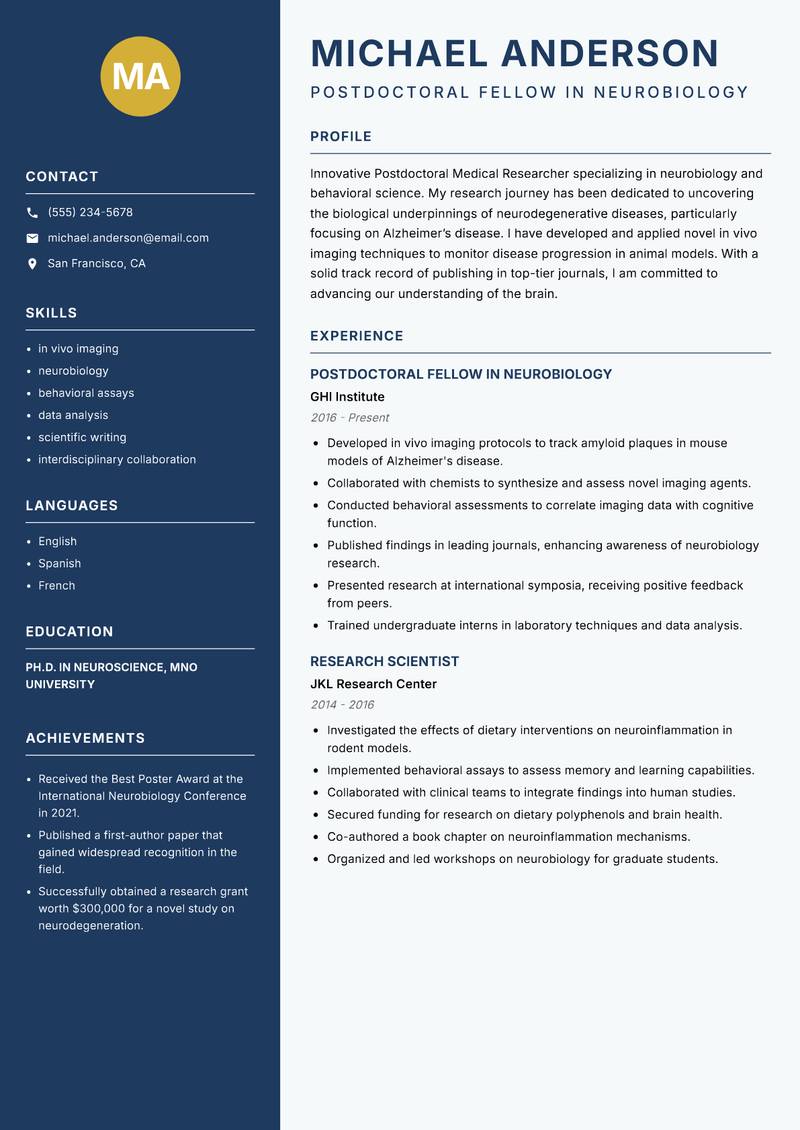
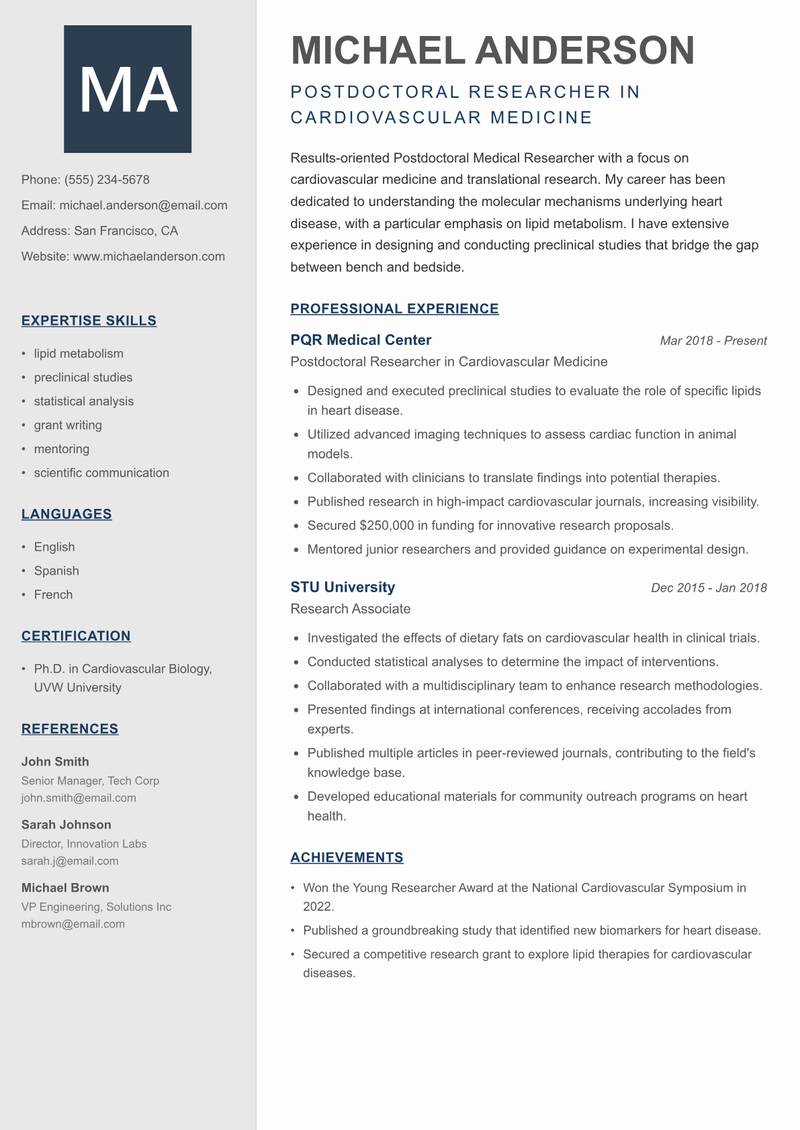
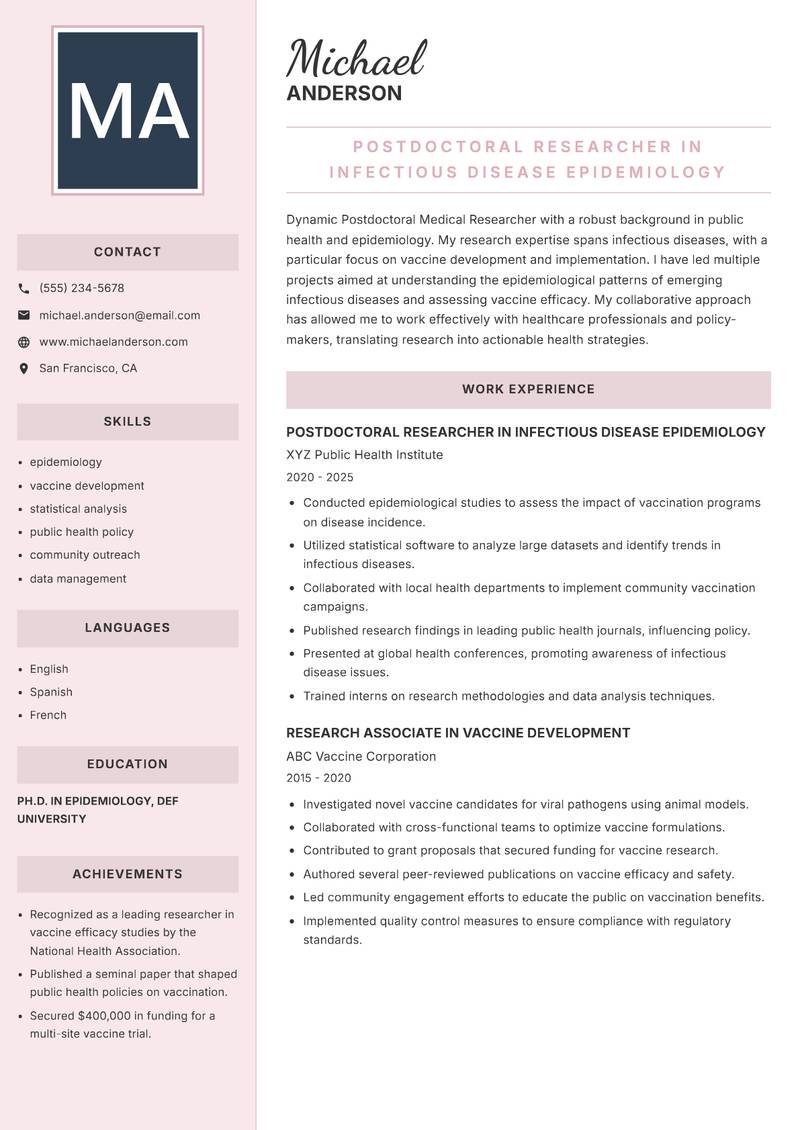
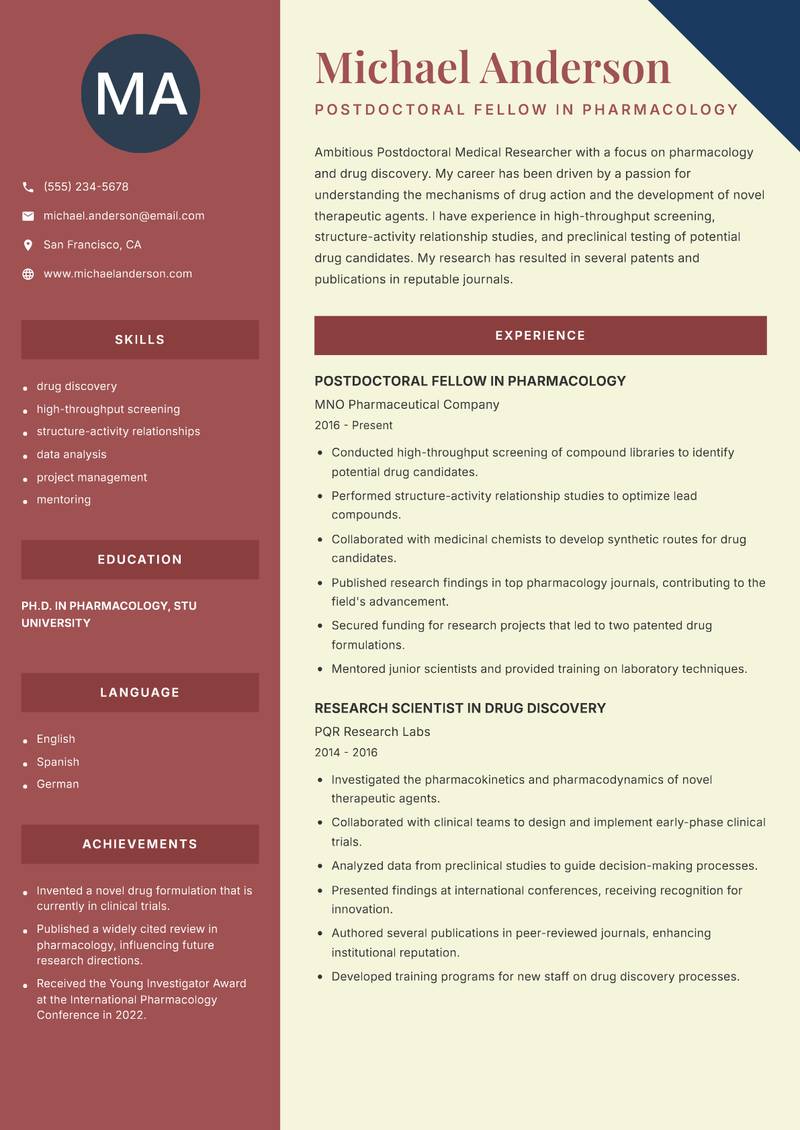
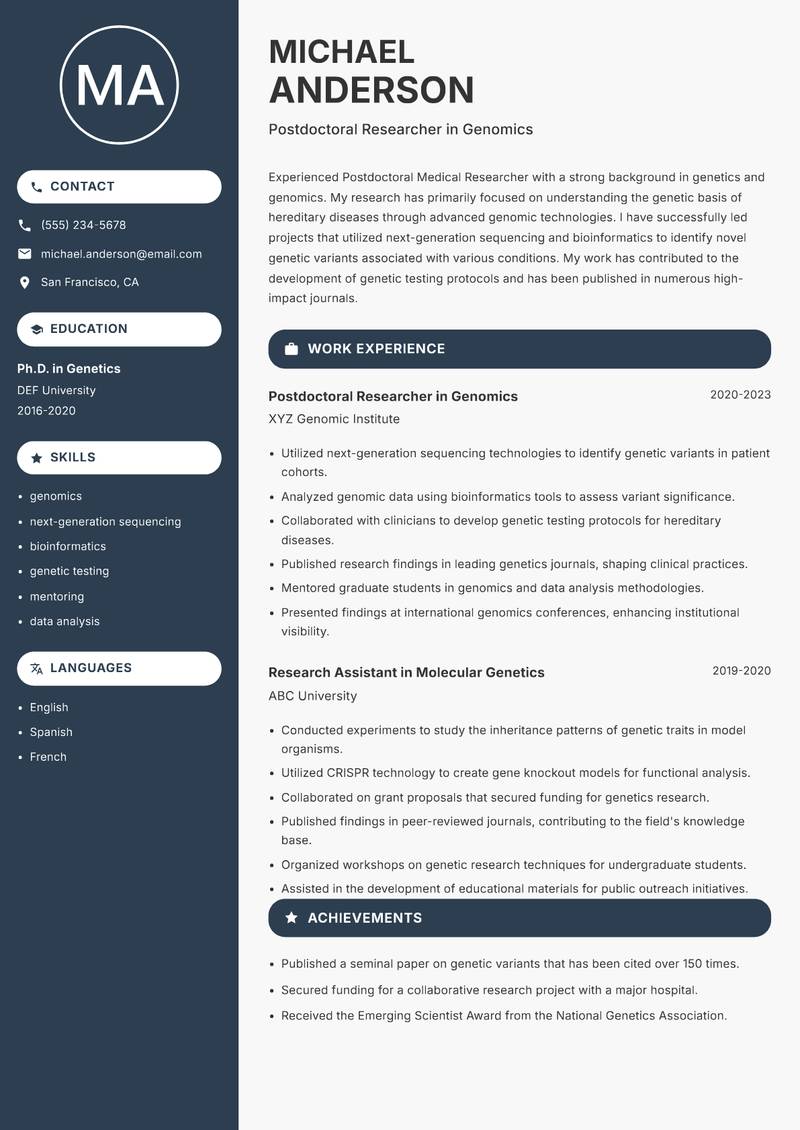
Browse Postdoctoral Medical Researcher resume examples built around clinical trial design & protocol development, tailored for Medical Research roles.
A strong Postdoctoral Medical Researcher resume leads with a focused professional summary that names the exact role and your standout achievement. In the experience section, open every bullet with a strong action verb and quantify the result with numbers wherever possible. Highlight your most relevant competencies — especially Clinical Trial Design & Protocol Development, Good Clinical Practice (GCP) Compliance, and Biostatistics & Data Analysis (R, SAS, SPSS) — in a dedicated Skills section positioned early so ATS systems and hiring managers both find it immediately.
For format, most Postdoctoral Medical Researcher roles suit a reverse-chronological layout: most recent position first, working backwards. Keep to one page for under five years of experience, or two pages for senior candidates with a rich project or leadership history. Use clean, ATS-safe fonts (10–12pt), standard section headings (Summary, Experience, Education, Skills), and avoid tables, text boxes, or multi-column layouts that applicant tracking systems cannot parse reliably.