Postdoctoral Researcher Resume

These Postdoctoral Researcher resume samples are designed to help you write a resume that gets noticed by hiring managers and passes applicant tracking systems (ATS) in Higher Education. Each example shows real formatting, section structure, and language you can adapt to your own background. When writing your own Postdoctoral Researcher resume, focus on highlighting academic teaching & course design, research publication & grant writing and student advising & mentoring. Recruiters scan for these qualifications first, so they should appear early in your summary and experience sections. Use strong action verbs such as "taught", "researched", "published", "mentored" to describe your achievements, and quantify your impact wherever possible — percentages, dollar amounts, or time saved make your resume more convincing. A common mistake to avoid: writing a generic objective statement instead of a targeted postdoctoral researcher professional summary. Tailor your resume to each Postdoctoral Researcher position you apply for rather than using one generic version.

Postdoctoral Researcher Resume Template
View PDF
0.0 (0 ratings)

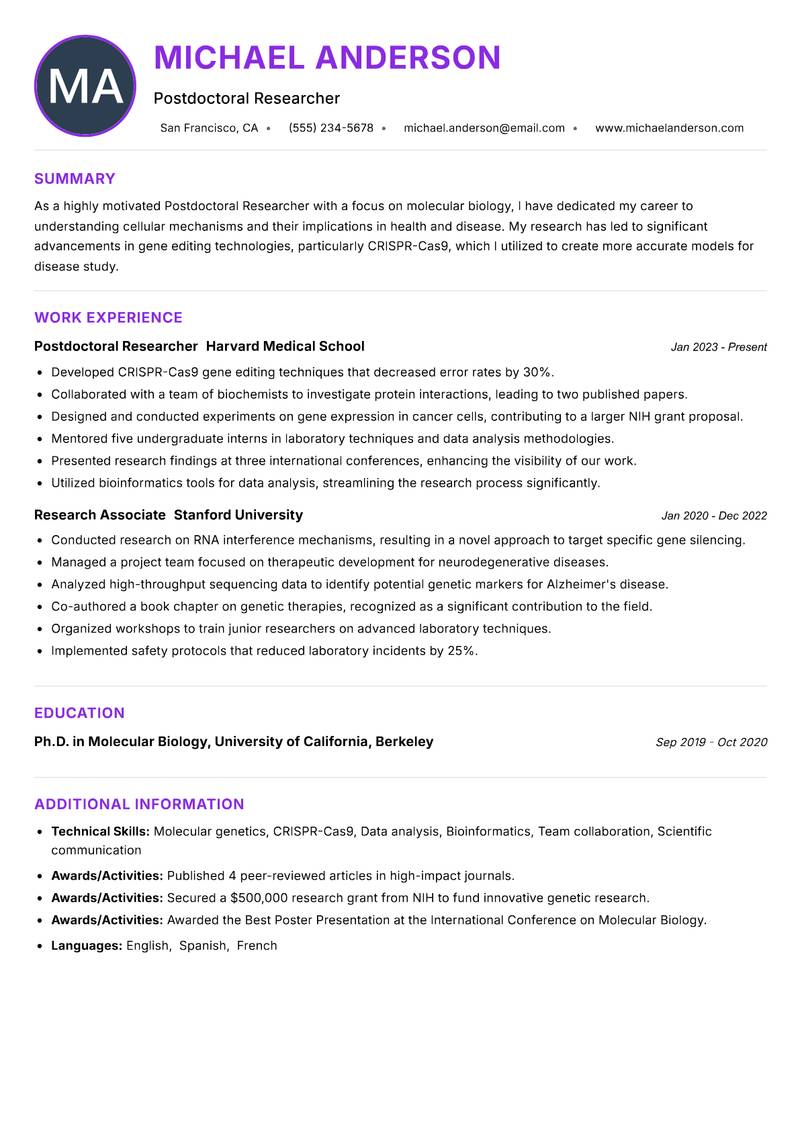
Postdoctoral Researcher Resume

As a highly motivated Postdoctoral Researcher with a focus on molecular biology, I have dedicated my career to understanding cellular mechanisms and their implications in health and disease. My research has led to significant advancements in gene editing technologies, particularly CRISPR-Cas9, which I utilized to create more accurate models for disease study. With over five years of experience in academic settings, I excel in designing and executing experiments, analyzing complex data sets, and collaborating with multidisciplinary teams. My strong communication skills allow me to effectively convey complex scientific concepts to both technical and non-technical audiences. I am passionate about mentoring graduate students and contributing to academic publications, which I believe are crucial for advancing scientific knowledge. My goal is to leverage my expertise in molecular genetics to contribute to innovative research that can improve therapeutic strategies for genetic disorders.

Molecular genetics CRISPR-Cas9 Data analysis Bioinformatics Team collaboration Scientific communication
Postdoctoral Researcher Resume Preview Example
View PDF
  1. Developed CRISPR-Cas9 gene editing techniques that decreased error rates by 30%.
  2. Collaborated with a team of biochemists to investigate protein interactions, leading to two published papers.
  3. Designed and conducted experiments on gene expression in cancer cells, contributing to a larger NIH grant proposal.
  4. Mentored five undergraduate interns in laboratory techniques and data analysis methodologies.
  5. Presented research findings at three international conferences, enhancing the visibility of our work.
  6. Utilized bioinformatics tools for data analysis, streamlining the research process significantly.
  1. Conducted research on RNA interference mechanisms, resulting in a novel approach to target specific gene silencing.
  2. Managed a project team focused on therapeutic development for neurodegenerative diseases.
  3. Analyzed high-throughput sequencing data to identify potential genetic markers for Alzheimer's disease.
  4. Co-authored a book chapter on genetic therapies, recognized as a significant contribution to the field.
  5. Organized workshops to train junior researchers on advanced laboratory techniques.
  6. Implemented safety protocols that reduced laboratory incidents by 25%.

Achievements

  • Published 4 peer-reviewed articles in high-impact journals.
  • Secured a $500,000 research grant from NIH to fund innovative genetic research.
  • Awarded the Best Poster Presentation at the International Conference on Molecular Biology.
⏱️
Experience
2-5 Years
📅
Level
Mid Level
🎓
Education
Ph.D. in Molecular Biology, Un...

Postdoctoral Researcher Resume

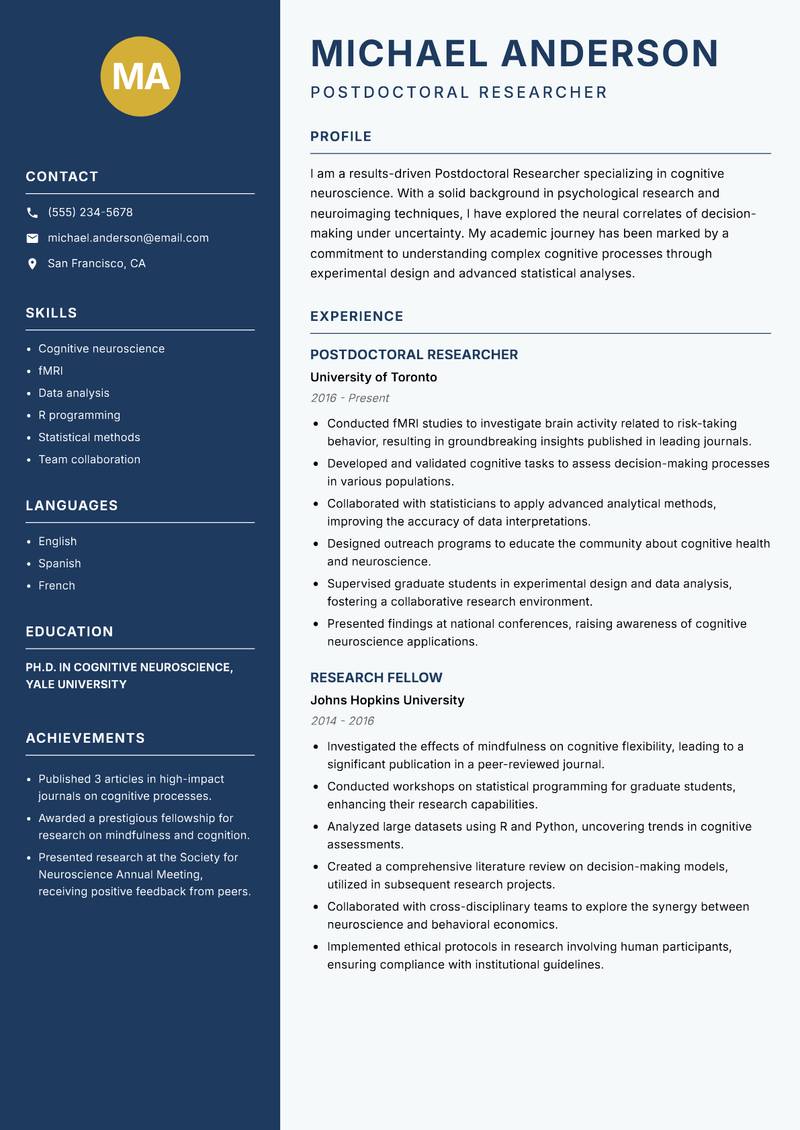
I am a results-driven Postdoctoral Researcher specializing in cognitive neuroscience. With a solid background in psychological research and neuroimaging techniques, I have explored the neural correlates of decision-making under uncertainty. My academic journey has been marked by a commitment to understanding complex cognitive processes through experimental design and advanced statistical analyses. I have collaborated on numerous interdisciplinary projects, which have honed my ability to work with diverse teams and communicate findings effectively. I am particularly passionate about translating my research into practical applications that can enhance educational practices and mental health interventions. Through my teaching and mentoring roles, I have inspired students to pursue careers in science and research. I aim to continue my research in cognitive processes while contributing to academic scholarship and community outreach.

Cognitive neuroscience fMRI Data analysis R programming Statistical methods Team collaboration
Postdoctoral Researcher Resume Preview Example
View PDF
  1. Conducted fMRI studies to investigate brain activity related to risk-taking behavior, resulting in groundbreaking insights published in leading journals.
  2. Developed and validated cognitive tasks to assess decision-making processes in various populations.
  3. Collaborated with statisticians to apply advanced analytical methods, improving the accuracy of data interpretations.
  4. Designed outreach programs to educate the community about cognitive health and neuroscience.
  5. Supervised graduate students in experimental design and data analysis, fostering a collaborative research environment.
  6. Presented findings at national conferences, raising awareness of cognitive neuroscience applications.
  1. Investigated the effects of mindfulness on cognitive flexibility, leading to a significant publication in a peer-reviewed journal.
  2. Conducted workshops on statistical programming for graduate students, enhancing their research capabilities.
  3. Analyzed large datasets using R and Python, uncovering trends in cognitive assessments.
  4. Created a comprehensive literature review on decision-making models, utilized in subsequent research projects.
  5. Collaborated with cross-disciplinary teams to explore the synergy between neuroscience and behavioral economics.
  6. Implemented ethical protocols in research involving human participants, ensuring compliance with institutional guidelines.

Achievements

  • Published 3 articles in high-impact journals on cognitive processes.
  • Awarded a prestigious fellowship for research on mindfulness and cognition.
  • Presented research at the Society for Neuroscience Annual Meeting, receiving positive feedback from peers.
⏱️
Experience
2-5 Years
📅
Level
Mid Level
🎓
Education
Ph.D. in Cognitive Neuroscienc...

Postdoctoral Researcher Resume

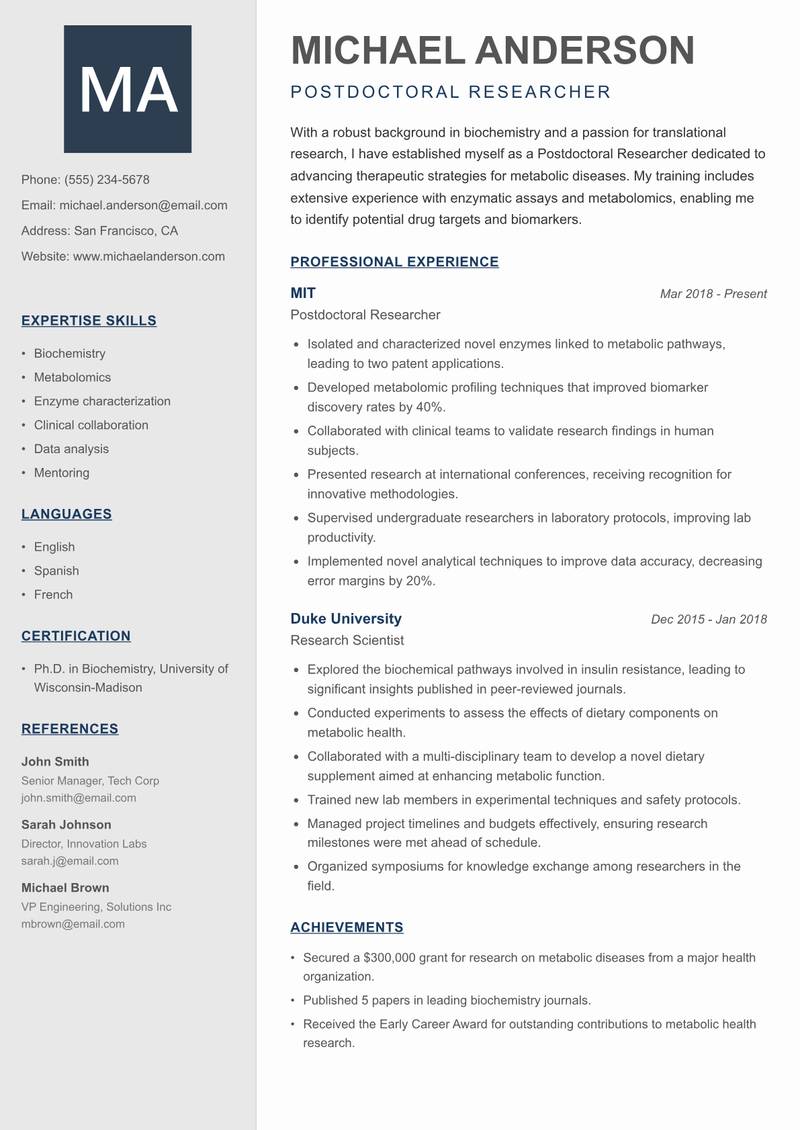
With a robust background in biochemistry and a passion for translational research, I have established myself as a Postdoctoral Researcher dedicated to advancing therapeutic strategies for metabolic diseases. My training includes extensive experience with enzymatic assays and metabolomics, enabling me to identify potential drug targets and biomarkers. I have successfully led interdisciplinary projects that bridge the gap between basic research and clinical applications, resulting in novel approaches to treat conditions like diabetes and obesity. My work has been recognized through various academic awards, and I actively seek collaborations that enhance the applicability of my research. I am committed to mentoring the next generation of scientists and fostering an environment of inquiry and innovation. My ultimate goal is to contribute to groundbreaking research that can significantly improve patient outcomes in metabolic health.

Biochemistry Metabolomics Enzyme characterization Clinical collaboration Data analysis Mentoring
Postdoctoral Researcher Resume Preview Example
View PDF
  1. Isolated and characterized novel enzymes linked to metabolic pathways, leading to two patent applications.
  2. Developed metabolomic profiling techniques that improved biomarker discovery rates by 40%.
  3. Collaborated with clinical teams to validate research findings in human subjects.
  4. Presented research at international conferences, receiving recognition for innovative methodologies.
  5. Supervised undergraduate researchers in laboratory protocols, improving lab productivity.
  6. Implemented novel analytical techniques to improve data accuracy, decreasing error margins by 20%.
  1. Explored the biochemical pathways involved in insulin resistance, leading to significant insights published in peer-reviewed journals.
  2. Conducted experiments to assess the effects of dietary components on metabolic health.
  3. Collaborated with a multi-disciplinary team to develop a novel dietary supplement aimed at enhancing metabolic function.
  4. Trained new lab members in experimental techniques and safety protocols.
  5. Managed project timelines and budgets effectively, ensuring research milestones were met ahead of schedule.
  6. Organized symposiums for knowledge exchange among researchers in the field.

Achievements

  • Secured a $300,000 grant for research on metabolic diseases from a major health organization.
  • Published 5 papers in leading biochemistry journals.
  • Received the Early Career Award for outstanding contributions to metabolic health research.
⏱️
Experience
2-5 Years
📅
Level
Mid Level
🎓
Education
Ph.D. in Biochemistry, Univers...

Postdoctoral Researcher Resume

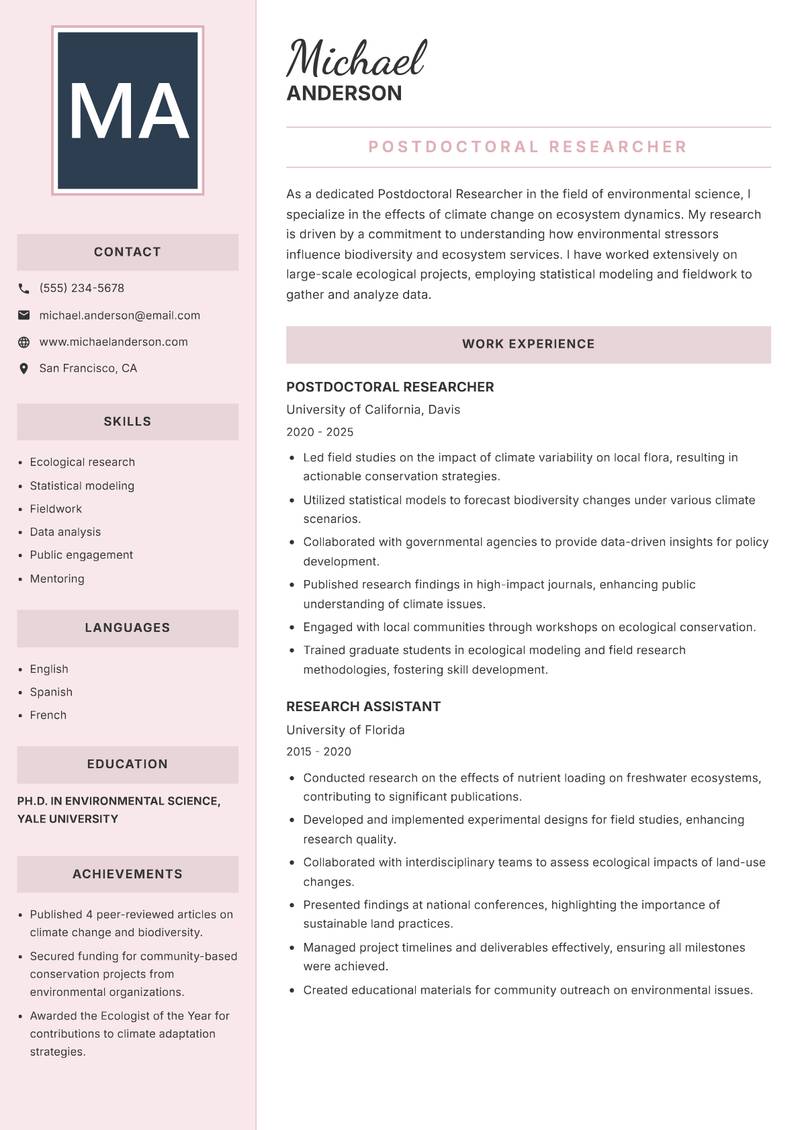
As a dedicated Postdoctoral Researcher in the field of environmental science, I specialize in the effects of climate change on ecosystem dynamics. My research is driven by a commitment to understanding how environmental stressors influence biodiversity and ecosystem services. I have worked extensively on large-scale ecological projects, employing statistical modeling and fieldwork to gather and analyze data. My ability to communicate complex ecological concepts to diverse audiences has been instrumental in fostering collaboration among stakeholders. I am passionate about applying my research to inform policy decisions and conservation efforts. Throughout my career, I have prioritized public engagement and mentorship, recognizing the importance of inspiring future scientists. I am eager to continue my work in ecological research, focusing on sustainable practices that benefit both the environment and society.

Ecological research Statistical modeling Fieldwork Data analysis Public engagement Mentoring
Postdoctoral Researcher Resume Preview Example
View PDF
  1. Led field studies on the impact of climate variability on local flora, resulting in actionable conservation strategies.
  2. Utilized statistical models to forecast biodiversity changes under various climate scenarios.
  3. Collaborated with governmental agencies to provide data-driven insights for policy development.
  4. Published research findings in high-impact journals, enhancing public understanding of climate issues.
  5. Engaged with local communities through workshops on ecological conservation.
  6. Trained graduate students in ecological modeling and field research methodologies, fostering skill development.
  1. Conducted research on the effects of nutrient loading on freshwater ecosystems, contributing to significant publications.
  2. Developed and implemented experimental designs for field studies, enhancing research quality.
  3. Collaborated with interdisciplinary teams to assess ecological impacts of land-use changes.
  4. Presented findings at national conferences, highlighting the importance of sustainable land practices.
  5. Managed project timelines and deliverables effectively, ensuring all milestones were achieved.
  6. Created educational materials for community outreach on environmental issues.

Achievements

  • Published 4 peer-reviewed articles on climate change and biodiversity.
  • Secured funding for community-based conservation projects from environmental organizations.
  • Awarded the Ecologist of the Year for contributions to climate adaptation strategies.
⏱️
Experience
2-5 Years
📅
Level
Mid Level
🎓
Education
Ph.D. in Environmental Science...

Postdoctoral Researcher Resume

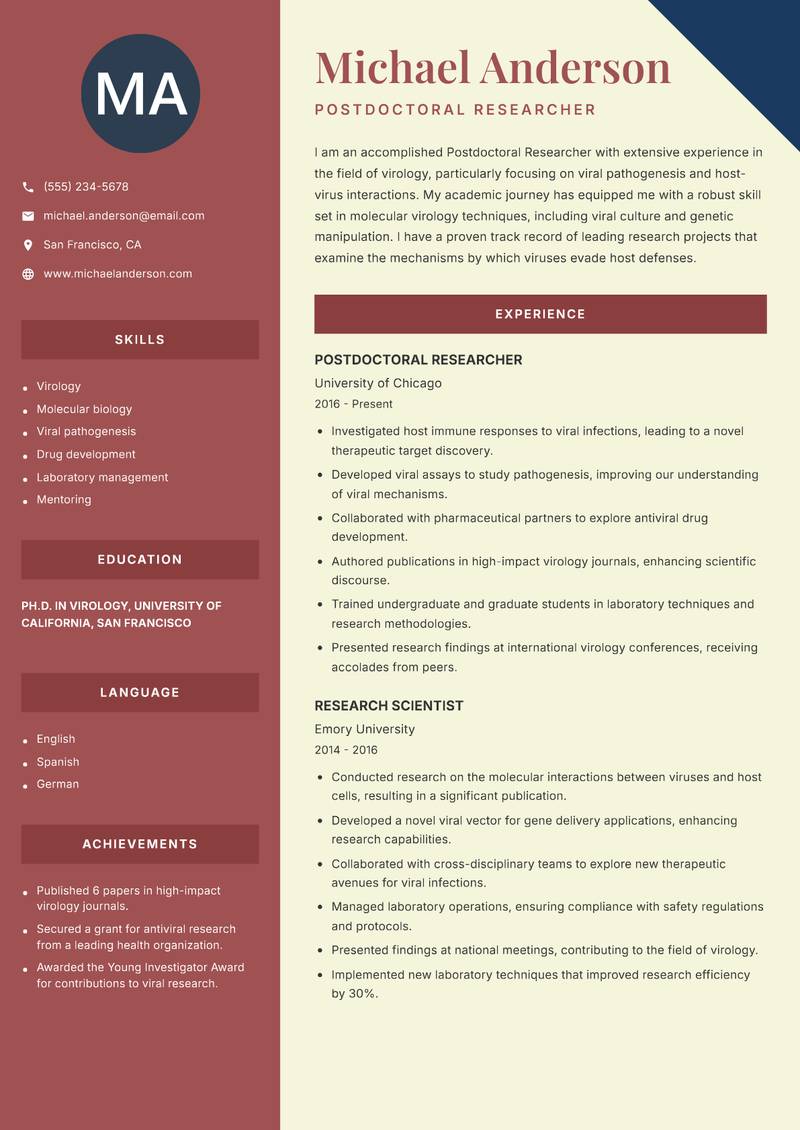
I am an accomplished Postdoctoral Researcher with extensive experience in the field of virology, particularly focusing on viral pathogenesis and host-virus interactions. My academic journey has equipped me with a robust skill set in molecular virology techniques, including viral culture and genetic manipulation. I have a proven track record of leading research projects that examine the mechanisms by which viruses evade host defenses. My strong analytical skills and attention to detail have allowed me to contribute significantly to our understanding of viral diseases. I am committed to advancing scientific knowledge through collaboration with pharmaceutical companies, aiming to translate basic research into novel therapeutic strategies. I also prioritize the mentorship of young scientists, guiding them in their research endeavors. My goal is to continue conducting impactful research that contributes to global health solutions.

Virology Molecular biology Viral pathogenesis Drug development Laboratory management Mentoring
Postdoctoral Researcher Resume Preview Example
View PDF
  1. Investigated host immune responses to viral infections, leading to a novel therapeutic target discovery.
  2. Developed viral assays to study pathogenesis, improving our understanding of viral mechanisms.
  3. Collaborated with pharmaceutical partners to explore antiviral drug development.
  4. Authored publications in high-impact virology journals, enhancing scientific discourse.
  5. Trained undergraduate and graduate students in laboratory techniques and research methodologies.
  6. Presented research findings at international virology conferences, receiving accolades from peers.
  1. Conducted research on the molecular interactions between viruses and host cells, resulting in a significant publication.
  2. Developed a novel viral vector for gene delivery applications, enhancing research capabilities.
  3. Collaborated with cross-disciplinary teams to explore new therapeutic avenues for viral infections.
  4. Managed laboratory operations, ensuring compliance with safety regulations and protocols.
  5. Presented findings at national meetings, contributing to the field of virology.
  6. Implemented new laboratory techniques that improved research efficiency by 30%.

Achievements

  • Published 6 papers in high-impact virology journals.
  • Secured a grant for antiviral research from a leading health organization.
  • Awarded the Young Investigator Award for contributions to viral research.
⏱️
Experience
2-5 Years
📅
Level
Mid Level
🎓
Education
Ph.D. in Virology, University ...

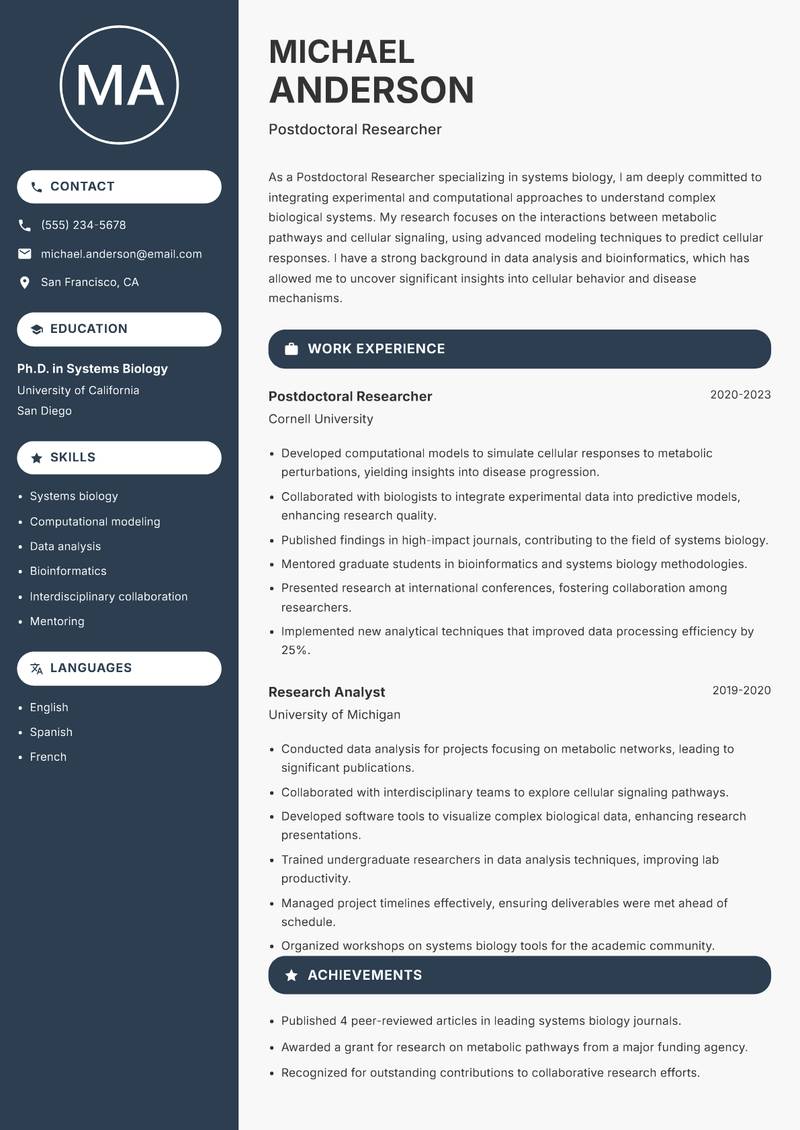
Postdoctoral Researcher Resume

As a Postdoctoral Researcher specializing in systems biology, I am deeply committed to integrating experimental and computational approaches to understand complex biological systems. My research focuses on the interactions between metabolic pathways and cellular signaling, using advanced modeling techniques to predict cellular responses. I have a strong background in data analysis and bioinformatics, which has allowed me to uncover significant insights into cellular behavior and disease mechanisms. I am passionate about collaborating with researchers from diverse fields to drive innovation and enhance our understanding of biological complexities. Additionally, I have experience mentoring graduate students and leading workshops on systems biology tools. My goal is to contribute to the development of new therapeutic strategies through interdisciplinary research and collaboration.

Systems biology Computational modeling Data analysis Bioinformatics Interdisciplinary collaboration Mentoring
Postdoctoral Researcher Resume Preview Example
View PDF
  1. Developed computational models to simulate cellular responses to metabolic perturbations, yielding insights into disease progression.
  2. Collaborated with biologists to integrate experimental data into predictive models, enhancing research quality.
  3. Published findings in high-impact journals, contributing to the field of systems biology.
  4. Mentored graduate students in bioinformatics and systems biology methodologies.
  5. Presented research at international conferences, fostering collaboration among researchers.
  6. Implemented new analytical techniques that improved data processing efficiency by 25%.
  1. Conducted data analysis for projects focusing on metabolic networks, leading to significant publications.
  2. Collaborated with interdisciplinary teams to explore cellular signaling pathways.
  3. Developed software tools to visualize complex biological data, enhancing research presentations.
  4. Trained undergraduate researchers in data analysis techniques, improving lab productivity.
  5. Managed project timelines effectively, ensuring deliverables were met ahead of schedule.
  6. Organized workshops on systems biology tools for the academic community.

Achievements

  • Published 4 peer-reviewed articles in leading systems biology journals.
  • Awarded a grant for research on metabolic pathways from a major funding agency.
  • Recognized for outstanding contributions to collaborative research efforts.
⏱️
Experience
2-5 Years
📅
Level
Mid Level
🎓
Education
Ph.D. in Systems Biology, Univ...

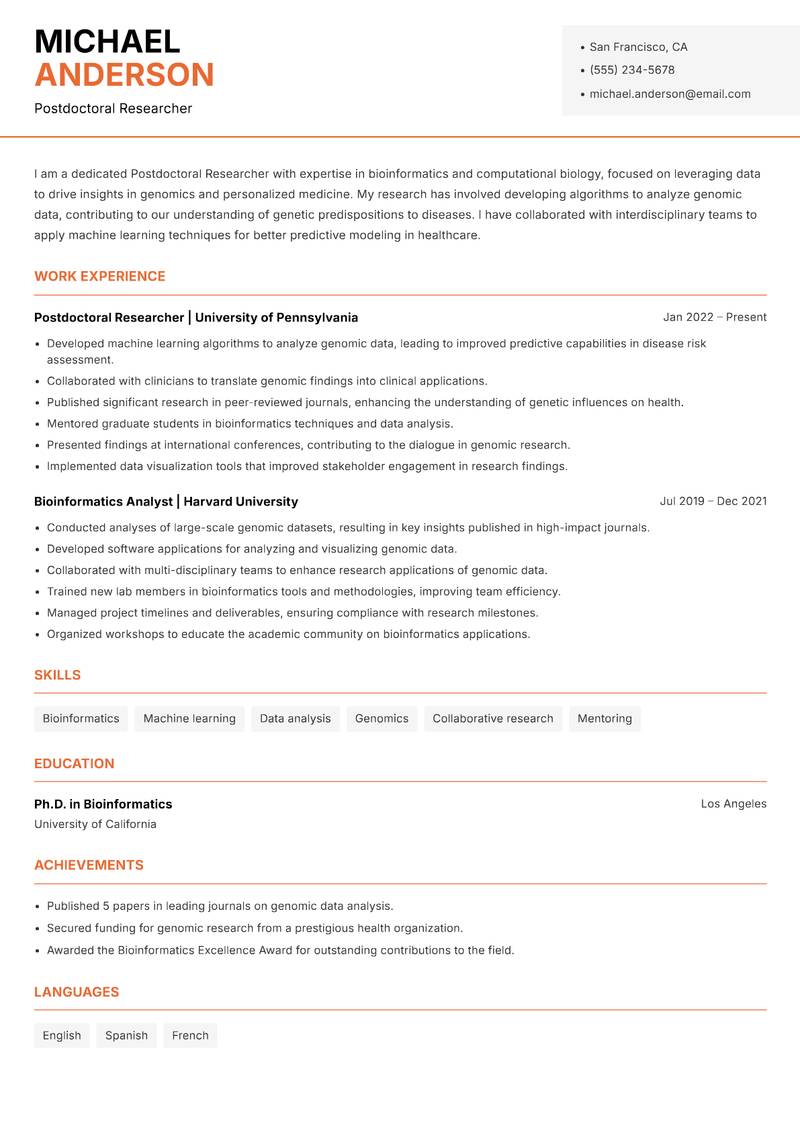
Postdoctoral Researcher Resume

I am a dedicated Postdoctoral Researcher with expertise in bioinformatics and computational biology, focused on leveraging data to drive insights in genomics and personalized medicine. My research has involved developing algorithms to analyze genomic data, contributing to our understanding of genetic predispositions to diseases. I have collaborated with interdisciplinary teams to apply machine learning techniques for better predictive modeling in healthcare. My strong analytical skills and attention to detail have allowed me to lead projects that translate complex genomic data into actionable insights. I am passionate about mentoring emerging scientists and fostering a collaborative research environment. My goal is to continue advancing the field of bioinformatics, contributing to research that enhances patient care and outcomes.

Bioinformatics Machine learning Data analysis Genomics Collaborative research Mentoring
Postdoctoral Researcher Resume Preview Example
View PDF
  1. Developed machine learning algorithms to analyze genomic data, leading to improved predictive capabilities in disease risk assessment.
  2. Collaborated with clinicians to translate genomic findings into clinical applications.
  3. Published significant research in peer-reviewed journals, enhancing the understanding of genetic influences on health.
  4. Mentored graduate students in bioinformatics techniques and data analysis.
  5. Presented findings at international conferences, contributing to the dialogue in genomic research.
  6. Implemented data visualization tools that improved stakeholder engagement in research findings.
  1. Conducted analyses of large-scale genomic datasets, resulting in key insights published in high-impact journals.
  2. Developed software applications for analyzing and visualizing genomic data.
  3. Collaborated with multi-disciplinary teams to enhance research applications of genomic data.
  4. Trained new lab members in bioinformatics tools and methodologies, improving team efficiency.
  5. Managed project timelines and deliverables, ensuring compliance with research milestones.
  6. Organized workshops to educate the academic community on bioinformatics applications.

Achievements

  • Published 5 papers in leading journals on genomic data analysis.
  • Secured funding for genomic research from a prestigious health organization.
  • Awarded the Bioinformatics Excellence Award for outstanding contributions to the field.
⏱️
Experience
2-5 Years
📅
Level
Mid Level
🎓
Education
Ph.D. in Bioinformatics, Unive...

Key Skills for Postdoctoral Researcher Positions

Resume Tips for Postdoctoral Researcher Applications

Strong Action Verbs for Postdoctoral Researcher Resumes

Taught · Researched · Published · Mentored · Advised · Administered · Developed · Evaluated · Coordinated · Collaborated · Achieved · Analyzed · Architected · Assessed

Common Mistakes to Avoid

Experience Levels

How to Write a Postdoctoral Researcher Resume

Browse Postdoctoral Researcher resume examples built around academic teaching & course design, tailored for Higher Education roles.

A strong Postdoctoral Researcher resume leads with a focused professional summary that names the exact role and your standout achievement. In the experience section, open every bullet with a strong action verb and quantify the result with numbers wherever possible. Highlight your most relevant competencies — especially Academic Teaching & Course Design, Research Publication & Grant Writing, and Student Advising & Mentoring — in a dedicated Skills section positioned early so ATS systems and hiring managers both find it immediately.

For format, most Postdoctoral Researcher roles suit a reverse-chronological layout: most recent position first, working backwards. Keep to one page for under five years of experience, or two pages for senior candidates with a rich project or leadership history. Use clean, ATS-safe fonts (10–12pt), standard section headings (Summary, Experience, Education, Skills), and avoid tables, text boxes, or multi-column layouts that applicant tracking systems cannot parse reliably.
Frequently Asked Questions

What makes a strong Postdoctoral Researcher resume stand out to employers?

A standout Postdoctoral Researcher resume combines role-specific skills with quantified achievements. Name the exact job title in your professional summary, mirror keywords from each job posting, and open every bullet point with a strong action verb followed by a measurable result. Certifications, tools, and domain experience specific to postdoctoral researcher roles should appear prominently near the top.

What skills are most important to include on a Higher Education resume?

Recruiters hiring in Higher Education consistently look for Academic Teaching & Course Design, Research Publication & Grant Writing, Student Advising & Mentoring, Curriculum Development & Review. List these in a dedicated Skills section near the top so both ATS systems and human reviewers spot them fast. Mirror the exact phrasing from each job posting wherever possible — many applicant tracking systems match literal strings rather than synonyms.

What is the best resume format for Higher Education professionals?

A reverse-chronological format is the standard choice for most Higher Education candidates — employers expect to see your most recent role first, working backwards. If you are transitioning into Higher Education from a related field, a hybrid format (brief skills summary at the top followed by chronological experience) can bridge the gap effectively. Keep the document to one page for under five years of experience, or two pages for senior specialists.

How do I make my Higher Education resume pass applicant tracking systems (ATS)?

Use standard section headings — Summary, Experience, Education, Skills — rather than creative labels that ATS parsers do not recognise. Embed domain keywords such as "Academic Teaching & Course Design" and "Research Publication & Grant Writing" naturally inside your experience bullets rather than cramming them into a standalone keyword list. Avoid tables, multi-column layouts, text boxes, headers, footers, and images — these confuse most modern parsers and can cause your resume to be misread or rejected before a human sees it.

What mistakes do Higher Education professionals most commonly make on their resume?

The most frequent issue is for academic roles: omitting publication lists, citation metrics, or grant funding history. Beyond that, generic objective statements, unquantified achievements, and inconsistent date formatting appear across almost every Higher Education application. Fix these by replacing every vague claim with a measurable outcome — specific numbers and named projects add credibility that adjectives cannot.

How long should a Higher Education resume be?

One page is appropriate for candidates with under five years of relevant Higher Education experience. Two pages are acceptable — and sometimes expected — for senior specialists, managers, or professionals with a strong portfolio of projects, publications, or credentials. Avoid padding to reach a page count: every line should directly support your application for the specific role you are targeting.

Should I include a professional summary at the top of my Higher Education resume?

Yes — a two to three sentence summary is the first section most recruiters read. Open with your title and years of Higher Education experience, then name your most relevant achievement or specialisation. One proven approach: For faculty roles, lead with research publications, conference presentations, and grant funding — this level of specificity signals genuine expertise before a recruiter reaches your experience section.

Scroll to view samples