Key Skills for Reach and Frequency Analyst Positions
- Integrated Media Planning & Channel Strategy
- Programmatic Advertising (DV360, The Trade Desk)
- TV & Broadcast Buying
- Digital Media Buying (Google, Meta, LinkedIn)
- Audience Research & Segmentation (Nielsen, ComScore)
- Media Analytics & Attribution
- Budget Management & ROI Optimization
- Publisher & Network Negotiations
- Cross-Channel Campaign Coordination
- Media Marketplace & Rate Card Knowledge
Resume Tips for Reach and Frequency Analyst Applications
- Frame every achievement as a business outcome — revenue impact, cost reduction, efficiency gain, or risk mitigated — since reach and frequency analyst employers want analysts who translate data into decisions, not just produce reports
- Quantify media budgets managed and key campaign performance metrics: reach, frequency, CPM, ROAS.
- Demonstrate programmatic expertise: DSPs, DMPs, data management, and attribution tools.
- Highlight negotiation outcomes: rate card reductions, added value secured.
- List research tools used: Nielsen, ComScore, GfK, TGI, WARC.
- For integrated campaigns, show ability to coordinate across digital and traditional channels.
Strong Action Verbs for Reach and Frequency Analyst Resumes
Planned · Bought · Negotiated · Optimized · Allocated · Reached · Targeted · Analyzed · Coordinated · Delivered · Achieved · Administered · Architected · Assessed
Common Mistakes to Avoid
- Writing a generic objective statement instead of a targeted reach and frequency analyst professional summary
- Not providing budget scale and campaign performance metrics.
- Failing to demonstrate programmatic and digital buying expertise.
- Ignoring research and audience analytics tools.
- Not demonstrating negotiation skills — buying power is a core value media professionals provide.
Experience Levels
- Media Assistant / Junior Planner (0-2 years)
- Media Planner / Buyer (2-5 years)
- Senior Planner / Media Manager (5-9 years)
- Media Director (9-14 years)
- Head of Media / Chief Media Officer (14+ years)
How to Write a Reach and Frequency Analyst Resume
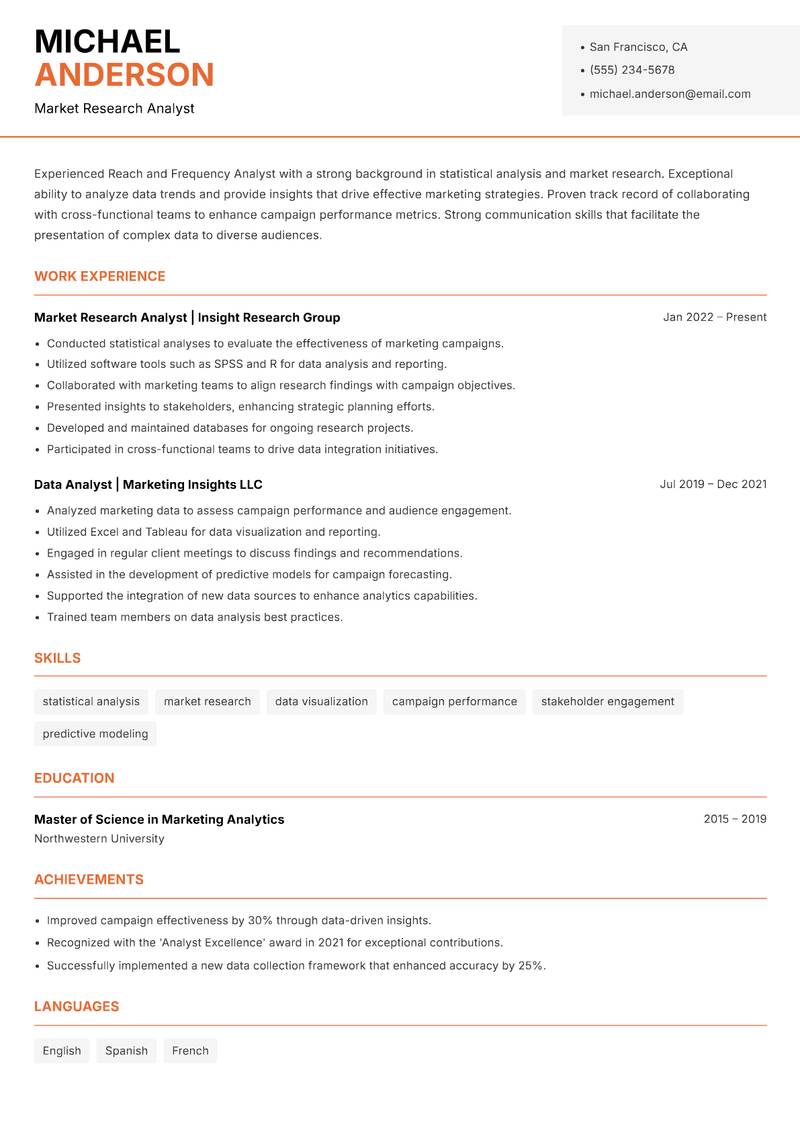
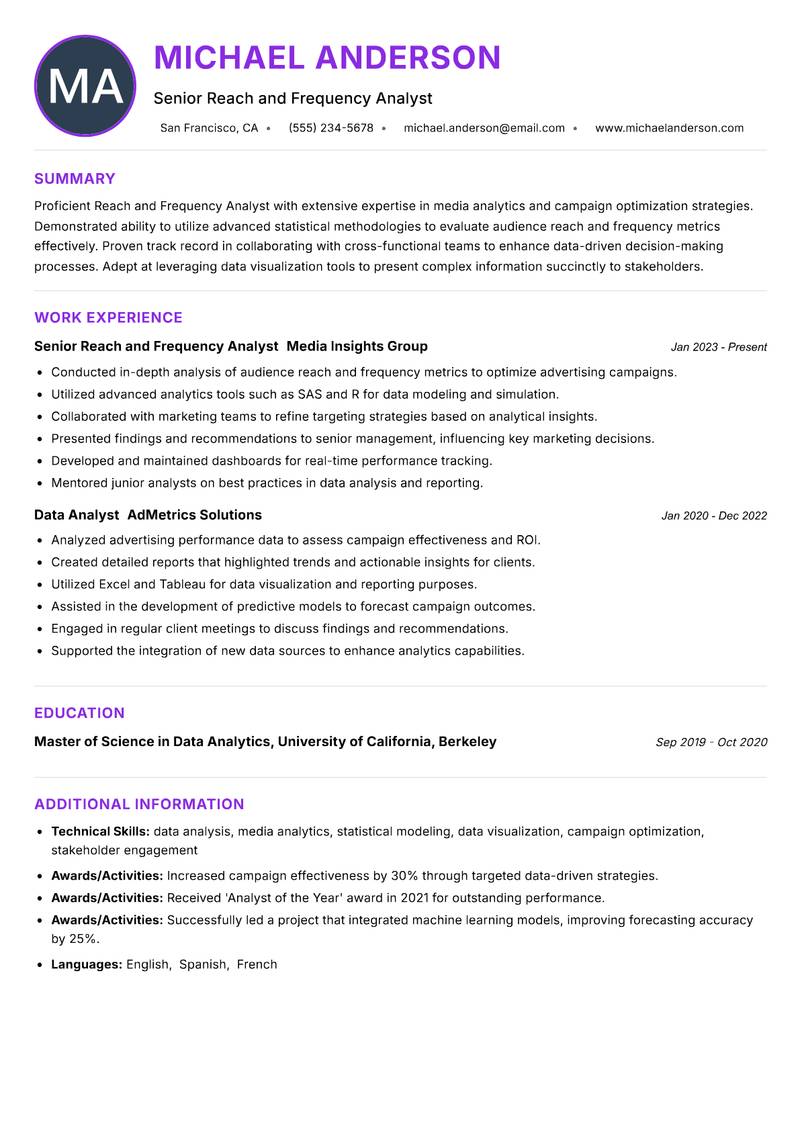
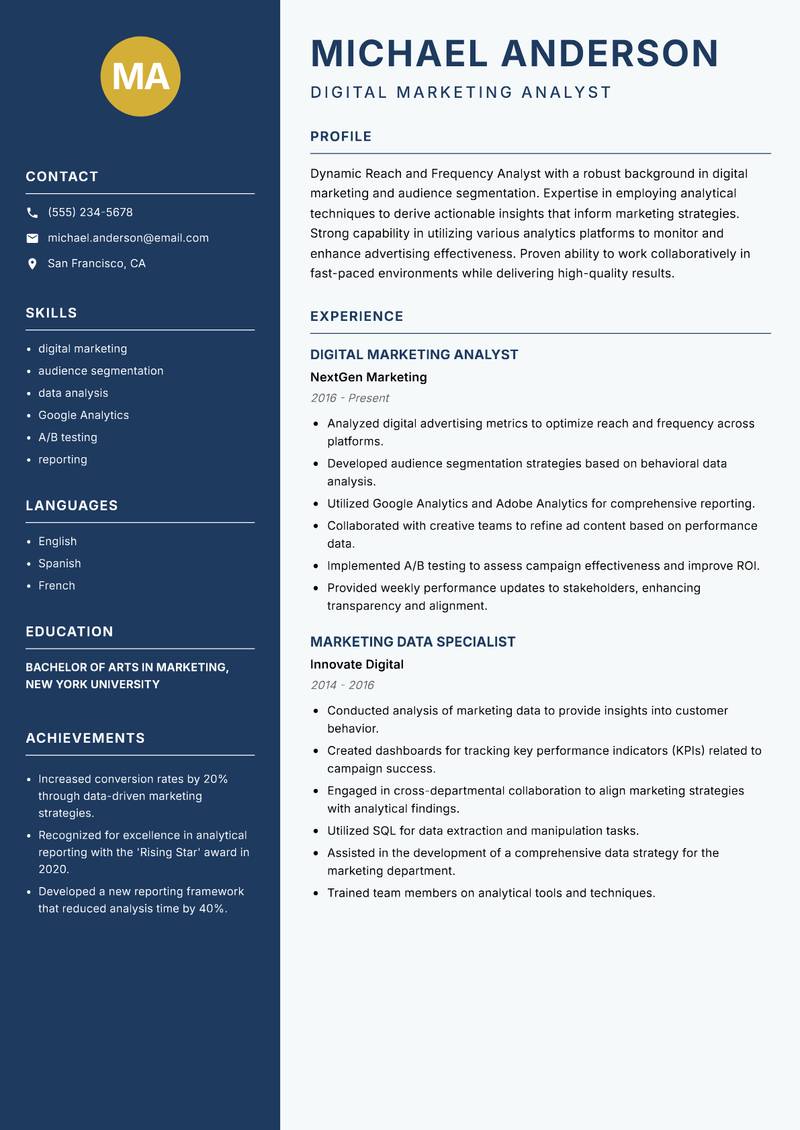
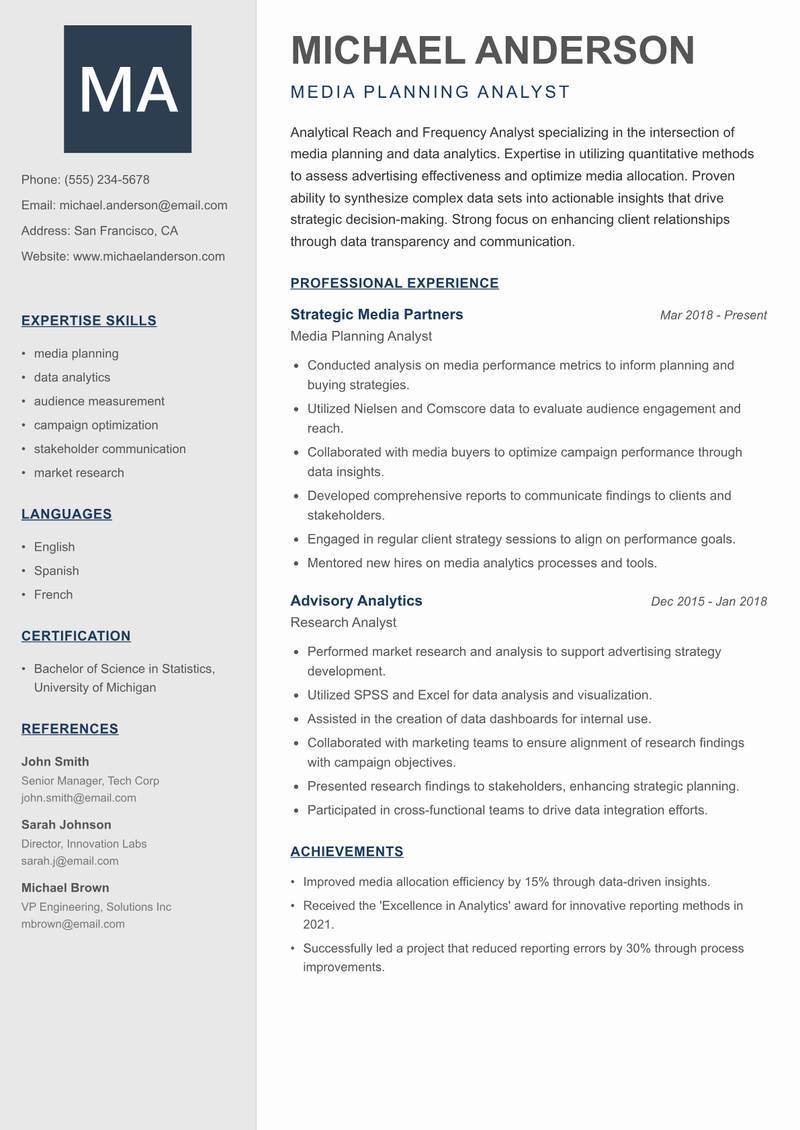
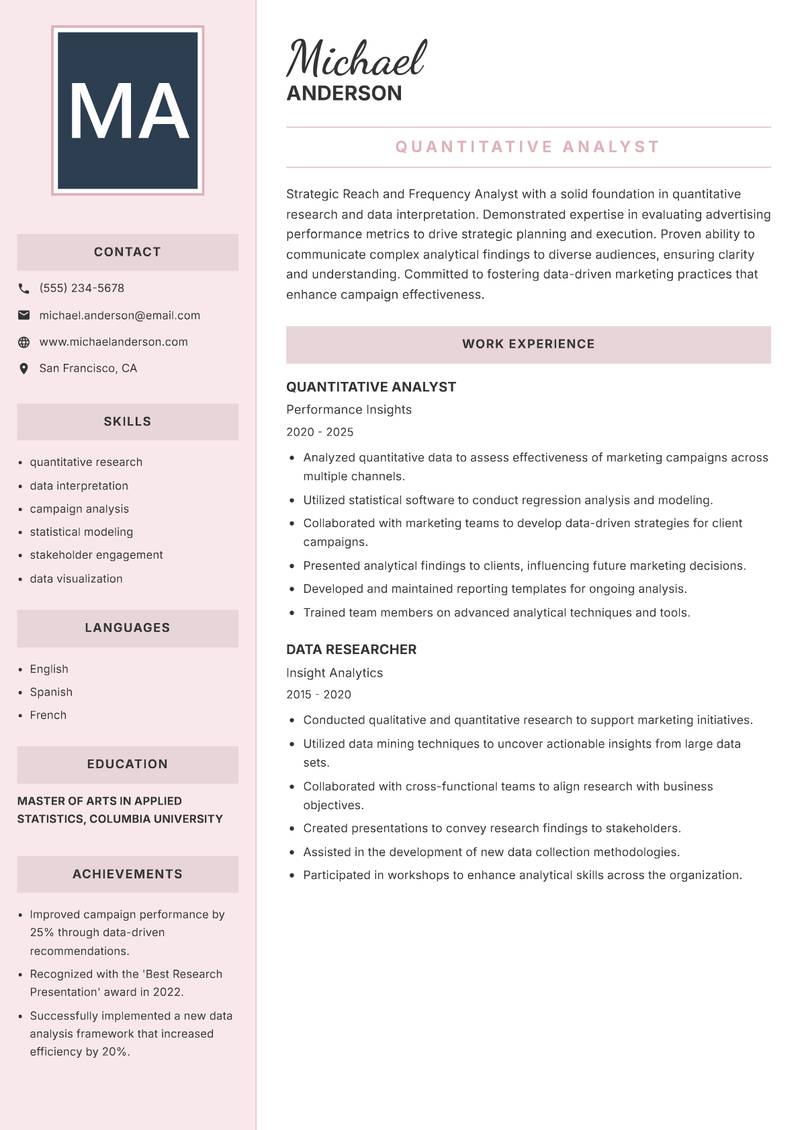
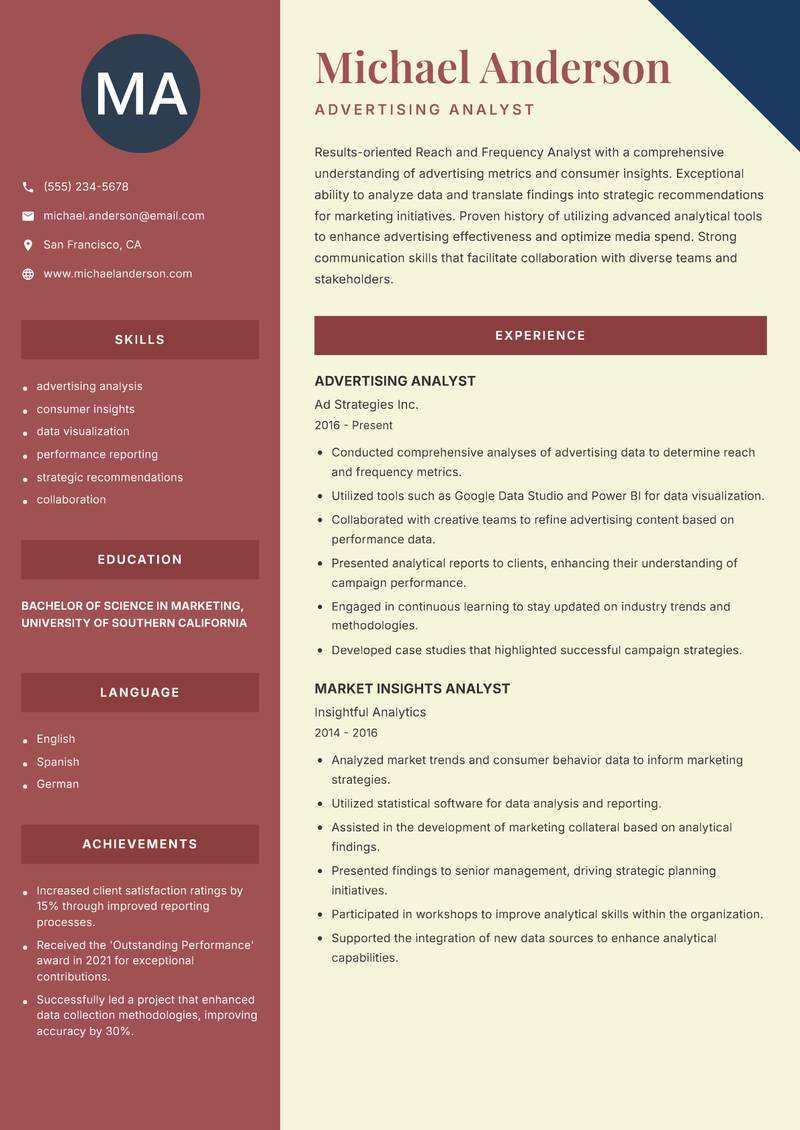
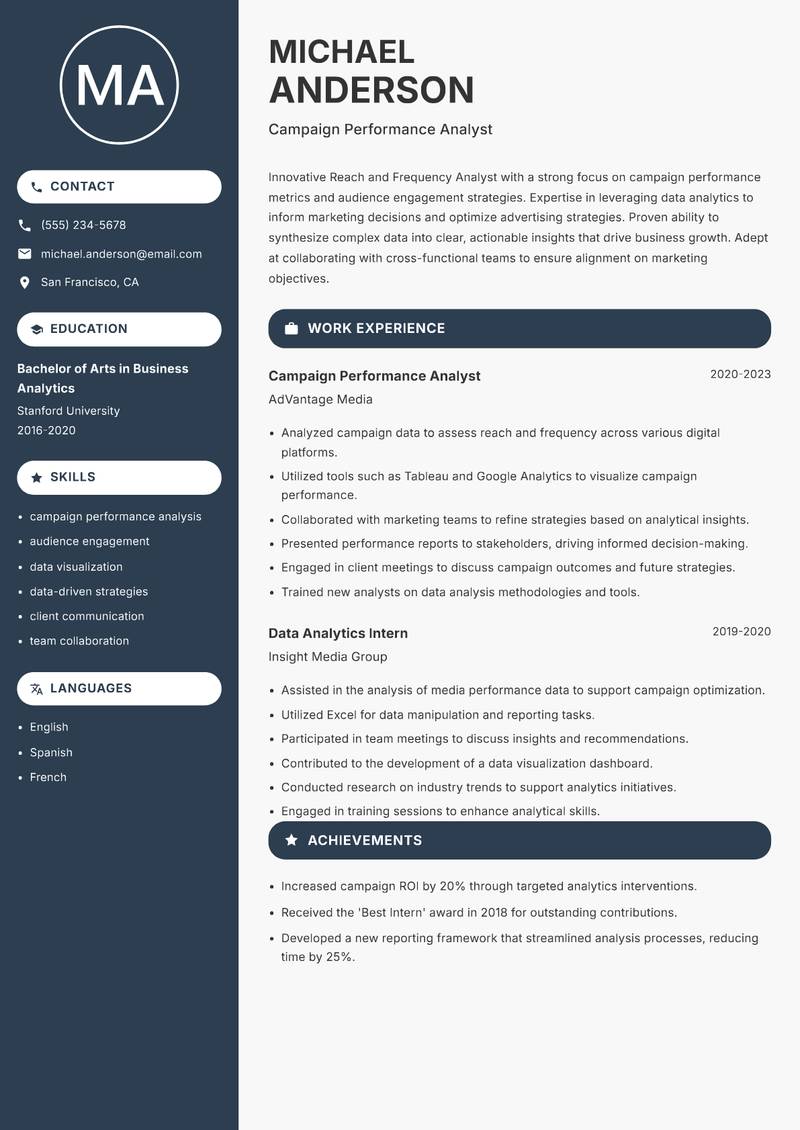
Browse Reach and Frequency Analyst resume examples built around integrated media planning & channel strategy, tailored for Media Planning roles.
A strong Reach and Frequency Analyst resume leads with a focused professional summary that names the exact role and your standout achievement. In the experience section, open every bullet with a strong action verb and quantify the result with numbers wherever possible. Highlight your most relevant competencies — especially Integrated Media Planning & Channel Strategy, Programmatic Advertising (DV360, The Trade Desk), and TV & Broadcast Buying — in a dedicated Skills section positioned early so ATS systems and hiring managers both find it immediately.
For format, most Reach and Frequency Analyst roles suit a reverse-chronological layout: most recent position first, working backwards. Keep to one page for under five years of experience, or two pages for senior candidates with a rich project or leadership history. Use clean, ATS-safe fonts (10–12pt), standard section headings (Summary, Experience, Education, Skills), and avoid tables, text boxes, or multi-column layouts that applicant tracking systems cannot parse reliably.