Key Skills for Registered Nurse Positions
- Patient Assessment & Clinical Monitoring
- Medication Administration & Pharmacology
- Wound Care & Infection Prevention
- Intravenous Therapy & Cannulation
- Clinical Documentation (EMR/EHR)
- Emergency & Acute Care Response
- Patient & Family Education
- Interdisciplinary Team Collaboration
- Specialty Clinical Skills (ICU, ED, Theatre, Oncology)
- Leadership & Staff Supervision
Resume Tips for Registered Nurse Applications
- Place your license number, state of registration, and renewal date in a dedicated Credentials section near the top — most registered nurse positions are gatekept by compliance checks before anyone reviews your clinical experience
- List nursing registration clearly with registration number and regulatory body.
- Specify clinical specialty and setting — generalist nursing and specialty nursing require distinct resumes.
- Quantify patient load and acuity managed — ward capacity, nurse-to-patient ratios, case complexity.
- Highlight post-registration qualifications and specialty certifications (e.g., CEN, CCRN, OCN).
- Demonstrate leadership contributions — charge nurse experience, mentoring, quality improvement projects.
Strong Action Verbs for Registered Nurse Resumes
Assessed · Administered · Monitored · Coordinated · Educated · Documented · Collaborated · Managed · Supervised · Advocated · Achieved · Analyzed · Architected · Automated
Common Mistakes to Avoid
- Writing a generic objective statement instead of a targeted registered nurse professional summary
- Omitting nursing registration number — it is the first thing employers verify.
- Failure to specify clinical specialty — a general nursing CV rarely succeeds in specialty applications.
- Not quantifying patient care — ward size, patient ratios, and acuity demonstrate clinical experience.
- Ignoring mandatory certifications (BLS, ACLS, medication competency).
Experience Levels
- Nursing Student / Graduate Nurse (0-1 year)
- Registered Nurse (1-4 years)
- Senior Nurse / Specialty Nurse (4-8 years)
- Clinical Nurse Manager (8-13 years)
- Director of Nursing / Chief Nurse (13+ years)
How to Write a Registered Nurse Resume
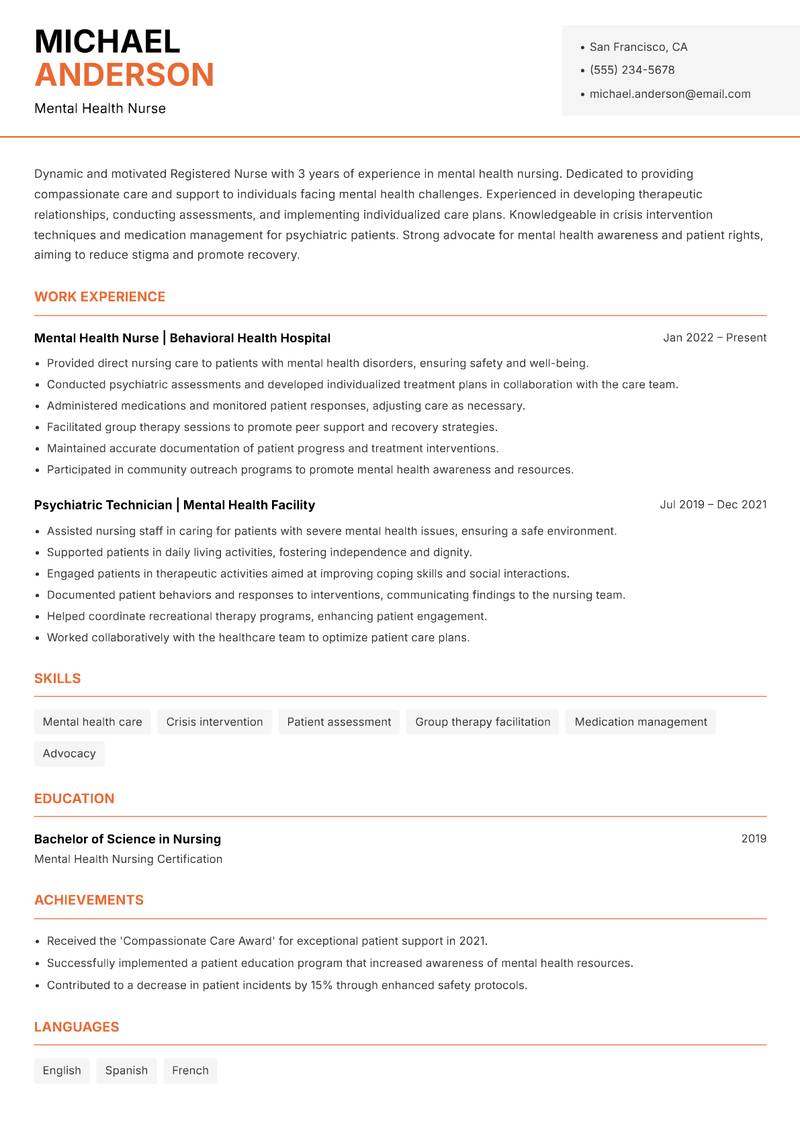
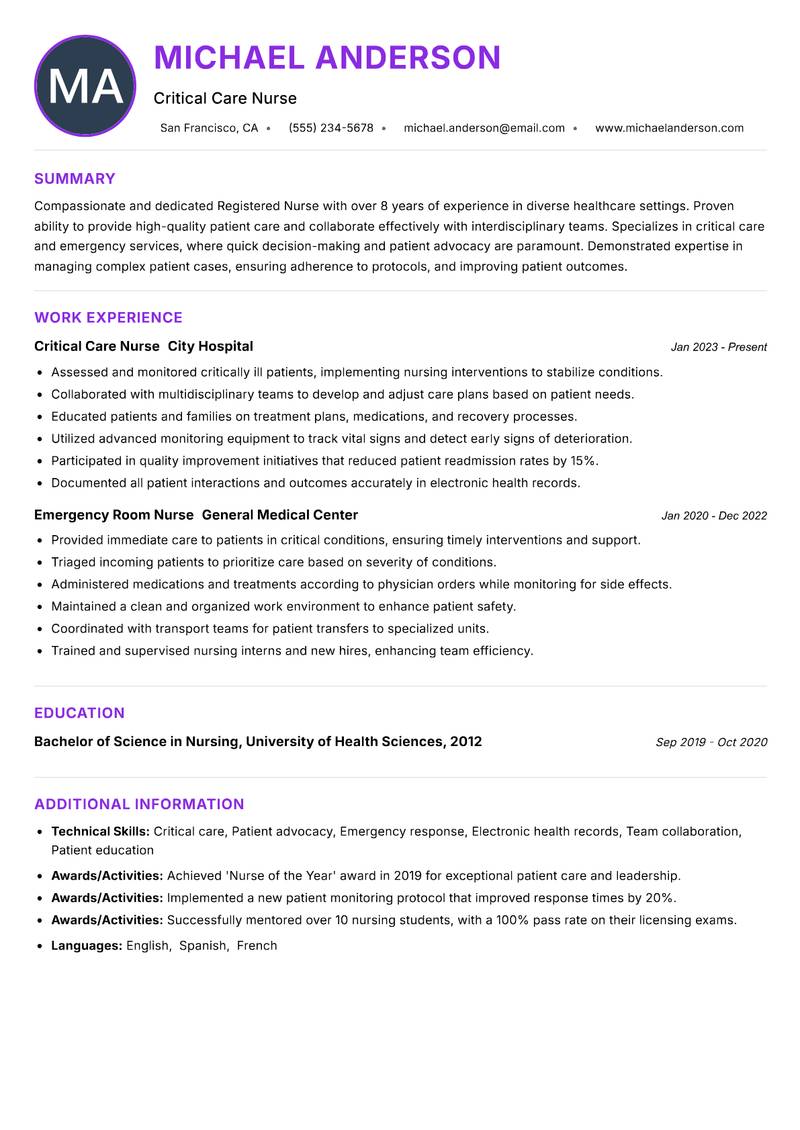
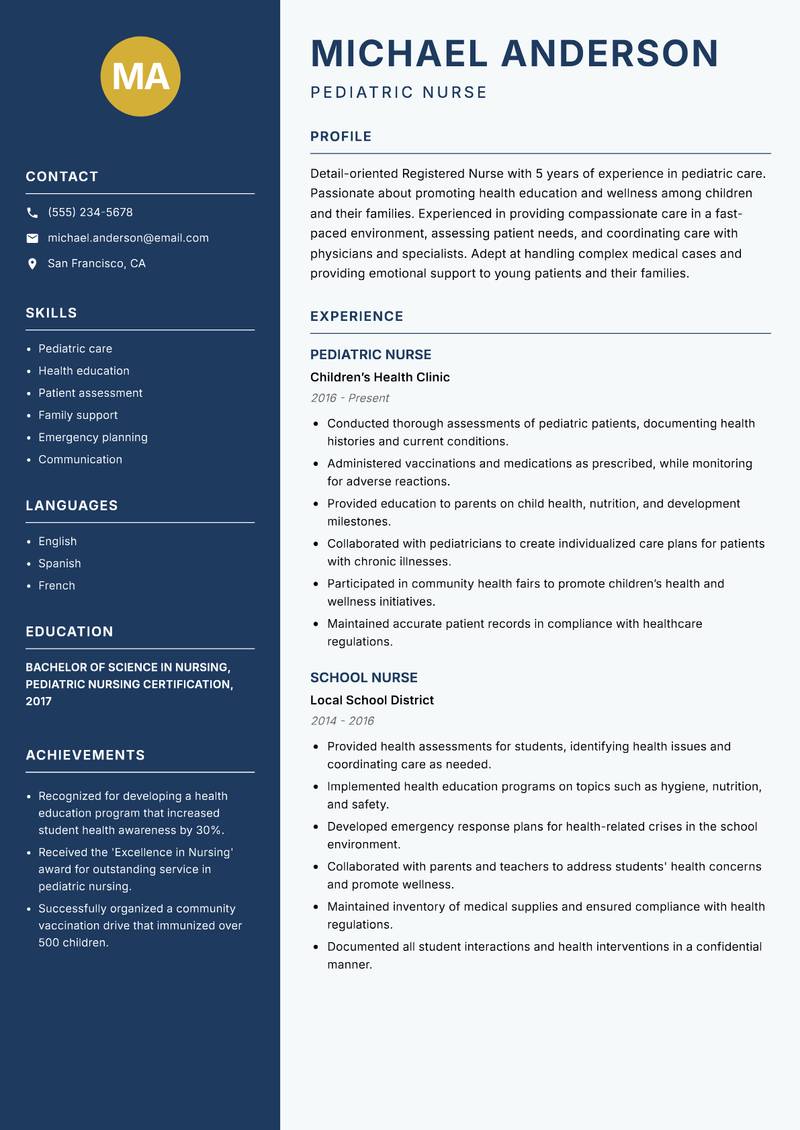
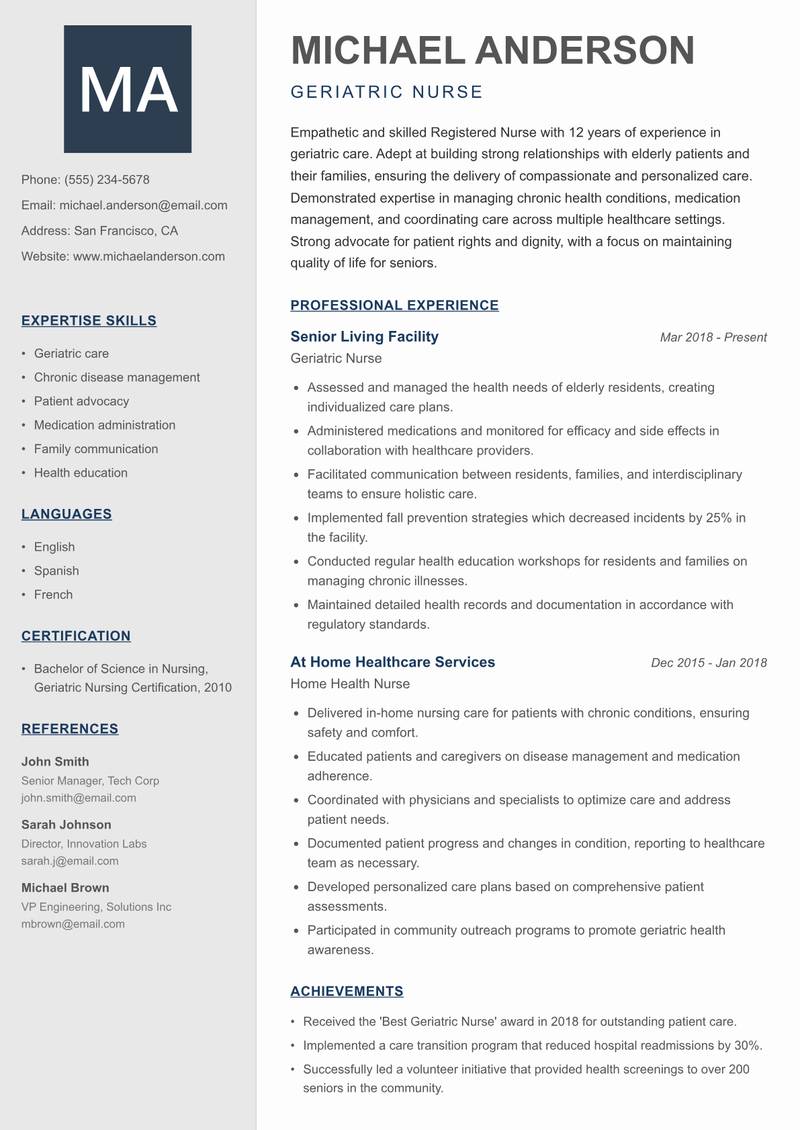
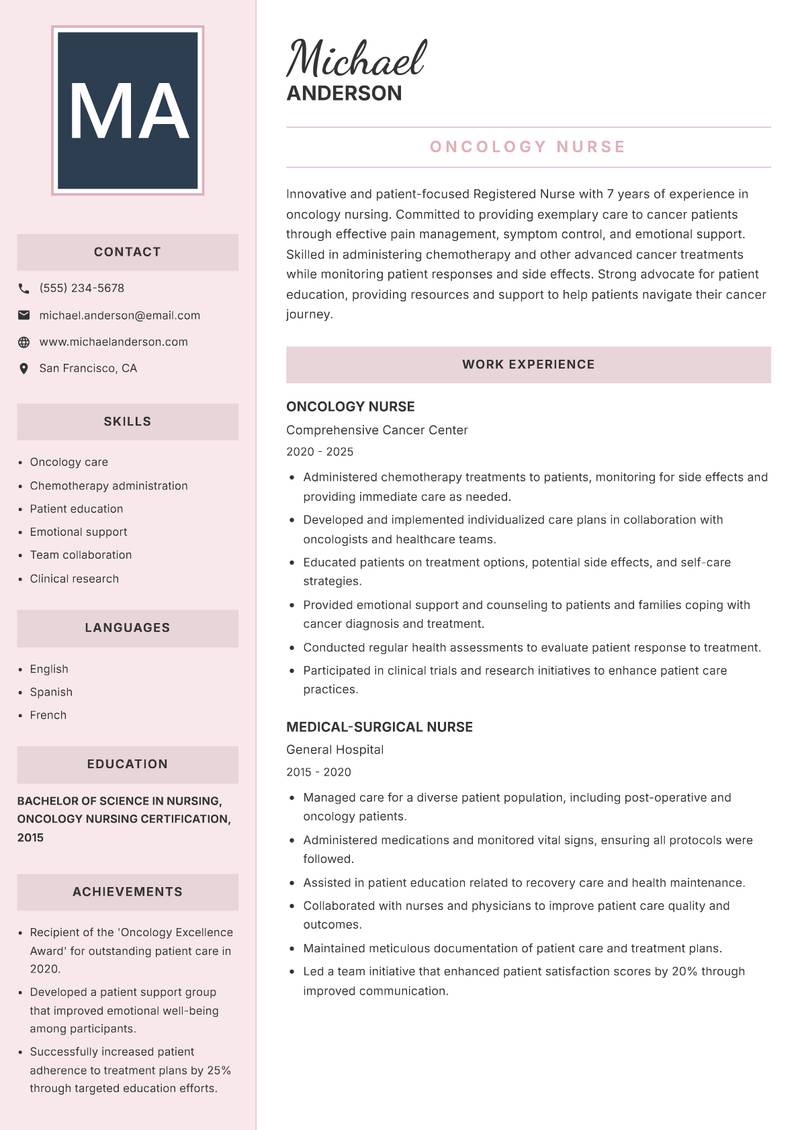
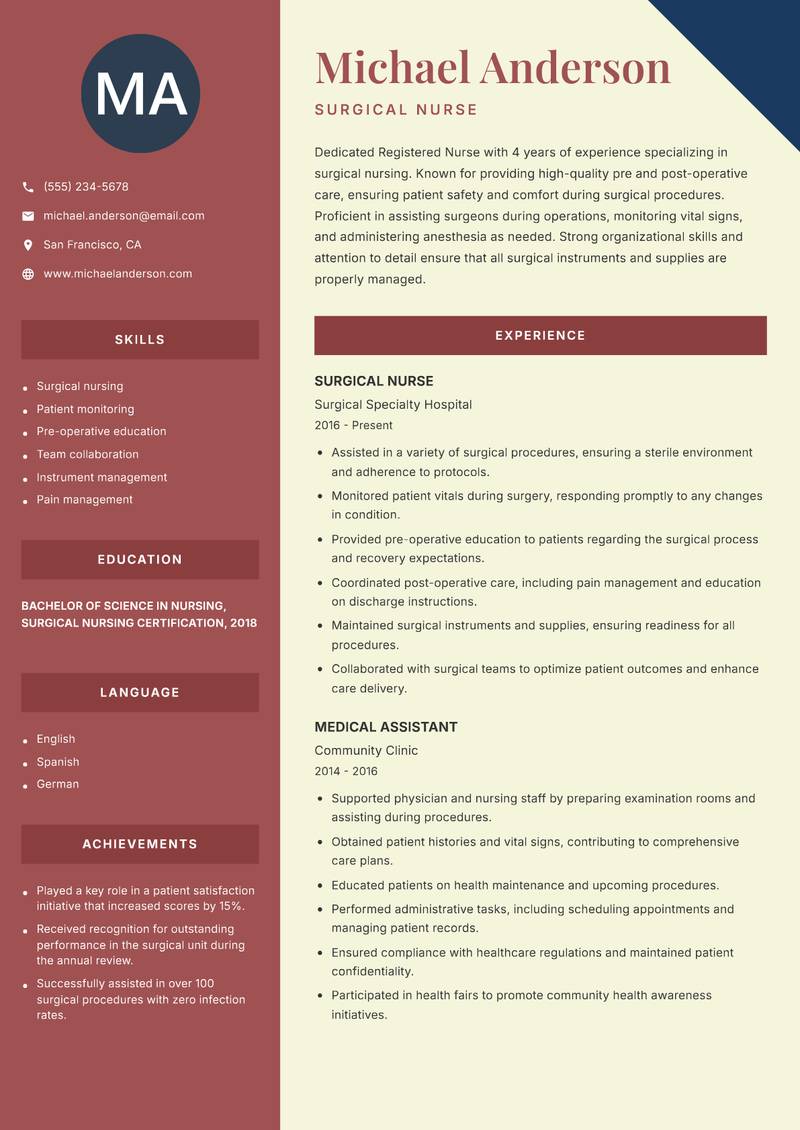
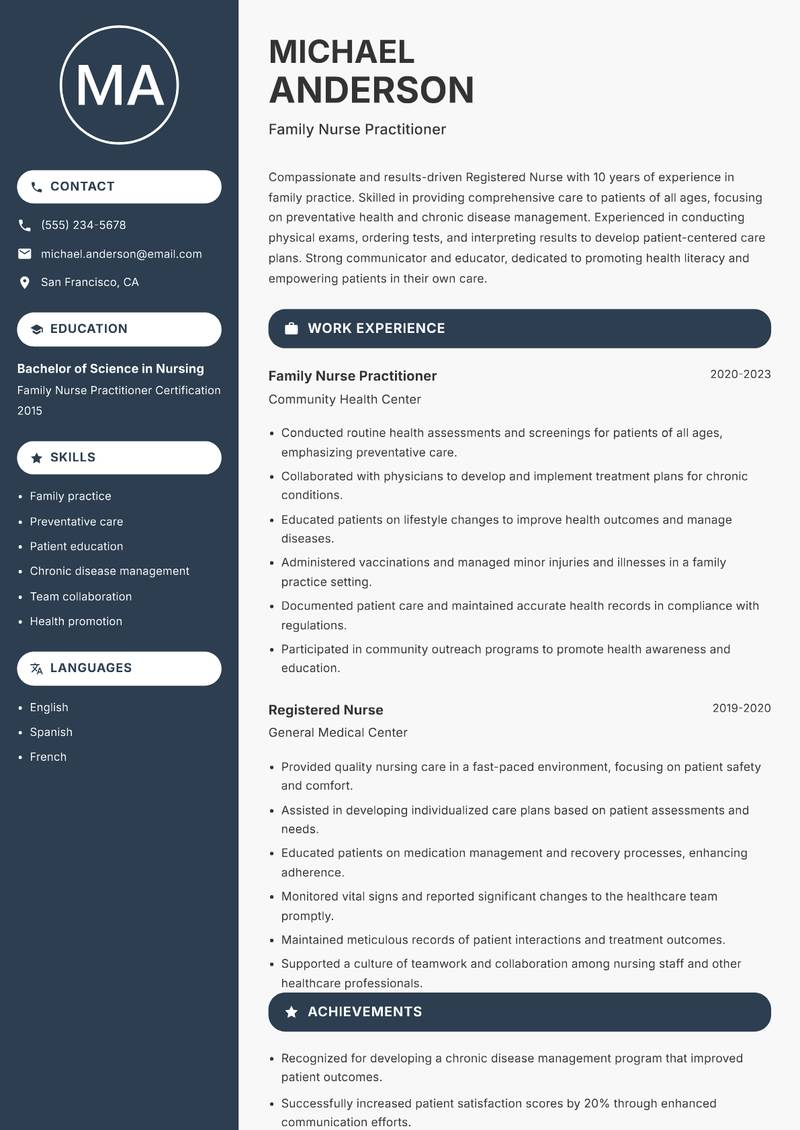
Browse Registered Nurse resume examples built around patient assessment & clinical monitoring, tailored for Nursing roles.
A strong Registered Nurse resume leads with a focused professional summary that names the exact role and your standout achievement. In the experience section, open every bullet with a strong action verb and quantify the result with numbers wherever possible. Highlight your most relevant competencies — especially Patient Assessment & Clinical Monitoring, Medication Administration & Pharmacology, and Wound Care & Infection Prevention — in a dedicated Skills section positioned early so ATS systems and hiring managers both find it immediately.
For format, most Registered Nurse roles suit a reverse-chronological layout: most recent position first, working backwards. Keep to one page for under five years of experience, or two pages for senior candidates with a rich project or leadership history. Use clean, ATS-safe fonts (10–12pt), standard section headings (Summary, Experience, Education, Skills), and avoid tables, text boxes, or multi-column layouts that applicant tracking systems cannot parse reliably.