Key Skills for Relief Operations Officer Positions
- As a Relief Operations
- Reporting
- Documenting the progress of relief effort
- Humanitarian Principles (IASC)
- Program Design & Implementation
- Humanitarian Funding (CERF, ECHO, USAID)
- Needs Assessment & Analysis
- Protection Mainstreaming
- Monitoring, Evaluation & Learning (MEL)
- Proposal Writing & Donor Reporting
Resume Tips for Relief Operations Officer Applications
- Begin your professional summary with the exact job title "Relief Operations Officer" — ATS systems often match titles literally, and including yours increases the likelihood of passing the initial automated keyword filter before a recruiter reviews your resume
- Detail the countries and crises you have worked in. Quantify program budgets managed, beneficiaries reached, and grants secured. Demonstrate donor relationship management (ECHO, USAID, DFAT, DFID). Highlight MEL methodology and how your programs adapted to evidence. Note languages spoken and in-country experience.
- Lead each bullet with an action verb and quantify the result — numbers make achievements credible
- Include a dedicated skills section listing both technical competencies and relevant certifications
- Keep to one page for under 5 years of experience; two pages for senior relief operations officer roles
Strong Action Verbs for Relief Operations Officer Resumes
Delivered · Managed · Coordinated · Facilitated · Secured · Reported · Built · Led · Monitored · Advocated · Delivered · Achieved · Administered · Analyzed · Architected · Assessed
Common Mistakes to Avoid
- Writing a generic objective statement instead of a targeted relief operations officer professional summary
- Omitting specific crisis contexts and geographies
- Failing to quantify beneficiary reach and funding secured
- Being vague about donor reporting and grant management
- Neglecting MEL frameworks and adaptive management
- Missing inter-agency coordination and humanitarian cluster experience
- Listing responsibilities without quantified results — 'managed budget' vs 'managed $2M budget'
- Using the same resume for every application instead of tailoring to each job posting
- Poor formatting that confuses ATS — stick to standard section headings and avoid tables
Experience Levels
- Field volunteer\nProgram officer\nSenior program manager\nCountry director
How to Write a Relief Operations Officer Resume
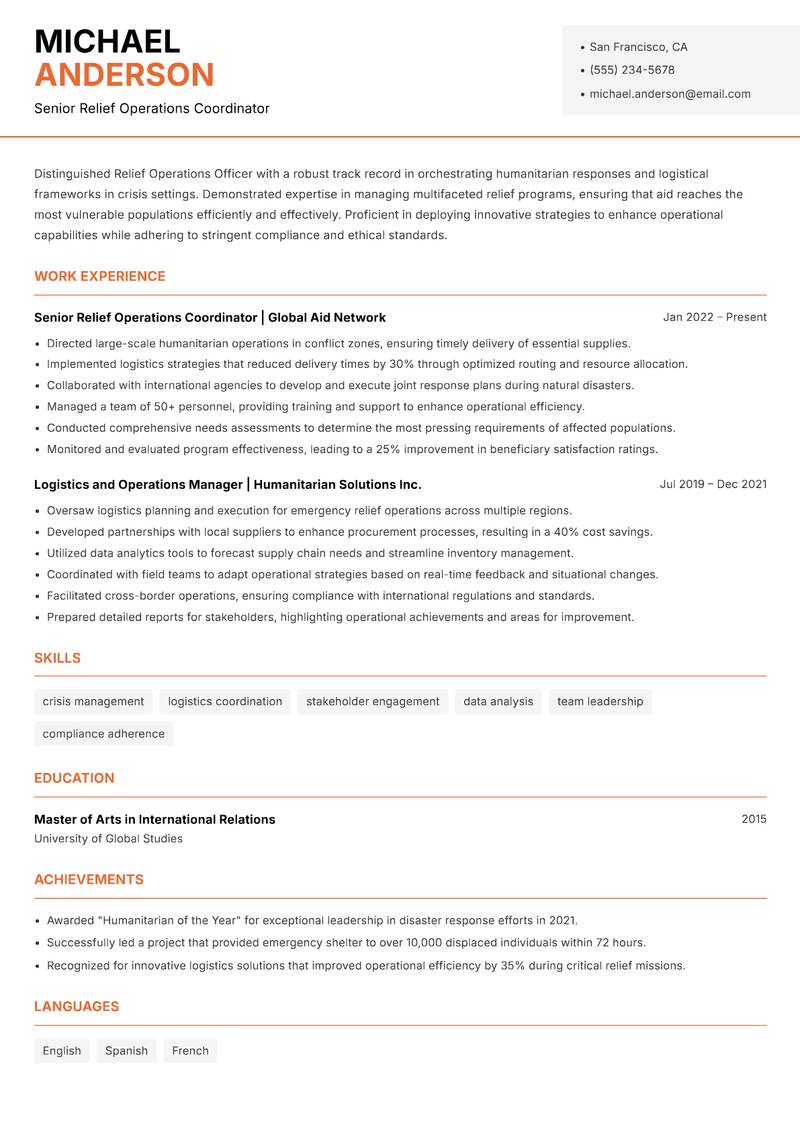
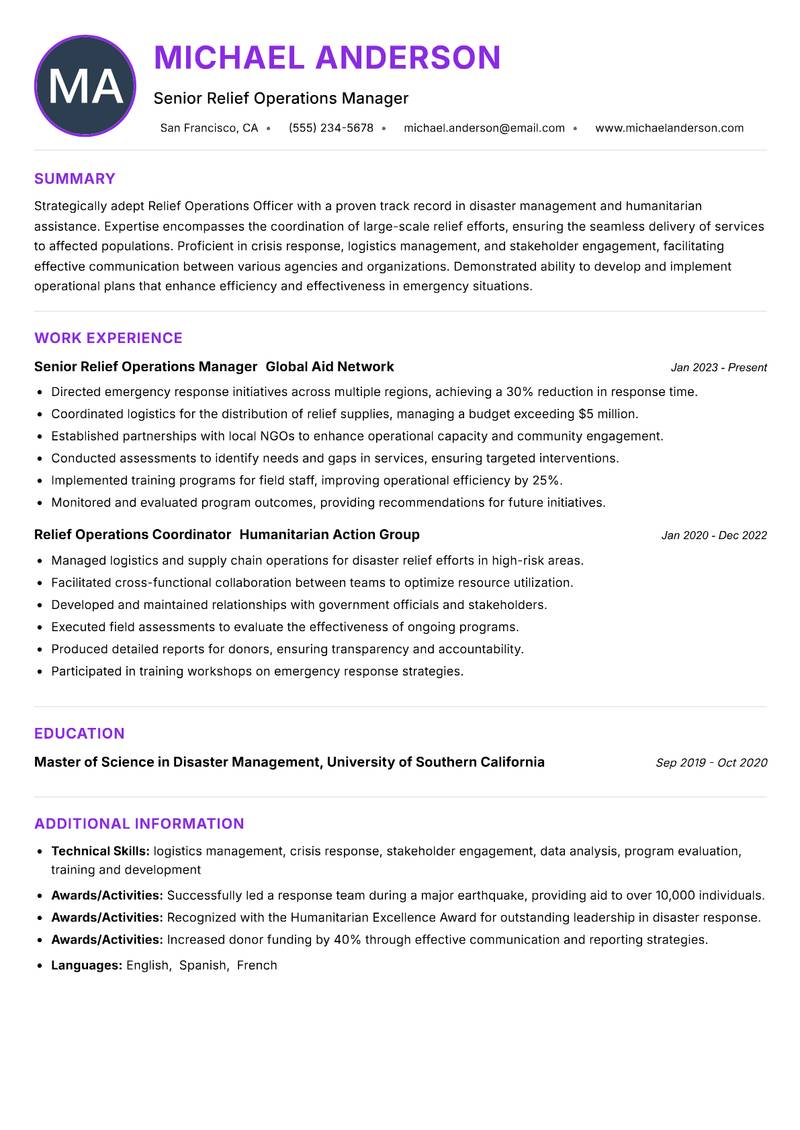
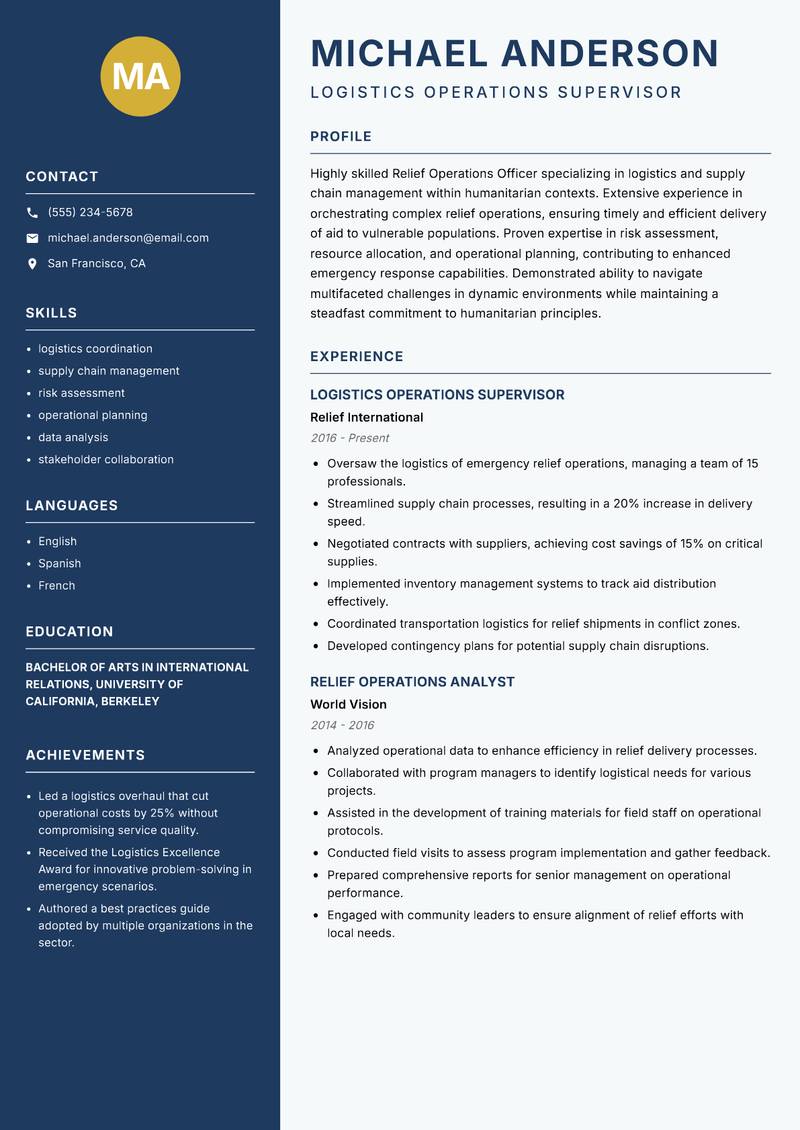
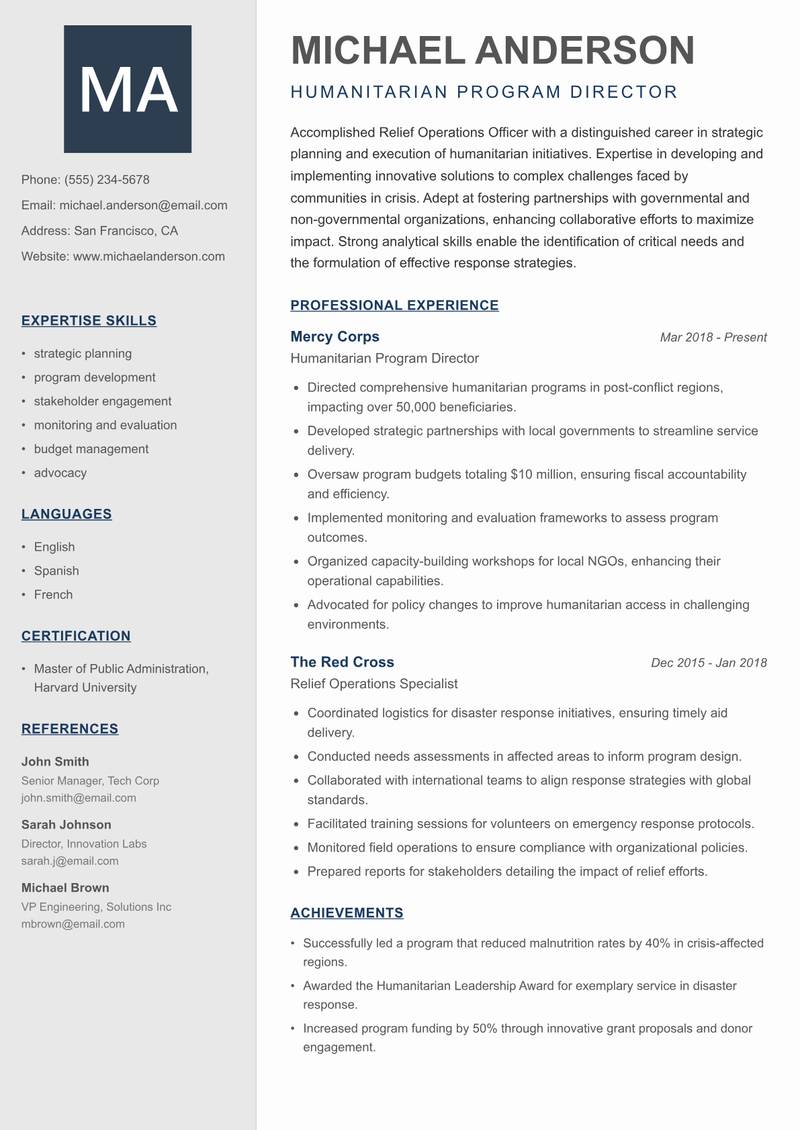
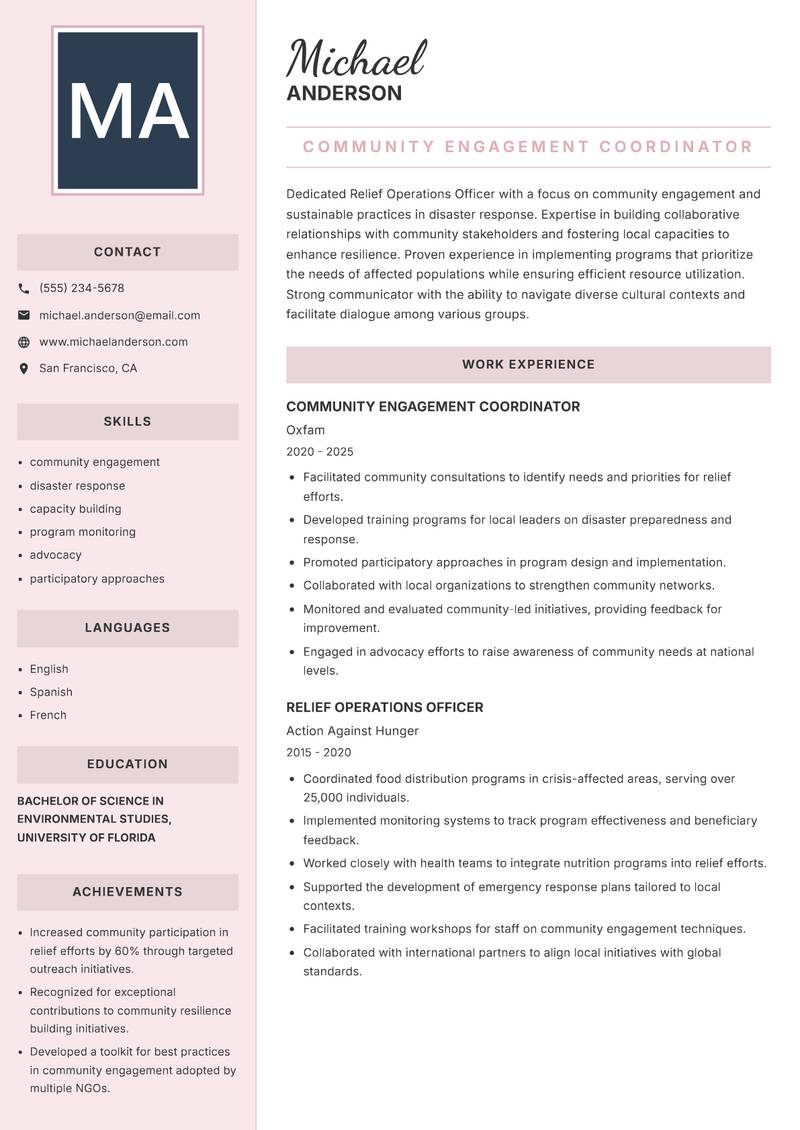
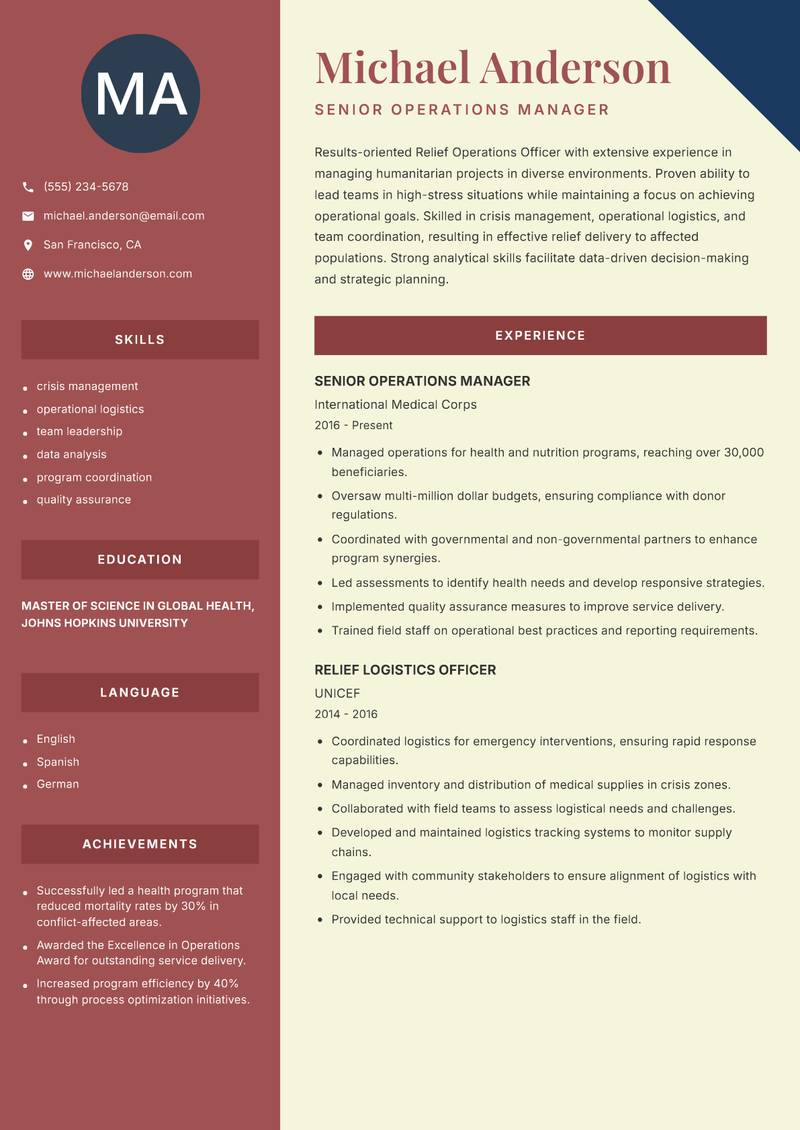
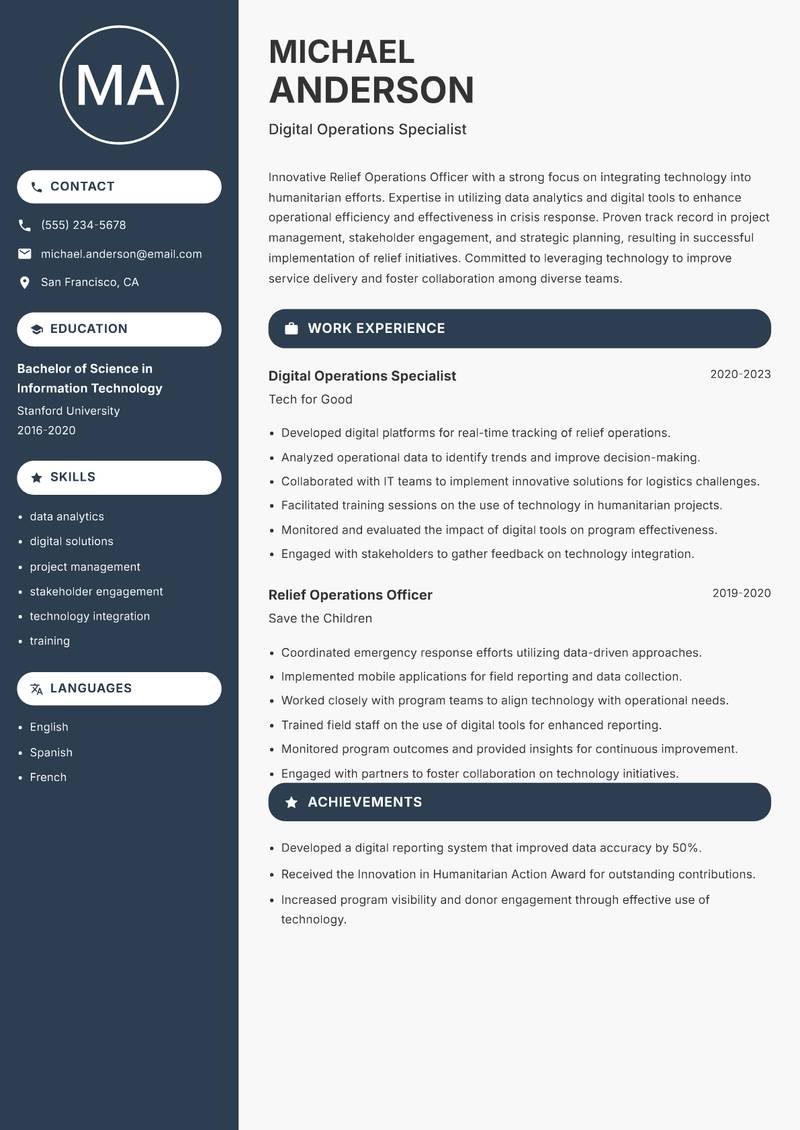
Browse Relief Operations Officer resume examples built around reporting, tailored for Humanitarian Aid roles.
A strong Relief Operations Officer resume leads with a focused professional summary that names the exact role and your standout achievement. In the experience section, open every bullet with a strong action verb and quantify the result with numbers wherever possible. Highlight your most relevant competencies — especially As a Relief Operations, Reporting, and Documenting the progress of relief effort — in a dedicated Skills section positioned early so ATS systems and hiring managers both find it immediately.
For format, most Relief Operations Officer roles suit a reverse-chronological layout: most recent position first, working backwards. Keep to one page for under five years of experience, or two pages for senior candidates with a rich project or leadership history. Use clean, ATS-safe fonts (10–12pt), standard section headings (Summary, Experience, Education, Skills), and avoid tables, text boxes, or multi-column layouts that applicant tracking systems cannot parse reliably.