Seismologist Resume

These Seismologist resume samples are designed to help you write a resume that gets noticed by hiring managers and passes applicant tracking systems (ATS) in Earth Sciences. Each example shows real formatting, section structure, and language you can adapt to your own background. When writing your own Seismologist resume, focus on highlighting geological mapping & field survey, petrography & mineralogy and seismic & geophysical data interpretation. Recruiters scan for these qualifications first, so they should appear early in your summary and experience sections. Use strong action verbs such as "mapped", "surveyed", "interpreted", "modeled" to describe your achievements, and quantify your impact wherever possible — percentages, dollar amounts, or time saved make your resume more convincing. A common mistake to avoid: writing a generic objective statement instead of a targeted seismologist professional summary. Tailor your resume to each Seismologist position you apply for rather than using one generic version.

Seismologist Resume Template
View PDF
0.0 (0 ratings)

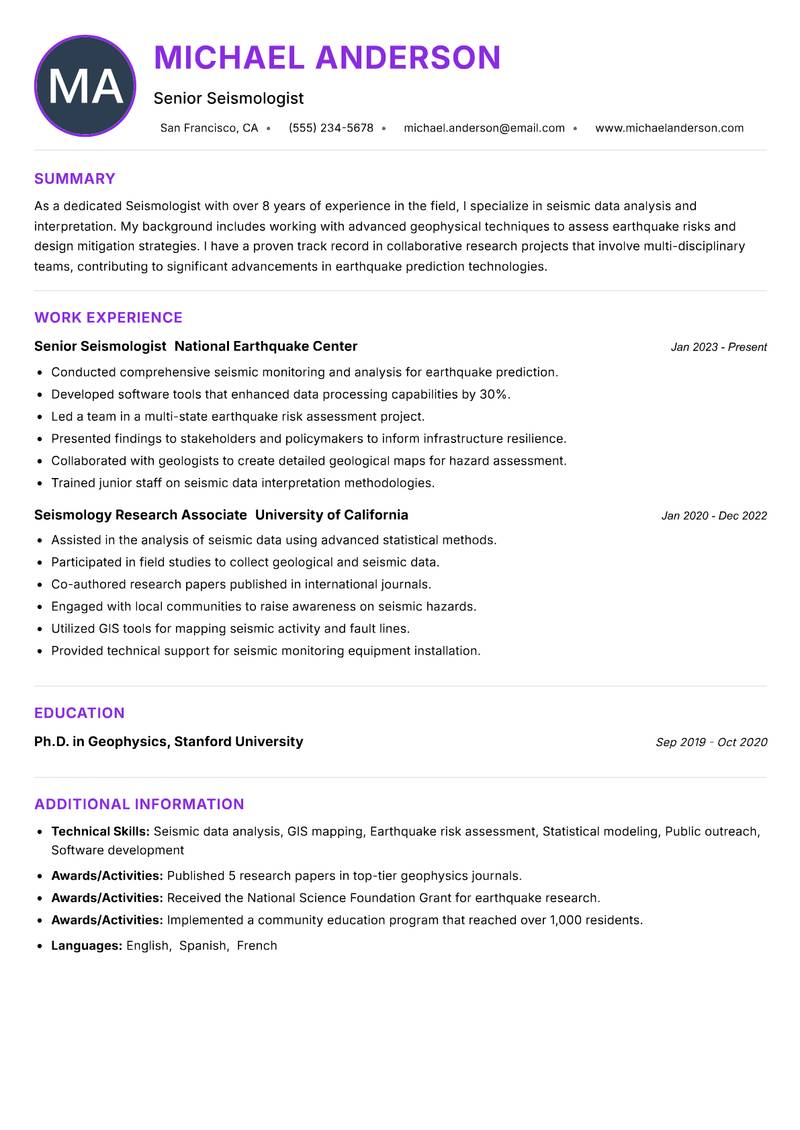
Senior Seismologist Resume

As a dedicated Seismologist with over 8 years of experience in the field, I specialize in seismic data analysis and interpretation. My background includes working with advanced geophysical techniques to assess earthquake risks and design mitigation strategies. I have a proven track record in collaborative research projects that involve multi-disciplinary teams, contributing to significant advancements in earthquake prediction technologies. My expertise extends to the development of innovative software tools for seismic data processing, which have improved accuracy and efficiency in our analyses. I am passionate about educating communities on earthquake preparedness, having led numerous workshops and public outreach programs. Additionally, I have been instrumental in publishing research findings in peer-reviewed journals, emphasizing the importance of data-driven approaches in understanding seismic activity. I am committed to advancing our understanding of tectonic processes and their implications for urban planning and infrastructure development.

Seismic data analysis GIS mapping Earthquake risk assessment Statistical modeling Public outreach Software development
Seismologist Resume Preview Example
View PDF
  1. Conducted comprehensive seismic monitoring and analysis for earthquake prediction.
  2. Developed software tools that enhanced data processing capabilities by 30%.
  3. Led a team in a multi-state earthquake risk assessment project.
  4. Presented findings to stakeholders and policymakers to inform infrastructure resilience.
  5. Collaborated with geologists to create detailed geological maps for hazard assessment.
  6. Trained junior staff on seismic data interpretation methodologies.
  1. Assisted in the analysis of seismic data using advanced statistical methods.
  2. Participated in field studies to collect geological and seismic data.
  3. Co-authored research papers published in international journals.
  4. Engaged with local communities to raise awareness on seismic hazards.
  5. Utilized GIS tools for mapping seismic activity and fault lines.
  6. Provided technical support for seismic monitoring equipment installation.

Achievements

  • Published 5 research papers in top-tier geophysics journals.
  • Received the National Science Foundation Grant for earthquake research.
  • Implemented a community education program that reached over 1,000 residents.
⏱️
Experience
2-5 Years
📅
Level
Mid Level
🎓
Education
Ph.D. in Geophysics, Stanford ...

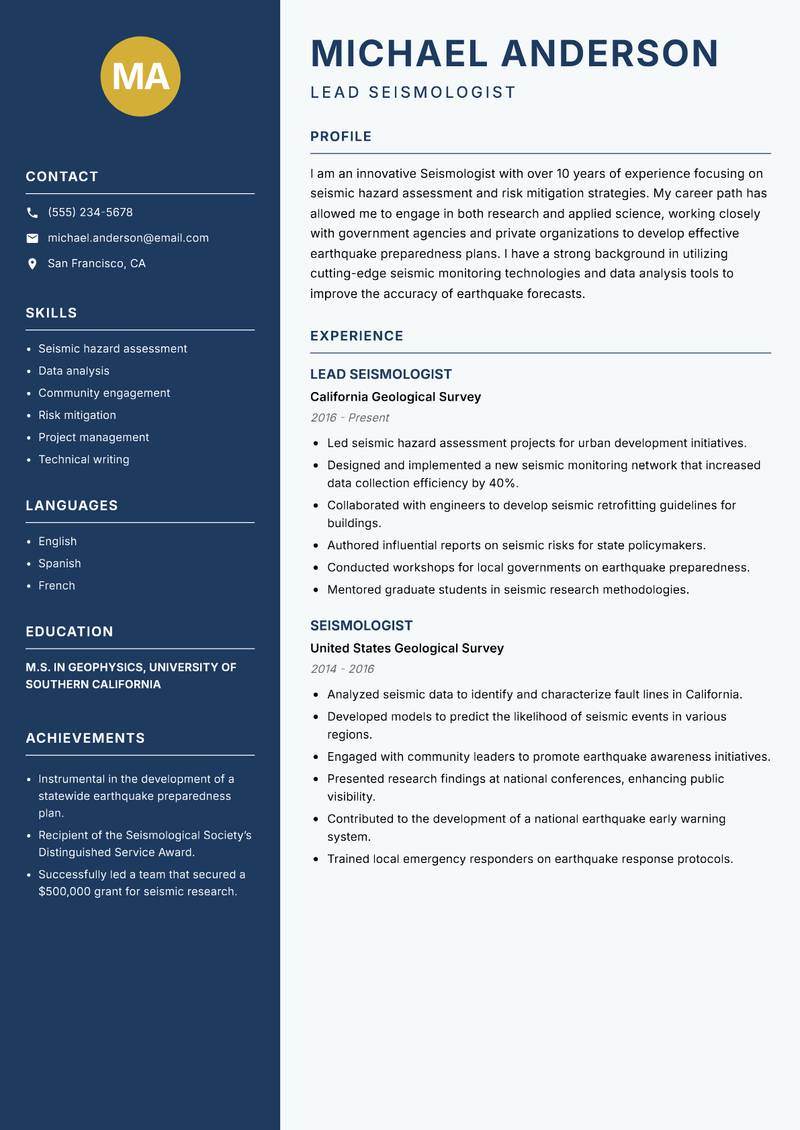
Lead Seismologist Resume

I am an innovative Seismologist with over 10 years of experience focusing on seismic hazard assessment and risk mitigation strategies. My career path has allowed me to engage in both research and applied science, working closely with government agencies and private organizations to develop effective earthquake preparedness plans. I have a strong background in utilizing cutting-edge seismic monitoring technologies and data analysis tools to improve the accuracy of earthquake forecasts. My role has included leading interdisciplinary teams in complex projects that evaluate the impact of seismic events on urban infrastructures. I am also passionate about mentorship, providing guidance to junior scientists and students in the field. My work has contributed to several high-profile reports that influence policy decisions regarding seismic safety. I aim to bridge the gap between scientific research and practical applications to enhance community resilience against earthquakes.

Seismic hazard assessment Data analysis Community engagement Risk mitigation Project management Technical writing
Seismologist Resume Preview Example
View PDF
  1. Led seismic hazard assessment projects for urban development initiatives.
  2. Designed and implemented a new seismic monitoring network that increased data collection efficiency by 40%.
  3. Collaborated with engineers to develop seismic retrofitting guidelines for buildings.
  4. Authored influential reports on seismic risks for state policymakers.
  5. Conducted workshops for local governments on earthquake preparedness.
  6. Mentored graduate students in seismic research methodologies.
  1. Analyzed seismic data to identify and characterize fault lines in California.
  2. Developed models to predict the likelihood of seismic events in various regions.
  3. Engaged with community leaders to promote earthquake awareness initiatives.
  4. Presented research findings at national conferences, enhancing public visibility.
  5. Contributed to the development of a national earthquake early warning system.
  6. Trained local emergency responders on earthquake response protocols.

Achievements

  • Instrumental in the development of a statewide earthquake preparedness plan.
  • Recipient of the Seismological Society’s Distinguished Service Award.
  • Successfully led a team that secured a $500,000 grant for seismic research.
⏱️
Experience
2-5 Years
📅
Level
Mid Level
🎓
Education
M.S. in Geophysics, University...

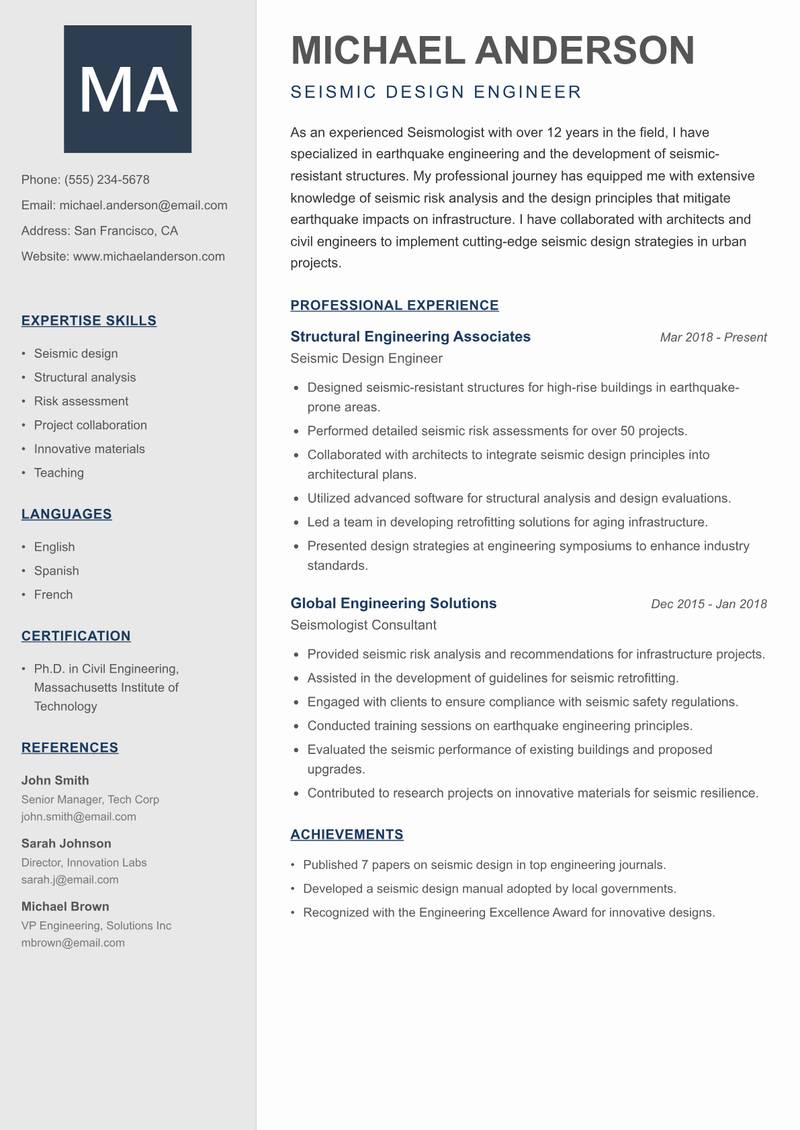
Seismic Design Engineer Resume

As an experienced Seismologist with over 12 years in the field, I have specialized in earthquake engineering and the development of seismic-resistant structures. My professional journey has equipped me with extensive knowledge of seismic risk analysis and the design principles that mitigate earthquake impacts on infrastructure. I have collaborated with architects and civil engineers to implement cutting-edge seismic design strategies in urban projects. My strong analytical skills enable me to conduct comprehensive assessments of existing structures and recommend necessary retrofitting measures. I am dedicated to advancing the field through research and have published several papers on the application of innovative materials in seismic design. My goal is to enhance public safety by ensuring that our built environments can withstand the forces of nature. I am also actively involved in teaching and mentoring the next generation of engineers in seismic design principles and best practices.

Seismic design Structural analysis Risk assessment Project collaboration Innovative materials Teaching
Seismologist Resume Preview Example
View PDF
  1. Designed seismic-resistant structures for high-rise buildings in earthquake-prone areas.
  2. Performed detailed seismic risk assessments for over 50 projects.
  3. Collaborated with architects to integrate seismic design principles into architectural plans.
  4. Utilized advanced software for structural analysis and design evaluations.
  5. Led a team in developing retrofitting solutions for aging infrastructure.
  6. Presented design strategies at engineering symposiums to enhance industry standards.
  1. Provided seismic risk analysis and recommendations for infrastructure projects.
  2. Assisted in the development of guidelines for seismic retrofitting.
  3. Engaged with clients to ensure compliance with seismic safety regulations.
  4. Conducted training sessions on earthquake engineering principles.
  5. Evaluated the seismic performance of existing buildings and proposed upgrades.
  6. Contributed to research projects on innovative materials for seismic resilience.

Achievements

  • Published 7 papers on seismic design in top engineering journals.
  • Developed a seismic design manual adopted by local governments.
  • Recognized with the Engineering Excellence Award for innovative designs.
⏱️
Experience
2-5 Years
📅
Level
Mid Level
🎓
Education
Ph.D. in Civil Engineering, Ma...

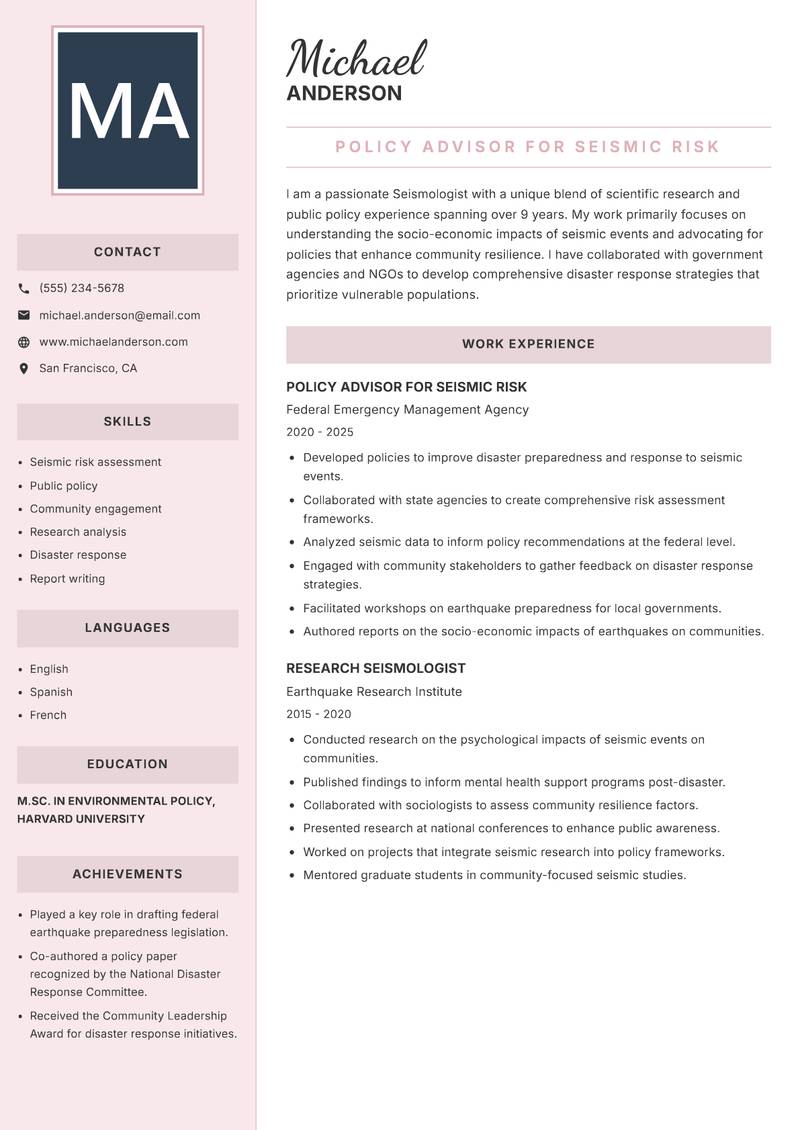
Policy Advisor for Seismic Risk Resume

I am a passionate Seismologist with a unique blend of scientific research and public policy experience spanning over 9 years. My work primarily focuses on understanding the socio-economic impacts of seismic events and advocating for policies that enhance community resilience. I have collaborated with government agencies and NGOs to develop comprehensive disaster response strategies that prioritize vulnerable populations. My expertise in seismic risk assessment enables me to contribute valuable insights into urban planning and emergency management. I am committed to utilizing data-driven approaches to inform policy decisions that protect lives and property. In addition to my policy work, I have conducted extensive research on the psychological effects of earthquakes on affected communities, leading to enhanced support programs. My goal is to bridge the gap between science and policy to create safer environments for all.

Seismic risk assessment Public policy Community engagement Research analysis Disaster response Report writing
Seismologist Resume Preview Example
View PDF
  1. Developed policies to improve disaster preparedness and response to seismic events.
  2. Collaborated with state agencies to create comprehensive risk assessment frameworks.
  3. Analyzed seismic data to inform policy recommendations at the federal level.
  4. Engaged with community stakeholders to gather feedback on disaster response strategies.
  5. Facilitated workshops on earthquake preparedness for local governments.
  6. Authored reports on the socio-economic impacts of earthquakes on communities.
  1. Conducted research on the psychological impacts of seismic events on communities.
  2. Published findings to inform mental health support programs post-disaster.
  3. Collaborated with sociologists to assess community resilience factors.
  4. Presented research at national conferences to enhance public awareness.
  5. Worked on projects that integrate seismic research into policy frameworks.
  6. Mentored graduate students in community-focused seismic studies.

Achievements

  • Played a key role in drafting federal earthquake preparedness legislation.
  • Co-authored a policy paper recognized by the National Disaster Response Committee.
  • Received the Community Leadership Award for disaster response initiatives.
⏱️
Experience
2-5 Years
📅
Level
Mid Level
🎓
Education
M.Sc. in Environmental Policy,...

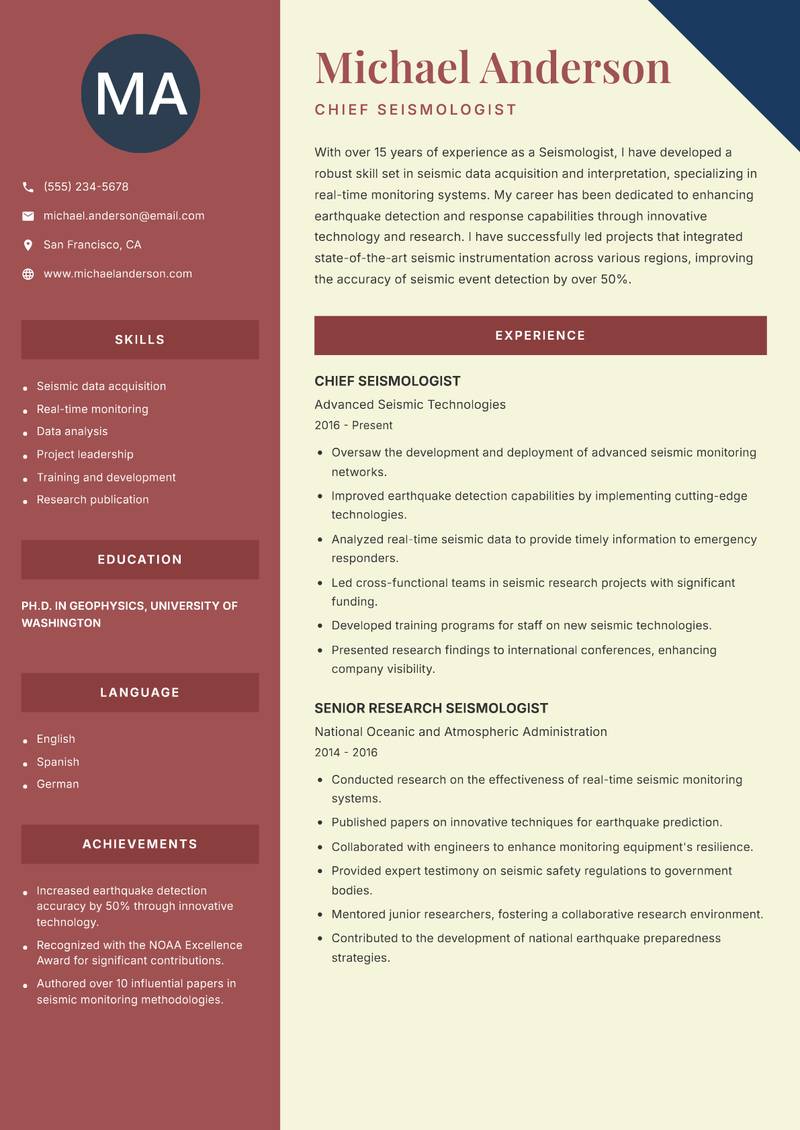
Chief Seismologist Resume

With over 15 years of experience as a Seismologist, I have developed a robust skill set in seismic data acquisition and interpretation, specializing in real-time monitoring systems. My career has been dedicated to enhancing earthquake detection and response capabilities through innovative technology and research. I have successfully led projects that integrated state-of-the-art seismic instrumentation across various regions, improving the accuracy of seismic event detection by over 50%. My analytical abilities allow me to interpret complex datasets and translate them into actionable insights for emergency management teams. I am also passionate about training the next generation of scientists, leading workshops and courses that focus on advanced seismic analysis techniques. My goal is to ensure that our understanding of seismic activity is continually advancing, contributing to safer communities and infrastructure.

Seismic data acquisition Real-time monitoring Data analysis Project leadership Training and development Research publication
Seismologist Resume Preview Example
View PDF
  1. Oversaw the development and deployment of advanced seismic monitoring networks.
  2. Improved earthquake detection capabilities by implementing cutting-edge technologies.
  3. Analyzed real-time seismic data to provide timely information to emergency responders.
  4. Led cross-functional teams in seismic research projects with significant funding.
  5. Developed training programs for staff on new seismic technologies.
  6. Presented research findings to international conferences, enhancing company visibility.
  1. Conducted research on the effectiveness of real-time seismic monitoring systems.
  2. Published papers on innovative techniques for earthquake prediction.
  3. Collaborated with engineers to enhance monitoring equipment's resilience.
  4. Provided expert testimony on seismic safety regulations to government bodies.
  5. Mentored junior researchers, fostering a collaborative research environment.
  6. Contributed to the development of national earthquake preparedness strategies.

Achievements

  • Increased earthquake detection accuracy by 50% through innovative technology.
  • Recognized with the NOAA Excellence Award for significant contributions.
  • Authored over 10 influential papers in seismic monitoring methodologies.
⏱️
Experience
2-5 Years
📅
Level
Mid Level
🎓
Education
Ph.D. in Geophysics, Universit...

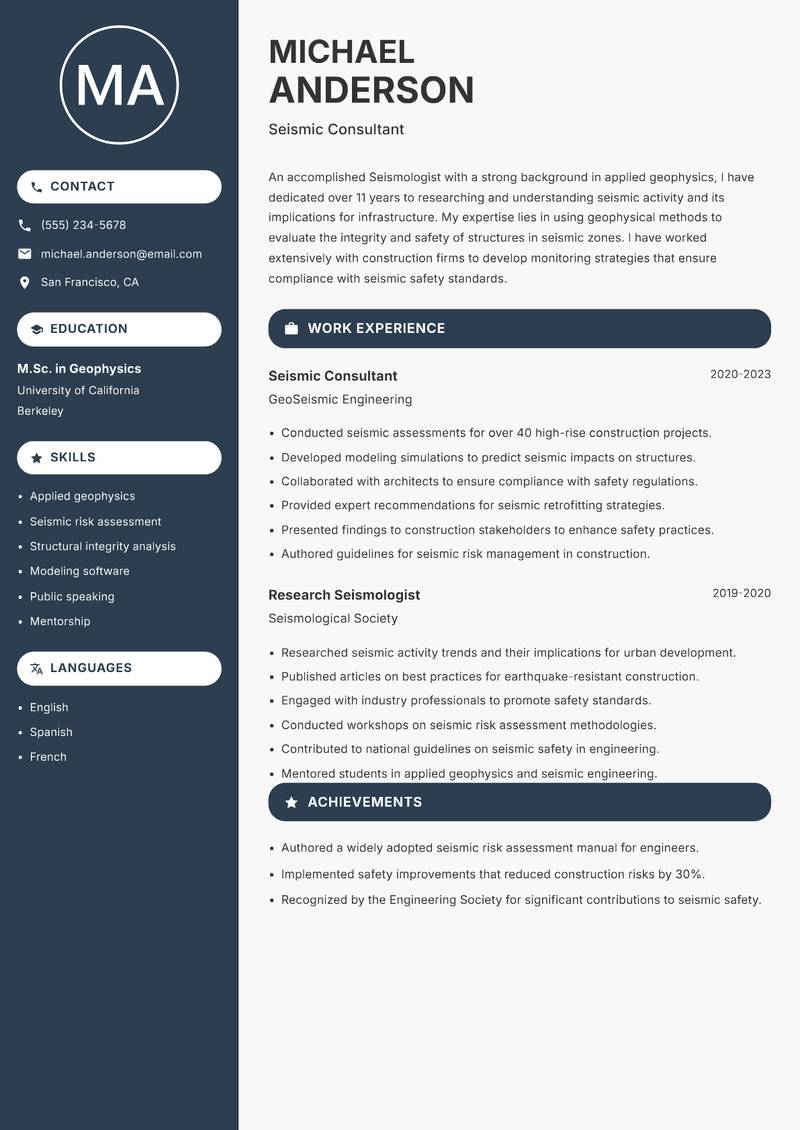
Seismic Consultant Resume

An accomplished Seismologist with a strong background in applied geophysics, I have dedicated over 11 years to researching and understanding seismic activity and its implications for infrastructure. My expertise lies in using geophysical methods to evaluate the integrity and safety of structures in seismic zones. I have worked extensively with construction firms to develop monitoring strategies that ensure compliance with seismic safety standards. My technical proficiency includes the use of advanced modeling software to simulate seismic impacts on buildings and infrastructure. I take pride in my ability to communicate complex scientific concepts to diverse audiences, including engineers, architects, and policymakers. My research has led to several key improvements in construction practices that mitigate earthquake risks, and I am driven by a commitment to protecting lives through better engineering solutions.

Applied geophysics Seismic risk assessment Structural integrity analysis Modeling software Public speaking Mentorship
Seismologist Resume Preview Example
View PDF
  1. Conducted seismic assessments for over 40 high-rise construction projects.
  2. Developed modeling simulations to predict seismic impacts on structures.
  3. Collaborated with architects to ensure compliance with safety regulations.
  4. Provided expert recommendations for seismic retrofitting strategies.
  5. Presented findings to construction stakeholders to enhance safety practices.
  6. Authored guidelines for seismic risk management in construction.
  1. Researched seismic activity trends and their implications for urban development.
  2. Published articles on best practices for earthquake-resistant construction.
  3. Engaged with industry professionals to promote safety standards.
  4. Conducted workshops on seismic risk assessment methodologies.
  5. Contributed to national guidelines on seismic safety in engineering.
  6. Mentored students in applied geophysics and seismic engineering.

Achievements

  • Authored a widely adopted seismic risk assessment manual for engineers.
  • Implemented safety improvements that reduced construction risks by 30%.
  • Recognized by the Engineering Society for significant contributions to seismic safety.
⏱️
Experience
2-5 Years
📅
Level
Mid Level
🎓
Education
M.Sc. in Geophysics, Universit...

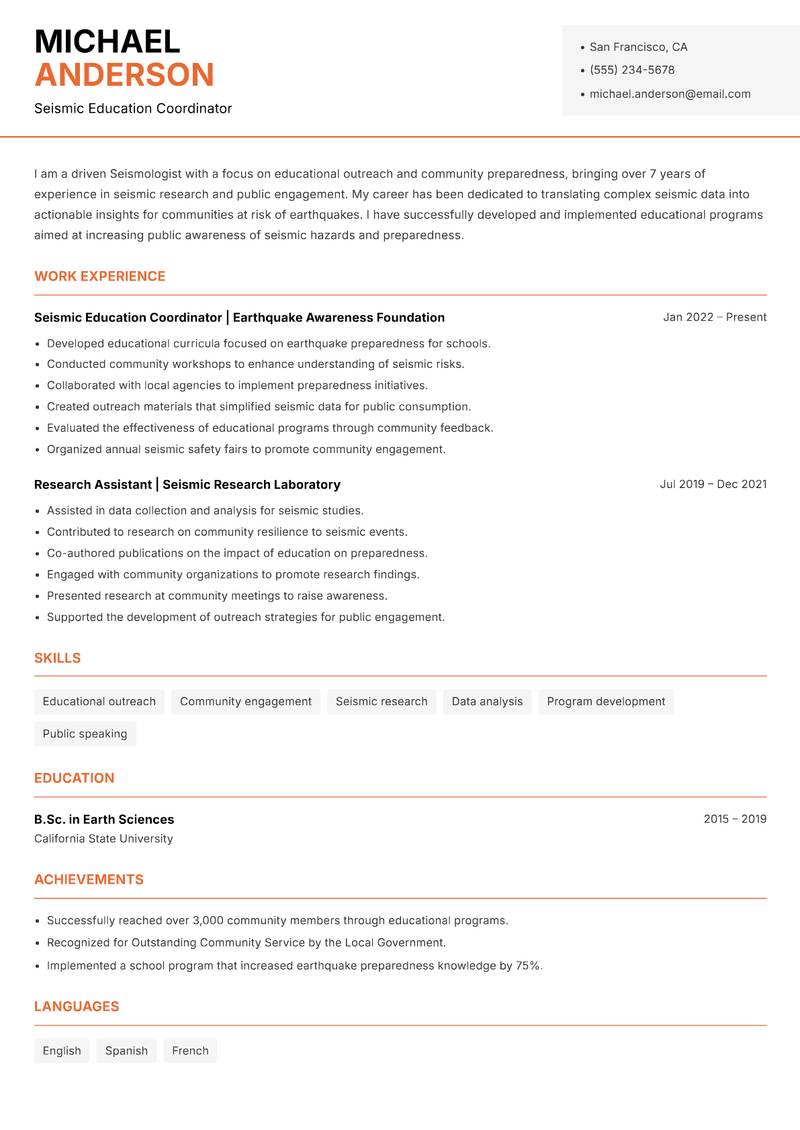
Seismic Education Coordinator Resume

I am a driven Seismologist with a focus on educational outreach and community preparedness, bringing over 7 years of experience in seismic research and public engagement. My career has been dedicated to translating complex seismic data into actionable insights for communities at risk of earthquakes. I have successfully developed and implemented educational programs aimed at increasing public awareness of seismic hazards and preparedness. My role often involves collaborating with schools, community organizations, and local governments to promote best practices in earthquake readiness. I have also contributed to research projects that analyze community resilience and the effectiveness of preparedness initiatives. My goal is to empower individuals and communities to take proactive measures against seismic risks through education and engagement.

Educational outreach Community engagement Seismic research Data analysis Program development Public speaking
Seismologist Resume Preview Example
View PDF
  1. Developed educational curricula focused on earthquake preparedness for schools.
  2. Conducted community workshops to enhance understanding of seismic risks.
  3. Collaborated with local agencies to implement preparedness initiatives.
  4. Created outreach materials that simplified seismic data for public consumption.
  5. Evaluated the effectiveness of educational programs through community feedback.
  6. Organized annual seismic safety fairs to promote community engagement.
  1. Assisted in data collection and analysis for seismic studies.
  2. Contributed to research on community resilience to seismic events.
  3. Co-authored publications on the impact of education on preparedness.
  4. Engaged with community organizations to promote research findings.
  5. Presented research at community meetings to raise awareness.
  6. Supported the development of outreach strategies for public engagement.

Achievements

  • Successfully reached over 3,000 community members through educational programs.
  • Recognized for Outstanding Community Service by the Local Government.
  • Implemented a school program that increased earthquake preparedness knowledge by 75%.
⏱️
Experience
2-5 Years
📅
Level
Mid Level
🎓
Education
B.Sc. in Earth Sciences, Calif...

Key Skills for Seismologist Positions

Resume Tips for Seismologist Applications

Strong Action Verbs for Seismologist Resumes

Mapped · Surveyed · Interpreted · Modeled · Analyzed · Investigated · Drilled · Characterized · Published · Assessed · Achieved · Administered · Architected · Automated

Common Mistakes to Avoid

Experience Levels

How to Write a Seismologist Resume

Browse Seismologist resume examples built around geological mapping & field survey, tailored for Earth Sciences roles.

A strong Seismologist resume leads with a focused professional summary that names the exact role and your standout achievement. In the experience section, open every bullet with a strong action verb and quantify the result with numbers wherever possible. Highlight your most relevant competencies — especially Geological Mapping & Field Survey, Petrography & Mineralogy, and Seismic & Geophysical Data Interpretation — in a dedicated Skills section positioned early so ATS systems and hiring managers both find it immediately.

For format, most Seismologist roles suit a reverse-chronological layout: most recent position first, working backwards. Keep to one page for under five years of experience, or two pages for senior candidates with a rich project or leadership history. Use clean, ATS-safe fonts (10–12pt), standard section headings (Summary, Experience, Education, Skills), and avoid tables, text boxes, or multi-column layouts that applicant tracking systems cannot parse reliably.
Frequently Asked Questions

What makes a strong Seismologist resume stand out to employers?

A standout Seismologist resume combines role-specific skills with quantified achievements. Name the exact job title in your professional summary, mirror keywords from each job posting, and open every bullet point with a strong action verb followed by a measurable result. Certifications, tools, and domain experience specific to seismologist roles should appear prominently near the top.

What skills are most important to include on a Earth Sciences resume?

Recruiters hiring in Earth Sciences consistently look for Geological Mapping & Field Survey, Petrography & Mineralogy, Seismic & Geophysical Data Interpretation, GIS & Remote Sensing (ArcGIS, QGIS). List these in a dedicated Skills section near the top so both ATS systems and human reviewers spot them fast. Mirror the exact phrasing from each job posting wherever possible — many applicant tracking systems match literal strings rather than synonyms.

What is the best resume format for Earth Sciences professionals?

A reverse-chronological format is the standard choice for most Earth Sciences candidates — employers expect to see your most recent role first, working backwards. If you are transitioning into Earth Sciences from a related field, a hybrid format (brief skills summary at the top followed by chronological experience) can bridge the gap effectively. Keep the document to one page for under five years of experience, or two pages for senior specialists.

How do I make my Earth Sciences resume pass applicant tracking systems (ATS)?

Use standard section headings — Summary, Experience, Education, Skills — rather than creative labels that ATS parsers do not recognise. Embed domain keywords such as "Geological Mapping & Field Survey" and "Petrography & Mineralogy" naturally inside your experience bullets rather than cramming them into a standalone keyword list. Avoid tables, multi-column layouts, text boxes, headers, footers, and images — these confuse most modern parsers and can cause your resume to be misread or rejected before a human sees it.

What mistakes do Earth Sciences professionals most commonly make on their resume?

The most frequent issue is not specifying field environments — offshore vs. tropical vs. arctic geology are very different competencies. Beyond that, generic objective statements, unquantified achievements, and inconsistent date formatting appear across almost every Earth Sciences application. Fix these by replacing every vague claim with a measurable outcome — specific numbers and named projects add credibility that adjectives cannot.

How long should a Earth Sciences resume be?

One page is appropriate for candidates with under five years of relevant Earth Sciences experience. Two pages are acceptable — and sometimes expected — for senior specialists, managers, or professionals with a strong portfolio of projects, publications, or credentials. Avoid padding to reach a page count: every line should directly support your application for the specific role you are targeting.

Should I include a professional summary at the top of my Earth Sciences resume?

Yes — a two to three sentence summary is the first section most recruiters read. Open with your title and years of Earth Sciences experience, then name your most relevant achievement or specialisation. One proven approach: Specify field experience including environments worked in (desert, offshore, Arctic) and duration — this level of specificity signals genuine expertise before a recruiter reaches your experience section.

Scroll to view samples