Key Skills for Silversmith Positions
- Forging, Annealing & Heat Treatment
- Jewelry Design & Fabrication
- Gemstone Setting (Prong, Bezel, Pave)
- Engraving & Chasing
- Soldering & Brazing
- Metal Casting (Lost Wax, Sand Casting)
- Surface Finishing (Polishing, Patination, Plating)
- Metals Knowledge (Gold, Silver, Steel, Copper, Bronze)
- CAD Jewelry Design (Rhino, MatrixGold)
- Welding & Metal Sculpture
Resume Tips for Silversmith Applications
- Lead your summary by emphasising technical expertise — it sets apart strong silversmith applicants from the start
- Include a portfolio — metal craft is visual and employers and clients judge work before qualifications.
- Specify metalworking disciplines: forging, jewelry, casting, engraving — they are distinct skill sets.
- List materials expertise: precious metals, alloys, patination, plating processes.
- For jewelry roles, demonstrate gemstone knowledge and setting techniques.
- Highlight CAD jewelry design skills if applicable — digital design is transforming custom jewelry.
Strong Action Verbs for Silversmith Resumes
Forged · Crafted · Designed · Fabricated · Set · Engraved · Cast · Finished · Polished · Customized · Achieved · Administered · Analyzed · Architected
Common Mistakes to Avoid
- Writing a generic objective statement instead of a targeted silversmith professional summary
- Not providing a portfolio — metal craft is judged on the quality of finished work.
- Failing to specify techniques and materials — blacksmithing and jewelry making require different skills.
- Ignoring finishing and surface treatment expertise.
- Not demonstrating design skills alongside fabrication skills for creative roles.
Experience Levels
- Apprentice / Trainee Metalworker (0-3 years)
- Metal Craftsperson (3-7 years)
- Senior Craftsperson (7-13 years)
- Master Craftsperson / Workshop Manager (13-20 years)
- Design Director / Studio Owner (20+ years)
How to Write a Silversmith Resume
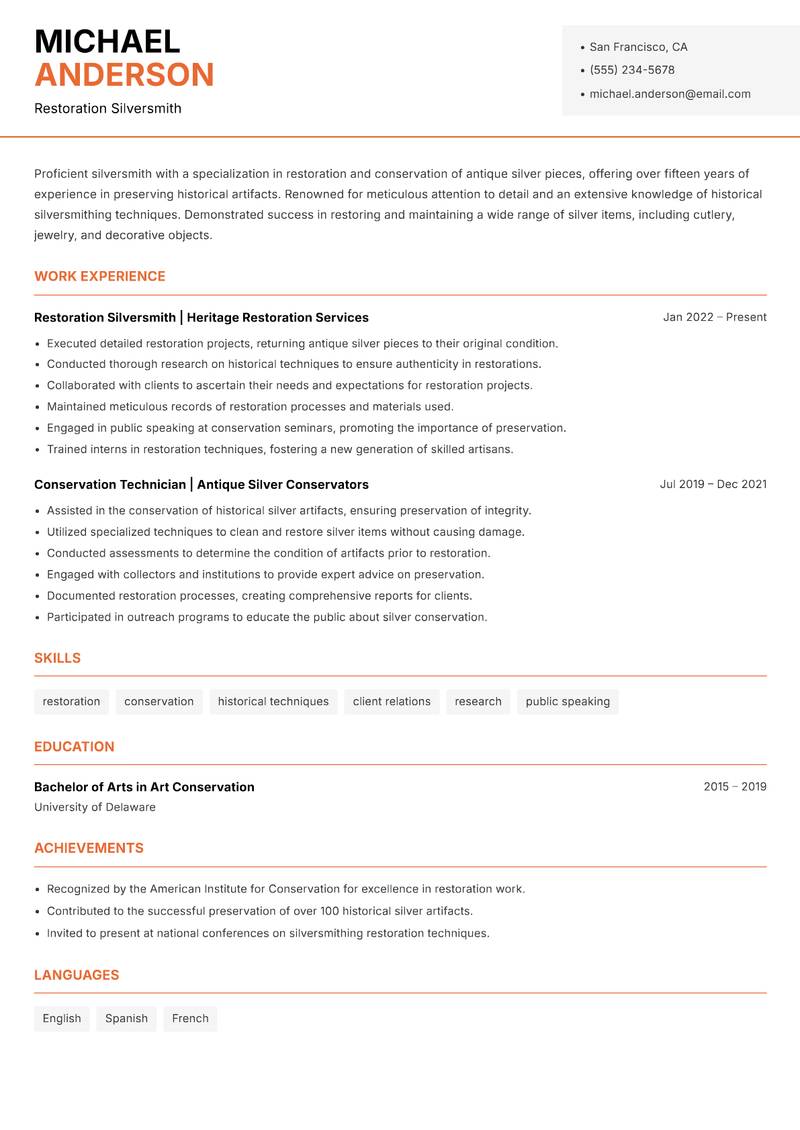
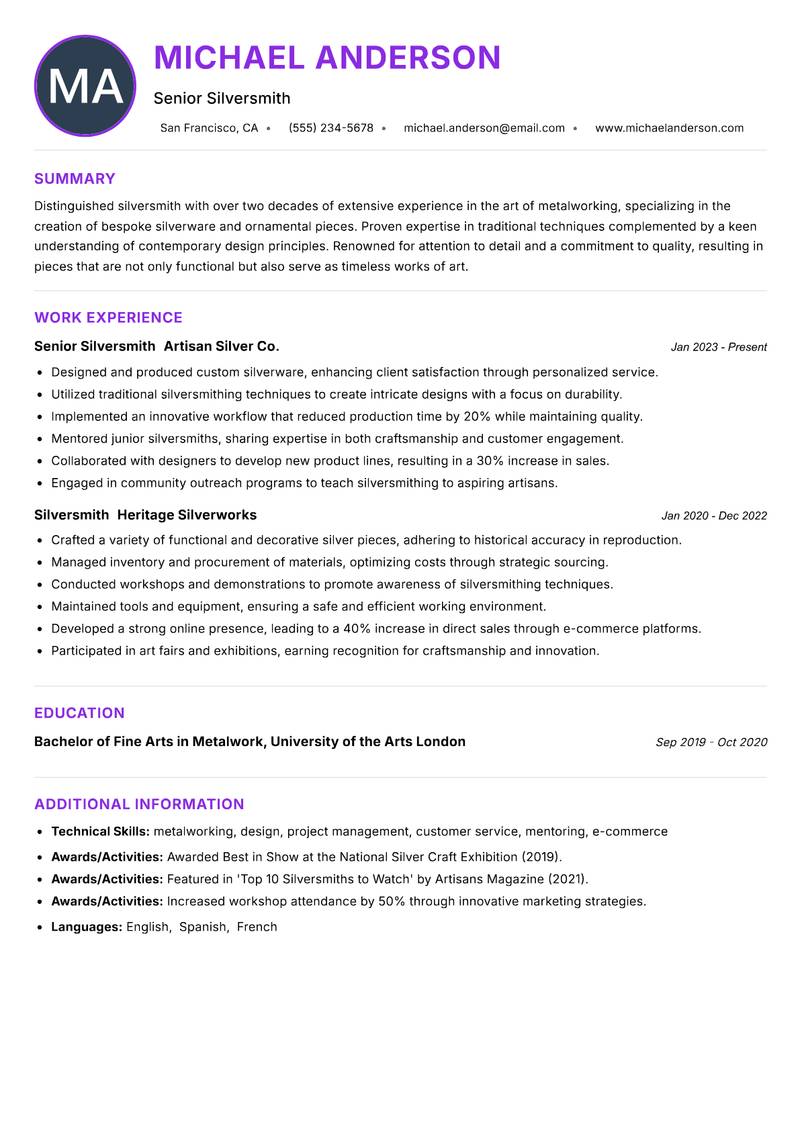
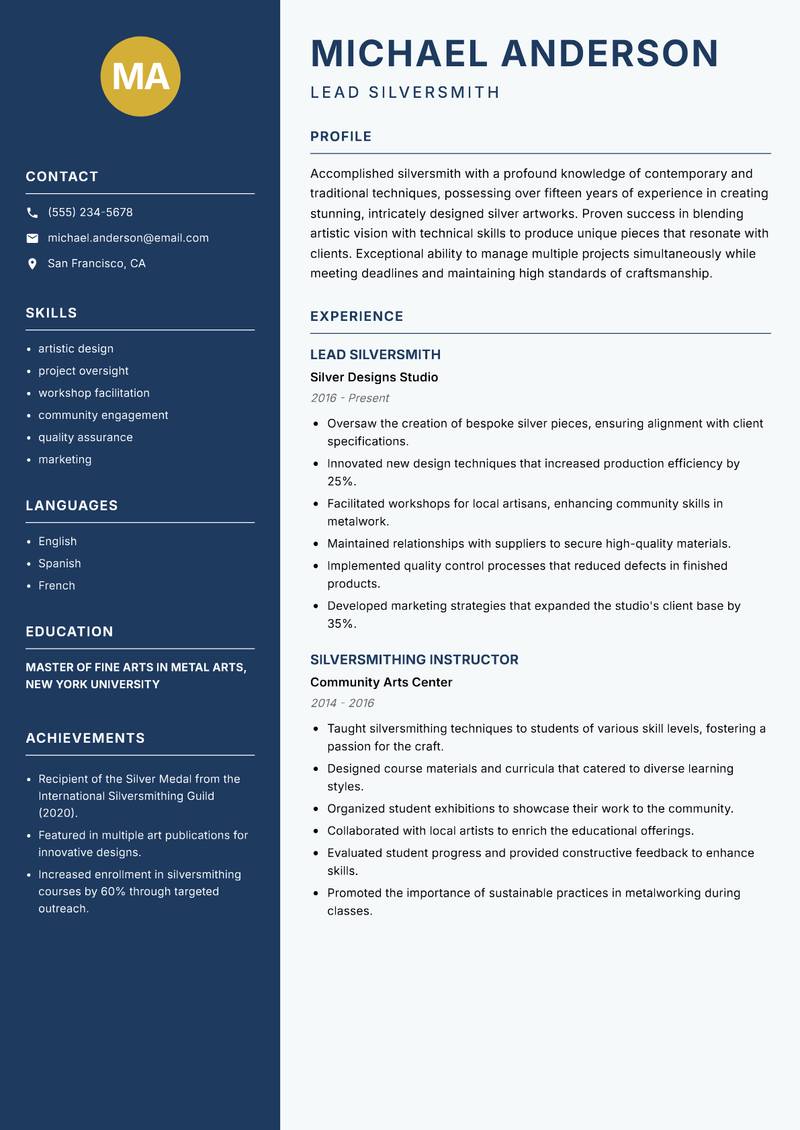
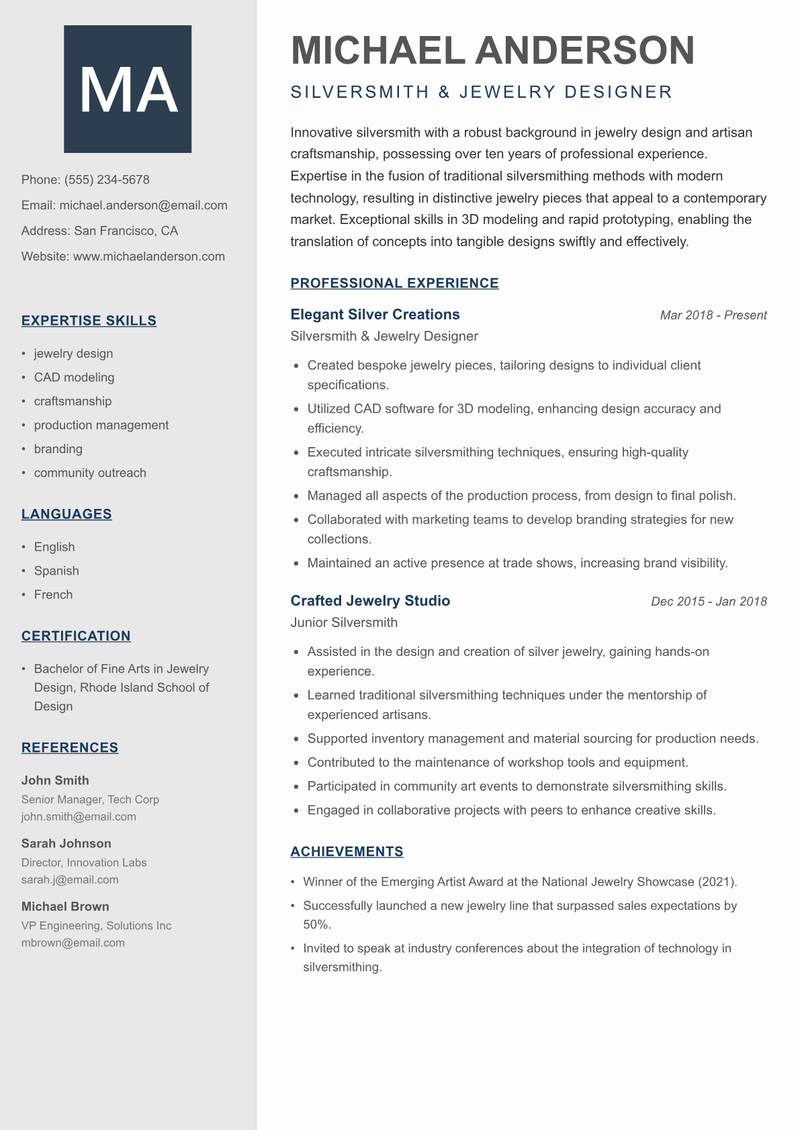
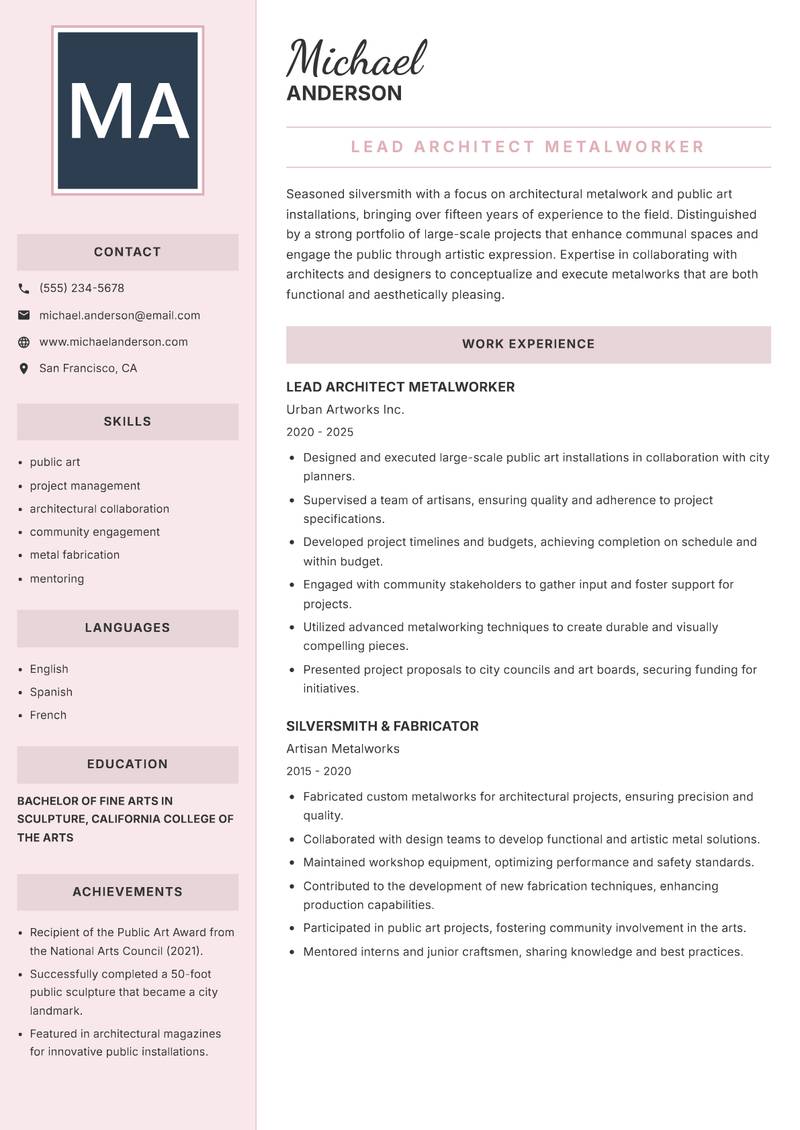
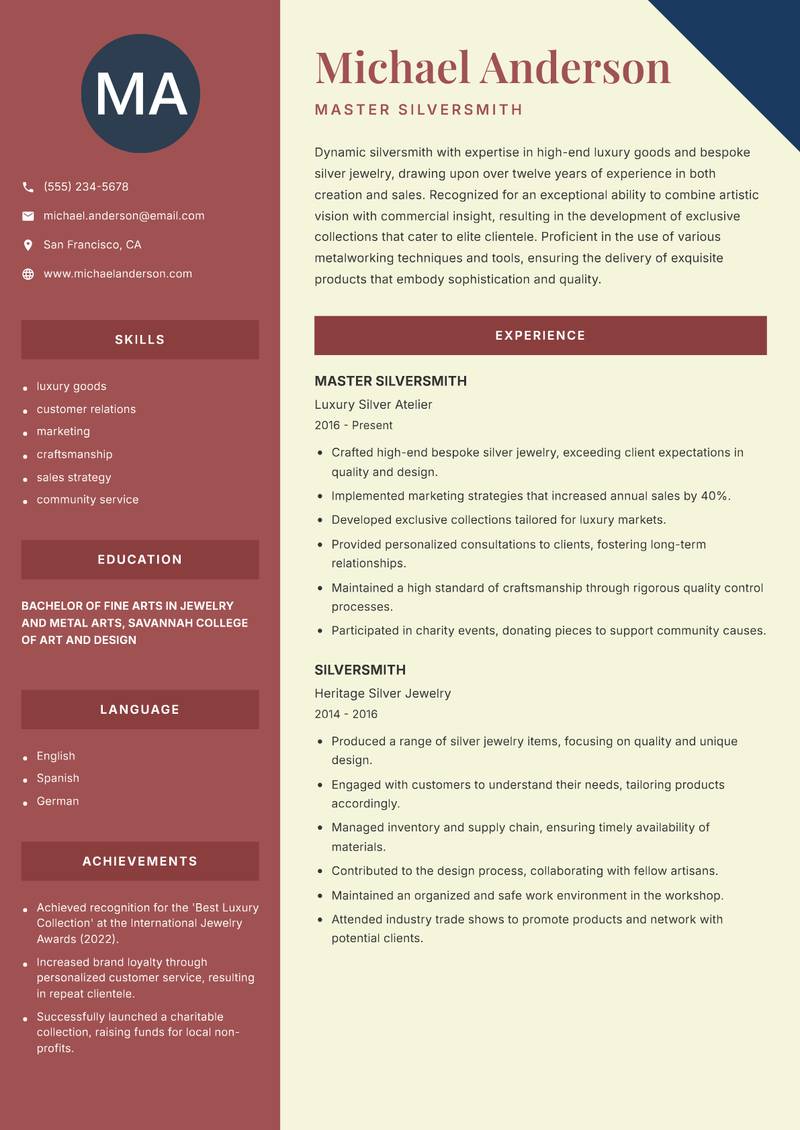
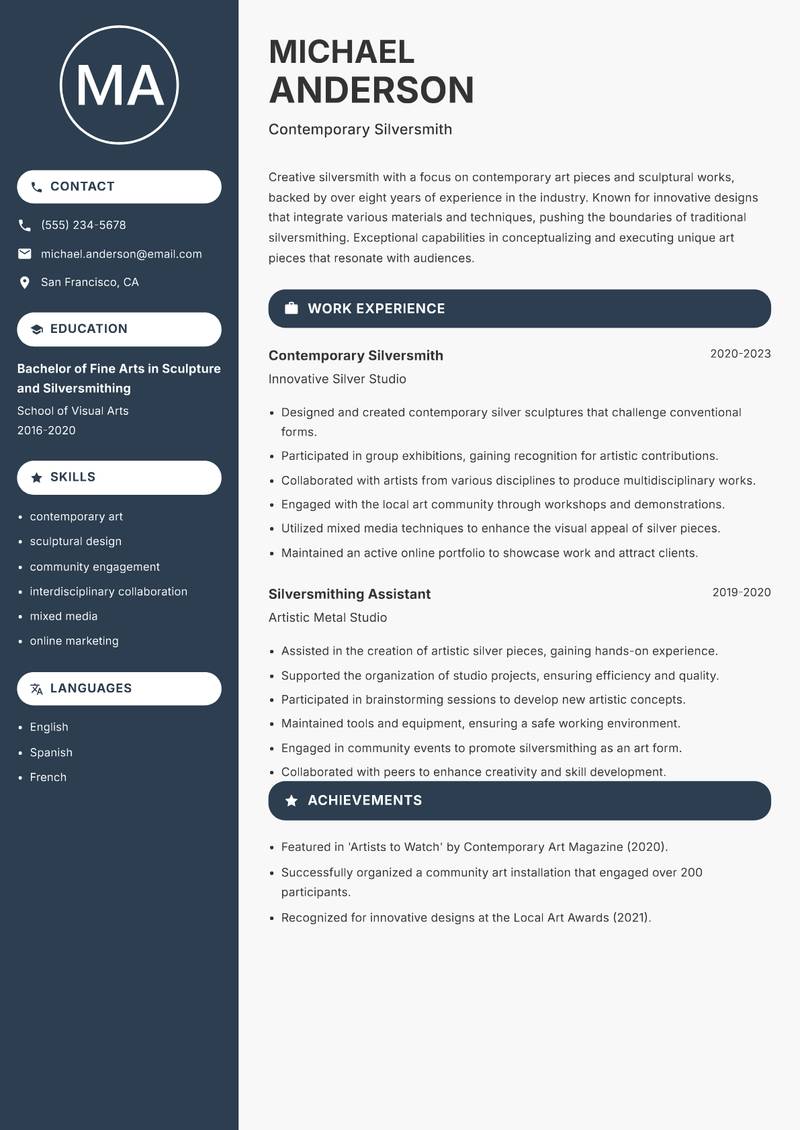
Browse Silversmith resume examples built around forging, annealing & heat treatment, tailored for Metal Crafts roles.
A strong Silversmith resume leads with a focused professional summary that names the exact role and your standout achievement. In the experience section, open every bullet with a strong action verb and quantify the result with numbers wherever possible. Highlight your most relevant competencies — especially Forging, Annealing & Heat Treatment, Jewelry Design & Fabrication, and Gemstone Setting (Prong, Bezel, Pave) — in a dedicated Skills section positioned early so ATS systems and hiring managers both find it immediately.
For format, most Silversmith roles suit a reverse-chronological layout: most recent position first, working backwards. Keep to one page for under five years of experience, or two pages for senior candidates with a rich project or leadership history. Use clean, ATS-safe fonts (10–12pt), standard section headings (Summary, Experience, Education, Skills), and avoid tables, text boxes, or multi-column layouts that applicant tracking systems cannot parse reliably.