Key Skills for Site Reliability Engineer Positions
- Cloud platforms
- Programming Languages (Python, Java, JavaScript, Go, Rust, C++)
- Web Frameworks (React, Node.js, Django, Spring, FastAPI)
- Database Design (SQL, NoSQL, ORM)
- Version Control (Git, GitHub, GitLab)
- Testing & Quality Assurance (Unit, Integration, E2E)
- CI/CD & DevOps Practices
- System Design & Scalability
- API Design (REST, GraphQL, gRPC)
- Agile & Scrum Methodology
Resume Tips for Site Reliability Engineer Applications
- Begin your professional summary with the exact job title "Site Reliability Engineer" — ATS systems often match titles literally, and including yours increases the likelihood of passing the initial automated keyword filter before a recruiter reviews your resume
- Link to your GitHub, portfolio, or notable open-source contributions — working code is the best credential.
- Quantify impact: performance improvements (load times, query speed), scale (users served), or reliability (uptime).
- Organize technical skills by proficiency — distinguish between languages you know deeply vs. superficially.
- Describe your role within team projects — solo achievements matter, but collaborative engineering is the norm.
- For senior roles, emphasize mentoring, architecture decisions, and cross-team influence.
Strong Action Verbs for Site Reliability Engineer Resumes
Engineered · Built · Refactored · Deployed · Optimized · Architected · Shipped · Debugged · Designed · Implemented · Achieved · Administered · Analyzed · Assessed
Common Mistakes to Avoid
- Writing a generic objective statement instead of a targeted site reliability engineer professional summary
- Listing every language or framework touched without demonstrating depth.
- Describing features built without explaining the business problem they solved.
- Neglecting to show testing practices — untested code is a red flag in professional engineering.
- Failing to demonstrate system design thinking at senior levels.
Experience Levels
- Junior Developer / Graduate (0-2 years)
- Software Engineer (2-5 years)
- Senior Software Engineer (5-9 years)
- Staff / Principal Engineer (9-13 years)
- Engineering Manager / VP Engineering (13+ years)
How to Write a Site Reliability Engineer Resume
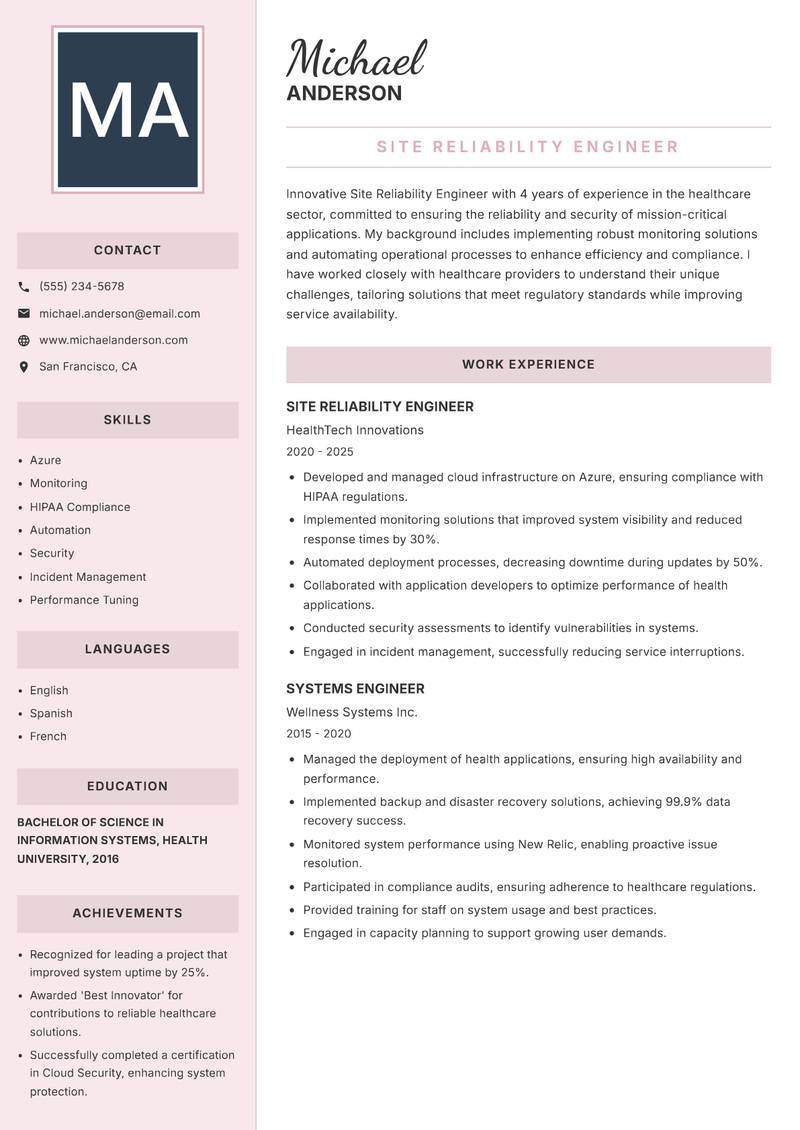
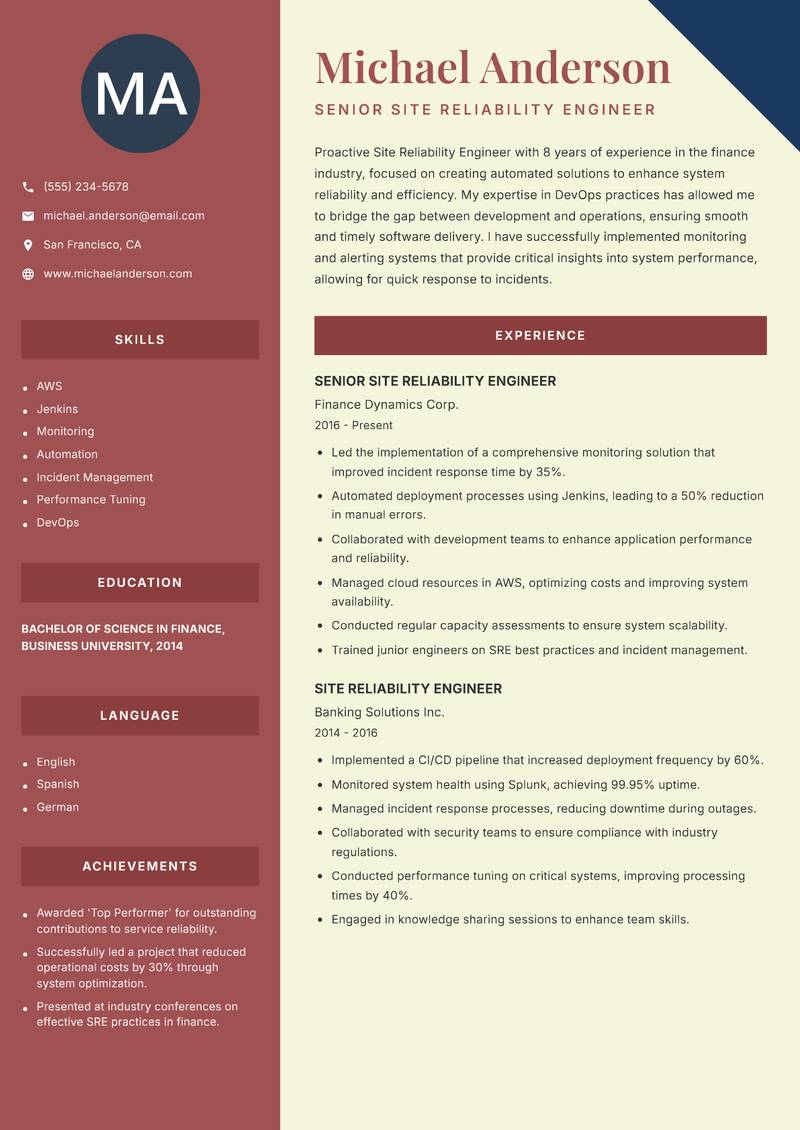
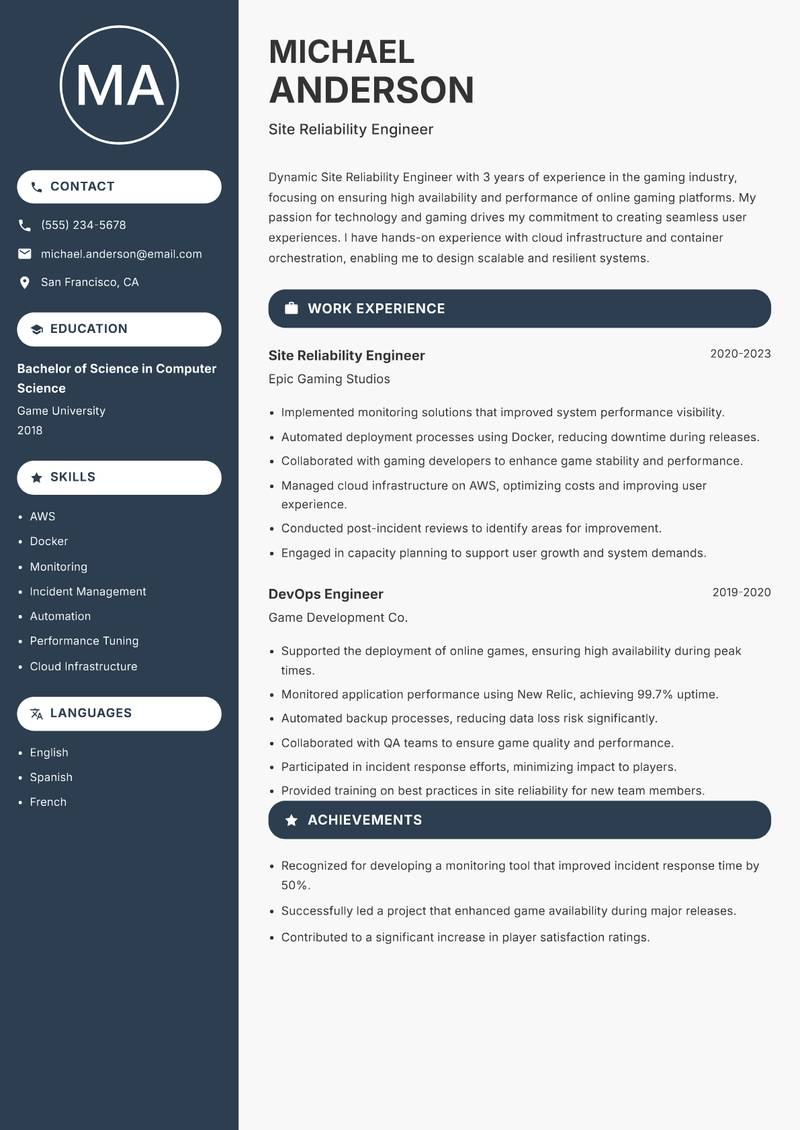
Browse Site Reliability Engineer resume examples built around cloud platforms, tailored for Software Development roles.
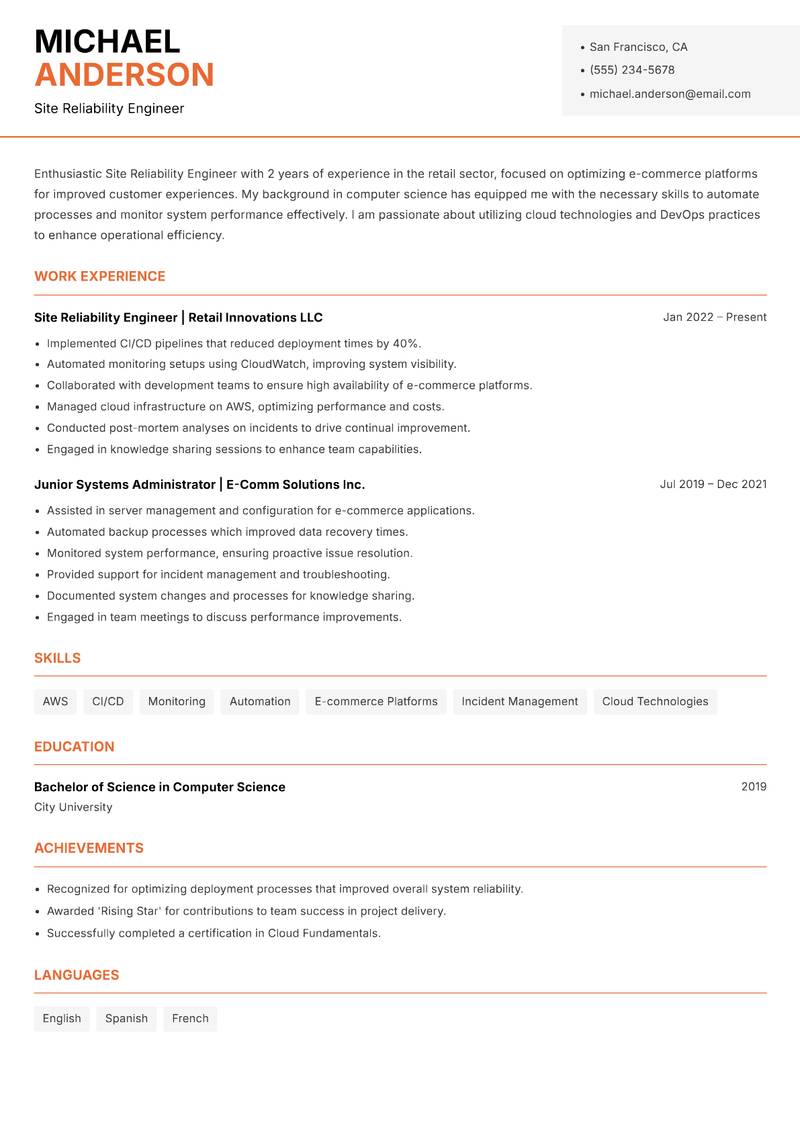
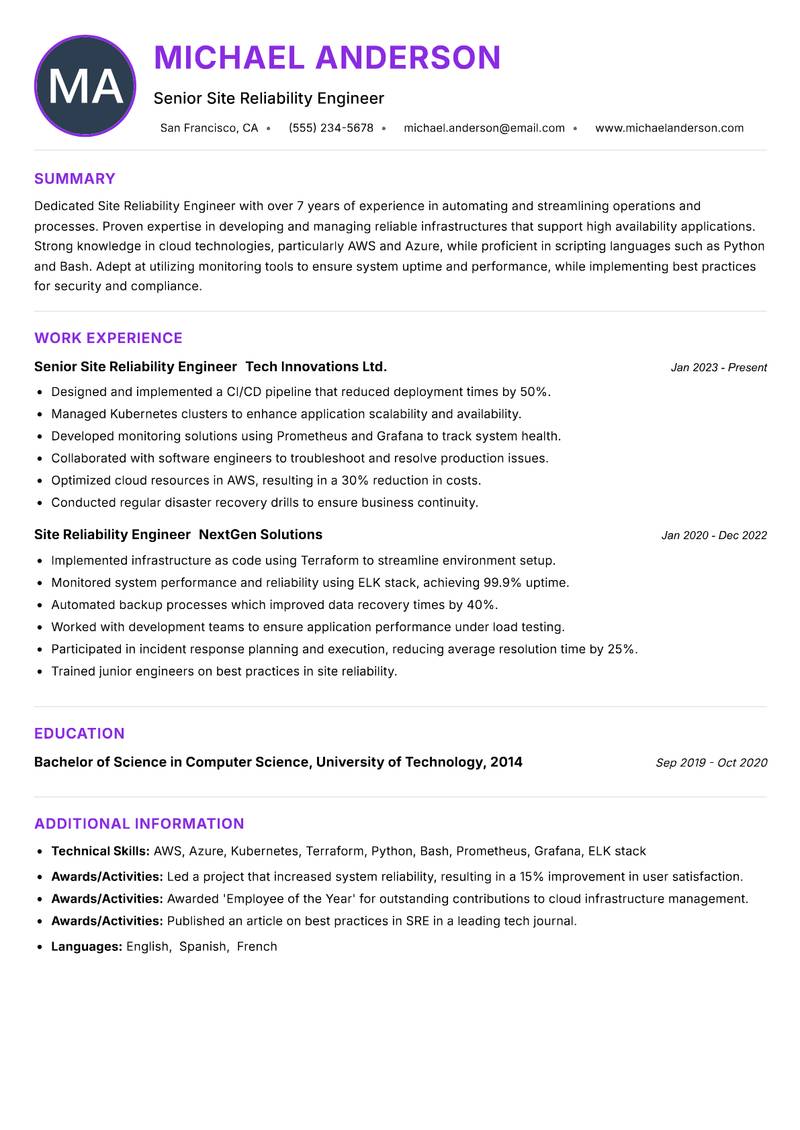
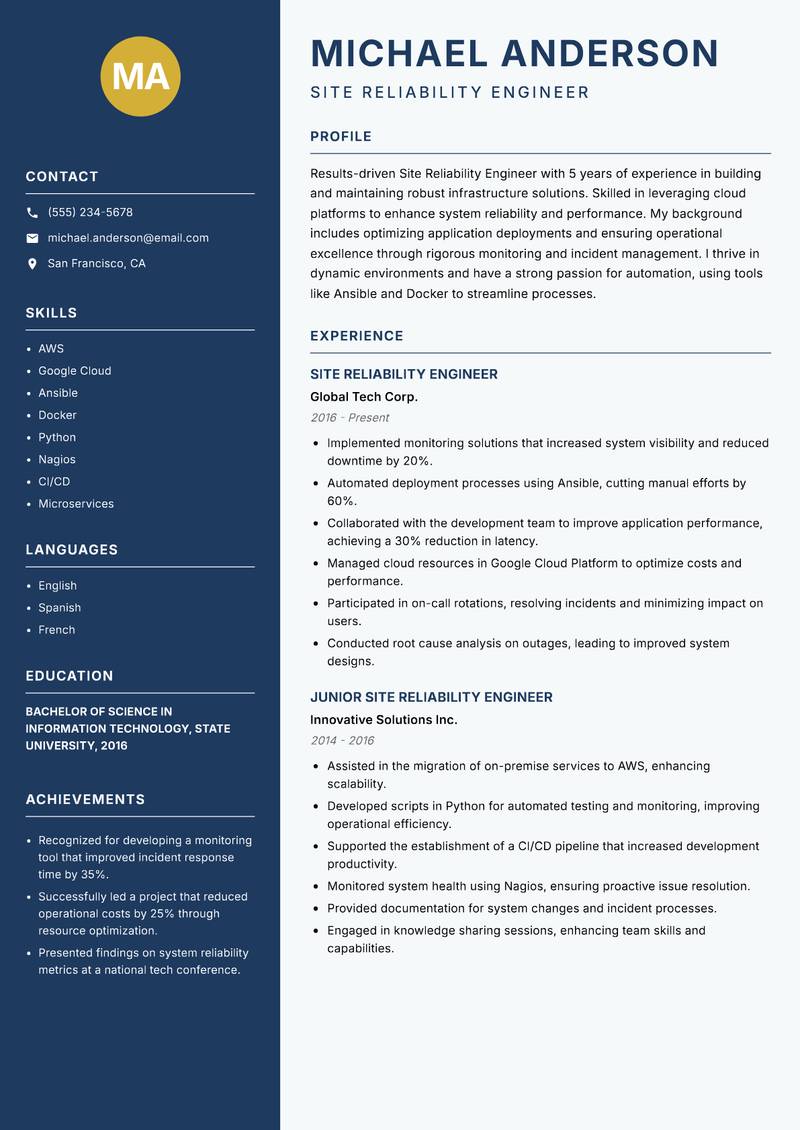
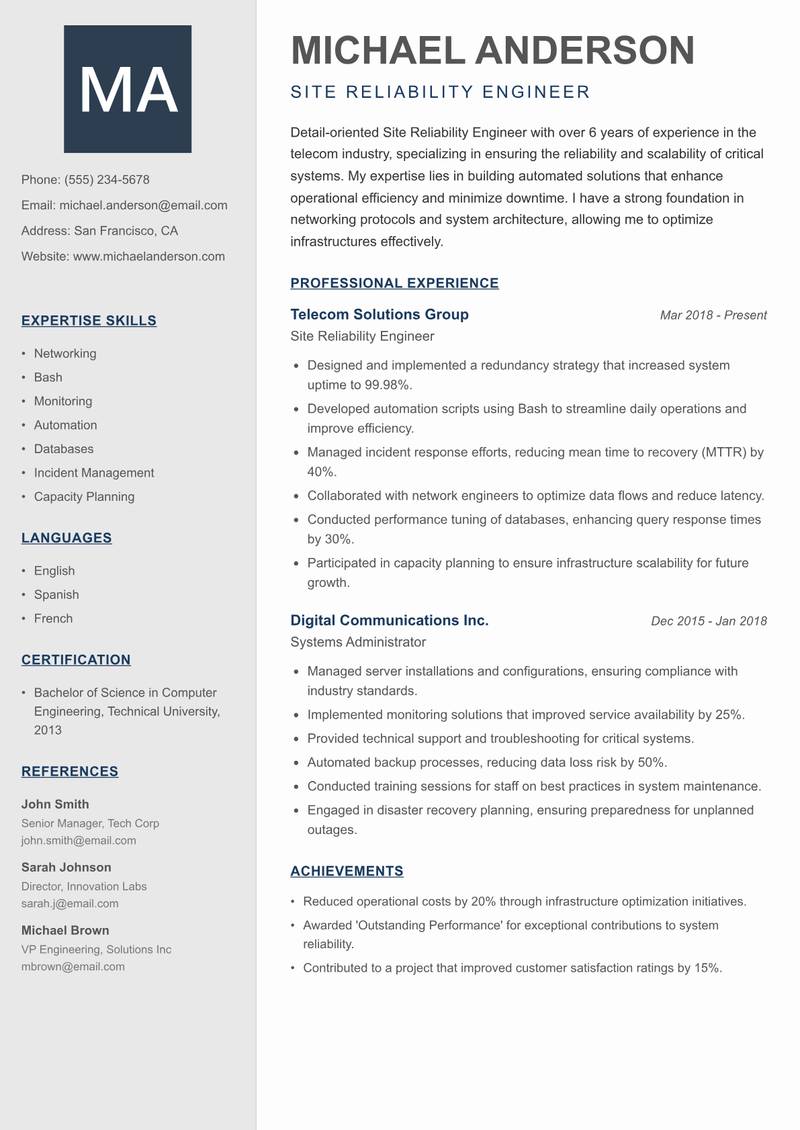
A strong Site Reliability Engineer resume leads with a focused professional summary that names the exact role and your standout achievement. In the experience section, open every bullet with a strong action verb and quantify the result with numbers wherever possible. Highlight your most relevant competencies — especially Cloud platforms, Programming Languages (Python, Java, JavaScript, Go, Rust, C++), and Web Frameworks (React, Node.js, Django, Spring, FastAPI) — in a dedicated Skills section positioned early so ATS systems and hiring managers both find it immediately.
For format, most Site Reliability Engineer roles suit a reverse-chronological layout: most recent position first, working backwards. Keep to one page for under five years of experience, or two pages for senior candidates with a rich project or leadership history. Use clean, ATS-safe fonts (10–12pt), standard section headings (Summary, Experience, Education, Skills), and avoid tables, text boxes, or multi-column layouts that applicant tracking systems cannot parse reliably.