Key Skills for Soil and Water Monitoring Analyst Positions
- Soil and Water Monitoring
- Soil Science & Fertility Assessment
- Irrigation System Design & Management
- Drainage Engineering
- Water-Use Efficiency & Conservation
- Soil Erosion Prevention & Remediation
- GIS & Spatial Mapping
- Water Quality Monitoring & Analysis
- Enviro-Agricultural Compliance
- Salinity & Waterlogging Management
Resume Tips for Soil and Water Monitoring Analyst Applications
- Frame every achievement as a business outcome — revenue impact, cost reduction, efficiency gain, or risk mitigated — since soil and water monitoring analyst employers want analysts who translate data into decisions, not just produce reports
- Demonstrate soil science methodology: soil morphology, fertility testing, salinity measurement.
- Highlight irrigation system types you have designed or managed: drip, pivot, furrow, subsurface.
- Quantify conservation outcomes: erosion reduced, water-use efficiency improved, soil organic carbon gains.
- For regulatory roles, demonstrate knowledge of water rights and environmental compliance frameworks.
- Show GIS proficiency — soil and water management is spatially complex.
Strong Action Verbs for Soil and Water Monitoring Analyst Resumes
Assessed · Designed · Managed · Monitored · Conserved · Remediated · Mapped · Planned · Implemented · Measured · Achieved · Administered · Analyzed · Architected
Common Mistakes to Avoid
- Writing a generic objective statement instead of a targeted soil and water monitoring analyst professional summary
- Not demonstrating technical soil science methodology.
- Failing to show irrigation design and water efficiency knowledge.
- Ignoring regulatory and compliance dimensions of water resource management.
- Not quantifying conservation or efficiency outcomes.
Experience Levels
- Field Technician / Science Graduate (0-2 years)
- Soil / Water Scientist (2-6 years)
- Senior Scientist / Specialist (6-11 years)
- Principal Scientist / Manager (11-17 years)
- Director / Chief Natural Resource Officer (17+ years)
How to Write a Soil and Water Monitoring Analyst Resume
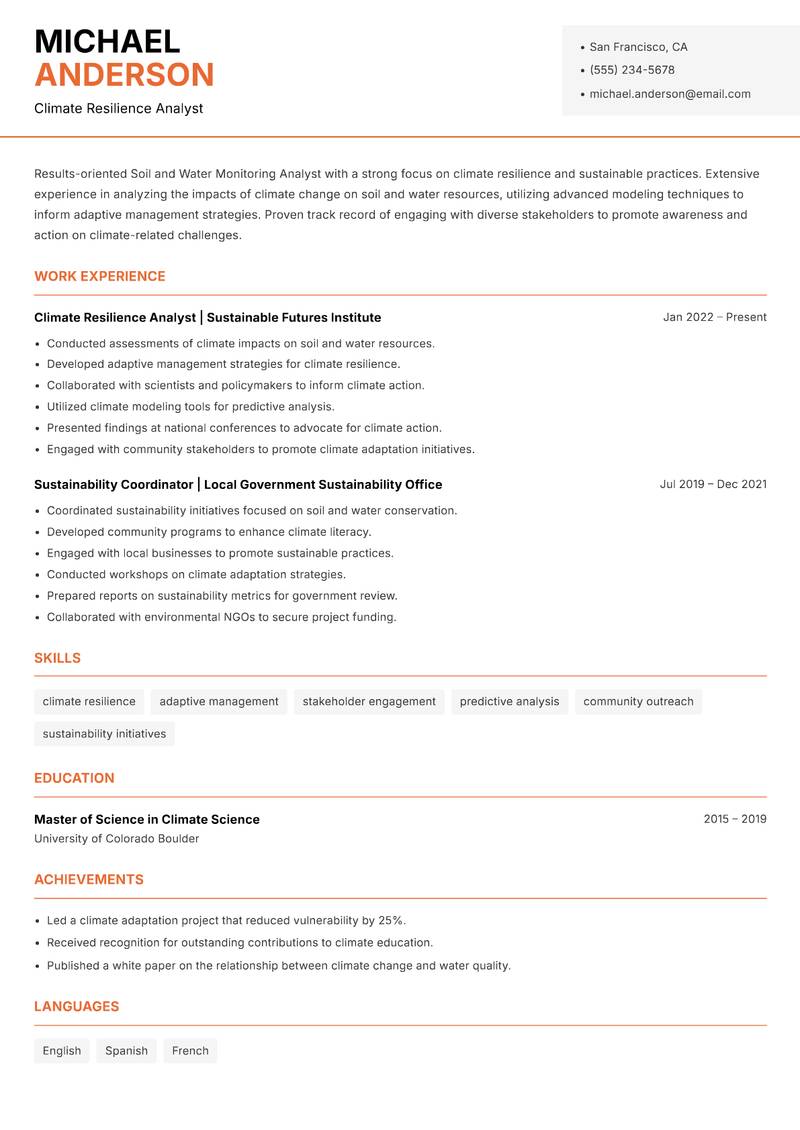
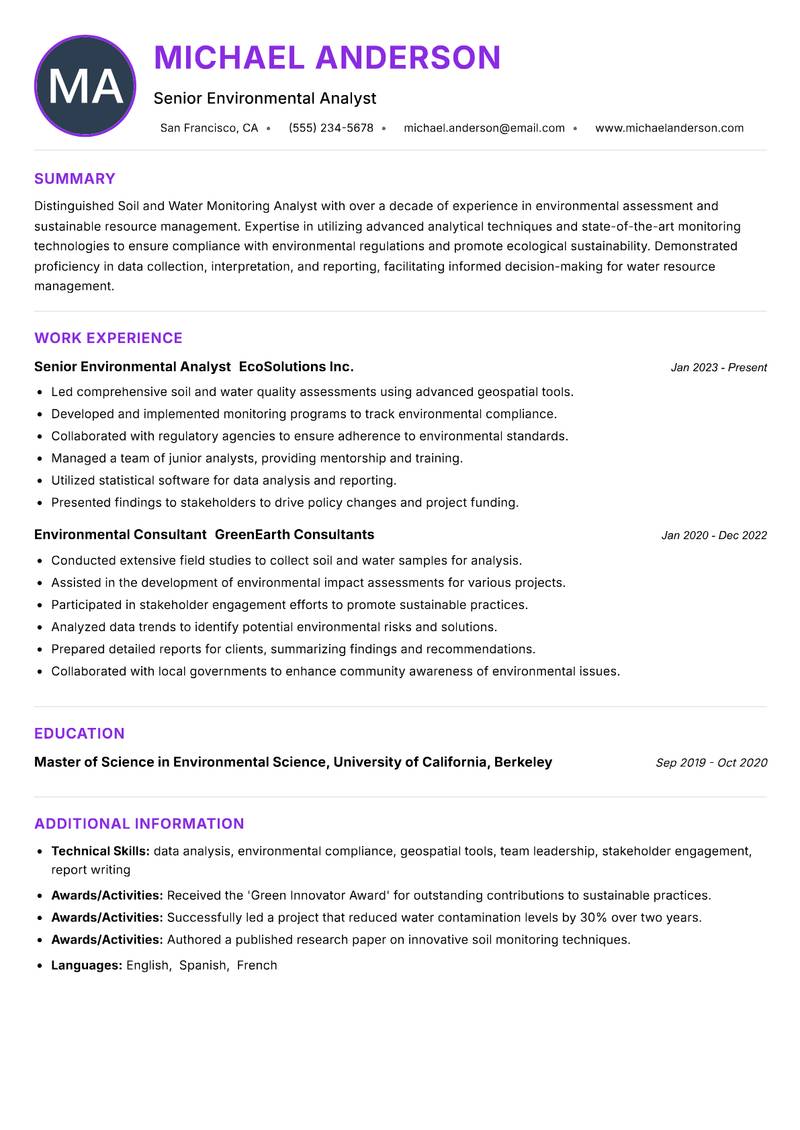
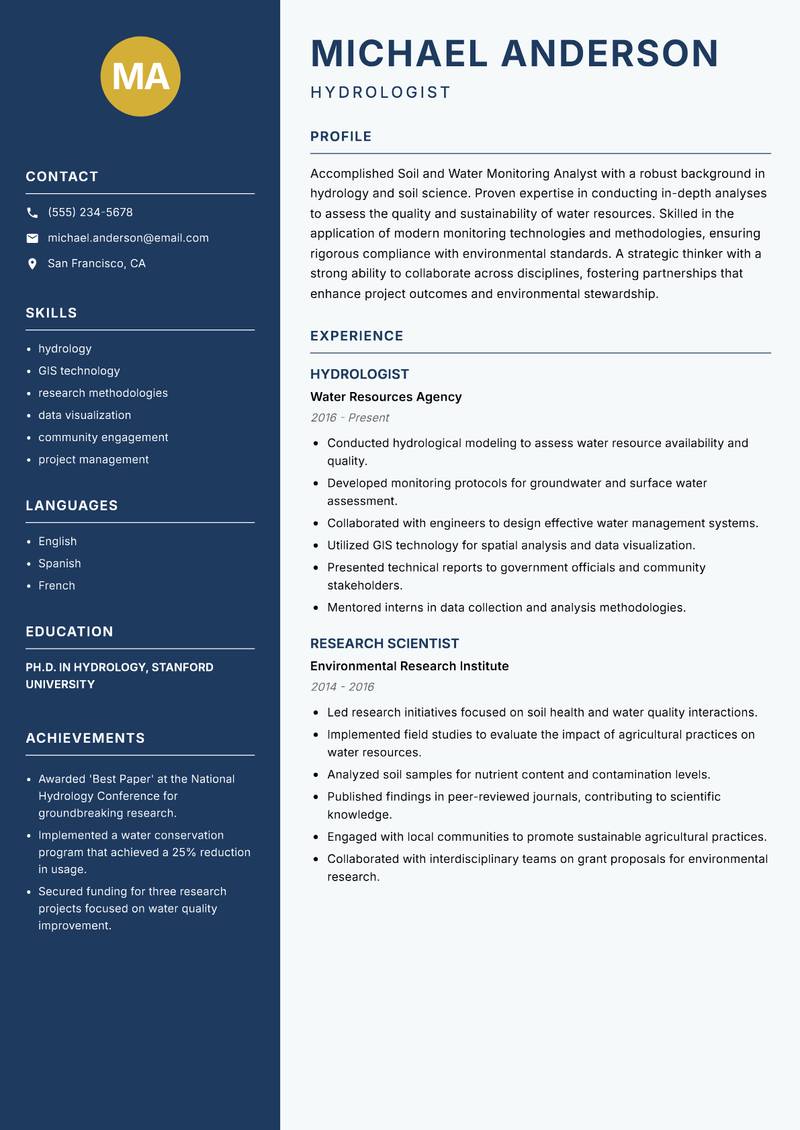
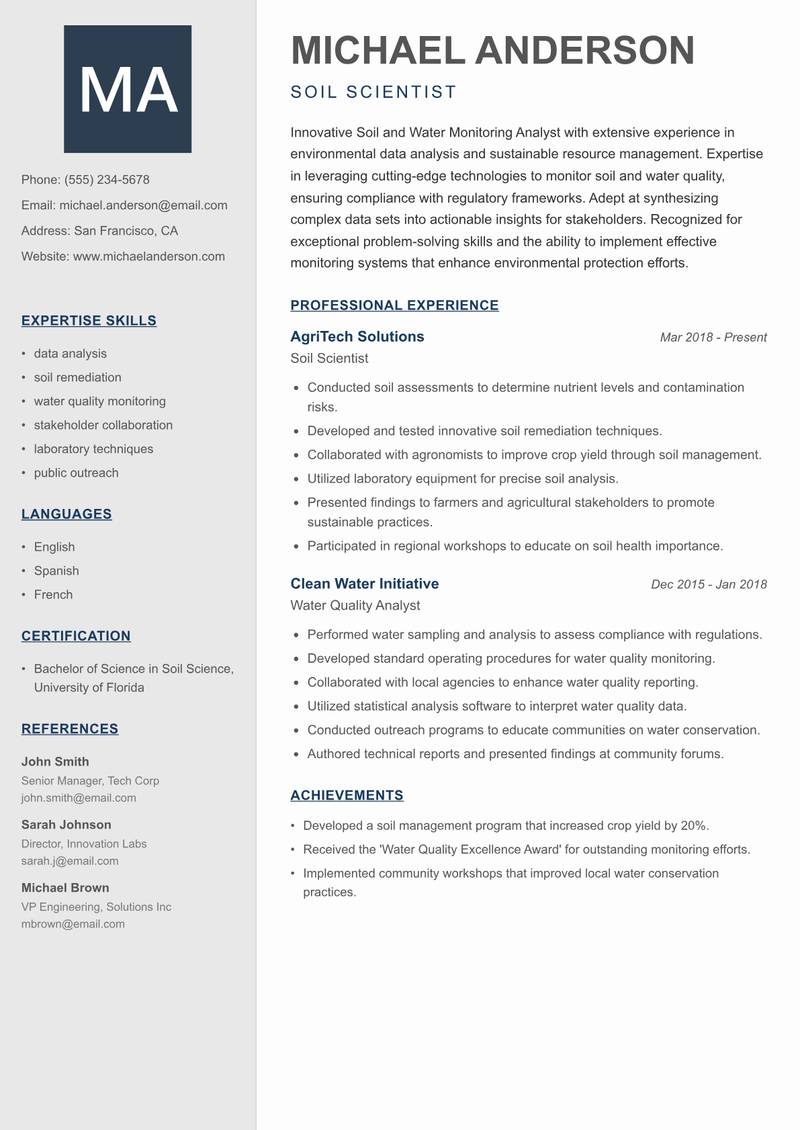
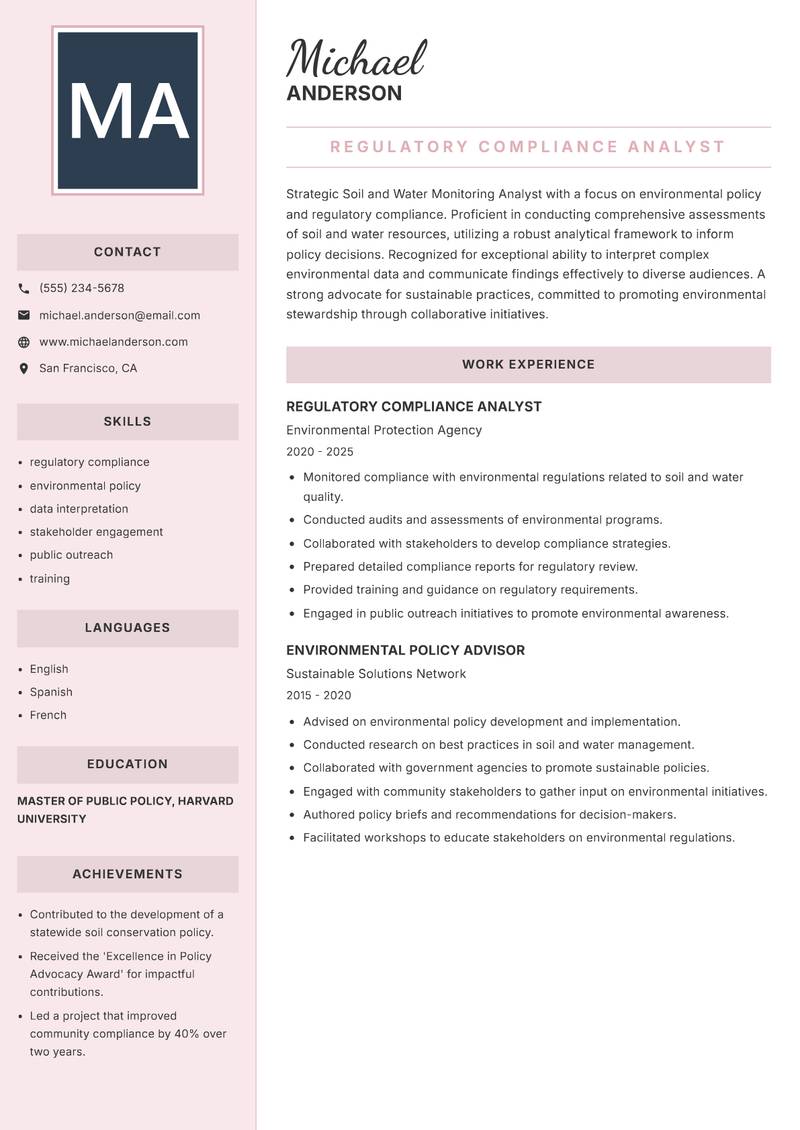
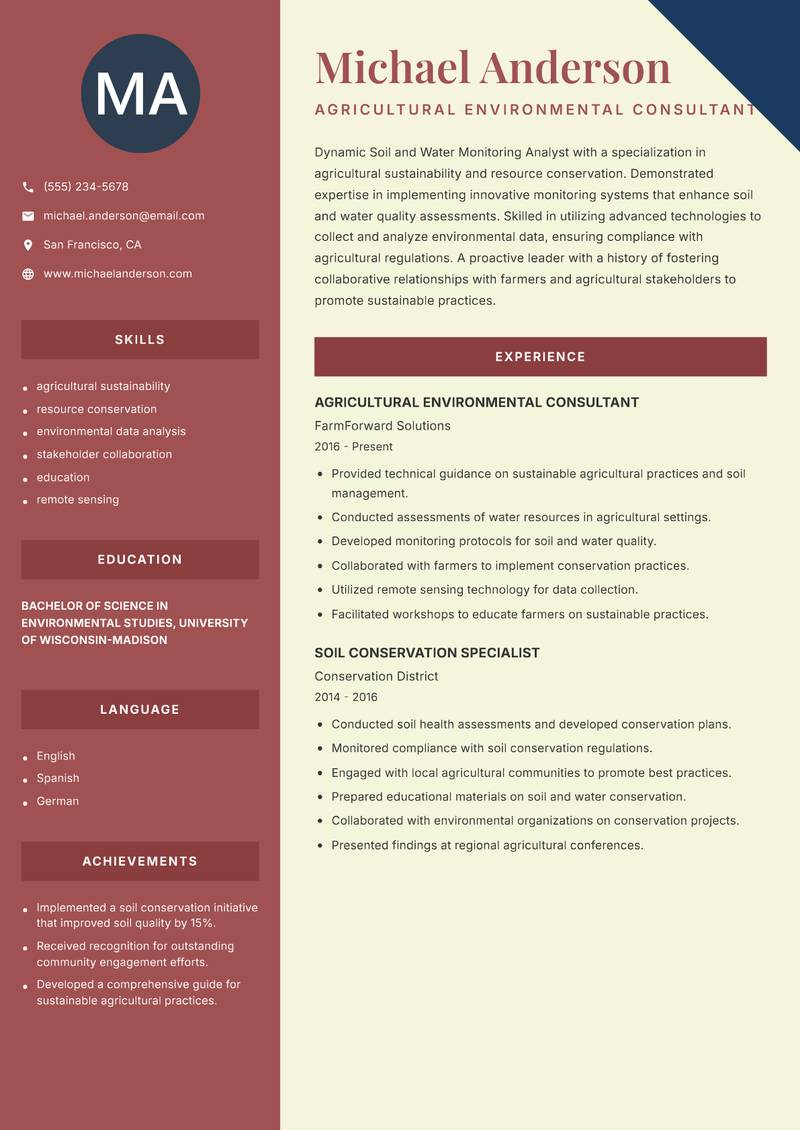
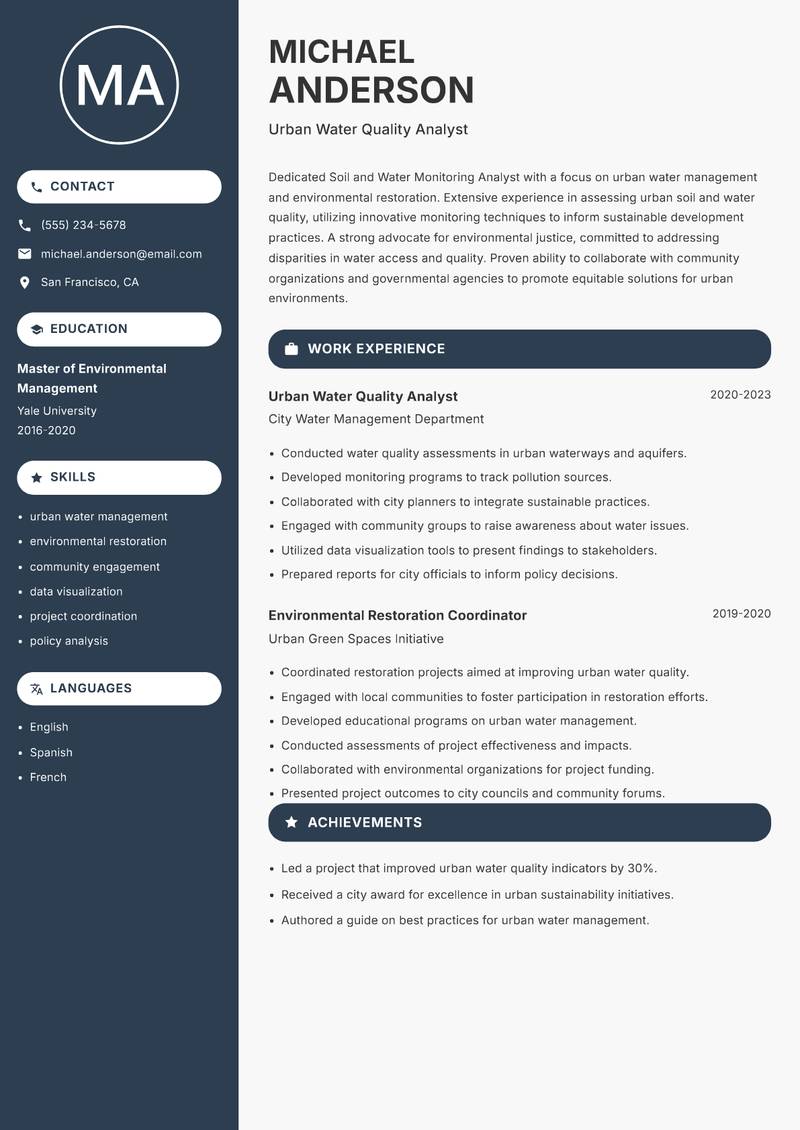
Browse Soil and Water Monitoring Analyst resume examples built around irrigation system design & management, tailored for Soil & Water Management roles.
A strong Soil and Water Monitoring Analyst resume leads with a focused professional summary that names the exact role and your standout achievement. In the experience section, open every bullet with a strong action verb and quantify the result with numbers wherever possible. Highlight your most relevant competencies — especially Soil and Water Monitoring, Soil Science & Fertility Assessment, and Irrigation System Design & Management — in a dedicated Skills section positioned early so ATS systems and hiring managers both find it immediately.
For format, most Soil and Water Monitoring Analyst roles suit a reverse-chronological layout: most recent position first, working backwards. Keep to one page for under five years of experience, or two pages for senior candidates with a rich project or leadership history. Use clean, ATS-safe fonts (10–12pt), standard section headings (Summary, Experience, Education, Skills), and avoid tables, text boxes, or multi-column layouts that applicant tracking systems cannot parse reliably.