Veterinary Anesthesiologist Resume

These Veterinary Anesthesiologist resume samples are designed to help you write a resume that gets noticed by hiring managers and passes applicant tracking systems (ATS) in Veterinary Science. Each example shows real formatting, section structure, and language you can adapt to your own background. When writing your own Veterinary Anesthesiologist resume, focus on highlighting clinical examination & diagnosis (Multi-species), surgical techniques (Routine & specialized) and medical imaging (X-Ray, ultrasound, MRI). Recruiters scan for these qualifications first, so they should appear early in your summary and experience sections. Use strong action verbs such as "examined", "diagnosed", "surgically treated", "vaccinated" to describe your achievements, and quantify your impact wherever possible — percentages, dollar amounts, or time saved make your resume more convincing. A common mistake to avoid: writing a generic objective statement instead of a targeted veterinary anesthesiologist professional summary. Tailor your resume to each Veterinary Anesthesiologist position you apply for rather than using one generic version.

Veterinary Anesthesiologist Resume Template
View PDF
0.0 (0 ratings)

Senior Veterinary Anesthesiologist Resume

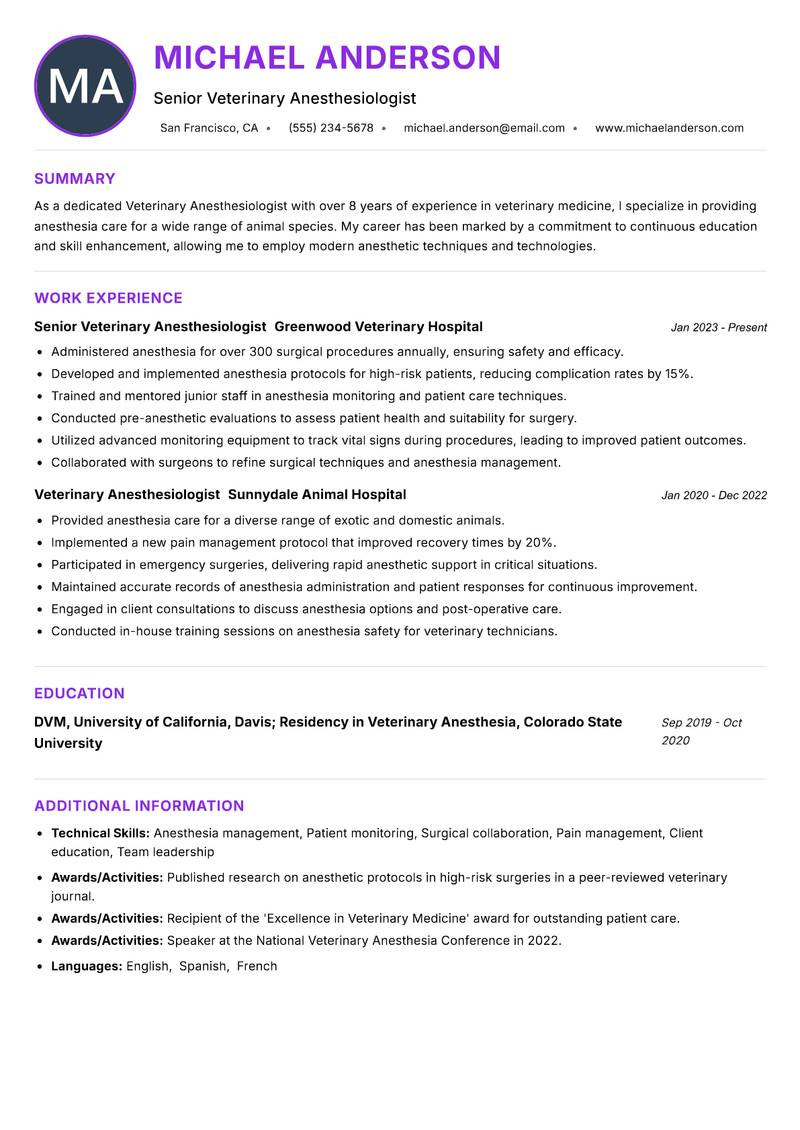
As a dedicated Veterinary Anesthesiologist with over 8 years of experience in veterinary medicine, I specialize in providing anesthesia care for a wide range of animal species. My career has been marked by a commitment to continuous education and skill enhancement, allowing me to employ modern anesthetic techniques and technologies. I have worked in various clinical settings, from emergency care clinics to specialized veterinary hospitals, where I have honed my ability to manage complex anesthetic protocols and monitor patient vitals meticulously. My approach combines a passion for animal welfare with a strong focus on client education and support. I am skilled in collaborating with multidisciplinary teams to ensure the best possible outcomes for our patients. My goal is to further advance the field of veterinary anesthesiology by adopting evidence-based practices and contributing to the ongoing education of my peers. I am actively involved in research initiatives aimed at improving anesthetic safety and efficacy in veterinary medicine, which underscores my commitment to the profession and the health of our animal patients.

Anesthesia management Patient monitoring Surgical collaboration Pain management Client education Team leadership
Veterinary Anesthesiologist Resume Preview Example
View PDF
  1. Administered anesthesia for over 300 surgical procedures annually, ensuring safety and efficacy.
  2. Developed and implemented anesthesia protocols for high-risk patients, reducing complication rates by 15%.
  3. Trained and mentored junior staff in anesthesia monitoring and patient care techniques.
  4. Conducted pre-anesthetic evaluations to assess patient health and suitability for surgery.
  5. Utilized advanced monitoring equipment to track vital signs during procedures, leading to improved patient outcomes.
  6. Collaborated with surgeons to refine surgical techniques and anesthesia management.
  1. Provided anesthesia care for a diverse range of exotic and domestic animals.
  2. Implemented a new pain management protocol that improved recovery times by 20%.
  3. Participated in emergency surgeries, delivering rapid anesthetic support in critical situations.
  4. Maintained accurate records of anesthesia administration and patient responses for continuous improvement.
  5. Engaged in client consultations to discuss anesthesia options and post-operative care.
  6. Conducted in-house training sessions on anesthesia safety for veterinary technicians.

Achievements

  • Published research on anesthetic protocols in high-risk surgeries in a peer-reviewed veterinary journal.
  • Recipient of the 'Excellence in Veterinary Medicine' award for outstanding patient care.
  • Speaker at the National Veterinary Anesthesia Conference in 2022.
⏱️
Experience
2-5 Years
📅
Level
Mid Level
🎓
Education
DVM, University of California,...

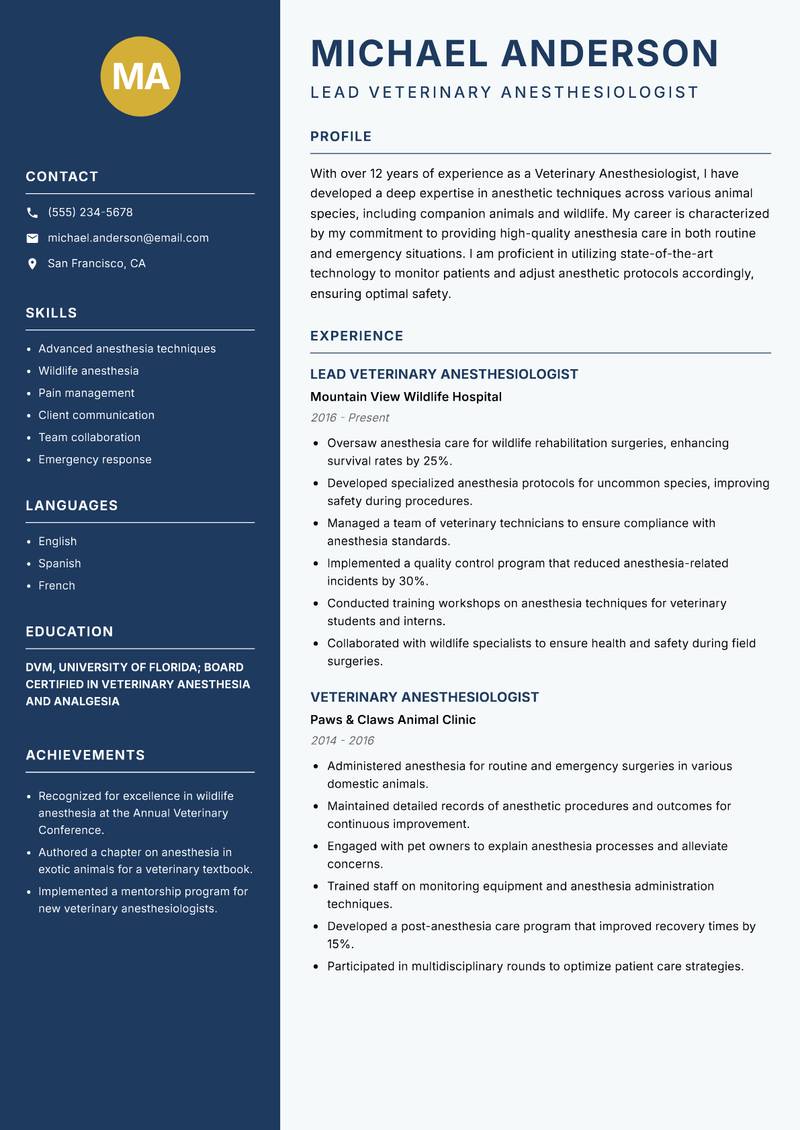
Lead Veterinary Anesthesiologist Resume

With over 12 years of experience as a Veterinary Anesthesiologist, I have developed a deep expertise in anesthetic techniques across various animal species, including companion animals and wildlife. My career is characterized by my commitment to providing high-quality anesthesia care in both routine and emergency situations. I am proficient in utilizing state-of-the-art technology to monitor patients and adjust anesthetic protocols accordingly, ensuring optimal safety. My passion for veterinary medicine drives me to stay updated with the latest advancements in anesthesia and pain management. I have collaborated with numerous specialists to create tailored anesthesia plans that accommodate individual patient needs. Additionally, I actively participate in community outreach programs, educating pet owners about the importance of pre-anesthetic evaluations and post-operative care. As a leader in my field, I aim to foster a culture of continuous learning and improvement among my peers.

Advanced anesthesia techniques Wildlife anesthesia Pain management Client communication Team collaboration Emergency response
Veterinary Anesthesiologist Resume Preview Example
View PDF
  1. Oversaw anesthesia care for wildlife rehabilitation surgeries, enhancing survival rates by 25%.
  2. Developed specialized anesthesia protocols for uncommon species, improving safety during procedures.
  3. Managed a team of veterinary technicians to ensure compliance with anesthesia standards.
  4. Implemented a quality control program that reduced anesthesia-related incidents by 30%.
  5. Conducted training workshops on anesthesia techniques for veterinary students and interns.
  6. Collaborated with wildlife specialists to ensure health and safety during field surgeries.
  1. Administered anesthesia for routine and emergency surgeries in various domestic animals.
  2. Maintained detailed records of anesthetic procedures and outcomes for continuous improvement.
  3. Engaged with pet owners to explain anesthesia processes and alleviate concerns.
  4. Trained staff on monitoring equipment and anesthesia administration techniques.
  5. Developed a post-anesthesia care program that improved recovery times by 15%.
  6. Participated in multidisciplinary rounds to optimize patient care strategies.

Achievements

  • Recognized for excellence in wildlife anesthesia at the Annual Veterinary Conference.
  • Authored a chapter on anesthesia in exotic animals for a veterinary textbook.
  • Implemented a mentorship program for new veterinary anesthesiologists.
⏱️
Experience
2-5 Years
📅
Level
Mid Level
🎓
Education
DVM, University of Florida; Bo...

Veterinary Anesthesiologist Resume

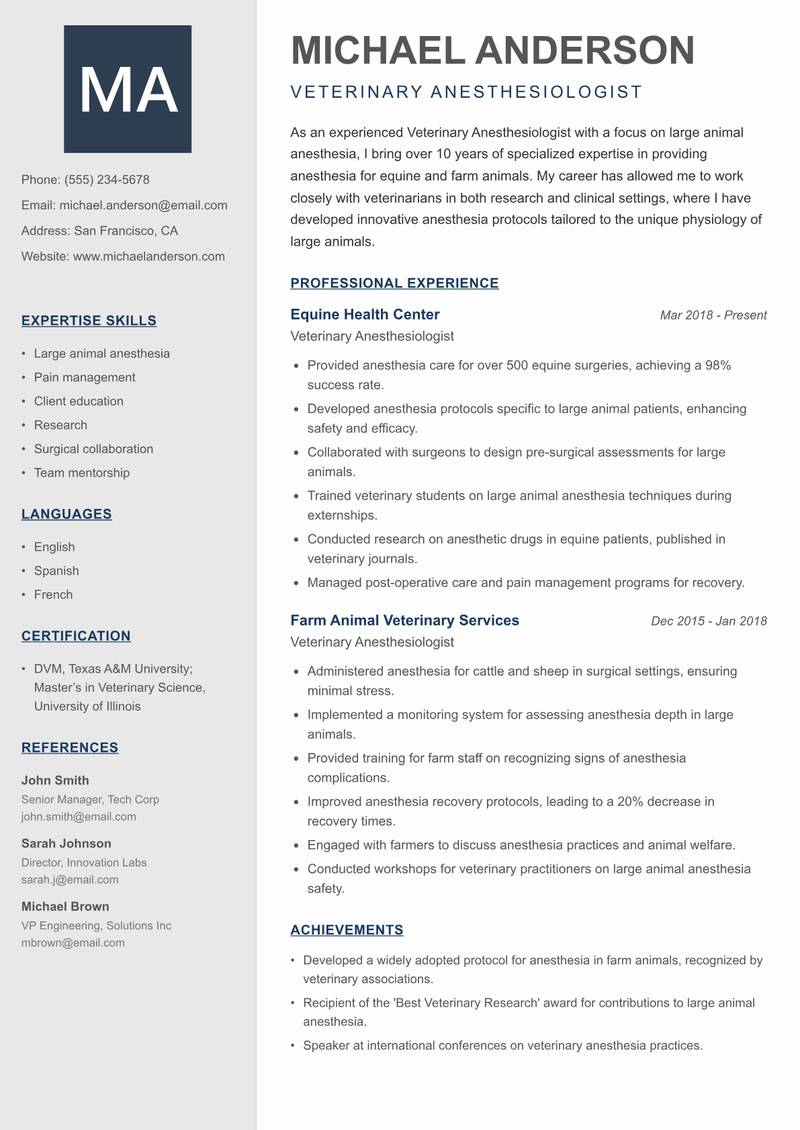
As an experienced Veterinary Anesthesiologist with a focus on large animal anesthesia, I bring over 10 years of specialized expertise in providing anesthesia for equine and farm animals. My career has allowed me to work closely with veterinarians in both research and clinical settings, where I have developed innovative anesthesia protocols tailored to the unique physiology of large animals. I prioritize animal welfare and safety, ensuring that each patient receives the highest standard of care. My background in agricultural practices complements my veterinary training, enabling me to address the specific needs of livestock anesthesia. I actively contribute to veterinary education by participating in seminars and workshops aimed at sharing best practices in large animal anesthesia. My goal is to improve the standards of care in veterinary medicine, particularly for large animal patients, through collaboration and continuous learning.

Large animal anesthesia Pain management Client education Research Surgical collaboration Team mentorship
Veterinary Anesthesiologist Resume Preview Example
View PDF
  1. Provided anesthesia care for over 500 equine surgeries, achieving a 98% success rate.
  2. Developed anesthesia protocols specific to large animal patients, enhancing safety and efficacy.
  3. Collaborated with surgeons to design pre-surgical assessments for large animals.
  4. Trained veterinary students on large animal anesthesia techniques during externships.
  5. Conducted research on anesthetic drugs in equine patients, published in veterinary journals.
  6. Managed post-operative care and pain management programs for recovery.
  1. Administered anesthesia for cattle and sheep in surgical settings, ensuring minimal stress.
  2. Implemented a monitoring system for assessing anesthesia depth in large animals.
  3. Provided training for farm staff on recognizing signs of anesthesia complications.
  4. Improved anesthesia recovery protocols, leading to a 20% decrease in recovery times.
  5. Engaged with farmers to discuss anesthesia practices and animal welfare.
  6. Conducted workshops for veterinary practitioners on large animal anesthesia safety.

Achievements

  • Developed a widely adopted protocol for anesthesia in farm animals, recognized by veterinary associations.
  • Recipient of the 'Best Veterinary Research' award for contributions to large animal anesthesia.
  • Speaker at international conferences on veterinary anesthesia practices.
⏱️
Experience
2-5 Years
📅
Level
Mid Level
🎓
Education
DVM, Texas A&M University; Mas...

Veterinary Anesthesiologist Resume

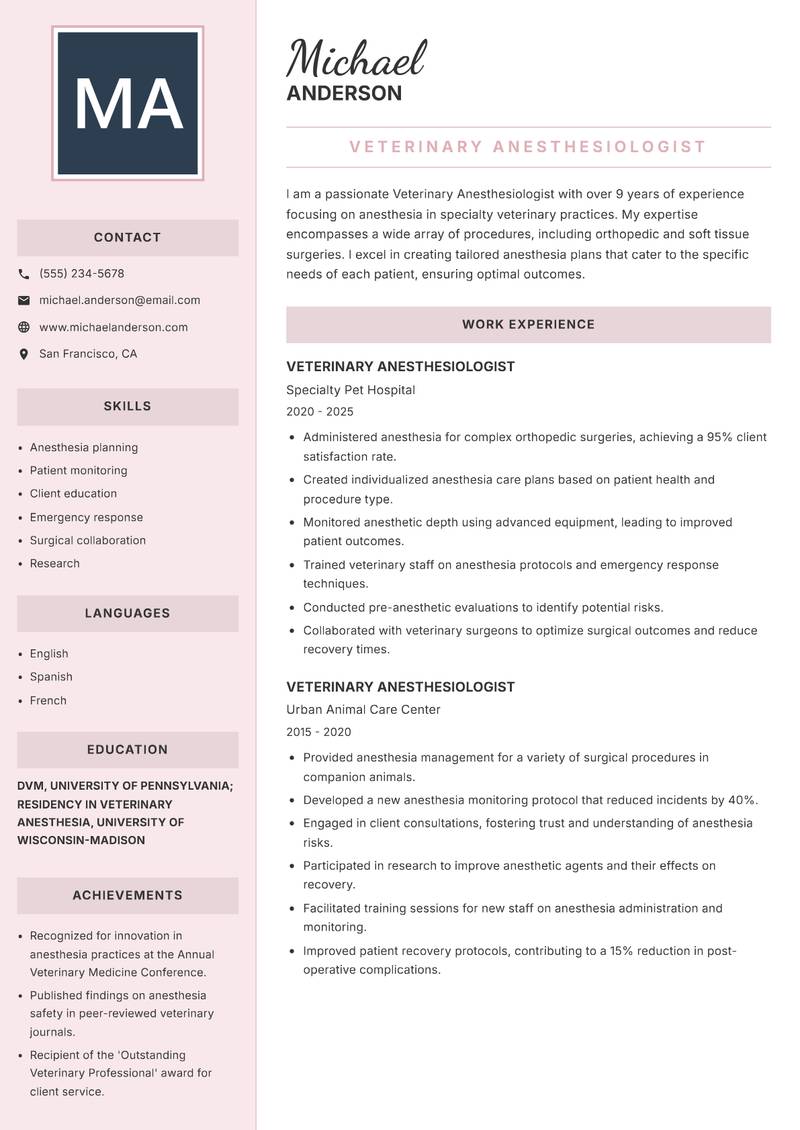
I am a passionate Veterinary Anesthesiologist with over 9 years of experience focusing on anesthesia in specialty veterinary practices. My expertise encompasses a wide array of procedures, including orthopedic and soft tissue surgeries. I excel in creating tailored anesthesia plans that cater to the specific needs of each patient, ensuring optimal outcomes. My commitment to advancing veterinary anesthesia practices is reflected in my participation in ongoing training and research initiatives. I pride myself on my ability to communicate effectively with clients, educating them about the anesthesia process and addressing any concerns. Additionally, I work closely with surgical teams to enhance collaboration and ensure cohesive patient care. My goal is to contribute to the veterinary field by promoting best practices in anesthesia management and improving patient safety.

Anesthesia planning Patient monitoring Client education Emergency response Surgical collaboration Research
Veterinary Anesthesiologist Resume Preview Example
View PDF
  1. Administered anesthesia for complex orthopedic surgeries, achieving a 95% client satisfaction rate.
  2. Created individualized anesthesia care plans based on patient health and procedure type.
  3. Monitored anesthetic depth using advanced equipment, leading to improved patient outcomes.
  4. Trained veterinary staff on anesthesia protocols and emergency response techniques.
  5. Conducted pre-anesthetic evaluations to identify potential risks.
  6. Collaborated with veterinary surgeons to optimize surgical outcomes and reduce recovery times.
  1. Provided anesthesia management for a variety of surgical procedures in companion animals.
  2. Developed a new anesthesia monitoring protocol that reduced incidents by 40%.
  3. Engaged in client consultations, fostering trust and understanding of anesthesia risks.
  4. Participated in research to improve anesthetic agents and their effects on recovery.
  5. Facilitated training sessions for new staff on anesthesia administration and monitoring.
  6. Improved patient recovery protocols, contributing to a 15% reduction in post-operative complications.

Achievements

  • Recognized for innovation in anesthesia practices at the Annual Veterinary Medicine Conference.
  • Published findings on anesthesia safety in peer-reviewed veterinary journals.
  • Recipient of the 'Outstanding Veterinary Professional' award for client service.
⏱️
Experience
2-5 Years
📅
Level
Mid Level
🎓
Education
DVM, University of Pennsylvani...

Veterinary Anesthesiologist Resume

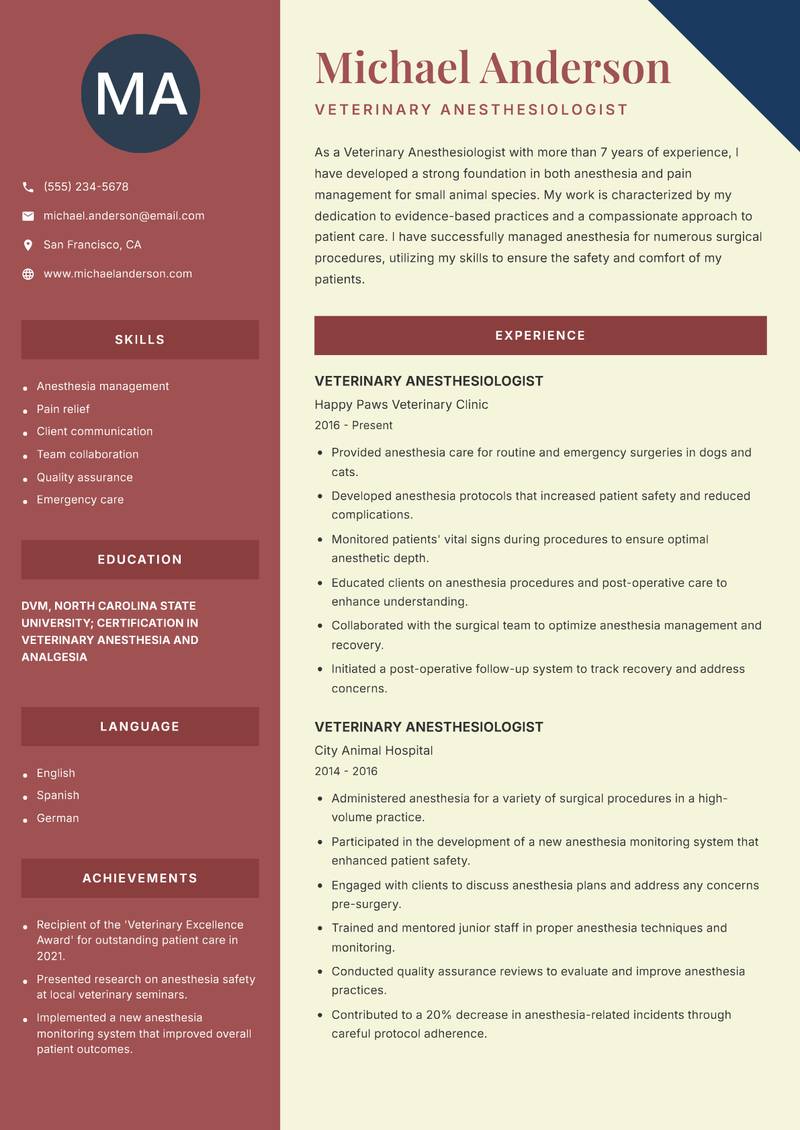
As a Veterinary Anesthesiologist with more than 7 years of experience, I have developed a strong foundation in both anesthesia and pain management for small animal species. My work is characterized by my dedication to evidence-based practices and a compassionate approach to patient care. I have successfully managed anesthesia for numerous surgical procedures, utilizing my skills to ensure the safety and comfort of my patients. My experience includes collaborating with surgeons and technicians to create comprehensive anesthesia plans tailored to individual patient needs. I am passionate about educating pet owners about the anesthesia process, helping to alleviate their concerns and ensure informed decisions. My goal is to continue developing my expertise in veterinary anesthesiology and to contribute positively to the veterinary community.

Anesthesia management Pain relief Client communication Team collaboration Quality assurance Emergency care
Veterinary Anesthesiologist Resume Preview Example
View PDF
  1. Provided anesthesia care for routine and emergency surgeries in dogs and cats.
  2. Developed anesthesia protocols that increased patient safety and reduced complications.
  3. Monitored patients' vital signs during procedures to ensure optimal anesthetic depth.
  4. Educated clients on anesthesia procedures and post-operative care to enhance understanding.
  5. Collaborated with the surgical team to optimize anesthesia management and recovery.
  6. Initiated a post-operative follow-up system to track recovery and address concerns.
  1. Administered anesthesia for a variety of surgical procedures in a high-volume practice.
  2. Participated in the development of a new anesthesia monitoring system that enhanced patient safety.
  3. Engaged with clients to discuss anesthesia plans and address any concerns pre-surgery.
  4. Trained and mentored junior staff in proper anesthesia techniques and monitoring.
  5. Conducted quality assurance reviews to evaluate and improve anesthesia practices.
  6. Contributed to a 20% decrease in anesthesia-related incidents through careful protocol adherence.

Achievements

  • Recipient of the 'Veterinary Excellence Award' for outstanding patient care in 2021.
  • Presented research on anesthesia safety at local veterinary seminars.
  • Implemented a new anesthesia monitoring system that improved overall patient outcomes.
⏱️
Experience
2-5 Years
📅
Level
Mid Level
🎓
Education
DVM, North Carolina State Univ...

Veterinary Anesthesiologist Resume

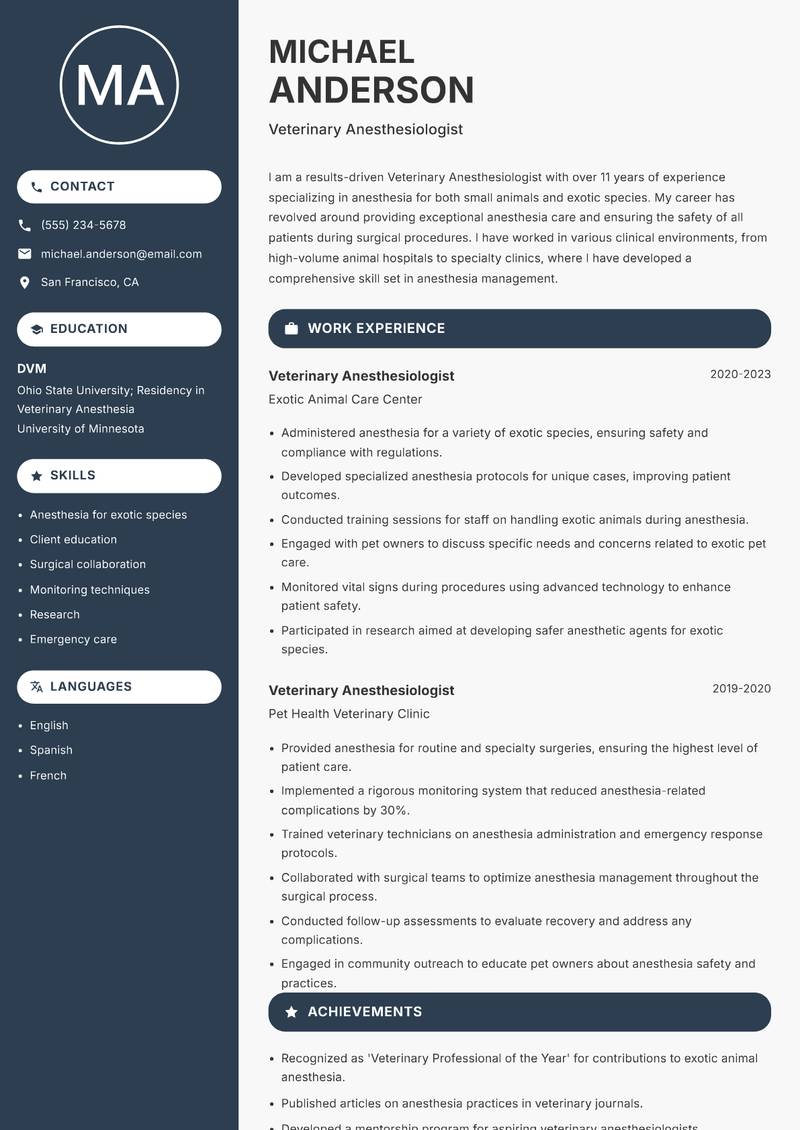
I am a results-driven Veterinary Anesthesiologist with over 11 years of experience specializing in anesthesia for both small animals and exotic species. My career has revolved around providing exceptional anesthesia care and ensuring the safety of all patients during surgical procedures. I have worked in various clinical environments, from high-volume animal hospitals to specialty clinics, where I have developed a comprehensive skill set in anesthesia management. My commitment to professional growth and staying abreast of technological advancements allows me to implement the best practices in veterinary anesthesia. I take pride in my ability to communicate effectively with clients, educating them on the anesthesia process and addressing any concerns they may have. My goal is to contribute to the veterinary community by promoting innovative approaches to anesthesia and enhancing patient care.

Anesthesia for exotic species Client education Surgical collaboration Monitoring techniques Research Emergency care
Veterinary Anesthesiologist Resume Preview Example
View PDF
  1. Administered anesthesia for a variety of exotic species, ensuring safety and compliance with regulations.
  2. Developed specialized anesthesia protocols for unique cases, improving patient outcomes.
  3. Conducted training sessions for staff on handling exotic animals during anesthesia.
  4. Engaged with pet owners to discuss specific needs and concerns related to exotic pet care.
  5. Monitored vital signs during procedures using advanced technology to enhance patient safety.
  6. Participated in research aimed at developing safer anesthetic agents for exotic species.
  1. Provided anesthesia for routine and specialty surgeries, ensuring the highest level of patient care.
  2. Implemented a rigorous monitoring system that reduced anesthesia-related complications by 30%.
  3. Trained veterinary technicians on anesthesia administration and emergency response protocols.
  4. Collaborated with surgical teams to optimize anesthesia management throughout the surgical process.
  5. Conducted follow-up assessments to evaluate recovery and address any complications.
  6. Engaged in community outreach to educate pet owners about anesthesia safety and practices.

Achievements

  • Recognized as 'Veterinary Professional of the Year' for contributions to exotic animal anesthesia.
  • Published articles on anesthesia practices in veterinary journals.
  • Developed a mentorship program for aspiring veterinary anesthesiologists.
⏱️
Experience
2-5 Years
📅
Level
Mid Level
🎓
Education
DVM, Ohio State University; Re...

Emergency Veterinary Anesthesiologist Resume

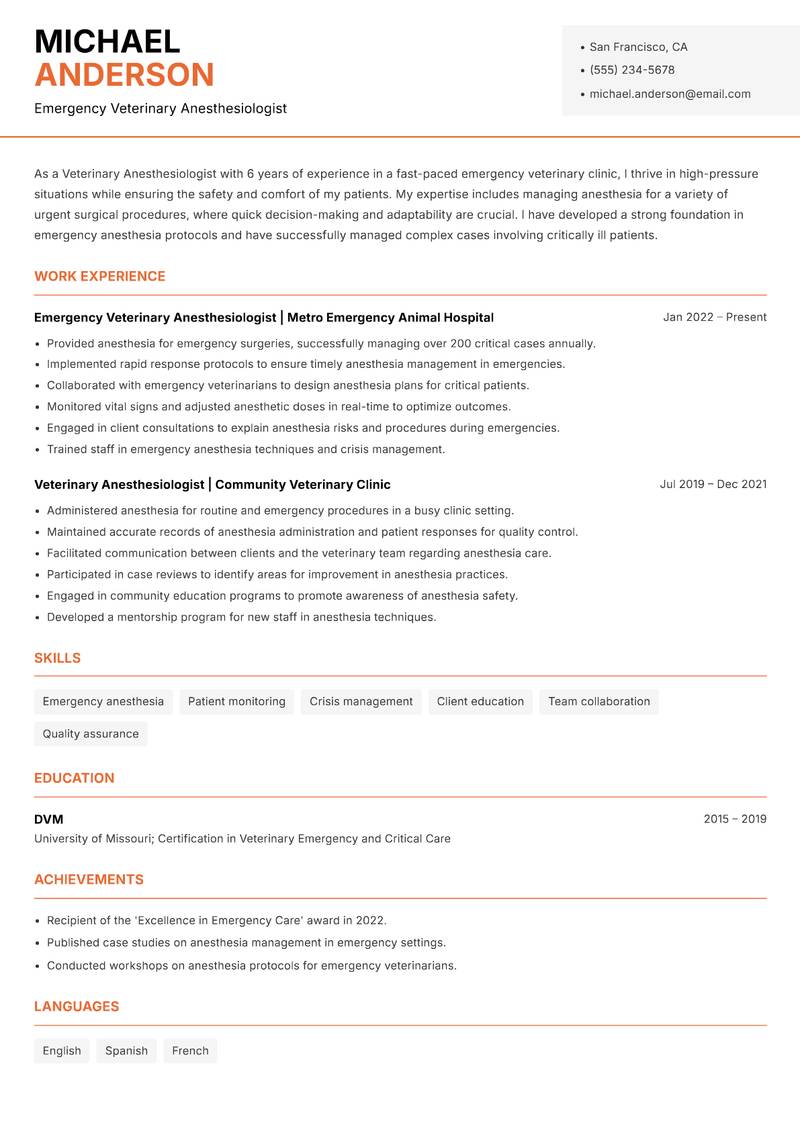
As a Veterinary Anesthesiologist with 6 years of experience in a fast-paced emergency veterinary clinic, I thrive in high-pressure situations while ensuring the safety and comfort of my patients. My expertise includes managing anesthesia for a variety of urgent surgical procedures, where quick decision-making and adaptability are crucial. I have developed a strong foundation in emergency anesthesia protocols and have successfully managed complex cases involving critically ill patients. My commitment to continuous learning drives me to stay current with the latest advances in veterinary anesthesia. I prioritize clear communication with both pet owners and the veterinary team to ensure a cohesive approach to patient care. My goal is to enhance my skills in emergency veterinary medicine and contribute to the advancement of anesthesia practices in high-stress environments.

Emergency anesthesia Patient monitoring Crisis management Client education Team collaboration Quality assurance
Veterinary Anesthesiologist Resume Preview Example
View PDF
  1. Provided anesthesia for emergency surgeries, successfully managing over 200 critical cases annually.
  2. Implemented rapid response protocols to ensure timely anesthesia management in emergencies.
  3. Collaborated with emergency veterinarians to design anesthesia plans for critical patients.
  4. Monitored vital signs and adjusted anesthetic doses in real-time to optimize outcomes.
  5. Engaged in client consultations to explain anesthesia risks and procedures during emergencies.
  6. Trained staff in emergency anesthesia techniques and crisis management.
  1. Administered anesthesia for routine and emergency procedures in a busy clinic setting.
  2. Maintained accurate records of anesthesia administration and patient responses for quality control.
  3. Facilitated communication between clients and the veterinary team regarding anesthesia care.
  4. Participated in case reviews to identify areas for improvement in anesthesia practices.
  5. Engaged in community education programs to promote awareness of anesthesia safety.
  6. Developed a mentorship program for new staff in anesthesia techniques.

Achievements

  • Recipient of the 'Excellence in Emergency Care' award in 2022.
  • Published case studies on anesthesia management in emergency settings.
  • Conducted workshops on anesthesia protocols for emergency veterinarians.
⏱️
Experience
2-5 Years
📅
Level
Mid Level
🎓
Education
DVM, University of Missouri; C...

Key Skills for Veterinary Anesthesiologist Positions

Resume Tips for Veterinary Anesthesiologist Applications

Strong Action Verbs for Veterinary Anesthesiologist Resumes

Examined · Diagnosed · Surgically Treated · Vaccinated · Prescribed · Managed · Monitored · Communicated · Researched · Educated · Updated · Achieved · Administered · Analyzed

Common Mistakes to Avoid

Experience Levels

How to Write a Veterinary Anesthesiologist Resume

Browse Veterinary Anesthesiologist resume examples built around clinical examination & diagnosis (Multi-species), tailored for Veterinary Science roles.

A strong Veterinary Anesthesiologist resume leads with a focused professional summary that names the exact role and your standout achievement. In the experience section, open every bullet with a strong action verb and quantify the result with numbers wherever possible. Highlight your most relevant competencies — especially Clinical Examination & Diagnosis (Multi-species), Surgical Techniques (Routine & Specialized), and Medical Imaging (X-Ray, Ultrasound, MRI) — in a dedicated Skills section positioned early so ATS systems and hiring managers both find it immediately.

For format, most Veterinary Anesthesiologist roles suit a reverse-chronological layout: most recent position first, working backwards. Keep to one page for under five years of experience, or two pages for senior candidates with a rich project or leadership history. Use clean, ATS-safe fonts (10–12pt), standard section headings (Summary, Experience, Education, Skills), and avoid tables, text boxes, or multi-column layouts that applicant tracking systems cannot parse reliably.
Frequently Asked Questions

What makes a strong Veterinary Anesthesiologist resume stand out to employers?

A standout Veterinary Anesthesiologist resume combines role-specific skills with quantified achievements. Name the exact job title in your professional summary, mirror keywords from each job posting, and open every bullet point with a strong action verb followed by a measurable result. Certifications, tools, and domain experience specific to veterinary anesthesiologist roles should appear prominently near the top.

What skills are most important to include on a Veterinary Science resume?

Recruiters hiring in Veterinary Science consistently look for Clinical Examination & Diagnosis (Multi-species), Surgical Techniques (Routine & Specialized), Medical Imaging (X-Ray, Ultrasound, MRI), Pharmacology & Prescribing. List these in a dedicated Skills section near the top so both ATS systems and human reviewers spot them fast. Mirror the exact phrasing from each job posting wherever possible — many applicant tracking systems match literal strings rather than synonyms.

What is the best resume format for Veterinary Science professionals?

A reverse-chronological format is the standard choice for most Veterinary Science candidates — employers expect to see your most recent role first, working backwards. If you are transitioning into Veterinary Science from a related field, a hybrid format (brief skills summary at the top followed by chronological experience) can bridge the gap effectively. Keep the document to one page for under five years of experience, or two pages for senior specialists.

How do I make my Veterinary Science resume pass applicant tracking systems (ATS)?

Use standard section headings — Summary, Experience, Education, Skills — rather than creative labels that ATS parsers do not recognise. Embed domain keywords such as "Clinical Examination & Diagnosis (Multi-species)" and "Surgical Techniques (Routine & Specialized)" naturally inside your experience bullets rather than cramming them into a standalone keyword list. Avoid tables, multi-column layouts, text boxes, headers, footers, and images — these confuse most modern parsers and can cause your resume to be misread or rejected before a human sees it.

What mistakes do Veterinary Science professionals most commonly make on their resume?

The most frequent issue is failing to list veterinary registration — practicing without it is illegal in most jurisdictions. Beyond that, generic objective statements, unquantified achievements, and inconsistent date formatting appear across almost every Veterinary Science application. Fix these by replacing every vague claim with a measurable outcome — specific numbers and named projects add credibility that adjectives cannot.

How long should a Veterinary Science resume be?

One page is appropriate for candidates with under five years of relevant Veterinary Science experience. Two pages are acceptable — and sometimes expected — for senior specialists, managers, or professionals with a strong portfolio of projects, publications, or credentials. Avoid padding to reach a page count: every line should directly support your application for the specific role you are targeting.

Should I include a professional summary at the top of my Veterinary Science resume?

Yes — a two to three sentence summary is the first section most recruiters read. Open with your title and years of Veterinary Science experience, then name your most relevant achievement or specialisation. One proven approach: List veterinary registration and licenses — they are essential for any clinical role — this level of specificity signals genuine expertise before a recruiter reaches your experience section.

Scroll to view samples