Veterinary Microbiologist Resume

These Veterinary Microbiologist resume samples are designed to help you write a resume that gets noticed by hiring managers and passes applicant tracking systems (ATS) in Veterinary Science. Each example shows real formatting, section structure, and language you can adapt to your own background. When writing your own Veterinary Microbiologist resume, focus on highlighting clinical examination & diagnosis (Multi-species), surgical techniques (Routine & specialized) and medical imaging (X-Ray, ultrasound, MRI). Recruiters scan for these qualifications first, so they should appear early in your summary and experience sections. Use strong action verbs such as "examined", "diagnosed", "surgically treated", "vaccinated" to describe your achievements, and quantify your impact wherever possible — percentages, dollar amounts, or time saved make your resume more convincing. A common mistake to avoid: writing a generic objective statement instead of a targeted veterinary microbiologist professional summary. Tailor your resume to each Veterinary Microbiologist position you apply for rather than using one generic version.

Veterinary Microbiologist Resume Template
View PDF
0.0 (0 ratings)

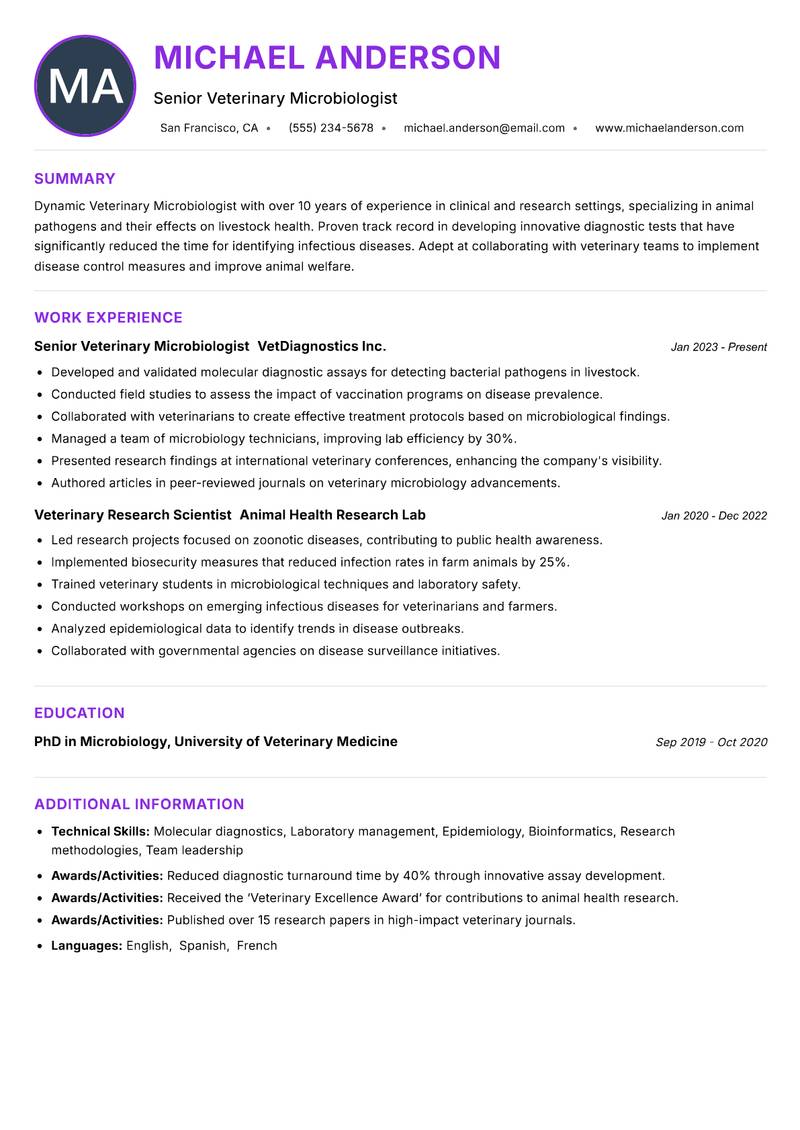
Senior Veterinary Microbiologist Resume

Dynamic Veterinary Microbiologist with over 10 years of experience in clinical and research settings, specializing in animal pathogens and their effects on livestock health. Proven track record in developing innovative diagnostic tests that have significantly reduced the time for identifying infectious diseases. Adept at collaborating with veterinary teams to implement disease control measures and improve animal welfare. Possesses a strong foundation in microbiological techniques and laboratory management, combined with a passion for advancing veterinary science through research. Committed to enhancing public health through effective animal disease management and prevention strategies. Holds a PhD in Microbiology and a deep understanding of regulatory compliance in veterinary practices.

Molecular diagnostics Laboratory management Epidemiology Bioinformatics Research methodologies Team leadership
Veterinary Microbiologist Resume Preview Example
View PDF
  1. Developed and validated molecular diagnostic assays for detecting bacterial pathogens in livestock.
  2. Conducted field studies to assess the impact of vaccination programs on disease prevalence.
  3. Collaborated with veterinarians to create effective treatment protocols based on microbiological findings.
  4. Managed a team of microbiology technicians, improving lab efficiency by 30%.
  5. Presented research findings at international veterinary conferences, enhancing the company's visibility.
  6. Authored articles in peer-reviewed journals on veterinary microbiology advancements.
  1. Led research projects focused on zoonotic diseases, contributing to public health awareness.
  2. Implemented biosecurity measures that reduced infection rates in farm animals by 25%.
  3. Trained veterinary students in microbiological techniques and laboratory safety.
  4. Conducted workshops on emerging infectious diseases for veterinarians and farmers.
  5. Analyzed epidemiological data to identify trends in disease outbreaks.
  6. Collaborated with governmental agencies on disease surveillance initiatives.

Achievements

  • Reduced diagnostic turnaround time by 40% through innovative assay development.
  • Received the ‘Veterinary Excellence Award’ for contributions to animal health research.
  • Published over 15 research papers in high-impact veterinary journals.
⏱️
Experience
2-5 Years
📅
Level
Mid Level
🎓
Education
PhD in Microbiology, Universit...

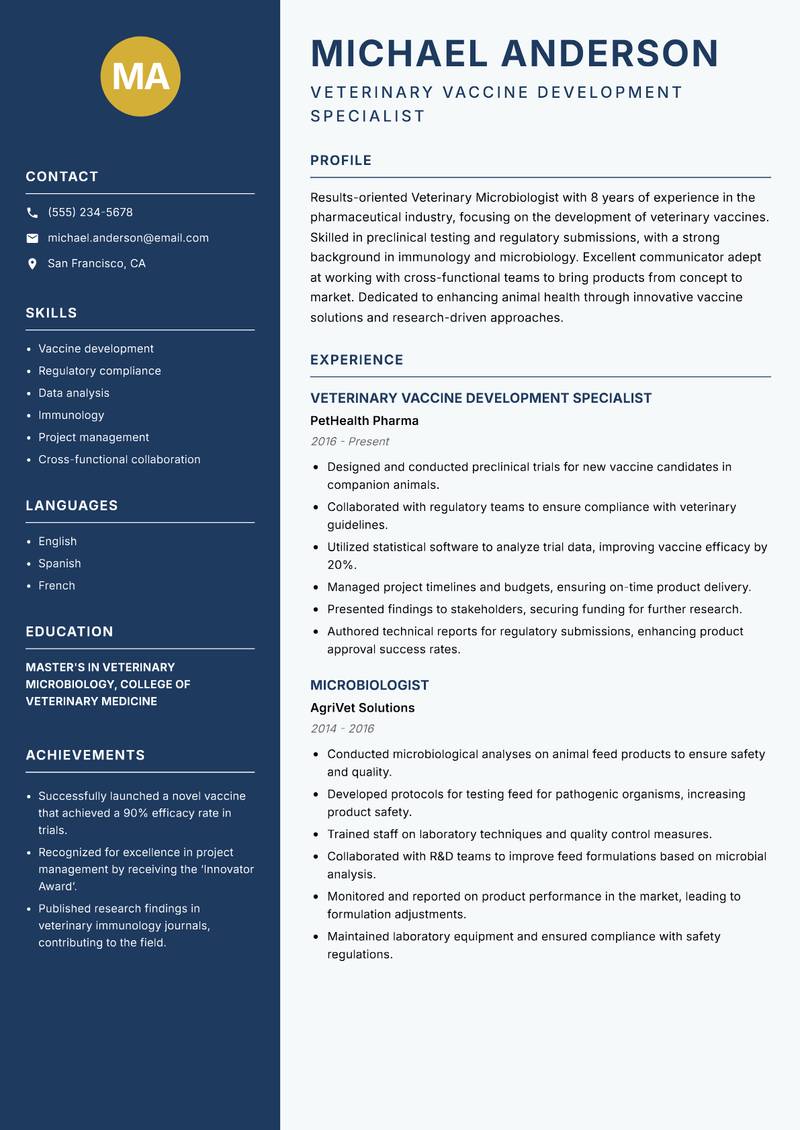
Veterinary Vaccine Development Specialist Resume

Accomplished Veterinary Microbiologist with 8 years of experience in the pharmaceutical industry, focusing on the development of veterinary vaccines. Skilled in preclinical testing and regulatory submissions, with a strong background in immunology and microbiology. Excellent communicator adept at working with cross-functional teams to bring products from concept to market. Dedicated to enhancing animal health through innovative vaccine solutions and research-driven approaches. Holds a Master's degree in Veterinary Microbiology and is proficient in various laboratory techniques and data analysis tools.

Vaccine development Regulatory compliance Data analysis Immunology Project management Cross-functional collaboration
Veterinary Microbiologist Resume Preview Example
View PDF
  1. Designed and conducted preclinical trials for new vaccine candidates in companion animals.
  2. Collaborated with regulatory teams to ensure compliance with veterinary guidelines.
  3. Utilized statistical software to analyze trial data, improving vaccine efficacy by 20%.
  4. Managed project timelines and budgets, ensuring on-time product delivery.
  5. Presented findings to stakeholders, securing funding for further research.
  6. Authored technical reports for regulatory submissions, enhancing product approval success rates.
  1. Conducted microbiological analyses on animal feed products to ensure safety and quality.
  2. Developed protocols for testing feed for pathogenic organisms, increasing product safety.
  3. Trained staff on laboratory techniques and quality control measures.
  4. Collaborated with R&D teams to improve feed formulations based on microbial analysis.
  5. Monitored and reported on product performance in the market, leading to formulation adjustments.
  6. Maintained laboratory equipment and ensured compliance with safety regulations.

Achievements

  • Successfully launched a novel vaccine that achieved a 90% efficacy rate in trials.
  • Recognized for excellence in project management by receiving the ‘Innovator Award’.
  • Published research findings in veterinary immunology journals, contributing to the field.
⏱️
Experience
2-5 Years
📅
Level
Mid Level
🎓
Education
Master's in Veterinary Microbi...

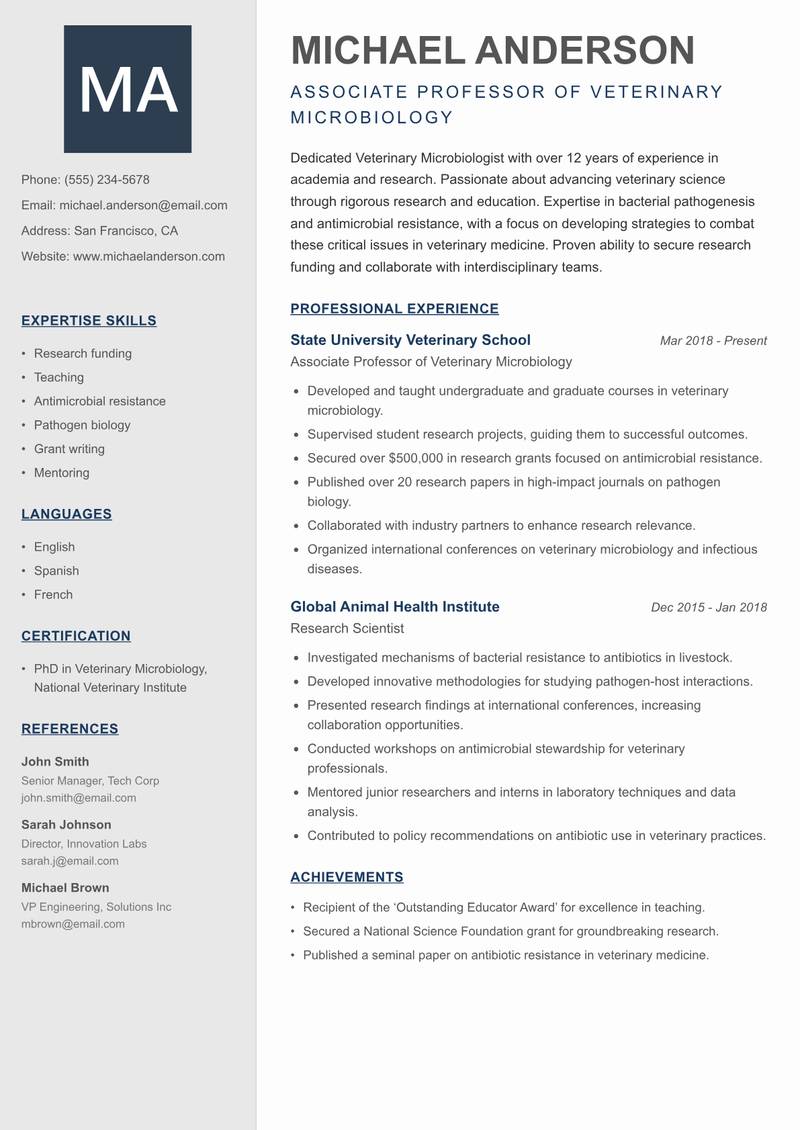
Associate Professor of Veterinary Microbiology Resume

Dedicated Veterinary Microbiologist with over 12 years of experience in academia and research. Passionate about advancing veterinary science through rigorous research and education. Expertise in bacterial pathogenesis and antimicrobial resistance, with a focus on developing strategies to combat these critical issues in veterinary medicine. Proven ability to secure research funding and collaborate with interdisciplinary teams. Committed to mentoring students and fostering the next generation of veterinary scientists. Holds a PhD in Veterinary Microbiology and has published extensively in peer-reviewed journals.

Research funding Teaching Antimicrobial resistance Pathogen biology Grant writing Mentoring
Veterinary Microbiologist Resume Preview Example
View PDF
  1. Developed and taught undergraduate and graduate courses in veterinary microbiology.
  2. Supervised student research projects, guiding them to successful outcomes.
  3. Secured over $500,000 in research grants focused on antimicrobial resistance.
  4. Published over 20 research papers in high-impact journals on pathogen biology.
  5. Collaborated with industry partners to enhance research relevance.
  6. Organized international conferences on veterinary microbiology and infectious diseases.
  1. Investigated mechanisms of bacterial resistance to antibiotics in livestock.
  2. Developed innovative methodologies for studying pathogen-host interactions.
  3. Presented research findings at international conferences, increasing collaboration opportunities.
  4. Conducted workshops on antimicrobial stewardship for veterinary professionals.
  5. Mentored junior researchers and interns in laboratory techniques and data analysis.
  6. Contributed to policy recommendations on antibiotic use in veterinary practices.

Achievements

  • Recipient of the ‘Outstanding Educator Award’ for excellence in teaching.
  • Secured a National Science Foundation grant for groundbreaking research.
  • Published a seminal paper on antibiotic resistance in veterinary medicine.
⏱️
Experience
2-5 Years
📅
Level
Mid Level
🎓
Education
PhD in Veterinary Microbiology...

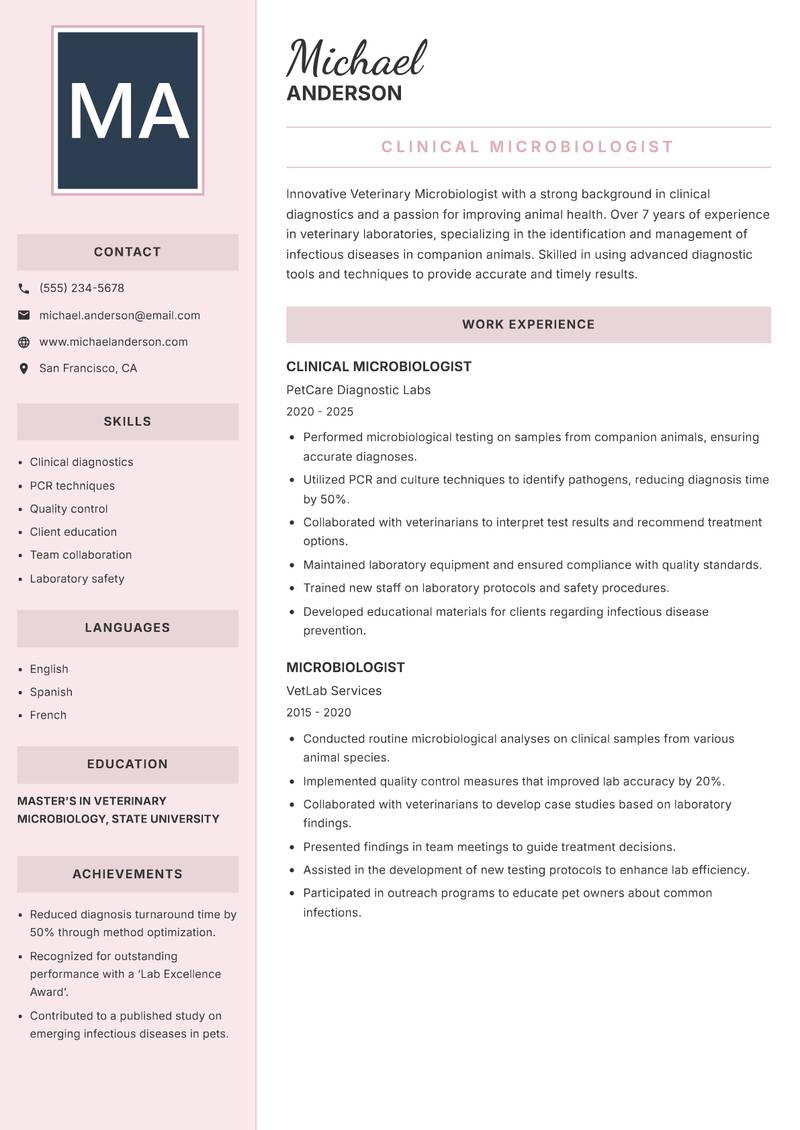
Clinical Microbiologist Resume

Innovative Veterinary Microbiologist with a strong background in clinical diagnostics and a passion for improving animal health. Over 7 years of experience in veterinary laboratories, specializing in the identification and management of infectious diseases in companion animals. Skilled in using advanced diagnostic tools and techniques to provide accurate and timely results. Committed to continuous professional development and implementing best practices in laboratory settings. Holds a Master's in Veterinary Microbiology and is dedicated to client education and outreach.

Clinical diagnostics PCR techniques Quality control Client education Team collaboration Laboratory safety
Veterinary Microbiologist Resume Preview Example
View PDF
  1. Performed microbiological testing on samples from companion animals, ensuring accurate diagnoses.
  2. Utilized PCR and culture techniques to identify pathogens, reducing diagnosis time by 50%.
  3. Collaborated with veterinarians to interpret test results and recommend treatment options.
  4. Maintained laboratory equipment and ensured compliance with quality standards.
  5. Trained new staff on laboratory protocols and safety procedures.
  6. Developed educational materials for clients regarding infectious disease prevention.
  1. Conducted routine microbiological analyses on clinical samples from various animal species.
  2. Implemented quality control measures that improved lab accuracy by 20%.
  3. Collaborated with veterinarians to develop case studies based on laboratory findings.
  4. Presented findings in team meetings to guide treatment decisions.
  5. Assisted in the development of new testing protocols to enhance lab efficiency.
  6. Participated in outreach programs to educate pet owners about common infections.

Achievements

  • Reduced diagnosis turnaround time by 50% through method optimization.
  • Recognized for outstanding performance with a ‘Lab Excellence Award’.
  • Contributed to a published study on emerging infectious diseases in pets.
⏱️
Experience
2-5 Years
📅
Level
Mid Level
🎓
Education
Master's in Veterinary Microbi...

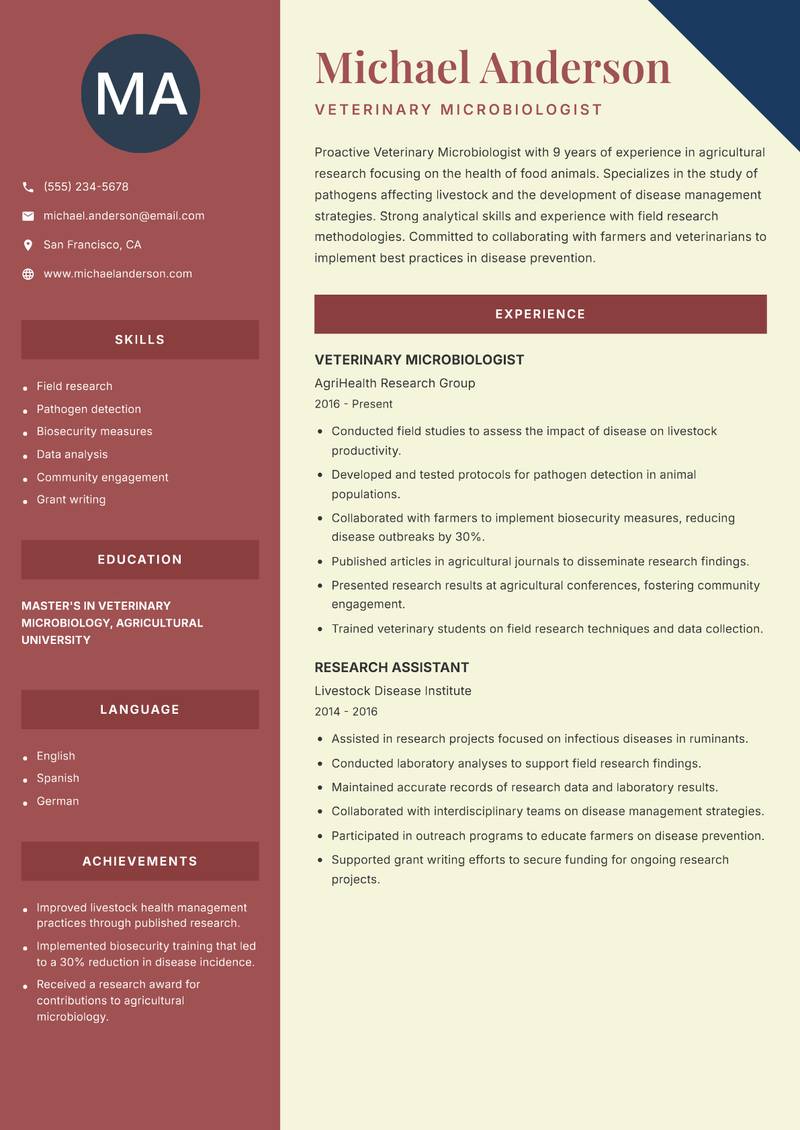
Veterinary Microbiologist Resume

Driven Veterinary Microbiologist with 9 years of experience in agricultural research focusing on the health of food animals. Specializes in the study of pathogens affecting livestock and the development of disease management strategies. Strong analytical skills and experience with field research methodologies. Committed to collaborating with farmers and veterinarians to implement best practices in disease prevention. Holds a Master's degree in Veterinary Microbiology and has a proven track record of publishing research findings that have influenced industry practices.

Field research Pathogen detection Biosecurity measures Data analysis Community engagement Grant writing
Veterinary Microbiologist Resume Preview Example
View PDF
  1. Conducted field studies to assess the impact of disease on livestock productivity.
  2. Developed and tested protocols for pathogen detection in animal populations.
  3. Collaborated with farmers to implement biosecurity measures, reducing disease outbreaks by 30%.
  4. Published articles in agricultural journals to disseminate research findings.
  5. Presented research results at agricultural conferences, fostering community engagement.
  6. Trained veterinary students on field research techniques and data collection.
  1. Assisted in research projects focused on infectious diseases in ruminants.
  2. Conducted laboratory analyses to support field research findings.
  3. Maintained accurate records of research data and laboratory results.
  4. Collaborated with interdisciplinary teams on disease management strategies.
  5. Participated in outreach programs to educate farmers on disease prevention.
  6. Supported grant writing efforts to secure funding for ongoing research projects.

Achievements

  • Improved livestock health management practices through published research.
  • Implemented biosecurity training that led to a 30% reduction in disease incidence.
  • Received a research award for contributions to agricultural microbiology.
⏱️
Experience
2-5 Years
📅
Level
Mid Level
🎓
Education
Master's in Veterinary Microbi...

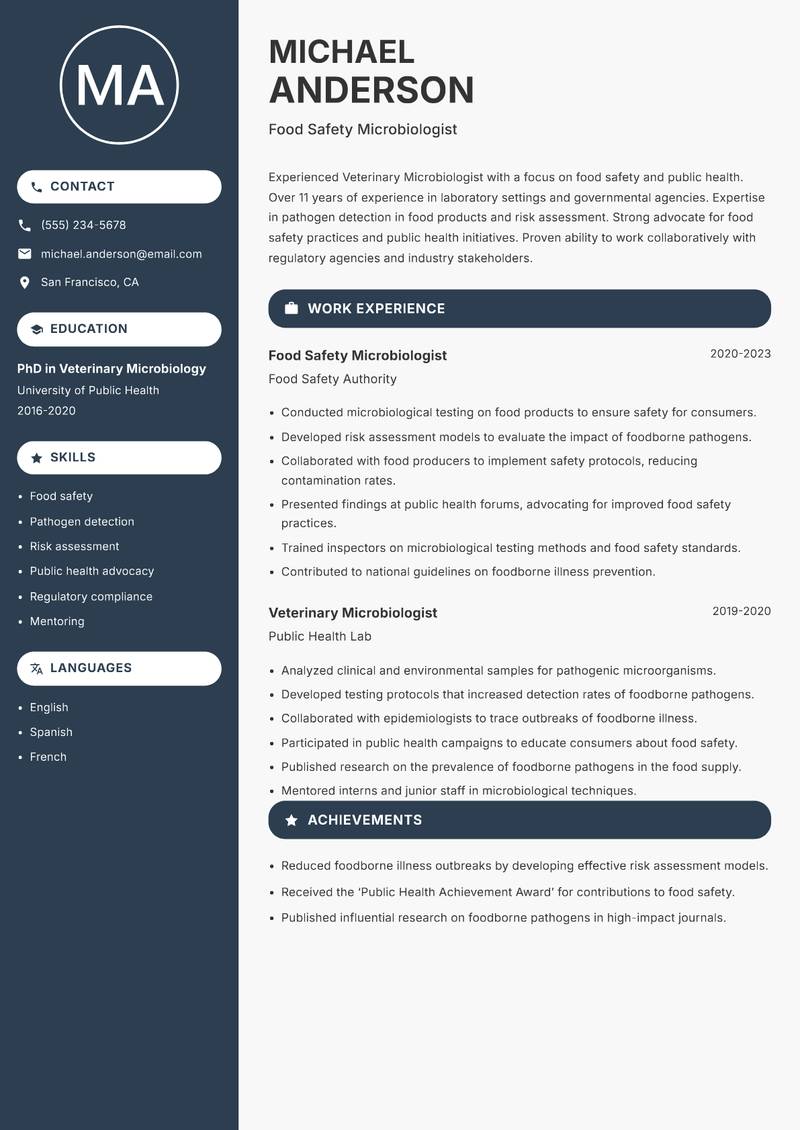
Food Safety Microbiologist Resume

Experienced Veterinary Microbiologist with a focus on food safety and public health. Over 11 years of experience in laboratory settings and governmental agencies. Expertise in pathogen detection in food products and risk assessment. Strong advocate for food safety practices and public health initiatives. Proven ability to work collaboratively with regulatory agencies and industry stakeholders. Holds a PhD in Veterinary Microbiology and is dedicated to educating the public on foodborne pathogens and prevention strategies.

Food safety Pathogen detection Risk assessment Public health advocacy Regulatory compliance Mentoring
Veterinary Microbiologist Resume Preview Example
View PDF
  1. Conducted microbiological testing on food products to ensure safety for consumers.
  2. Developed risk assessment models to evaluate the impact of foodborne pathogens.
  3. Collaborated with food producers to implement safety protocols, reducing contamination rates.
  4. Presented findings at public health forums, advocating for improved food safety practices.
  5. Trained inspectors on microbiological testing methods and food safety standards.
  6. Contributed to national guidelines on foodborne illness prevention.
  1. Analyzed clinical and environmental samples for pathogenic microorganisms.
  2. Developed testing protocols that increased detection rates of foodborne pathogens.
  3. Collaborated with epidemiologists to trace outbreaks of foodborne illness.
  4. Participated in public health campaigns to educate consumers about food safety.
  5. Published research on the prevalence of foodborne pathogens in the food supply.
  6. Mentored interns and junior staff in microbiological techniques.

Achievements

  • Reduced foodborne illness outbreaks by developing effective risk assessment models.
  • Received the ‘Public Health Achievement Award’ for contributions to food safety.
  • Published influential research on foodborne pathogens in high-impact journals.
⏱️
Experience
2-5 Years
📅
Level
Mid Level
🎓
Education
PhD in Veterinary Microbiology...

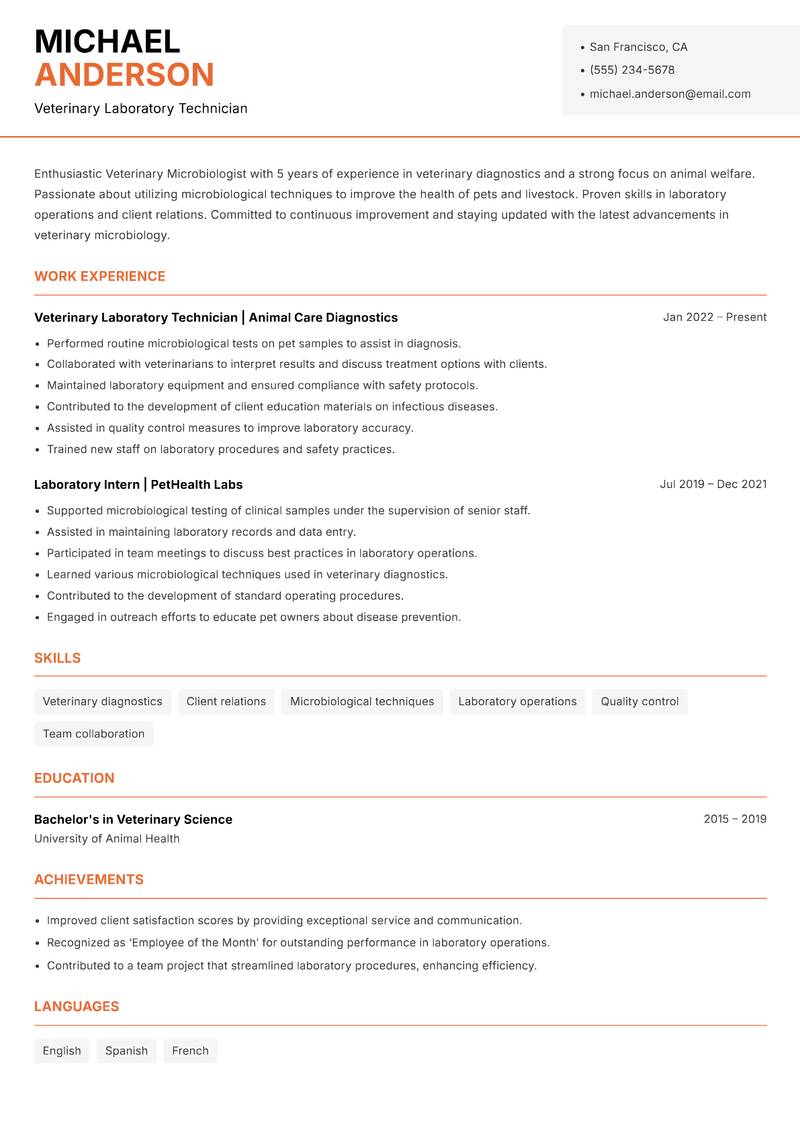
Veterinary Laboratory Technician Resume

Enthusiastic Veterinary Microbiologist with 5 years of experience in veterinary diagnostics and a strong focus on animal welfare. Passionate about utilizing microbiological techniques to improve the health of pets and livestock. Proven skills in laboratory operations and client relations. Committed to continuous improvement and staying updated with the latest advancements in veterinary microbiology. Holds a Bachelor's degree in Veterinary Science and is eager to contribute to a team dedicated to animal health and disease prevention.

Veterinary diagnostics Client relations Microbiological techniques Laboratory operations Quality control Team collaboration
Veterinary Microbiologist Resume Preview Example
View PDF
  1. Performed routine microbiological tests on pet samples to assist in diagnosis.
  2. Collaborated with veterinarians to interpret results and discuss treatment options with clients.
  3. Maintained laboratory equipment and ensured compliance with safety protocols.
  4. Contributed to the development of client education materials on infectious diseases.
  5. Assisted in quality control measures to improve laboratory accuracy.
  6. Trained new staff on laboratory procedures and safety practices.
  1. Supported microbiological testing of clinical samples under the supervision of senior staff.
  2. Assisted in maintaining laboratory records and data entry.
  3. Participated in team meetings to discuss best practices in laboratory operations.
  4. Learned various microbiological techniques used in veterinary diagnostics.
  5. Contributed to the development of standard operating procedures.
  6. Engaged in outreach efforts to educate pet owners about disease prevention.

Achievements

  • Improved client satisfaction scores by providing exceptional service and communication.
  • Recognized as ‘Employee of the Month’ for outstanding performance in laboratory operations.
  • Contributed to a team project that streamlined laboratory procedures, enhancing efficiency.
⏱️
Experience
2-5 Years
📅
Level
Mid Level
🎓
Education
Bachelor's in Veterinary Scien...

Key Skills for Veterinary Microbiologist Positions

Resume Tips for Veterinary Microbiologist Applications

Strong Action Verbs for Veterinary Microbiologist Resumes

Examined · Diagnosed · Surgically Treated · Vaccinated · Prescribed · Managed · Monitored · Communicated · Researched · Educated · Updated · Achieved · Administered · Analyzed

Common Mistakes to Avoid

Experience Levels

How to Write a Veterinary Microbiologist Resume

Browse Veterinary Microbiologist resume examples built around clinical examination & diagnosis (Multi-species), tailored for Veterinary Science roles.

A strong Veterinary Microbiologist resume leads with a focused professional summary that names the exact role and your standout achievement. In the experience section, open every bullet with a strong action verb and quantify the result with numbers wherever possible. Highlight your most relevant competencies — especially Clinical Examination & Diagnosis (Multi-species), Surgical Techniques (Routine & Specialized), and Medical Imaging (X-Ray, Ultrasound, MRI) — in a dedicated Skills section positioned early so ATS systems and hiring managers both find it immediately.

For format, most Veterinary Microbiologist roles suit a reverse-chronological layout: most recent position first, working backwards. Keep to one page for under five years of experience, or two pages for senior candidates with a rich project or leadership history. Use clean, ATS-safe fonts (10–12pt), standard section headings (Summary, Experience, Education, Skills), and avoid tables, text boxes, or multi-column layouts that applicant tracking systems cannot parse reliably.
Frequently Asked Questions

What makes a strong Veterinary Microbiologist resume stand out to employers?

A standout Veterinary Microbiologist resume combines role-specific skills with quantified achievements. Name the exact job title in your professional summary, mirror keywords from each job posting, and open every bullet point with a strong action verb followed by a measurable result. Certifications, tools, and domain experience specific to veterinary microbiologist roles should appear prominently near the top.

What skills are most important to include on a Veterinary Science resume?

Recruiters hiring in Veterinary Science consistently look for Clinical Examination & Diagnosis (Multi-species), Surgical Techniques (Routine & Specialized), Medical Imaging (X-Ray, Ultrasound, MRI), Pharmacology & Prescribing. List these in a dedicated Skills section near the top so both ATS systems and human reviewers spot them fast. Mirror the exact phrasing from each job posting wherever possible — many applicant tracking systems match literal strings rather than synonyms.

What is the best resume format for Veterinary Science professionals?

A reverse-chronological format is the standard choice for most Veterinary Science candidates — employers expect to see your most recent role first, working backwards. If you are transitioning into Veterinary Science from a related field, a hybrid format (brief skills summary at the top followed by chronological experience) can bridge the gap effectively. Keep the document to one page for under five years of experience, or two pages for senior specialists.

How do I make my Veterinary Science resume pass applicant tracking systems (ATS)?

Use standard section headings — Summary, Experience, Education, Skills — rather than creative labels that ATS parsers do not recognise. Embed domain keywords such as "Clinical Examination & Diagnosis (Multi-species)" and "Surgical Techniques (Routine & Specialized)" naturally inside your experience bullets rather than cramming them into a standalone keyword list. Avoid tables, multi-column layouts, text boxes, headers, footers, and images — these confuse most modern parsers and can cause your resume to be misread or rejected before a human sees it.

What mistakes do Veterinary Science professionals most commonly make on their resume?

The most frequent issue is failing to list veterinary registration — practicing without it is illegal in most jurisdictions. Beyond that, generic objective statements, unquantified achievements, and inconsistent date formatting appear across almost every Veterinary Science application. Fix these by replacing every vague claim with a measurable outcome — specific numbers and named projects add credibility that adjectives cannot.

How long should a Veterinary Science resume be?

One page is appropriate for candidates with under five years of relevant Veterinary Science experience. Two pages are acceptable — and sometimes expected — for senior specialists, managers, or professionals with a strong portfolio of projects, publications, or credentials. Avoid padding to reach a page count: every line should directly support your application for the specific role you are targeting.

Should I include a professional summary at the top of my Veterinary Science resume?

Yes — a two to three sentence summary is the first section most recruiters read. Open with your title and years of Veterinary Science experience, then name your most relevant achievement or specialisation. One proven approach: List veterinary registration and licenses — they are essential for any clinical role — this level of specificity signals genuine expertise before a recruiter reaches your experience section.

Scroll to view samples