Veterinary Research Scientist Resume

These Veterinary Research Scientist resume samples are designed to help you write a resume that gets noticed by hiring managers and passes applicant tracking systems (ATS) in Veterinary Science. Each example shows real formatting, section structure, and language you can adapt to your own background. When writing your own Veterinary Research Scientist resume, focus on highlighting veterinary research, as a veterinary research and clinical examination & diagnosis (Multi-species). Recruiters scan for these qualifications first, so they should appear early in your summary and experience sections. Use strong action verbs such as "examined", "diagnosed", "surgically treated", "vaccinated" to describe your achievements, and quantify your impact wherever possible — percentages, dollar amounts, or time saved make your resume more convincing. A common mistake to avoid: writing a generic objective statement instead of a targeted veterinary research scientist professional summary. Tailor your resume to each Veterinary Research Scientist position you apply for rather than using one generic version.

Veterinary Research Scientist Resume Template
View PDF
0.0 (0 ratings)

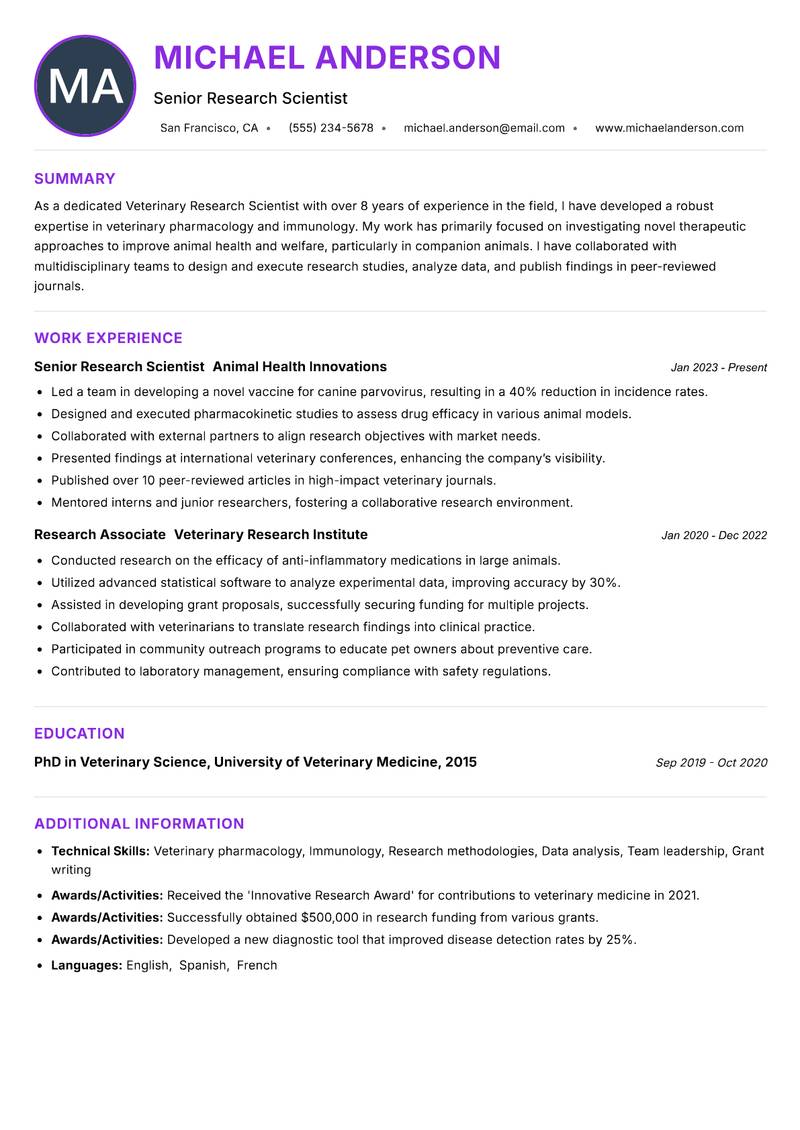
Senior Research Scientist Resume

As a dedicated Veterinary Research Scientist with over 8 years of experience in the field, I have developed a robust expertise in veterinary pharmacology and immunology. My work has primarily focused on investigating novel therapeutic approaches to improve animal health and welfare, particularly in companion animals. I have collaborated with multidisciplinary teams to design and execute research studies, analyze data, and publish findings in peer-reviewed journals. My strong analytical skills and attention to detail enable me to drive innovative solutions in veterinary medicine. I am passionate about advancing the understanding of animal diseases and developing effective treatments through rigorous scientific inquiry. Additionally, I have a proven track record of securing funding for research projects and mentoring junior scientists in their professional development. My goal is to continue contributing to the field through impactful research and collaboration with industry stakeholders.

Veterinary pharmacology Immunology Research methodologies Data analysis Team leadership Grant writing
Veterinary Research Scientist Resume Preview Example
View PDF
  1. Led a team in developing a novel vaccine for canine parvovirus, resulting in a 40% reduction in incidence rates.
  2. Designed and executed pharmacokinetic studies to assess drug efficacy in various animal models.
  3. Collaborated with external partners to align research objectives with market needs.
  4. Presented findings at international veterinary conferences, enhancing the company’s visibility.
  5. Published over 10 peer-reviewed articles in high-impact veterinary journals.
  6. Mentored interns and junior researchers, fostering a collaborative research environment.
  1. Conducted research on the efficacy of anti-inflammatory medications in large animals.
  2. Utilized advanced statistical software to analyze experimental data, improving accuracy by 30%.
  3. Assisted in developing grant proposals, successfully securing funding for multiple projects.
  4. Collaborated with veterinarians to translate research findings into clinical practice.
  5. Participated in community outreach programs to educate pet owners about preventive care.
  6. Contributed to laboratory management, ensuring compliance with safety regulations.

Achievements

  • Received the 'Innovative Research Award' for contributions to veterinary medicine in 2021.
  • Successfully obtained $500,000 in research funding from various grants.
  • Developed a new diagnostic tool that improved disease detection rates by 25%.
⏱️
Experience
2-5 Years
📅
Level
Mid Level
🎓
Education
PhD in Veterinary Science, Uni...

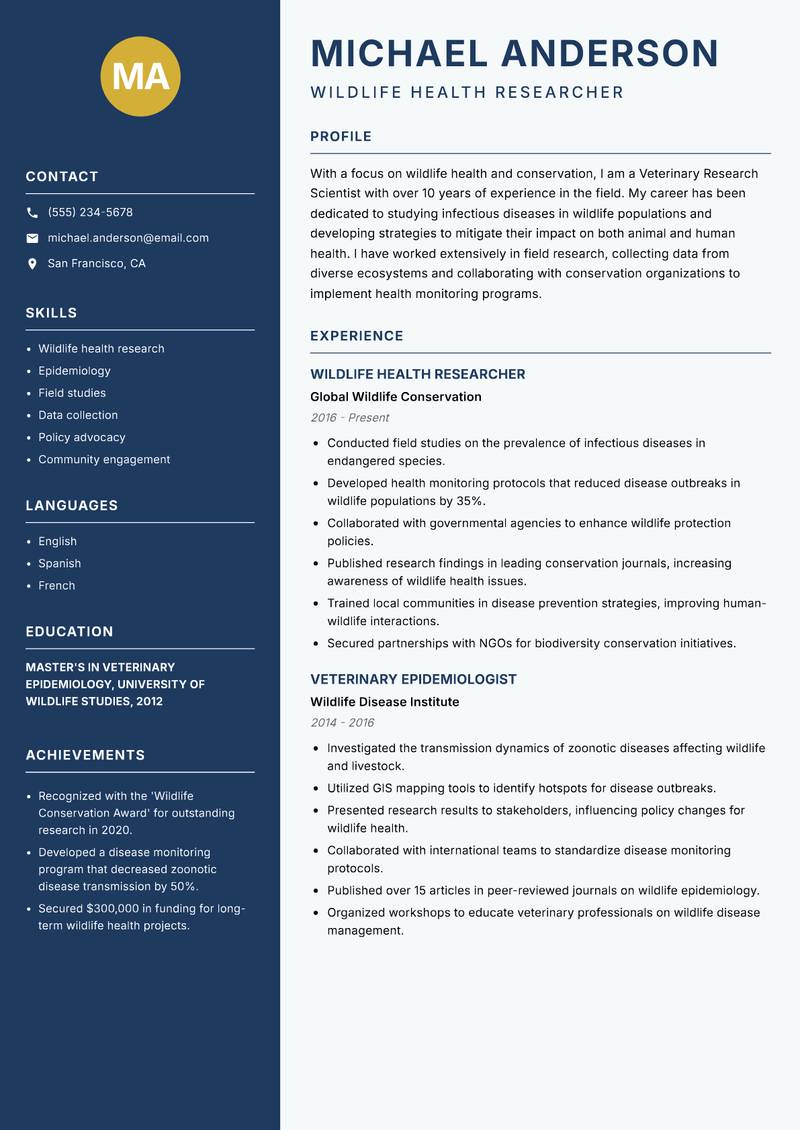
Wildlife Health Researcher Resume

With a focus on wildlife health and conservation, I am a Veterinary Research Scientist with over 10 years of experience in the field. My career has been dedicated to studying infectious diseases in wildlife populations and developing strategies to mitigate their impact on both animal and human health. I have worked extensively in field research, collecting data from diverse ecosystems and collaborating with conservation organizations to implement health monitoring programs. My expertise in epidemiology and zoonotic diseases has allowed me to publish significant findings that inform wildlife management practices. I am committed to fostering a sustainable coexistence between wildlife and human populations through innovative research and education.

Wildlife health research Epidemiology Field studies Data collection Policy advocacy Community engagement
Veterinary Research Scientist Resume Preview Example
View PDF
  1. Conducted field studies on the prevalence of infectious diseases in endangered species.
  2. Developed health monitoring protocols that reduced disease outbreaks in wildlife populations by 35%.
  3. Collaborated with governmental agencies to enhance wildlife protection policies.
  4. Published research findings in leading conservation journals, increasing awareness of wildlife health issues.
  5. Trained local communities in disease prevention strategies, improving human-wildlife interactions.
  6. Secured partnerships with NGOs for biodiversity conservation initiatives.
  1. Investigated the transmission dynamics of zoonotic diseases affecting wildlife and livestock.
  2. Utilized GIS mapping tools to identify hotspots for disease outbreaks.
  3. Presented research results to stakeholders, influencing policy changes for wildlife health.
  4. Collaborated with international teams to standardize disease monitoring protocols.
  5. Published over 15 articles in peer-reviewed journals on wildlife epidemiology.
  6. Organized workshops to educate veterinary professionals on wildlife disease management.

Achievements

  • Recognized with the 'Wildlife Conservation Award' for outstanding research in 2020.
  • Developed a disease monitoring program that decreased zoonotic disease transmission by 50%.
  • Secured $300,000 in funding for long-term wildlife health projects.
⏱️
Experience
2-5 Years
📅
Level
Mid Level
🎓
Education
Master's in Veterinary Epidemi...

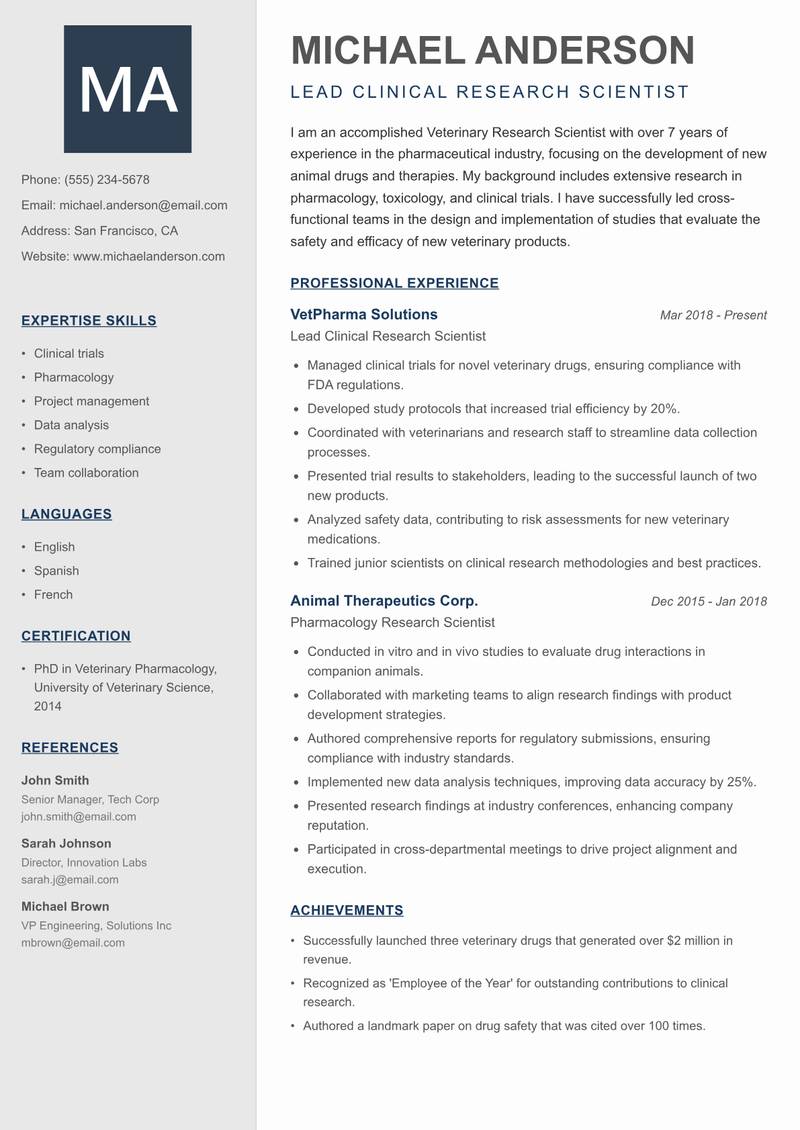
Lead Clinical Research Scientist Resume

I am an accomplished Veterinary Research Scientist with over 7 years of experience in the pharmaceutical industry, focusing on the development of new animal drugs and therapies. My background includes extensive research in pharmacology, toxicology, and clinical trials. I have successfully led cross-functional teams in the design and implementation of studies that evaluate the safety and efficacy of new veterinary products. My strong project management skills have allowed me to deliver results within stringent timelines while ensuring compliance with regulatory standards. I am passionate about improving animal health through innovative therapeutics and contributing to the advancement of veterinary medicine.

Clinical trials Pharmacology Project management Data analysis Regulatory compliance Team collaboration
Veterinary Research Scientist Resume Preview Example
View PDF
  1. Managed clinical trials for novel veterinary drugs, ensuring compliance with FDA regulations.
  2. Developed study protocols that increased trial efficiency by 20%.
  3. Coordinated with veterinarians and research staff to streamline data collection processes.
  4. Presented trial results to stakeholders, leading to the successful launch of two new products.
  5. Analyzed safety data, contributing to risk assessments for new veterinary medications.
  6. Trained junior scientists on clinical research methodologies and best practices.
  1. Conducted in vitro and in vivo studies to evaluate drug interactions in companion animals.
  2. Collaborated with marketing teams to align research findings with product development strategies.
  3. Authored comprehensive reports for regulatory submissions, ensuring compliance with industry standards.
  4. Implemented new data analysis techniques, improving data accuracy by 25%.
  5. Presented research findings at industry conferences, enhancing company reputation.
  6. Participated in cross-departmental meetings to drive project alignment and execution.

Achievements

  • Successfully launched three veterinary drugs that generated over $2 million in revenue.
  • Recognized as 'Employee of the Year' for outstanding contributions to clinical research.
  • Authored a landmark paper on drug safety that was cited over 100 times.
⏱️
Experience
2-5 Years
📅
Level
Mid Level
🎓
Education
PhD in Veterinary Pharmacology...

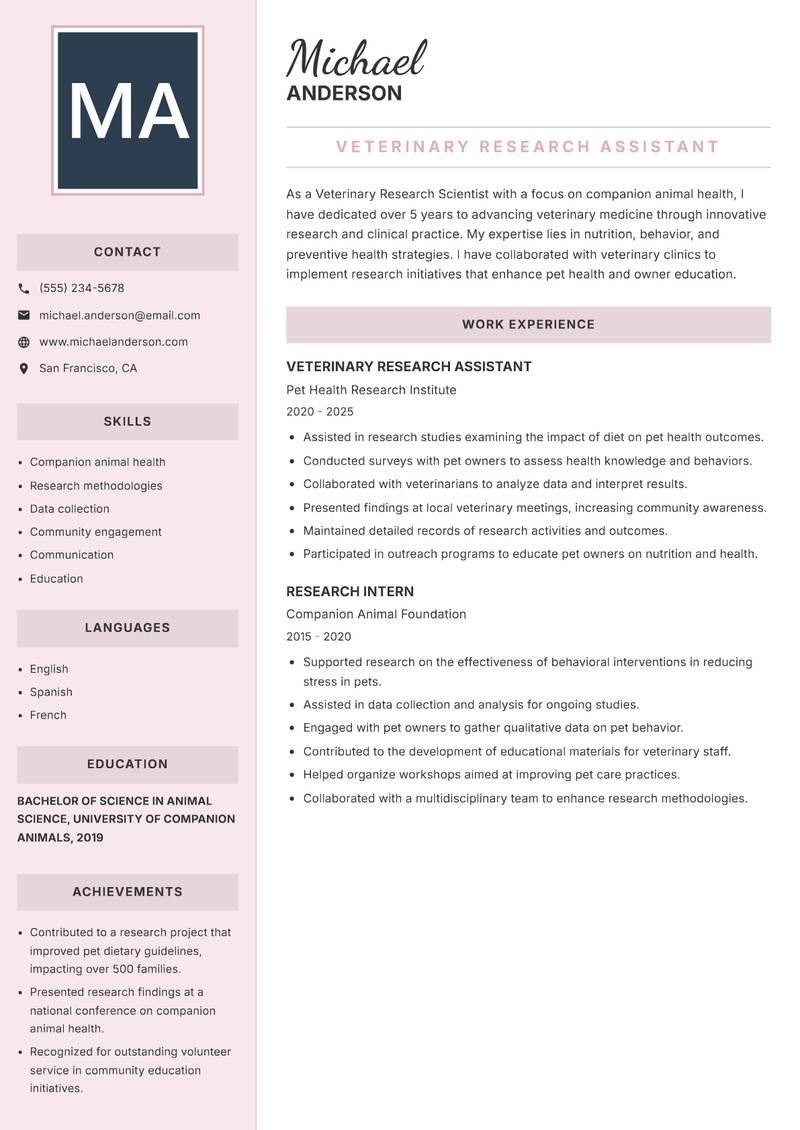
Veterinary Research Assistant Resume

As a Veterinary Research Scientist with a focus on companion animal health, I have dedicated over 5 years to advancing veterinary medicine through innovative research and clinical practice. My expertise lies in nutrition, behavior, and preventive health strategies. I have collaborated with veterinary clinics to implement research initiatives that enhance pet health and owner education. My strong communication skills enable me to effectively work with diverse teams and engage pet owners in health discussions. I am committed to integrating scientific research with clinical practice to improve the quality of life for companion animals and their families.

Companion animal health Research methodologies Data collection Community engagement Communication Education
Veterinary Research Scientist Resume Preview Example
View PDF
  1. Assisted in research studies examining the impact of diet on pet health outcomes.
  2. Conducted surveys with pet owners to assess health knowledge and behaviors.
  3. Collaborated with veterinarians to analyze data and interpret results.
  4. Presented findings at local veterinary meetings, increasing community awareness.
  5. Maintained detailed records of research activities and outcomes.
  6. Participated in outreach programs to educate pet owners on nutrition and health.
  1. Supported research on the effectiveness of behavioral interventions in reducing stress in pets.
  2. Assisted in data collection and analysis for ongoing studies.
  3. Engaged with pet owners to gather qualitative data on pet behavior.
  4. Contributed to the development of educational materials for veterinary staff.
  5. Helped organize workshops aimed at improving pet care practices.
  6. Collaborated with a multidisciplinary team to enhance research methodologies.

Achievements

  • Contributed to a research project that improved pet dietary guidelines, impacting over 500 families.
  • Presented research findings at a national conference on companion animal health.
  • Recognized for outstanding volunteer service in community education initiatives.
⏱️
Experience
2-5 Years
📅
Level
Mid Level
🎓
Education
Bachelor of Science in Animal ...

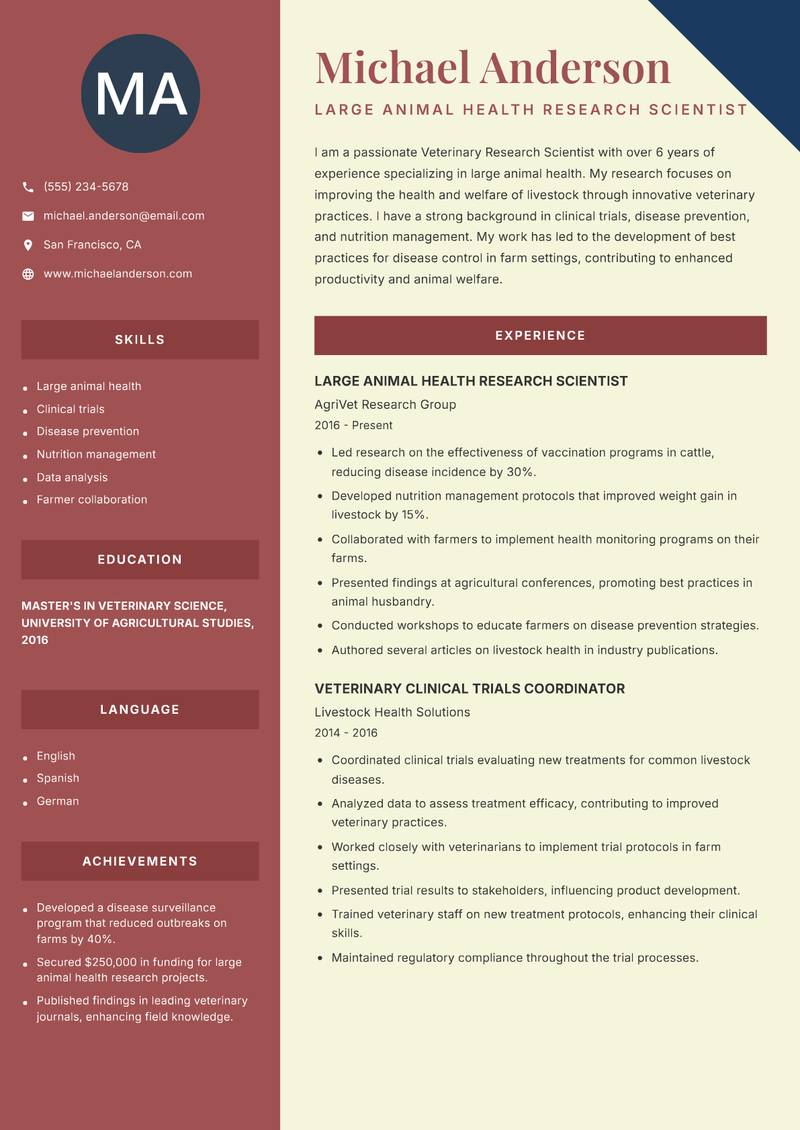
Large Animal Health Research Scientist Resume

I am a passionate Veterinary Research Scientist with over 6 years of experience specializing in large animal health. My research focuses on improving the health and welfare of livestock through innovative veterinary practices. I have a strong background in clinical trials, disease prevention, and nutrition management. My work has led to the development of best practices for disease control in farm settings, contributing to enhanced productivity and animal welfare. I pride myself on my ability to collaborate effectively with farmers and veterinary professionals to translate research findings into practical applications that benefit both animals and the agricultural industry.

Large animal health Clinical trials Disease prevention Nutrition management Data analysis Farmer collaboration
Veterinary Research Scientist Resume Preview Example
View PDF
  1. Led research on the effectiveness of vaccination programs in cattle, reducing disease incidence by 30%.
  2. Developed nutrition management protocols that improved weight gain in livestock by 15%.
  3. Collaborated with farmers to implement health monitoring programs on their farms.
  4. Presented findings at agricultural conferences, promoting best practices in animal husbandry.
  5. Conducted workshops to educate farmers on disease prevention strategies.
  6. Authored several articles on livestock health in industry publications.
  1. Coordinated clinical trials evaluating new treatments for common livestock diseases.
  2. Analyzed data to assess treatment efficacy, contributing to improved veterinary practices.
  3. Worked closely with veterinarians to implement trial protocols in farm settings.
  4. Presented trial results to stakeholders, influencing product development.
  5. Trained veterinary staff on new treatment protocols, enhancing their clinical skills.
  6. Maintained regulatory compliance throughout the trial processes.

Achievements

  • Developed a disease surveillance program that reduced outbreaks on farms by 40%.
  • Secured $250,000 in funding for large animal health research projects.
  • Published findings in leading veterinary journals, enhancing field knowledge.
⏱️
Experience
2-5 Years
📅
Level
Mid Level
🎓
Education
Master's in Veterinary Science...

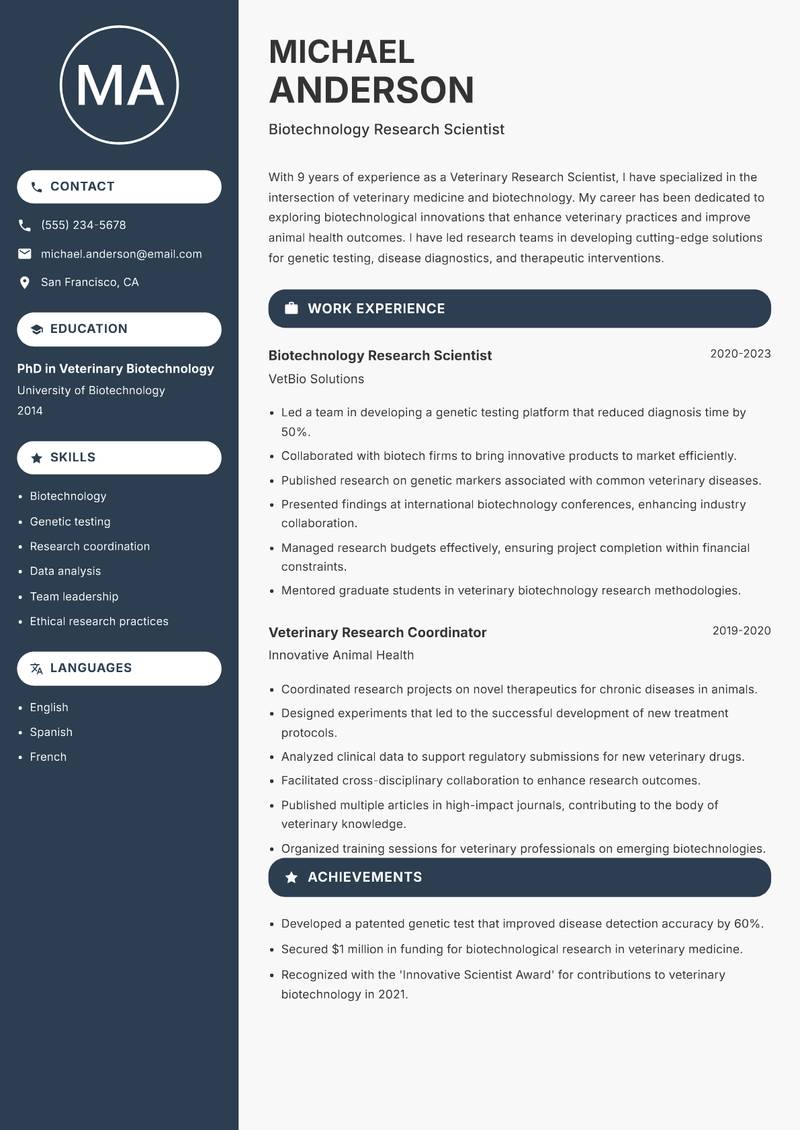
Biotechnology Research Scientist Resume

With 9 years of experience as a Veterinary Research Scientist, I have specialized in the intersection of veterinary medicine and biotechnology. My career has been dedicated to exploring biotechnological innovations that enhance veterinary practices and improve animal health outcomes. I have led research teams in developing cutting-edge solutions for genetic testing, disease diagnostics, and therapeutic interventions. My ability to bridge the gap between science and practical application has resulted in successful collaborations with veterinary clinics and biotech firms. I am dedicated to advancing the field through rigorous research, innovative thinking, and a commitment to ethical practices in animal research.

Biotechnology Genetic testing Research coordination Data analysis Team leadership Ethical research practices
Veterinary Research Scientist Resume Preview Example
View PDF
  1. Led a team in developing a genetic testing platform that reduced diagnosis time by 50%.
  2. Collaborated with biotech firms to bring innovative products to market efficiently.
  3. Published research on genetic markers associated with common veterinary diseases.
  4. Presented findings at international biotechnology conferences, enhancing industry collaboration.
  5. Managed research budgets effectively, ensuring project completion within financial constraints.
  6. Mentored graduate students in veterinary biotechnology research methodologies.
  1. Coordinated research projects on novel therapeutics for chronic diseases in animals.
  2. Designed experiments that led to the successful development of new treatment protocols.
  3. Analyzed clinical data to support regulatory submissions for new veterinary drugs.
  4. Facilitated cross-disciplinary collaboration to enhance research outcomes.
  5. Published multiple articles in high-impact journals, contributing to the body of veterinary knowledge.
  6. Organized training sessions for veterinary professionals on emerging biotechnologies.

Achievements

  • Developed a patented genetic test that improved disease detection accuracy by 60%.
  • Secured $1 million in funding for biotechnological research in veterinary medicine.
  • Recognized with the 'Innovative Scientist Award' for contributions to veterinary biotechnology in 2021.
⏱️
Experience
2-5 Years
📅
Level
Mid Level
🎓
Education
PhD in Veterinary Biotechnolog...

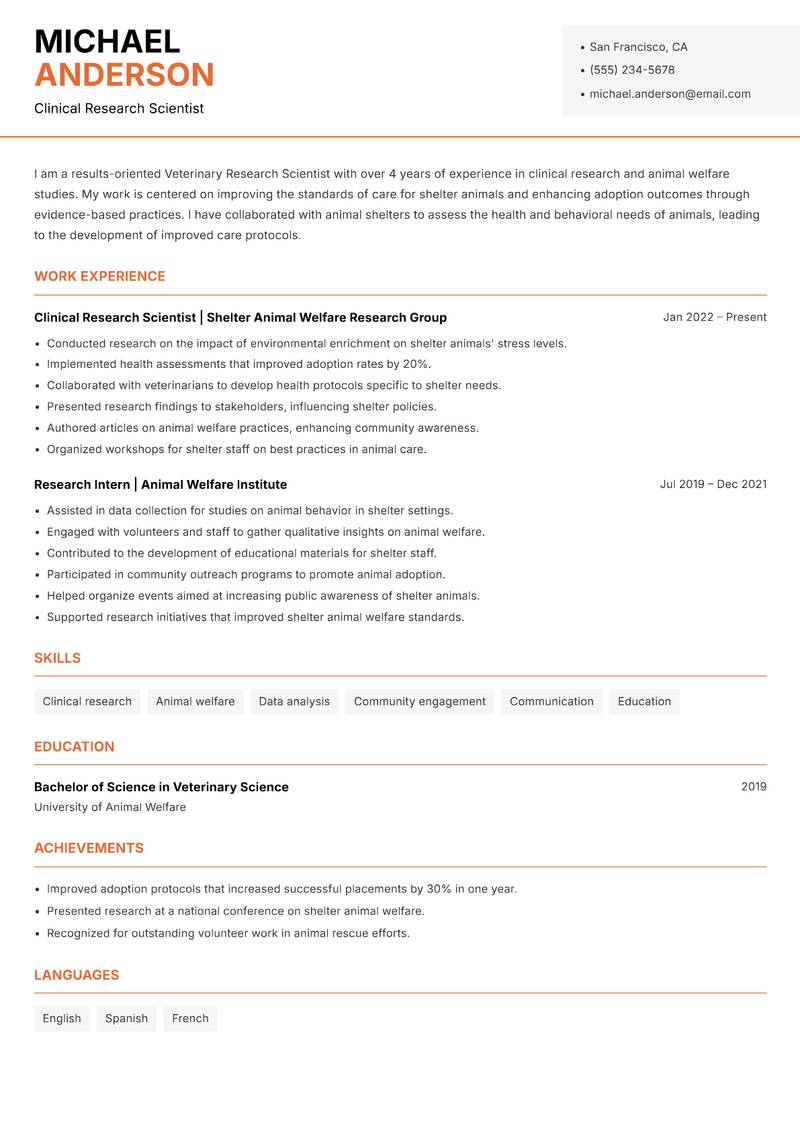
Clinical Research Scientist Resume

I am a results-oriented Veterinary Research Scientist with over 4 years of experience in clinical research and animal welfare studies. My work is centered on improving the standards of care for shelter animals and enhancing adoption outcomes through evidence-based practices. I have collaborated with animal shelters to assess the health and behavioral needs of animals, leading to the development of improved care protocols. My ability to analyze data and translate findings into actionable recommendations has proven invaluable in driving positive changes in shelter environments. I am passionate about advocating for the health and well-being of all animals, especially those in need.

Clinical research Animal welfare Data analysis Community engagement Communication Education
Veterinary Research Scientist Resume Preview Example
View PDF
  1. Conducted research on the impact of environmental enrichment on shelter animals' stress levels.
  2. Implemented health assessments that improved adoption rates by 20%.
  3. Collaborated with veterinarians to develop health protocols specific to shelter needs.
  4. Presented research findings to stakeholders, influencing shelter policies.
  5. Authored articles on animal welfare practices, enhancing community awareness.
  6. Organized workshops for shelter staff on best practices in animal care.
  1. Assisted in data collection for studies on animal behavior in shelter settings.
  2. Engaged with volunteers and staff to gather qualitative insights on animal welfare.
  3. Contributed to the development of educational materials for shelter staff.
  4. Participated in community outreach programs to promote animal adoption.
  5. Helped organize events aimed at increasing public awareness of shelter animals.
  6. Supported research initiatives that improved shelter animal welfare standards.

Achievements

  • Improved adoption protocols that increased successful placements by 30% in one year.
  • Presented research at a national conference on shelter animal welfare.
  • Recognized for outstanding volunteer work in animal rescue efforts.
⏱️
Experience
2-5 Years
📅
Level
Mid Level
🎓
Education
Bachelor of Science in Veterin...

Key Skills for Veterinary Research Scientist Positions

Resume Tips for Veterinary Research Scientist Applications

Strong Action Verbs for Veterinary Research Scientist Resumes

Examined · Diagnosed · Surgically Treated · Vaccinated · Prescribed · Managed · Monitored · Communicated · Researched · Educated · Achieved · Administered · Analyzed · Architected

Common Mistakes to Avoid

Experience Levels

How to Write a Veterinary Research Scientist Resume

Browse Veterinary Research Scientist resume examples built around clinical examination & diagnosis (Multi-species), tailored for Veterinary Science roles.

A strong Veterinary Research Scientist resume leads with a focused professional summary that names the exact role and your standout achievement. In the experience section, open every bullet with a strong action verb and quantify the result with numbers wherever possible. Highlight your most relevant competencies — especially Veterinary Research, As a Veterinary Research, and Clinical Examination & Diagnosis (Multi-species) — in a dedicated Skills section positioned early so ATS systems and hiring managers both find it immediately.

For format, most Veterinary Research Scientist roles suit a reverse-chronological layout: most recent position first, working backwards. Keep to one page for under five years of experience, or two pages for senior candidates with a rich project or leadership history. Use clean, ATS-safe fonts (10–12pt), standard section headings (Summary, Experience, Education, Skills), and avoid tables, text boxes, or multi-column layouts that applicant tracking systems cannot parse reliably.
Frequently Asked Questions

What makes a strong Veterinary Research Scientist resume stand out to employers?

A standout Veterinary Research Scientist resume combines role-specific skills with quantified achievements. Name the exact job title in your professional summary, mirror keywords from each job posting, and open every bullet point with a strong action verb followed by a measurable result. Certifications, tools, and domain experience specific to veterinary research scientist roles should appear prominently near the top.

What skills are most important to include on a Veterinary Science resume?

Recruiters hiring in Veterinary Science consistently look for Clinical Examination & Diagnosis (Multi-species), Surgical Techniques (Routine & Specialized), Medical Imaging (X-Ray, Ultrasound, MRI), Pharmacology & Prescribing. List these in a dedicated Skills section near the top so both ATS systems and human reviewers spot them fast. Mirror the exact phrasing from each job posting wherever possible — many applicant tracking systems match literal strings rather than synonyms.

What is the best resume format for Veterinary Science professionals?

A reverse-chronological format is the standard choice for most Veterinary Science candidates — employers expect to see your most recent role first, working backwards. If you are transitioning into Veterinary Science from a related field, a hybrid format (brief skills summary at the top followed by chronological experience) can bridge the gap effectively. Keep the document to one page for under five years of experience, or two pages for senior specialists.

How do I make my Veterinary Science resume pass applicant tracking systems (ATS)?

Use standard section headings — Summary, Experience, Education, Skills — rather than creative labels that ATS parsers do not recognise. Embed domain keywords such as "Clinical Examination & Diagnosis (Multi-species)" and "Surgical Techniques (Routine & Specialized)" naturally inside your experience bullets rather than cramming them into a standalone keyword list. Avoid tables, multi-column layouts, text boxes, headers, footers, and images — these confuse most modern parsers and can cause your resume to be misread or rejected before a human sees it.

What mistakes do Veterinary Science professionals most commonly make on their resume?

The most frequent issue is failing to list veterinary registration — practicing without it is illegal in most jurisdictions. Beyond that, generic objective statements, unquantified achievements, and inconsistent date formatting appear across almost every Veterinary Science application. Fix these by replacing every vague claim with a measurable outcome — specific numbers and named projects add credibility that adjectives cannot.

How long should a Veterinary Science resume be?

One page is appropriate for candidates with under five years of relevant Veterinary Science experience. Two pages are acceptable — and sometimes expected — for senior specialists, managers, or professionals with a strong portfolio of projects, publications, or credentials. Avoid padding to reach a page count: every line should directly support your application for the specific role you are targeting.

Should I include a professional summary at the top of my Veterinary Science resume?

Yes — a two to three sentence summary is the first section most recruiters read. Open with your title and years of Veterinary Science experience, then name your most relevant achievement or specialisation. One proven approach: List veterinary registration and licenses — they are essential for any clinical role — this level of specificity signals genuine expertise before a recruiter reaches your experience section.

Scroll to view samples