Veterinary Toxicologist Resume

These Veterinary Toxicologist resume samples are designed to help you write a resume that gets noticed by hiring managers and passes applicant tracking systems (ATS) in Veterinary Science. Each example shows real formatting, section structure, and language you can adapt to your own background. When writing your own Veterinary Toxicologist resume, focus on highlighting clinical examination & diagnosis (Multi-species), surgical techniques (Routine & specialized) and medical imaging (X-Ray, ultrasound, MRI). Recruiters scan for these qualifications first, so they should appear early in your summary and experience sections. Use strong action verbs such as "examined", "diagnosed", "surgically treated", "vaccinated" to describe your achievements, and quantify your impact wherever possible — percentages, dollar amounts, or time saved make your resume more convincing. A common mistake to avoid: writing a generic objective statement instead of a targeted veterinary toxicologist professional summary. Tailor your resume to each Veterinary Toxicologist position you apply for rather than using one generic version.

Veterinary Toxicologist Resume Template
View PDF
0.0 (0 ratings)

Senior Veterinary Toxicologist Resume

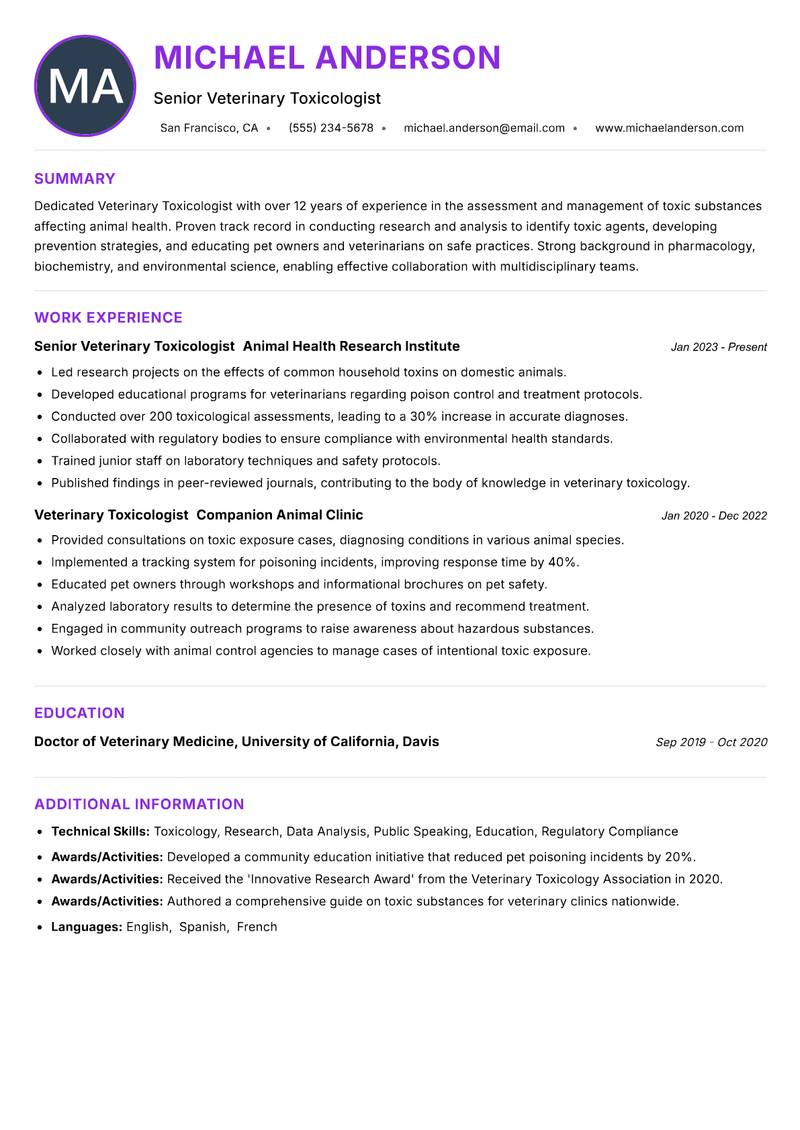
Dedicated Veterinary Toxicologist with over 12 years of experience in the assessment and management of toxic substances affecting animal health. Proven track record in conducting research and analysis to identify toxic agents, developing prevention strategies, and educating pet owners and veterinarians on safe practices. Strong background in pharmacology, biochemistry, and environmental science, enabling effective collaboration with multidisciplinary teams. Skilled in utilizing advanced laboratory techniques and diagnostic tools, combined with a passion for improving animal welfare through scientific advances. Adept at presenting complex information in understandable formats to diverse audiences, and committed to staying updated with the latest research and regulatory changes impacting veterinary toxicology. Seeking to leverage expertise in a dynamic organization focused on innovative veterinary solutions and public health.

Toxicology Research Data Analysis Public Speaking Education Regulatory Compliance
Veterinary Toxicologist Resume Preview Example
View PDF
  1. Led research projects on the effects of common household toxins on domestic animals.
  2. Developed educational programs for veterinarians regarding poison control and treatment protocols.
  3. Conducted over 200 toxicological assessments, leading to a 30% increase in accurate diagnoses.
  4. Collaborated with regulatory bodies to ensure compliance with environmental health standards.
  5. Trained junior staff on laboratory techniques and safety protocols.
  6. Published findings in peer-reviewed journals, contributing to the body of knowledge in veterinary toxicology.
  1. Provided consultations on toxic exposure cases, diagnosing conditions in various animal species.
  2. Implemented a tracking system for poisoning incidents, improving response time by 40%.
  3. Educated pet owners through workshops and informational brochures on pet safety.
  4. Analyzed laboratory results to determine the presence of toxins and recommend treatment.
  5. Engaged in community outreach programs to raise awareness about hazardous substances.
  6. Worked closely with animal control agencies to manage cases of intentional toxic exposure.

Achievements

  • Developed a community education initiative that reduced pet poisoning incidents by 20%.
  • Received the 'Innovative Research Award' from the Veterinary Toxicology Association in 2020.
  • Authored a comprehensive guide on toxic substances for veterinary clinics nationwide.
⏱️
Experience
2-5 Years
📅
Level
Mid Level
🎓
Education
Doctor of Veterinary Medicine,...

Veterinary Toxicologist Resume

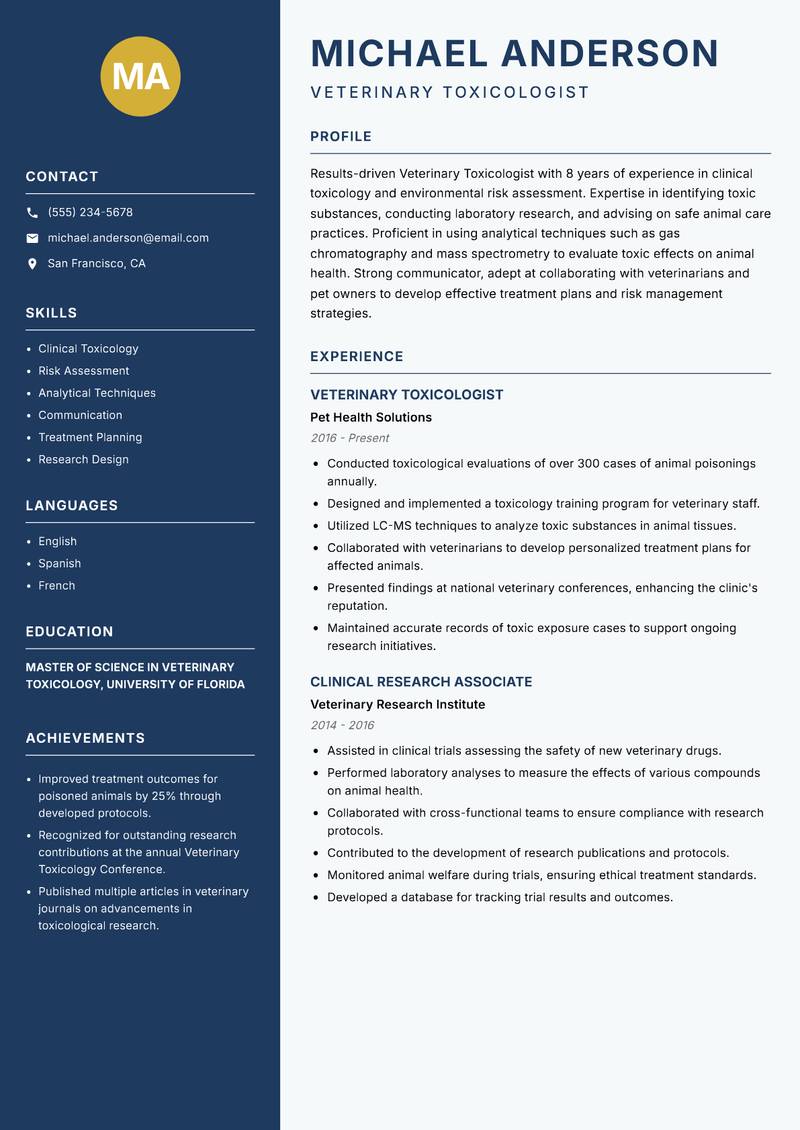
Experienced Veterinary Toxicologist with 8 years of experience in clinical toxicology and environmental risk assessment. Expertise in identifying toxic substances, conducting laboratory research, and advising on safe animal care practices. Proficient in using analytical techniques such as gas chromatography and mass spectrometry to evaluate toxic effects on animal health. Strong communicator, adept at collaborating with veterinarians and pet owners to develop effective treatment plans and risk management strategies. Passionate about advancing veterinary medicine through research and education, and committed to promoting animal welfare. Seeking a challenging role where I can apply my skills in toxicology to contribute to animal health and safety.

Clinical Toxicology Risk Assessment Analytical Techniques Communication Treatment Planning Research Design
Veterinary Toxicologist Resume Preview Example
View PDF
  1. Conducted toxicological evaluations of over 300 cases of animal poisonings annually.
  2. Designed and implemented a toxicology training program for veterinary staff.
  3. Utilized LC-MS techniques to analyze toxic substances in animal tissues.
  4. Collaborated with veterinarians to develop personalized treatment plans for affected animals.
  5. Presented findings at national veterinary conferences, enhancing the clinic's reputation.
  6. Maintained accurate records of toxic exposure cases to support ongoing research initiatives.
  1. Assisted in clinical trials assessing the safety of new veterinary drugs.
  2. Performed laboratory analyses to measure the effects of various compounds on animal health.
  3. Collaborated with cross-functional teams to ensure compliance with research protocols.
  4. Contributed to the development of research publications and protocols.
  5. Monitored animal welfare during trials, ensuring ethical treatment standards.
  6. Developed a database for tracking trial results and outcomes.

Achievements

  • Improved treatment outcomes for poisoned animals by 25% through developed protocols.
  • Recognized for outstanding research contributions at the annual Veterinary Toxicology Conference.
  • Published multiple articles in veterinary journals on advancements in toxicological research.
⏱️
Experience
2-5 Years
📅
Level
Mid Level
🎓
Education
Master of Science in Veterinar...

Associate Professor of Veterinary Toxicology Resume

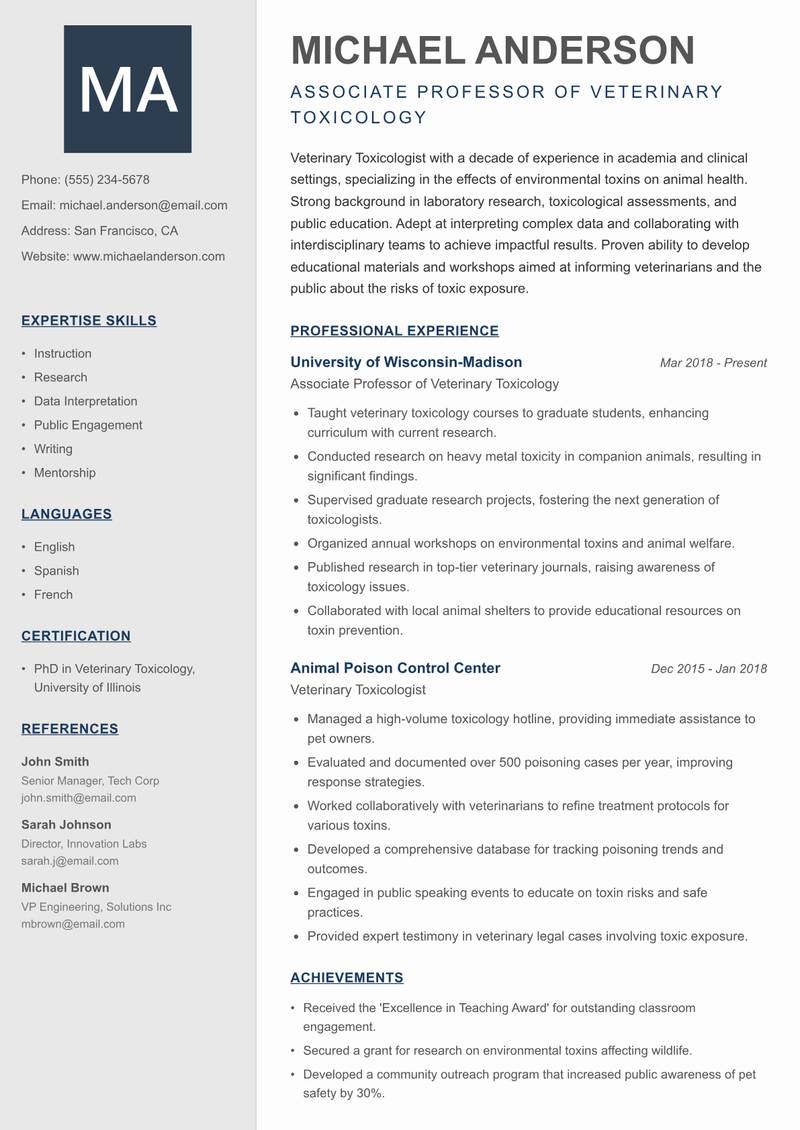
Veterinary Toxicologist with a decade of experience in academia and clinical settings, specializing in the effects of environmental toxins on animal health. Strong background in laboratory research, toxicological assessments, and public education. Adept at interpreting complex data and collaborating with interdisciplinary teams to achieve impactful results. Proven ability to develop educational materials and workshops aimed at informing veterinarians and the public about the risks of toxic exposure. Committed to advancing veterinary toxicology through research, innovation, and community engagement. Looking for an opportunity to contribute to a research institution focused on animal health and environmental safety.

Instruction Research Data Interpretation Public Engagement Writing Mentorship
Veterinary Toxicologist Resume Preview Example
View PDF
  1. Taught veterinary toxicology courses to graduate students, enhancing curriculum with current research.
  2. Conducted research on heavy metal toxicity in companion animals, resulting in significant findings.
  3. Supervised graduate research projects, fostering the next generation of toxicologists.
  4. Organized annual workshops on environmental toxins and animal welfare.
  5. Published research in top-tier veterinary journals, raising awareness of toxicology issues.
  6. Collaborated with local animal shelters to provide educational resources on toxin prevention.
  1. Managed a high-volume toxicology hotline, providing immediate assistance to pet owners.
  2. Evaluated and documented over 500 poisoning cases per year, improving response strategies.
  3. Worked collaboratively with veterinarians to refine treatment protocols for various toxins.
  4. Developed a comprehensive database for tracking poisoning trends and outcomes.
  5. Engaged in public speaking events to educate on toxin risks and safe practices.
  6. Provided expert testimony in veterinary legal cases involving toxic exposure.

Achievements

  • Received the 'Excellence in Teaching Award' for outstanding classroom engagement.
  • Secured a grant for research on environmental toxins affecting wildlife.
  • Developed a community outreach program that increased public awareness of pet safety by 30%.
⏱️
Experience
2-5 Years
📅
Level
Mid Level
🎓
Education
PhD in Veterinary Toxicology, ...

Veterinary Toxicologist Resume

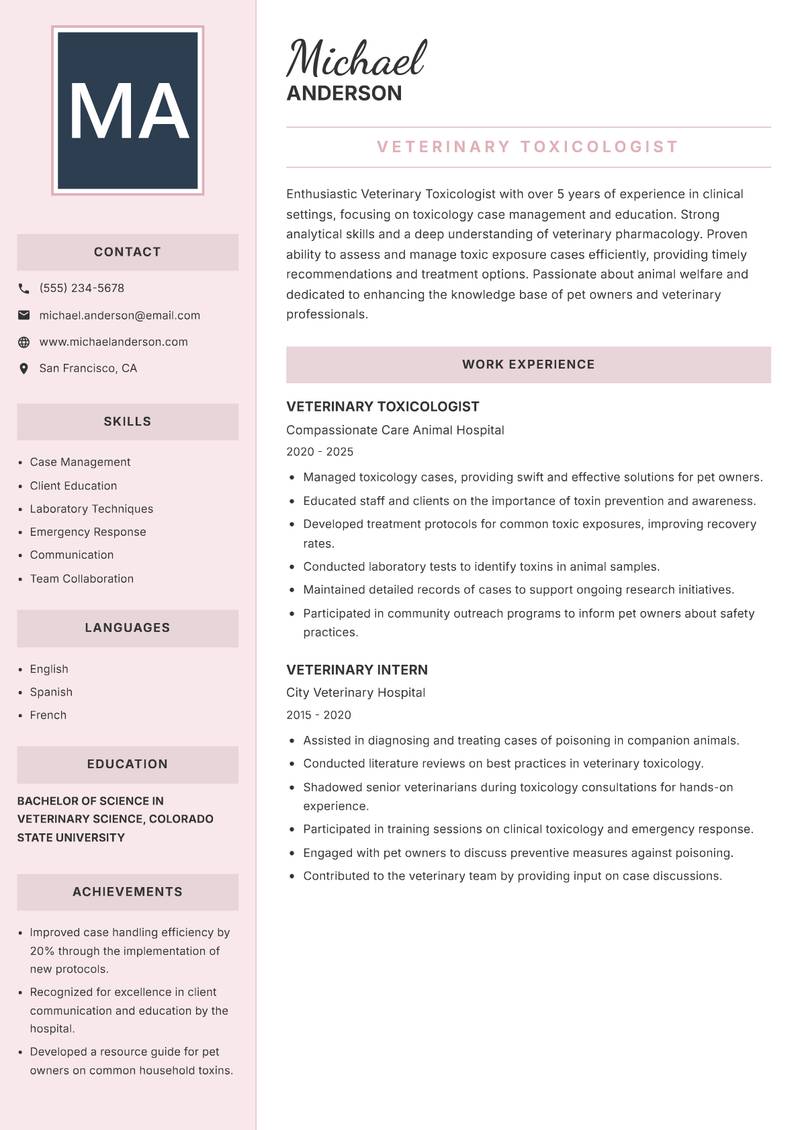
Enthusiastic Veterinary Toxicologist with over 5 years of experience in clinical settings, focusing on toxicology case management and education. Strong analytical skills and a deep understanding of veterinary pharmacology. Proven ability to assess and manage toxic exposure cases efficiently, providing timely recommendations and treatment options. Passionate about animal welfare and dedicated to enhancing the knowledge base of pet owners and veterinary professionals. Skilled in using modern diagnostic tools to identify toxic agents and their effects. Seeking a role that allows for direct impact on animal health and safety through research and community education.

Case Management Client Education Laboratory Techniques Emergency Response Communication Team Collaboration
Veterinary Toxicologist Resume Preview Example
View PDF
  1. Managed toxicology cases, providing swift and effective solutions for pet owners.
  2. Educated staff and clients on the importance of toxin prevention and awareness.
  3. Developed treatment protocols for common toxic exposures, improving recovery rates.
  4. Conducted laboratory tests to identify toxins in animal samples.
  5. Maintained detailed records of cases to support ongoing research initiatives.
  6. Participated in community outreach programs to inform pet owners about safety practices.
  1. Assisted in diagnosing and treating cases of poisoning in companion animals.
  2. Conducted literature reviews on best practices in veterinary toxicology.
  3. Shadowed senior veterinarians during toxicology consultations for hands-on experience.
  4. Participated in training sessions on clinical toxicology and emergency response.
  5. Engaged with pet owners to discuss preventive measures against poisoning.
  6. Contributed to the veterinary team by providing input on case discussions.

Achievements

  • Improved case handling efficiency by 20% through the implementation of new protocols.
  • Recognized for excellence in client communication and education by the hospital.
  • Developed a resource guide for pet owners on common household toxins.
⏱️
Experience
2-5 Years
📅
Level
Mid Level
🎓
Education
Bachelor of Science in Veterin...

Lead Veterinary Toxicologist Resume

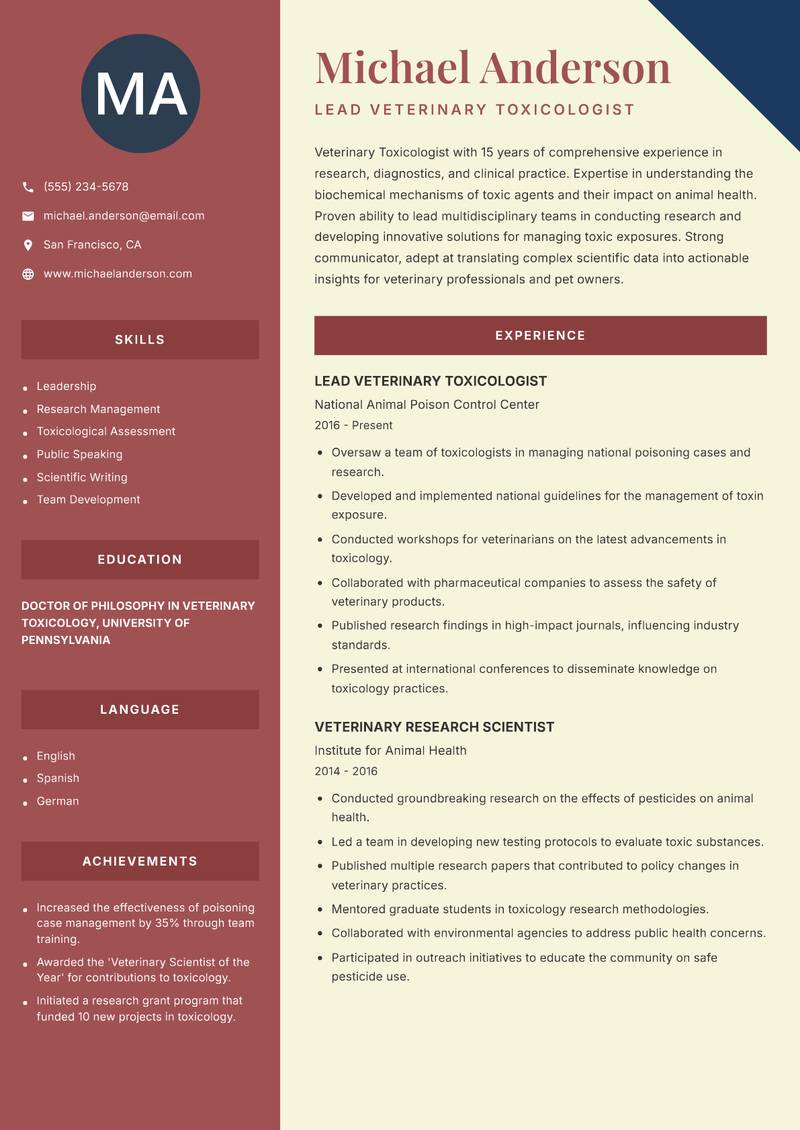
Veterinary Toxicologist with 15 years of comprehensive experience in research, diagnostics, and clinical practice. Expertise in understanding the biochemical mechanisms of toxic agents and their impact on animal health. Proven ability to lead multidisciplinary teams in conducting research and developing innovative solutions for managing toxic exposures. Strong communicator, adept at translating complex scientific data into actionable insights for veterinary professionals and pet owners. Passionate about advancing veterinary toxicology through education, research, and community engagement. Seeking a leadership role in a forward-thinking veterinary organization focused on animal health and safety.

Leadership Research Management Toxicological Assessment Public Speaking Scientific Writing Team Development
Veterinary Toxicologist Resume Preview Example
View PDF
  1. Oversaw a team of toxicologists in managing national poisoning cases and research.
  2. Developed and implemented national guidelines for the management of toxin exposure.
  3. Conducted workshops for veterinarians on the latest advancements in toxicology.
  4. Collaborated with pharmaceutical companies to assess the safety of veterinary products.
  5. Published research findings in high-impact journals, influencing industry standards.
  6. Presented at international conferences to disseminate knowledge on toxicology practices.
  1. Conducted groundbreaking research on the effects of pesticides on animal health.
  2. Led a team in developing new testing protocols to evaluate toxic substances.
  3. Published multiple research papers that contributed to policy changes in veterinary practices.
  4. Mentored graduate students in toxicology research methodologies.
  5. Collaborated with environmental agencies to address public health concerns.
  6. Participated in outreach initiatives to educate the community on safe pesticide use.

Achievements

  • Increased the effectiveness of poisoning case management by 35% through team training.
  • Awarded the 'Veterinary Scientist of the Year' for contributions to toxicology.
  • Initiated a research grant program that funded 10 new projects in toxicology.
⏱️
Experience
2-5 Years
📅
Level
Mid Level
🎓
Education
Doctor of Philosophy in Veteri...

Veterinary Toxicologist Resume

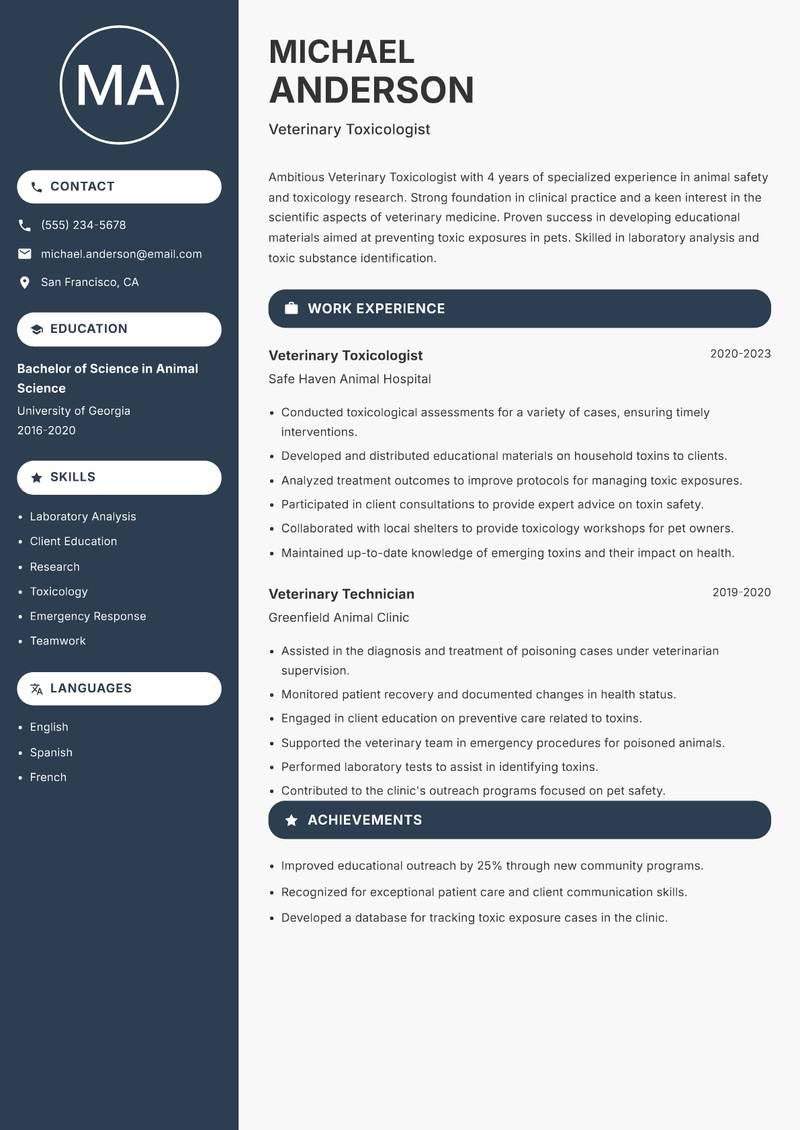
Driven Veterinary Toxicologist with 4 years of specialized experience in animal safety and toxicology research. Strong foundation in clinical practice and a keen interest in the scientific aspects of veterinary medicine. Proven success in developing educational materials aimed at preventing toxic exposures in pets. Skilled in laboratory analysis and toxic substance identification. Passionate about improving animal welfare through proactive education and community involvement. Seeking a position that allows for growth and the opportunity to make a difference in veterinary toxicology.

Laboratory Analysis Client Education Research Toxicology Emergency Response Teamwork
Veterinary Toxicologist Resume Preview Example
View PDF
  1. Conducted toxicological assessments for a variety of cases, ensuring timely interventions.
  2. Developed and distributed educational materials on household toxins to clients.
  3. Analyzed treatment outcomes to improve protocols for managing toxic exposures.
  4. Participated in client consultations to provide expert advice on toxin safety.
  5. Collaborated with local shelters to provide toxicology workshops for pet owners.
  6. Maintained up-to-date knowledge of emerging toxins and their impact on health.
  1. Assisted in the diagnosis and treatment of poisoning cases under veterinarian supervision.
  2. Monitored patient recovery and documented changes in health status.
  3. Engaged in client education on preventive care related to toxins.
  4. Supported the veterinary team in emergency procedures for poisoned animals.
  5. Performed laboratory tests to assist in identifying toxins.
  6. Contributed to the clinic's outreach programs focused on pet safety.

Achievements

  • Improved educational outreach by 25% through new community programs.
  • Recognized for exceptional patient care and client communication skills.
  • Developed a database for tracking toxic exposure cases in the clinic.
⏱️
Experience
2-5 Years
📅
Level
Mid Level
🎓
Education
Bachelor of Science in Animal ...

Regulatory Affairs Specialist Resume

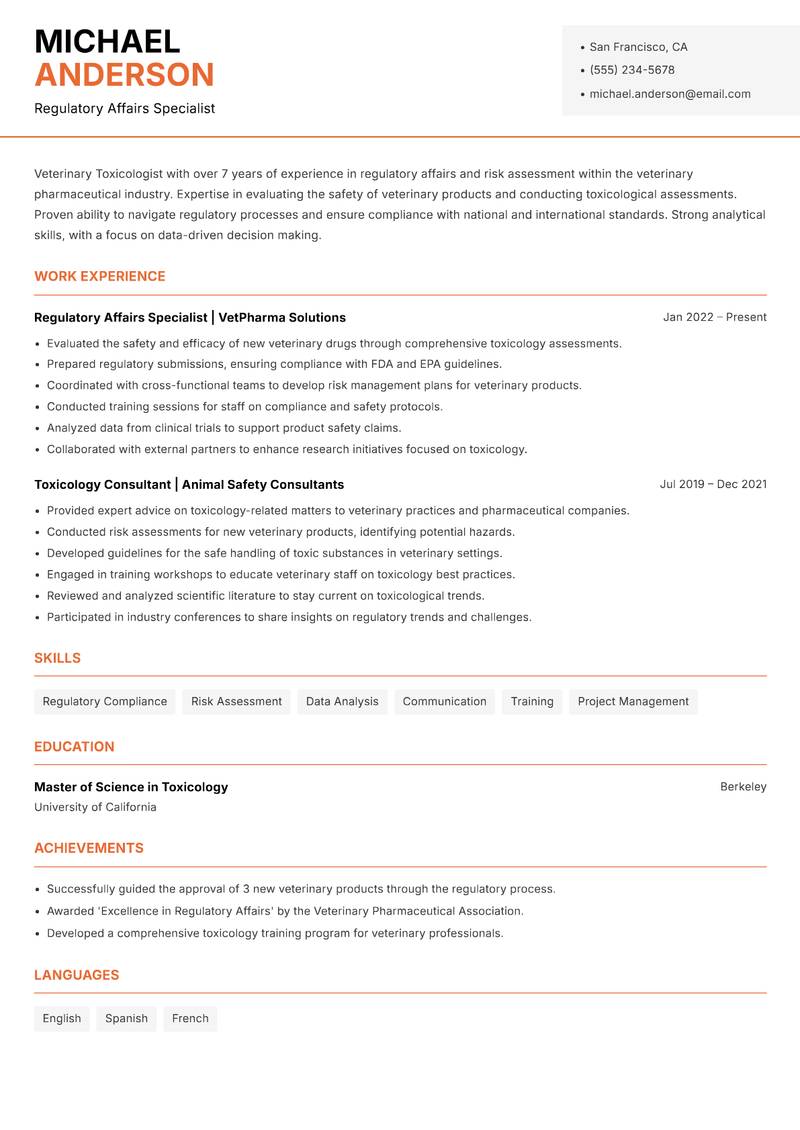
Veterinary Toxicologist with over 7 years of experience in regulatory affairs and risk assessment within the veterinary pharmaceutical industry. Expertise in evaluating the safety of veterinary products and conducting toxicological assessments. Proven ability to navigate regulatory processes and ensure compliance with national and international standards. Strong analytical skills, with a focus on data-driven decision making. Committed to improving animal health through effective risk management strategies and education. Seeking a senior role within a reputable organization that prioritizes animal safety and welfare.

Regulatory Compliance Risk Assessment Data Analysis Communication Training Project Management
Veterinary Toxicologist Resume Preview Example
View PDF
  1. Evaluated the safety and efficacy of new veterinary drugs through comprehensive toxicology assessments.
  2. Prepared regulatory submissions, ensuring compliance with FDA and EPA guidelines.
  3. Coordinated with cross-functional teams to develop risk management plans for veterinary products.
  4. Conducted training sessions for staff on compliance and safety protocols.
  5. Analyzed data from clinical trials to support product safety claims.
  6. Collaborated with external partners to enhance research initiatives focused on toxicology.
  1. Provided expert advice on toxicology-related matters to veterinary practices and pharmaceutical companies.
  2. Conducted risk assessments for new veterinary products, identifying potential hazards.
  3. Developed guidelines for the safe handling of toxic substances in veterinary settings.
  4. Engaged in training workshops to educate veterinary staff on toxicology best practices.
  5. Reviewed and analyzed scientific literature to stay current on toxicological trends.
  6. Participated in industry conferences to share insights on regulatory trends and challenges.

Achievements

  • Successfully guided the approval of 3 new veterinary products through the regulatory process.
  • Awarded 'Excellence in Regulatory Affairs' by the Veterinary Pharmaceutical Association.
  • Developed a comprehensive toxicology training program for veterinary professionals.
⏱️
Experience
2-5 Years
📅
Level
Mid Level
🎓
Education
Master of Science in Toxicolog...

Key Skills for Veterinary Toxicologist Positions

Resume Tips for Veterinary Toxicologist Applications

Strong Action Verbs for Veterinary Toxicologist Resumes

Examined · Diagnosed · Surgically Treated · Vaccinated · Prescribed · Managed · Monitored · Communicated · Researched · Educated · Achieved · Administered · Analyzed · Architected

Common Mistakes to Avoid

Experience Levels

How to Write a Veterinary Toxicologist Resume

Browse Veterinary Toxicologist resume examples built around clinical examination & diagnosis (Multi-species), tailored for Veterinary Science roles.

A strong Veterinary Toxicologist resume leads with a focused professional summary that names the exact role and your standout achievement. In the experience section, open every bullet with a strong action verb and quantify the result with numbers wherever possible. Highlight your most relevant competencies — especially Clinical Examination & Diagnosis (Multi-species), Surgical Techniques (Routine & Specialized), and Medical Imaging (X-Ray, Ultrasound, MRI) — in a dedicated Skills section positioned early so ATS systems and hiring managers both find it immediately.

For format, most Veterinary Toxicologist roles suit a reverse-chronological layout: most recent position first, working backwards. Keep to one page for under five years of experience, or two pages for senior candidates with a rich project or leadership history. Use clean, ATS-safe fonts (10–12pt), standard section headings (Summary, Experience, Education, Skills), and avoid tables, text boxes, or multi-column layouts that applicant tracking systems cannot parse reliably.
Frequently Asked Questions

What makes a strong Veterinary Toxicologist resume stand out to employers?

A standout Veterinary Toxicologist resume combines role-specific skills with quantified achievements. Name the exact job title in your professional summary, mirror keywords from each job posting, and open every bullet point with a strong action verb followed by a measurable result. Certifications, tools, and domain experience specific to veterinary toxicologist roles should appear prominently near the top.

What skills are most important to include on a Veterinary Science resume?

Recruiters hiring in Veterinary Science consistently look for Clinical Examination & Diagnosis (Multi-species), Surgical Techniques (Routine & Specialized), Medical Imaging (X-Ray, Ultrasound, MRI), Pharmacology & Prescribing. List these in a dedicated Skills section near the top so both ATS systems and human reviewers spot them fast. Mirror the exact phrasing from each job posting wherever possible — many applicant tracking systems match literal strings rather than synonyms.

What is the best resume format for Veterinary Science professionals?

A reverse-chronological format is the standard choice for most Veterinary Science candidates — employers expect to see your most recent role first, working backwards. If you are transitioning into Veterinary Science from a related field, a hybrid format (brief skills summary at the top followed by chronological experience) can bridge the gap effectively. Keep the document to one page for under five years of experience, or two pages for senior specialists.

How do I make my Veterinary Science resume pass applicant tracking systems (ATS)?

Use standard section headings — Summary, Experience, Education, Skills — rather than creative labels that ATS parsers do not recognise. Embed domain keywords such as "Clinical Examination & Diagnosis (Multi-species)" and "Surgical Techniques (Routine & Specialized)" naturally inside your experience bullets rather than cramming them into a standalone keyword list. Avoid tables, multi-column layouts, text boxes, headers, footers, and images — these confuse most modern parsers and can cause your resume to be misread or rejected before a human sees it.

What mistakes do Veterinary Science professionals most commonly make on their resume?

The most frequent issue is failing to list veterinary registration — practicing without it is illegal in most jurisdictions. Beyond that, generic objective statements, unquantified achievements, and inconsistent date formatting appear across almost every Veterinary Science application. Fix these by replacing every vague claim with a measurable outcome — specific numbers and named projects add credibility that adjectives cannot.

How long should a Veterinary Science resume be?

One page is appropriate for candidates with under five years of relevant Veterinary Science experience. Two pages are acceptable — and sometimes expected — for senior specialists, managers, or professionals with a strong portfolio of projects, publications, or credentials. Avoid padding to reach a page count: every line should directly support your application for the specific role you are targeting.

Should I include a professional summary at the top of my Veterinary Science resume?

Yes — a two to three sentence summary is the first section most recruiters read. Open with your title and years of Veterinary Science experience, then name your most relevant achievement or specialisation. One proven approach: List veterinary registration and licenses — they are essential for any clinical role — this level of specificity signals genuine expertise before a recruiter reaches your experience section.

Scroll to view samples