Wayfinding Designer Resume

These Wayfinding Designer resume samples are designed to help you write a resume that gets noticed by hiring managers and passes applicant tracking systems (ATS) in Visual Communication. Each example shows real formatting, section structure, and language you can adapt to your own background. When writing your own Wayfinding Designer resume, focus on highlighting information design & data visualization, brand communication design and illustration & infographic creation. Recruiters scan for these qualifications first, so they should appear early in your summary and experience sections. Use strong action verbs such as "communicated", "designed", "visualized", "illustrated" to describe your achievements, and quantify your impact wherever possible — percentages, dollar amounts, or time saved make your resume more convincing. A common mistake to avoid: writing a generic objective statement instead of a targeted wayfinding designer professional summary. Tailor your resume to each Wayfinding Designer position you apply for rather than using one generic version.

Wayfinding Designer Resume Template
View PDF
0.0 (0 ratings)

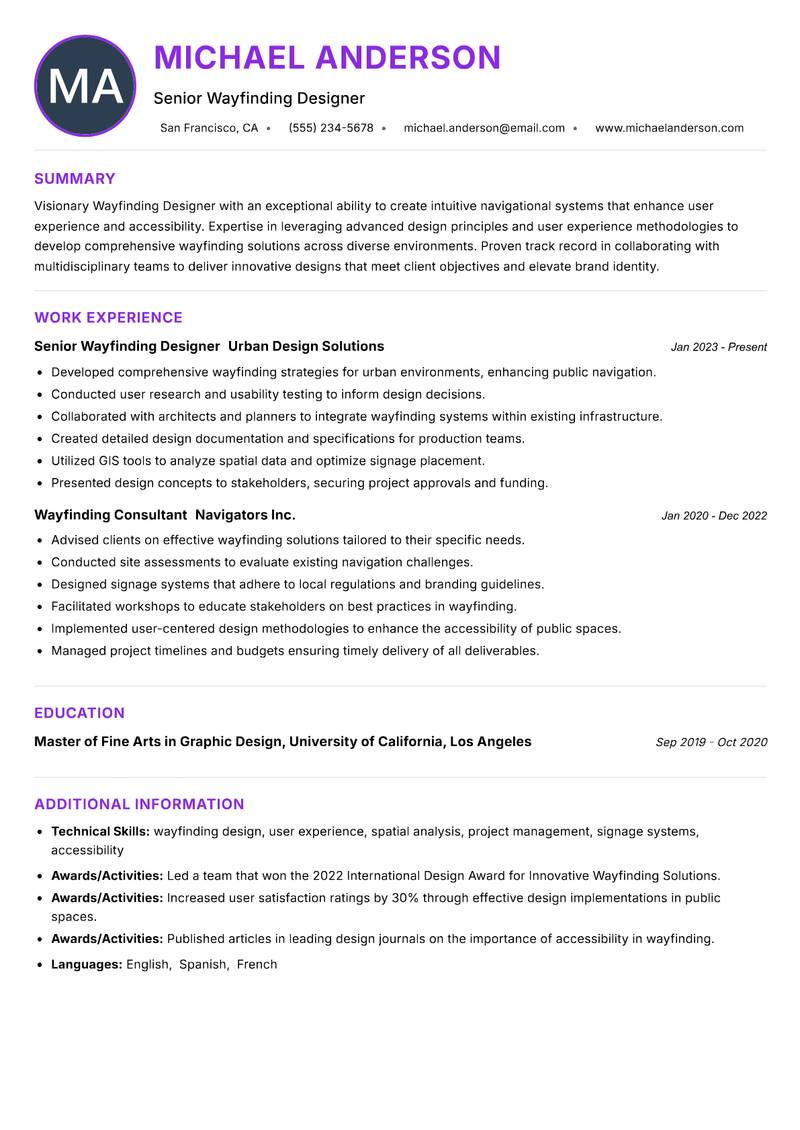
Senior Wayfinding Designer Resume

Visionary Wayfinding Designer with an exceptional ability to create intuitive navigational systems that enhance user experience and accessibility. Expertise in leveraging advanced design principles and user experience methodologies to develop comprehensive wayfinding solutions across diverse environments. Proven track record in collaborating with multidisciplinary teams to deliver innovative designs that meet client objectives and elevate brand identity. Strong analytical skills facilitate the assessment of user behavior and flow, ensuring solutions are both functional and aesthetically pleasing. A commitment to sustainability and inclusivity in design practices drives the creation of environments that are accessible to all. Recognized for the ability to integrate technology and traditional design, resulting in enhanced interactive wayfinding systems that engage users effectively.

wayfinding design user experience spatial analysis project management signage systems accessibility
Wayfinding Designer Resume Preview Example
View PDF
  1. Developed comprehensive wayfinding strategies for urban environments, enhancing public navigation.
  2. Conducted user research and usability testing to inform design decisions.
  3. Collaborated with architects and planners to integrate wayfinding systems within existing infrastructure.
  4. Created detailed design documentation and specifications for production teams.
  5. Utilized GIS tools to analyze spatial data and optimize signage placement.
  6. Presented design concepts to stakeholders, securing project approvals and funding.
  1. Advised clients on effective wayfinding solutions tailored to their specific needs.
  2. Conducted site assessments to evaluate existing navigation challenges.
  3. Designed signage systems that adhere to local regulations and branding guidelines.
  4. Facilitated workshops to educate stakeholders on best practices in wayfinding.
  5. Implemented user-centered design methodologies to enhance the accessibility of public spaces.
  6. Managed project timelines and budgets ensuring timely delivery of all deliverables.

Achievements

  • Led a team that won the 2022 International Design Award for Innovative Wayfinding Solutions.
  • Increased user satisfaction ratings by 30% through effective design implementations in public spaces.
  • Published articles in leading design journals on the importance of accessibility in wayfinding.
⏱️
Experience
2-5 Years
📅
Level
Mid Level
🎓
Education
Master of Fine Arts in Graphic...

Lead Wayfinding Designer Resume

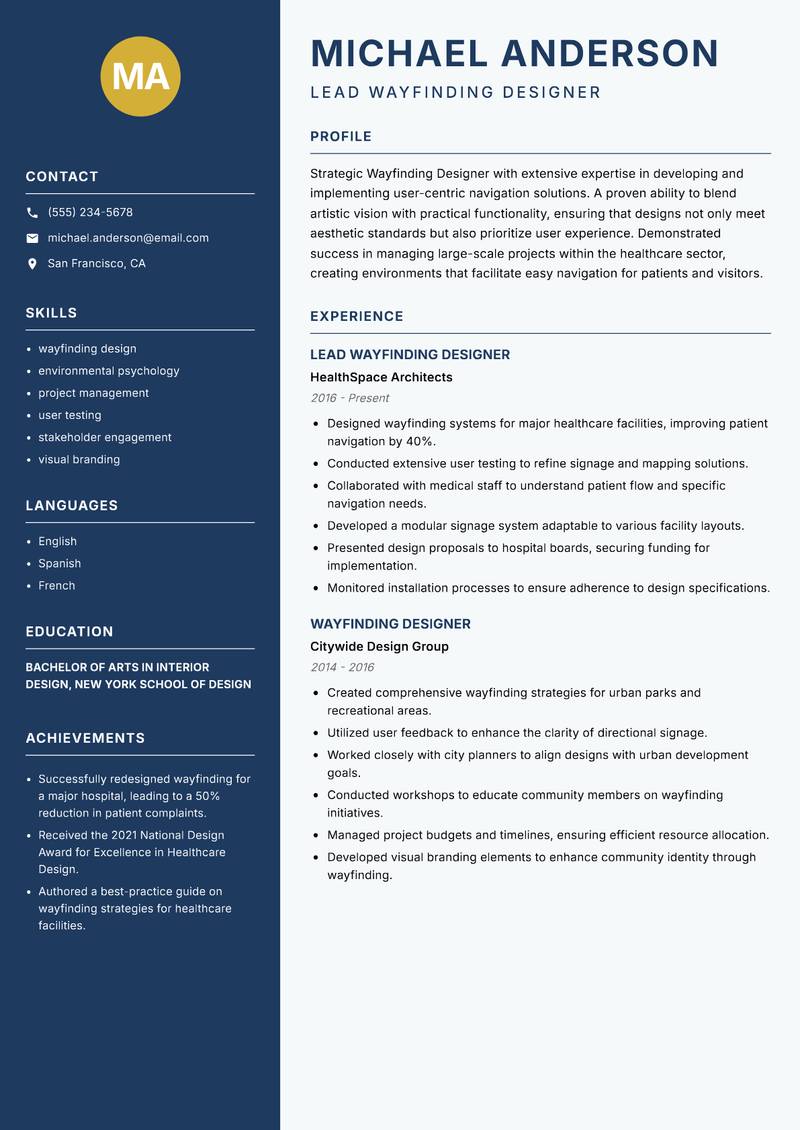
Strategic Wayfinding Designer with extensive expertise in developing and implementing user-centric navigation solutions. A proven ability to blend artistic vision with practical functionality, ensuring that designs not only meet aesthetic standards but also prioritize user experience. Demonstrated success in managing large-scale projects within the healthcare sector, creating environments that facilitate easy navigation for patients and visitors. Skilled in stakeholder engagement, fostering collaboration among diverse teams to achieve unified design goals. Strong foundation in environmental psychology informs design choices, contributing to the creation of comforting and efficient navigational aids. Recognized for innovative approaches that enhance visibility and clarity in complex environments.

wayfinding design environmental psychology project management user testing stakeholder engagement visual branding
Wayfinding Designer Resume Preview Example
View PDF
  1. Designed wayfinding systems for major healthcare facilities, improving patient navigation by 40%.
  2. Conducted extensive user testing to refine signage and mapping solutions.
  3. Collaborated with medical staff to understand patient flow and specific navigation needs.
  4. Developed a modular signage system adaptable to various facility layouts.
  5. Presented design proposals to hospital boards, securing funding for implementation.
  6. Monitored installation processes to ensure adherence to design specifications.
  1. Created comprehensive wayfinding strategies for urban parks and recreational areas.
  2. Utilized user feedback to enhance the clarity of directional signage.
  3. Worked closely with city planners to align designs with urban development goals.
  4. Conducted workshops to educate community members on wayfinding initiatives.
  5. Managed project budgets and timelines, ensuring efficient resource allocation.
  6. Developed visual branding elements to enhance community identity through wayfinding.

Achievements

  • Successfully redesigned wayfinding for a major hospital, leading to a 50% reduction in patient complaints.
  • Received the 2021 National Design Award for Excellence in Healthcare Design.
  • Authored a best-practice guide on wayfinding strategies for healthcare facilities.
⏱️
Experience
2-5 Years
📅
Level
Mid Level
🎓
Education
Bachelor of Arts in Interior D...

Wayfinding Designer Resume

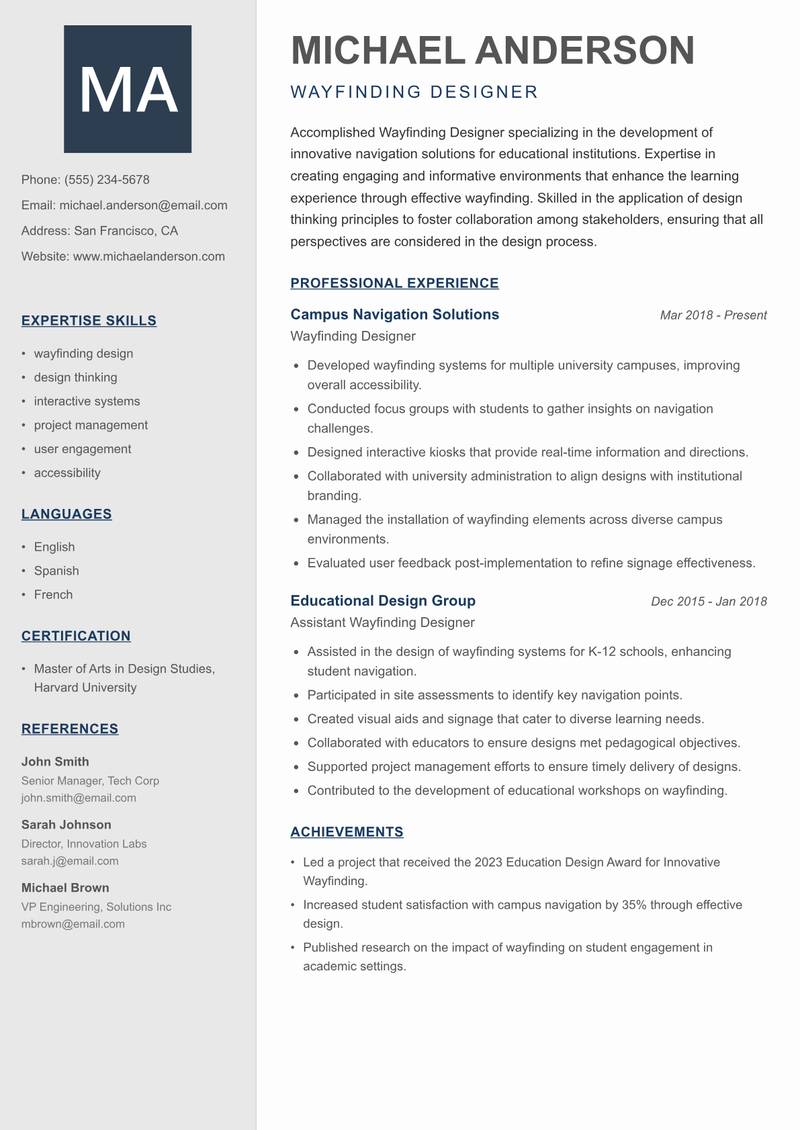
Accomplished Wayfinding Designer specializing in the development of innovative navigation solutions for educational institutions. Expertise in creating engaging and informative environments that enhance the learning experience through effective wayfinding. Skilled in the application of design thinking principles to foster collaboration among stakeholders, ensuring that all perspectives are considered in the design process. Proven ability to integrate technology with traditional design methods to produce interactive signage systems that engage students and visitors alike. A commitment to fostering inclusivity through design, ensuring that all individuals can navigate educational spaces with ease. Recognized for pioneering projects that set new standards in wayfinding within the education sector.

wayfinding design design thinking interactive systems project management user engagement accessibility
Wayfinding Designer Resume Preview Example
View PDF
  1. Developed wayfinding systems for multiple university campuses, improving overall accessibility.
  2. Conducted focus groups with students to gather insights on navigation challenges.
  3. Designed interactive kiosks that provide real-time information and directions.
  4. Collaborated with university administration to align designs with institutional branding.
  5. Managed the installation of wayfinding elements across diverse campus environments.
  6. Evaluated user feedback post-implementation to refine signage effectiveness.
  1. Assisted in the design of wayfinding systems for K-12 schools, enhancing student navigation.
  2. Participated in site assessments to identify key navigation points.
  3. Created visual aids and signage that cater to diverse learning needs.
  4. Collaborated with educators to ensure designs met pedagogical objectives.
  5. Supported project management efforts to ensure timely delivery of designs.
  6. Contributed to the development of educational workshops on wayfinding.

Achievements

  • Led a project that received the 2023 Education Design Award for Innovative Wayfinding.
  • Increased student satisfaction with campus navigation by 35% through effective design.
  • Published research on the impact of wayfinding on student engagement in academic settings.
⏱️
Experience
2-5 Years
📅
Level
Mid Level
🎓
Education
Master of Arts in Design Studi...

Wayfinding Designer Resume

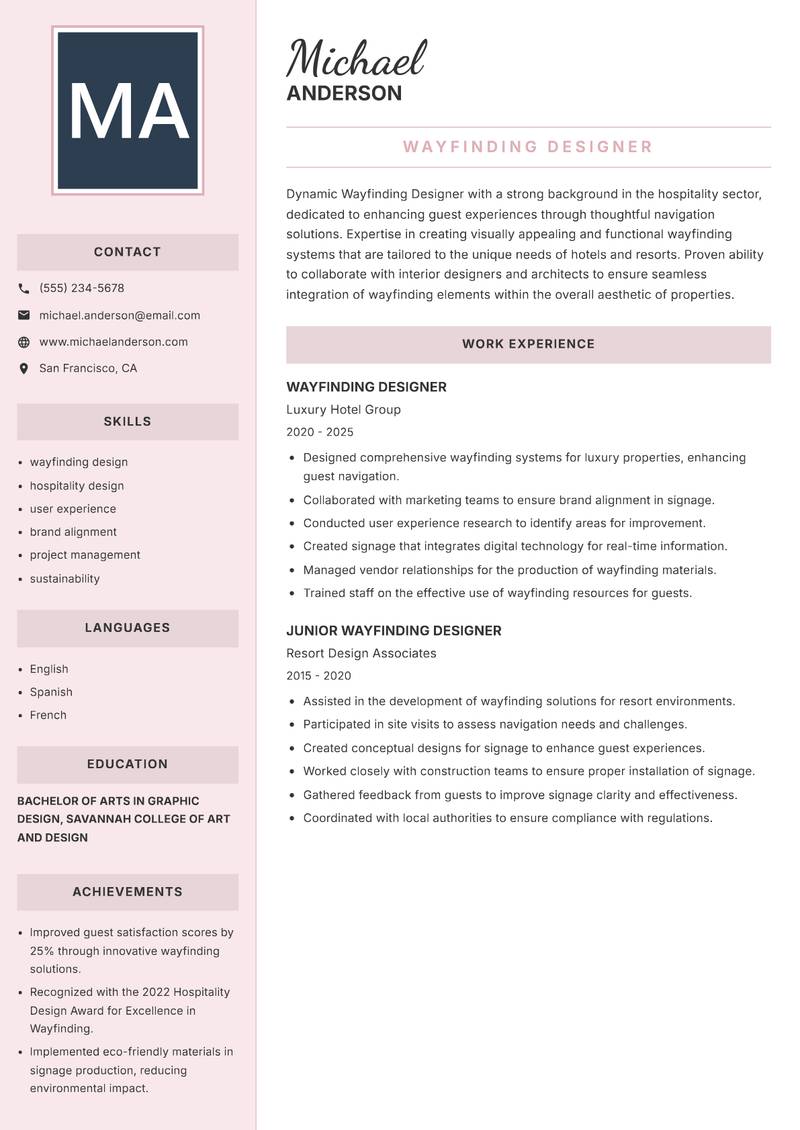
Dynamic Wayfinding Designer with a strong background in the hospitality sector, dedicated to enhancing guest experiences through thoughtful navigation solutions. Expertise in creating visually appealing and functional wayfinding systems that are tailored to the unique needs of hotels and resorts. Proven ability to collaborate with interior designers and architects to ensure seamless integration of wayfinding elements within the overall aesthetic of properties. A deep understanding of brand identity informs the design process, ensuring that wayfinding solutions reflect the essence of the hospitality experience. Recognized for innovative approaches that combine technology with traditional signage to create engaging guest interactions. Committed to sustainability, ensuring that designs are environmentally responsible and enhance the guest journey.

wayfinding design hospitality design user experience brand alignment project management sustainability
Wayfinding Designer Resume Preview Example
View PDF
  1. Designed comprehensive wayfinding systems for luxury properties, enhancing guest navigation.
  2. Collaborated with marketing teams to ensure brand alignment in signage.
  3. Conducted user experience research to identify areas for improvement.
  4. Created signage that integrates digital technology for real-time information.
  5. Managed vendor relationships for the production of wayfinding materials.
  6. Trained staff on the effective use of wayfinding resources for guests.
  1. Assisted in the development of wayfinding solutions for resort environments.
  2. Participated in site visits to assess navigation needs and challenges.
  3. Created conceptual designs for signage to enhance guest experiences.
  4. Worked closely with construction teams to ensure proper installation of signage.
  5. Gathered feedback from guests to improve signage clarity and effectiveness.
  6. Coordinated with local authorities to ensure compliance with regulations.

Achievements

  • Improved guest satisfaction scores by 25% through innovative wayfinding solutions.
  • Recognized with the 2022 Hospitality Design Award for Excellence in Wayfinding.
  • Implemented eco-friendly materials in signage production, reducing environmental impact.
⏱️
Experience
2-5 Years
📅
Level
Mid Level
🎓
Education
Bachelor of Arts in Graphic De...

Wayfinding Designer Resume

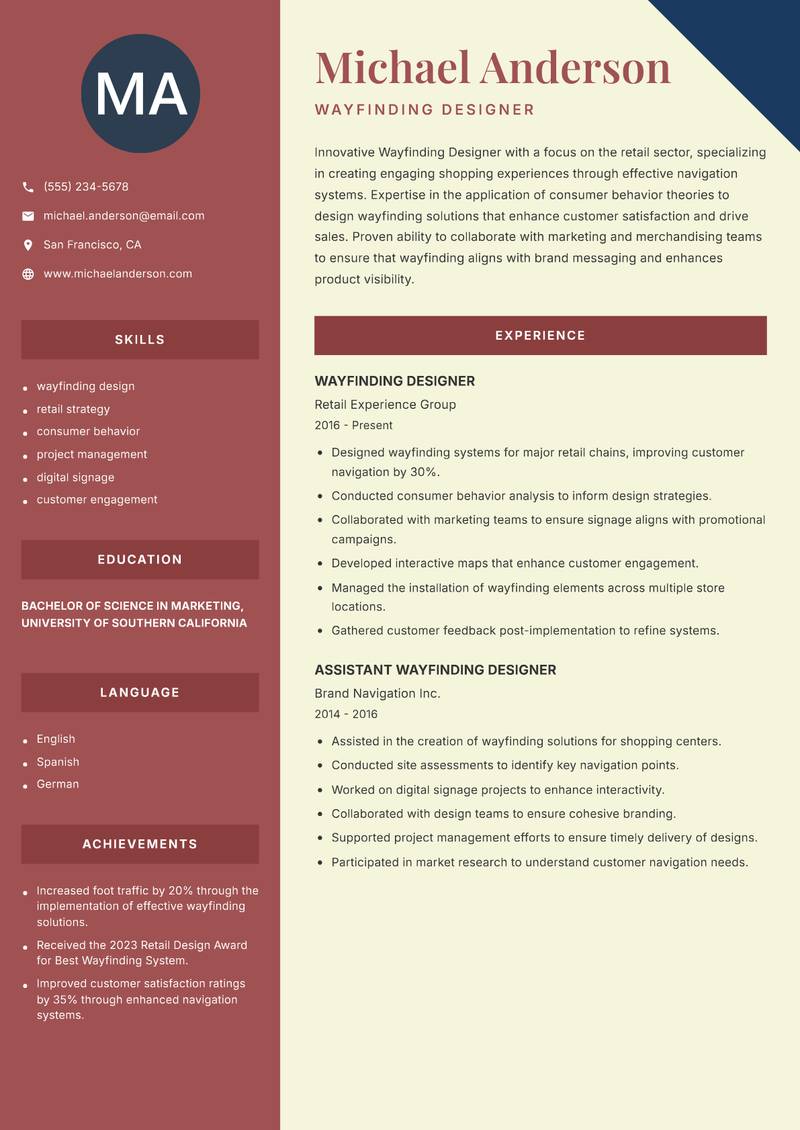
Innovative Wayfinding Designer with a focus on the retail sector, specializing in creating engaging shopping experiences through effective navigation systems. Expertise in the application of consumer behavior theories to design wayfinding solutions that enhance customer satisfaction and drive sales. Proven ability to collaborate with marketing and merchandising teams to ensure that wayfinding aligns with brand messaging and enhances product visibility. Skilled in utilizing digital technologies to create interactive wayfinding solutions that engage shoppers in a meaningful way. Recognized for developing comprehensive design strategies that improve customer flow and increase dwell time within retail environments. Committed to leveraging design as a tool for enhancing the overall shopping experience.

wayfinding design retail strategy consumer behavior project management digital signage customer engagement
Wayfinding Designer Resume Preview Example
View PDF
  1. Designed wayfinding systems for major retail chains, improving customer navigation by 30%.
  2. Conducted consumer behavior analysis to inform design strategies.
  3. Collaborated with marketing teams to ensure signage aligns with promotional campaigns.
  4. Developed interactive maps that enhance customer engagement.
  5. Managed the installation of wayfinding elements across multiple store locations.
  6. Gathered customer feedback post-implementation to refine systems.
  1. Assisted in the creation of wayfinding solutions for shopping centers.
  2. Conducted site assessments to identify key navigation points.
  3. Worked on digital signage projects to enhance interactivity.
  4. Collaborated with design teams to ensure cohesive branding.
  5. Supported project management efforts to ensure timely delivery of designs.
  6. Participated in market research to understand customer navigation needs.

Achievements

  • Increased foot traffic by 20% through the implementation of effective wayfinding solutions.
  • Received the 2023 Retail Design Award for Best Wayfinding System.
  • Improved customer satisfaction ratings by 35% through enhanced navigation systems.
⏱️
Experience
2-5 Years
📅
Level
Mid Level
🎓
Education
Bachelor of Science in Marketi...

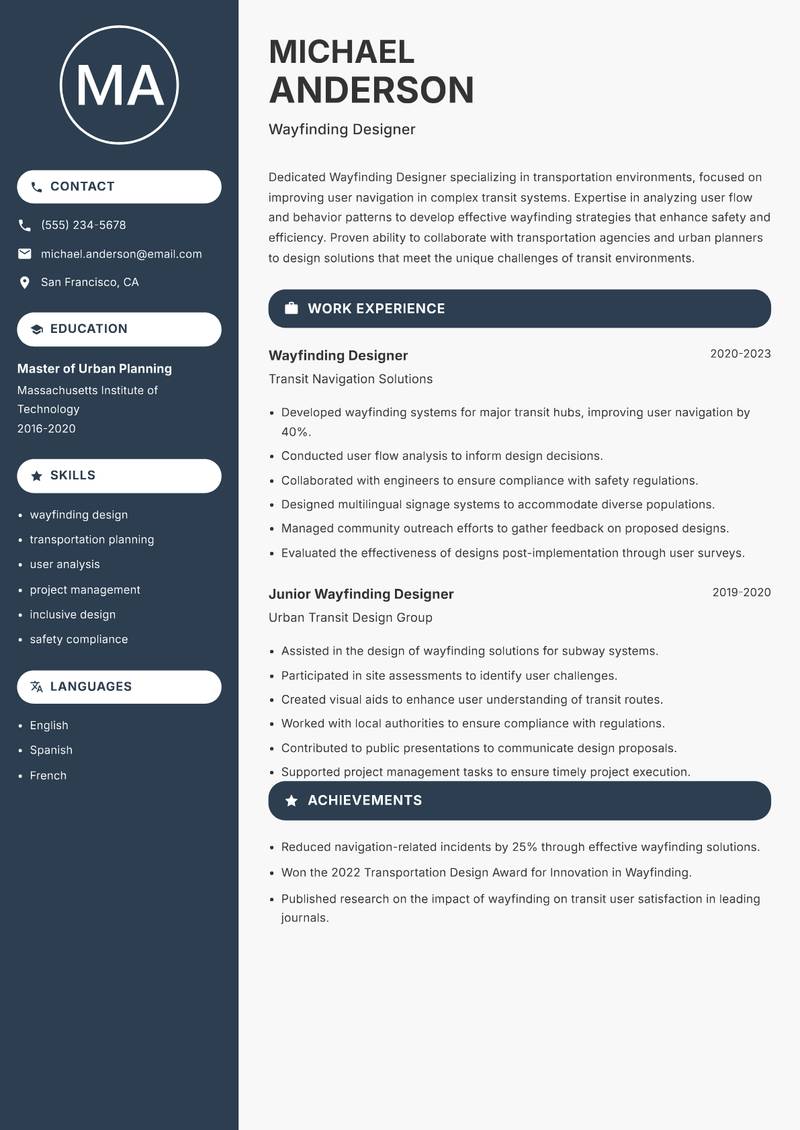
Wayfinding Designer Resume

Dedicated Wayfinding Designer specializing in transportation environments, focused on improving user navigation in complex transit systems. Expertise in analyzing user flow and behavior patterns to develop effective wayfinding strategies that enhance safety and efficiency. Proven ability to collaborate with transportation agencies and urban planners to design solutions that meet the unique challenges of transit environments. A strong advocate for inclusivity in design, ensuring that all users, including those with disabilities, can navigate transit systems with ease. Recognized for developing innovative signage and mapping systems that significantly reduce confusion and improve overall user satisfaction. Committed to advancing the field of wayfinding through research and continuous improvement.

wayfinding design transportation planning user analysis project management inclusive design safety compliance
Wayfinding Designer Resume Preview Example
View PDF
  1. Developed wayfinding systems for major transit hubs, improving user navigation by 40%.
  2. Conducted user flow analysis to inform design decisions.
  3. Collaborated with engineers to ensure compliance with safety regulations.
  4. Designed multilingual signage systems to accommodate diverse populations.
  5. Managed community outreach efforts to gather feedback on proposed designs.
  6. Evaluated the effectiveness of designs post-implementation through user surveys.
  1. Assisted in the design of wayfinding solutions for subway systems.
  2. Participated in site assessments to identify user challenges.
  3. Created visual aids to enhance user understanding of transit routes.
  4. Worked with local authorities to ensure compliance with regulations.
  5. Contributed to public presentations to communicate design proposals.
  6. Supported project management tasks to ensure timely project execution.

Achievements

  • Reduced navigation-related incidents by 25% through effective wayfinding solutions.
  • Won the 2022 Transportation Design Award for Innovation in Wayfinding.
  • Published research on the impact of wayfinding on transit user satisfaction in leading journals.
⏱️
Experience
2-5 Years
📅
Level
Mid Level
🎓
Education
Master of Urban Planning, Mass...

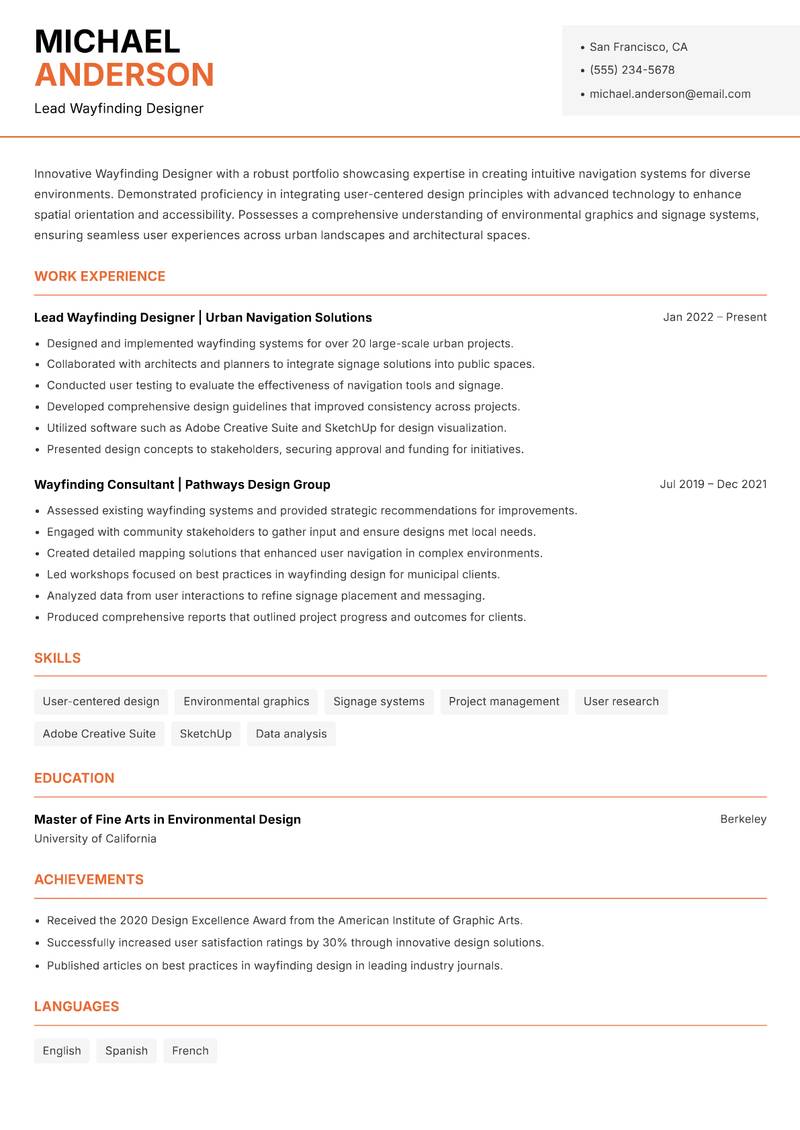
Lead Wayfinding Designer Resume

Innovative Wayfinding Designer with a robust portfolio showcasing expertise in creating intuitive navigation systems for diverse environments. Demonstrated proficiency in integrating user-centered design principles with advanced technology to enhance spatial orientation and accessibility. Possesses a comprehensive understanding of environmental graphics and signage systems, ensuring seamless user experiences across urban landscapes and architectural spaces. Proven track record in collaborating with cross-functional teams to deliver projects on time and within budget, while adhering to stringent design standards. Adept at conducting user research and applying findings to inform design decisions, ultimately resulting in enhanced user satisfaction and engagement. Committed to promoting sustainable design practices that not only meet client needs but also contribute positively to the built environment.

User-centered design Environmental graphics Signage systems Project management User research Adobe Creative Suite SketchUp Data analysis
Wayfinding Designer Resume Preview Example
View PDF
  1. Designed and implemented wayfinding systems for over 20 large-scale urban projects.
  2. Collaborated with architects and planners to integrate signage solutions into public spaces.
  3. Conducted user testing to evaluate the effectiveness of navigation tools and signage.
  4. Developed comprehensive design guidelines that improved consistency across projects.
  5. Utilized software such as Adobe Creative Suite and SketchUp for design visualization.
  6. Presented design concepts to stakeholders, securing approval and funding for initiatives.
  1. Assessed existing wayfinding systems and provided strategic recommendations for improvements.
  2. Engaged with community stakeholders to gather input and ensure designs met local needs.
  3. Created detailed mapping solutions that enhanced user navigation in complex environments.
  4. Led workshops focused on best practices in wayfinding design for municipal clients.
  5. Analyzed data from user interactions to refine signage placement and messaging.
  6. Produced comprehensive reports that outlined project progress and outcomes for clients.

Achievements

  • Received the 2020 Design Excellence Award from the American Institute of Graphic Arts.
  • Successfully increased user satisfaction ratings by 30% through innovative design solutions.
  • Published articles on best practices in wayfinding design in leading industry journals.
⏱️
Experience
2-5 Years
📅
Level
Mid Level
🎓
Education
Master of Fine Arts in Environ...

Key Skills for Wayfinding Designer Positions

Resume Tips for Wayfinding Designer Applications

Strong Action Verbs for Wayfinding Designer Resumes

Communicated · Designed · Visualized · Illustrated · Strategized · Produced · Presented · Simplified · Crafted · Delivered · Achieved · Administered · Analyzed · Architected

Common Mistakes to Avoid

Experience Levels

How to Write a Wayfinding Designer Resume

Browse Wayfinding Designer resume examples built around information design & data visualization, tailored for Visual Communication roles.

A strong Wayfinding Designer resume leads with a focused professional summary that names the exact role and your standout achievement. In the experience section, open every bullet with a strong action verb and quantify the result with numbers wherever possible. Highlight your most relevant competencies — especially Information Design & Data Visualization, Brand Communication Design, and Illustration & Infographic Creation — in a dedicated Skills section positioned early so ATS systems and hiring managers both find it immediately.

For format, most Wayfinding Designer roles suit a reverse-chronological layout: most recent position first, working backwards. Keep to one page for under five years of experience, or two pages for senior candidates with a rich project or leadership history. Use clean, ATS-safe fonts (10–12pt), standard section headings (Summary, Experience, Education, Skills), and avoid tables, text boxes, or multi-column layouts that applicant tracking systems cannot parse reliably.
Frequently Asked Questions

What makes a strong Wayfinding Designer resume stand out to employers?

A standout Wayfinding Designer resume combines role-specific skills with quantified achievements. Name the exact job title in your professional summary, mirror keywords from each job posting, and open every bullet point with a strong action verb followed by a measurable result. Certifications, tools, and domain experience specific to wayfinding designer roles should appear prominently near the top.

What skills are most important to include on a Visual Communication resume?

Recruiters hiring in Visual Communication consistently look for Information Design & Data Visualization, Brand Communication Design, Illustration & Infographic Creation, Publication Design (InDesign, Affinity Publisher). List these in a dedicated Skills section near the top so both ATS systems and human reviewers spot them fast. Mirror the exact phrasing from each job posting wherever possible — many applicant tracking systems match literal strings rather than synonyms.

What is the best resume format for Visual Communication professionals?

A reverse-chronological format is the standard choice for most Visual Communication candidates — employers expect to see your most recent role first, working backwards. If you are transitioning into Visual Communication from a related field, a hybrid format (brief skills summary at the top followed by chronological experience) can bridge the gap effectively. Keep the document to one page for under five years of experience, or two pages for senior specialists.

How do I make my Visual Communication resume pass applicant tracking systems (ATS)?

Use standard section headings — Summary, Experience, Education, Skills — rather than creative labels that ATS parsers do not recognise. Embed domain keywords such as "Information Design & Data Visualization" and "Brand Communication Design" naturally inside your experience bullets rather than cramming them into a standalone keyword list. Avoid tables, multi-column layouts, text boxes, headers, footers, and images — these confuse most modern parsers and can cause your resume to be misread or rejected before a human sees it.

What mistakes do Visual Communication professionals most commonly make on their resume?

The most frequent issue is not providing a portfolio with strategic context for each project. Beyond that, generic objective statements, unquantified achievements, and inconsistent date formatting appear across almost every Visual Communication application. Fix these by replacing every vague claim with a measurable outcome — specific numbers and named projects add credibility that adjectives cannot.

How long should a Visual Communication resume be?

One page is appropriate for candidates with under five years of relevant Visual Communication experience. Two pages are acceptable — and sometimes expected — for senior specialists, managers, or professionals with a strong portfolio of projects, publications, or credentials. Avoid padding to reach a page count: every line should directly support your application for the specific role you are targeting.

Should I include a professional summary at the top of my Visual Communication resume?

Yes — a two to three sentence summary is the first section most recruiters read. Open with your title and years of Visual Communication experience, then name your most relevant achievement or specialisation. One proven approach: Portfolio is essential — link to it from the top of your resume — this level of specificity signals genuine expertise before a recruiter reaches your experience section.

Scroll to view samples