Wildlife Veterinarian Resume

These Wildlife Veterinarian resume samples are designed to help you write a resume that gets noticed by hiring managers and passes applicant tracking systems (ATS) in Veterinary Science. Each example shows real formatting, section structure, and language you can adapt to your own background. When writing your own Wildlife Veterinarian resume, focus on highlighting clinical examination & diagnosis (Multi-species), surgical techniques (Routine & specialized) and medical imaging (X-Ray, ultrasound, MRI). Recruiters scan for these qualifications first, so they should appear early in your summary and experience sections. Use strong action verbs such as "examined", "diagnosed", "surgically treated", "vaccinated" to describe your achievements, and quantify your impact wherever possible — percentages, dollar amounts, or time saved make your resume more convincing. A common mistake to avoid: writing a generic objective statement instead of a targeted wildlife veterinarian professional summary. Tailor your resume to each Wildlife Veterinarian position you apply for rather than using one generic version.

Wildlife Veterinarian Resume Template
View PDF
0.0 (0 ratings)

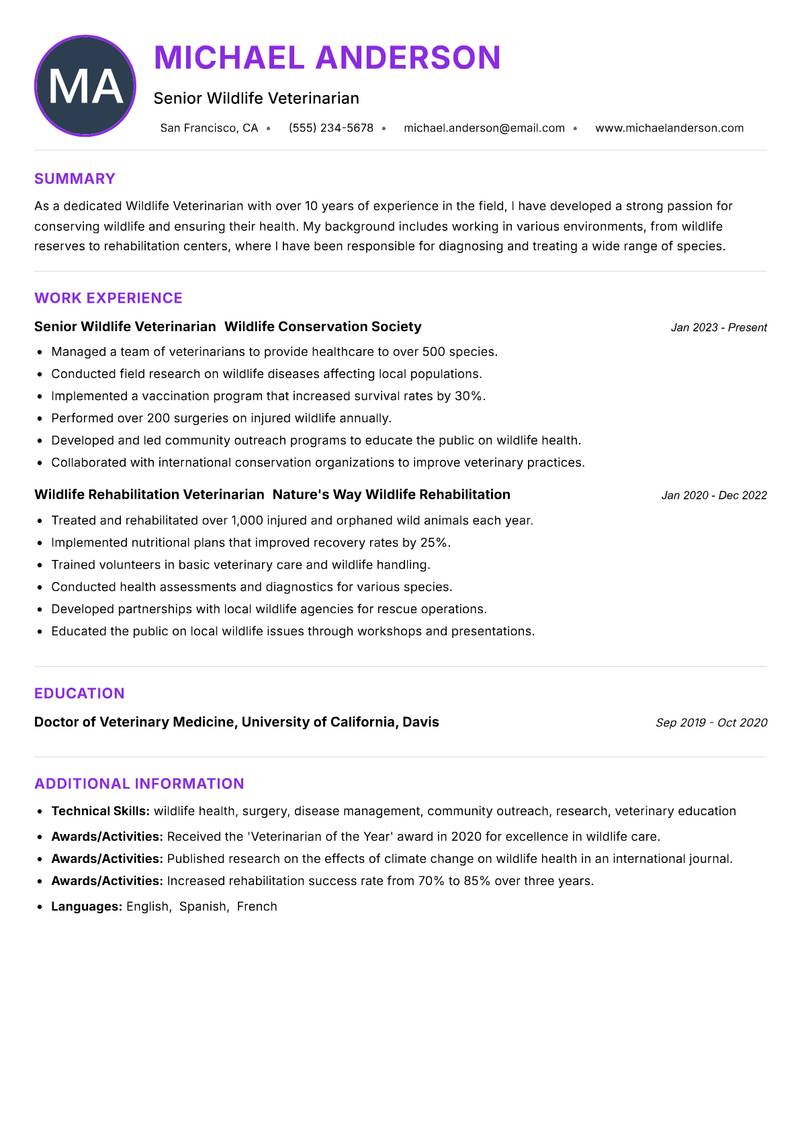
Senior Wildlife Veterinarian Resume

As a dedicated Wildlife Veterinarian with over 10 years of experience in the field, I have developed a strong passion for conserving wildlife and ensuring their health. My background includes working in various environments, from wildlife reserves to rehabilitation centers, where I have been responsible for diagnosing and treating a wide range of species. My expertise lies in the management of wildlife diseases, implementing vaccination programs, and conducting field surgeries. I have collaborated with conservation organizations to develop strategies that enhance the health and survival of endangered species. By utilizing cutting-edge veterinary practices and staying updated with the latest research, I strive to contribute to the sustainability of wildlife populations. Additionally, I have experience in educating the public about wildlife health issues and the importance of conservation efforts. My goal is to continue advocating for wildlife welfare and to make a significant impact in the field through my clinical skills and outreach initiatives.

wildlife health surgery disease management community outreach research veterinary education
Wildlife Veterinarian Resume Preview Example
View PDF
  1. Managed a team of veterinarians to provide healthcare to over 500 species.
  2. Conducted field research on wildlife diseases affecting local populations.
  3. Implemented a vaccination program that increased survival rates by 30%.
  4. Performed over 200 surgeries on injured wildlife annually.
  5. Developed and led community outreach programs to educate the public on wildlife health.
  6. Collaborated with international conservation organizations to improve veterinary practices.
  1. Treated and rehabilitated over 1,000 injured and orphaned wild animals each year.
  2. Implemented nutritional plans that improved recovery rates by 25%.
  3. Trained volunteers in basic veterinary care and wildlife handling.
  4. Conducted health assessments and diagnostics for various species.
  5. Developed partnerships with local wildlife agencies for rescue operations.
  6. Educated the public on local wildlife issues through workshops and presentations.

Achievements

  • Received the 'Veterinarian of the Year' award in 2020 for excellence in wildlife care.
  • Published research on the effects of climate change on wildlife health in an international journal.
  • Increased rehabilitation success rate from 70% to 85% over three years.
⏱️
Experience
2-5 Years
📅
Level
Mid Level
🎓
Education
Doctor of Veterinary Medicine,...

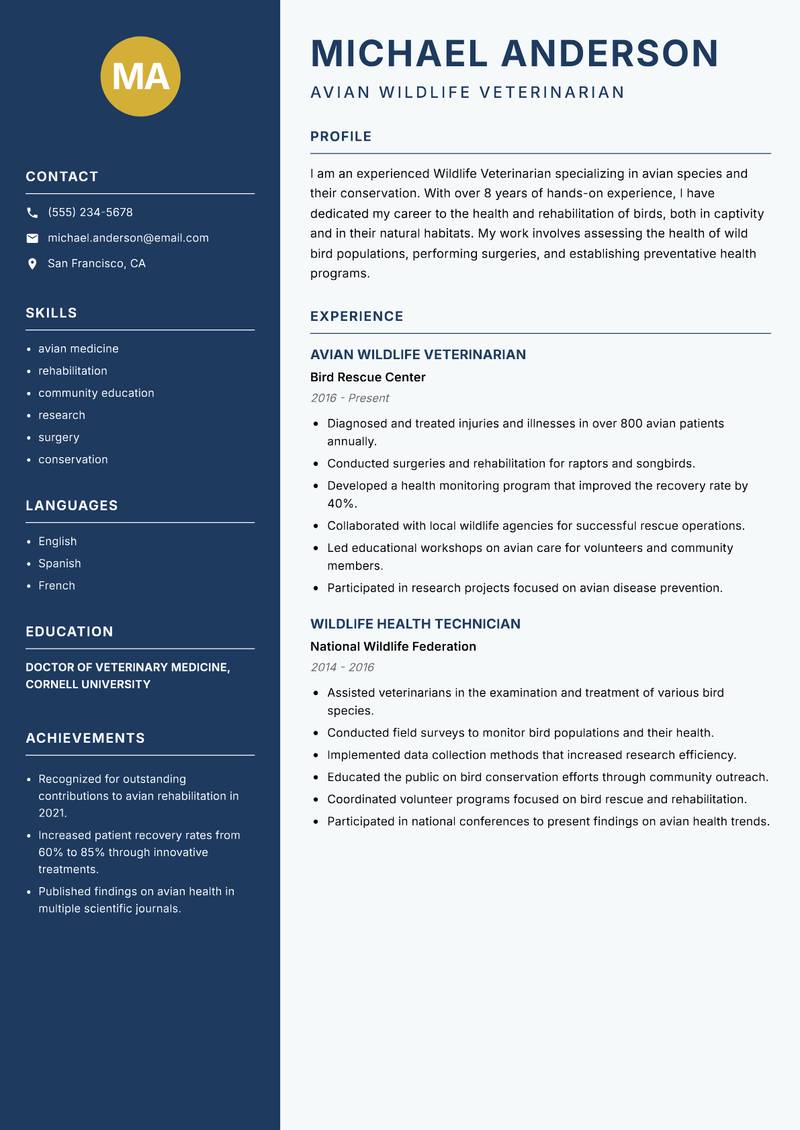
Avian Wildlife Veterinarian Resume

I am an experienced Wildlife Veterinarian specializing in avian species and their conservation. With over 8 years of hands-on experience, I have dedicated my career to the health and rehabilitation of birds, both in captivity and in their natural habitats. My work involves assessing the health of wild bird populations, performing surgeries, and establishing preventative health programs. I have also collaborated with environmental organizations to monitor and manage bird populations affected by habitat loss. My passion for avian medicine has led me to develop innovative treatment protocols that have significantly improved the recovery rates of injured birds. Furthermore, I actively engage in educational initiatives to raise awareness about the importance of bird conservation. My ultimate goal is to contribute to the sustainable management of avian species through veterinary care and community involvement.

avian medicine rehabilitation community education research surgery conservation
Wildlife Veterinarian Resume Preview Example
View PDF
  1. Diagnosed and treated injuries and illnesses in over 800 avian patients annually.
  2. Conducted surgeries and rehabilitation for raptors and songbirds.
  3. Developed a health monitoring program that improved the recovery rate by 40%.
  4. Collaborated with local wildlife agencies for successful rescue operations.
  5. Led educational workshops on avian care for volunteers and community members.
  6. Participated in research projects focused on avian disease prevention.
  1. Assisted veterinarians in the examination and treatment of various bird species.
  2. Conducted field surveys to monitor bird populations and their health.
  3. Implemented data collection methods that increased research efficiency.
  4. Educated the public on bird conservation efforts through community outreach.
  5. Coordinated volunteer programs focused on bird rescue and rehabilitation.
  6. Participated in national conferences to present findings on avian health trends.

Achievements

  • Recognized for outstanding contributions to avian rehabilitation in 2021.
  • Increased patient recovery rates from 60% to 85% through innovative treatments.
  • Published findings on avian health in multiple scientific journals.
⏱️
Experience
2-5 Years
📅
Level
Mid Level
🎓
Education
Doctor of Veterinary Medicine,...

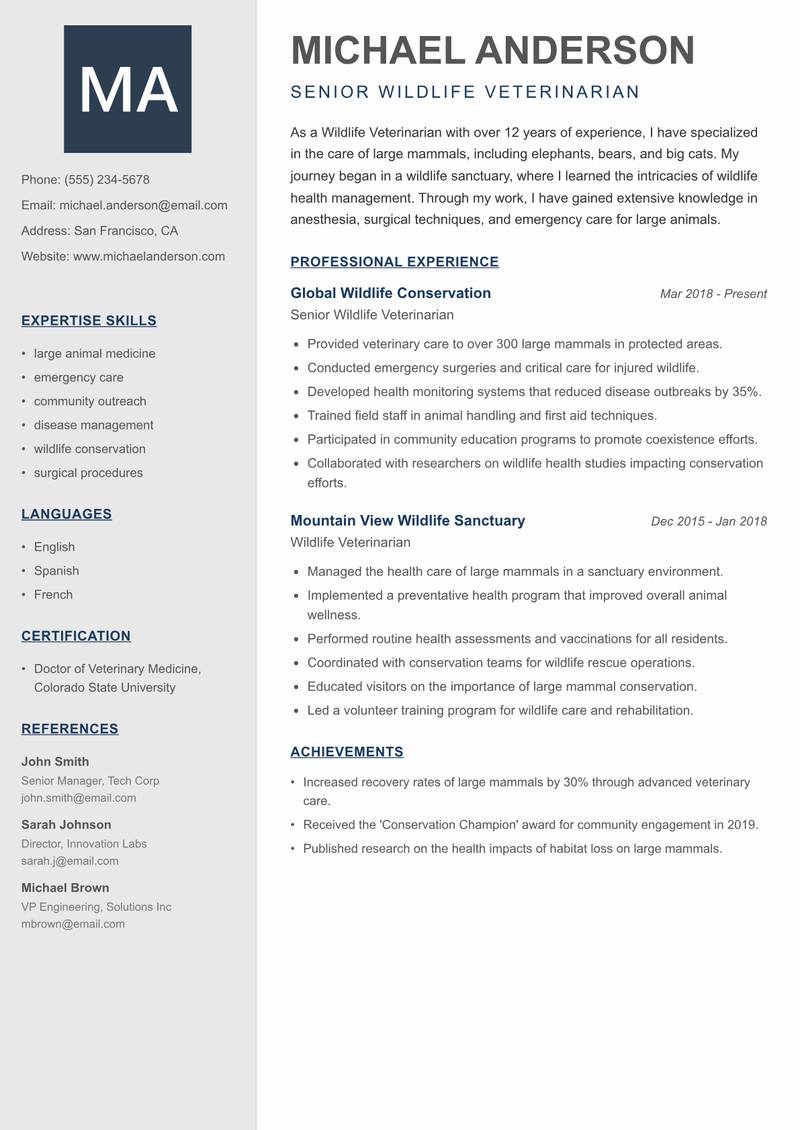
Senior Wildlife Veterinarian Resume

As a Wildlife Veterinarian with over 12 years of experience, I have specialized in the care of large mammals, including elephants, bears, and big cats. My journey began in a wildlife sanctuary, where I learned the intricacies of wildlife health management. Through my work, I have gained extensive knowledge in anesthesia, surgical techniques, and emergency care for large animals. I have collaborated with various conservation organizations to develop health monitoring systems that track disease outbreaks in wild populations. My commitment to wildlife conservation is evident in my participatory approach, working closely with local communities to reduce human-wildlife conflict. My goal is to ensure the health and sustainability of large mammal populations while promoting coexistence with humans through education and outreach programs.

large animal medicine emergency care community outreach disease management wildlife conservation surgical procedures
Wildlife Veterinarian Resume Preview Example
View PDF
  1. Provided veterinary care to over 300 large mammals in protected areas.
  2. Conducted emergency surgeries and critical care for injured wildlife.
  3. Developed health monitoring systems that reduced disease outbreaks by 35%.
  4. Trained field staff in animal handling and first aid techniques.
  5. Participated in community education programs to promote coexistence efforts.
  6. Collaborated with researchers on wildlife health studies impacting conservation efforts.
  1. Managed the health care of large mammals in a sanctuary environment.
  2. Implemented a preventative health program that improved overall animal wellness.
  3. Performed routine health assessments and vaccinations for all residents.
  4. Coordinated with conservation teams for wildlife rescue operations.
  5. Educated visitors on the importance of large mammal conservation.
  6. Led a volunteer training program for wildlife care and rehabilitation.

Achievements

  • Increased recovery rates of large mammals by 30% through advanced veterinary care.
  • Received the 'Conservation Champion' award for community engagement in 2019.
  • Published research on the health impacts of habitat loss on large mammals.
⏱️
Experience
2-5 Years
📅
Level
Mid Level
🎓
Education
Doctor of Veterinary Medicine,...

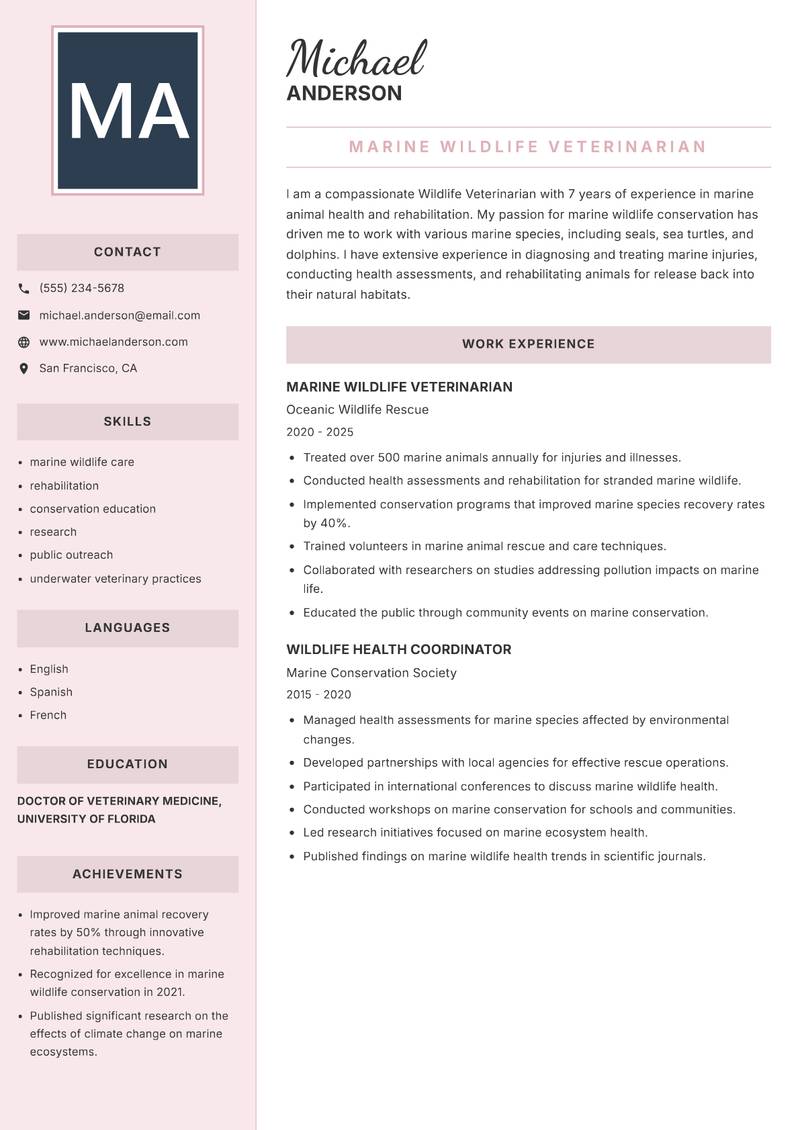
Marine Wildlife Veterinarian Resume

I am a compassionate Wildlife Veterinarian with 7 years of experience in marine animal health and rehabilitation. My passion for marine wildlife conservation has driven me to work with various marine species, including seals, sea turtles, and dolphins. I have extensive experience in diagnosing and treating marine injuries, conducting health assessments, and rehabilitating animals for release back into their natural habitats. Through my role, I have developed partnerships with local and international organizations to promote marine conservation efforts. I am skilled in underwater veterinary practices and have contributed to research on the effects of pollution and climate change on marine ecosystems. My goal is to enhance the well-being of marine wildlife while educating communities about the importance of ocean conservation.

marine wildlife care rehabilitation conservation education research public outreach underwater veterinary practices
Wildlife Veterinarian Resume Preview Example
View PDF
  1. Treated over 500 marine animals annually for injuries and illnesses.
  2. Conducted health assessments and rehabilitation for stranded marine wildlife.
  3. Implemented conservation programs that improved marine species recovery rates by 40%.
  4. Trained volunteers in marine animal rescue and care techniques.
  5. Collaborated with researchers on studies addressing pollution impacts on marine life.
  6. Educated the public through community events on marine conservation.
  1. Managed health assessments for marine species affected by environmental changes.
  2. Developed partnerships with local agencies for effective rescue operations.
  3. Participated in international conferences to discuss marine wildlife health.
  4. Conducted workshops on marine conservation for schools and communities.
  5. Led research initiatives focused on marine ecosystem health.
  6. Published findings on marine wildlife health trends in scientific journals.

Achievements

  • Improved marine animal recovery rates by 50% through innovative rehabilitation techniques.
  • Recognized for excellence in marine wildlife conservation in 2021.
  • Published significant research on the effects of climate change on marine ecosystems.
⏱️
Experience
2-5 Years
📅
Level
Mid Level
🎓
Education
Doctor of Veterinary Medicine,...

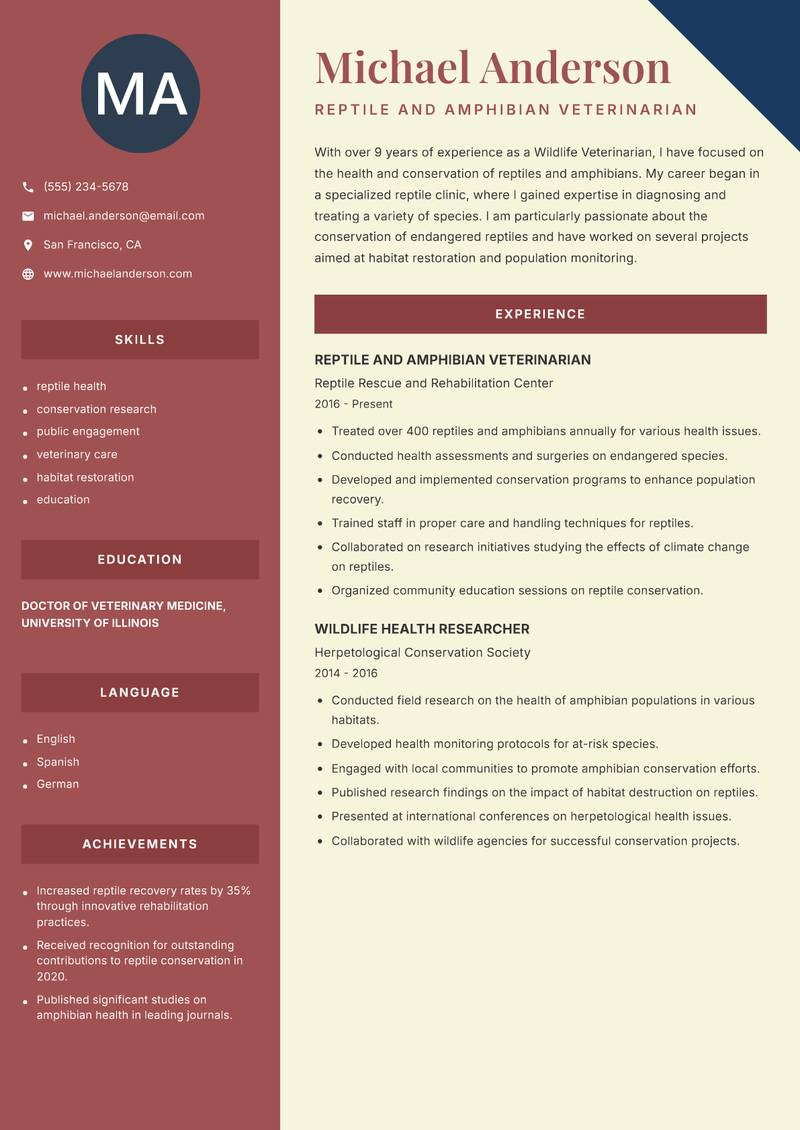
Reptile and Amphibian Veterinarian Resume

With over 9 years of experience as a Wildlife Veterinarian, I have focused on the health and conservation of reptiles and amphibians. My career began in a specialized reptile clinic, where I gained expertise in diagnosing and treating a variety of species. I am particularly passionate about the conservation of endangered reptiles and have worked on several projects aimed at habitat restoration and population monitoring. My clinical skills are complemented by my research background, where I have led studies on the health impacts of environmental changes on reptile populations. Additionally, I actively engage in educational outreach programs to raise awareness about the importance of reptile conservation. My aim is to contribute to the preservation of reptile species through veterinary care and public education.

reptile health conservation research public engagement veterinary care habitat restoration education
Wildlife Veterinarian Resume Preview Example
View PDF
  1. Treated over 400 reptiles and amphibians annually for various health issues.
  2. Conducted health assessments and surgeries on endangered species.
  3. Developed and implemented conservation programs to enhance population recovery.
  4. Trained staff in proper care and handling techniques for reptiles.
  5. Collaborated on research initiatives studying the effects of climate change on reptiles.
  6. Organized community education sessions on reptile conservation.
  1. Conducted field research on the health of amphibian populations in various habitats.
  2. Developed health monitoring protocols for at-risk species.
  3. Engaged with local communities to promote amphibian conservation efforts.
  4. Published research findings on the impact of habitat destruction on reptiles.
  5. Presented at international conferences on herpetological health issues.
  6. Collaborated with wildlife agencies for successful conservation projects.

Achievements

  • Increased reptile recovery rates by 35% through innovative rehabilitation practices.
  • Received recognition for outstanding contributions to reptile conservation in 2020.
  • Published significant studies on amphibian health in leading journals.
⏱️
Experience
2-5 Years
📅
Level
Mid Level
🎓
Education
Doctor of Veterinary Medicine,...

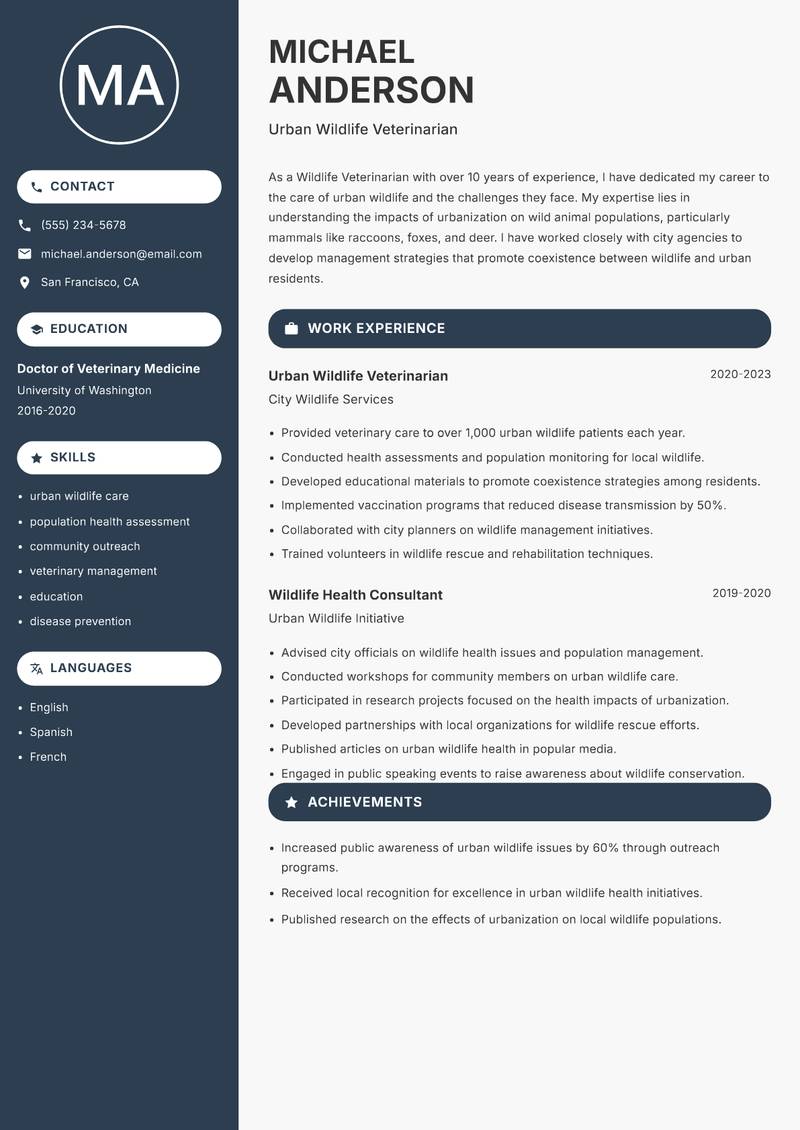
Urban Wildlife Veterinarian Resume

As a Wildlife Veterinarian with over 10 years of experience, I have dedicated my career to the care of urban wildlife and the challenges they face. My expertise lies in understanding the impacts of urbanization on wild animal populations, particularly mammals like raccoons, foxes, and deer. I have worked closely with city agencies to develop management strategies that promote coexistence between wildlife and urban residents. My role includes diagnosing and treating injuries, conducting population health assessments, and implementing vaccination programs. I am also involved in educational campaigns aimed at raising awareness about urban wildlife issues and fostering community engagement. My goal is to ensure the health of urban wildlife while promoting a harmonious relationship with local communities.

urban wildlife care population health assessment community outreach veterinary management education disease prevention
Wildlife Veterinarian Resume Preview Example
View PDF
  1. Provided veterinary care to over 1,000 urban wildlife patients each year.
  2. Conducted health assessments and population monitoring for local wildlife.
  3. Developed educational materials to promote coexistence strategies among residents.
  4. Implemented vaccination programs that reduced disease transmission by 50%.
  5. Collaborated with city planners on wildlife management initiatives.
  6. Trained volunteers in wildlife rescue and rehabilitation techniques.
  1. Advised city officials on wildlife health issues and population management.
  2. Conducted workshops for community members on urban wildlife care.
  3. Participated in research projects focused on the health impacts of urbanization.
  4. Developed partnerships with local organizations for wildlife rescue efforts.
  5. Published articles on urban wildlife health in popular media.
  6. Engaged in public speaking events to raise awareness about wildlife conservation.

Achievements

  • Increased public awareness of urban wildlife issues by 60% through outreach programs.
  • Received local recognition for excellence in urban wildlife health initiatives.
  • Published research on the effects of urbanization on local wildlife populations.
⏱️
Experience
2-5 Years
📅
Level
Mid Level
🎓
Education
Doctor of Veterinary Medicine,...

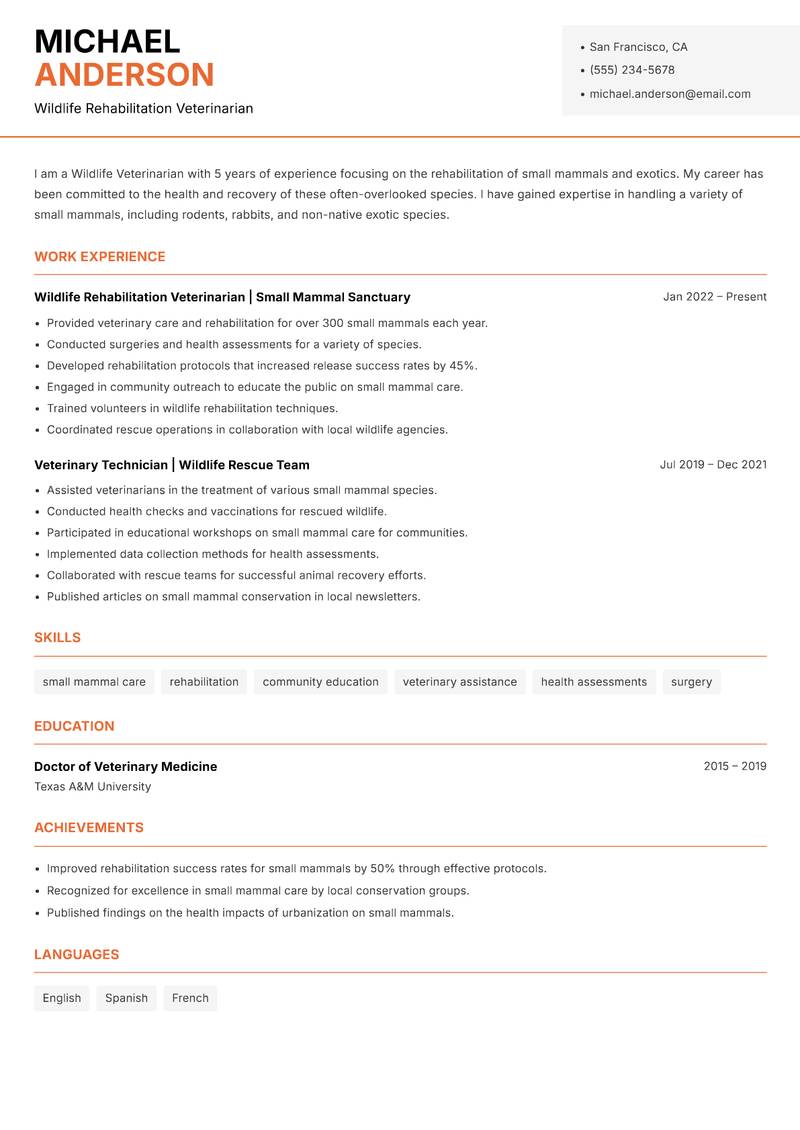
Wildlife Rehabilitation Veterinarian Resume

I am a Wildlife Veterinarian with 5 years of experience focusing on the rehabilitation of small mammals and exotics. My career has been committed to the health and recovery of these often-overlooked species. I have gained expertise in handling a variety of small mammals, including rodents, rabbits, and non-native exotic species. My responsibilities include diagnosing health issues, performing surgeries, and implementing rehabilitation protocols to ensure successful releases back into the wild. I have collaborated with wildlife organizations to create and promote health education programs aimed at protecting these species. My goal is to improve the welfare of small mammals and exotics through dedicated veterinary care and community engagement.

small mammal care rehabilitation community education veterinary assistance health assessments surgery
Wildlife Veterinarian Resume Preview Example
View PDF
  1. Provided veterinary care and rehabilitation for over 300 small mammals each year.
  2. Conducted surgeries and health assessments for a variety of species.
  3. Developed rehabilitation protocols that increased release success rates by 45%.
  4. Engaged in community outreach to educate the public on small mammal care.
  5. Trained volunteers in wildlife rehabilitation techniques.
  6. Coordinated rescue operations in collaboration with local wildlife agencies.
  1. Assisted veterinarians in the treatment of various small mammal species.
  2. Conducted health checks and vaccinations for rescued wildlife.
  3. Participated in educational workshops on small mammal care for communities.
  4. Implemented data collection methods for health assessments.
  5. Collaborated with rescue teams for successful animal recovery efforts.
  6. Published articles on small mammal conservation in local newsletters.

Achievements

  • Improved rehabilitation success rates for small mammals by 50% through effective protocols.
  • Recognized for excellence in small mammal care by local conservation groups.
  • Published findings on the health impacts of urbanization on small mammals.
⏱️
Experience
2-5 Years
📅
Level
Mid Level
🎓
Education
Doctor of Veterinary Medicine,...

Key Skills for Wildlife Veterinarian Positions

Resume Tips for Wildlife Veterinarian Applications

Strong Action Verbs for Wildlife Veterinarian Resumes

Examined · Diagnosed · Surgically Treated · Vaccinated · Prescribed · Managed · Monitored · Communicated · Researched · Educated · Achieved · Administered · Analyzed · Architected

Common Mistakes to Avoid

Experience Levels

How to Write a Wildlife Veterinarian Resume

Browse Wildlife Veterinarian resume examples built around clinical examination & diagnosis (Multi-species), tailored for Veterinary Science roles.

A strong Wildlife Veterinarian resume leads with a focused professional summary that names the exact role and your standout achievement. In the experience section, open every bullet with a strong action verb and quantify the result with numbers wherever possible. Highlight your most relevant competencies — especially Clinical Examination & Diagnosis (Multi-species), Surgical Techniques (Routine & Specialized), and Medical Imaging (X-Ray, Ultrasound, MRI) — in a dedicated Skills section positioned early so ATS systems and hiring managers both find it immediately.

For format, most Wildlife Veterinarian roles suit a reverse-chronological layout: most recent position first, working backwards. Keep to one page for under five years of experience, or two pages for senior candidates with a rich project or leadership history. Use clean, ATS-safe fonts (10–12pt), standard section headings (Summary, Experience, Education, Skills), and avoid tables, text boxes, or multi-column layouts that applicant tracking systems cannot parse reliably.
Frequently Asked Questions

What makes a strong Wildlife Veterinarian resume stand out to employers?

A standout Wildlife Veterinarian resume combines role-specific skills with quantified achievements. Name the exact job title in your professional summary, mirror keywords from each job posting, and open every bullet point with a strong action verb followed by a measurable result. Certifications, tools, and domain experience specific to wildlife veterinarian roles should appear prominently near the top.

What skills are most important to include on a Veterinary Science resume?

Recruiters hiring in Veterinary Science consistently look for Clinical Examination & Diagnosis (Multi-species), Surgical Techniques (Routine & Specialized), Medical Imaging (X-Ray, Ultrasound, MRI), Pharmacology & Prescribing. List these in a dedicated Skills section near the top so both ATS systems and human reviewers spot them fast. Mirror the exact phrasing from each job posting wherever possible — many applicant tracking systems match literal strings rather than synonyms.

What is the best resume format for Veterinary Science professionals?

A reverse-chronological format is the standard choice for most Veterinary Science candidates — employers expect to see your most recent role first, working backwards. If you are transitioning into Veterinary Science from a related field, a hybrid format (brief skills summary at the top followed by chronological experience) can bridge the gap effectively. Keep the document to one page for under five years of experience, or two pages for senior specialists.

How do I make my Veterinary Science resume pass applicant tracking systems (ATS)?

Use standard section headings — Summary, Experience, Education, Skills — rather than creative labels that ATS parsers do not recognise. Embed domain keywords such as "Clinical Examination & Diagnosis (Multi-species)" and "Surgical Techniques (Routine & Specialized)" naturally inside your experience bullets rather than cramming them into a standalone keyword list. Avoid tables, multi-column layouts, text boxes, headers, footers, and images — these confuse most modern parsers and can cause your resume to be misread or rejected before a human sees it.

What mistakes do Veterinary Science professionals most commonly make on their resume?

The most frequent issue is failing to list veterinary registration — practicing without it is illegal in most jurisdictions. Beyond that, generic objective statements, unquantified achievements, and inconsistent date formatting appear across almost every Veterinary Science application. Fix these by replacing every vague claim with a measurable outcome — specific numbers and named projects add credibility that adjectives cannot.

How long should a Veterinary Science resume be?

One page is appropriate for candidates with under five years of relevant Veterinary Science experience. Two pages are acceptable — and sometimes expected — for senior specialists, managers, or professionals with a strong portfolio of projects, publications, or credentials. Avoid padding to reach a page count: every line should directly support your application for the specific role you are targeting.

Should I include a professional summary at the top of my Veterinary Science resume?

Yes — a two to three sentence summary is the first section most recruiters read. Open with your title and years of Veterinary Science experience, then name your most relevant achievement or specialisation. One proven approach: List veterinary registration and licenses — they are essential for any clinical role — this level of specificity signals genuine expertise before a recruiter reaches your experience section.

Scroll to view samples