Key Skills for Youth Policy Analyst Positions
- Program planning and monitoring
- Youth engagement frameworks
- Training and facilitation techniques
- Impact assessment and reporting
- Knowledge of youth policies and schemes
- Mentoring and counseling
- Stakeholder and community coordination
- Workshop and event management
- Grant documentation and reporting
- Partnership building
Resume Tips for Youth Policy Analyst Applications
- Frame every achievement as a business outcome — revenue impact, cost reduction, efficiency gain, or risk mitigated — since youth policy analyst employers want analysts who translate data into decisions, not just produce reports
- Quantify number of youths mentored or programs delivered.
- Highlight measurable outcomes like employment, retention, or skill gains.
- Showcase partnerships with schools, NGOs, or government bodies.
- Mention funded projects or grants managed successfully.
- Include certifications in counseling, training, or youth work.
Strong Action Verbs for Youth Policy Analyst Resumes
Empowered · Mentored · Facilitated · Coordinated · Implemented · Advocated · Mobilized · Designed · Evaluated · Transformed · Updated · Achieved · Administered · Analyzed
Common Mistakes to Avoid
- Writing a generic objective statement instead of a targeted youth policy analyst professional summary
- Focusing on passion without measurable results.
- Ignoring monitoring and evaluation experience.
- Using generic NGO language without role clarity.
- Overlooking safeguarding and ethical practices.
Experience Levels
- Entry Level: Supports program delivery, outreach, and youth facilitation.
- Mid Level: Designs initiatives, manages teams, and tracks impact.
- Senior Level: Leads strategy, partnerships, funding, and policy alignment.
How to Write a Youth Policy Analyst Resume
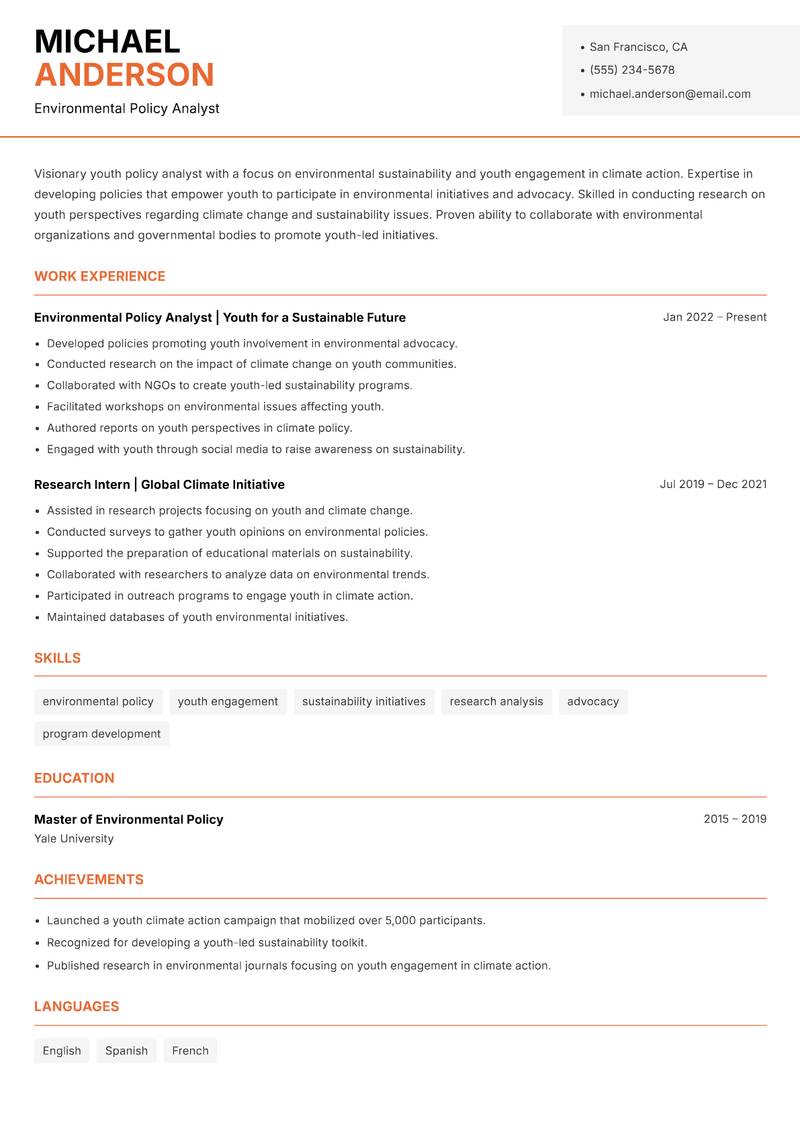
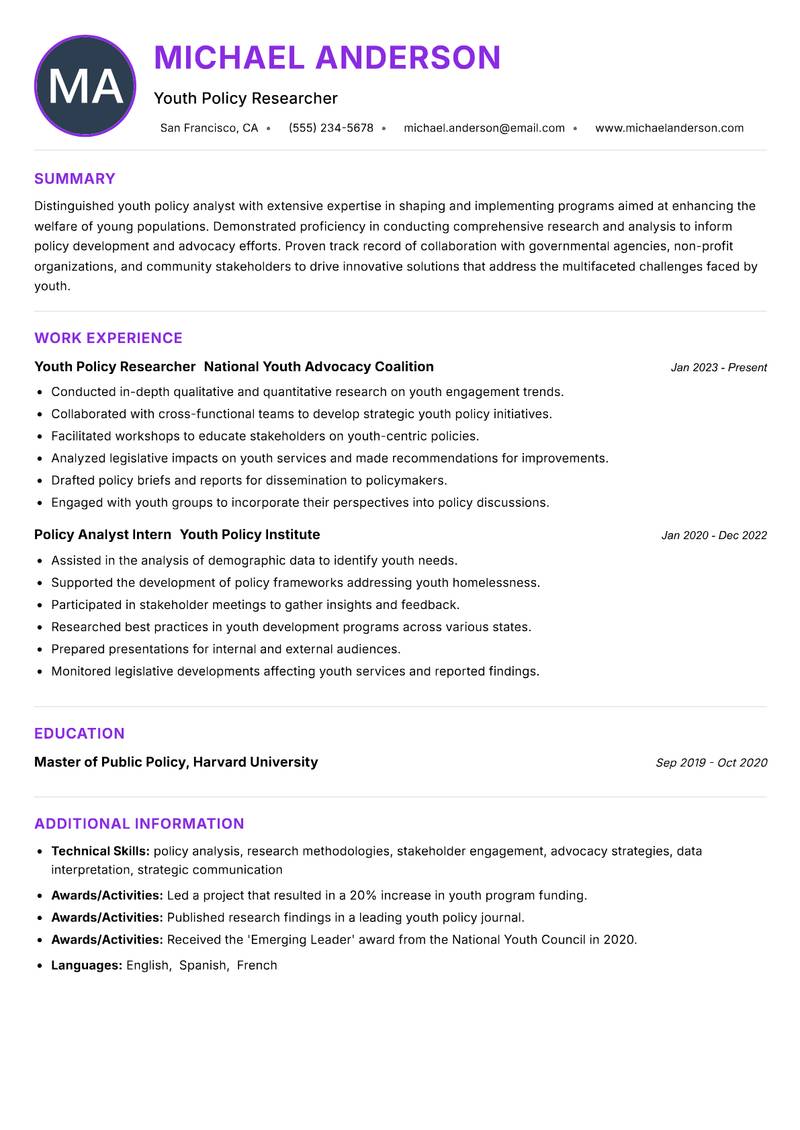
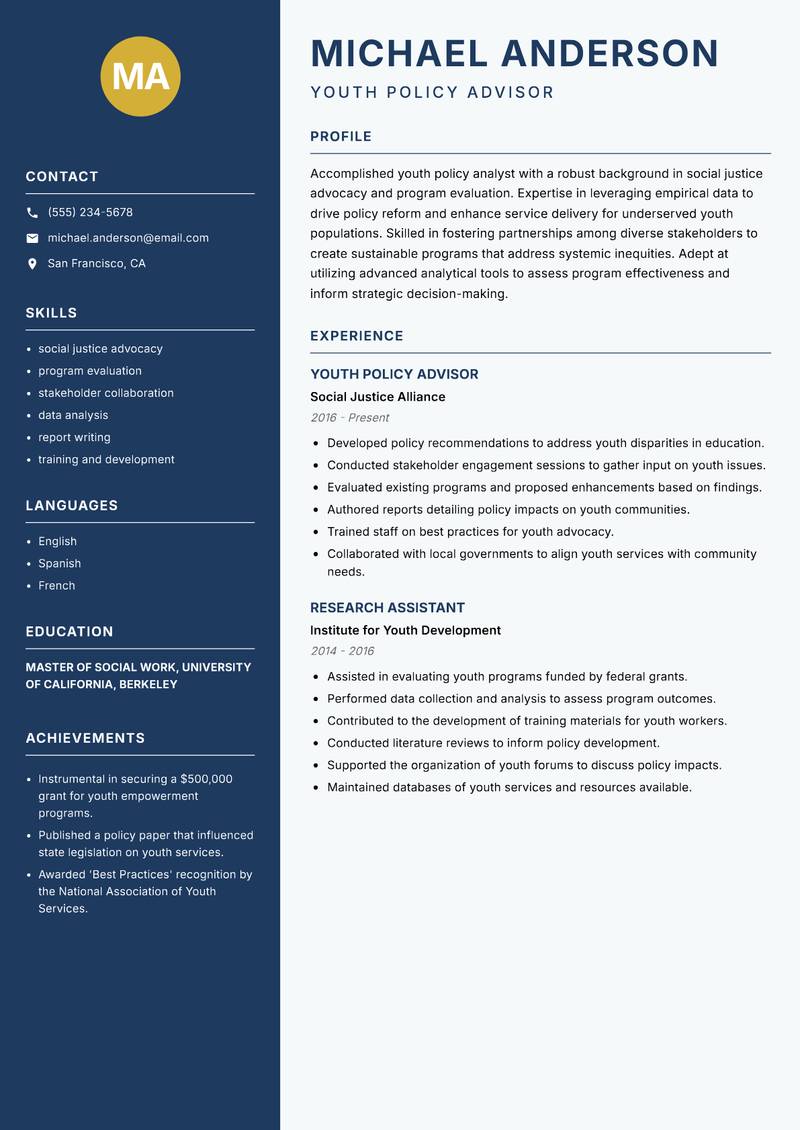
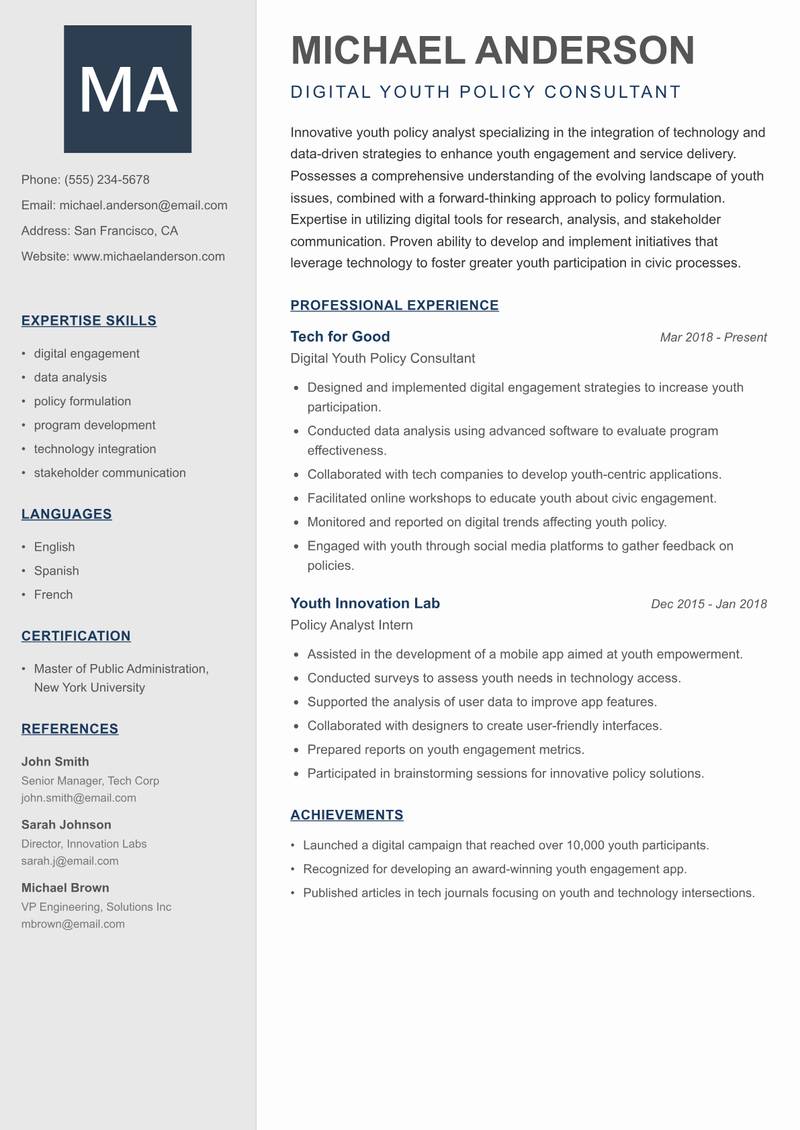
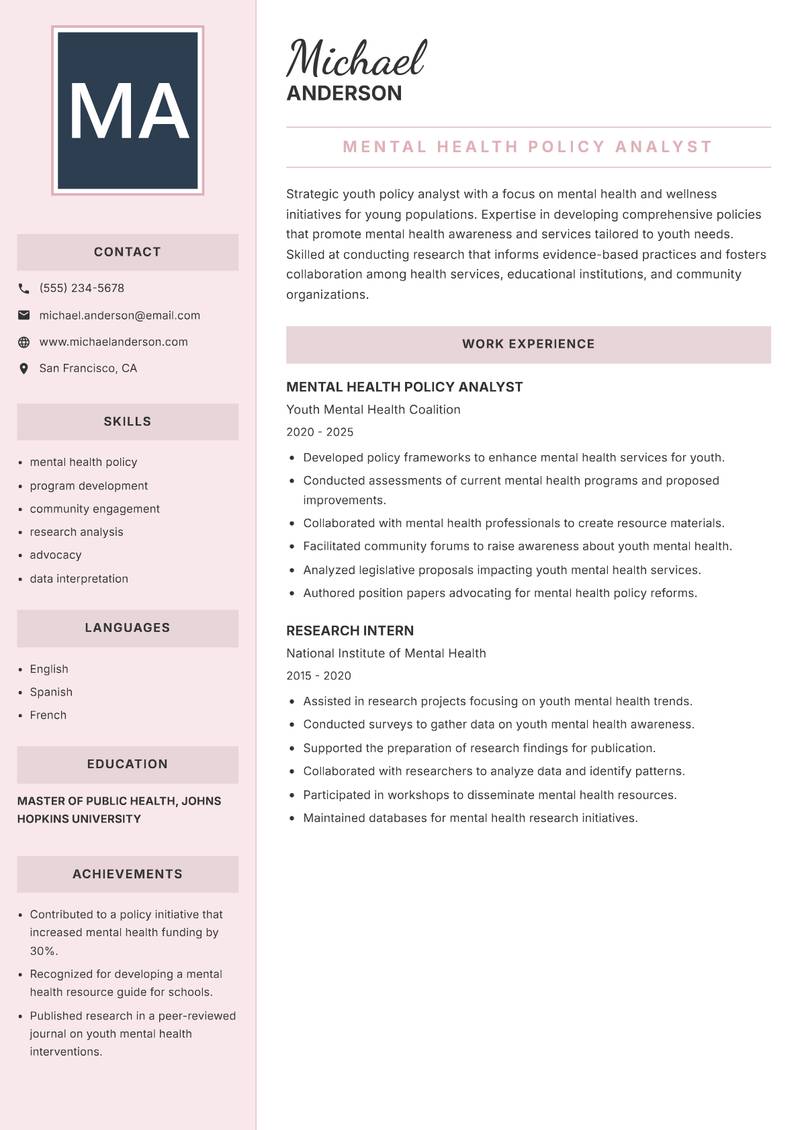
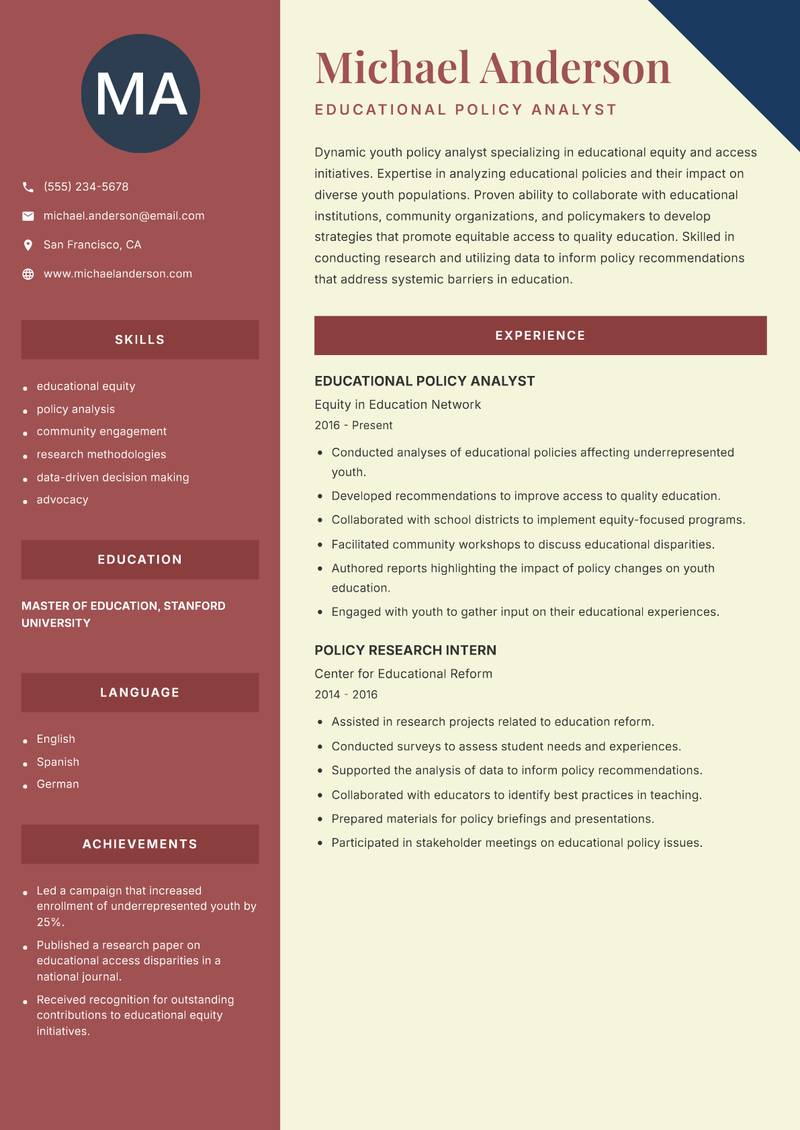
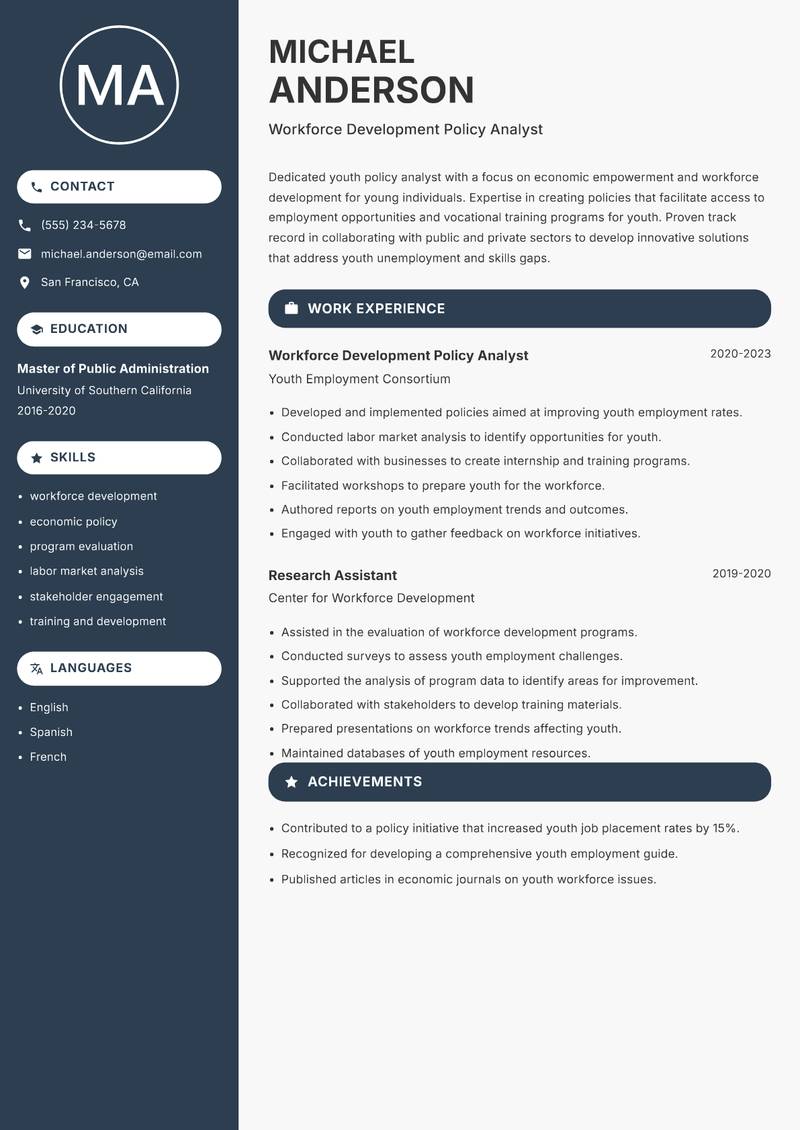
Browse Youth Policy Analyst resume examples built around program planning and monitoring, tailored for Youth Development roles.
A strong Youth Policy Analyst resume leads with a focused professional summary that names the exact role and your standout achievement. In the experience section, open every bullet with a strong action verb and quantify the result with numbers wherever possible. Highlight your most relevant competencies — especially Program planning and monitoring, Youth engagement frameworks, and Training and facilitation techniques — in a dedicated Skills section positioned early so ATS systems and hiring managers both find it immediately.
For format, most Youth Policy Analyst roles suit a reverse-chronological layout: most recent position first, working backwards. Keep to one page for under five years of experience, or two pages for senior candidates with a rich project or leadership history. Use clean, ATS-safe fonts (10–12pt), standard section headings (Summary, Experience, Education, Skills), and avoid tables, text boxes, or multi-column layouts that applicant tracking systems cannot parse reliably.