Key Skills for Injury Prevention Specialist Positions
- Exercise Physiology
- Biomechanical Analysis
- Performance Testing & Monitoring
- Athlete Load Management
- Sports Nutrition Support
- Strength & Conditioning Science
- Heart Rate Variability (HRV) Monitoring
- GPS & Wearable Technology
- Data Analysis & Reporting
- Sport Psychology Principles
Resume Tips for Injury Prevention Specialist Applications
- Highlight your Risk assessment and safety training experience prominently — this is a primary differentiator employers look for in injury prevention specialist candidates
- List your degree (Sports Science, Exercise Physiology) and any professional registrations (ESSA, NSCA-CSCS). Quantify athlete performance improvements and programs designed. Detail specific technology platforms (Catapult, Polar, Vald, Kinexon) you are proficient with. Demonstrate statistical analysis and data visualisation capability.
- Lead each bullet with an action verb and quantify the result — numbers make achievements credible
- Include a dedicated skills section listing both technical competencies and relevant certifications
- Keep to one page for under 5 years of experience; two pages for senior injury prevention specialist roles
Strong Action Verbs for Injury Prevention Specialist Resumes
Tested · Monitored · Analysed · Designed · Optimised · Managed · Improved · Coordinated · Delivered · Advised · Achieved · Administered · Analyzed · Architected · Assessed · Automated
Common Mistakes to Avoid
- Leaving out Risk assessment and safety training experience — this is a core differentiator for injury prevention specialist roles
- Writing a generic objective statement instead of a targeted injury prevention specialist professional summary
- Being too academic without demonstrating applied, on-field experience
- Omitting performance technology platforms
- Failing to quantify athlete outcomes and performance gains
- Neglecting interdisciplinary collaboration (coaches, physios, nutritionists)
- Missing data analysis and reporting capabilities
- Listing responsibilities without quantified results — 'managed budget' vs 'managed $2M budget'
- Using the same resume for every application instead of tailoring to each job posting
Experience Levels
- Graduate sports scientist\nPractitioner\nSenior sports scientist\nHead of performance
How to Write a Injury Prevention Specialist Resume
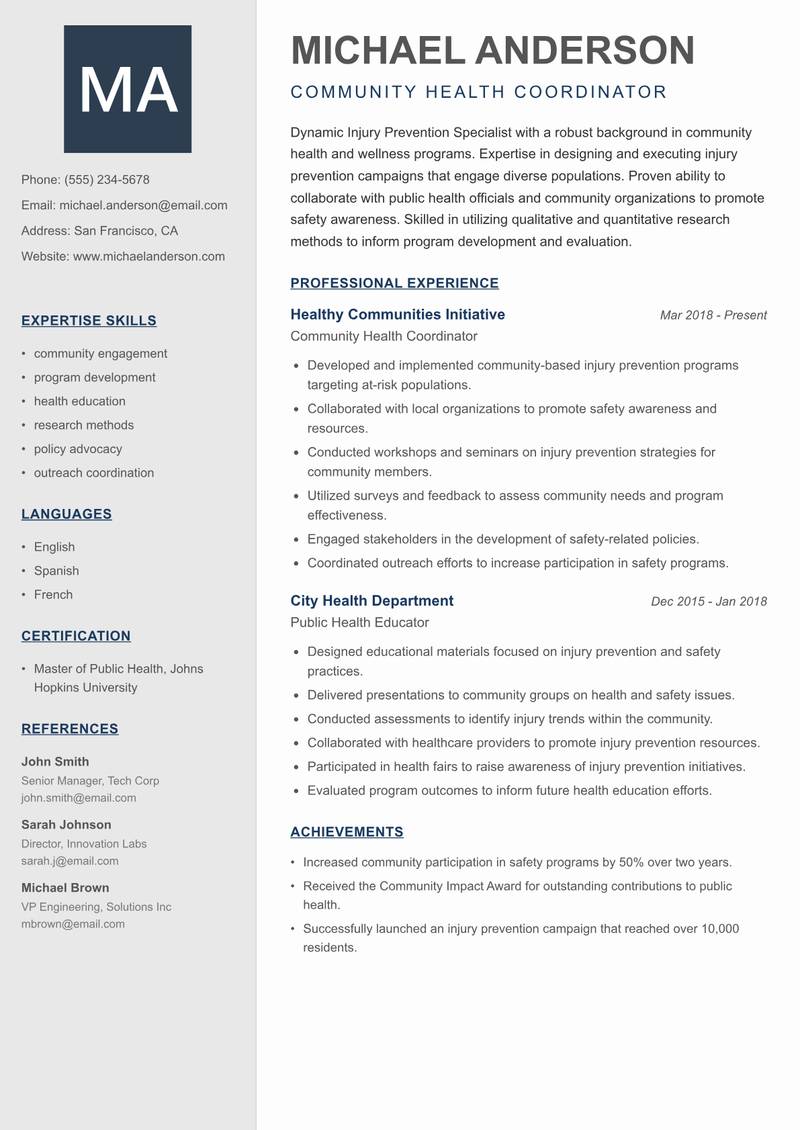
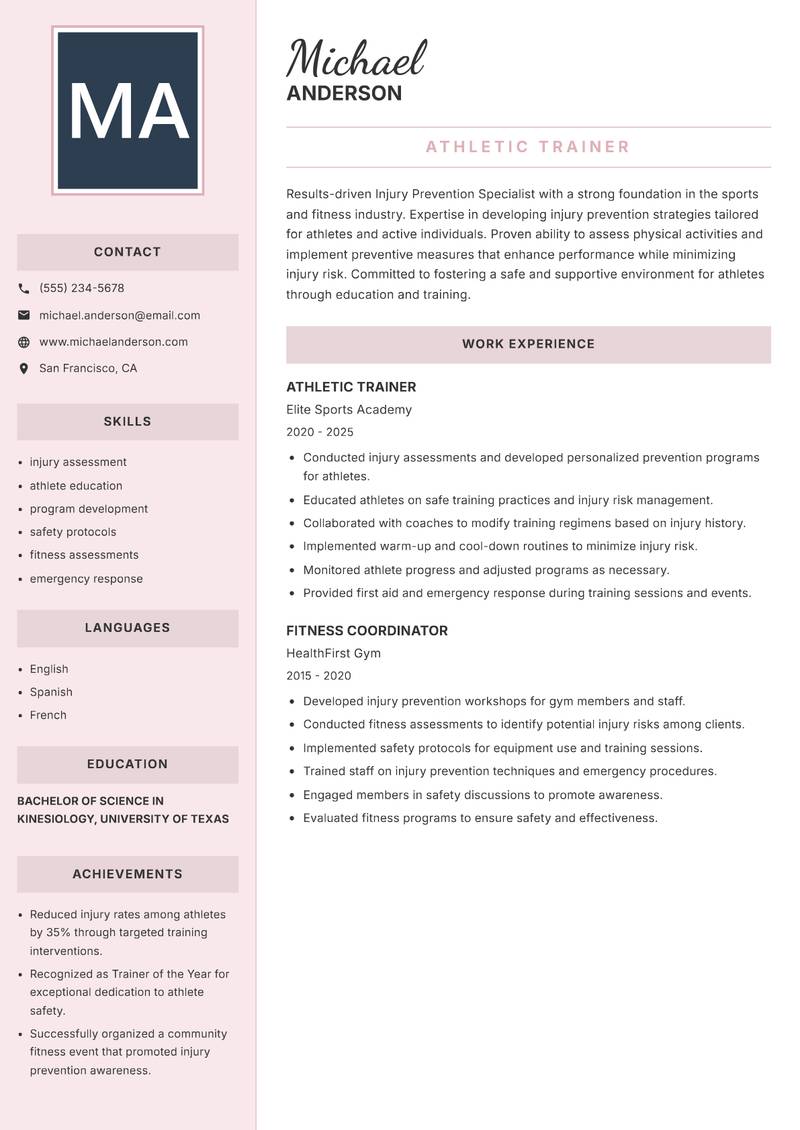
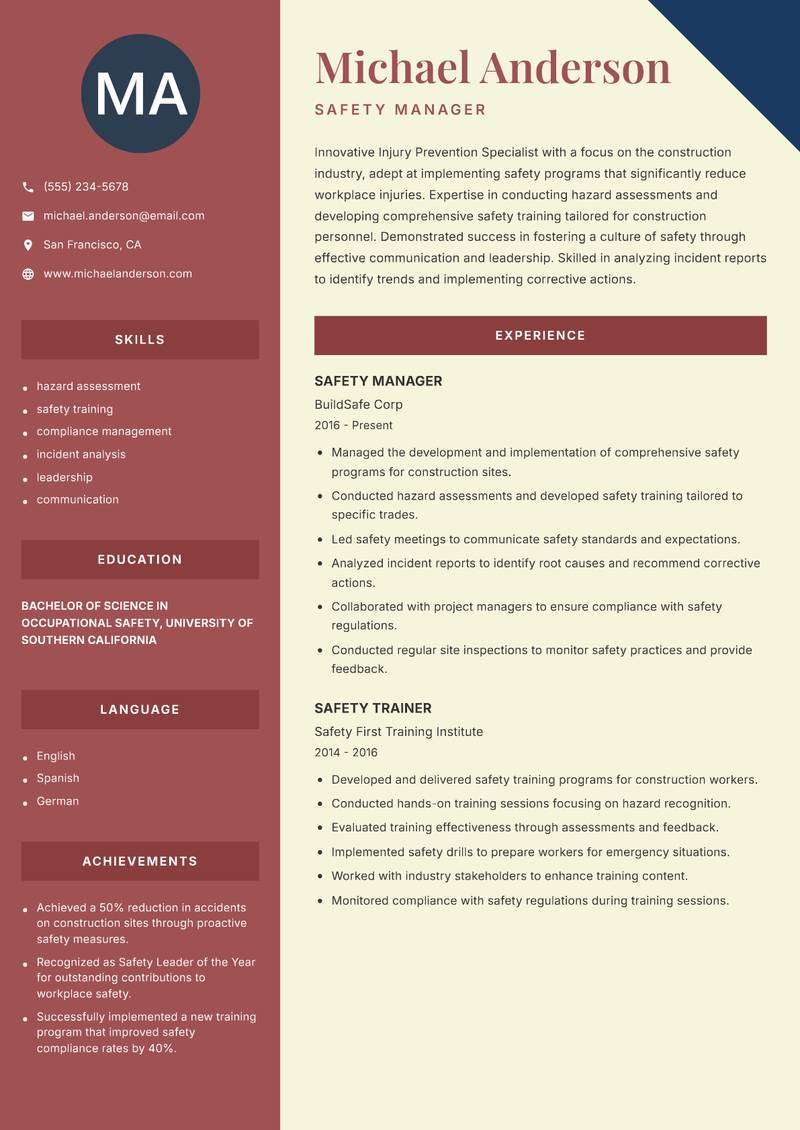
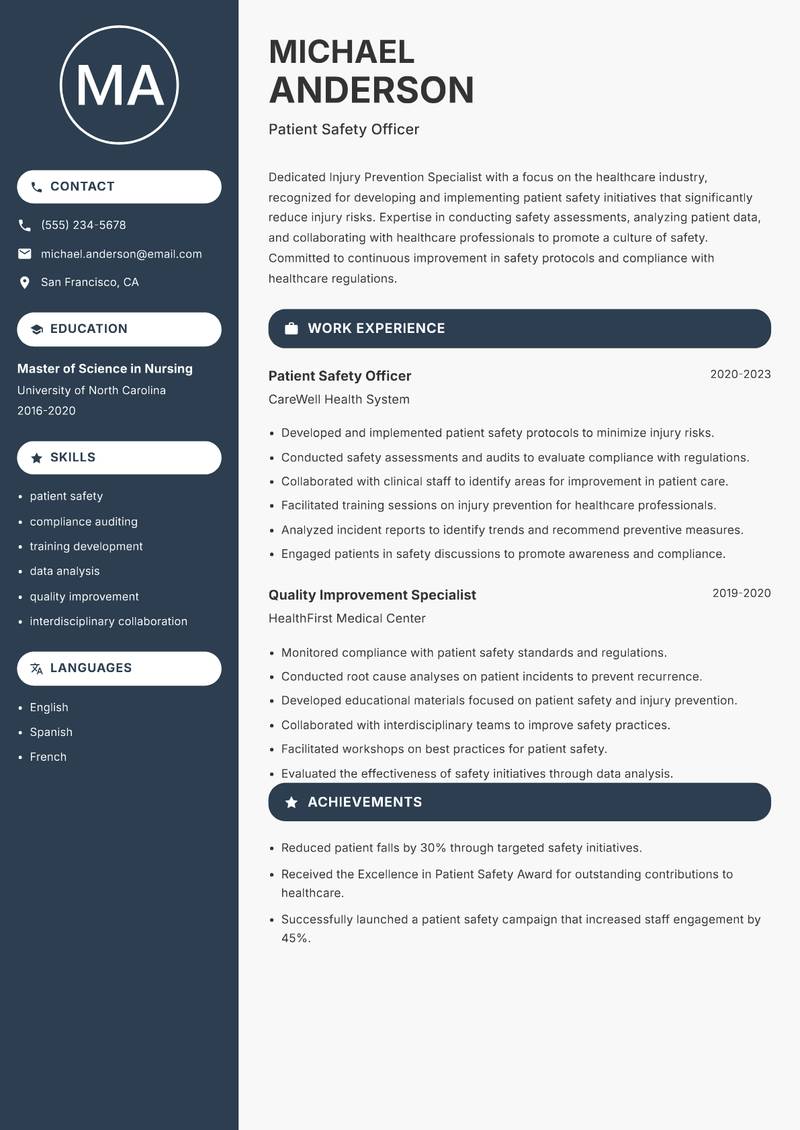
Browse Injury Prevention Specialist resume examples built around exercise physiology\, tailored for Sports Science roles.
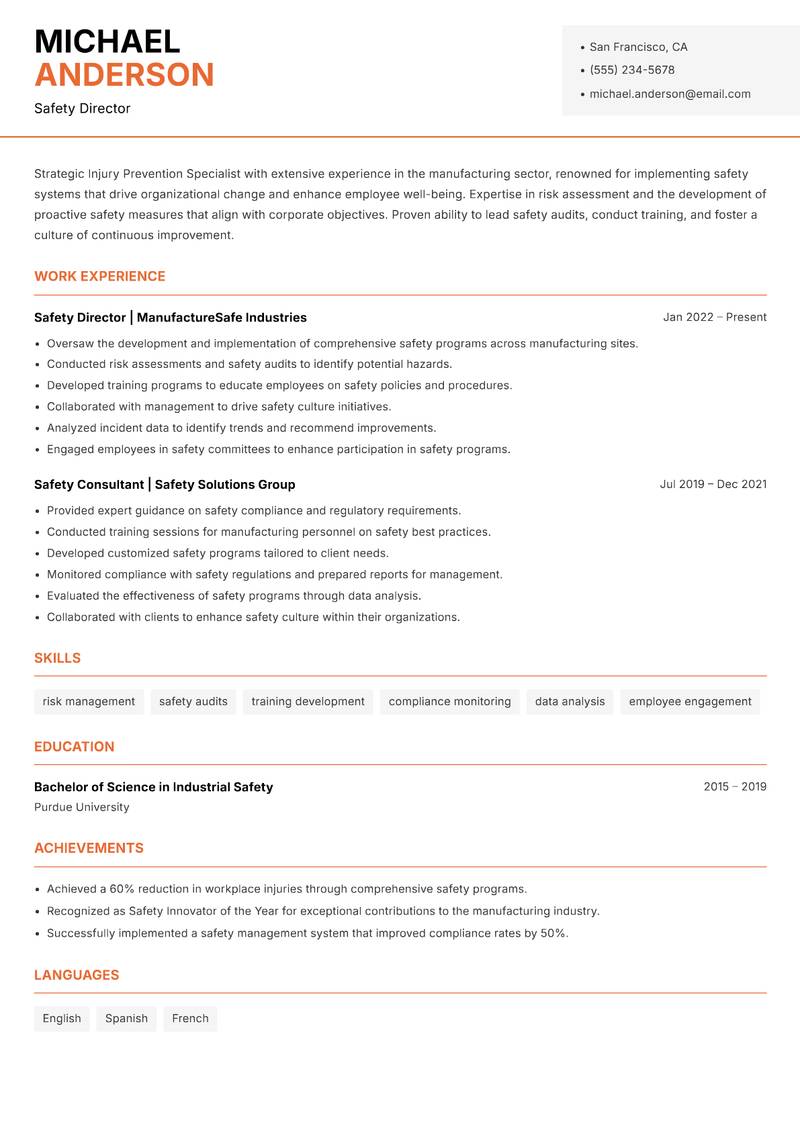
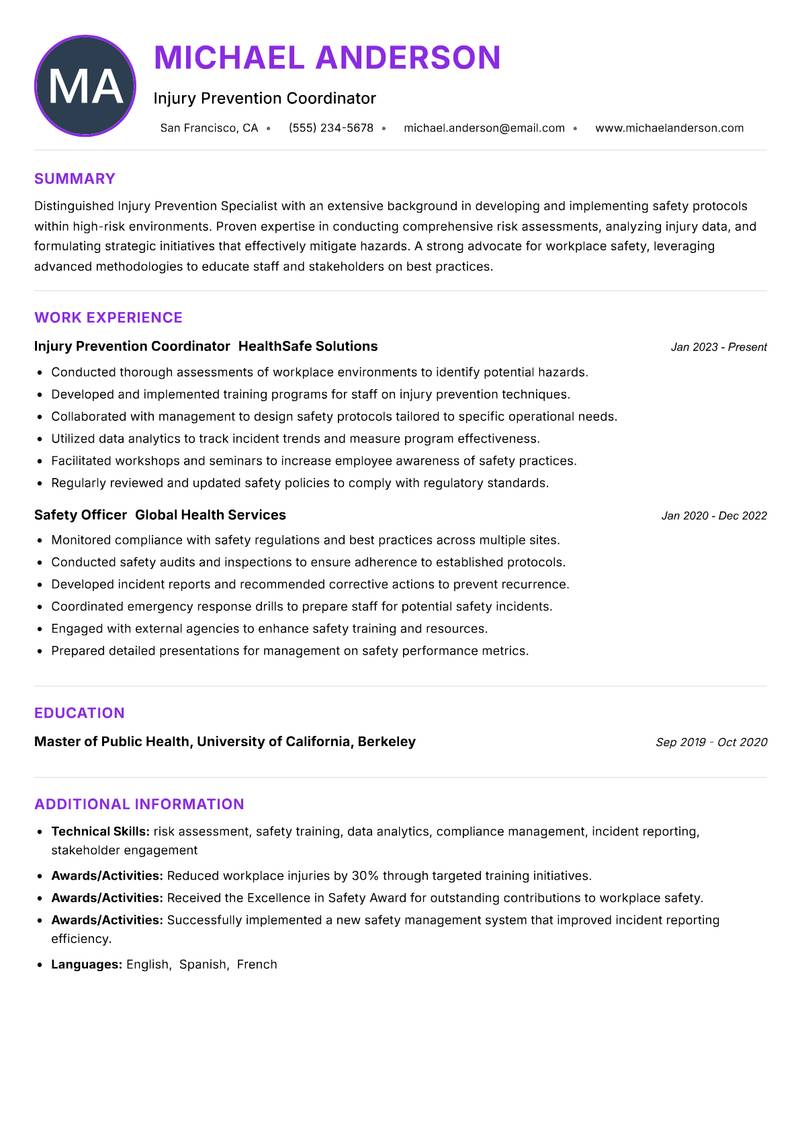
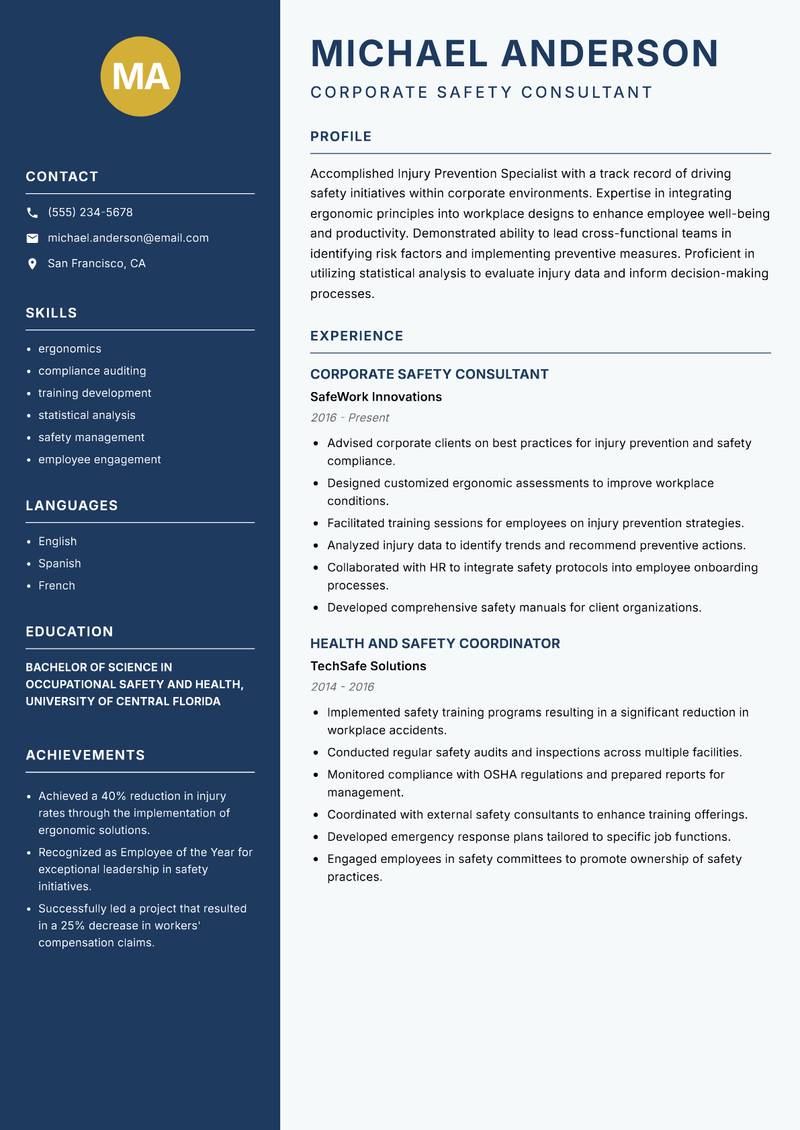
A strong Injury Prevention Specialist resume leads with a focused professional summary that names the exact role and your standout achievement. In the experience section, open every bullet with a strong action verb and quantify the result with numbers wherever possible. Highlight your most relevant competencies — especially Exercise Physiology, Biomechanical Analysis, and Performance Testing & Monitoring — in a dedicated Skills section positioned early so ATS systems and hiring managers both find it immediately.
For format, most Injury Prevention Specialist roles suit a reverse-chronological layout: most recent position first, working backwards. Keep to one page for under five years of experience, or two pages for senior candidates with a rich project or leadership history. Use clean, ATS-safe fonts (10–12pt), standard section headings (Summary, Experience, Education, Skills), and avoid tables, text boxes, or multi-column layouts that applicant tracking systems cannot parse reliably.