Key Skills for Planetary Scientist Positions
- Orbital Mechanics & Mission Design
- Astrophysics & Cosmological Analysis
- Satellite Design & Systems Engineering
- Remote Sensing & Earth Observation
- Telemetry, Tracking & Command (TT&C)
- Space Weather & Radiation Analysis
- Scientific Computing (Python, MATLAB, IDL)
- Payload Integration & Testing
- Space Mission Operations
- Scientific Writing & Publication
Resume Tips for Planetary Scientist Applications
- List peer-reviewed publications in a separate section using a standard citation format, and note your h-index if it is competitive — planetary scientist academic or industry research roles evaluate research output before reviewing general experience
- Named mission involvement (e.g., Hubble, James Webb, Sentinel) is the gold standard credential — lead with it.
- List publications, observing proposals, and data analysis contributions for research roles.
- Demonstrate software proficiency: Python, MATLAB, IDL, or mission-specific tools.
- For commercial space roles, translate scientific expertise into business or customer value propositions.
- Highlight interdisciplinary engineering — space systems require knowledge of multiple engineering domains.
Strong Action Verbs for Planetary Scientist Resumes
Launched · Modeled · Analyzed · Designed · Operated · Published · Tracked · Calibrated · Simulated · Investigated · Achieved · Administered · Architected · Assessed
Common Mistakes to Avoid
- Writing a generic objective statement instead of a targeted planetary scientist professional summary
- Not naming specific missions or programs — generic space science experience is far less compelling.
- Failing to demonstrate computational and data analysis skills — modern space science is highly computational.
- Overfocusing on theoretical knowledge without demonstrating engineering or operational relevance.
- Not highlighting interdisciplinary skills — space systems require broad technical competence.
Experience Levels
- Graduate Researcher / Junior Engineer (0-4 years)
- Research Scientist / Systems Engineer (4-9 years)
- Senior Scientist / Lead Engineer (9-15 years)
- Principal Investigator / Program Manager (15-22 years)
- Director / Chief Scientist (22+ years)
How to Write a Planetary Scientist Resume
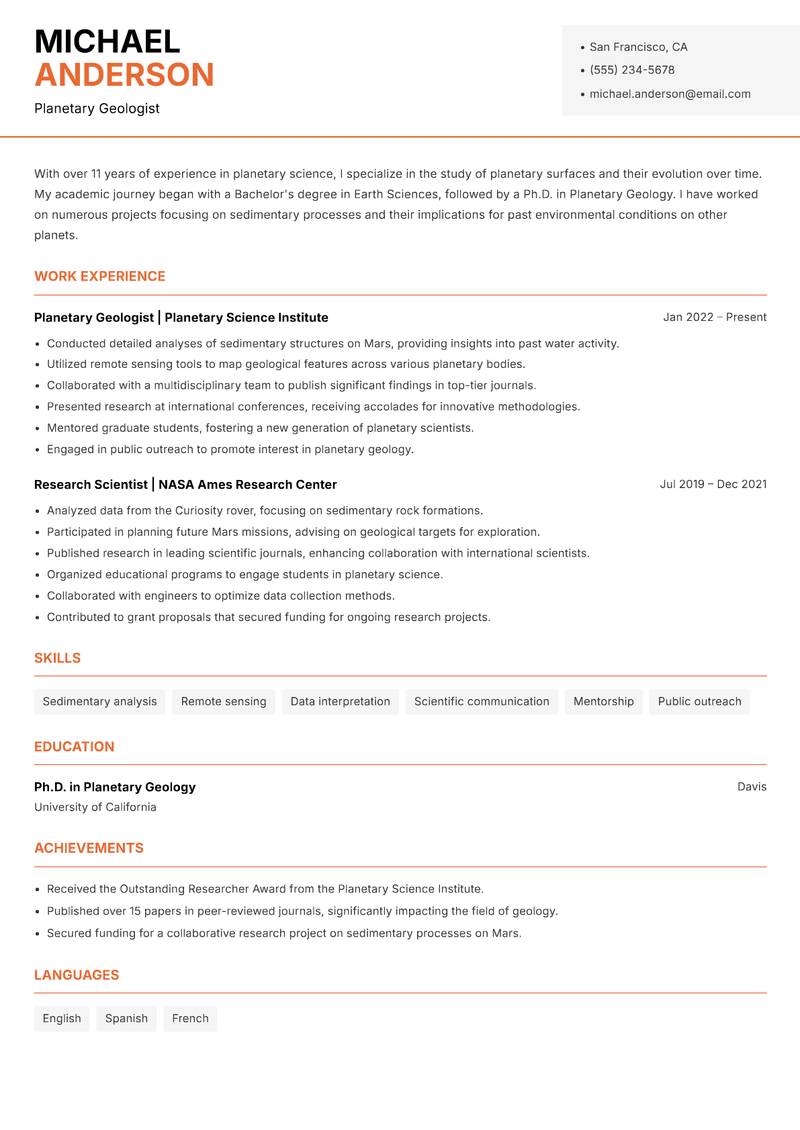
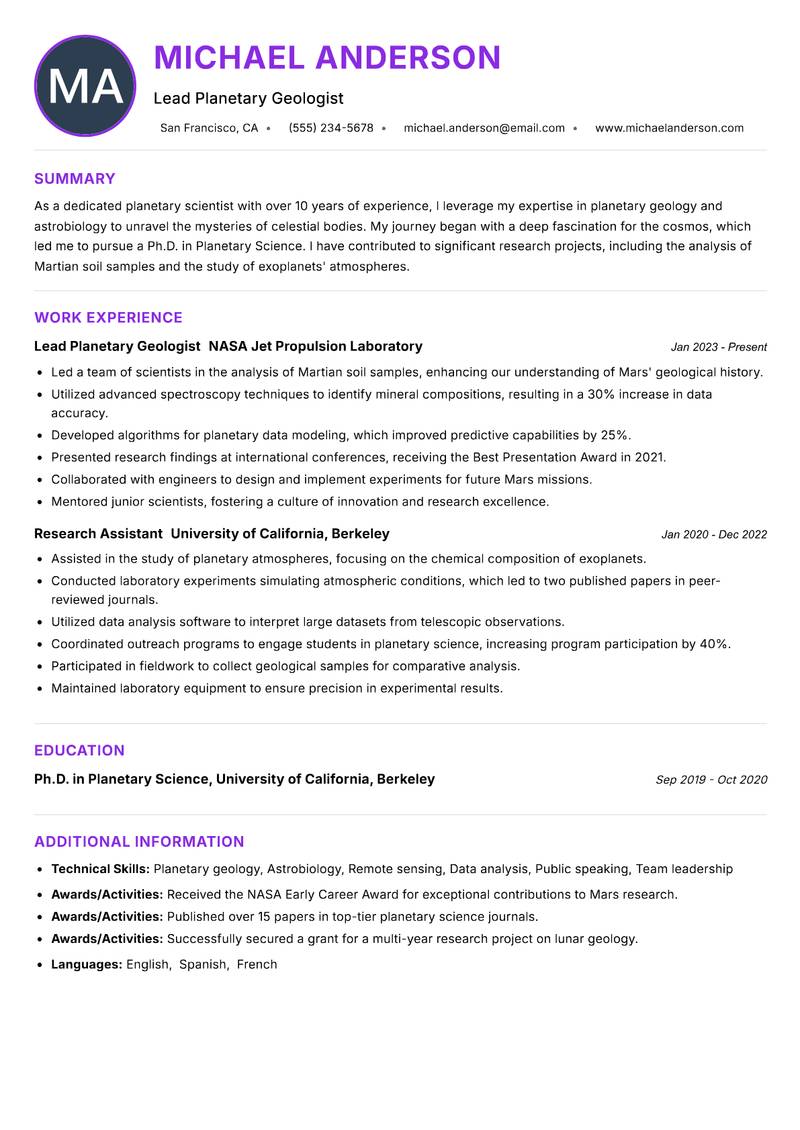
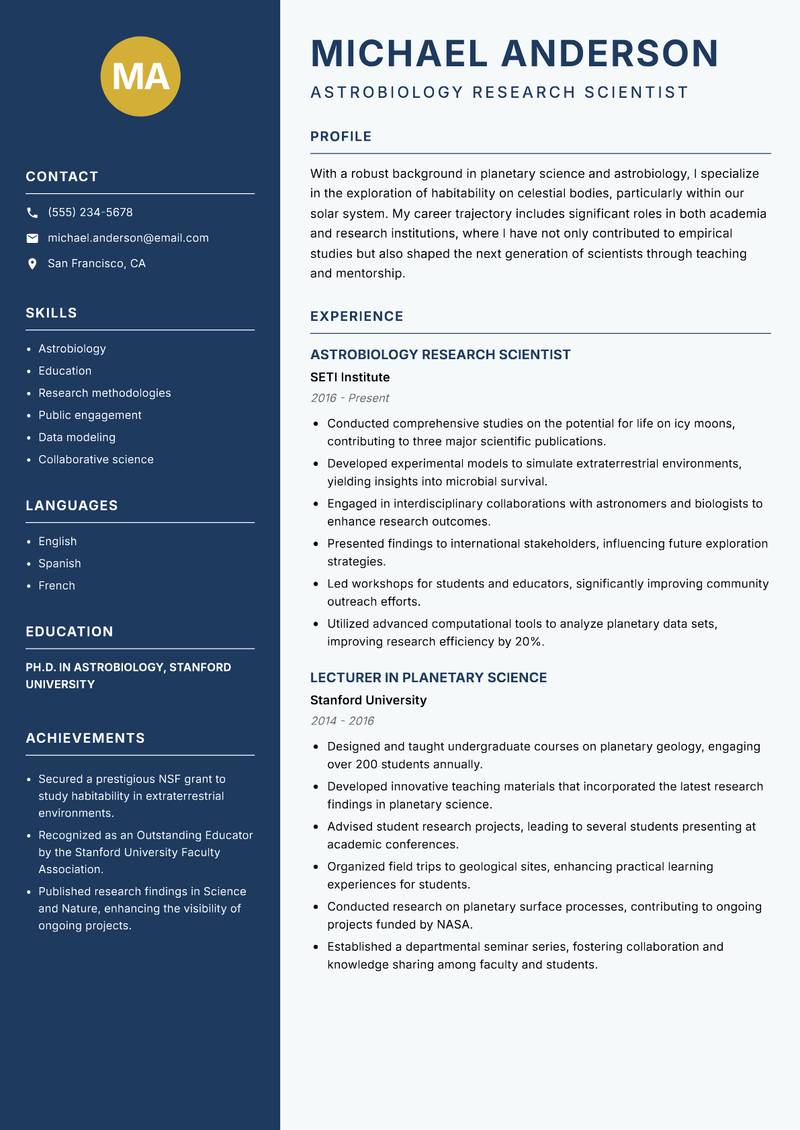
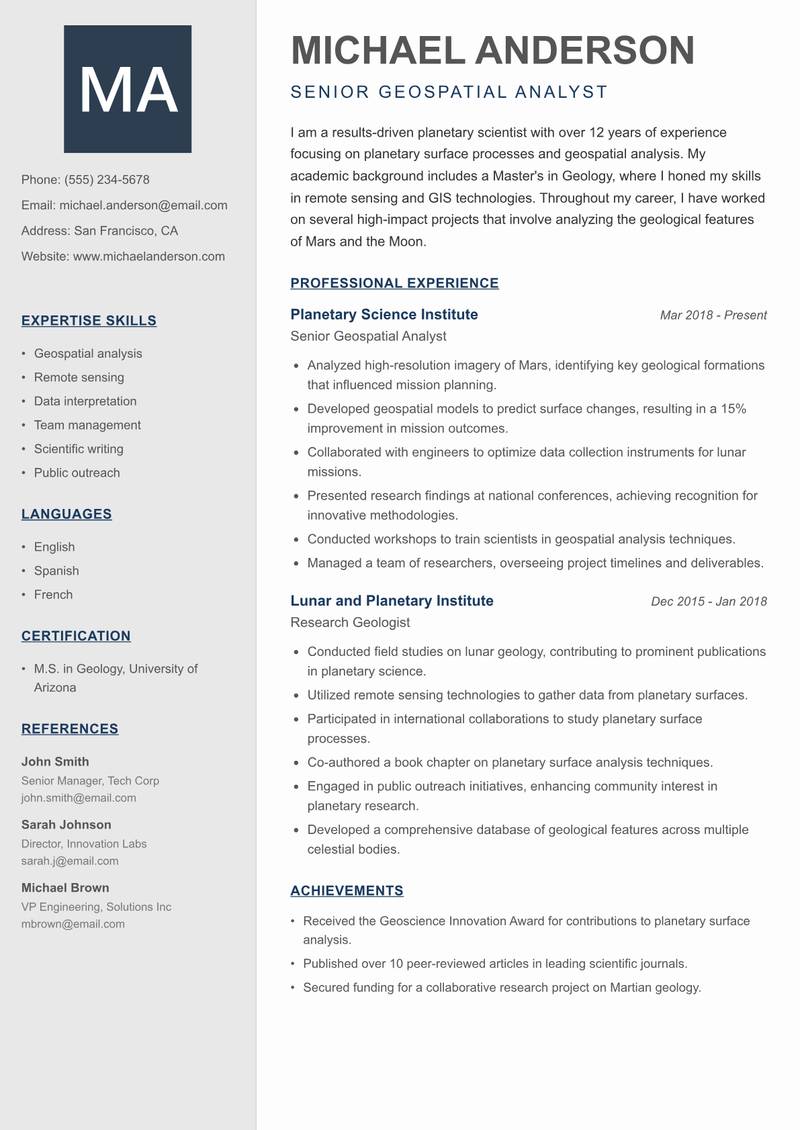
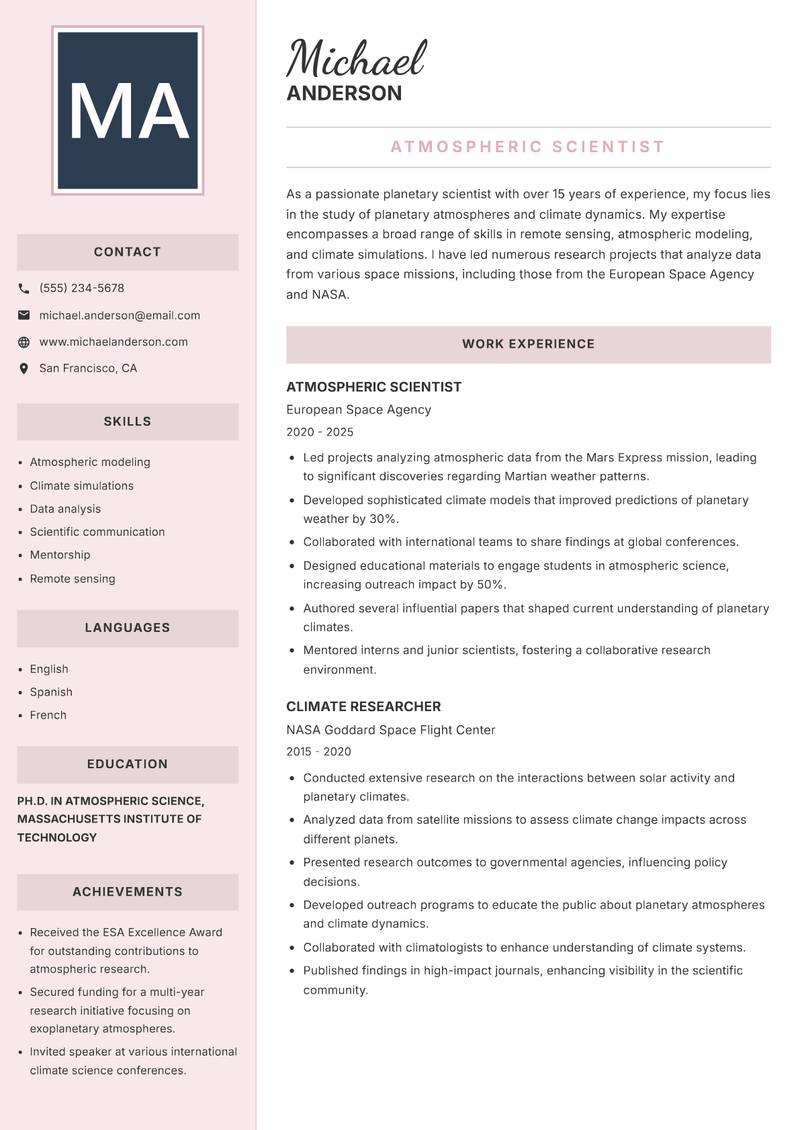
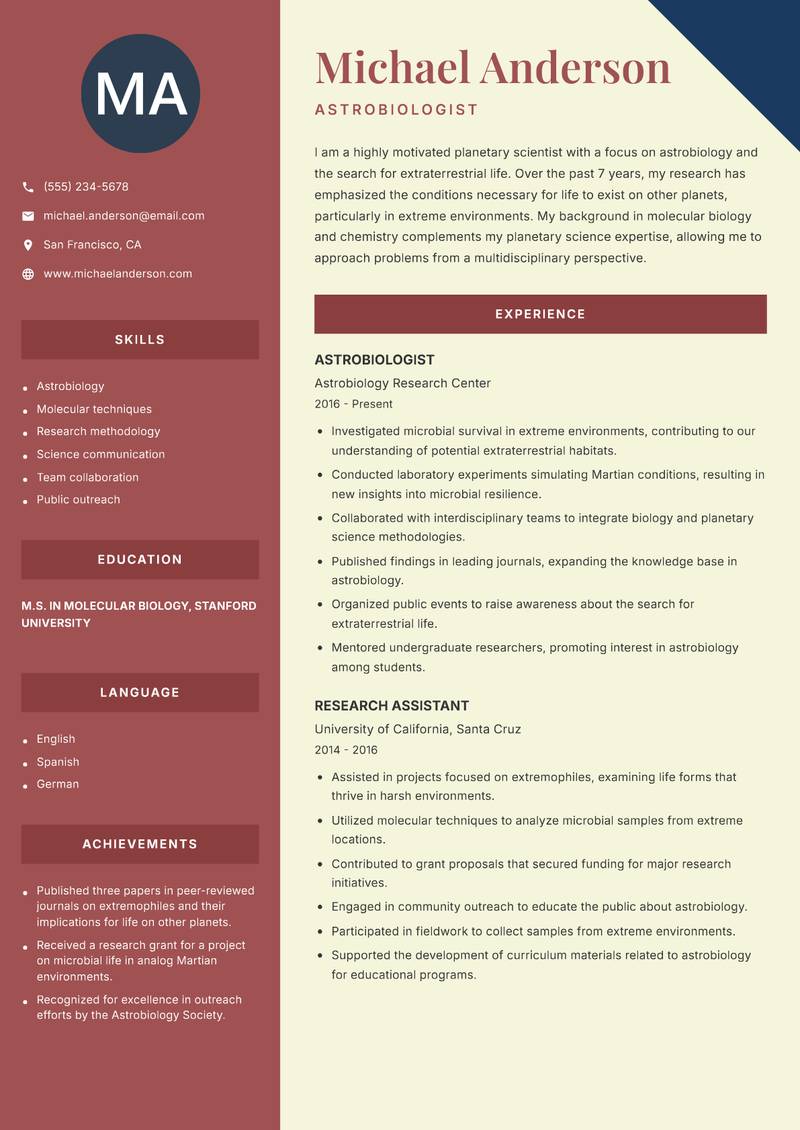
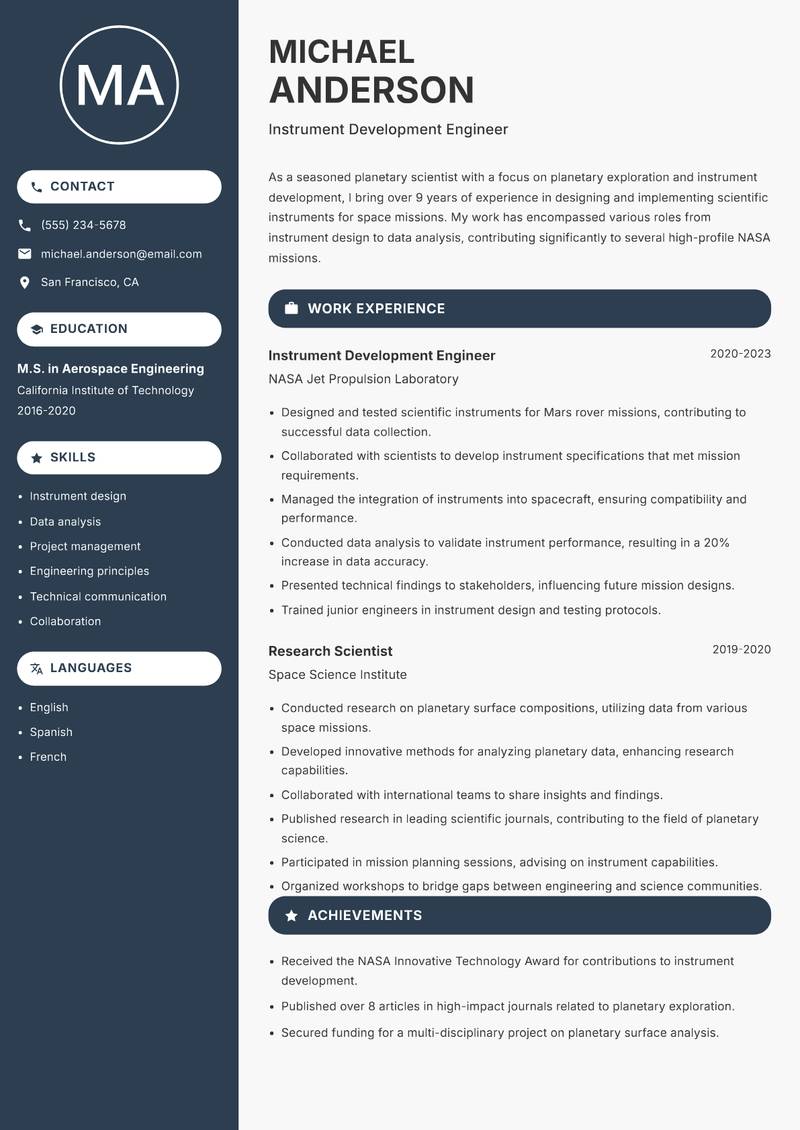
Browse Planetary Scientist resume examples built around orbital mechanics & mission design, tailored for Space Sciences roles.
A strong Planetary Scientist resume leads with a focused professional summary that names the exact role and your standout achievement. In the experience section, open every bullet with a strong action verb and quantify the result with numbers wherever possible. Highlight your most relevant competencies — especially Orbital Mechanics & Mission Design, Astrophysics & Cosmological Analysis, and Satellite Design & Systems Engineering — in a dedicated Skills section positioned early so ATS systems and hiring managers both find it immediately.
For format, most Planetary Scientist roles suit a reverse-chronological layout: most recent position first, working backwards. Keep to one page for under five years of experience, or two pages for senior candidates with a rich project or leadership history. Use clean, ATS-safe fonts (10–12pt), standard section headings (Summary, Experience, Education, Skills), and avoid tables, text boxes, or multi-column layouts that applicant tracking systems cannot parse reliably.