Key Skills for Product Security Engineer Positions
- Threat Detection & Incident Response
- Penetration Testing & Vulnerability Assessment
- Security Information & Event Management (SIEM)
- Network Security & Firewall Management
- Identity & Access Management (IAM)
- Compliance Frameworks (ISO 27001, NIST, SOC 2)
- Malware Analysis & Reverse Engineering
- Cloud Security Architecture
- Risk Assessment & Management
- Digital Forensics
Resume Tips for Product Security Engineer Applications
- Begin your professional summary with the exact job title "Product Security Engineer" — ATS systems often match titles literally, and including yours increases the likelihood of passing the initial automated keyword filter before a recruiter reviews your resume
- Lead with certifications: CISSP, CEH, OSCP, CompTIA Security+, CISM — they are gatekeepers.
- Quantify risk reduction — vulnerabilities discovered, incidents contained, compliance achieved.
- For red team/pen testing roles, describe methodologies used (OWASP, PTES, MITRE ATT&CK).
- Highlight experience with specific SIEM platforms: Splunk, IBM QRadar, Microsoft Sentinel.
- Demonstrate communication skills — security professionals must brief non-technical executives.
Strong Action Verbs for Product Security Engineer Resumes
Secured · Detected · Responded · Penetrated · Analyzed · Mitigated · Forensicated · Audited · Implemented · Monitored · Updated · Achieved · Administered · Architected
Common Mistakes to Avoid
- Writing a generic objective statement instead of a targeted product security engineer professional summary
- Omitting specific certifications — hiring managers frequently filter by CISSP, OSCP, or equivalent.
- Being vague about tools and frameworks — specify the exact platforms, not just 'security tools'.
- Failing to show business context for technical work — frame security in terms of risk and compliance.
- Neglecting soft skills — security professionals routinely present to boards and non-technical leadership.
Experience Levels
- Junior Security Analyst (0-2 years)
- Security Analyst / Engineer (2-5 years)
- Senior Security Engineer (5-8 years)
- Security Architect / Manager (8-12 years)
- CISO / VP of Security (12+ years)
How to Write a Product Security Engineer Resume
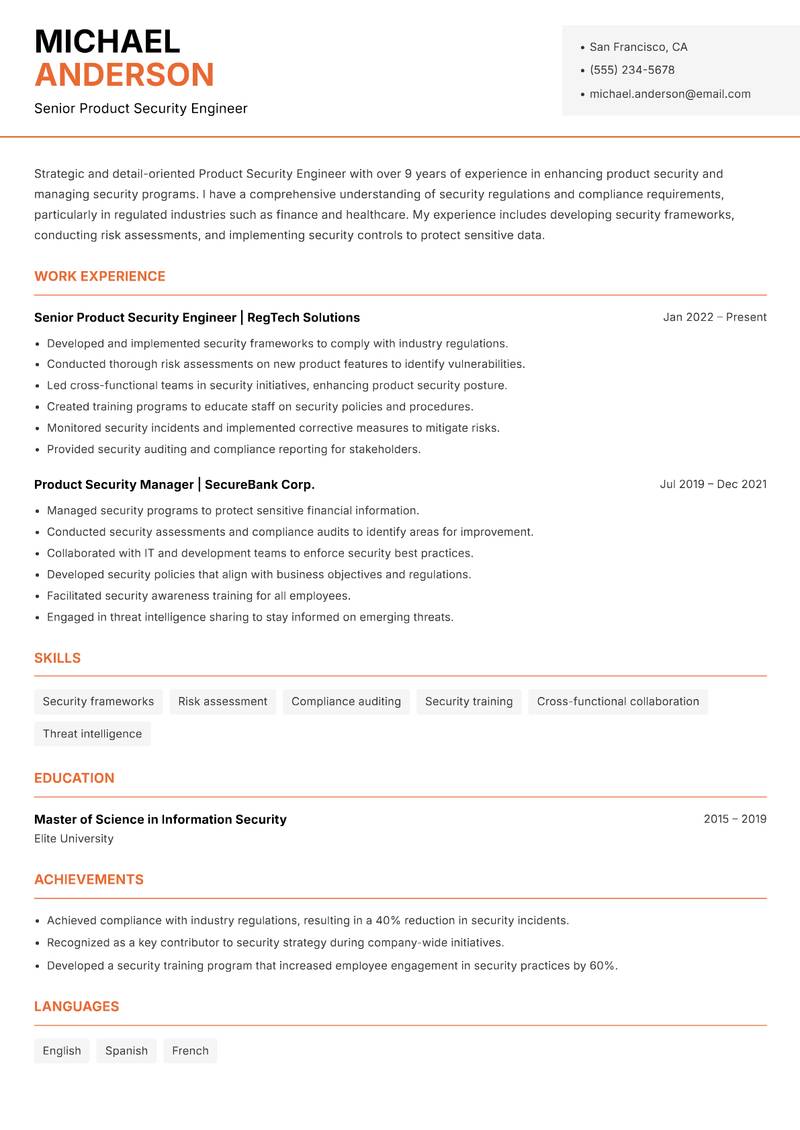
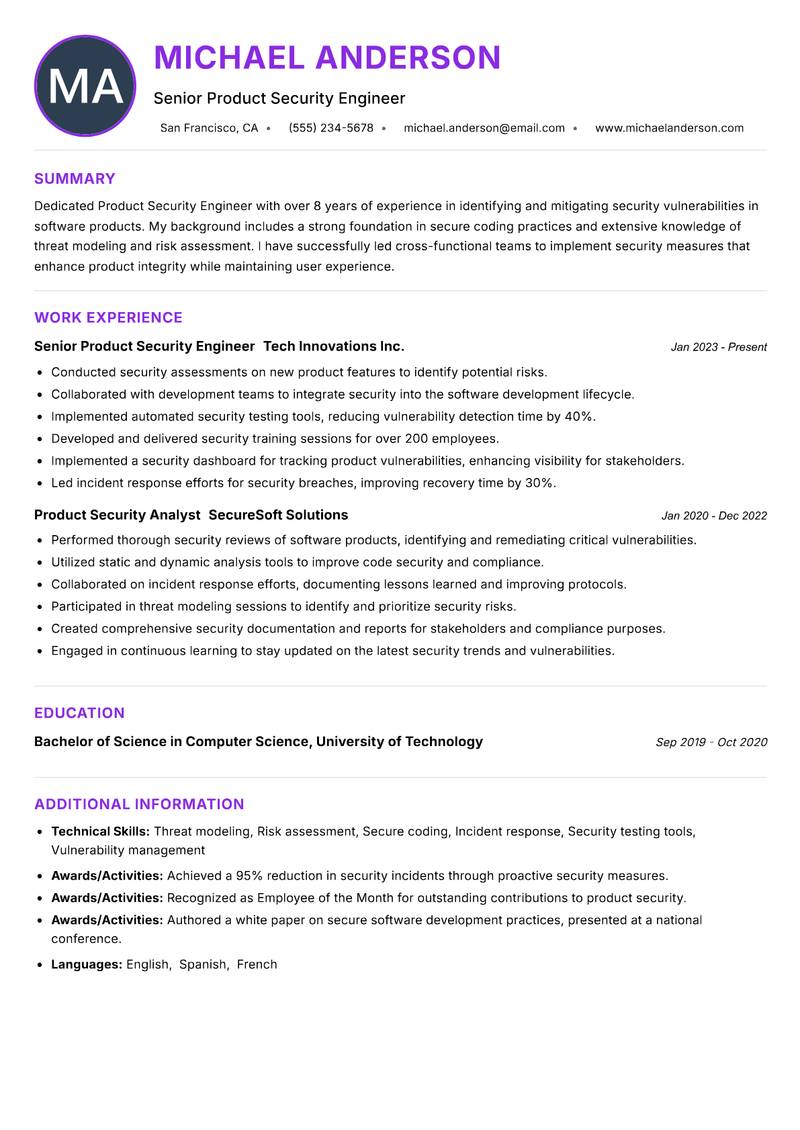
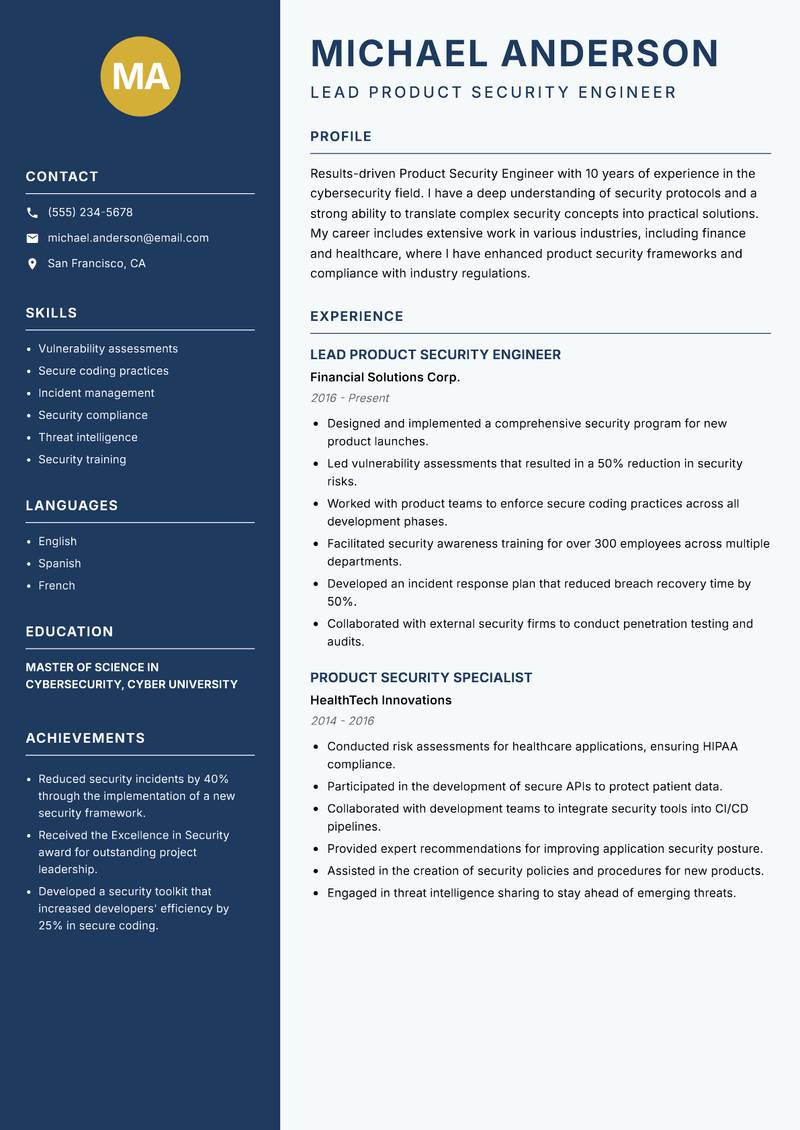
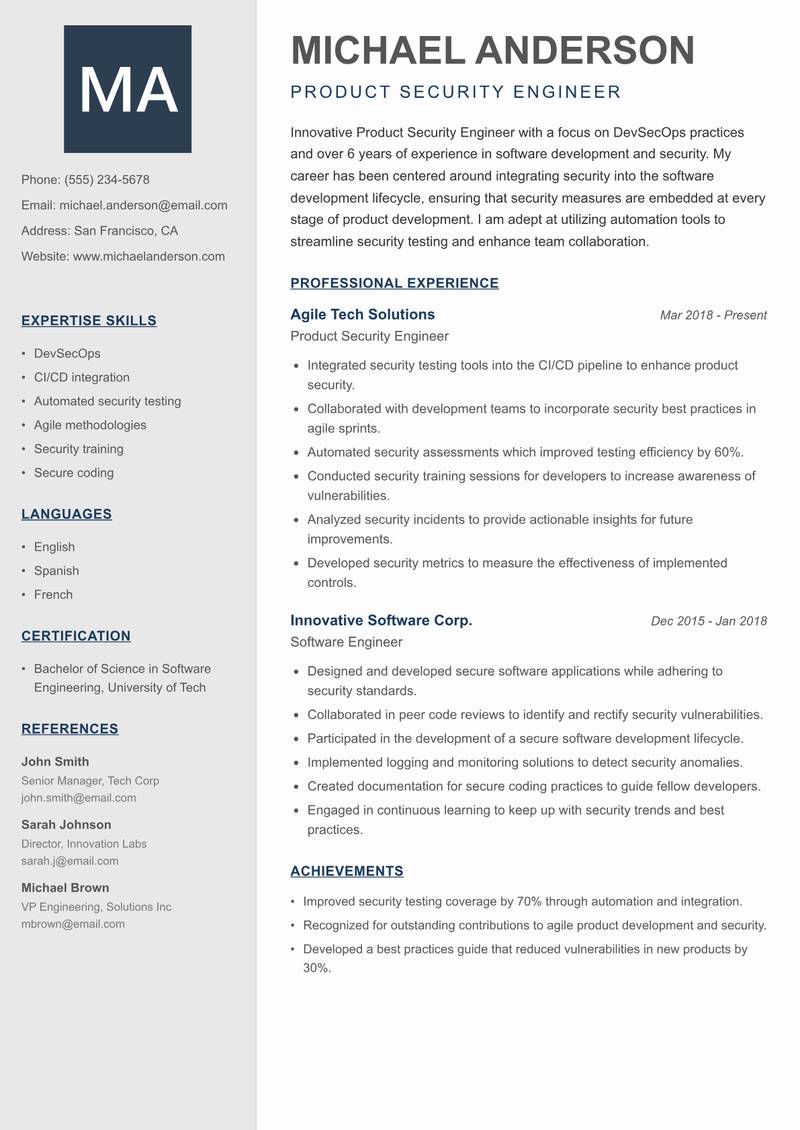
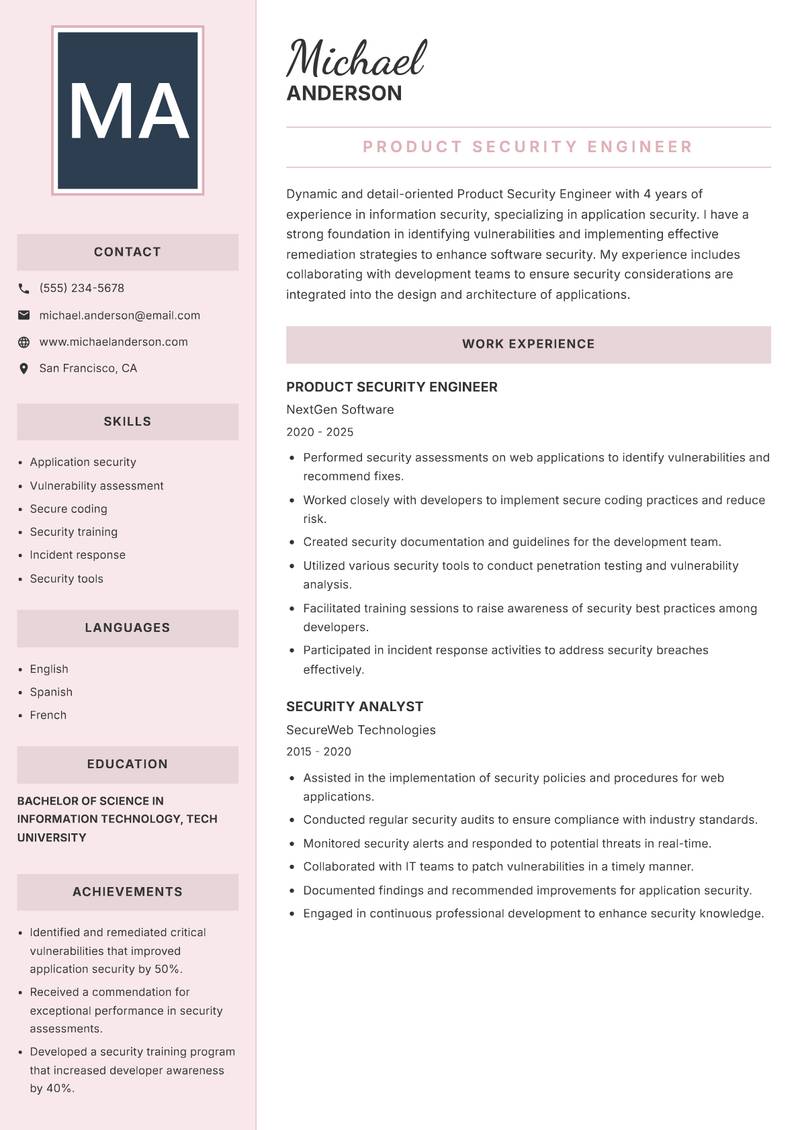
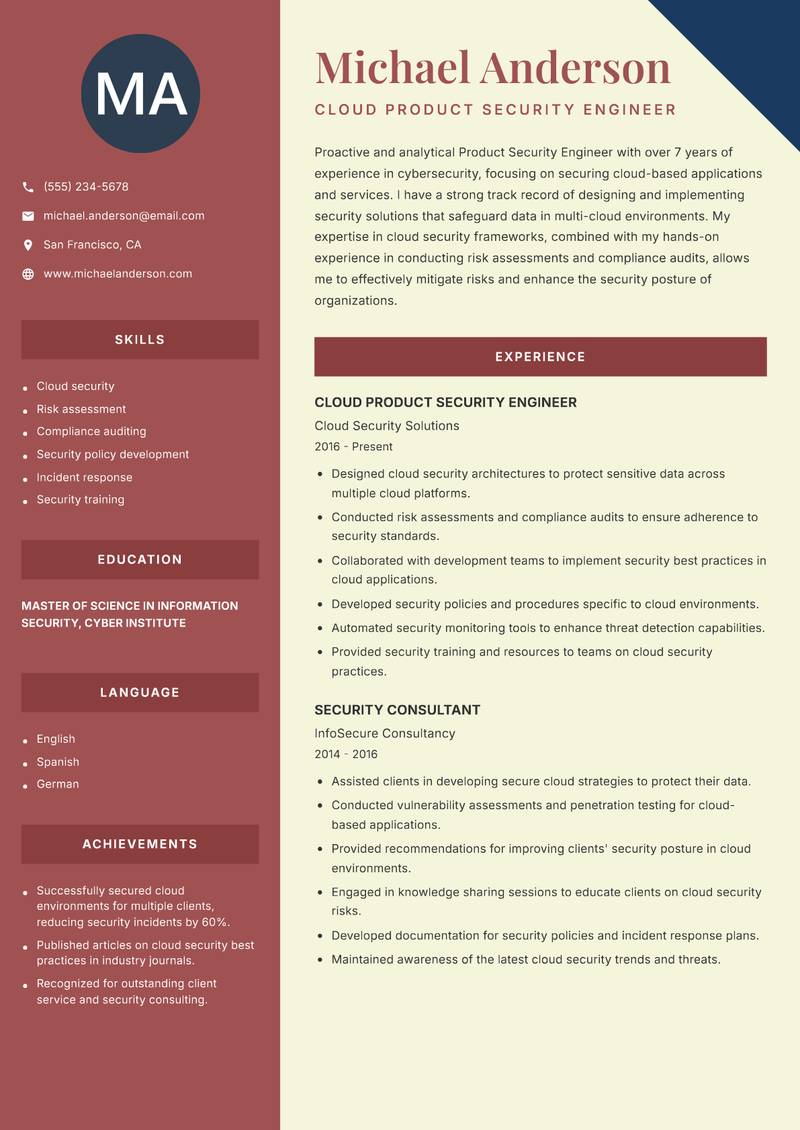
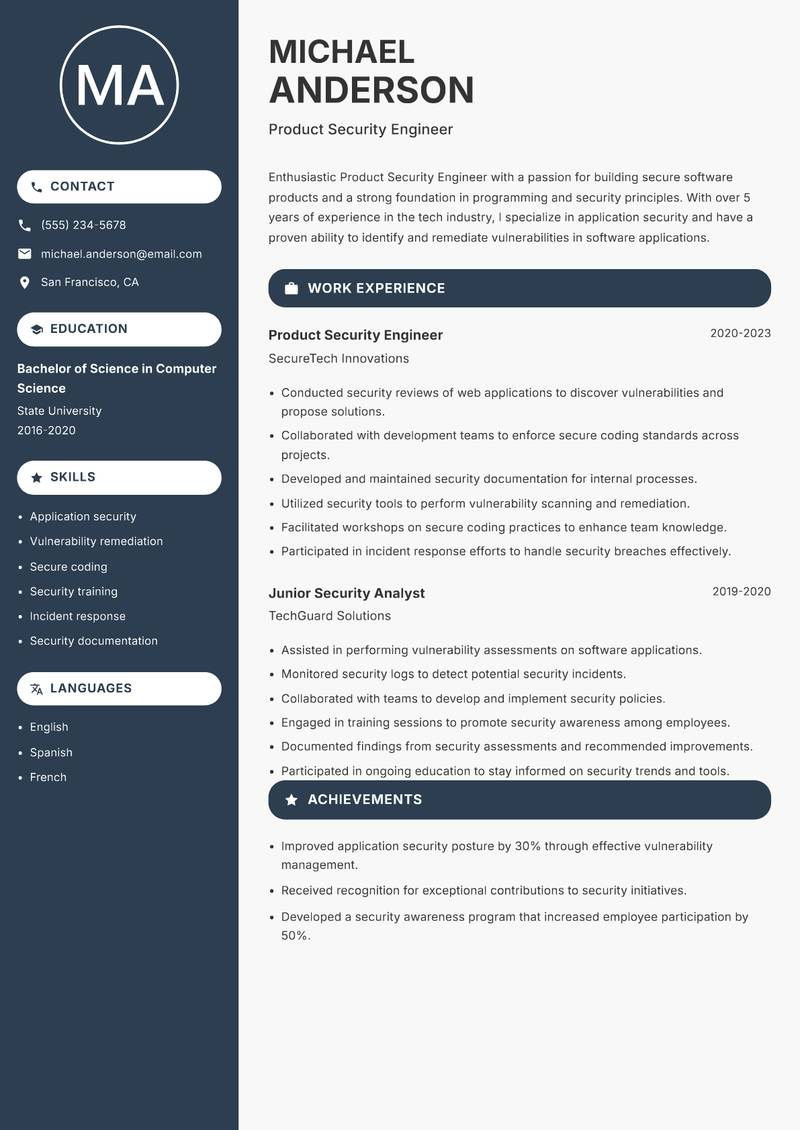
Browse Product Security Engineer resume examples built around threat detection & incident response, tailored for Cybersecurity roles.
A strong Product Security Engineer resume leads with a focused professional summary that names the exact role and your standout achievement. In the experience section, open every bullet with a strong action verb and quantify the result with numbers wherever possible. Highlight your most relevant competencies — especially Threat Detection & Incident Response, Penetration Testing & Vulnerability Assessment, and Security Information & Event Management (SIEM) — in a dedicated Skills section positioned early so ATS systems and hiring managers both find it immediately.
For format, most Product Security Engineer roles suit a reverse-chronological layout: most recent position first, working backwards. Keep to one page for under five years of experience, or two pages for senior candidates with a rich project or leadership history. Use clean, ATS-safe fonts (10–12pt), standard section headings (Summary, Experience, Education, Skills), and avoid tables, text boxes, or multi-column layouts that applicant tracking systems cannot parse reliably.