Key Skills for Psychologist Positions
- Various therapeutic techniques
- Patient assessment
- Evidence-Based Psychotherapy (CBT, DBT, ACT, EMDR)
- Psychiatric Assessment & Diagnosis (DSM-5, ICD-11)
- Crisis Intervention & Risk Assessment
- Case Management & Care Coordination
- Group Therapy Facilitation
- Trauma-Informed Care
- Substance Use & Dual Diagnosis Treatment
- Mental Health First Aid
Resume Tips for Psychologist Applications
- Highlight your Various therapeutic techniques and patient assessm experience prominently — this is a primary differentiator employers look for in psychologist candidates
- Lead with licensure: LCSW, LPC, PhD, PsyD, MBBCh (Psychiatry) — it determines your legal scope of practice.
- Specify therapeutic modalities and the populations you have worked with.
- Demonstrate crisis intervention training and risk assessment competency.
- Highlight experience with specific settings: hospitals, community mental health, schools, private practice.
- For supervisory roles, list clinical supervision hours provided and supervisee outcomes.
Strong Action Verbs for Psychologist Resumes
Assessed · Treated · Facilitated · Coordinated · Supervised · Documented · Intervened · Advocated · Therapized · Consulted · Achieved · Administered · Analyzed · Architected
Common Mistakes to Avoid
- Leaving out Various therapeutic techniques and patie experience — this is a core differentiator for psychologist roles
- Writing a generic objective statement instead of a targeted psychologist professional summary
- Omitting licensure details — scope of practice varies enormously by credential, so employers need this.
- Not specifying therapeutic modalities — 'provided therapy' tells an employer nothing useful.
- Failing to demonstrate crisis competency — it is essential for most mental health roles.
Experience Levels
- Graduate Trainee / Intern (0-2 years)
- Associate / Provisionally Licensed (2-4 years)
- Licensed Practitioner (4-8 years)
- Senior Clinician / Supervisor (8-13 years)
- Clinical Director / Consultant (13+ years)
How to Write a Psychologist Resume
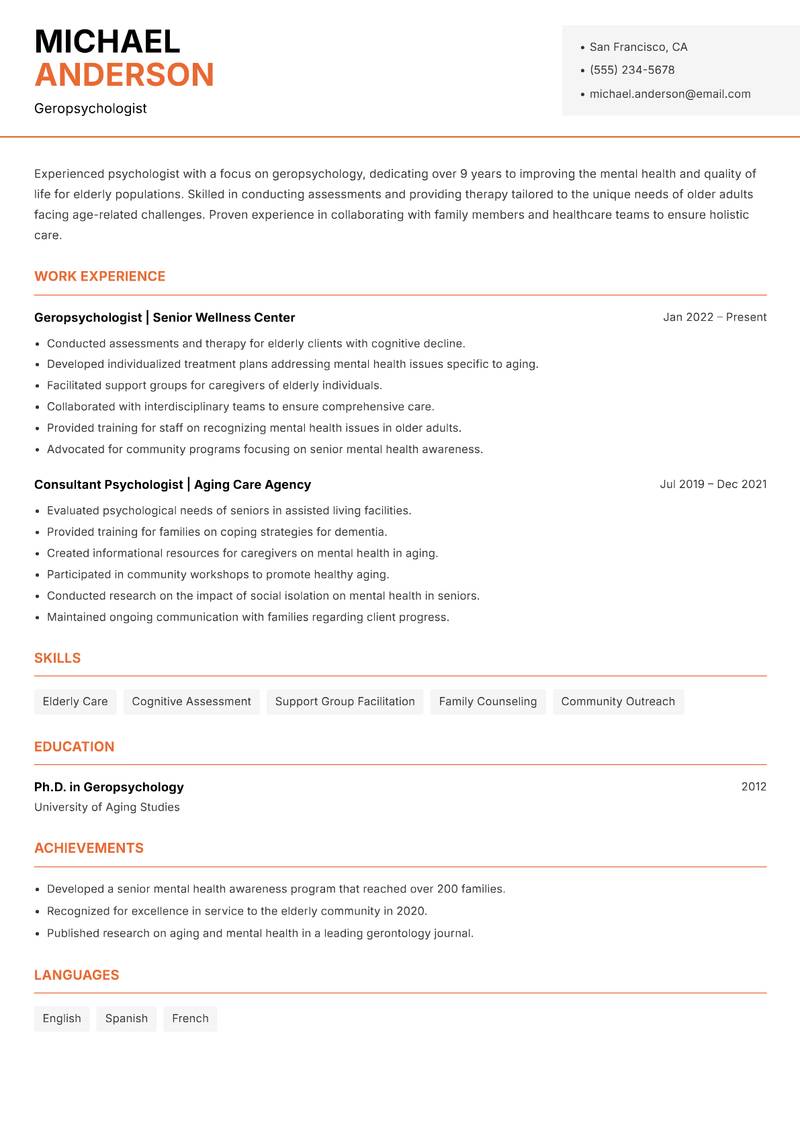
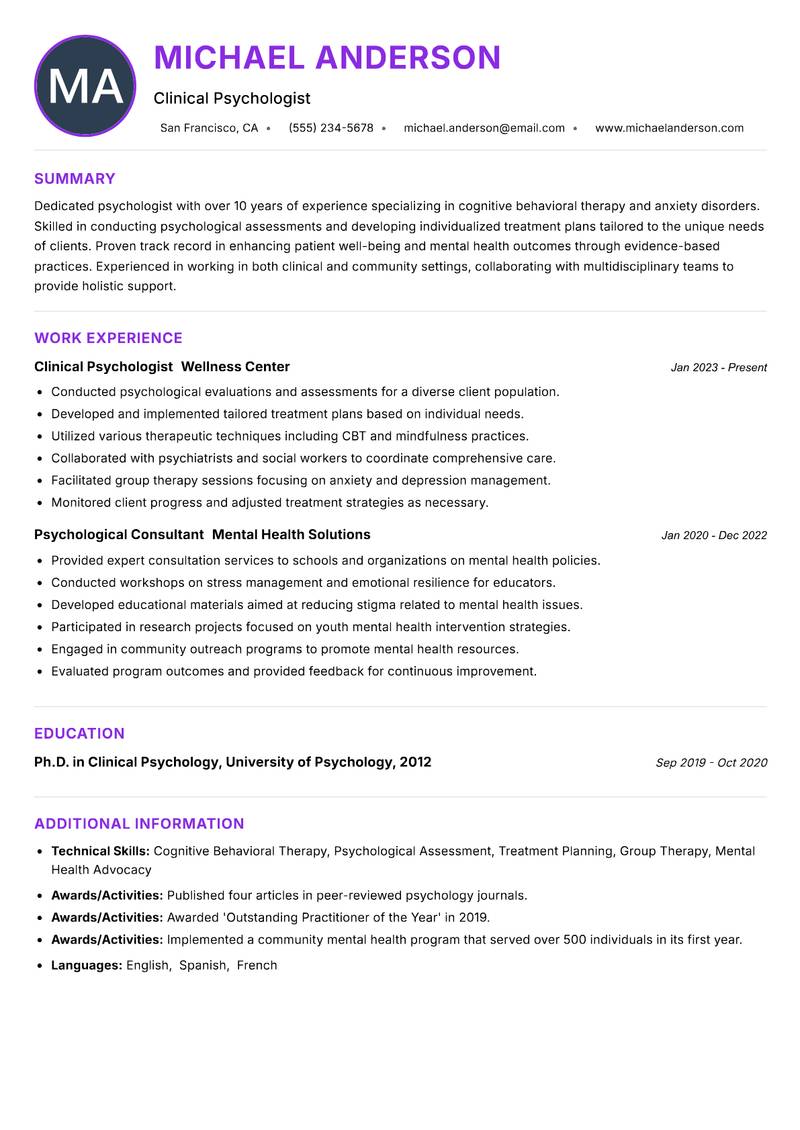
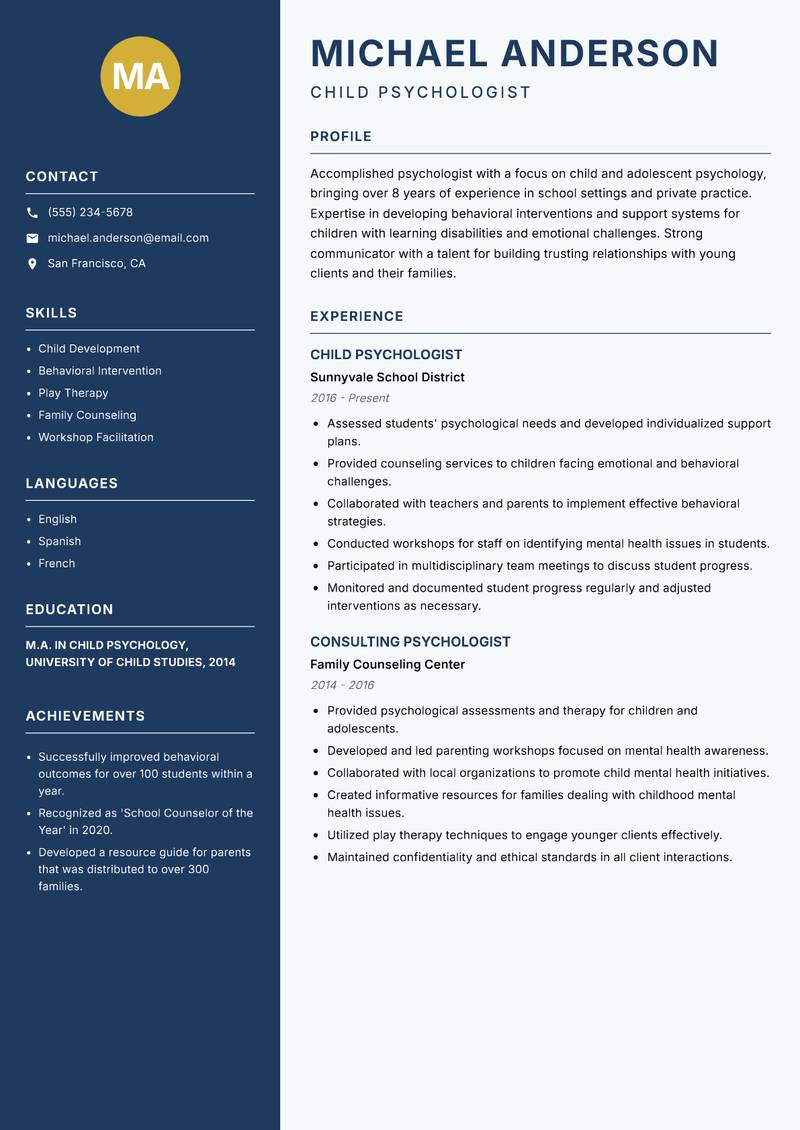
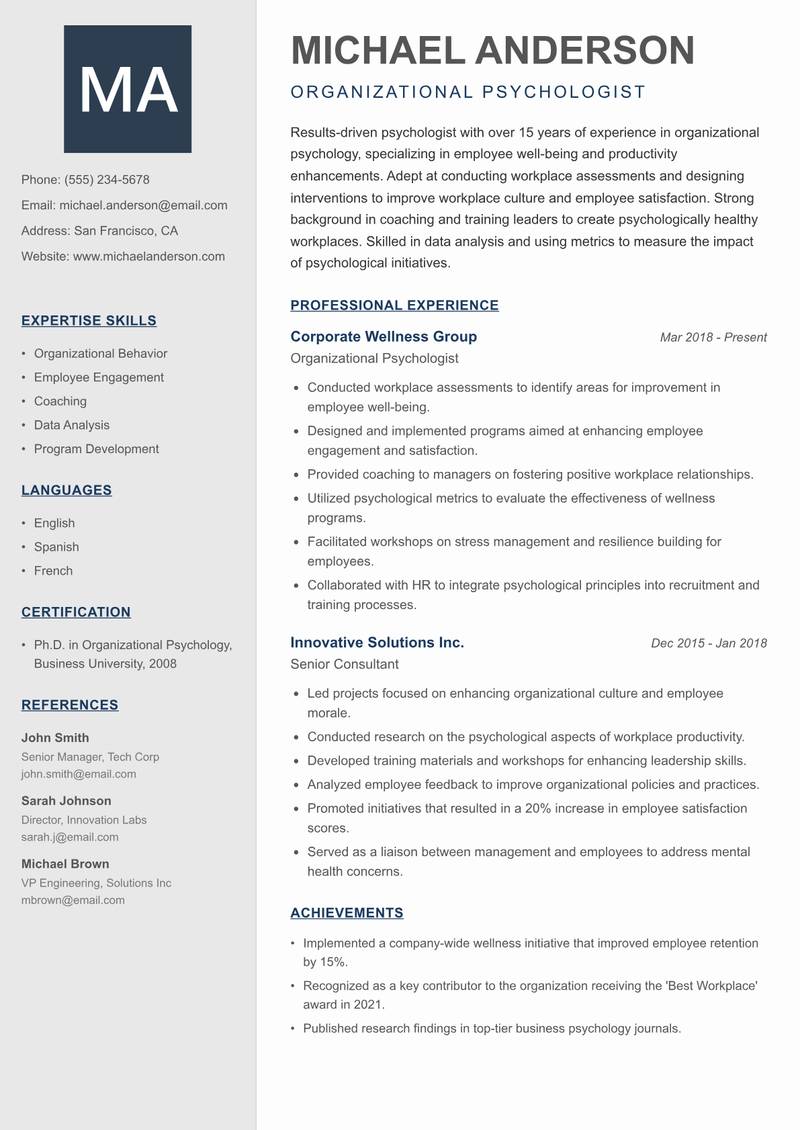
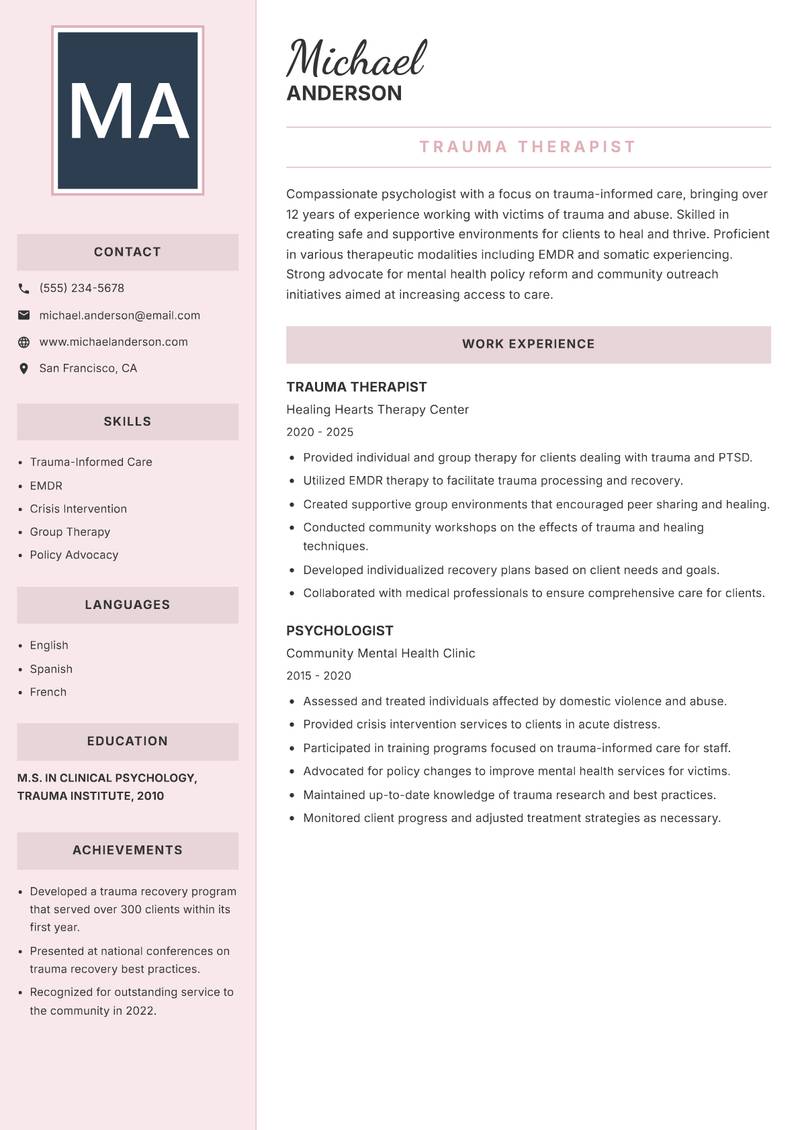
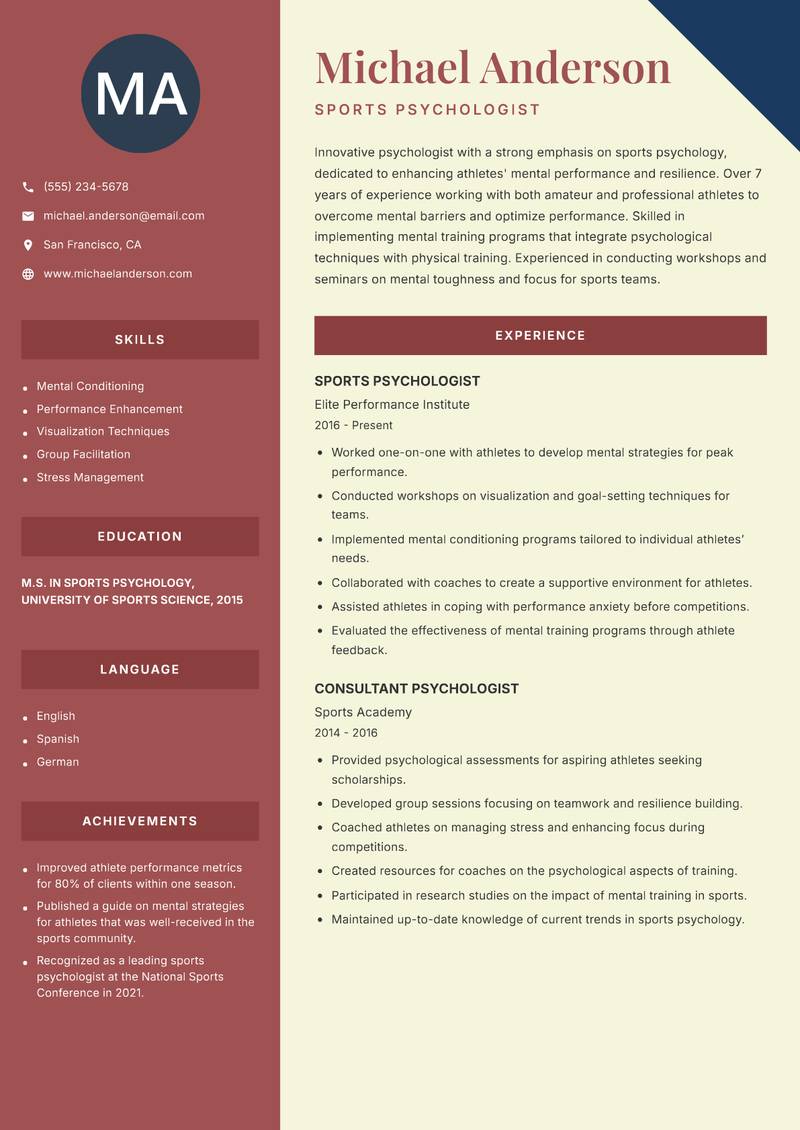
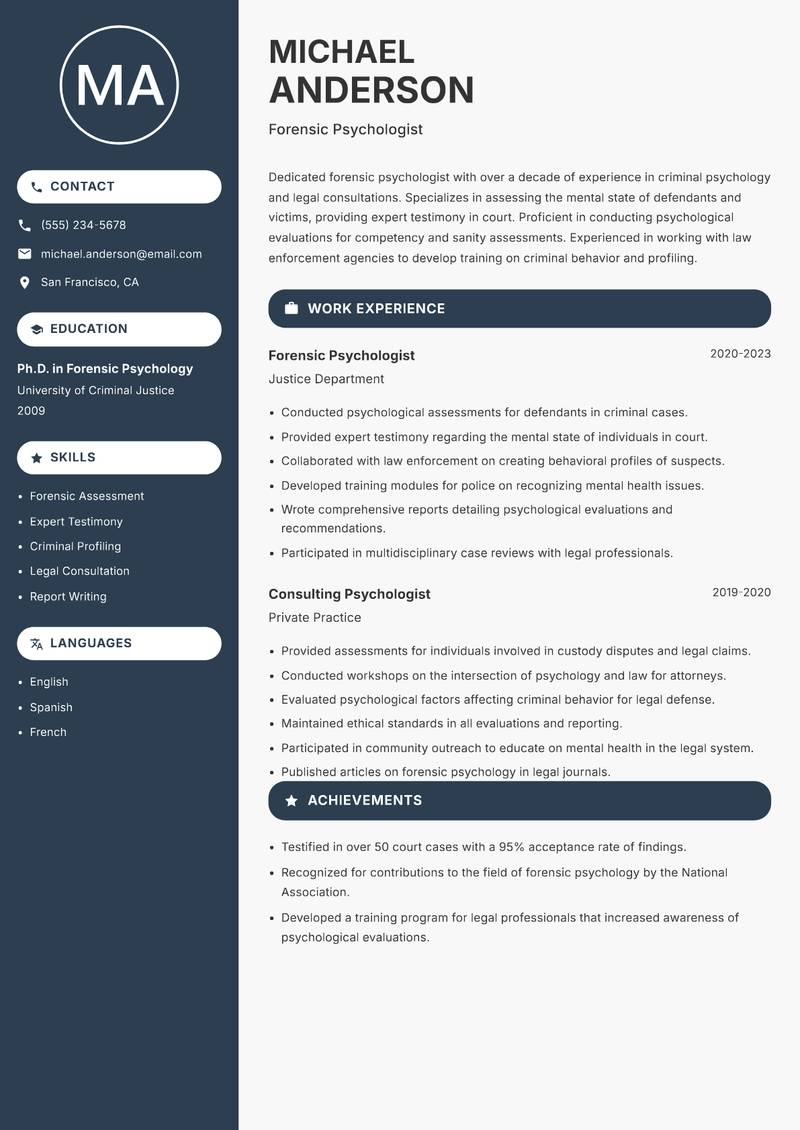
Browse Psychologist resume examples built around various therapeutic techniques, tailored for Mental Health roles.
A strong Psychologist resume leads with a focused professional summary that names the exact role and your standout achievement. In the experience section, open every bullet with a strong action verb and quantify the result with numbers wherever possible. Highlight your most relevant competencies — especially Various therapeutic techniques, Patient assessment, and Evidence-Based Psychotherapy (CBT, DBT, ACT, EMDR) — in a dedicated Skills section positioned early so ATS systems and hiring managers both find it immediately.
For format, most Psychologist roles suit a reverse-chronological layout: most recent position first, working backwards. Keep to one page for under five years of experience, or two pages for senior candidates with a rich project or leadership history. Use clean, ATS-safe fonts (10–12pt), standard section headings (Summary, Experience, Education, Skills), and avoid tables, text boxes, or multi-column layouts that applicant tracking systems cannot parse reliably.