Key Skills for Visual Artist Positions
- Various mediums
- Studio Practice & Artistic Technique
- Exhibition Curation & Installation
- Artist Statement & Critical Writing
- Grant Writing & Arts Funding
- Gallery & Museum Relations
- Public Art Project Management
- Digital Portfolio & Social Media
- Art Education & Workshop Facilitation
- Materials & Process Knowledge
Resume Tips for Visual Artist Applications
- Highlight your Various mediums experience prominently — this is a primary differentiator employers look for in visual artist candidates
- Lead with exhibition history: solo and group shows, galleries, and years.
- List public collections that hold your work — institutional acquisition is a significant credential.
- Include critical recognition: reviews, awards, artist residencies, and prizes.
- For grant-funded roles, list grants applied for, secured, and project outcomes.
- For teaching positions, emphasize curriculum development and arts education philosophy.
Strong Action Verbs for Visual Artist Resumes
Exhibited · Created · Curated · Installed · Published · Secured · Collaborated · Educated · Commissioned · Produced · Achieved · Administered · Analyzed · Architected
Common Mistakes to Avoid
- Leaving out Various mediums experience — this is a core differentiator for visual artist roles
- Writing a generic objective statement instead of a targeted visual artist professional summary
- Failing to maintain a professional online portfolio — gallery professionals and curators expect to see work online.
- Not organizing exhibition history chronologically and clearly.
- Ignoring grant writing skills — most arts careers depend on public funding.
Experience Levels
- Art Student / Emerging Artist (0-3 years)
- Established Artist / Gallery Represented (3-10 years)
- Mid-Career Artist / Curator (10-20 years)
- Senior Artist / Art Director (20-30 years)
- Esteemed Artist / Arts Leader (30+ years)
How to Write a Visual Artist Resume
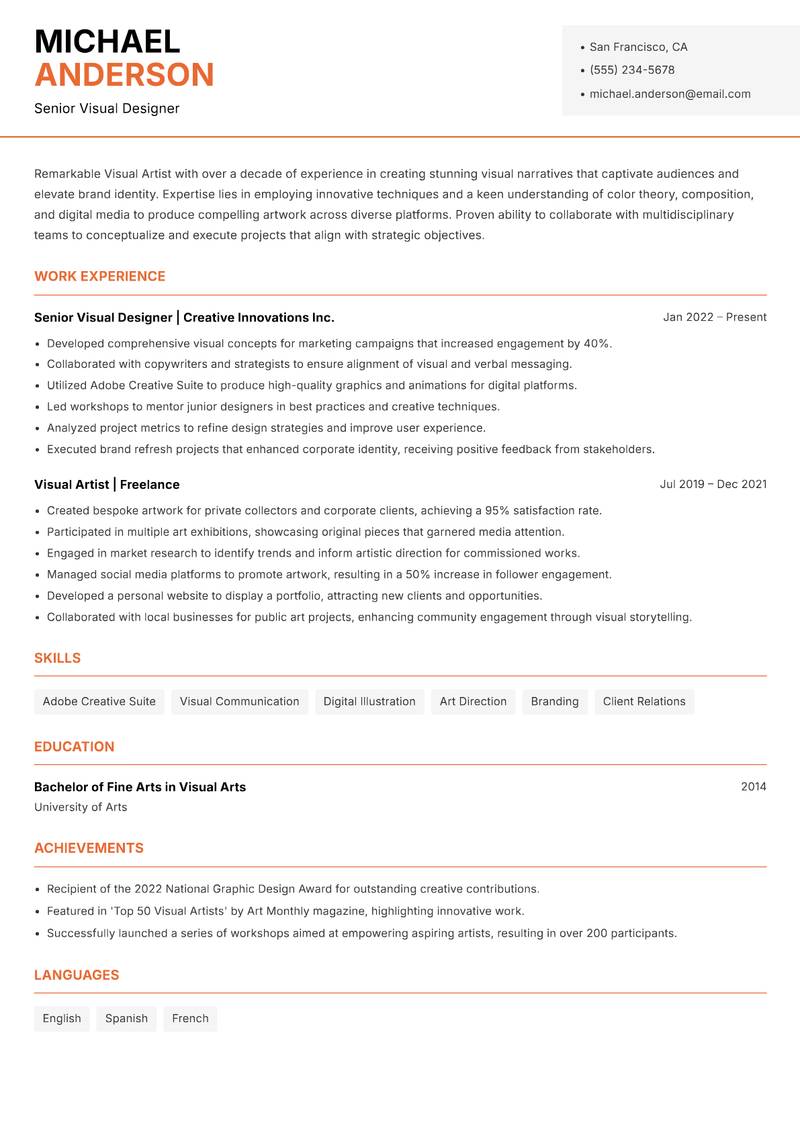
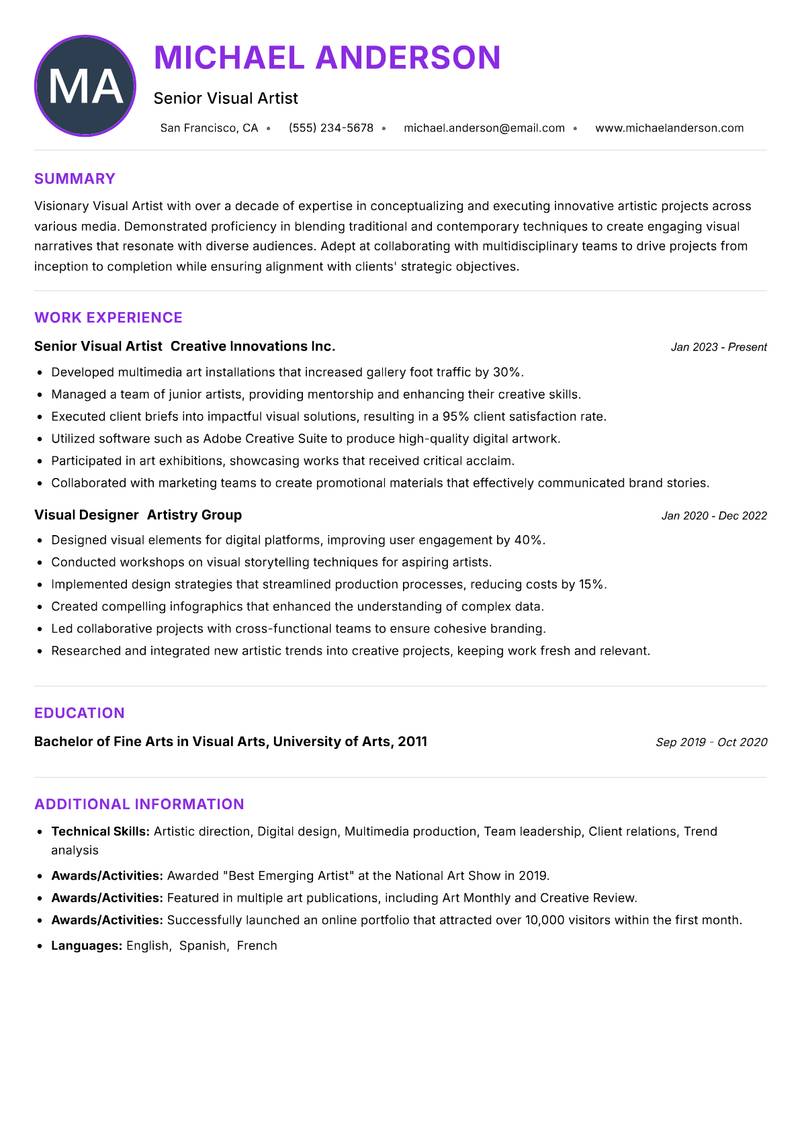
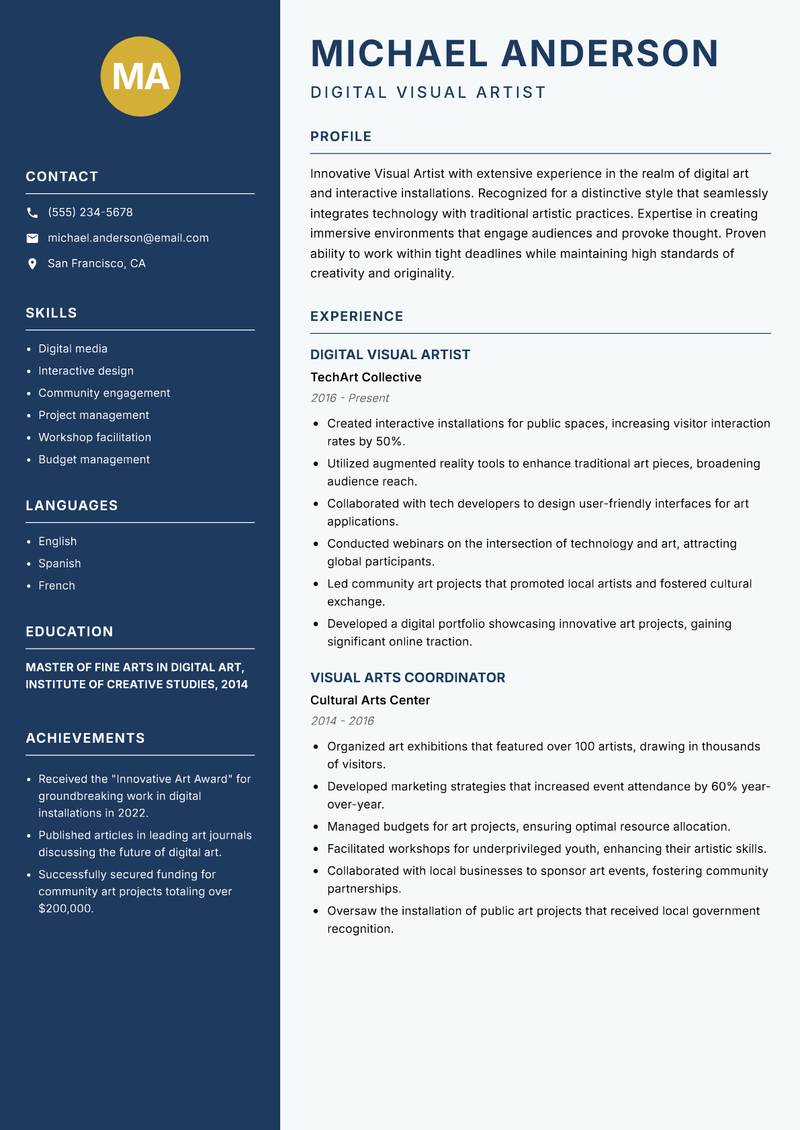
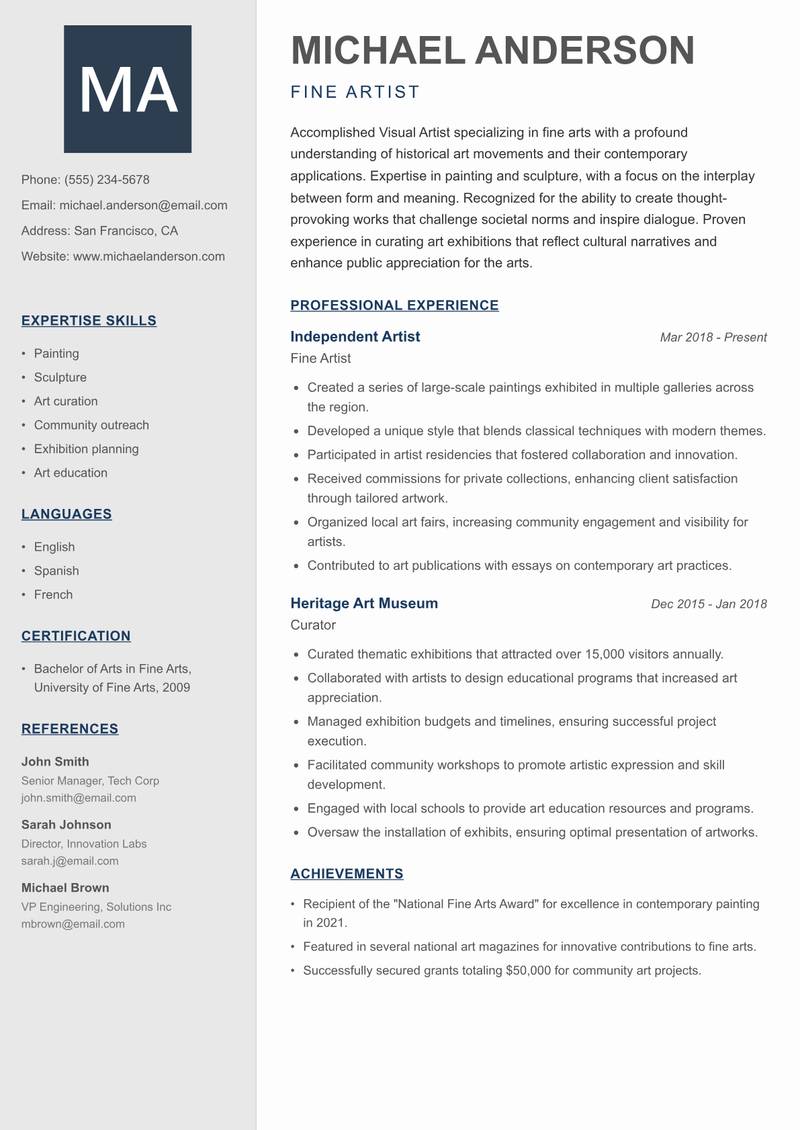
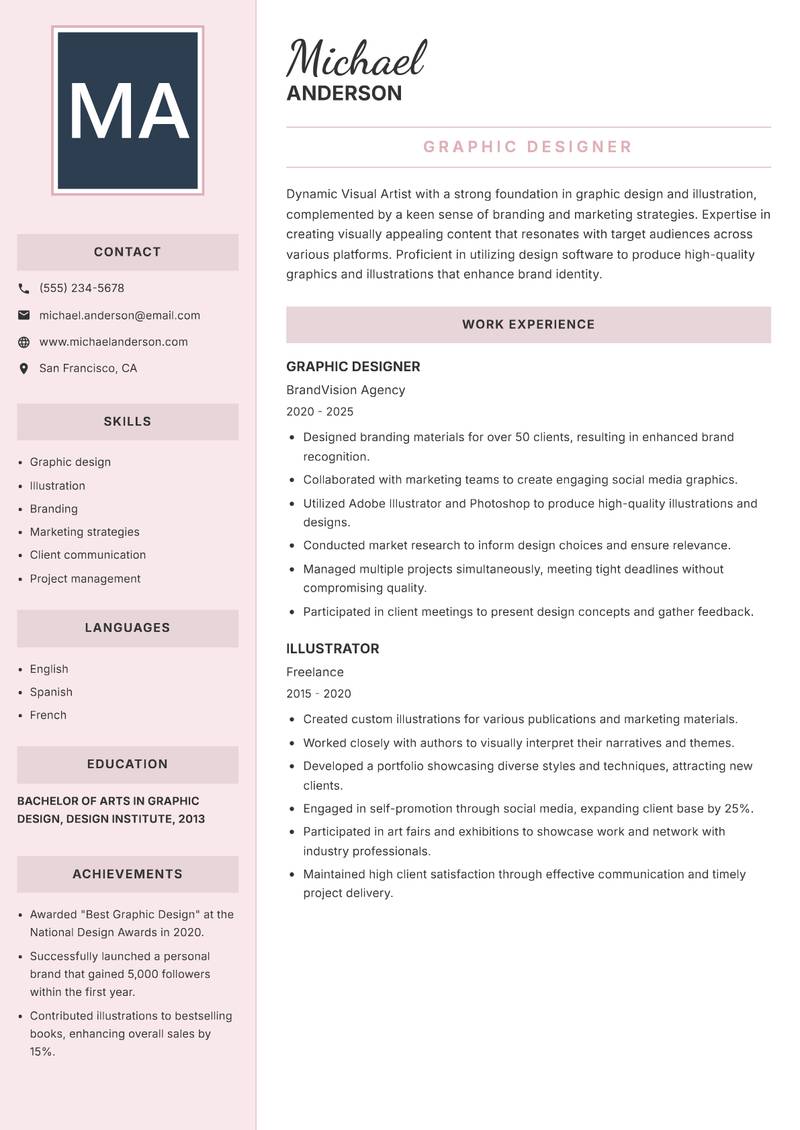
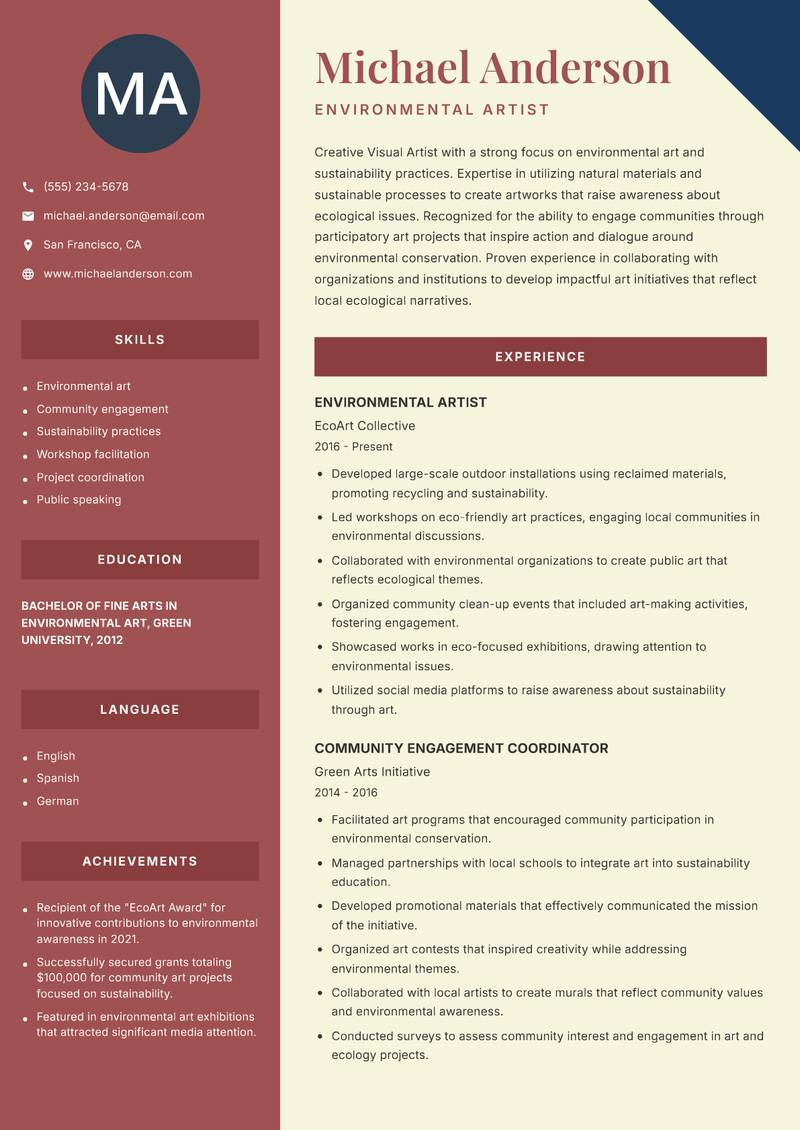
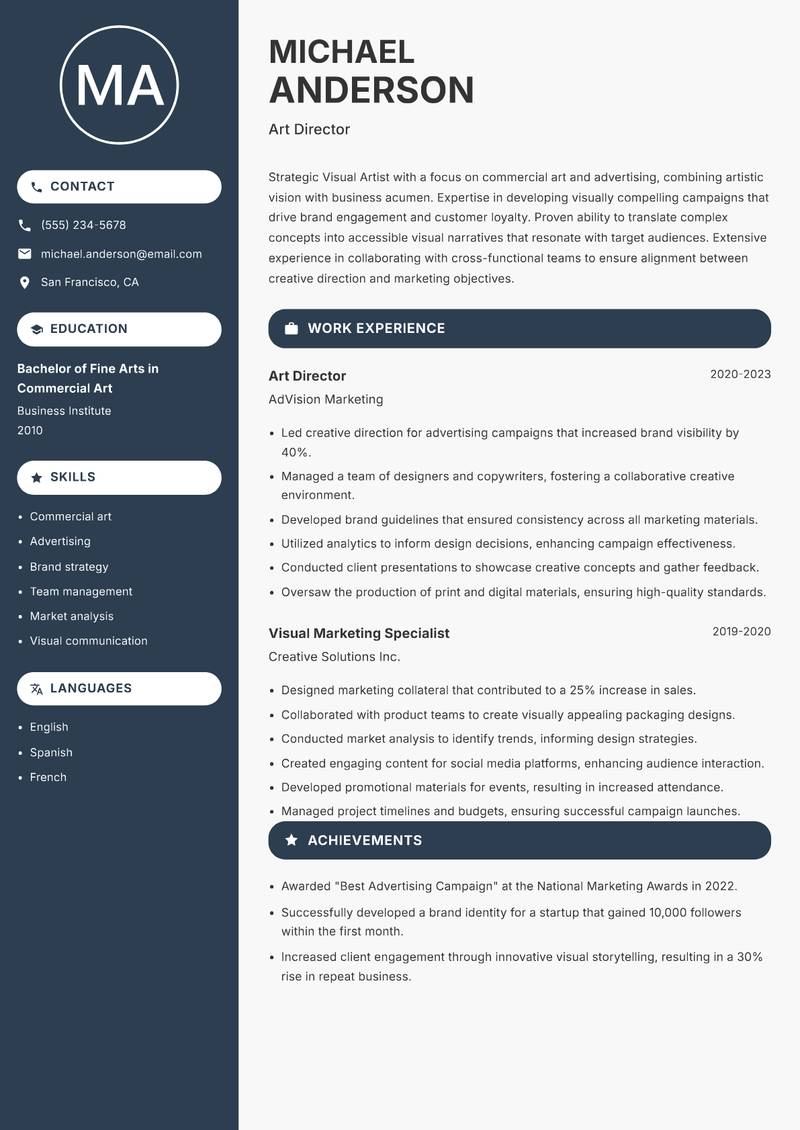
Browse Visual Artist resume examples built around various mediums, tailored for Fine Arts roles.
A strong Visual Artist resume leads with a focused professional summary that names the exact role and your standout achievement. In the experience section, open every bullet with a strong action verb and quantify the result with numbers wherever possible. Highlight your most relevant competencies — especially Various mediums, Studio Practice & Artistic Technique, and Exhibition Curation & Installation — in a dedicated Skills section positioned early so ATS systems and hiring managers both find it immediately.
For format, most Visual Artist roles suit a reverse-chronological layout: most recent position first, working backwards. Keep to one page for under five years of experience, or two pages for senior candidates with a rich project or leadership history. Use clean, ATS-safe fonts (10–12pt), standard section headings (Summary, Experience, Education, Skills), and avoid tables, text boxes, or multi-column layouts that applicant tracking systems cannot parse reliably.