Bioinformatics Scientist Resume

These Bioinformatics Scientist resume samples are designed to help you write a resume that gets noticed by hiring managers and passes applicant tracking systems (ATS) in Life Sciences. Each example shows real formatting, section structure, and language you can adapt to your own background. When writing your own Bioinformatics Scientist resume, focus on highlighting molecular biology techniques (PCR, CRISPR, western blot), cell culture & in vitro models and genomics & sequencing (NGS, sanger). Recruiters scan for these qualifications first, so they should appear early in your summary and experience sections. Use strong action verbs such as "discovered", "synthesized", "sequenced", "expressed" to describe your achievements, and quantify your impact wherever possible — percentages, dollar amounts, or time saved make your resume more convincing. A common mistake to avoid: writing a generic objective statement instead of a targeted bioinformatics scientist professional summary. Tailor your resume to each Bioinformatics Scientist position you apply for rather than using one generic version.

Bioinformatics Scientist Resume Template
View PDF
0.0 (0 ratings)

Senior Bioinformatics Scientist Resume

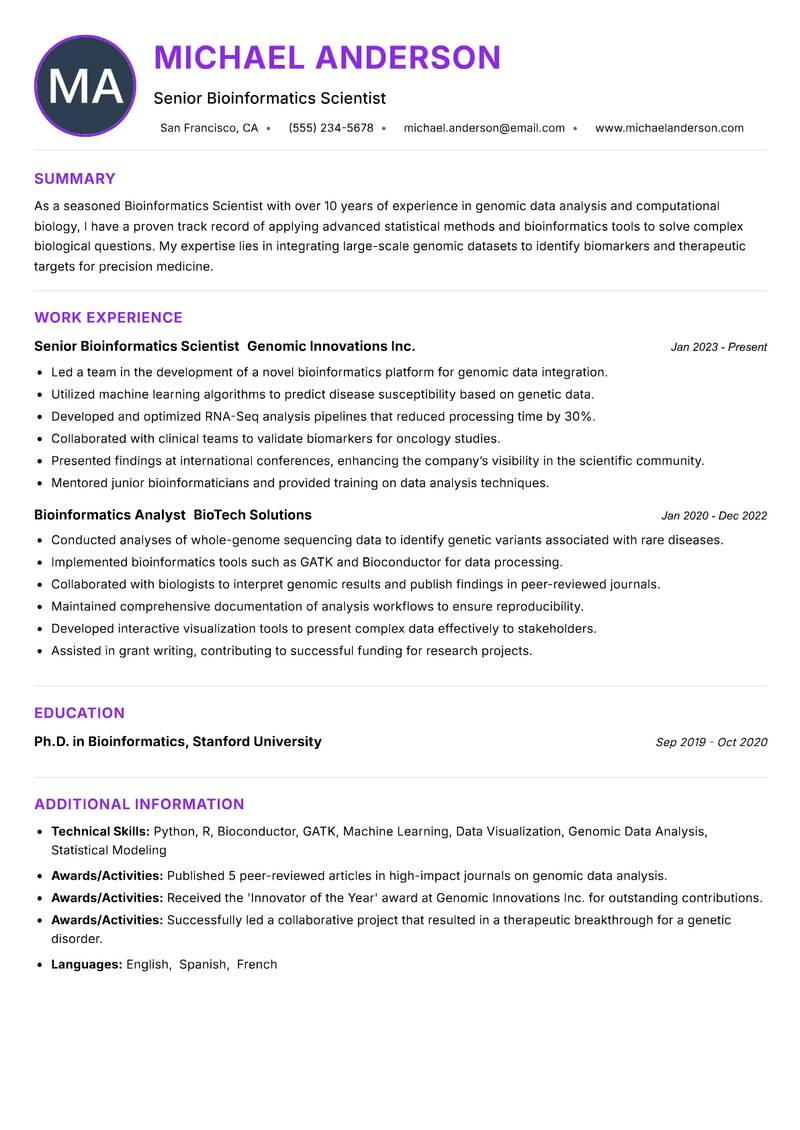
As a seasoned Bioinformatics Scientist with over 10 years of experience in genomic data analysis and computational biology, I have a proven track record of applying advanced statistical methods and bioinformatics tools to solve complex biological questions. My expertise lies in integrating large-scale genomic datasets to identify biomarkers and therapeutic targets for precision medicine. I have collaborated with multidisciplinary teams in both academic and industry settings, contributing to significant advancements in personalized drug development. My strong programming skills in Python and R, combined with my knowledge of molecular biology, enable me to develop robust data analysis pipelines that accelerate research timelines. I am passionate about leveraging cutting-edge bioinformatics technologies to enhance our understanding of genetic diseases and improve patient outcomes. I thrive in fast-paced environments and enjoy mentoring junior scientists, fostering a collaborative atmosphere that drives innovation and discovery.

Python R Bioconductor GATK Machine Learning Data Visualization Genomic Data Analysis Statistical Modeling
Bioinformatics Scientist Resume Preview Example
View PDF
  1. Led a team in the development of a novel bioinformatics platform for genomic data integration.
  2. Utilized machine learning algorithms to predict disease susceptibility based on genetic data.
  3. Developed and optimized RNA-Seq analysis pipelines that reduced processing time by 30%.
  4. Collaborated with clinical teams to validate biomarkers for oncology studies.
  5. Presented findings at international conferences, enhancing the company’s visibility in the scientific community.
  6. Mentored junior bioinformaticians and provided training on data analysis techniques.
  1. Conducted analyses of whole-genome sequencing data to identify genetic variants associated with rare diseases.
  2. Implemented bioinformatics tools such as GATK and Bioconductor for data processing.
  3. Collaborated with biologists to interpret genomic results and publish findings in peer-reviewed journals.
  4. Maintained comprehensive documentation of analysis workflows to ensure reproducibility.
  5. Developed interactive visualization tools to present complex data effectively to stakeholders.
  6. Assisted in grant writing, contributing to successful funding for research projects.

Achievements

  • Published 5 peer-reviewed articles in high-impact journals on genomic data analysis.
  • Received the 'Innovator of the Year' award at Genomic Innovations Inc. for outstanding contributions.
  • Successfully led a collaborative project that resulted in a therapeutic breakthrough for a genetic disorder.
⏱️
Experience
2-5 Years
📅
Level
Mid Level
🎓
Education
Ph.D. in Bioinformatics, Stanf...

Bioinformatics Scientist Resume

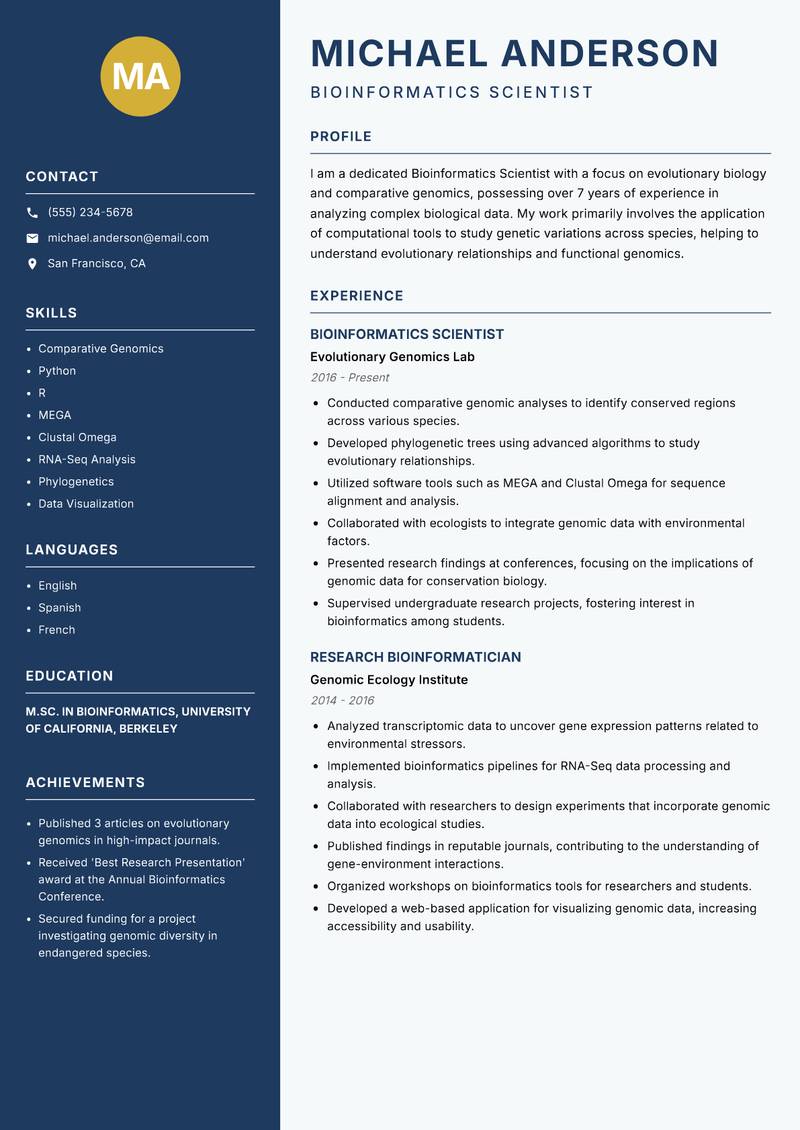
I am a dedicated Bioinformatics Scientist with a focus on evolutionary biology and comparative genomics, possessing over 7 years of experience in analyzing complex biological data. My work primarily involves the application of computational tools to study genetic variations across species, helping to understand evolutionary relationships and functional genomics. With a solid foundation in both biology and computer science, I excel at utilizing bioinformatics software to interpret large datasets and derive meaningful insights. I have a proven ability to communicate complex scientific concepts to both technical and non-technical audiences, facilitating collaborative projects across various disciplines. My passion for teaching and sharing knowledge drives my commitment to developing innovative educational programs in bioinformatics for students and colleagues alike. I am eager to contribute to research initiatives that aim to unveil the mysteries of genetics and evolution.

Comparative Genomics Python R MEGA Clustal Omega RNA-Seq Analysis Phylogenetics Data Visualization
Bioinformatics Scientist Resume Preview Example
View PDF
  1. Conducted comparative genomic analyses to identify conserved regions across various species.
  2. Developed phylogenetic trees using advanced algorithms to study evolutionary relationships.
  3. Utilized software tools such as MEGA and Clustal Omega for sequence alignment and analysis.
  4. Collaborated with ecologists to integrate genomic data with environmental factors.
  5. Presented research findings at conferences, focusing on the implications of genomic data for conservation biology.
  6. Supervised undergraduate research projects, fostering interest in bioinformatics among students.
  1. Analyzed transcriptomic data to uncover gene expression patterns related to environmental stressors.
  2. Implemented bioinformatics pipelines for RNA-Seq data processing and analysis.
  3. Collaborated with researchers to design experiments that incorporate genomic data into ecological studies.
  4. Published findings in reputable journals, contributing to the understanding of gene-environment interactions.
  5. Organized workshops on bioinformatics tools for researchers and students.
  6. Developed a web-based application for visualizing genomic data, increasing accessibility and usability.

Achievements

  • Published 3 articles on evolutionary genomics in high-impact journals.
  • Received 'Best Research Presentation' award at the Annual Bioinformatics Conference.
  • Secured funding for a project investigating genomic diversity in endangered species.
⏱️
Experience
2-5 Years
📅
Level
Mid Level
🎓
Education
M.Sc. in Bioinformatics, Unive...

Bioinformatics Scientist Resume

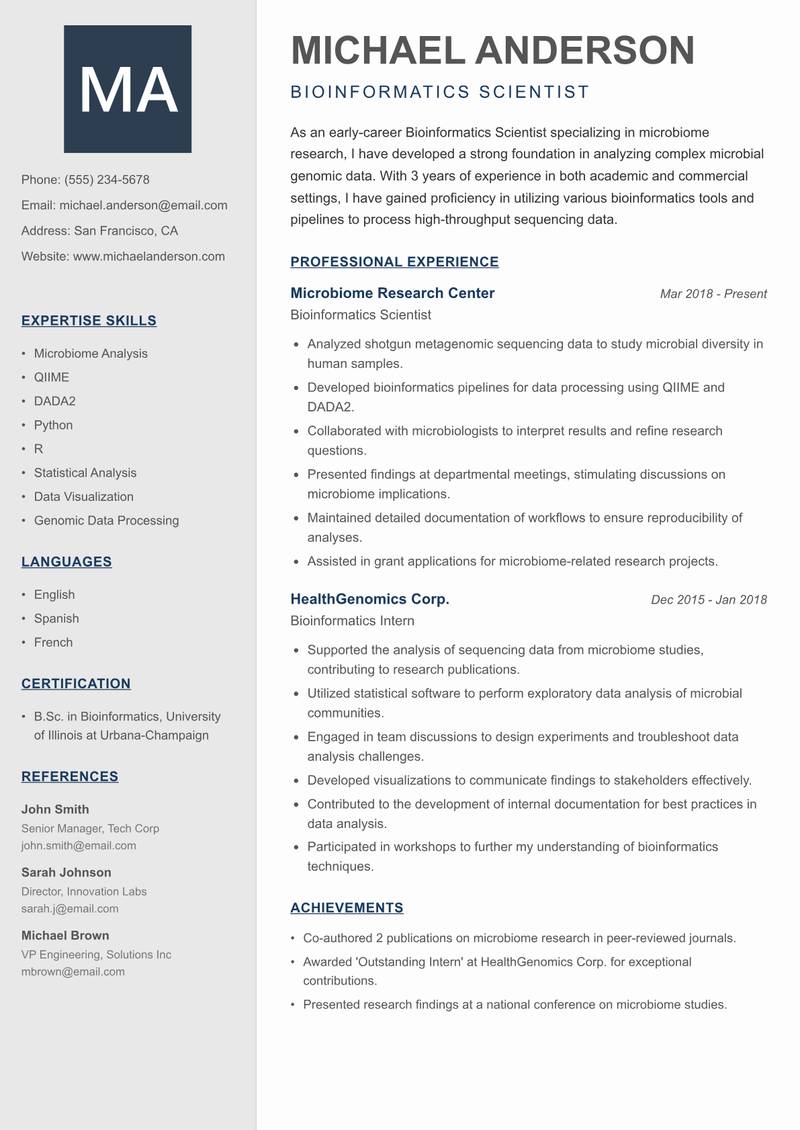
As an early-career Bioinformatics Scientist specializing in microbiome research, I have developed a strong foundation in analyzing complex microbial genomic data. With 3 years of experience in both academic and commercial settings, I have gained proficiency in utilizing various bioinformatics tools and pipelines to process high-throughput sequencing data. My work has focused on understanding the role of the microbiome in human health and disease, contributing to the identification of potential therapeutic targets. I have collaborated with cross-functional teams to design experiments and analyze results, ensuring that research objectives are met efficiently. My analytical skills, combined with my attention to detail, allow me to derive meaningful insights from large datasets. I am eager to continue advancing my knowledge and skills in bioinformatics while contributing to impactful research in the field of microbiome studies.

Microbiome Analysis QIIME DADA2 Python R Statistical Analysis Data Visualization Genomic Data Processing
Bioinformatics Scientist Resume Preview Example
View PDF
  1. Analyzed shotgun metagenomic sequencing data to study microbial diversity in human samples.
  2. Developed bioinformatics pipelines for data processing using QIIME and DADA2.
  3. Collaborated with microbiologists to interpret results and refine research questions.
  4. Presented findings at departmental meetings, stimulating discussions on microbiome implications.
  5. Maintained detailed documentation of workflows to ensure reproducibility of analyses.
  6. Assisted in grant applications for microbiome-related research projects.
  1. Supported the analysis of sequencing data from microbiome studies, contributing to research publications.
  2. Utilized statistical software to perform exploratory data analysis of microbial communities.
  3. Engaged in team discussions to design experiments and troubleshoot data analysis challenges.
  4. Developed visualizations to communicate findings to stakeholders effectively.
  5. Contributed to the development of internal documentation for best practices in data analysis.
  6. Participated in workshops to further my understanding of bioinformatics techniques.

Achievements

  • Co-authored 2 publications on microbiome research in peer-reviewed journals.
  • Awarded 'Outstanding Intern' at HealthGenomics Corp. for exceptional contributions.
  • Presented research findings at a national conference on microbiome studies.
⏱️
Experience
2-5 Years
📅
Level
Mid Level
🎓
Education
B.Sc. in Bioinformatics, Unive...

Bioinformatics Scientist Resume

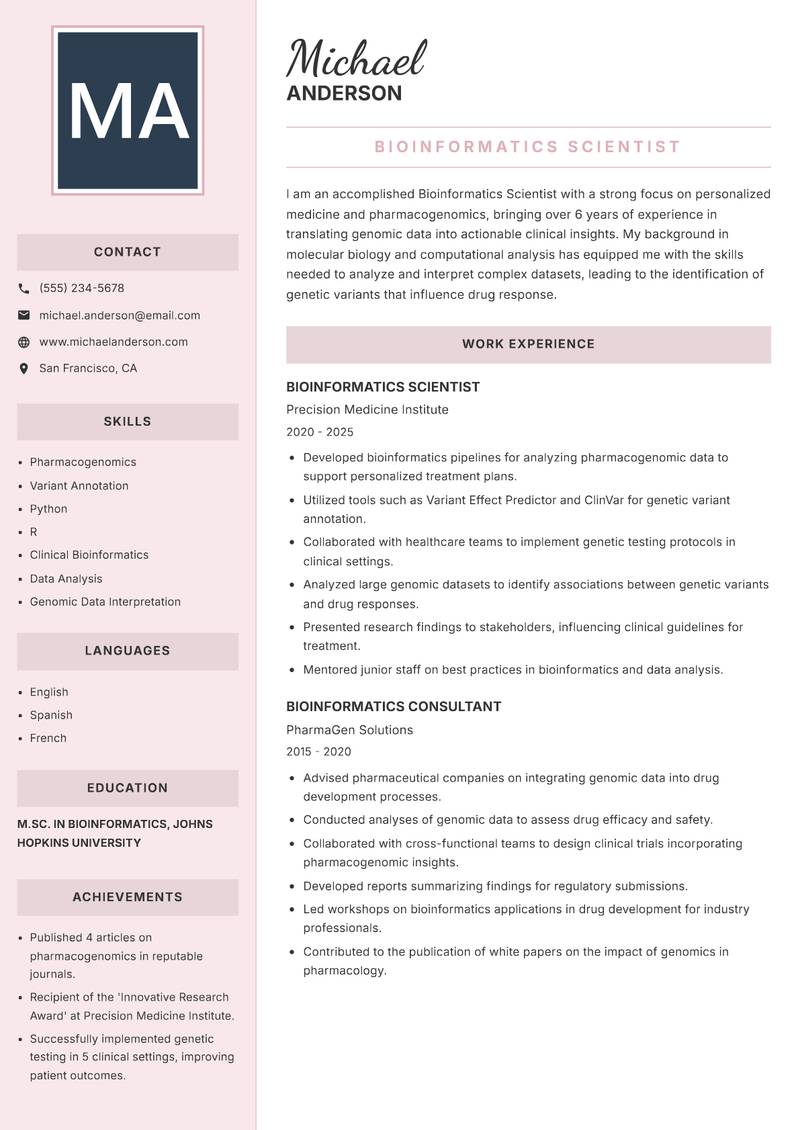
I am an accomplished Bioinformatics Scientist with a strong focus on personalized medicine and pharmacogenomics, bringing over 6 years of experience in translating genomic data into actionable clinical insights. My background in molecular biology and computational analysis has equipped me with the skills needed to analyze and interpret complex datasets, leading to the identification of genetic variants that influence drug response. I have successfully collaborated with clinicians and researchers to integrate genetic testing into patient care, enhancing treatment outcomes. My expertise in using bioinformatics tools for variant annotation and clinical decision support has been instrumental in advancing precision medicine initiatives. I am dedicated to continuous learning and am passionate about leveraging bioinformatics to improve healthcare and patient outcomes through data-driven decisions.

Pharmacogenomics Variant Annotation Python R Clinical Bioinformatics Data Analysis Genomic Data Interpretation
Bioinformatics Scientist Resume Preview Example
View PDF
  1. Developed bioinformatics pipelines for analyzing pharmacogenomic data to support personalized treatment plans.
  2. Utilized tools such as Variant Effect Predictor and ClinVar for genetic variant annotation.
  3. Collaborated with healthcare teams to implement genetic testing protocols in clinical settings.
  4. Analyzed large genomic datasets to identify associations between genetic variants and drug responses.
  5. Presented research findings to stakeholders, influencing clinical guidelines for treatment.
  6. Mentored junior staff on best practices in bioinformatics and data analysis.
  1. Advised pharmaceutical companies on integrating genomic data into drug development processes.
  2. Conducted analyses of genomic data to assess drug efficacy and safety.
  3. Collaborated with cross-functional teams to design clinical trials incorporating pharmacogenomic insights.
  4. Developed reports summarizing findings for regulatory submissions.
  5. Led workshops on bioinformatics applications in drug development for industry professionals.
  6. Contributed to the publication of white papers on the impact of genomics in pharmacology.

Achievements

  • Published 4 articles on pharmacogenomics in reputable journals.
  • Recipient of the 'Innovative Research Award' at Precision Medicine Institute.
  • Successfully implemented genetic testing in 5 clinical settings, improving patient outcomes.
⏱️
Experience
2-5 Years
📅
Level
Mid Level
🎓
Education
M.Sc. in Bioinformatics, Johns...

Senior Bioinformatics Scientist Resume

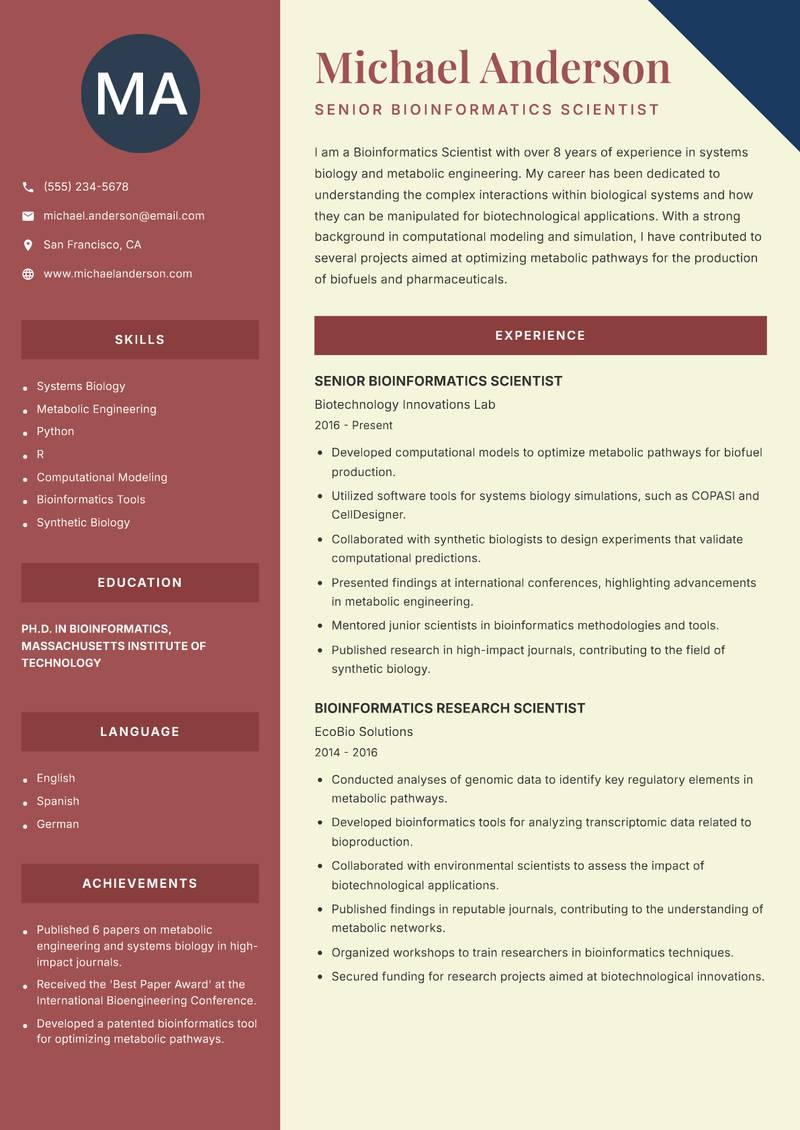
I am a Bioinformatics Scientist with over 8 years of experience in systems biology and metabolic engineering. My career has been dedicated to understanding the complex interactions within biological systems and how they can be manipulated for biotechnological applications. With a strong background in computational modeling and simulation, I have contributed to several projects aimed at optimizing metabolic pathways for the production of biofuels and pharmaceuticals. My expertise includes the development of computational tools for simulating biological processes, which has enabled me to drive innovation in synthetic biology research. I am adept at collaborating with interdisciplinary teams to design experiments and interpret data, ensuring that research objectives align with industry needs. I am passionate about utilizing bioinformatics to advance sustainable solutions and improve the efficiency of bioproduction systems.

Systems Biology Metabolic Engineering Python R Computational Modeling Bioinformatics Tools Synthetic Biology
Bioinformatics Scientist Resume Preview Example
View PDF
  1. Developed computational models to optimize metabolic pathways for biofuel production.
  2. Utilized software tools for systems biology simulations, such as COPASI and CellDesigner.
  3. Collaborated with synthetic biologists to design experiments that validate computational predictions.
  4. Presented findings at international conferences, highlighting advancements in metabolic engineering.
  5. Mentored junior scientists in bioinformatics methodologies and tools.
  6. Published research in high-impact journals, contributing to the field of synthetic biology.
  1. Conducted analyses of genomic data to identify key regulatory elements in metabolic pathways.
  2. Developed bioinformatics tools for analyzing transcriptomic data related to bioproduction.
  3. Collaborated with environmental scientists to assess the impact of biotechnological applications.
  4. Published findings in reputable journals, contributing to the understanding of metabolic networks.
  5. Organized workshops to train researchers in bioinformatics techniques.
  6. Secured funding for research projects aimed at biotechnological innovations.

Achievements

  • Published 6 papers on metabolic engineering and systems biology in high-impact journals.
  • Received the 'Best Paper Award' at the International Bioengineering Conference.
  • Developed a patented bioinformatics tool for optimizing metabolic pathways.
⏱️
Experience
2-5 Years
📅
Level
Mid Level
🎓
Education
Ph.D. in Bioinformatics, Massa...

Bioinformatics Scientist Resume

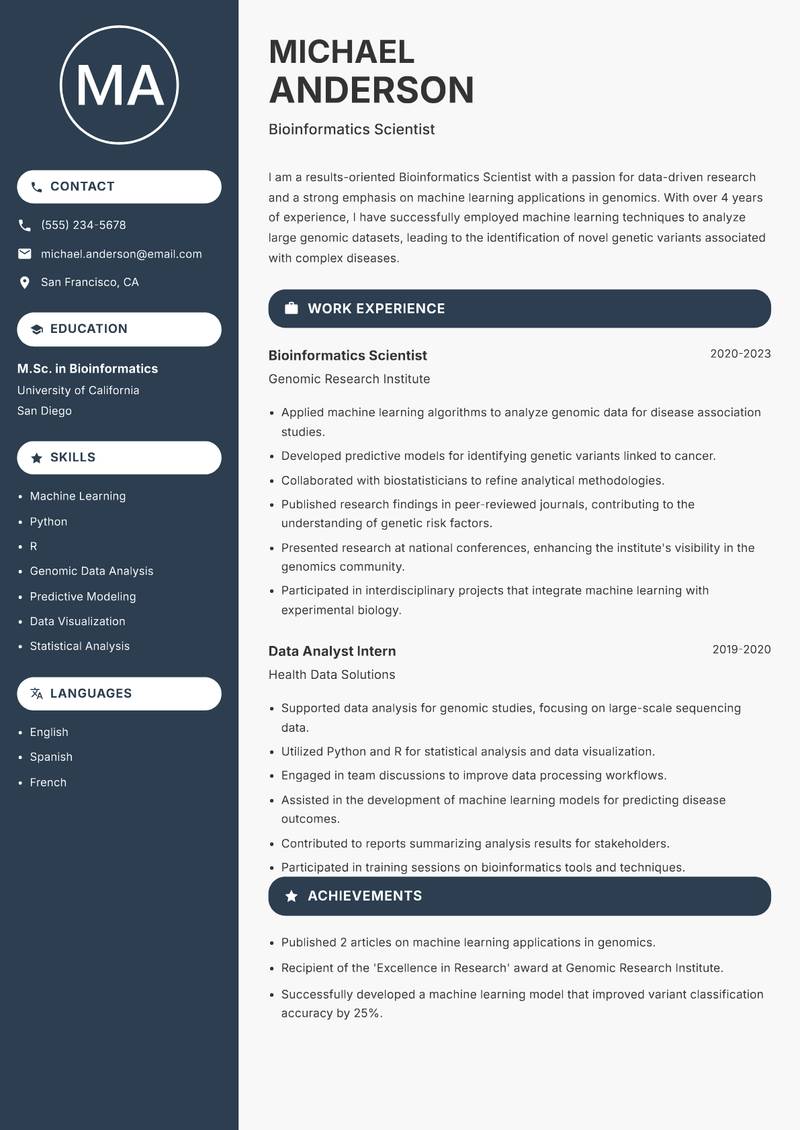
I am a results-oriented Bioinformatics Scientist with a passion for data-driven research and a strong emphasis on machine learning applications in genomics. With over 4 years of experience, I have successfully employed machine learning techniques to analyze large genomic datasets, leading to the identification of novel genetic variants associated with complex diseases. My background in computer science and statistics allows me to create robust analytical models that enhance the understanding of genetic predispositions. I thrive in collaborative environments, working closely with biologists and data scientists to bridge the gap between computational and experimental research. My goal is to leverage my skills in bioinformatics and machine learning to contribute to groundbreaking research that advances the field of genomics and improves healthcare outcomes.

Machine Learning Python R Genomic Data Analysis Predictive Modeling Data Visualization Statistical Analysis
Bioinformatics Scientist Resume Preview Example
View PDF
  1. Applied machine learning algorithms to analyze genomic data for disease association studies.
  2. Developed predictive models for identifying genetic variants linked to cancer.
  3. Collaborated with biostatisticians to refine analytical methodologies.
  4. Published research findings in peer-reviewed journals, contributing to the understanding of genetic risk factors.
  5. Presented research at national conferences, enhancing the institute's visibility in the genomics community.
  6. Participated in interdisciplinary projects that integrate machine learning with experimental biology.
  1. Supported data analysis for genomic studies, focusing on large-scale sequencing data.
  2. Utilized Python and R for statistical analysis and data visualization.
  3. Engaged in team discussions to improve data processing workflows.
  4. Assisted in the development of machine learning models for predicting disease outcomes.
  5. Contributed to reports summarizing analysis results for stakeholders.
  6. Participated in training sessions on bioinformatics tools and techniques.

Achievements

  • Published 2 articles on machine learning applications in genomics.
  • Recipient of the 'Excellence in Research' award at Genomic Research Institute.
  • Successfully developed a machine learning model that improved variant classification accuracy by 25%.
⏱️
Experience
2-5 Years
📅
Level
Mid Level
🎓
Education
M.Sc. in Bioinformatics, Unive...

Bioinformatics Scientist Resume

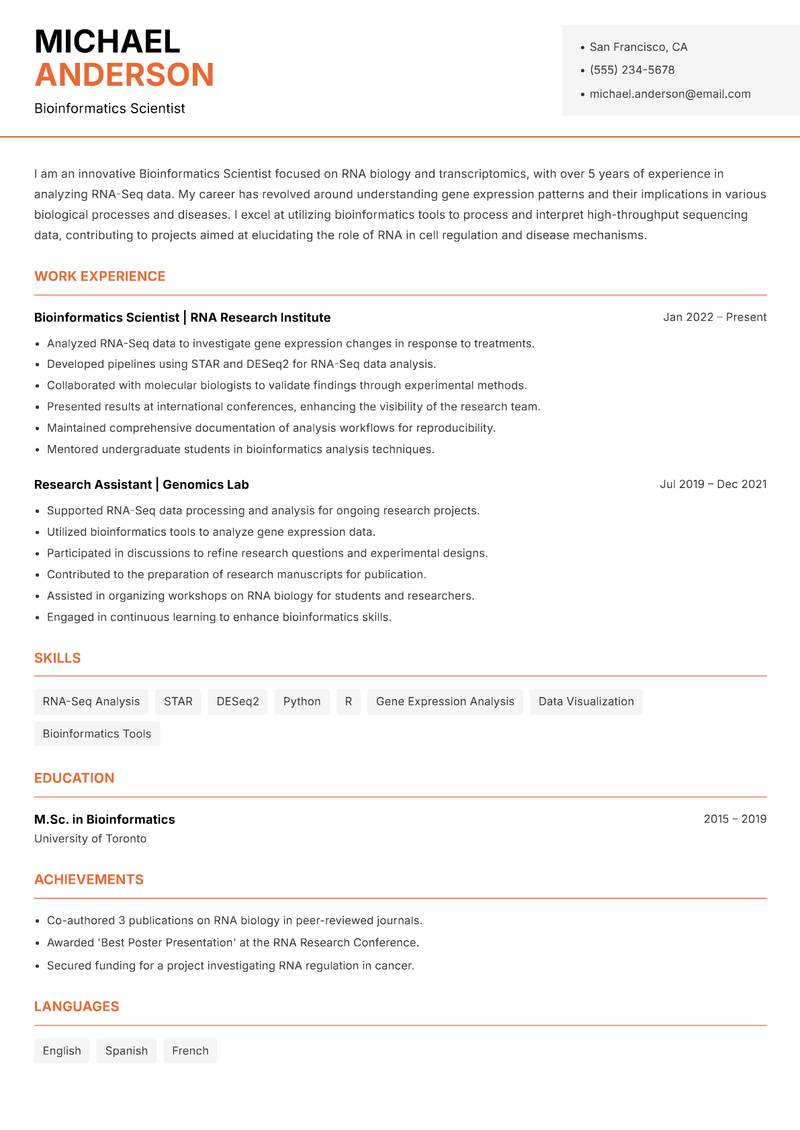
I am an innovative Bioinformatics Scientist focused on RNA biology and transcriptomics, with over 5 years of experience in analyzing RNA-Seq data. My career has revolved around understanding gene expression patterns and their implications in various biological processes and diseases. I excel at utilizing bioinformatics tools to process and interpret high-throughput sequencing data, contributing to projects aimed at elucidating the role of RNA in cell regulation and disease mechanisms. My collaborative spirit enables me to work effectively with multidisciplinary teams, translating complex data into actionable insights. I am committed to advancing the field of RNA research through innovative data analysis approaches and fostering a deeper understanding of gene regulation. I am enthusiastic about contributing to research that has the potential to lead to novel therapeutic strategies.

RNA-Seq Analysis STAR DESeq2 Python R Gene Expression Analysis Data Visualization Bioinformatics Tools
Bioinformatics Scientist Resume Preview Example
View PDF
  1. Analyzed RNA-Seq data to investigate gene expression changes in response to treatments.
  2. Developed pipelines using STAR and DESeq2 for RNA-Seq data analysis.
  3. Collaborated with molecular biologists to validate findings through experimental methods.
  4. Presented results at international conferences, enhancing the visibility of the research team.
  5. Maintained comprehensive documentation of analysis workflows for reproducibility.
  6. Mentored undergraduate students in bioinformatics analysis techniques.
  1. Supported RNA-Seq data processing and analysis for ongoing research projects.
  2. Utilized bioinformatics tools to analyze gene expression data.
  3. Participated in discussions to refine research questions and experimental designs.
  4. Contributed to the preparation of research manuscripts for publication.
  5. Assisted in organizing workshops on RNA biology for students and researchers.
  6. Engaged in continuous learning to enhance bioinformatics skills.

Achievements

  • Co-authored 3 publications on RNA biology in peer-reviewed journals.
  • Awarded 'Best Poster Presentation' at the RNA Research Conference.
  • Secured funding for a project investigating RNA regulation in cancer.
⏱️
Experience
2-5 Years
📅
Level
Mid Level
🎓
Education
M.Sc. in Bioinformatics, Unive...

Key Skills for Bioinformatics Scientist Positions

Resume Tips for Bioinformatics Scientist Applications

Strong Action Verbs for Bioinformatics Scientist Resumes

Discovered · Synthesized · Sequenced · Expressed · Analyzed · Published · Optimized · Developed · Patented · Validated · Achieved · Administered · Architected · Assessed

Common Mistakes to Avoid

Experience Levels

How to Write a Bioinformatics Scientist Resume

Browse Bioinformatics Scientist resume examples built around molecular biology techniques (PCR, CRISPR, western blot), tailored for Life Sciences roles.

A strong Bioinformatics Scientist resume leads with a focused professional summary that names the exact role and your standout achievement. In the experience section, open every bullet with a strong action verb and quantify the result with numbers wherever possible. Highlight your most relevant competencies — especially Molecular Biology Techniques (PCR, CRISPR, Western Blot), Cell Culture & In Vitro Models, and Genomics & Sequencing (NGS, Sanger) — in a dedicated Skills section positioned early so ATS systems and hiring managers both find it immediately.

For format, most Bioinformatics Scientist roles suit a reverse-chronological layout: most recent position first, working backwards. Keep to one page for under five years of experience, or two pages for senior candidates with a rich project or leadership history. Use clean, ATS-safe fonts (10–12pt), standard section headings (Summary, Experience, Education, Skills), and avoid tables, text boxes, or multi-column layouts that applicant tracking systems cannot parse reliably.
Frequently Asked Questions

What makes a strong Bioinformatics Scientist resume stand out to employers?

A standout Bioinformatics Scientist resume combines role-specific skills with quantified achievements. Name the exact job title in your professional summary, mirror keywords from each job posting, and open every bullet point with a strong action verb followed by a measurable result. Certifications, tools, and domain experience specific to bioinformatics scientist roles should appear prominently near the top.

What skills are most important to include on a Life Sciences resume?

Recruiters hiring in Life Sciences consistently look for Molecular Biology Techniques (PCR, CRISPR, Western Blot), Cell Culture & In Vitro Models, Genomics & Sequencing (NGS, Sanger), Bioinformatics & Computational Biology. List these in a dedicated Skills section near the top so both ATS systems and human reviewers spot them fast. Mirror the exact phrasing from each job posting wherever possible — many applicant tracking systems match literal strings rather than synonyms.

What is the best resume format for Life Sciences professionals?

A reverse-chronological format is the standard choice for most Life Sciences candidates — employers expect to see your most recent role first, working backwards. If you are transitioning into Life Sciences from a related field, a hybrid format (brief skills summary at the top followed by chronological experience) can bridge the gap effectively. Keep the document to one page for under five years of experience, or two pages for senior specialists.

How do I make my Life Sciences resume pass applicant tracking systems (ATS)?

Use standard section headings — Summary, Experience, Education, Skills — rather than creative labels that ATS parsers do not recognise. Embed domain keywords such as "Molecular Biology Techniques (PCR, CRISPR, Western Blot)" and "Cell Culture & In Vitro Models" naturally inside your experience bullets rather than cramming them into a standalone keyword list. Avoid tables, multi-column layouts, text boxes, headers, footers, and images — these confuse most modern parsers and can cause your resume to be misread or rejected before a human sees it.

What mistakes do Life Sciences professionals most commonly make on their resume?

The most frequent issue is being vague about techniques — 'molecular biology skills' is meaningless without specifics. Beyond that, generic objective statements, unquantified achievements, and inconsistent date formatting appear across almost every Life Sciences application. Fix these by replacing every vague claim with a measurable outcome — specific numbers and named projects add credibility that adjectives cannot.

How long should a Life Sciences resume be?

One page is appropriate for candidates with under five years of relevant Life Sciences experience. Two pages are acceptable — and sometimes expected — for senior specialists, managers, or professionals with a strong portfolio of projects, publications, or credentials. Avoid padding to reach a page count: every line should directly support your application for the specific role you are targeting.

Should I include a professional summary at the top of my Life Sciences resume?

Yes — a two to three sentence summary is the first section most recruiters read. Open with your title and years of Life Sciences experience, then name your most relevant achievement or specialisation. One proven approach: List specific molecular biology techniques — CRISPR, qPCR, single-cell sequencing — rather than generic 'molecular biology skills' — this level of specificity signals genuine expertise before a recruiter reaches your experience section.

Scroll to view samples