Key Skills for Molecular Biologist Positions
- Genetic analysis
- Biochemistry
- Molecular Biology Techniques (PCR, CRISPR, Western Blot)
- Cell Culture & In Vitro Models
- Genomics & Sequencing (NGS, Sanger)
- Bioinformatics & Computational Biology
- Protein Expression & Purification
- Flow Cytometry & Immunohistochemistry
- Animal Model Studies (in vivo research)
- Good Laboratory Practice (GLP) & GMP
Resume Tips for Molecular Biologist Applications
- Highlight your Genetic analysis and biochemistry experience prominently — this is a primary differentiator employers look for in molecular biologist candidates
- List specific molecular biology techniques — CRISPR, qPCR, single-cell sequencing — rather than generic 'molecular biology skills'.
- Demonstrate bioinformatics competency with specific tools: BLAST, Galaxy, R Bioconductor, Python.
- For pharma roles, highlight GLP/GMP compliance experience.
- Quantify research output: publications, conference presentations, patents filed.
- Show progression from bench science to data analysis — hybrid skill sets are increasingly prized.
Strong Action Verbs for Molecular Biologist Resumes
Discovered · Synthesized · Sequenced · Expressed · Analyzed · Published · Optimized · Developed · Patented · Validated · Updated · Achieved · Administered · Architected
Common Mistakes to Avoid
- Leaving out Genetic analysis and biochemistry experience — this is a core differentiator for molecular biologist roles
- Writing a generic objective statement instead of a targeted molecular biologist professional summary
- Being vague about techniques — 'molecular biology skills' is meaningless without specifics.
- Failing to show computational or bioinformatics competency for modern life science roles.
- Not listing publications and patents for research-focused applications.
Experience Levels
- Research Student / Technician (0-3 years)
- Research Scientist (3-7 years)
- Senior Scientist (7-12 years)
- Principal Scientist / Group Leader (12-17 years)
- Director / Chief Scientific Officer (17+ years)
How to Write a Molecular Biologist Resume
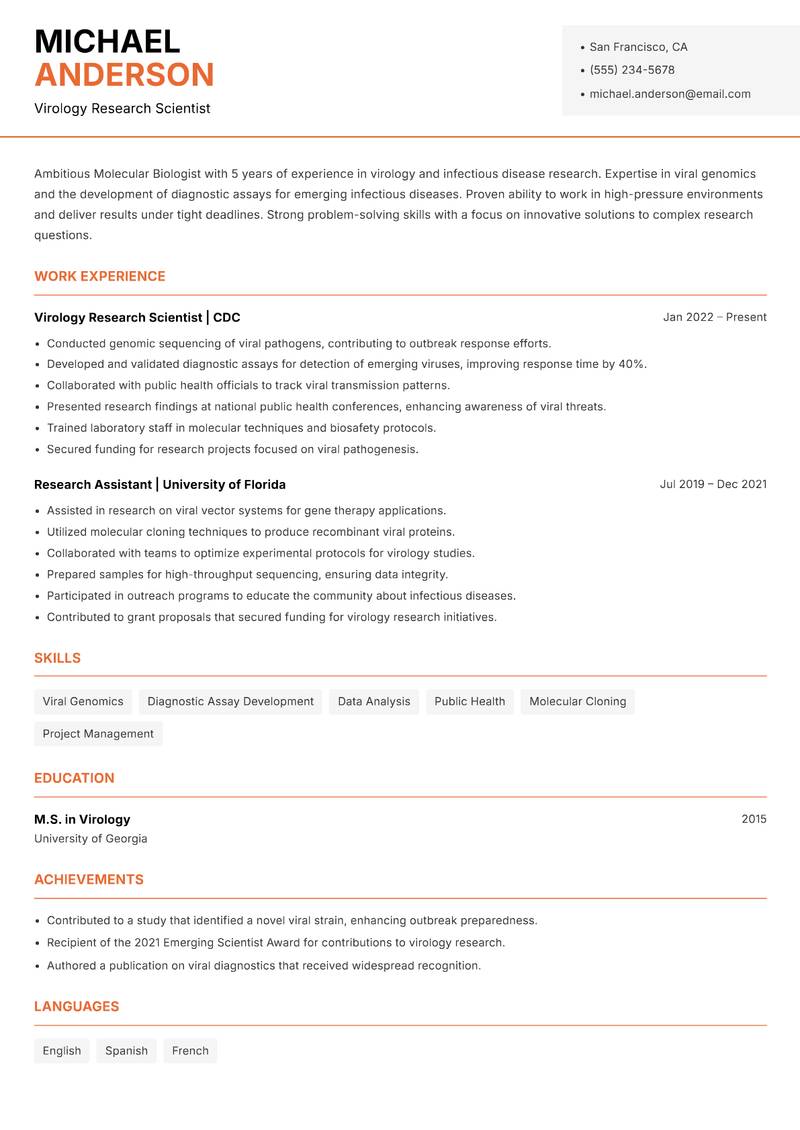
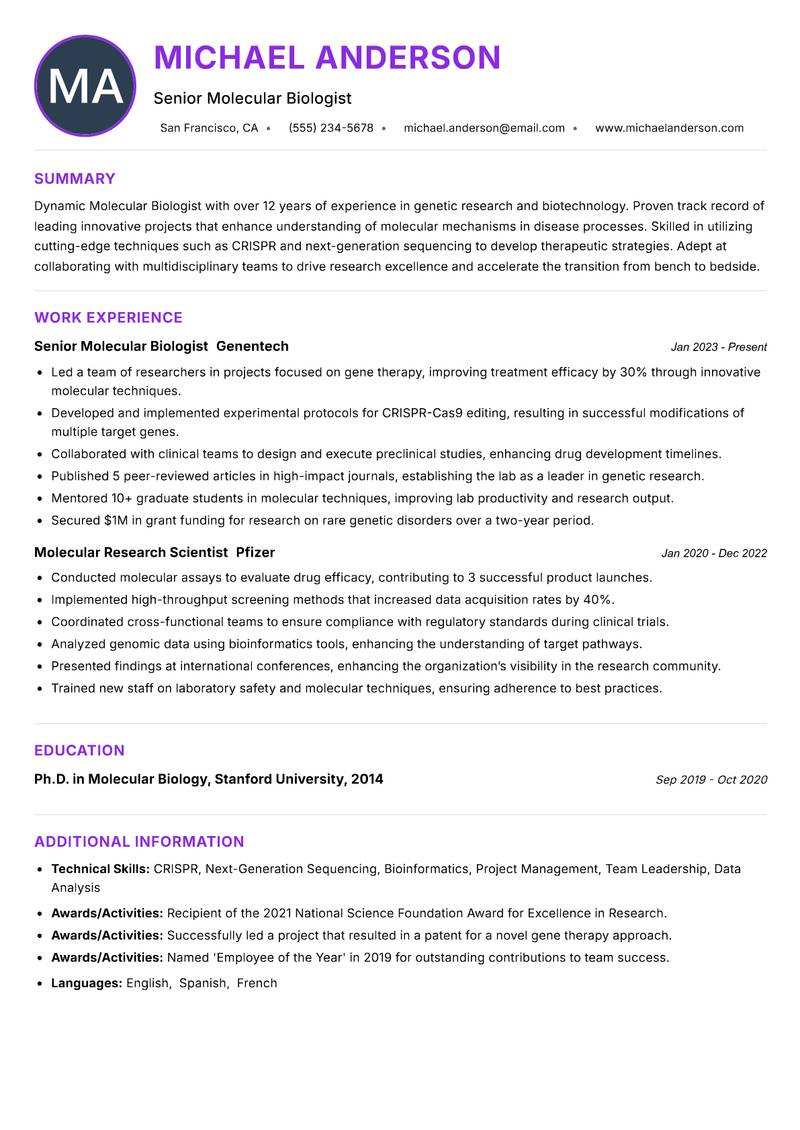
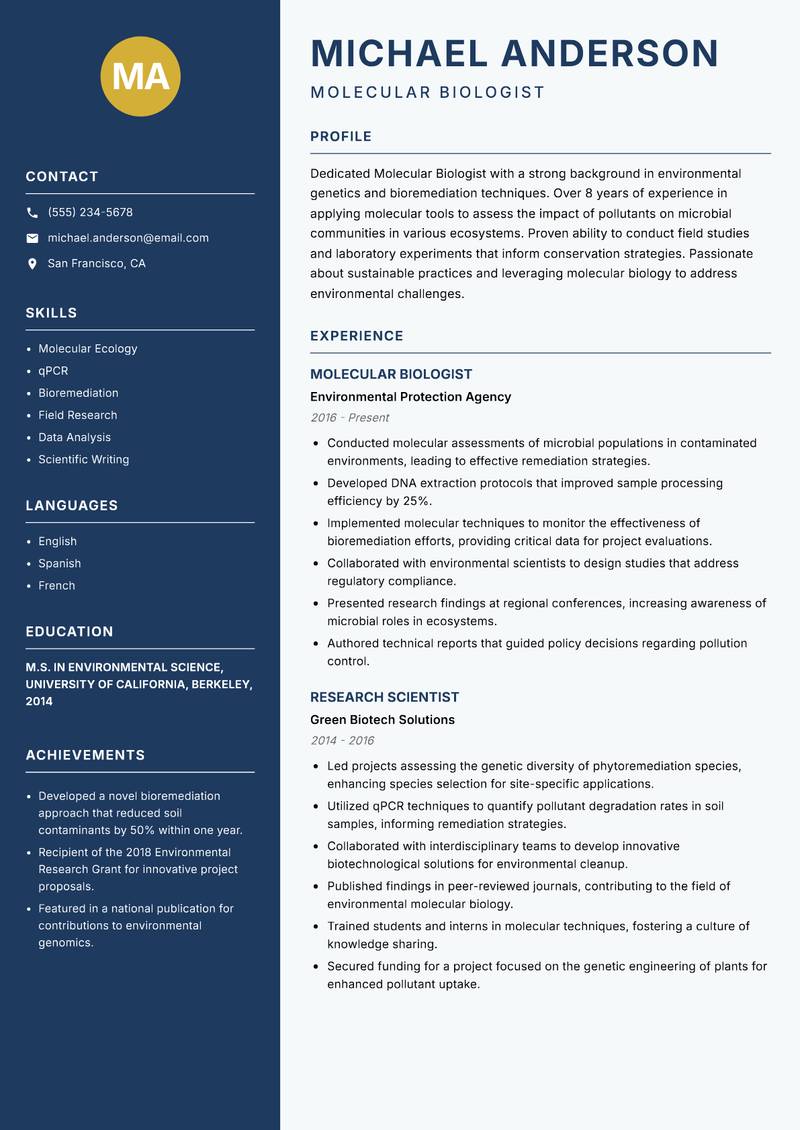
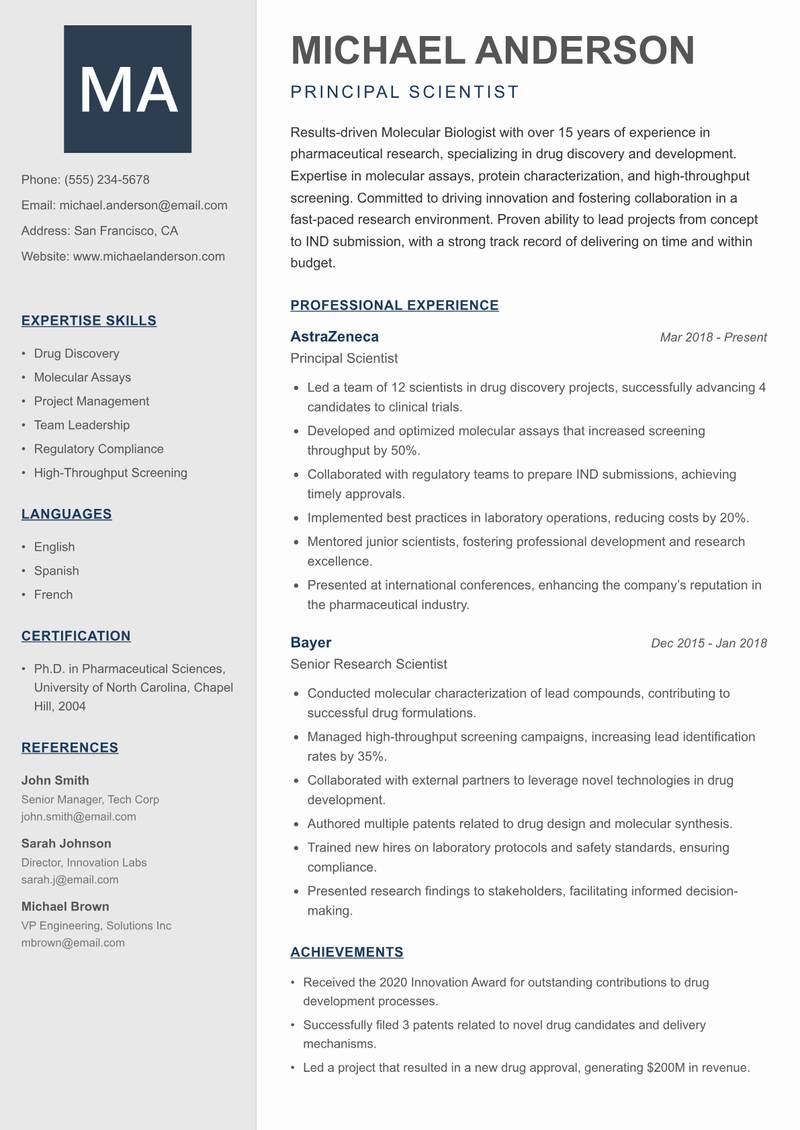
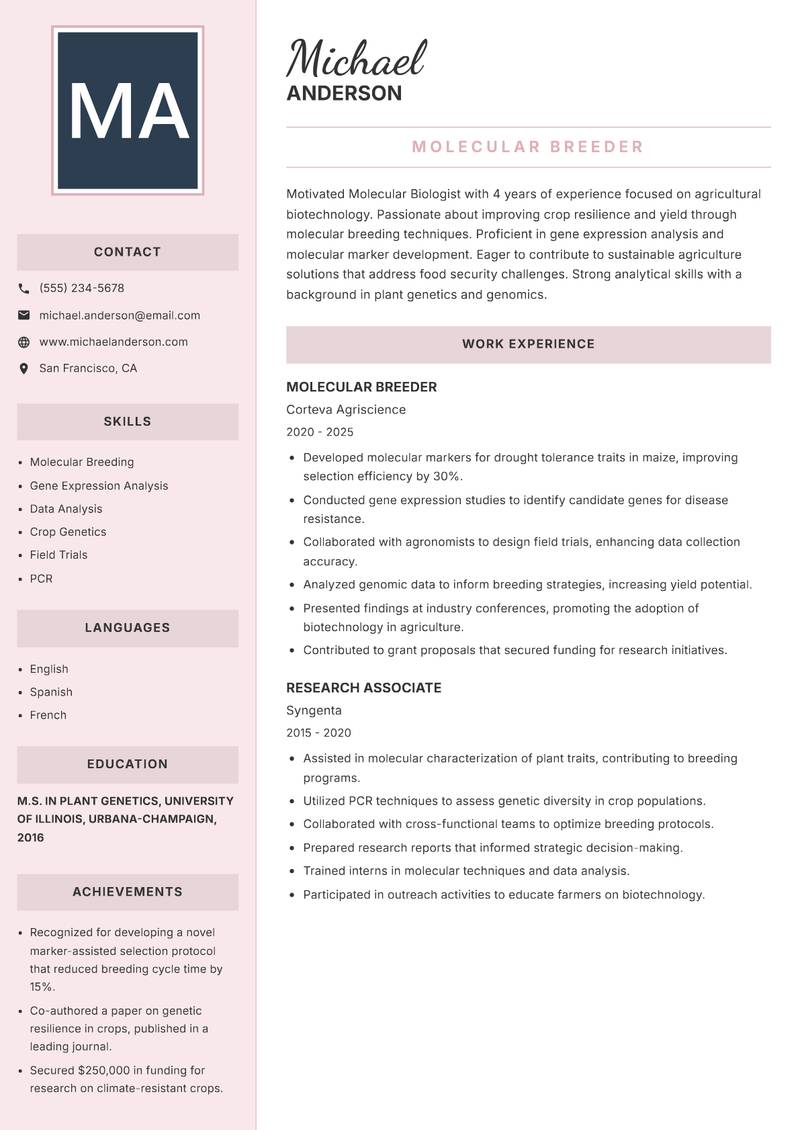
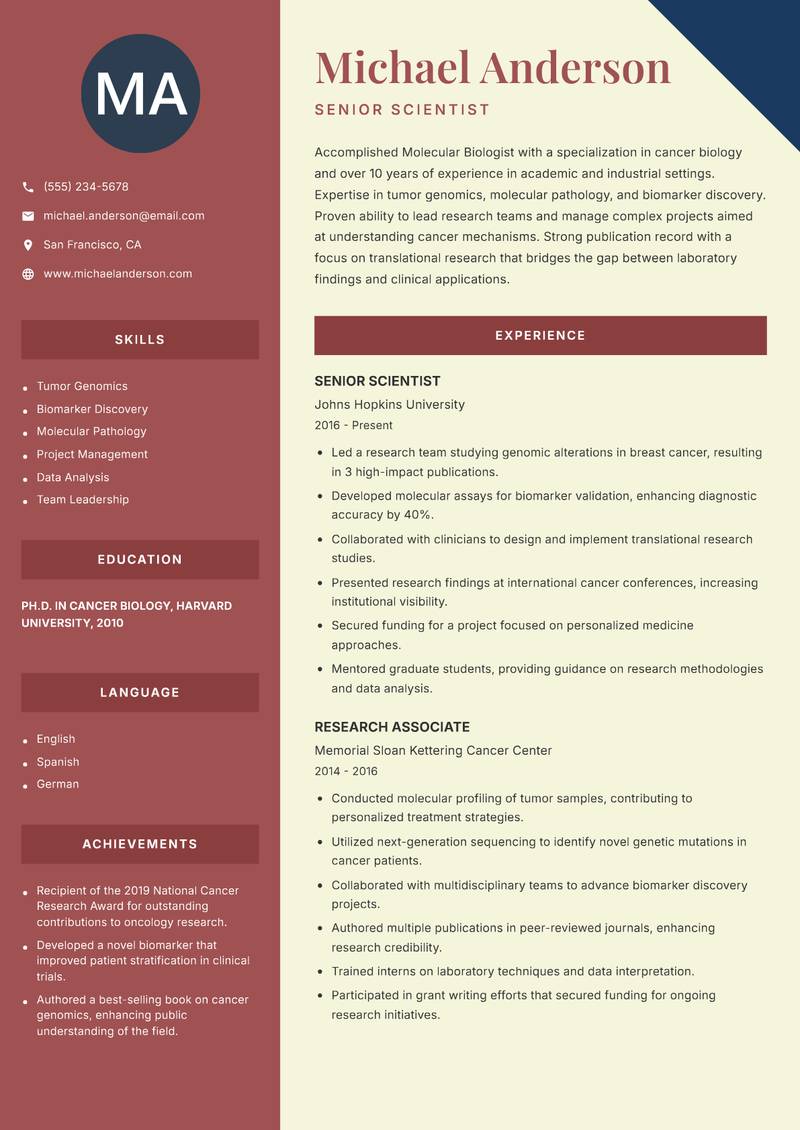
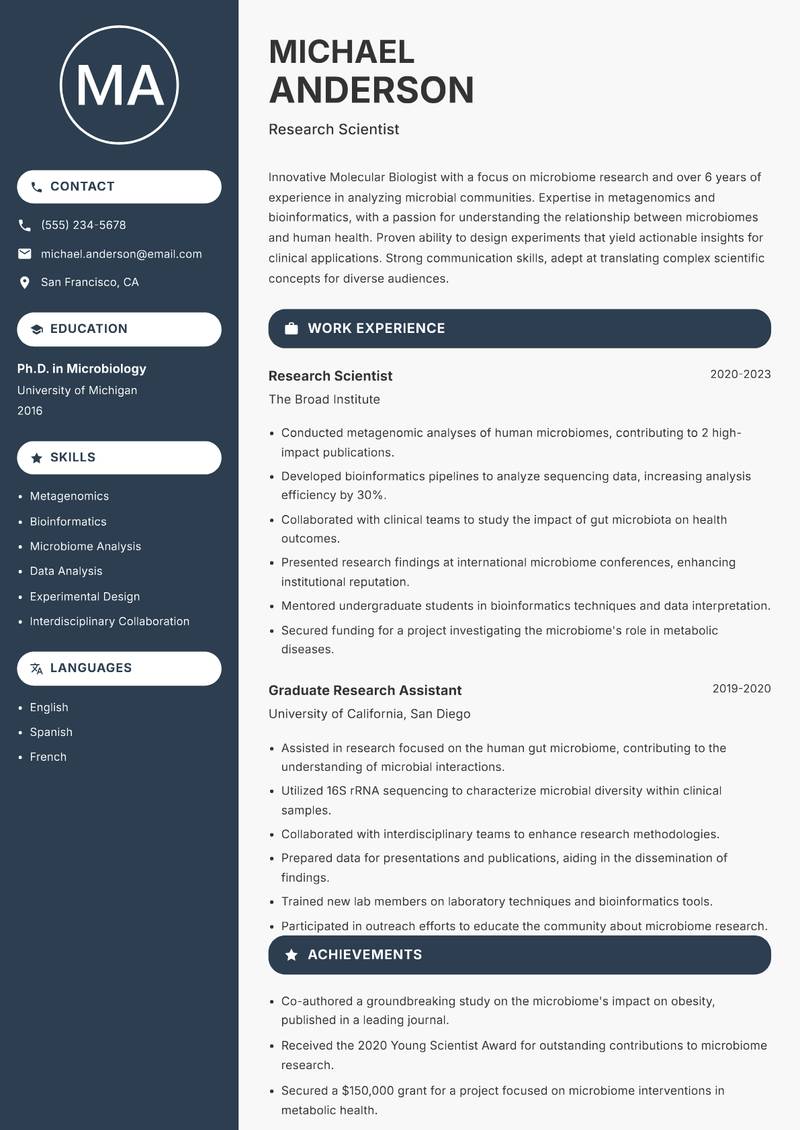
Browse Molecular Biologist resume examples built around genetic analysis, tailored for Life Sciences roles.
A strong Molecular Biologist resume leads with a focused professional summary that names the exact role and your standout achievement. In the experience section, open every bullet with a strong action verb and quantify the result with numbers wherever possible. Highlight your most relevant competencies — especially Genetic analysis, Biochemistry, and Molecular Biology Techniques (PCR, CRISPR, Western Blot) — in a dedicated Skills section positioned early so ATS systems and hiring managers both find it immediately.
For format, most Molecular Biologist roles suit a reverse-chronological layout: most recent position first, working backwards. Keep to one page for under five years of experience, or two pages for senior candidates with a rich project or leadership history. Use clean, ATS-safe fonts (10–12pt), standard section headings (Summary, Experience, Education, Skills), and avoid tables, text boxes, or multi-column layouts that applicant tracking systems cannot parse reliably.