Neuroscientist Resume

These Neuroscientist resume samples are designed to help you write a resume that gets noticed by hiring managers and passes applicant tracking systems (ATS) in Life Sciences. Each example shows real formatting, section structure, and language you can adapt to your own background. When writing your own Neuroscientist resume, focus on highlighting molecular biology techniques (PCR, CRISPR, western blot), cell culture & in vitro models and genomics & sequencing (NGS, sanger). Recruiters scan for these qualifications first, so they should appear early in your summary and experience sections. Use strong action verbs such as "discovered", "synthesized", "sequenced", "expressed" to describe your achievements, and quantify your impact wherever possible — percentages, dollar amounts, or time saved make your resume more convincing. A common mistake to avoid: writing a generic objective statement instead of a targeted neuroscientist professional summary. Tailor your resume to each Neuroscientist position you apply for rather than using one generic version.

Neuroscientist Resume Template
View PDF
0.0 (0 ratings)

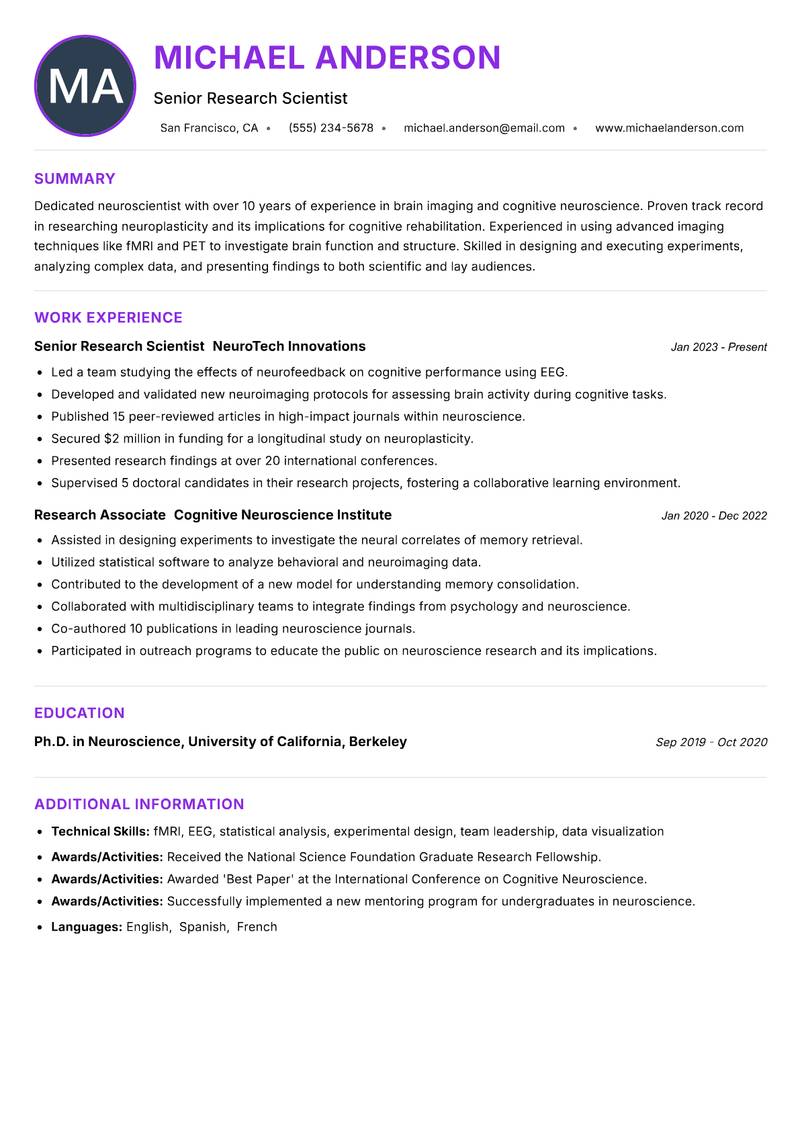
Senior Research Scientist Resume

Dedicated neuroscientist with over 10 years of experience in brain imaging and cognitive neuroscience. Proven track record in researching neuroplasticity and its implications for cognitive rehabilitation. Experienced in using advanced imaging techniques like fMRI and PET to investigate brain function and structure. Skilled in designing and executing experiments, analyzing complex data, and presenting findings to both scientific and lay audiences. Passionate about translating research into practical applications, particularly in mental health and rehabilitation. Committed to mentoring the next generation of scientists and fostering collaborative research environments. Looking to leverage my expertise in a cutting-edge research institution focused on neurodevelopmental disorders.

fMRI EEG statistical analysis experimental design team leadership data visualization
Neuroscientist Resume Preview Example
View PDF
  1. Led a team studying the effects of neurofeedback on cognitive performance using EEG.
  2. Developed and validated new neuroimaging protocols for assessing brain activity during cognitive tasks.
  3. Published 15 peer-reviewed articles in high-impact journals within neuroscience.
  4. Secured $2 million in funding for a longitudinal study on neuroplasticity.
  5. Presented research findings at over 20 international conferences.
  6. Supervised 5 doctoral candidates in their research projects, fostering a collaborative learning environment.
  1. Assisted in designing experiments to investigate the neural correlates of memory retrieval.
  2. Utilized statistical software to analyze behavioral and neuroimaging data.
  3. Contributed to the development of a new model for understanding memory consolidation.
  4. Collaborated with multidisciplinary teams to integrate findings from psychology and neuroscience.
  5. Co-authored 10 publications in leading neuroscience journals.
  6. Participated in outreach programs to educate the public on neuroscience research and its implications.

Achievements

  • Received the National Science Foundation Graduate Research Fellowship.
  • Awarded 'Best Paper' at the International Conference on Cognitive Neuroscience.
  • Successfully implemented a new mentoring program for undergraduates in neuroscience.
⏱️
Experience
2-5 Years
📅
Level
Mid Level
🎓
Education
Ph.D. in Neuroscience, Univers...

Clinical Research Scientist Resume

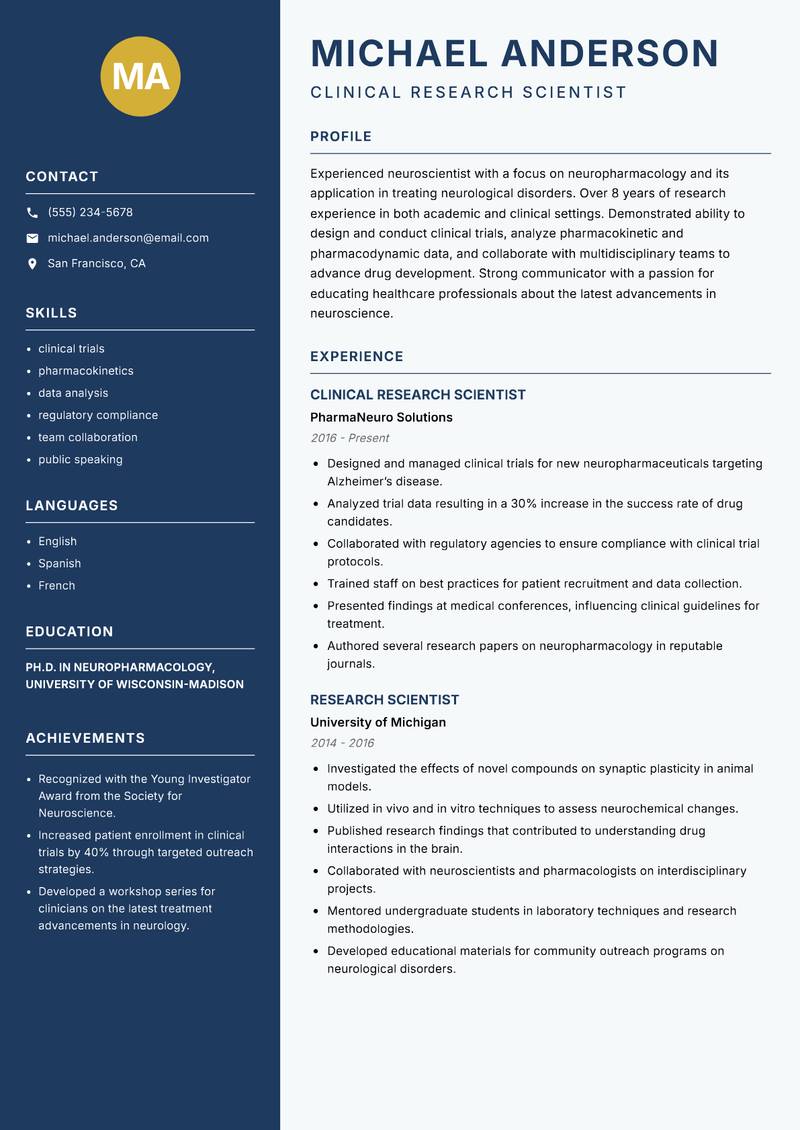
Experienced neuroscientist with a focus on neuropharmacology and its application in treating neurological disorders. Over 8 years of research experience in both academic and clinical settings. Demonstrated ability to design and conduct clinical trials, analyze pharmacokinetic and pharmacodynamic data, and collaborate with multidisciplinary teams to advance drug development. Strong communicator with a passion for educating healthcare professionals about the latest advancements in neuroscience. Actively engaged in public outreach to promote awareness of neurological conditions and the importance of research. Seeking a position in a pharmaceutical company where I can contribute to innovative treatment solutions for patients.

clinical trials pharmacokinetics data analysis regulatory compliance team collaboration public speaking
Neuroscientist Resume Preview Example
View PDF
  1. Designed and managed clinical trials for new neuropharmaceuticals targeting Alzheimer’s disease.
  2. Analyzed trial data resulting in a 30% increase in the success rate of drug candidates.
  3. Collaborated with regulatory agencies to ensure compliance with clinical trial protocols.
  4. Trained staff on best practices for patient recruitment and data collection.
  5. Presented findings at medical conferences, influencing clinical guidelines for treatment.
  6. Authored several research papers on neuropharmacology in reputable journals.
  1. Investigated the effects of novel compounds on synaptic plasticity in animal models.
  2. Utilized in vivo and in vitro techniques to assess neurochemical changes.
  3. Published research findings that contributed to understanding drug interactions in the brain.
  4. Collaborated with neuroscientists and pharmacologists on interdisciplinary projects.
  5. Mentored undergraduate students in laboratory techniques and research methodologies.
  6. Developed educational materials for community outreach programs on neurological disorders.

Achievements

  • Recognized with the Young Investigator Award from the Society for Neuroscience.
  • Increased patient enrollment in clinical trials by 40% through targeted outreach strategies.
  • Developed a workshop series for clinicians on the latest treatment advancements in neurology.
⏱️
Experience
2-5 Years
📅
Level
Mid Level
🎓
Education
Ph.D. in Neuropharmacology, Un...

Neuroinformatics Specialist Resume

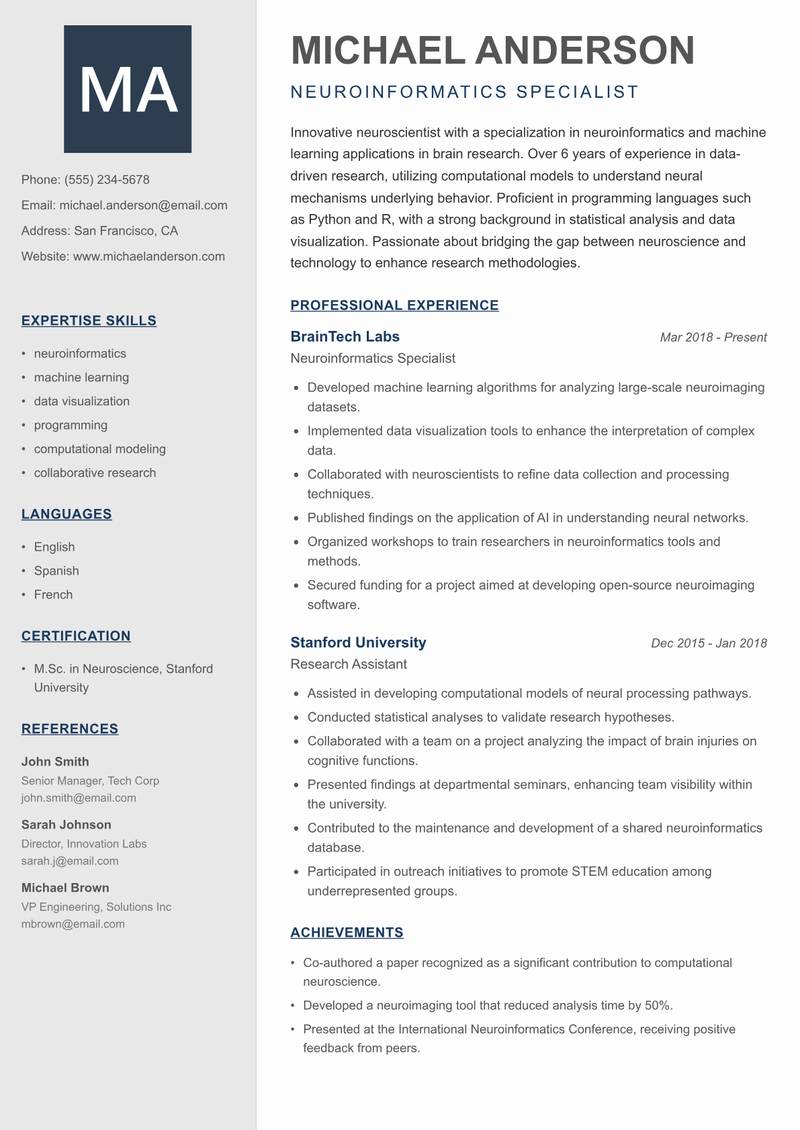
Innovative neuroscientist with a specialization in neuroinformatics and machine learning applications in brain research. Over 6 years of experience in data-driven research, utilizing computational models to understand neural mechanisms underlying behavior. Proficient in programming languages such as Python and R, with a strong background in statistical analysis and data visualization. Passionate about bridging the gap between neuroscience and technology to enhance research methodologies. Committed to advancing the field of computational neuroscience through collaborative efforts and interdisciplinary projects. Seeking a position where I can apply my technical skills to develop tools that facilitate neuroscience research.

neuroinformatics machine learning data visualization programming computational modeling collaborative research
Neuroscientist Resume Preview Example
View PDF
  1. Developed machine learning algorithms for analyzing large-scale neuroimaging datasets.
  2. Implemented data visualization tools to enhance the interpretation of complex data.
  3. Collaborated with neuroscientists to refine data collection and processing techniques.
  4. Published findings on the application of AI in understanding neural networks.
  5. Organized workshops to train researchers in neuroinformatics tools and methods.
  6. Secured funding for a project aimed at developing open-source neuroimaging software.
  1. Assisted in developing computational models of neural processing pathways.
  2. Conducted statistical analyses to validate research hypotheses.
  3. Collaborated with a team on a project analyzing the impact of brain injuries on cognitive functions.
  4. Presented findings at departmental seminars, enhancing team visibility within the university.
  5. Contributed to the maintenance and development of a shared neuroinformatics database.
  6. Participated in outreach initiatives to promote STEM education among underrepresented groups.

Achievements

  • Co-authored a paper recognized as a significant contribution to computational neuroscience.
  • Developed a neuroimaging tool that reduced analysis time by 50%.
  • Presented at the International Neuroinformatics Conference, receiving positive feedback from peers.
⏱️
Experience
2-5 Years
📅
Level
Mid Level
🎓
Education
M.Sc. in Neuroscience, Stanfor...

Research Scientist Resume

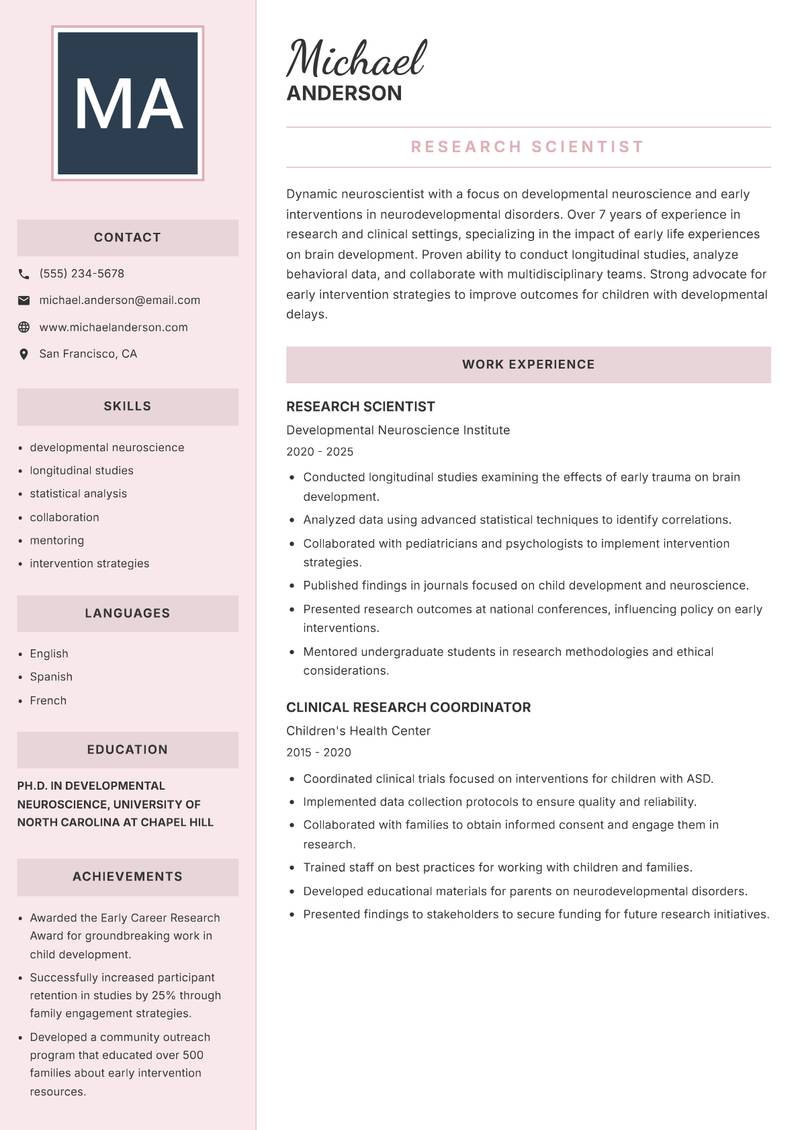
Dynamic neuroscientist with a focus on developmental neuroscience and early interventions in neurodevelopmental disorders. Over 7 years of experience in research and clinical settings, specializing in the impact of early life experiences on brain development. Proven ability to conduct longitudinal studies, analyze behavioral data, and collaborate with multidisciplinary teams. Strong advocate for early intervention strategies to improve outcomes for children with developmental delays. Seeking a role in a research institution or nonprofit organization dedicated to improving the lives of children through neuroscience-based interventions.

developmental neuroscience longitudinal studies statistical analysis collaboration mentoring intervention strategies
Neuroscientist Resume Preview Example
View PDF
  1. Conducted longitudinal studies examining the effects of early trauma on brain development.
  2. Analyzed data using advanced statistical techniques to identify correlations.
  3. Collaborated with pediatricians and psychologists to implement intervention strategies.
  4. Published findings in journals focused on child development and neuroscience.
  5. Presented research outcomes at national conferences, influencing policy on early interventions.
  6. Mentored undergraduate students in research methodologies and ethical considerations.
  1. Coordinated clinical trials focused on interventions for children with ASD.
  2. Implemented data collection protocols to ensure quality and reliability.
  3. Collaborated with families to obtain informed consent and engage them in research.
  4. Trained staff on best practices for working with children and families.
  5. Developed educational materials for parents on neurodevelopmental disorders.
  6. Presented findings to stakeholders to secure funding for future research initiatives.

Achievements

  • Awarded the Early Career Research Award for groundbreaking work in child development.
  • Successfully increased participant retention in studies by 25% through family engagement strategies.
  • Developed a community outreach program that educated over 500 families about early intervention resources.
⏱️
Experience
2-5 Years
📅
Level
Mid Level
🎓
Education
Ph.D. in Developmental Neurosc...

Neurobiologist Resume

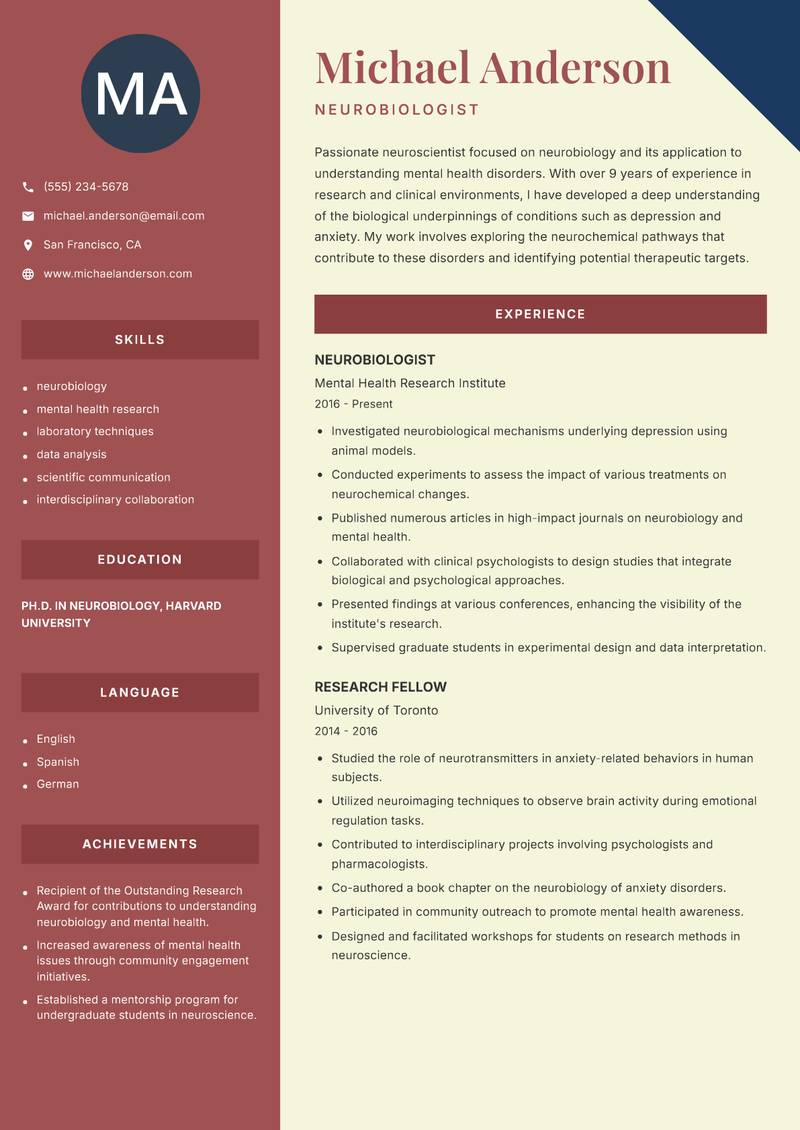
Dedicated neuroscientist focused on neurobiology and its application to understanding mental health disorders. With over 9 years of experience in research and clinical environments, I have developed a deep understanding of the biological underpinnings of conditions such as depression and anxiety. My work involves exploring the neurochemical pathways that contribute to these disorders and identifying potential therapeutic targets. Skilled in laboratory techniques, data analysis, and scientific communication, I strive to bridge the gap between research findings and clinical practices. Eager to contribute my expertise in a clinical research team dedicated to improving mental health treatments.

neurobiology mental health research laboratory techniques data analysis scientific communication interdisciplinary collaboration
Neuroscientist Resume Preview Example
View PDF
  1. Investigated neurobiological mechanisms underlying depression using animal models.
  2. Conducted experiments to assess the impact of various treatments on neurochemical changes.
  3. Published numerous articles in high-impact journals on neurobiology and mental health.
  4. Collaborated with clinical psychologists to design studies that integrate biological and psychological approaches.
  5. Presented findings at various conferences, enhancing the visibility of the institute's research.
  6. Supervised graduate students in experimental design and data interpretation.
  1. Studied the role of neurotransmitters in anxiety-related behaviors in human subjects.
  2. Utilized neuroimaging techniques to observe brain activity during emotional regulation tasks.
  3. Contributed to interdisciplinary projects involving psychologists and pharmacologists.
  4. Co-authored a book chapter on the neurobiology of anxiety disorders.
  5. Participated in community outreach to promote mental health awareness.
  6. Designed and facilitated workshops for students on research methods in neuroscience.

Achievements

  • Recipient of the Outstanding Research Award for contributions to understanding neurobiology and mental health.
  • Increased awareness of mental health issues through community engagement initiatives.
  • Established a mentorship program for undergraduate students in neuroscience.
⏱️
Experience
2-5 Years
📅
Level
Mid Level
🎓
Education
Ph.D. in Neurobiology, Harvard...

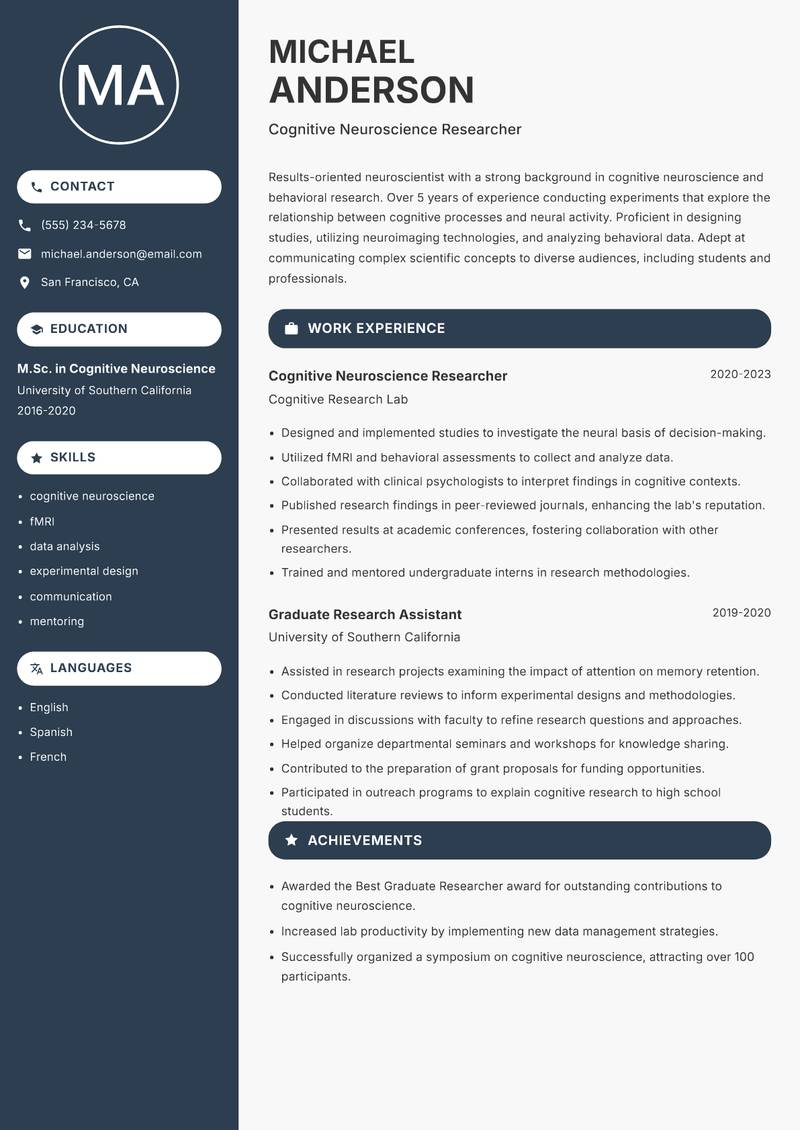
Cognitive Neuroscience Researcher Resume

Accomplished neuroscientist with a strong background in cognitive neuroscience and behavioral research. Over 5 years of experience conducting experiments that explore the relationship between cognitive processes and neural activity. Proficient in designing studies, utilizing neuroimaging technologies, and analyzing behavioral data. Adept at communicating complex scientific concepts to diverse audiences, including students and professionals. Committed to fostering an inclusive research environment and collaborating with interdisciplinary teams to enhance research outcomes. Seeking a position in a research lab or academic institution where I can contribute to impactful cognitive neuroscience studies.

cognitive neuroscience fMRI data analysis experimental design communication mentoring
Neuroscientist Resume Preview Example
View PDF
  1. Designed and implemented studies to investigate the neural basis of decision-making.
  2. Utilized fMRI and behavioral assessments to collect and analyze data.
  3. Collaborated with clinical psychologists to interpret findings in cognitive contexts.
  4. Published research findings in peer-reviewed journals, enhancing the lab's reputation.
  5. Presented results at academic conferences, fostering collaboration with other researchers.
  6. Trained and mentored undergraduate interns in research methodologies.
  1. Assisted in research projects examining the impact of attention on memory retention.
  2. Conducted literature reviews to inform experimental designs and methodologies.
  3. Engaged in discussions with faculty to refine research questions and approaches.
  4. Helped organize departmental seminars and workshops for knowledge sharing.
  5. Contributed to the preparation of grant proposals for funding opportunities.
  6. Participated in outreach programs to explain cognitive research to high school students.

Achievements

  • Awarded the Best Graduate Researcher award for outstanding contributions to cognitive neuroscience.
  • Increased lab productivity by implementing new data management strategies.
  • Successfully organized a symposium on cognitive neuroscience, attracting over 100 participants.
⏱️
Experience
2-5 Years
📅
Level
Mid Level
🎓
Education
M.Sc. in Cognitive Neuroscienc...

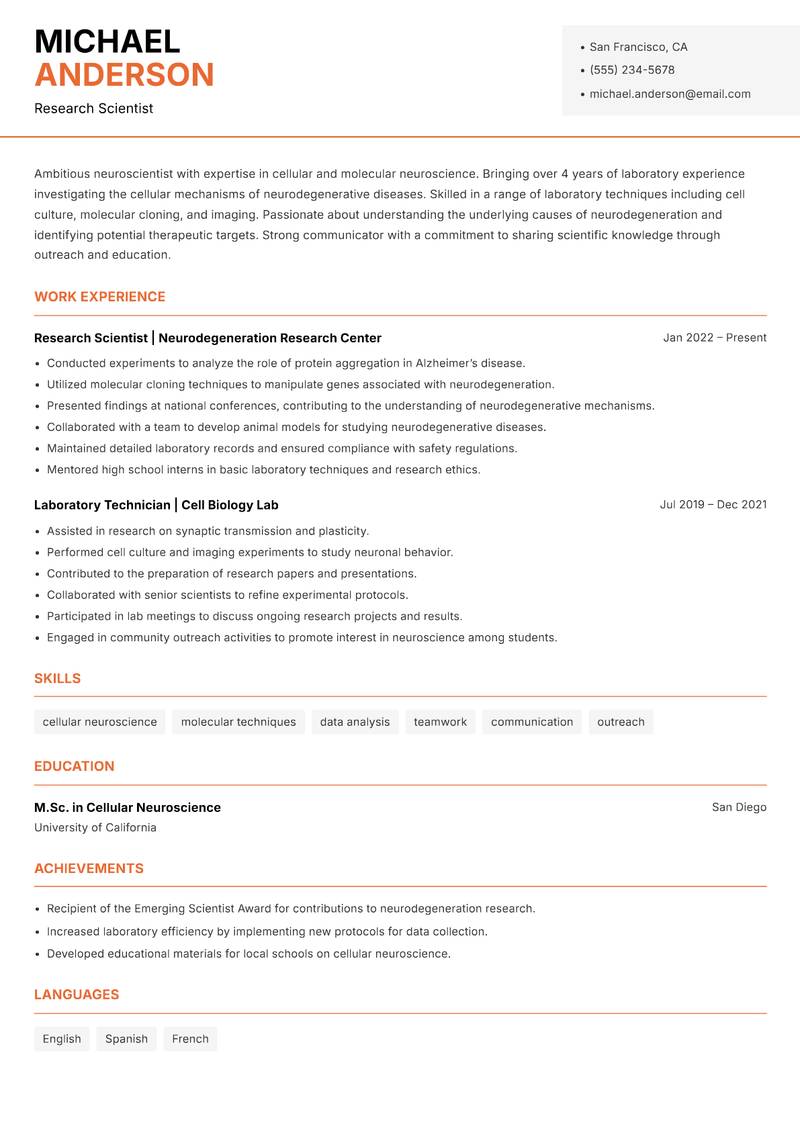
Research Scientist Resume

Driven neuroscientist with expertise in cellular and molecular neuroscience. Bringing over 4 years of laboratory experience investigating the cellular mechanisms of neurodegenerative diseases. Skilled in a range of laboratory techniques including cell culture, molecular cloning, and imaging. Passionate about understanding the underlying causes of neurodegeneration and identifying potential therapeutic targets. Strong communicator with a commitment to sharing scientific knowledge through outreach and education. Eager to join a research team focused on innovative solutions to neurodegenerative disorders.

cellular neuroscience molecular techniques data analysis teamwork communication outreach
Neuroscientist Resume Preview Example
View PDF
  1. Conducted experiments to analyze the role of protein aggregation in Alzheimer’s disease.
  2. Utilized molecular cloning techniques to manipulate genes associated with neurodegeneration.
  3. Presented findings at national conferences, contributing to the understanding of neurodegenerative mechanisms.
  4. Collaborated with a team to develop animal models for studying neurodegenerative diseases.
  5. Maintained detailed laboratory records and ensured compliance with safety regulations.
  6. Mentored high school interns in basic laboratory techniques and research ethics.
  1. Assisted in research on synaptic transmission and plasticity.
  2. Performed cell culture and imaging experiments to study neuronal behavior.
  3. Contributed to the preparation of research papers and presentations.
  4. Collaborated with senior scientists to refine experimental protocols.
  5. Participated in lab meetings to discuss ongoing research projects and results.
  6. Engaged in community outreach activities to promote interest in neuroscience among students.

Achievements

  • Recipient of the Emerging Scientist Award for contributions to neurodegeneration research.
  • Increased laboratory efficiency by implementing new protocols for data collection.
  • Developed educational materials for local schools on cellular neuroscience.
⏱️
Experience
2-5 Years
📅
Level
Mid Level
🎓
Education
M.Sc. in Cellular Neuroscience...

Key Skills for Neuroscientist Positions

Resume Tips for Neuroscientist Applications

Strong Action Verbs for Neuroscientist Resumes

Discovered · Synthesized · Sequenced · Expressed · Analyzed · Published · Optimized · Developed · Patented · Validated · Achieved · Administered · Architected · Assessed

Common Mistakes to Avoid

Experience Levels

How to Write a Neuroscientist Resume

Browse Neuroscientist resume examples built around molecular biology techniques (PCR, CRISPR, western blot), tailored for Life Sciences roles.

A strong Neuroscientist resume leads with a focused professional summary that names the exact role and your standout achievement. In the experience section, open every bullet with a strong action verb and quantify the result with numbers wherever possible. Highlight your most relevant competencies — especially Molecular Biology Techniques (PCR, CRISPR, Western Blot), Cell Culture & In Vitro Models, and Genomics & Sequencing (NGS, Sanger) — in a dedicated Skills section positioned early so ATS systems and hiring managers both find it immediately.

For format, most Neuroscientist roles suit a reverse-chronological layout: most recent position first, working backwards. Keep to one page for under five years of experience, or two pages for senior candidates with a rich project or leadership history. Use clean, ATS-safe fonts (10–12pt), standard section headings (Summary, Experience, Education, Skills), and avoid tables, text boxes, or multi-column layouts that applicant tracking systems cannot parse reliably.
Frequently Asked Questions

What makes a strong Neuroscientist resume stand out to employers?

A standout Neuroscientist resume combines role-specific skills with quantified achievements. Name the exact job title in your professional summary, mirror keywords from each job posting, and open every bullet point with a strong action verb followed by a measurable result. Certifications, tools, and domain experience specific to neuroscientist roles should appear prominently near the top.

What skills are most important to include on a Life Sciences resume?

Recruiters hiring in Life Sciences consistently look for Molecular Biology Techniques (PCR, CRISPR, Western Blot), Cell Culture & In Vitro Models, Genomics & Sequencing (NGS, Sanger), Bioinformatics & Computational Biology. List these in a dedicated Skills section near the top so both ATS systems and human reviewers spot them fast. Mirror the exact phrasing from each job posting wherever possible — many applicant tracking systems match literal strings rather than synonyms.

What is the best resume format for Life Sciences professionals?

A reverse-chronological format is the standard choice for most Life Sciences candidates — employers expect to see your most recent role first, working backwards. If you are transitioning into Life Sciences from a related field, a hybrid format (brief skills summary at the top followed by chronological experience) can bridge the gap effectively. Keep the document to one page for under five years of experience, or two pages for senior specialists.

How do I make my Life Sciences resume pass applicant tracking systems (ATS)?

Use standard section headings — Summary, Experience, Education, Skills — rather than creative labels that ATS parsers do not recognise. Embed domain keywords such as "Molecular Biology Techniques (PCR, CRISPR, Western Blot)" and "Cell Culture & In Vitro Models" naturally inside your experience bullets rather than cramming them into a standalone keyword list. Avoid tables, multi-column layouts, text boxes, headers, footers, and images — these confuse most modern parsers and can cause your resume to be misread or rejected before a human sees it.

What mistakes do Life Sciences professionals most commonly make on their resume?

The most frequent issue is being vague about techniques — 'molecular biology skills' is meaningless without specifics. Beyond that, generic objective statements, unquantified achievements, and inconsistent date formatting appear across almost every Life Sciences application. Fix these by replacing every vague claim with a measurable outcome — specific numbers and named projects add credibility that adjectives cannot.

How long should a Life Sciences resume be?

One page is appropriate for candidates with under five years of relevant Life Sciences experience. Two pages are acceptable — and sometimes expected — for senior specialists, managers, or professionals with a strong portfolio of projects, publications, or credentials. Avoid padding to reach a page count: every line should directly support your application for the specific role you are targeting.

Should I include a professional summary at the top of my Life Sciences resume?

Yes — a two to three sentence summary is the first section most recruiters read. Open with your title and years of Life Sciences experience, then name your most relevant achievement or specialisation. One proven approach: List specific molecular biology techniques — CRISPR, qPCR, single-cell sequencing — rather than generic 'molecular biology skills' — this level of specificity signals genuine expertise before a recruiter reaches your experience section.

Scroll to view samples