Plant Biologist Resume

These Plant Biologist resume samples are designed to help you write a resume that gets noticed by hiring managers and passes applicant tracking systems (ATS) in Life Sciences. Each example shows real formatting, section structure, and language you can adapt to your own background. When writing your own Plant Biologist resume, focus on highlighting molecular biology techniques (PCR, CRISPR, western blot), cell culture & in vitro models and genomics & sequencing (NGS, sanger). Recruiters scan for these qualifications first, so they should appear early in your summary and experience sections. Use strong action verbs such as "discovered", "synthesized", "sequenced", "expressed" to describe your achievements, and quantify your impact wherever possible — percentages, dollar amounts, or time saved make your resume more convincing. A common mistake to avoid: writing a generic objective statement instead of a targeted plant biologist professional summary. Tailor your resume to each Plant Biologist position you apply for rather than using one generic version.

Plant Biologist Resume Template
View PDF
0.0 (0 ratings)

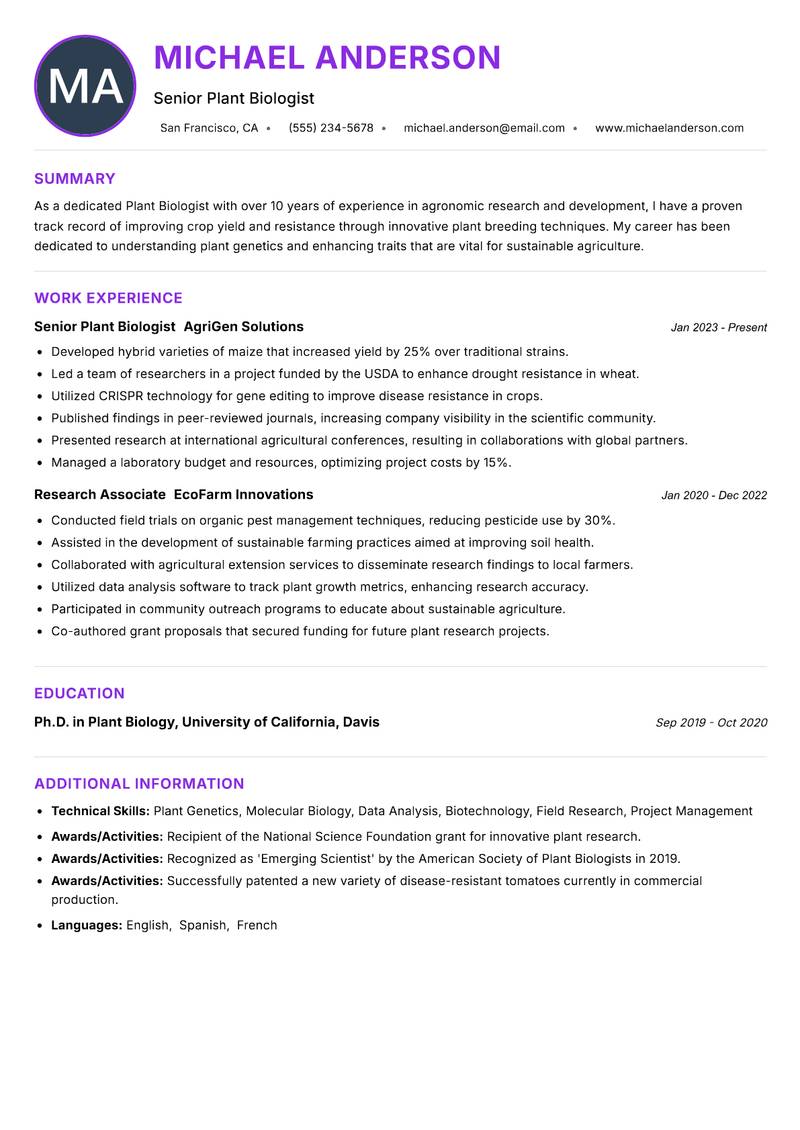
Senior Plant Biologist Resume

As a dedicated Plant Biologist with over 10 years of experience in agronomic research and development, I have a proven track record of improving crop yield and resistance through innovative plant breeding techniques. My career has been dedicated to understanding plant genetics and enhancing traits that are vital for sustainable agriculture. I have worked closely with interdisciplinary teams to implement cutting-edge biotechnology solutions that address climate change and food security. My expertise in molecular biology and hands-on experience in laboratory and field settings enable me to contribute effectively to projects aimed at optimizing crop performance. I possess strong analytical skills and an ability to interpret complex data, which has led to successful publications in reputable journals and presentations at international conferences. My passion for plant science drives me to stay updated with the latest research trends and technologies, ensuring that I can apply the best practices in my work. I am eager to leverage my knowledge and experience to make significant contributions to agricultural advancements and environmental sustainability.

Plant Genetics Molecular Biology Data Analysis Biotechnology Field Research Project Management
Plant Biologist Resume Preview Example
View PDF
  1. Developed hybrid varieties of maize that increased yield by 25% over traditional strains.
  2. Led a team of researchers in a project funded by the USDA to enhance drought resistance in wheat.
  3. Utilized CRISPR technology for gene editing to improve disease resistance in crops.
  4. Published findings in peer-reviewed journals, increasing company visibility in the scientific community.
  5. Presented research at international agricultural conferences, resulting in collaborations with global partners.
  6. Managed a laboratory budget and resources, optimizing project costs by 15%.
  1. Conducted field trials on organic pest management techniques, reducing pesticide use by 30%.
  2. Assisted in the development of sustainable farming practices aimed at improving soil health.
  3. Collaborated with agricultural extension services to disseminate research findings to local farmers.
  4. Utilized data analysis software to track plant growth metrics, enhancing research accuracy.
  5. Participated in community outreach programs to educate about sustainable agriculture.
  6. Co-authored grant proposals that secured funding for future plant research projects.

Achievements

  • Recipient of the National Science Foundation grant for innovative plant research.
  • Recognized as 'Emerging Scientist' by the American Society of Plant Biologists in 2019.
  • Successfully patented a new variety of disease-resistant tomatoes currently in commercial production.
⏱️
Experience
2-5 Years
📅
Level
Mid Level
🎓
Education
Ph.D. in Plant Biology, Univer...

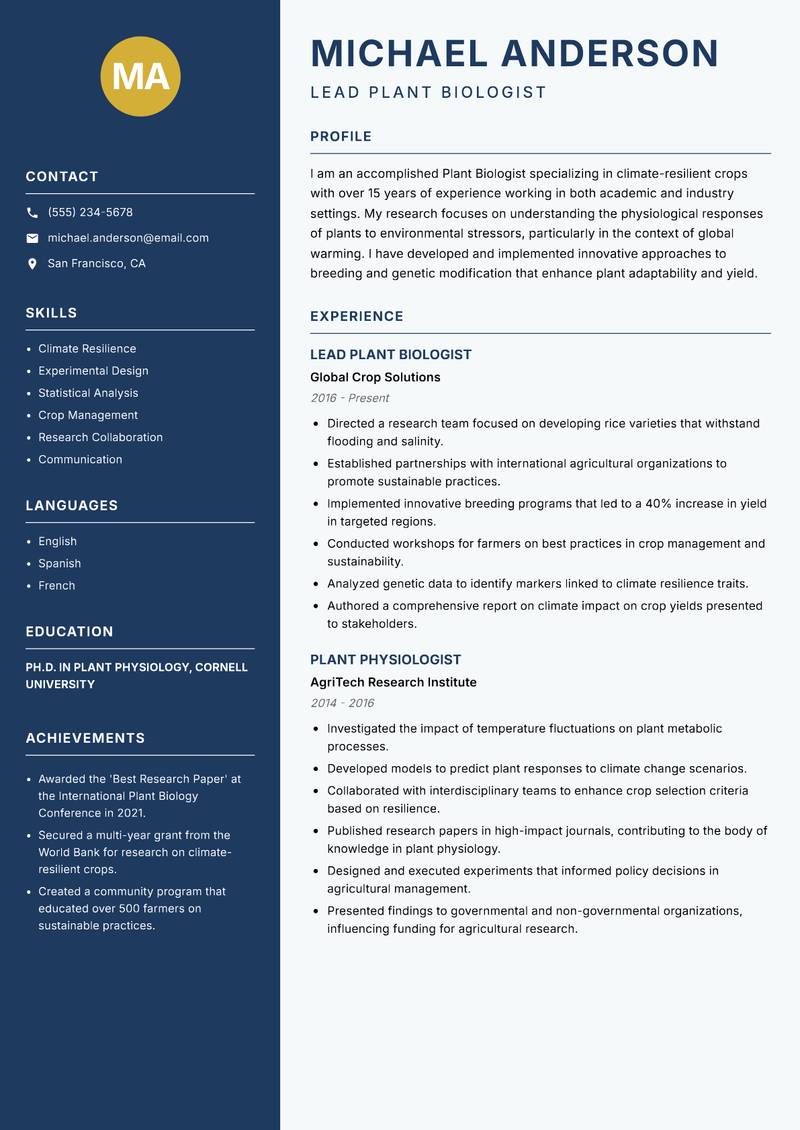
Lead Plant Biologist Resume

I am an accomplished Plant Biologist specializing in climate-resilient crops with over 15 years of experience working in both academic and industry settings. My research focuses on understanding the physiological responses of plants to environmental stressors, particularly in the context of global warming. I have developed and implemented innovative approaches to breeding and genetic modification that enhance plant adaptability and yield. My work has resulted in significant contributions to the advancement of agricultural practices aimed at food security. I have a strong foundation in experimental design and statistical analysis, which allows me to derive actionable insights from complex data sets. I am passionate about collaborating with scientists and agricultural stakeholders to translate research findings into practical applications. My ability to communicate complex scientific concepts to diverse audiences has been key in promoting understanding and support for my work. I am committed to furthering the field of plant biology and driving sustainable agricultural solutions.

Climate Resilience Experimental Design Statistical Analysis Crop Management Research Collaboration Communication
Plant Biologist Resume Preview Example
View PDF
  1. Directed a research team focused on developing rice varieties that withstand flooding and salinity.
  2. Established partnerships with international agricultural organizations to promote sustainable practices.
  3. Implemented innovative breeding programs that led to a 40% increase in yield in targeted regions.
  4. Conducted workshops for farmers on best practices in crop management and sustainability.
  5. Analyzed genetic data to identify markers linked to climate resilience traits.
  6. Authored a comprehensive report on climate impact on crop yields presented to stakeholders.
  1. Investigated the impact of temperature fluctuations on plant metabolic processes.
  2. Developed models to predict plant responses to climate change scenarios.
  3. Collaborated with interdisciplinary teams to enhance crop selection criteria based on resilience.
  4. Published research papers in high-impact journals, contributing to the body of knowledge in plant physiology.
  5. Designed and executed experiments that informed policy decisions in agricultural management.
  6. Presented findings to governmental and non-governmental organizations, influencing funding for agricultural research.

Achievements

  • Awarded the 'Best Research Paper' at the International Plant Biology Conference in 2021.
  • Secured a multi-year grant from the World Bank for research on climate-resilient crops.
  • Created a community program that educated over 500 farmers on sustainable practices.
⏱️
Experience
2-5 Years
📅
Level
Mid Level
🎓
Education
Ph.D. in Plant Physiology, Cor...

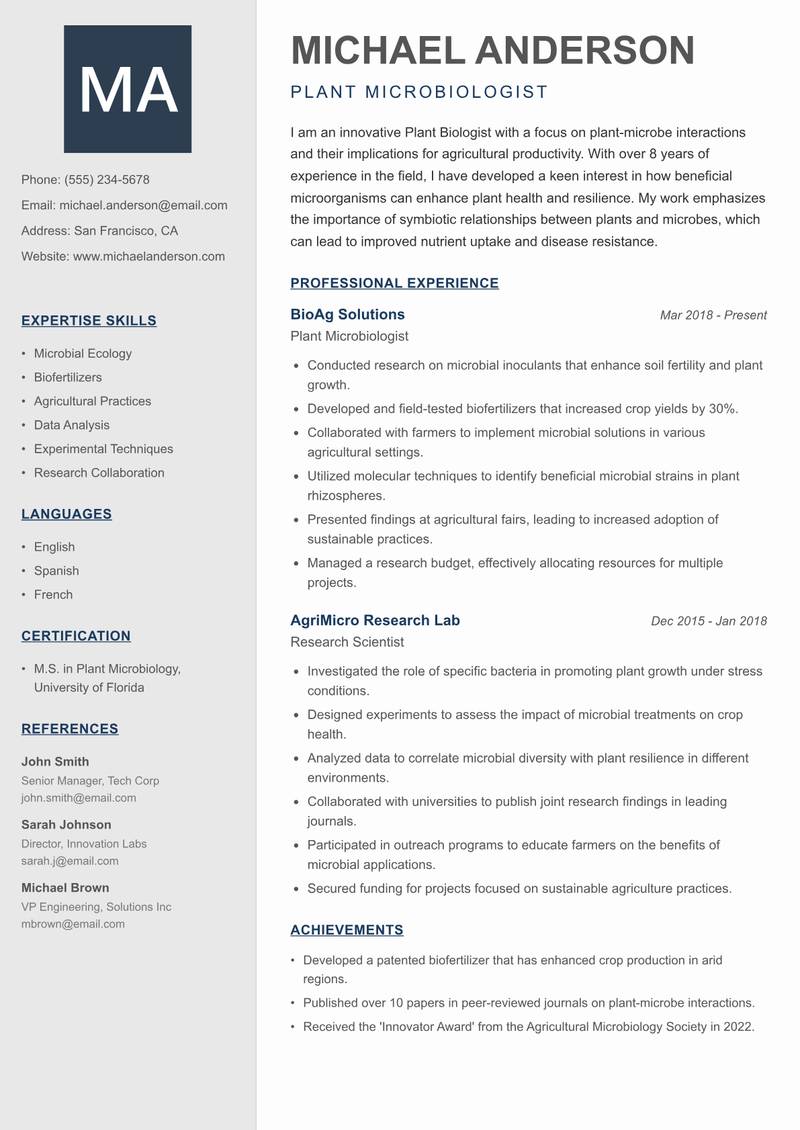
Plant Microbiologist Resume

I am an innovative Plant Biologist with a focus on plant-microbe interactions and their implications for agricultural productivity. With over 8 years of experience in the field, I have developed a keen interest in how beneficial microorganisms can enhance plant health and resilience. My work emphasizes the importance of symbiotic relationships between plants and microbes, which can lead to improved nutrient uptake and disease resistance. Through my research, I have contributed to the development of biofertilizers that have been adopted by local farmers to boost crop yields sustainably. I thrive in collaborative environments and enjoy working alongside ecologists, agronomists, and microbiologists to tackle complex agricultural challenges. My analytical skills and attention to detail allow me to conduct rigorous experiments that yield reliable data. I am passionate about translating scientific discoveries into practical farming solutions that can lead to sustainable agricultural practices.

Microbial Ecology Biofertilizers Agricultural Practices Data Analysis Experimental Techniques Research Collaboration
Plant Biologist Resume Preview Example
View PDF
  1. Conducted research on microbial inoculants that enhance soil fertility and plant growth.
  2. Developed and field-tested biofertilizers that increased crop yields by 30%.
  3. Collaborated with farmers to implement microbial solutions in various agricultural settings.
  4. Utilized molecular techniques to identify beneficial microbial strains in plant rhizospheres.
  5. Presented findings at agricultural fairs, leading to increased adoption of sustainable practices.
  6. Managed a research budget, effectively allocating resources for multiple projects.
  1. Investigated the role of specific bacteria in promoting plant growth under stress conditions.
  2. Designed experiments to assess the impact of microbial treatments on crop health.
  3. Analyzed data to correlate microbial diversity with plant resilience in different environments.
  4. Collaborated with universities to publish joint research findings in leading journals.
  5. Participated in outreach programs to educate farmers on the benefits of microbial applications.
  6. Secured funding for projects focused on sustainable agriculture practices.

Achievements

  • Developed a patented biofertilizer that has enhanced crop production in arid regions.
  • Published over 10 papers in peer-reviewed journals on plant-microbe interactions.
  • Received the 'Innovator Award' from the Agricultural Microbiology Society in 2022.
⏱️
Experience
2-5 Years
📅
Level
Mid Level
🎓
Education
M.S. in Plant Microbiology, Un...

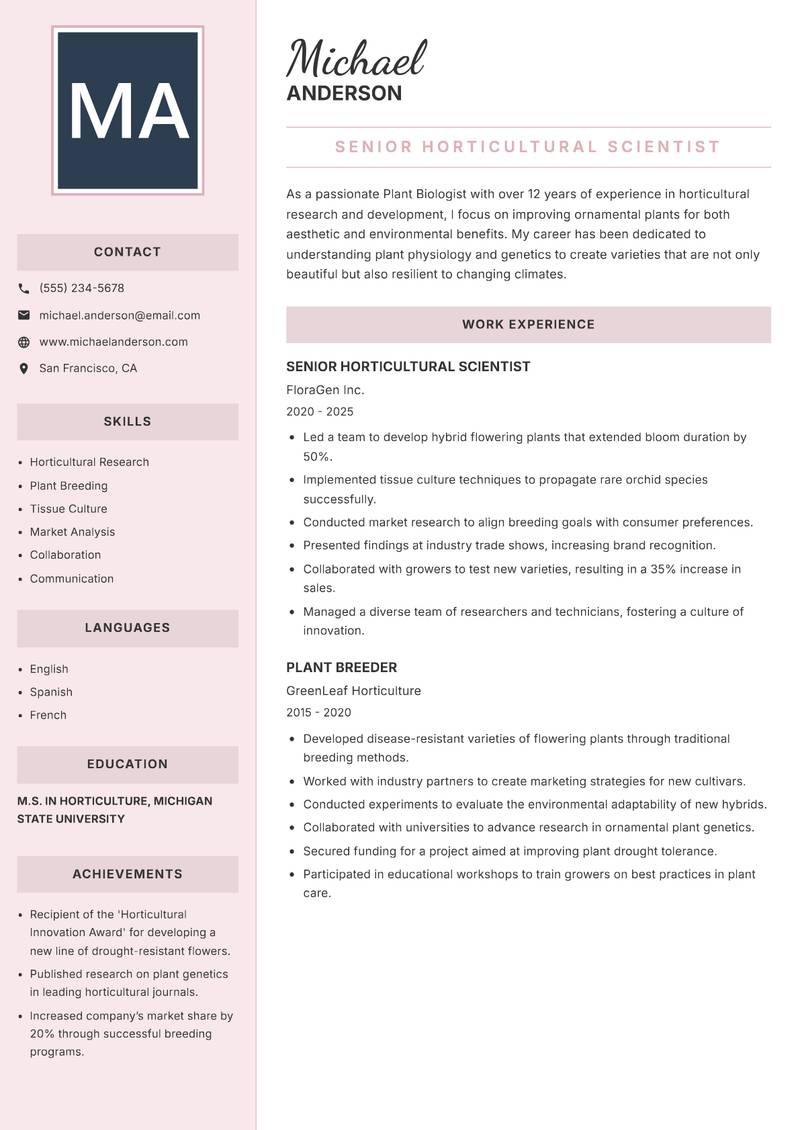
Senior Horticultural Scientist Resume

As a passionate Plant Biologist with over 12 years of experience in horticultural research and development, I focus on improving ornamental plants for both aesthetic and environmental benefits. My career has been dedicated to understanding plant physiology and genetics to create varieties that are not only beautiful but also resilient to changing climates. I have worked extensively on breeding programs that enhance flower longevity and resistance to diseases, thereby increasing market viability for growers. My strong background in biotechnology and plant tissue culture has allowed me to contribute to the development of new cultivars that meet consumer demands. I thrive in collaborative environments and have successfully led projects that integrate scientific research with practical application in the horticultural industry. My communication skills enable me to effectively share my findings with stakeholders, including growers and industry partners, ensuring that my research has a positive impact on the market.

Horticultural Research Plant Breeding Tissue Culture Market Analysis Collaboration Communication
Plant Biologist Resume Preview Example
View PDF
  1. Led a team to develop hybrid flowering plants that extended bloom duration by 50%.
  2. Implemented tissue culture techniques to propagate rare orchid species successfully.
  3. Conducted market research to align breeding goals with consumer preferences.
  4. Presented findings at industry trade shows, increasing brand recognition.
  5. Collaborated with growers to test new varieties, resulting in a 35% increase in sales.
  6. Managed a diverse team of researchers and technicians, fostering a culture of innovation.
  1. Developed disease-resistant varieties of flowering plants through traditional breeding methods.
  2. Worked with industry partners to create marketing strategies for new cultivars.
  3. Conducted experiments to evaluate the environmental adaptability of new hybrids.
  4. Collaborated with universities to advance research in ornamental plant genetics.
  5. Secured funding for a project aimed at improving plant drought tolerance.
  6. Participated in educational workshops to train growers on best practices in plant care.

Achievements

  • Recipient of the 'Horticultural Innovation Award' for developing a new line of drought-resistant flowers.
  • Published research on plant genetics in leading horticultural journals.
  • Increased company’s market share by 20% through successful breeding programs.
⏱️
Experience
2-5 Years
📅
Level
Mid Level
🎓
Education
M.S. in Horticulture, Michigan...

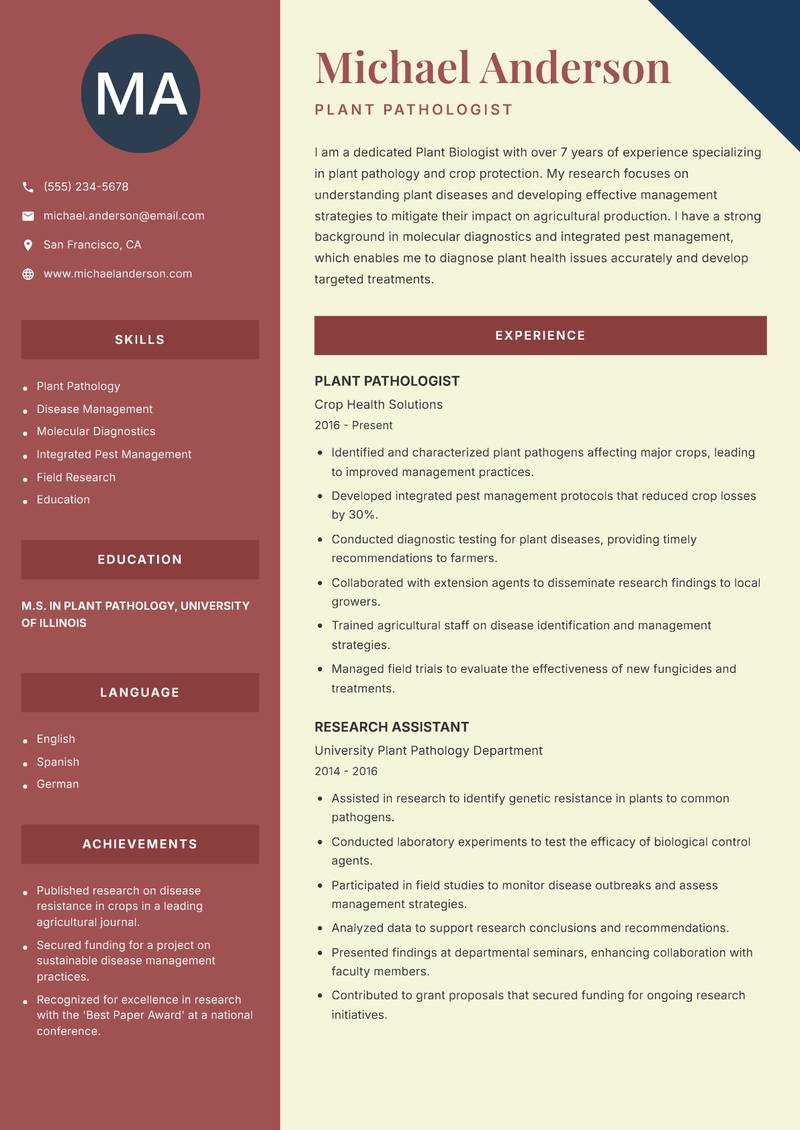
Plant Pathologist Resume

I am a dedicated Plant Biologist with over 7 years of experience specializing in plant pathology and crop protection. My research focuses on understanding plant diseases and developing effective management strategies to mitigate their impact on agricultural production. I have a strong background in molecular diagnostics and integrated pest management, which enables me to diagnose plant health issues accurately and develop targeted treatments. I have collaborated with farmers, agronomists, and researchers to implement best practices that enhance crop health and productivity. My analytical skills, combined with my practical experience in the field, allow me to provide valuable insights that drive effective disease management strategies. I am passionate about educating others on plant health and have conducted numerous workshops and training sessions for farmers and agricultural stakeholders. My goal is to contribute to sustainable agriculture by improving crop resilience against diseases.

Plant Pathology Disease Management Molecular Diagnostics Integrated Pest Management Field Research Education
Plant Biologist Resume Preview Example
View PDF
  1. Identified and characterized plant pathogens affecting major crops, leading to improved management practices.
  2. Developed integrated pest management protocols that reduced crop losses by 30%.
  3. Conducted diagnostic testing for plant diseases, providing timely recommendations to farmers.
  4. Collaborated with extension agents to disseminate research findings to local growers.
  5. Trained agricultural staff on disease identification and management strategies.
  6. Managed field trials to evaluate the effectiveness of new fungicides and treatments.
  1. Assisted in research to identify genetic resistance in plants to common pathogens.
  2. Conducted laboratory experiments to test the efficacy of biological control agents.
  3. Participated in field studies to monitor disease outbreaks and assess management strategies.
  4. Analyzed data to support research conclusions and recommendations.
  5. Presented findings at departmental seminars, enhancing collaboration with faculty members.
  6. Contributed to grant proposals that secured funding for ongoing research initiatives.

Achievements

  • Published research on disease resistance in crops in a leading agricultural journal.
  • Secured funding for a project on sustainable disease management practices.
  • Recognized for excellence in research with the 'Best Paper Award' at a national conference.
⏱️
Experience
2-5 Years
📅
Level
Mid Level
🎓
Education
M.S. in Plant Pathology, Unive...

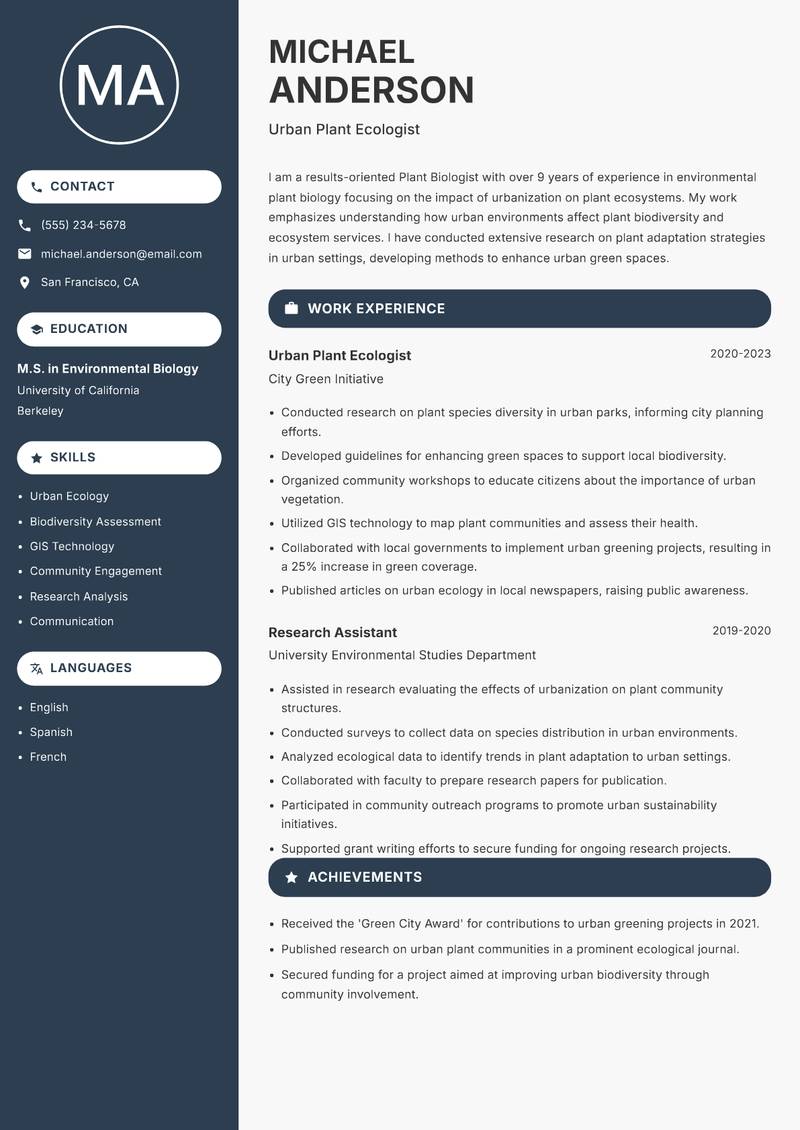
Urban Plant Ecologist Resume

I am a results-oriented Plant Biologist with over 9 years of experience in environmental plant biology focusing on the impact of urbanization on plant ecosystems. My work emphasizes understanding how urban environments affect plant biodiversity and ecosystem services. I have conducted extensive research on plant adaptation strategies in urban settings, developing methods to enhance urban green spaces. My analytical skills enable me to assess plant health and community dynamics effectively, contributing to sustainable urban planning. I have collaborated with city planners, environmental organizations, and community groups to implement green infrastructure projects that foster biodiversity. My passion for plant ecology drives my commitment to promoting urban sustainability through scientific research and community engagement. I am an effective communicator, capable of conveying complex ecological concepts to diverse audiences, which has enhanced public awareness of plant ecosystems in urban environments.

Urban Ecology Biodiversity Assessment GIS Technology Community Engagement Research Analysis Communication
Plant Biologist Resume Preview Example
View PDF
  1. Conducted research on plant species diversity in urban parks, informing city planning efforts.
  2. Developed guidelines for enhancing green spaces to support local biodiversity.
  3. Organized community workshops to educate citizens about the importance of urban vegetation.
  4. Utilized GIS technology to map plant communities and assess their health.
  5. Collaborated with local governments to implement urban greening projects, resulting in a 25% increase in green coverage.
  6. Published articles on urban ecology in local newspapers, raising public awareness.
  1. Assisted in research evaluating the effects of urbanization on plant community structures.
  2. Conducted surveys to collect data on species distribution in urban environments.
  3. Analyzed ecological data to identify trends in plant adaptation to urban settings.
  4. Collaborated with faculty to prepare research papers for publication.
  5. Participated in community outreach programs to promote urban sustainability initiatives.
  6. Supported grant writing efforts to secure funding for ongoing research projects.

Achievements

  • Received the 'Green City Award' for contributions to urban greening projects in 2021.
  • Published research on urban plant communities in a prominent ecological journal.
  • Secured funding for a project aimed at improving urban biodiversity through community involvement.
⏱️
Experience
2-5 Years
📅
Level
Mid Level
🎓
Education
M.S. in Environmental Biology,...

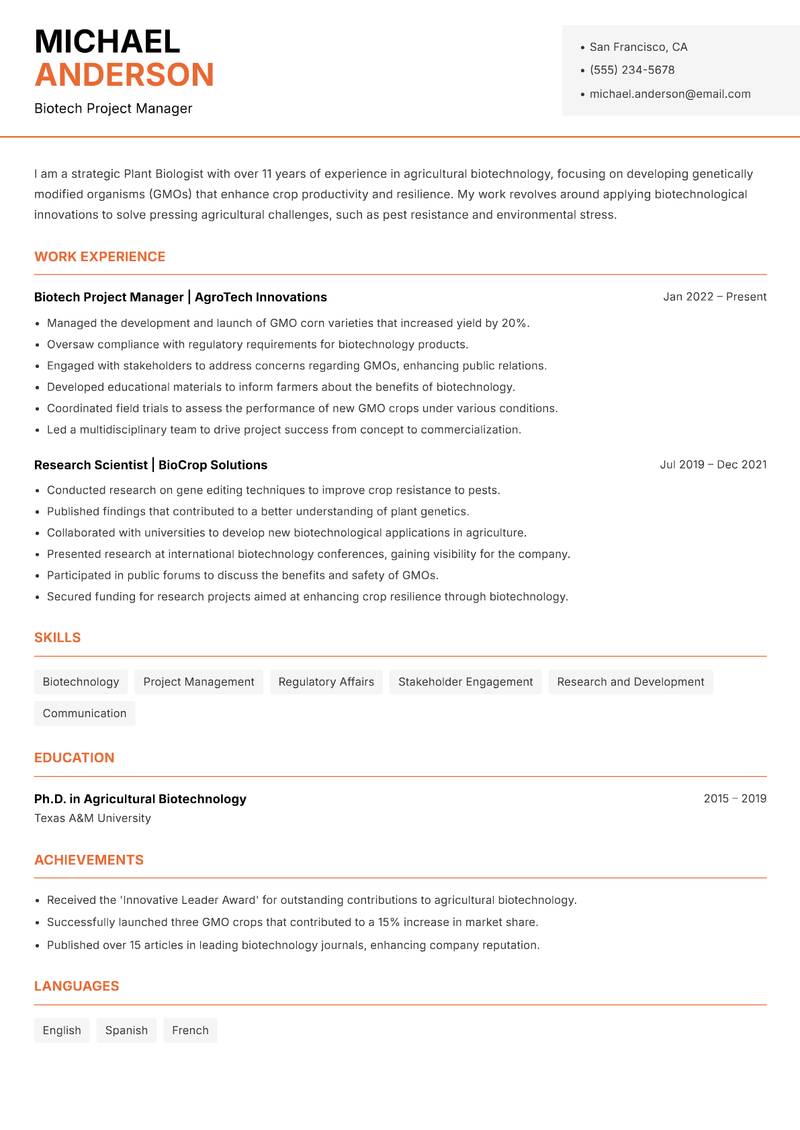
Biotech Project Manager Resume

I am a strategic Plant Biologist with over 11 years of experience in agricultural biotechnology, focusing on developing genetically modified organisms (GMOs) that enhance crop productivity and resilience. My work revolves around applying biotechnological innovations to solve pressing agricultural challenges, such as pest resistance and environmental stress. I have led cross-functional teams in the successful launch of several GMO crops, ensuring compliance with regulatory frameworks and addressing public concerns regarding biotechnology. My expertise in regulatory affairs and stakeholder engagement has been instrumental in educating the public and promoting acceptance of biotechnological advances. I thrive in fast-paced environments and am adept at managing multiple projects simultaneously. My strong analytical skills enable me to evaluate the efficacy of biotechnological solutions and their impact on agricultural sustainability. Passionate about advancing the field of agricultural biotechnology, I am committed to fostering innovations that can contribute to global food security.

Biotechnology Project Management Regulatory Affairs Stakeholder Engagement Research and Development Communication
Plant Biologist Resume Preview Example
View PDF
  1. Managed the development and launch of GMO corn varieties that increased yield by 20%.
  2. Oversaw compliance with regulatory requirements for biotechnology products.
  3. Engaged with stakeholders to address concerns regarding GMOs, enhancing public relations.
  4. Developed educational materials to inform farmers about the benefits of biotechnology.
  5. Coordinated field trials to assess the performance of new GMO crops under various conditions.
  6. Led a multidisciplinary team to drive project success from concept to commercialization.
  1. Conducted research on gene editing techniques to improve crop resistance to pests.
  2. Published findings that contributed to a better understanding of plant genetics.
  3. Collaborated with universities to develop new biotechnological applications in agriculture.
  4. Presented research at international biotechnology conferences, gaining visibility for the company.
  5. Participated in public forums to discuss the benefits and safety of GMOs.
  6. Secured funding for research projects aimed at enhancing crop resilience through biotechnology.

Achievements

  • Received the 'Innovative Leader Award' for outstanding contributions to agricultural biotechnology.
  • Successfully launched three GMO crops that contributed to a 15% increase in market share.
  • Published over 15 articles in leading biotechnology journals, enhancing company reputation.
⏱️
Experience
2-5 Years
📅
Level
Mid Level
🎓
Education
Ph.D. in Agricultural Biotechn...

Key Skills for Plant Biologist Positions

Resume Tips for Plant Biologist Applications

Strong Action Verbs for Plant Biologist Resumes

Discovered · Synthesized · Sequenced · Expressed · Analyzed · Published · Optimized · Developed · Patented · Validated · Achieved · Administered · Architected · Assessed

Common Mistakes to Avoid

Experience Levels

How to Write a Plant Biologist Resume

Browse Plant Biologist resume examples built around molecular biology techniques (PCR, CRISPR, western blot), tailored for Life Sciences roles.

A strong Plant Biologist resume leads with a focused professional summary that names the exact role and your standout achievement. In the experience section, open every bullet with a strong action verb and quantify the result with numbers wherever possible. Highlight your most relevant competencies — especially Molecular Biology Techniques (PCR, CRISPR, Western Blot), Cell Culture & In Vitro Models, and Genomics & Sequencing (NGS, Sanger) — in a dedicated Skills section positioned early so ATS systems and hiring managers both find it immediately.

For format, most Plant Biologist roles suit a reverse-chronological layout: most recent position first, working backwards. Keep to one page for under five years of experience, or two pages for senior candidates with a rich project or leadership history. Use clean, ATS-safe fonts (10–12pt), standard section headings (Summary, Experience, Education, Skills), and avoid tables, text boxes, or multi-column layouts that applicant tracking systems cannot parse reliably.
Frequently Asked Questions

What makes a strong Plant Biologist resume stand out to employers?

A standout Plant Biologist resume combines role-specific skills with quantified achievements. Name the exact job title in your professional summary, mirror keywords from each job posting, and open every bullet point with a strong action verb followed by a measurable result. Certifications, tools, and domain experience specific to plant biologist roles should appear prominently near the top.

What skills are most important to include on a Life Sciences resume?

Recruiters hiring in Life Sciences consistently look for Molecular Biology Techniques (PCR, CRISPR, Western Blot), Cell Culture & In Vitro Models, Genomics & Sequencing (NGS, Sanger), Bioinformatics & Computational Biology. List these in a dedicated Skills section near the top so both ATS systems and human reviewers spot them fast. Mirror the exact phrasing from each job posting wherever possible — many applicant tracking systems match literal strings rather than synonyms.

What is the best resume format for Life Sciences professionals?

A reverse-chronological format is the standard choice for most Life Sciences candidates — employers expect to see your most recent role first, working backwards. If you are transitioning into Life Sciences from a related field, a hybrid format (brief skills summary at the top followed by chronological experience) can bridge the gap effectively. Keep the document to one page for under five years of experience, or two pages for senior specialists.

How do I make my Life Sciences resume pass applicant tracking systems (ATS)?

Use standard section headings — Summary, Experience, Education, Skills — rather than creative labels that ATS parsers do not recognise. Embed domain keywords such as "Molecular Biology Techniques (PCR, CRISPR, Western Blot)" and "Cell Culture & In Vitro Models" naturally inside your experience bullets rather than cramming them into a standalone keyword list. Avoid tables, multi-column layouts, text boxes, headers, footers, and images — these confuse most modern parsers and can cause your resume to be misread or rejected before a human sees it.

What mistakes do Life Sciences professionals most commonly make on their resume?

The most frequent issue is being vague about techniques — 'molecular biology skills' is meaningless without specifics. Beyond that, generic objective statements, unquantified achievements, and inconsistent date formatting appear across almost every Life Sciences application. Fix these by replacing every vague claim with a measurable outcome — specific numbers and named projects add credibility that adjectives cannot.

How long should a Life Sciences resume be?

One page is appropriate for candidates with under five years of relevant Life Sciences experience. Two pages are acceptable — and sometimes expected — for senior specialists, managers, or professionals with a strong portfolio of projects, publications, or credentials. Avoid padding to reach a page count: every line should directly support your application for the specific role you are targeting.

Should I include a professional summary at the top of my Life Sciences resume?

Yes — a two to three sentence summary is the first section most recruiters read. Open with your title and years of Life Sciences experience, then name your most relevant achievement or specialisation. One proven approach: List specific molecular biology techniques — CRISPR, qPCR, single-cell sequencing — rather than generic 'molecular biology skills' — this level of specificity signals genuine expertise before a recruiter reaches your experience section.

Scroll to view samples